5.56 NATO Barrels for Sale
AR15Parts.com offers 5.56 NATO barrels for AR-15 builders who want one of the most common AR-15 chamberings, with barrels that can safely fire both 5.56 NATO and .223 Remington ammunition. Call (888) 706-0633 for product-listing questions, availability confirmation, or help comparing length, profile, and gas-system fitment before you order.
Need help narrowing down a 5.56 barrel? Ask about gas length, journal size, and muzzle threads before checkout.
5.56 NATO Barrels for AR-15 Builds
5.56 NATO is the military cartridge most closely associated with the AR-15 platform. The product listings on this page describe it as an all-around caliber with low recoil that works well for backyard plinking, competitive shooting, and hunting small game. The classic civilian AR-15 uses a 16-inch barrel, while the military M4 carbine uses a 14.5-inch barrel, and 5.56 barrels are made in a wide range of lengths across the industry.
What Makes a 5.56 NATO Barrel Different
- Chamber: a 5.56 NATO chamber is built for military-pressure 5.56 ammunition. The product listings note that these barrels can safely fire both .223 Remington and 5.56 NATO ammunition.
- Twist rate: the 5.56 NATO barrels currently listed at AR15Parts.com use a 1:7 or 1:8 twist, both common choices for stabilizing a broad range of .223-caliber bullet weights.
- Compatibility: 5.56 NATO barrels use the standard 5.56/.223 bolt face and standard AR-15 magazines, which makes them the simplest starting point for a new upper build or a replacement barrel.
AR15Parts.com supplies firearms, parts, and accessories by phone and online. Call (888) 706-0633 if you have questions about a specific listing.
Barrel Build or Complete Upper
A barrel build gives you control over the upper receiver, handguard, gas block, gas tube, muzzle device, and bolt carrier group, but it also demands careful compatibility checks and proper assembly, including headspace verification. Start with our AR-style rifle barrel catalog when you want to compare 5.56 barrels with other chamberings.
If you would rather not source each upper part separately, consider our 5.56 NATO complete uppers. Confirm the listed configuration and included components before pairing any complete upper with your lower.
Our 5.56 NATO Barrel Options
AR15Parts.com currently lists 5.56 NATO barrels from AR15Parts.com and Wilson Combat. Choose the route that fits your build plan, then use the individual listing to verify dimensions before ordering.
AR15Parts.com M4/Govt Parkerized Barrels
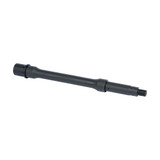
Our house-brand 5.56 NATO barrels use an M4/Govt profile in 4150 chrome moly with a parkerized finish, a carbine-length gas system, a .750-inch gas-block journal, 1/2x28 muzzle threads, and a listed weight of 2 lb. Two lengths are currently listed:
- 10.5-inch with a 1:7 twist, for compact builds.
- 16-inch with a 1:8 twist, for a standard-length AR-15 rifle.
Wilson Combat 16-Inch Stainless Barrels
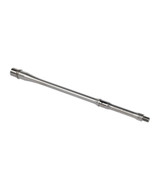
Wilson Combat options are 16-inch 416R stainless barrels with a glass bead finish, a 1:8 twist, 1/2x28 threads, a .750-inch journal, and an intermediate-length gas system. Two profiles are currently listed: the Ranger at a listed 1.5 lb and the Recon Fluted at a listed 1.7 lb.
Complete 5.56 NATO Uppers
A complete upper combines key components such as the barrel, upper receiver, gas system, handguard, bolt carrier group, and charging handle into one listed configuration. Review our 5.56 NATO complete uppers for current options, and check each listing for included components.
What to Look For in a 5.56 NATO Barrel
Start with how you plan to use the rifle, then compare barrel length, profile, material and finish, twist rate, gas system, and muzzle threads.
Barrel Length Options
The 5.56 NATO barrels currently listed at AR15Parts.com come in 10.5-inch and 16-inch lengths.
- 10.5-inch: a compact length for a short, maneuverable upper. Shorter barrels typically produce more muzzle blast, which makes muzzle-device selection more important. Federal, state, and local firearm requirements can depend on the complete firearm configuration, not barrel length alone. Confirm current requirements independently before buying or assembling parts.
- 16-inch: the classic civilian AR-15 rifle length and a versatile choice for range use, training, and hunting small game.
A longer barrel gives powder gases more time to accelerate the bullet, while a shorter barrel reduces overall length and weight. Actual velocity depends on ammunition, temperature, and barrel length.
Barrel Profile
Profile affects weight, balance, stiffness, and heat handling. Current listings include the M4/Govt profile on the AR15Parts.com barrels and the Ranger and Recon Fluted profiles on the Wilson Combat barrels. The Wilson Combat barrels are the lighter options on this page, with listed weights of 1.5 lb and 1.7 lb, compared with 2 lb for the M4/Govt barrels. A lighter barrel makes a rifle easier to carry, while a heavier contour generally handles heat better during longer strings of fire.
Material and Finish: Stainless vs. Parkerized
- 4150 chrome moly with a parkerized finish: used on the AR15Parts.com M4/Govt barrels. Chrome moly is a durable, practical barrel steel for working rifles, and the parkerized finish provides exterior corrosion protection.
- 416R stainless with a glass bead finish: used on the Wilson Combat barrels. Stainless resists corrosion at the steel level and is commonly chosen for precision-oriented builds.
Neither material is the universal answer. Match the material and finish to your climate, cleaning routine, firing schedule, and accuracy goals.
Twist Rate
The 10.5-inch AR15Parts.com barrel uses a 1:7 twist, and the 16-inch barrels use a 1:8 twist. A 1:7 twist is the faster of the two and is often chosen for longer, heavier bullets, while a 1:8 twist is a versatile rate for a wide range of common factory loads. Check your ammunition manufacturer's guidance for the bullets you plan to shoot.
Gas System and Gas-Block Journal
The AR15Parts.com M4/Govt barrels use a carbine-length gas system, and the Wilson Combat barrels use an intermediate-length gas system. Intermediate length is less common than carbine, mid-length, or rifle-length, so confirm the correct gas tube length with the Wilson Combat listing or the manufacturer before ordering. All current 5.56 NATO listings use a .750-inch gas-block journal.
Muzzle Threads and Feed Ramps
All current 5.56 NATO listings are threaded 1/2x28, the common thread pitch for .223/5.56 muzzle devices, and use M4 feed ramps. Pair the barrel with an upper receiver cut for M4 feed ramps and a muzzle device threaded 1/2x28.
Match your barrel, gas parts, and muzzle device before you build. Call (888) 706-0633 for help interpreting a product listing.
Why Choose AR15Parts.com
Trusted Firearms Parts Retailer
Nationwide service: call (888) 706-0633 if you need to ask about a listing, confirm availability, or discuss fitment for a planned 5.56 upper.
Build-Focused Product Selection
Build comparison: compare parkerized and stainless barrels, complete uppers, and supporting parts to decide how much of the build you want to assemble yourself.
Configuration details: check barrel length, twist rate, profile, material, finish, gas-system length, gas-block journal, muzzle threads, and weight in the individual product listing.
Direct Help Before You Order
Listing questions: call (888) 706-0633 if you need help reading a product description, comparing a component barrel with one of our 5.56 NATO complete uppers, or checking which specifications need to match your existing parts.
Our Process
Start with the build goal, then confirm each listed fitment detail before placing an order.
1. Define the Build Goal
Decide whether you want a compact upper or a standard 16-inch rifle, and whether the rifle is for range use, training, or hunting small game.
2. Compare Barrel Specifications
Compare the listed length, twist rate, profile, material, finish, gas-system length, gas-block journal, and weight across the current 5.56 NATO barrels.
3. Match the Remaining Upper Components
Use a standard 5.56/.223 bolt carrier group and AR-15 magazines, then match the gas block, gas tube, handguard, and muzzle device to the barrel's listed dimensions. If you want a turnkey route, compare the included components on our 5.56 NATO complete uppers.
4. Order or Ask Product Questions
Review the product listing one more time before ordering, especially length, gas details, and journal diameter. Call (888) 706-0633 if anything is unclear.
Confirm your barrel and upper-component fitment before you order. Call (888) 706-0633 for product questions.
Denison, TX Service Areas
Our team is based at 4000 Texoma Pkwy, Denison, TX, 75020, and we help builders in Denison, Sherman, Pottsboro, the Lake Texoma area and nationwide by phone and online. Contact us at (888) 706-0633 if you need help with a product listing or compatibility question.
Buyers can compare barrel lengths, profiles, materials, twist rates, and gas-system fitment in the product descriptions before selecting components. If you need a more complete setup, see our 5.56 NATO complete uppers.
Choose the Right 5.56 NATO Barrel for Your Build
Before checkout, match your 5.56 barrel to every part it must work with.
Final Compatibility Checklist
- Verify the barrel is chambered and marked 5.56 NATO.
- Use a standard 5.56/.223 bolt carrier group and standard AR-15 magazines.
- Match the gas tube to the listed gas-system length: carbine on the M4/Govt barrels, intermediate on the Wilson Combat barrels.
- Use a gas block sized for the .750-inch journal on the current listings.
- Choose a muzzle device threaded 1/2x28.
- Review twist rate, profile, material, and weight for your intended use.
- For the 10.5-inch barrel, confirm applicable federal, state, and local requirements for your complete firearm configuration.
- Confirm your upper receiver works with M4 feed ramps and that the handguard clears the gas block.
Buyers who want fewer individual fitment checks can review our 5.56 NATO complete uppers or browse the full AR-15 barrel catalog.
Confirm your barrel and component fit before checkout. Call (888) 706-0633 for help with a product listing.
Frequently Asked Questions
These answers cover chamber, fitment, and component selection before you order a 5.56 NATO barrel.
Can a 5.56 NATO Barrel Shoot .223 Remington?
Yes. The product listings note that these 5.56 NATO barrels can safely fire both .223 Remington and 5.56 NATO ammunition. The reverse is not always true, so do not assume a barrel marked only .223 Remington is rated for 5.56 NATO ammunition.
What Barrel Length Is Best for a 5.56 AR-15?
It depends on the role of the rifle. AR15Parts.com currently lists 10.5-inch and 16-inch 5.56 NATO barrels. The 16-inch barrel is the classic civilian AR-15 length and a versatile choice for general use. The 10.5-inch barrel suits a compact upper, but it adds muzzle blast, and federal, state, and local requirements can depend on the complete firearm configuration. Confirm those requirements independently before buying.
Is a 1:7 or 1:8 Twist Better for 5.56?
Neither is universally better. A 1:7 twist, used on the 10.5-inch barrel currently listed, is faster and often chosen for longer, heavier bullets. A 1:8 twist, used on the 16-inch barrels currently listed, is a versatile rate for a wide range of common factory loads. Compare your bullet choice with your ammunition manufacturer's guidance.
Stainless vs. Parkerized 5.56 Barrel: Which Is Better for Hunting?
Neither is universally better for hunting. A 416R stainless barrel, like the Wilson Combat options, resists corrosion at the steel level, which can help in wet or humid field conditions, and the lighter listed weights make them easier to carry. A parkerized 4150 chrome moly barrel relies on its exterior finish for corrosion protection and is a durable, practical choice for a working rifle. Review current hunting regulations for the game and area you plan to hunt.
What Is the Difference Between 5.56 NATO and 223 Wylde Barrels?
Both chambers are built to handle 5.56 NATO pressures and both can fire .223 Remington. The 223 Wylde is a hybrid chamber developed with match-grade .223 Remington ammunition in mind, and it is often chosen for accuracy-focused builds. If you want to compare, see our 223 Wylde barrels.
What Is the Difference Between a 5.56 Barrel and a Complete Upper?
A component barrel requires a compatible receiver, bolt carrier group, handguard, gas parts, muzzle device, and assembly work. A complete upper combines key components into a unit ready to pair with a compatible lower. Compare our 5.56 NATO complete uppers against the barrels on this page, or contact AR15Parts.com at (888) 706-0633 before you buy.
4 Products