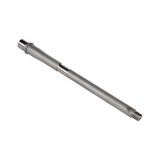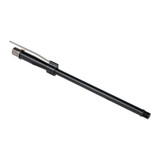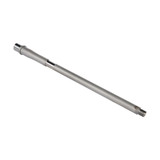

338 ARC Barrels for Sale
AR15Parts.com supplies 338 ARC barrels for shooters building cartridge-specific AR-15 uppers. The .338 ARC platform calls for a properly chambered barrel and the correct compatible bolt, with twist rate, gas-system configuration, and barrel length selected around the ammunition and use case. Contact AR15Parts.com by phone or through our online contact form for help reviewing the product specifications needed for your build.
Build your .338 ARC upper with the right barrel and compatible parts.
338 ARC Barrels for AR-15 Builds
A dedicated .338 ARC barrel gives an AR-15 upper the chamber, rifling, and gas-system layout required for this cartridge. Barrel selection affects projectile stabilization, muzzle velocity, handling, and how the rifle responds to the ammunition and suppressor you choose. It does not replace the need to verify bolt compatibility, headspace, and the manufacturer's assembly instructions.
Before ordering, use the item page to confirm the exact chambering, listed twist, barrel length, gas-system length, gas-block journal, muzzle-thread specification, contour, finish, and any included components. Product availability and configurations can change, so the product listing is the source to review before purchase.
For barrel length, twist, bolt compatibility, and suppressor considerations, read our 338 ARC complete uppers page before selecting your .338 ARC barrel.
What Should You Look for in a 338 ARC Barrel?
Start with the ammunition you expect to use most, then select a barrel whose published specifications support that plan. Heavy, low-velocity subsonic loads and lighter, faster supersonic loads can place different demands on rifling twist and gas tuning. Do not select a twist rate from a general rule alone, compare the barrel manufacturer's guidance with the bullet manufacturer's stability information.
Barrel length affects overall handling and velocity potential. Gas-system behavior is separate from barrel length: dwell time is the distance and pressure interval between the gas port and muzzle, so it depends on the barrel maker's gas-port location and the remaining barrel length beyond that port. A longer barrel does not automatically mean the same gas behavior unless the gas-system layout is also known.
- Confirm the chamber: Choose a barrel marked specifically for .338 ARC. A 5.56 NATO, .223 Wylde, or 300 Blackout barrel is not a substitute.
- Confirm the bolt requirement: Use the compatible bolt specified by the barrel or upper manufacturer. Do not assume a standard 5.56 bolt is appropriate.
- Review twist guidance: Match the listed twist to the projectile weights and velocity range you plan to shoot, especially when heavy subsonic ammunition is part of the plan.
- Check gas-system details: Match the listed gas-system length to the correct gas tube, and verify gas-block journal diameter before buying a block.
- Verify muzzle threads and handguard clearance: These details determine whether your selected muzzle device, suppressor mount, gas block, and handguard will fit together.
- Select contour, steel, and finish for the role: A lighter contour reduces front-end weight, while a heavier profile adds mass for longer firing strings. Review the individual listing for material and finish details.
Every barrel we stock in 338 ARC is made from 416R stainless steel. The Shaw Heavy barrels use a matte stainless finish, while the Ballistic Advantage Hanson Premium Black Series barrels are QPQ nitride treated for a black finish. Matte stainless offers strong corrosion resistance and is easy to inspect for wear, while the nitride-treated black finish adds extra surface hardness and additional corrosion protection, which can help in wet hunting conditions or heavy use. Parkerized chrome moly barrels are not currently part of our 338 ARC lineup. Compared with stainless, parkerized chrome moly typically requires more consistent oiling to resist rust and is more prone to corrosion if neglected, though it remains a durable option in other calibers. For 338 ARC hunting builds, the stainless options we carry provide reliable corrosion resistance with straightforward maintenance.
What Twist Rate Is Best for a .338 ARC Barrel?
The best twist rate is the one the barrel maker recommends for the bullet weights and velocities you intend to use. Heavy subsonic projectiles generally need sufficient rotational stability at lower velocity, while a supersonic-focused setup should be checked against the chosen bullet manufacturer's guidance. All 338 ARC barrels we stock use a 1:8 twist, but always verify the actual item specification before ordering.
If you intend to use more than one load type, select the barrel around the load you will shoot most often and test function and accuracy with your ammunition. Stability, sound performance, velocity, and reliable cycling are separate considerations, particularly when adding a suppressor.
Do .338 ARC Barrels Require a Special Bolt?
Yes. A .338 ARC upper requires the correct compatible bolt, and the barrel, bolt, and ammunition must be matched to the cartridge. The bolt face and cartridge support are not the same question as whether a bolt physically fits inside an AR-15 carrier.
For a build assembled from individual parts, have headspace checked with the proper gauges by a qualified armorer or gunsmith. A complete upper can simplify component matching, but you should still follow the maker's documentation and safe-function checks before live fire. Compare configured options through our 338 ARC complete uppers.
Is a 12.5-Inch or 16-Inch .338 ARC Barrel Better for Suppressed Use?
A 12.5-inch barrel favors a shorter overall package once a suppressor is attached, while a 16-inch barrel generally offers more velocity potential. Neither length is automatically better for suppressed shooting because reliability depends on the barrel's gas-port design, ammunition, suppressor backpressure, buffer system, and any required gas adjustment.
Choose the shorter option when compact handling is the priority and the listed barrel design supports your intended loads. Choose the longer option when added barrel length, velocity potential, or a different balance point matters more. Review the actual gas-system and muzzle-thread details on the barrel or upper listing before selecting compatible parts.
What's Included in Our 338 ARC Barrel Selection
Use the individual product listing to identify what is included and what must be purchased separately. A barrel by itself commonly requires a separate compatible bolt, gas block, gas tube, muzzle device, upper receiver, handguard, and installation hardware unless the listing expressly says otherwise.
- Chamber: Confirm that the product is identified as .338 ARC before adding it to a build.
- Twist rate: Review the exact listed twist and manufacturer guidance for the ammunition you plan to use.
- Length and contour: Compare overall length, weight, and profile against your handling and firing-volume needs.
- Gas system: Use the listed gas-system length and journal dimensions to select the correct gas tube and gas block.
- Steel and finish: Check the product page for the barrel material and protective finish, rather than assuming all options use the same construction.
- Included parts: Verify whether the item includes a gas block, gas tube, bolt, muzzle device, or any other component before ordering.
How to Choose a 338 ARC Barrel
Choose the barrel after defining the upper's job, ammunition, and component plan. A compact suppressed rifle, a supersonic-oriented rifle, and a general-purpose build may prioritize different specifications, but every setup still requires a purpose-built chamber, the correct bolt, and careful assembly.
1. Start With Your Ammunition and Suppressor Plan
Identify the ammunition type and projectile weights you expect to shoot first. If a suppressor is part of the build, confirm the muzzle-thread interface, suppressor-mount requirements, and manufacturer guidance for the barrel and chosen load.
2. Match Length and Contour to Handling Needs
A 12.5-inch option can reduce overall length, while a 16-inch option provides additional barrel length and velocity potential. A lighter contour helps reduce front-end weight, while a heavier profile can better manage heat during longer strings of fire.
3. Verify the Critical Product Specifications
Before placing an order, confirm chambering, listed twist, gas-system length, gas-block journal, muzzle threads, contour, steel, finish, and the parts included with the item. Check the product page for current specifications and availability.
4. Match the Rest of the Upper Assembly
Plan for the correct upper receiver, compatible bolt, gas block, gas tube, handguard clearance, muzzle device, and assembly tools. If you prefer a more complete route, review our 338 ARC complete uppers for configured upper options.
Need help matching a barrel, bolt, and upper parts? Call us at (888) 706-0633.
Signs It's Time for a 338 ARC Barrel
A dedicated barrel is needed when you are moving from a standard AR-15 caliber to .338 ARC. This is not a conversion accomplished with ammunition alone. The upper needs the proper chamber and compatible bolt, with gas-system components selected from the published barrel specifications.
- Your current 5.56 NATO, .223 Wylde, or 300 Blackout barrel cannot safely chamber .338 ARC ammunition.
- You want an upper built around heavy subsonic ammunition and need to compare manufacturer twist and gas-system guidance.
- You are deciding between a compact configuration and a longer barrel with additional velocity potential.
- You need to verify the compatible bolt before buying individual barrel and upper components.
- You are replacing a worn, damaged, or improperly chambered component with a cartridge-specific option.
Store uninstalled barrels, bolts, and muzzle devices clean and dry. Apply an appropriate light protective oil to exposed steel when storing parts for an extended period, protect muzzle threads, and avoid leaving components in a foam case that can hold moisture.
Why Choose AR15Parts.com for 338 ARC Barrels
AR15Parts.com offers firearms, parts, and accessories for AR-platform projects. The product pages provide a practical starting point for comparing component specifications before you commit to a barrel or complete upper configuration.
Specifications That Matter
Review the chamber, listed twist, barrel length, contour, steel type, finish, gas-system configuration, gas-block journal, and muzzle-thread information on the specific product page.
Build Compatibility
A .338 ARC setup needs a compatible bolt, not a standard 5.56 bolt. Pair the barrel with the specified bolt components, then review our AR-15 complete uppers if you prefer a matched upper assembly route.
Product Details Before Ordering
Use the product listing to verify current item details, included components, and compatibility notes before ordering. For questions that remain after reviewing the listing, contact AR15Parts.com at (888) 706-0633.
Find the Right 338 ARC Barrel for Your Build
Compare each .338 ARC barrel around your intended ammunition, suppressor plan, and matching AR-15 components. If you want a complete path, review our 338 ARC complete uppers or call (888) 706-0633 with product-specification questions.
Match your barrel and components before you start the build. Call (888) 706-0633 for product help.
Frequently Asked Questions
What Twist Rate Should I Choose for a 338 ARC Barrel?
Choose twist rate based on projectile weight, intended velocity, and whether subsonic shooting is your priority. All 338 ARC barrels we stock use a 1:8 twist, which suits both subsonic and supersonic loads when matched to the correct bullet weight. Check the bullet maker’s stability guidance and the barrel manufacturer’s stated ammunition range before ordering.
Is a 12.5-Inch or 16-Inch 338 ARC Barrel Better?
A 12.5-inch barrel favors compact handling, while a 16-inch barrel provides more barrel length and can change dwell time. Short barrels are common for compact suppressed builds, but gas-system design matters as much as length. A longer barrel may offer a different gas curve and more room for handguard and muzzle-device choices. Read the maker’s gas-system specifications before matching the barrel to your upper.
Can I Use a 338 ARC Barrel for a Suppressed Build?
Yes, a 338 ARC suppressed barrel can work well when the barrel, ammunition, gas system, and suppressor are matched correctly. Heavy subsonic ammunition needs adequate twist to stabilize at lower velocity. Gas tuning may be needed to control bolt speed and maintain reliable cycling. Follow all applicable federal, state, and local laws for suppressor ownership and configuration.
For a matched starting point, review our 338 ARC complete uppers. These assemblies help reduce fitment questions between the barrel, upper receiver, gas components, and bolt carrier group.
Do I Need a Specific Bolt for a 338 ARC Barrel?
Yes, a .338 ARC barrel requires an appropriate compatible bolt. The 338 ARC barrel and bolt must use the correct bolt face and cartridge support for the chambered round. Do not assume a standard 5.56 bolt will fit or function safely. Confirm compatibility with the barrel maker and inspect headspace during assembly.
Is a Stainless or Parkerized 338 ARC Barrel Better for Hunting?
All the 338 ARC barrels we currently list are made from 416R stainless steel, either matte finished or QPQ nitride treated for a black finish. We do not currently stock parkerized chrome moly 338 ARC barrels. Stainless offers strong corrosion resistance for hunting use with straightforward maintenance.
What Is the Difference Between Hanson and Heavy Contours?
Hanson contours are a balanced, lighter profile that keeps front-end weight manageable for handling, while Heavy contours add mass to help manage heat during longer strings of fire. Choose the Hanson profile for a lighter build and the Heavy profile when sustained fire and heat management are priorities.
How Should I Store and Maintain a 338 ARC Barrel?
Store your .338 ARC barrel in a dry location and clean it after use. Moisture-aware care matters for steel parts, especially after wet range days or temperature changes during storage. Protect muzzle threads with a thread protector when a suppressor or muzzle device is removed. Follow the barrel manufacturer’s cleaning guidance, avoid aggressive rod contact at the crown, and inspect the bore, chamber, gas block, and threads regularly.
Compare the available .338 ARC barrel specifications, then choose the length, twist, gas-system details, and compatible components that fit your build. For product questions, call (888) 706-0633.
6 Products