
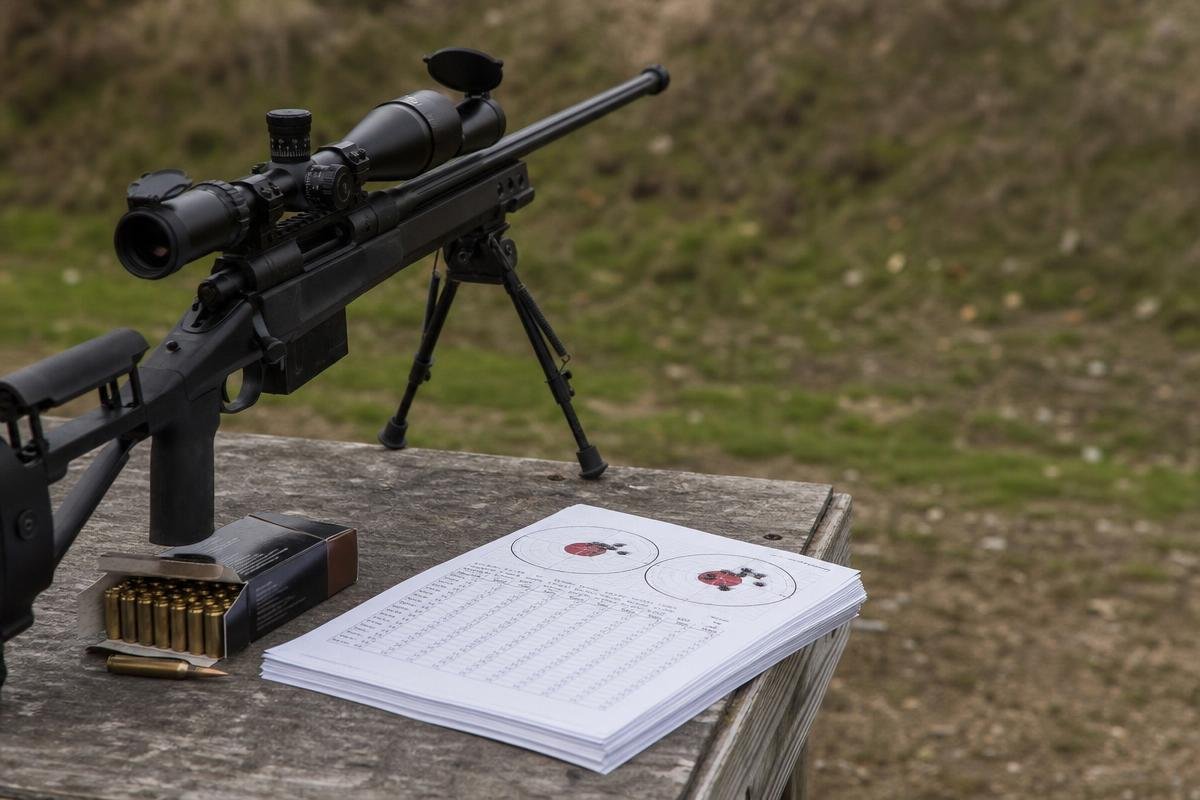
AR15Parts.com provides a practical look at .243 Winchester ballistics by distance, including drop, velocity, and energy from 100 through 500 yards. The examples below use clearly stated factory-load specifications and calculator inputs, but your rifle must still be zeroed and verified with the exact ammunition you intend to use. Need help confirming .243 Winchester rifle-pattern compatibility or selecting components for your intended load?
Key Takeaways
- Light 55 to 58 grain .243 Win loads start fast and offer flat short-range varmint holds, but drift more in wind and lose speed faster than higher-BC bullets.
- Most 95 to 100 grain controlled-expansion loads are common choices for deer-class hunting where legal, because they balance practical velocity, penetration-oriented bullet construction, and retained energy.
- With the 200-yard zero examples below, a typical 100-grain hunting load is roughly 7 to 8 inches low at 300 yards and about 48 inches low at 500 yards.
- .243 Winchester trajectory from 100 to 500 yards depends on the exact bullet, muzzle velocity, BC, optic height, zero, and current weather conditions.
What Are .243 Winchester Ballistics From 100 to 500 Yards?
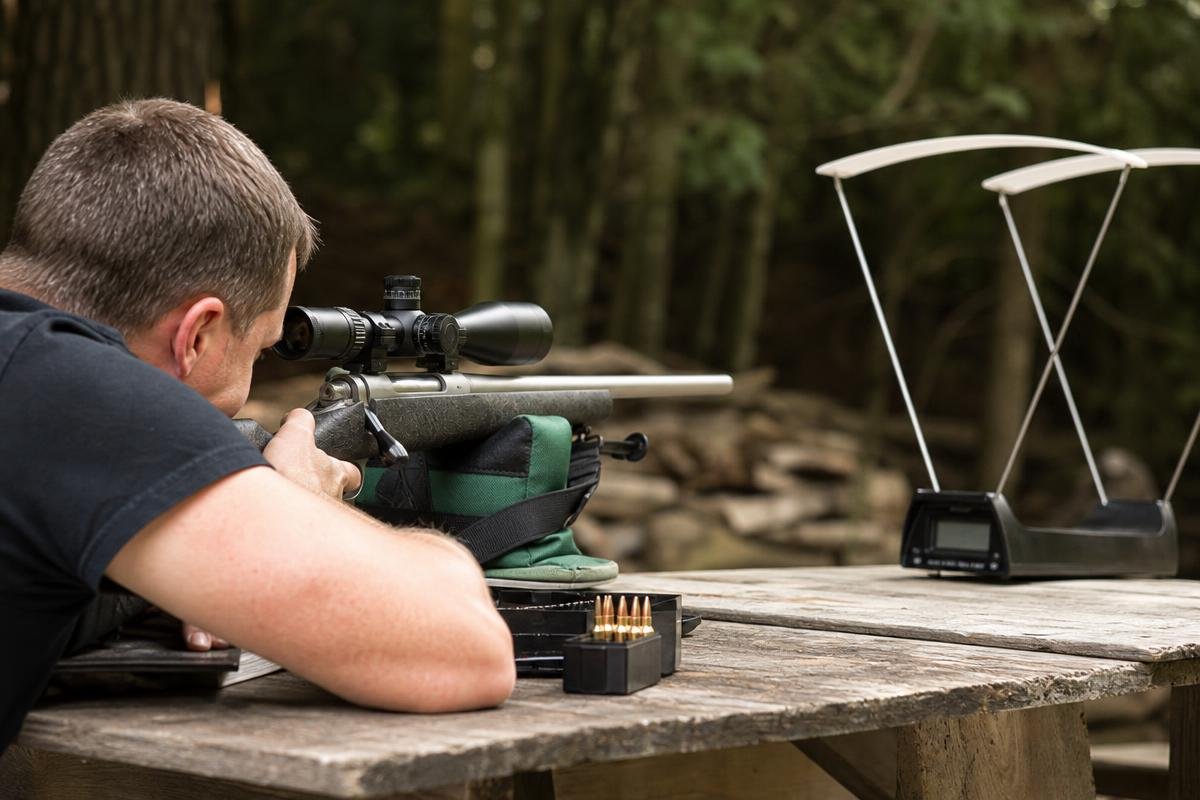
.243 Winchester is a versatile cartridge because it can launch light varmint bullets at high velocity or 95 to 100 grain hunting bullets with more useful downrange performance. The charts on this page compare specific factory-load examples under one standardized set of calculator assumptions, rather than presenting one generic number for every rifle.
For any range card, record your load name, published or chronographed muzzle velocity, bullet BC, barrel length, sight height, zero, and atmospheric inputs. Factory ammunition velocity is normally published from a manufacturer test barrel, so it should be treated as the input for a calculated example, not as a promise of velocity from every sporting rifle.
For shooters in the Denison area, warm weather and crosswinds can matter more as distance increases. A change in wind is usually the larger immediate correction on a practical 300- to 500-yard shot, while a hot afternoon can also change air density and the velocity your rifle produces. If you are evaluating a compatible large-frame setup, review our .243 Winchester complete uppers after confirming the receiver pattern specified on the product page.
How Does Bullet Weight Affect .243 Winchester Ballistics?
Bullet weight affects more than speed. Light bullets generally produce flatter close-range trajectories, while longer, higher-BC bullets can hold velocity and resist wind better farther downrange. Bullet construction and barrel twist are just as important as the number stamped on the box.
| Bullet Weight | Common Use | Typical Published Muzzle Velocity | Trajectory Tendency | Retained Energy | Tradeoff |
|---|---|---|---|---|---|
| 55 to 58 grain | Varmints | About 3,700 to 3,925 fps | Flat at short range | Drops faster at distance | More wind sensitivity with many low-BC designs |
| 80 grain | Varmints and targets | About 3,250 to 3,450 fps | Balanced | Moderate | Less initial speed than the lightest loads |
| 95 to 100 grain | Deer-class hunting | About 2,960 to 3,150 fps | Moderate arc | Good practical retention | More elevation correction at longer range |
| 105 to 115 grain | Distance targets | About 2,850 to 3,050 fps | Often better in wind | Can be strong downrange | Requires a twist rate suited to long bullets |
Light 55 to 58 Grain Loads
Light .243 bullets are often selected for varmints because they can leave the muzzle near 3,700 to 3,925 fps. Their early trajectory is forgiving, but many lightweight varmint bullets have lower BC values and can require noticeably more wind correction after 300 yards. Thin-jacketed designs are intended for rapid expansion, not deep penetration on larger game.
Midweight 80 Grain Loads
An 80-grain load sits between fast varmint ammunition and heavier hunting ammunition. Depending on the load and barrel, published velocities often fall around 3,250 to 3,450 fps. This class can be useful when a shooter wants less wind drift than a very light bullet without moving to a 95- or 100-grain hunting bullet.
95 to 100 Grain Hunting Loads
For deer-class use, 95- to 100-grain controlled-expansion bullets are common choices. Published velocities are often around 2,960 to 3,150 fps, but the important field question is whether the specific bullet remains within the manufacturer’s recommended impact-velocity range at your intended distance. A bonded, partition-style, monolithic, or other controlled-expansion design should not be treated like a varmint bullet simply because the weights are similar.
105 to 115 Grain High-BC Loads
Long 105- to 115-grain bullets are usually aimed at target work and wind performance. Many rifles with a 1:10 twist stabilize conventional 95- and 100-grain hunting bullets well, while the longest 105- to 115-grain designs may need a faster twist, often 1:8 or 1:7.5 depending on bullet length and manufacturer guidance. Confirm the barrel maker’s recommendation and verify stability on paper before taking a long bullet to distance. Comparing a barrel, bolt, magazine, and receiver setup for .243 Winchester?
What Is the Drop of a .243 Winchester at 300 and 500 Yards?
With a 200-yard zero, a fast 58-grain varmint load can be roughly 6 inches low at 300 yards and about 40 inches low at 500 yards. A 100-grain hunting load is commonly around 7 to 8 inches low at 300 and approximately 48 inches low at 500. The exact answer depends on the load and the rifle, which is why each chart below identifies its inputs.
How to Read the .243 Winchester Ballistics Tables
Velocity is shown in feet per second, energy in foot-pounds, and drop in inches relative to a 200-yard zero. The values are published or calculated trajectory estimates, not chronograph results from an individual rifle. Each example uses its manufacturer’s published muzzle velocity, a 1.5-inch sight height, and a 200-yard zero. Wind figures use a 10 mph full-value crosswind. Atmospheric assumptions can vary by source, so local results in Denison may differ slightly.
Source specifications are based on published manufacturer load data and bullet BC data. Calculations should be re-run with your own chronograph velocity, actual sight height, zero, temperature, pressure, and wind before dialing or holding at extended range.
58-Grain Varmint Load Ballistics
This calculated example uses Hornady Superformance Varmint .243 Winchester ammunition with a 58-grain V-MAX bullet. Hornady publishes a 3,925 fps muzzle velocity. The V-MAX has a published G1 BC of 0.250. It is a fast varmint example, not a deer-hunting recommendation.
Calculation assumptions: Hornady 58-grain V-MAX, G1 BC 0.250, published 3,925 fps muzzle velocity from a 24-inch test barrel, 1.5-inch sight height, 200-yard zero, 59°F, 29.92 inHg, sea level, and 10 mph 90-degree crosswind. Values below are calculated.
| Range | Velocity | Energy | Drop | 10 mph Wind Drift |
|---|---|---|---|---|
| Muzzle | 3,925 fps | 1,984 ft-lb | -1.5 in. | 0 in. |
| 100 yards | 3,469 fps | 1,551 ft-lb | +1.7 in. | 0.8 in. |
| 200 yards | 3,074 fps | 1,216 ft-lb | 0 in. | 3.5 in. |
| 300 yards | 2,731 fps | 961 ft-lb | -6.1 in. | 8.0 in. |
| 400 yards | 2,436 fps | 764 ft-lb | -17.6 in. | 14.5 in. |
| 500 yards | 2,184 fps | 615 ft-lb | -39.7 in. | 23.3 in. |
100-Grain Hunting Load Ballistics
This published example uses Federal Premium .243 Winchester 100-grain Nosler Partition ammunition. Federal currently lists a 2,850 fps muzzle velocity and a G1 BC of 0.384 for this load. This is a hunting-bullet example, but hunters should follow all applicable regulations and establish an ethical distance limit from verified field-position accuracy.
Reference specifications: Federal Premium 100-grain Nosler Partition, G1 BC 0.384, published 2,850 fps muzzle velocity, 1.5-inch sight height, and 200-yard zero. The values below are Federal's published trajectory figures.
| Range | Velocity | Energy | Drop | 10 mph Wind Drift |
|---|---|---|---|---|
| Muzzle | 2,850 fps | 1,803 ft-lb | -1.5 in. | 0 in. |
| 100 yards | 2,612 fps | 1,515 ft-lb | +1.8 in. | 0.9 in. |
| 200 yards | 2,386 fps | 1,264 ft-lb | 0 in. | 3.4 in. |
| 300 yards | 2,171 fps | 1,047 ft-lb | -8.0 in. | 8.2 in. |
| 400 yards | 1,968 fps | 860 ft-lb | -23.3 in. | 15.2 in. |
| 500 yards | 1,776 fps | 701 ft-lb | -47.6 in. | 24.8 in. |
Heavy-Bullet .243 Winchester Ballistics
Heavy .243 bullets can reduce wind drift when their BC is substantially higher, but bullet length, twist rate, chamber, and magazine constraints must be considered first. A 105- to 115-grain bullet is not automatically superior for every rifle or use case. Use a bullet maker’s BC and your chronographed velocity in a trusted calculator, then validate the predicted holds at known distances.
Practical note: Heavy-bullet performance varies too widely to present one universal chart. Confirm the exact bullet model, G1 or G7 BC, twist-rate recommendation, muzzle velocity, sight height, zero, and current environmental inputs before creating a range card.
| Range | What to Confirm | Why It Matters | Field Check |
|---|---|---|---|
| Muzzle to 100 yards | Stability and zero | Long bullets can show poor groups if the twist is inadequate | Inspect groups and bullet holes on paper |
| 200 yards | Actual velocity input | Small velocity errors begin to affect elevation predictions | Confirm point of impact at the zero distance |
| 300 yards | Elevation hold | Drop becomes meaningful with a 100- or 200-yard zero | Record confirmed correction on a range card |
| 400 yards | Wind correction | Higher BC can help, but wind remains a major variable | Test in known crosswind conditions |
| 500 yards | Velocity and impact performance | Target, bullet construction, and conditions set the practical limit | Use verified data rather than a generic hold |
A standard AR-15 lower is not compatible with .243 Winchester. The cartridge is based on the .308 Winchester case and requires a compatible large-frame receiver system, bolt, magazine, and chamber. Product specifications, not a generic “mil-spec lower” claim, should determine compatibility.
What Determines Your Actual .243 Winchester Trajectory?
Your actual trajectory is determined by measured muzzle velocity, BC, sight height, zero distance, and atmospheric conditions. These factors should be entered into the same calculator before comparing your field results to a published chart.
Muzzle Velocity and Barrel Length
Manufacturer velocity is commonly measured from a specified test barrel, often 24 inches for .243 Winchester ammunition. A shorter sporting barrel may produce a lower result, and a longer barrel may produce a higher one, but the change is load-specific. Do not assume a fixed feet-per-second gain or loss per inch. Chronograph at least a small sample of your actual ammunition lot, then use the average velocity for your initial calculation.
A 100-yard zero and a 200-yard zero also produce very different practical holds. With the 100-grain example above, a 100-yard zero places the bullet about 3.6 inches low at 200 yards and about 13.4 inches low at 300 yards. A 200-yard zero simplifies a 200-yard hold but places the bullet slightly high at midrange. Choose the zero that matches the distances you can actually verify.
Ballistic Coefficient and Air Drag
Ballistic coefficient estimates how efficiently a bullet resists drag. Use the BC type supplied by the bullet manufacturer, G1 with a G1 calculator or G7 with a G7 calculator. Mixing BC models can produce misleading trajectory and wind results. A high-BC bullet can reduce drift, but it does not eliminate the need to estimate wind correctly.
Zero Distance, Sight Height, and Wind
Scope centerline height above the bore affects the bullet’s relationship to the line of sight. Measure rather than guess, especially on rifles with tall mounts. Wind drift is separate from elevation: in the 100-grain example, a 10 mph full-value wind produces roughly 8 inches of drift at 300 yards and approximately 25 inches at 500 yards. A 5 mph wind would be roughly half those figures, while gusting or angled wind needs a different correction.
For handloads, use current published data from reputable component manufacturers and stay within listed maximums. AR15Parts.com is located at 4000 Texoma Parkway, Denison, TX 75020. For questions about rifle configurations and complete rifle options, contact the team before ordering parts.
How Far Is a .243 Winchester Effective for Deer and Varmints?
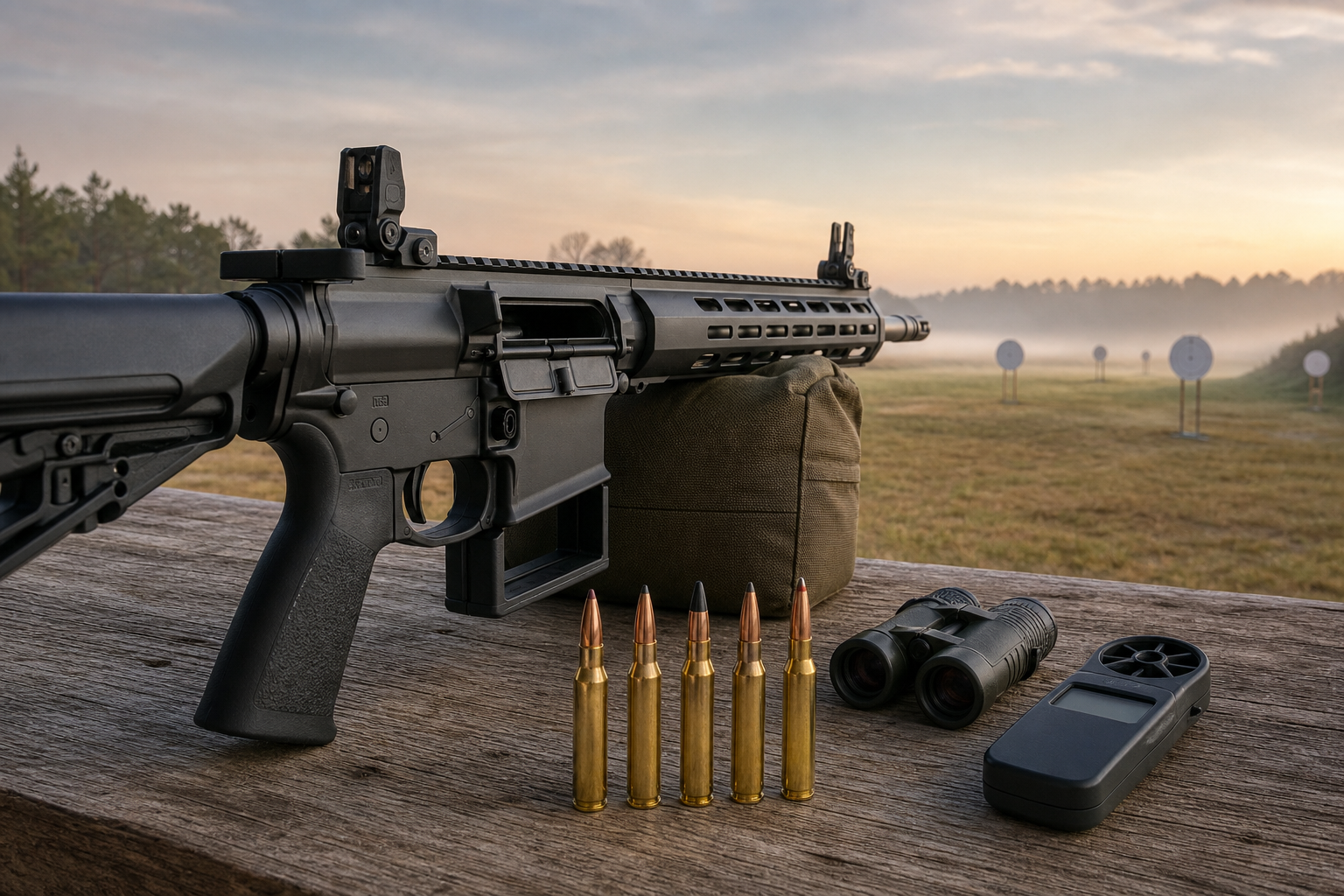
A .243 Winchester does not have one universal effective range. For varmints, the practical limit is usually set by wind reading and the ability to place a fast-expanding bullet precisely. For deer-class game, the limit should account for local regulations, bullet construction, the manufacturer’s recommended impact-velocity window, and your demonstrated accuracy from a realistic field position.
Bullet Construction Matters More Than a Simple Grain Number
A .243 Winchester bullet weight alone does not predict terminal performance. A light polymer-tip varmint bullet can fragment rapidly, while a bonded, partition-style, monolithic, or controlled-expansion hunting bullet is designed for more dependable penetration on medium game. Select the projectile for the intended target, then verify the impact velocity predicted at your maximum intended distance.
Long 105- to 115-grain target bullets can provide useful BC for distance work, but they are not a substitute for a properly selected hunting bullet. Confirm barrel twist, magazine length, and load suitability before assuming that the heaviest bullet is the best option.
A Practical Pre-Hunt Checklist
Confirm your setup before hunting around Denison or anywhere else. Check the regulations that apply where you hunt, then verify your rifle data with the exact load you plan to carry.
- Verify twist-rate compatibility with the selected bullet.
- Confirm your zero with the exact ammunition lot.
- Build a range card with verified drop and wind holds.
- Set a personal distance limit based on proven accuracy from field positions.
- Pass on shots beyond that limit, even if the cartridge can reach farther.
Need help evaluating a .243-compatible large-frame rifle configuration for your intended load?
Rifle Setup Considerations for .243 Winchester Ballistics
Published .243 Winchester ballistics only apply when your rifle, chamber, barrel, optic setup, and ammunition closely match the listed inputs. Confirm platform compatibility first, then build your final trajectory card around verified rifle-specific data.
Confirm the Rifle Pattern and Component Compatibility
A standard AR-15 cannot be converted to .243 Winchester with only a barrel change. The .243 Winchester is based on the .308 Winchester case and requires a compatible large-frame receiver pattern, correct bolt face, magazine system, chamber, and manufacturer-approved components. Review the specifications for any upper or receiver assembly to confirm it is intended for the lower receiver pattern you own.
Check chamber markings and magazine fit before ordering. Review our .243 Winchester complete uppers only after confirming the assembly matches the receiver pattern and component system identified by the product listing.
Barrel Twist, Bullet Length, and Stability
Twist rate stabilizes bullet length and shape, not grain weight alone. A 55-grain varmint bullet and a long 105-grain match bullet place very different demands on a barrel. Many traditional .243 Winchester hunting rifles use 1:10 twist barrels for common hunting weights, while long high-BC bullets often call for a faster twist. Follow the barrel manufacturer’s recommendation and test for repeatable accuracy.
Complete Upper Options and Safe Function Checks
A complete upper can simplify component matching only when the product page identifies the receiver pattern and parts included. Do not assume any upper is interchangeable with any lower. Before using trajectory data in the field, confirm safe feeding, extraction, function, and zero at a suitable range. If you need help selecting compatible parts, contact AR15Parts.com at (888) 706-0633.
Why Denison Shooters Should Verify Ballistics in Local Conditions
Calculated .243 Win drop, velocity, and energy are reference values. At Texoma-area distances, a steady crosswind can move a bullet much farther sideways than many shooters expect, particularly with light varmint bullets. Verify your zero and wind holds in safe range conditions with the rifle and ammunition you intend to use.
Turn Reference Data Into a Confirmed Range Card
Start with the stated factory-load data, then replace published muzzle velocity with your chronograph average if possible. Confirm the zero on paper, shoot at known distances, and record the elevation correction your rifle actually requires. A calculator gives you an informed first card, while targets provide the confirmation.
Your range card should list the exact load, bullet model, BC type and value, muzzle velocity, sight height, zero distance, verified elevation holds, and wind holds. Reconfirm after substantial temperature swings, an optic change, or a switch in ammunition lot. A properly configured rifle still needs rifle-specific data before you extend distance.
Frequently Asked Questions
What Is the Effective Range of a .243 Winchester?
The .243 Winchester effective range depends on the load, target size, conditions, rifle setup, and your demonstrated accuracy. Light varmint loads and 95 to 100 grain hunting loads do not carry the same velocity or energy at distance. Set your ethical limit from actual group size, bullet performance information, and verified field-position data, not a universal yardage claim.
How Much Does a .243 Winchester Drop at 300 Yards?
With a 200-yard zero, the 58-grain and 100-grain examples above are about 6.1 and 8.0 inches low at 300 yards, respectively. With a 100-yard zero, the same 100-grain load is about 13.4 inches low at 300 yards. Confirm the actual impact point with your rifle because velocity, sight height, zero, and conditions can change the result.
What Is the Drop of a .243 Winchester at 500 Yards?
With the 200-yard zero used above, the 58-grain V-MAX example is about 39.7 inches low at 500 yards, while the 100-grain Nosler Partition example is about 47.6 inches low. Wind is also significant at that distance: the 10 mph full-value examples show roughly 23 to 25 inches of drift.
Is .243 Winchester Suitable for Deer Hunting?
Yes. .243 Winchester is suitable for deer hunting where regulations allow it and the load is appropriate. Choose a controlled-expansion hunting bullet, such as a bonded soft point, partition-style projectile, or copper expanding design. Keep shots within your proven distance limit and place the bullet through vital tissue.
What Bullet Weight Is Common for Varmint Use?
Varmint loads commonly use a .243 Winchester bullet weight from 55 to 80 grains. Lighter 55- and 58-grain loads favor high muzzle velocity and flatter short-range holds. Heavier varmint bullets can offer better wind performance when their BC is higher.
What Twist Rate Is Best for .243 Winchester Bullets?
A 1:10 twist is common for traditional .243 Winchester hunting rifles and often works well with many 55- to 100-grain bullets. Long 105- to 115-grain high-BC bullets may require a faster twist, often 1:8 or faster depending on the bullet. Follow the barrel and bullet manufacturers’ guidance, then verify stability and accuracy with your rifle.
Does Barrel Length Affect .243 Winchester Velocity?
Yes, barrel length affects observed .243 Winchester velocity. A longer barrel generally gives powder more time to accelerate the bullet, but the gain varies by powder, chamber, and load. Confirm chronograph data from your own barrel before building a range card or adjusting a scope.
For purpose-built setups, .243 Winchester barrels can support a compatible rifle configuration when paired with the correct receiver pattern, bolt, magazine, and other required components.
What Zero Distance Should I Use?
Use the zero distance that matches your expected shooting distances and the holds you can confirm on paper. A 100-yard zero makes corrections easy to understand, while a 200-yard zero can reduce holdover at intermediate distance. For the 100-grain example on this page, a 200-yard zero is about 8.0 inches low at 300 yards and 47.6 inches low at 500 yards. Verify your own zero and range card under actual shooting conditions.
Use the stated tables as a starting point, then confirm your chosen load with your own rifle before relying on any hold. For compatible .243 Winchester barrels, uppers, and firearm parts, contact AR15Parts.com at (888) 706-0633.
Ready to Get Started with AR15Parts.com?
Call (888) 706-0633 to speak with our team directly. We're ready to answer your questions, walk you through your options, and help you find the right solution for your needs. Whether you're just starting to plan or ready to move forward, we'll make the process simple and stress-free. Reach out today and let's talk about how we can help.