
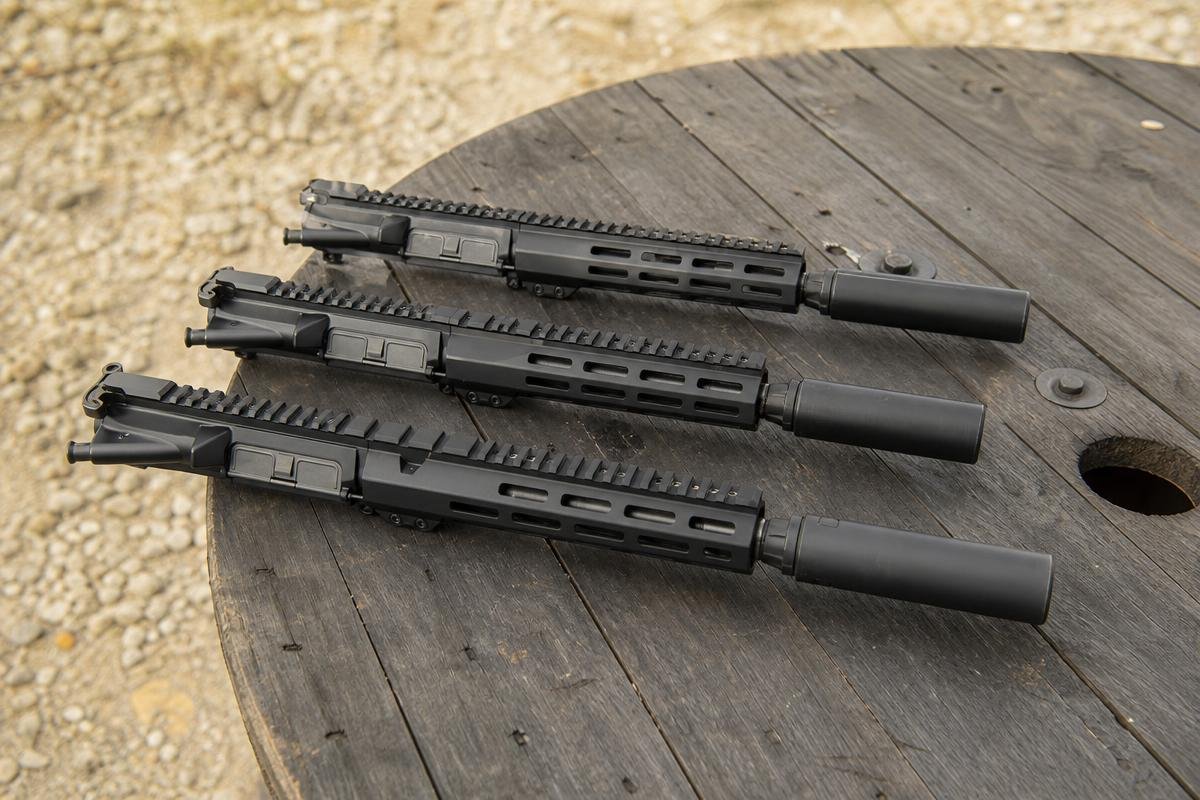
For most compact .300 Blackout builds, an 8-inch barrel favors the shortest suppressed package, while 10.5 inches gives you more rail space and a little more dwell time without moving into a full-length rifle format. A 16-inch option suits shooters who prefer a conventional layout and more forward support. Below, we explain the practical differences in handling, gas behavior, muzzle-device fit, and ammunition selection.
Need help matching a .300 Blackout barrel to your build?
Key Takeaways
- An 8-inch .300 Blackout barrel keeps a suppressed build short and easy to handle.
- A 10.5-inch barrel adds rail space and dwell time while remaining compact for practical use.
- A 16-inch barrel suits unsuppressed shooting and a conventional rifle-format layout.
- Choose the length after planning your ammunition, gas system, buffer setup, muzzle device, handguard clearance, and complete firearm configuration.
8-Inch vs 10.5-Inch vs 16-Inch .300 Blackout at a Glance
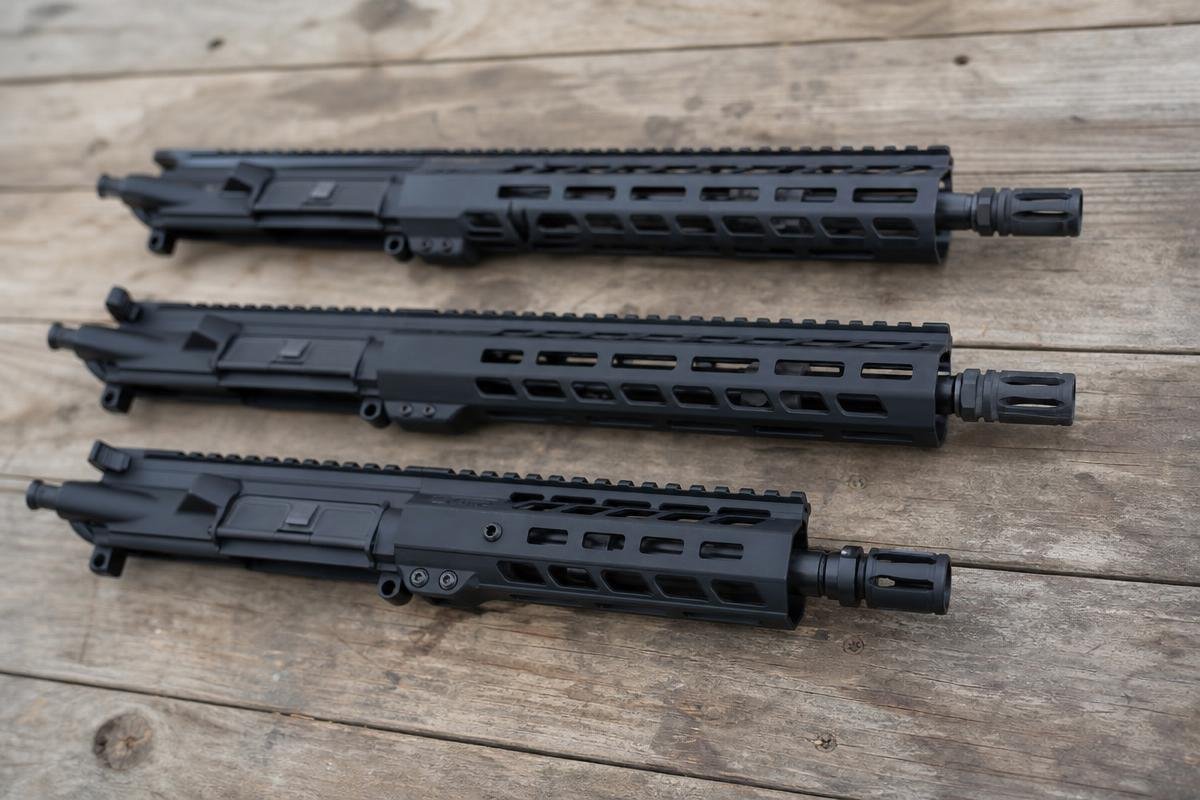
An 8-inch barrel prioritizes compactness, a 10.5-inch barrel balances size with more usable mounting space, and a 16-inch barrel provides a longer conventional layout. A 16-inch barrel is commonly used for a non-NFA rifle configuration when paired with a qualifying overall firearm setup, but classification depends on the complete firearm and current federal, Texas, and local requirements.
Quick Barrel-Length Comparison
| Barrel Length | Primary Use | Compactness | Common Ammunition Fit | Suppressor and Handguard Notes | Configuration Notes |
|---|---|---|---|---|---|
| 8-inch | Compact suppressed build | Highest | Subsonic and supersonic loads | Typically pairs with a short rail, confirm room for the muzzle device and suppressor mount | Check current firearm laws before assembly |
| 10.5-inch | General-purpose short build | High | Subsonic and supersonic loads | Allows more support-hand and accessory space while keeping a short package | Check current firearm laws before assembly |
| 16-inch | Rifle-length configuration | Lowest | Often selected for supersonic loads | Supports longer handguard options and places the muzzle farther forward | Confirm the complete firearm setup meets applicable requirements |
The meaningful difference between 8 and 10.5 inches is not just velocity. The added 2.5 inches changes the amount of barrel ahead of the gas port, available handguard length, sight and accessory placement, and finished length once a muzzle device or suppressor is installed. Match any 300 Blackout barrel to its specified gas system, bolt carrier group, buffer components, and intended muzzle device.
Compare barrel specifications before choosing the rest of your upper.
Why Published Velocity Numbers Need Context
Barrel length can affect velocity, particularly with supersonic ammunition, but no single velocity figure applies to every build. Readings vary by load, bullet weight, powder lot, chamber dimensions, bore condition, temperature, elevation, and chronograph setup. Heavy subsonic ammunition is generally selected to remain below the speed of sound, so an individual rifle and local conditions can matter when verifying subsonic performance.
Short-barrel configurations require careful legal review before assembly, modification, transportation, or use. Firearm classification can depend on the complete configuration, including the barrel, receiver, stock or brace arrangement, and other applicable factors. Consult current ATF guidance and qualified legal counsel for federal requirements, along with current Texas and local rules. For builders who prefer a matched starting point, our complete 300 Blackout uppers combine key upper components in one assembly.
On a rifle with a shoulder stock, an 8-inch or 10.5-inch barrel makes it a short-barreled rifle under the NFA, which requires an approved ATF Form 1 (building) or Form 4 (buying) before assembly. The NFA tax on SBRs is $0 since January 1, 2026, but registration is still required. Pistol builds follow separate rules, and state and local law can be stricter.
When an 8-Inch .300 Blackout Barrel Makes Sense
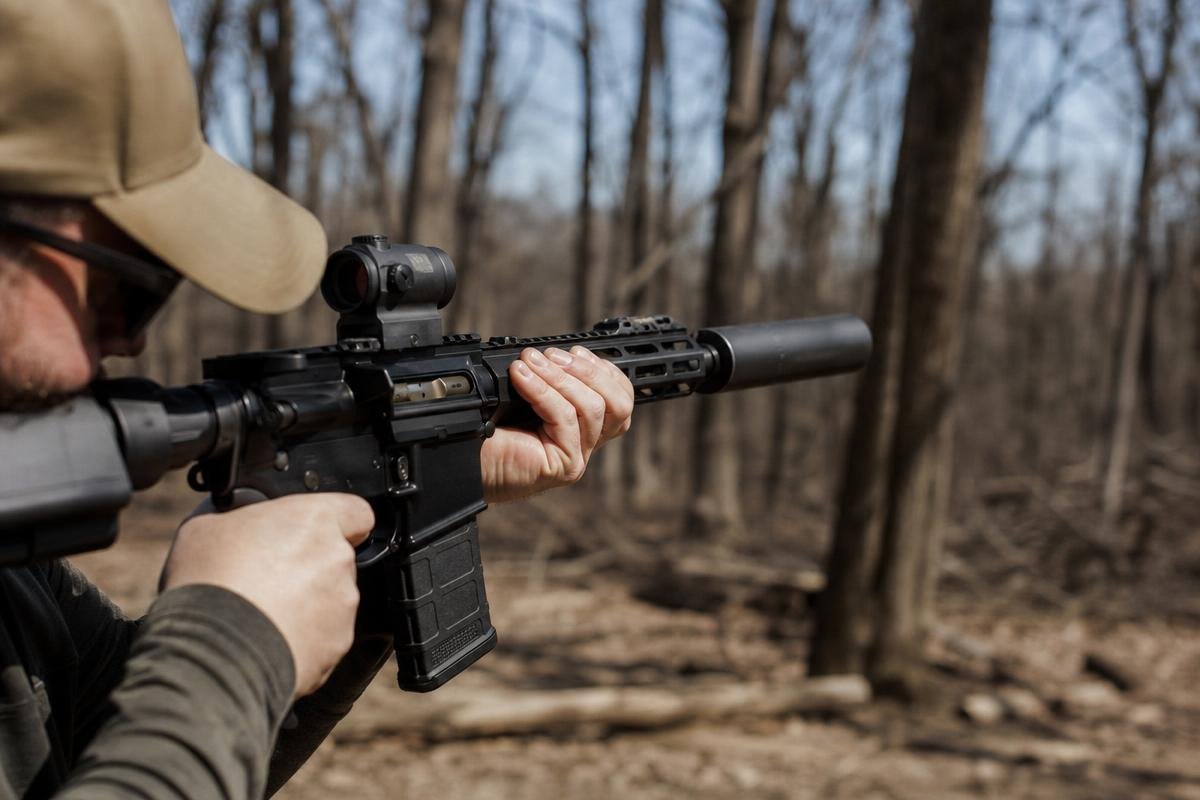
An 8-inch .300 Blackout barrel is a strong choice when minimizing the length of a suppressed build is the priority. It keeps the upper compact and can work with subsonic and supersonic ammunition when the barrel, gas system, ammunition, suppressor, and buffer setup are selected as a system.
The tradeoff is front-end space. An 8-inch setup saves length ahead of the receiver, but a muzzle device, suppressor mount, and suppressor can add meaningful overall length to the finished firearm.
Is an 8-Inch .300 Blackout Barrel Good for Suppressed Use?
Yes. An 8-inch barrel is commonly chosen for suppressed use because it keeps the host firearm compact, but the mount and handguard must be planned before parts are ordered.
Use this fitment checklist once, before committing to a rail or muzzle device:
- Confirm the barrel thread pattern and the suppressor manufacturer's approved mount.
- Measure from the barrel shoulder to the handguard face, not only from the muzzle.
- Account for the full length and diameter of the muzzle device, locking collar, and attachment method.
- Follow the suppressor manufacturer's minimum clearance guidance, including clearance for installation, removal, and heat expansion.
- Verify that the gas block and gas tube fit beneath the selected free-float handguard.
Short-Barrel Reliability Depends on the Whole System
An 8-inch build does not automatically cycle every .300 Blackout load. Gas-port sizing, gas-system length, suppressor backpressure, ammunition pressure, buffer weight, spring rate, carrier speed, magazine condition, and temperature all influence reliable bolt movement.
Start with the gas system specified for the barrel. Test the exact ammunition you expect to use, both suppressed and unsuppressed if both matter to you. Confirm feeding, extraction, ejection, and last-round bolt lockback before relying on the finished firearm. Heavy subsonic loads can behave differently from supersonic loads, particularly when fired without a suppressor.
Why a 10.5-Inch Barrel Is Often the Middle-Ground Choice
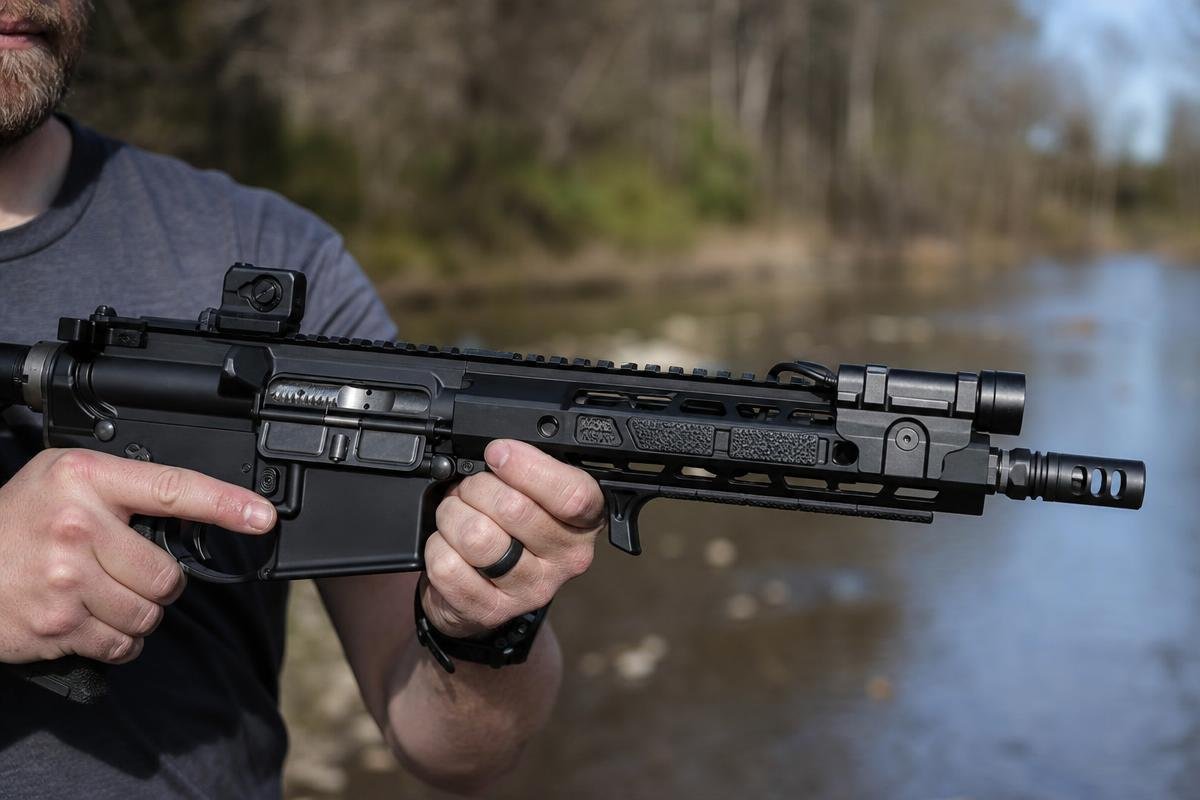
A 10.5-inch .300 Blackout barrel is often the best middle-ground option for builders who want a short firearm with more room for a handguard, light, sling hardware, and support-hand placement. Compared with an 8-inch option, it also adds barrel length ahead of the gas system and may provide more flexibility when tuning the complete upper.
The additional length can change velocity with a given load, but published figures should be treated as a reference rather than a promise. Chronograph the ammunition you plan to shoot from your completed firearm if velocity or subsonic performance is important to the build.
Is a 10.5-Inch .300 Blackout Barrel Better Than an 8-Inch Barrel?
A 10.5-inch barrel is better when you value more rail space and a less abbreviated front-end layout. An 8-inch barrel is better when the shortest practical suppressed package is the primary goal.
With a 10.5-inch setup, the extra space can make it easier to position a weapon light, sling mount, backup sights, and support hand without crowding the muzzle device. It can also make rail selection less restrictive, provided the handguard still leaves the manufacturer-required clearance for your chosen suppressor mount.
Choose Ammunition and Tuning as a Matched System
No single gas and buffer setup works equally well with every .300 Blackout load. Subsonic ammunition, supersonic ammunition, suppressor backpressure, gas-port diameter, buffer mass, spring rate, and carrier velocity all affect cycling.
A complete upper can simplify component matching because the barrel, gas system, receiver, and handguard are selected as a working assembly. Review our complete 300 Blackout uppers if you want fewer individual fitment decisions.
For builders anywhere who need product-selection help, AR15Parts.com can be reached at (888) 706-0633. Confirm current configuration rules before selecting any short-barrel setup.
What a 16-Inch .300 Blackout Barrel Changes
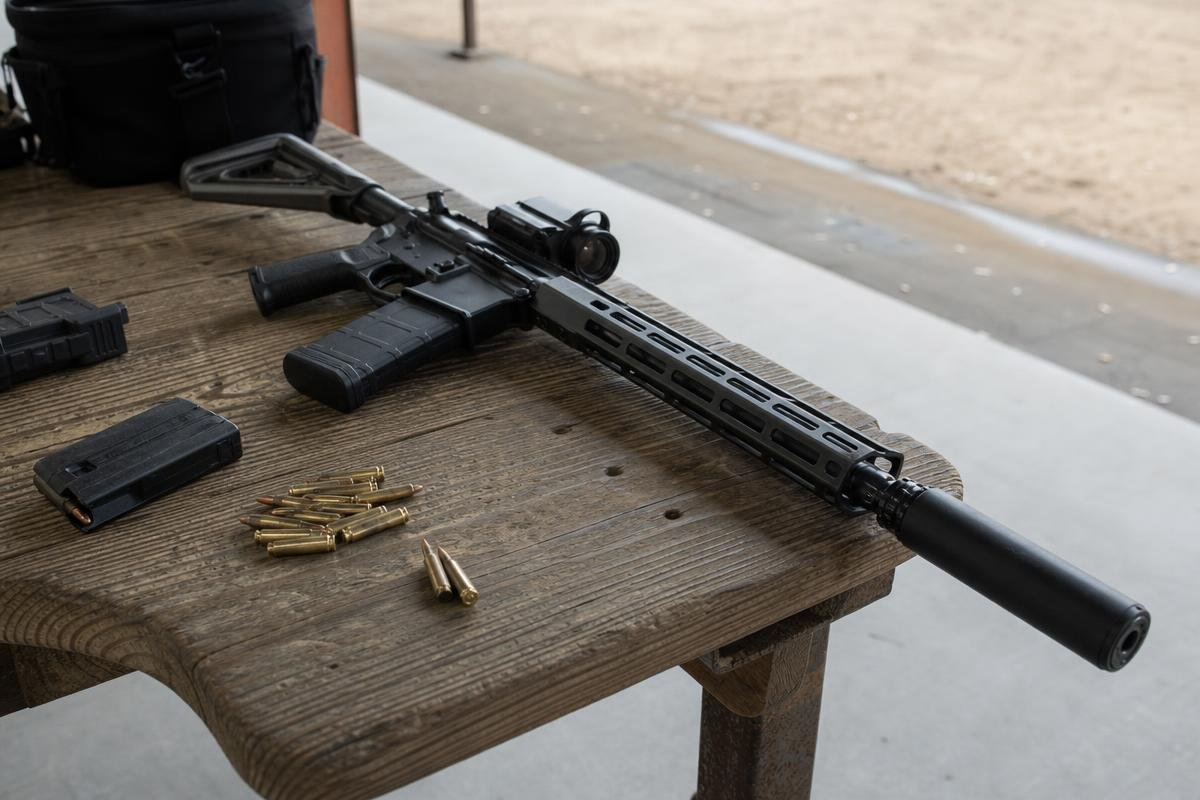
A 16-inch .300 Blackout barrel creates a conventional rifle-length layout with more forward support space, but it is longer and generally less compact than short-barrel options. It can be a practical choice for range use, hunting setups, and shooters who prioritize a full-size feel over a compact suppressed package.
A Conventional Rifle Layout With More Forward Support
The extra barrel length supports longer handguard choices and can provide more room for a forward grip position, weapon light, sling hardware, and iron sights. That added space may help shooters stabilize the firearm during supported range shooting or field positions.
A 16-inch barrel also places the muzzle farther forward of the shooter during unsuppressed firing. That can be a practical handling consideration, although muzzle-device selection still affects blast, concussion, and perceived recoil.
If you do not want to assemble a rifle, review our complete AR-15 rifles. These turnkey units avoid the need to select and fit each upper component yourself.
Longer Is Not Automatically the Better Cartridge Match
A 16-inch barrel may produce higher velocity with some supersonic loads, but results remain ammunition- and barrel-specific. More length does not automatically make it the best choice for heavy subsonic ammunition or a compact suppressor host.
Choose 16 inches when your realistic shooting distance, preferred shooting position, ammunition plan, and desired firearm balance favor a conventional format. Confirm the complete firearm configuration and all current legal requirements before assembly or modification.
Need help matching a 16-inch build to your ammunition and intended use? Call us at (888) 706-0633.
Build Parts That Need to Match Your Barrel Length
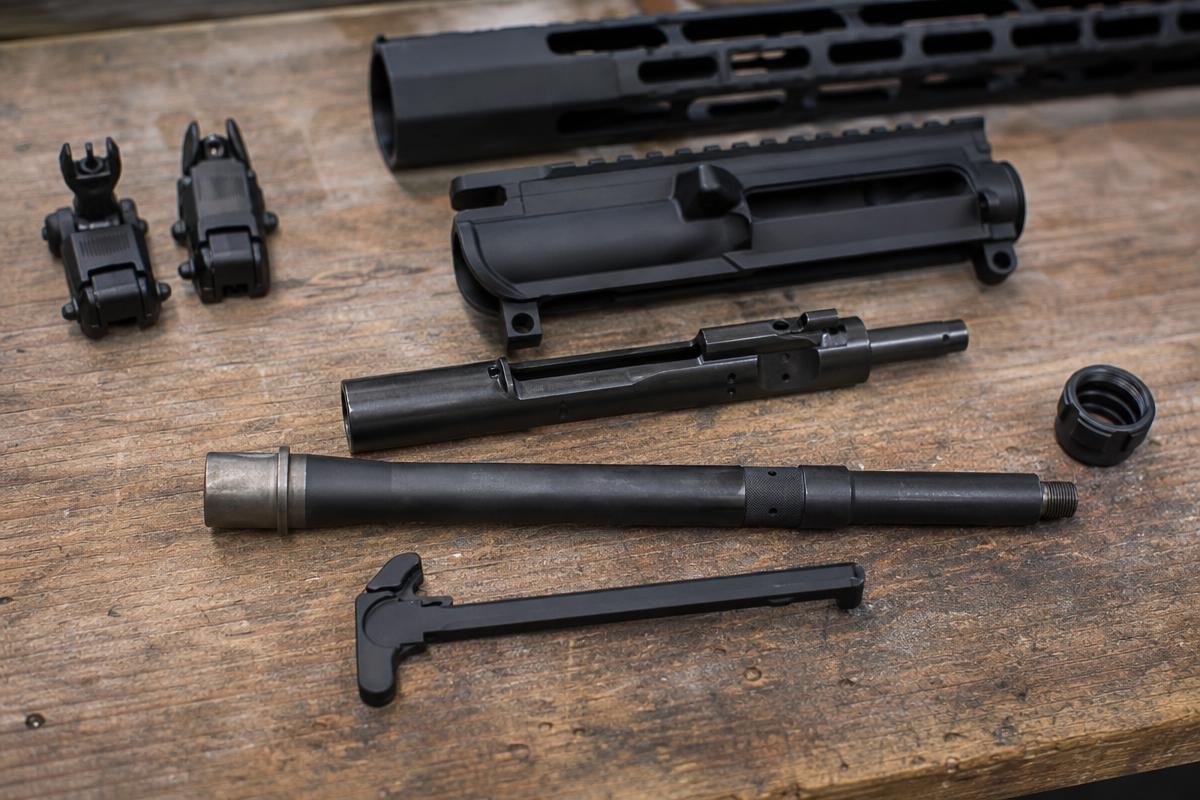
Barrel length alone does not determine whether a .300 Blackout builds cycles correctly. Before ordering, match the barrel's gas-system specification, gas-block journal diameter, muzzle threads, handguard dimensions, buffer components, and intended ammunition.
Gas System, Gas Block, and Buffer Compatibility
Use the gas-system length specified by the barrel manufacturer, then match the gas tube to that system. Confirm the gas-block journal diameter before choosing a low-profile or adjustable gas block. A .750-inch journal needs a .750-inch block, while other journal sizes require their matching block.
Short configurations benefit from methodical testing because suppressor backpressure and ammunition pressure can change carrier speed. Begin with a correctly matched AR-15 bolt carrier group and charging handle, then verify function with the loads you actually intend to use. Avoid changing multiple variables at once, since doing so makes it harder to identify the source of a cycling issue.
Muzzle Devices, Handguards, and Feeding Checks
Match the muzzle device to the barrel's thread pattern and the suppressor mount you intend to run. Do not assume two .300 Blackout barrels use the same threads. Check the barrel specification, then confirm that the device is approved for the suppressor mounting system and applicable barrel length.
Short free-float handguards need adequate space around the gas block, muzzle device, mounting collar, and suppressor attachment area. A handguard that ends too close to the mount can block proper installation or make removal difficult. Review manufacturer dimensions before ordering the rail and muzzle components together.
Magazines and ammunition can also affect feeding. Standard AR-15 magazines are commonly used, but bullet shape, overall cartridge length, follower condition, and magazine wear can change results. Check feeding and lockback with your intended ammunition before relying on the finished build.
Choosing the Right .300 Blackout Barrel for Your Intended Use
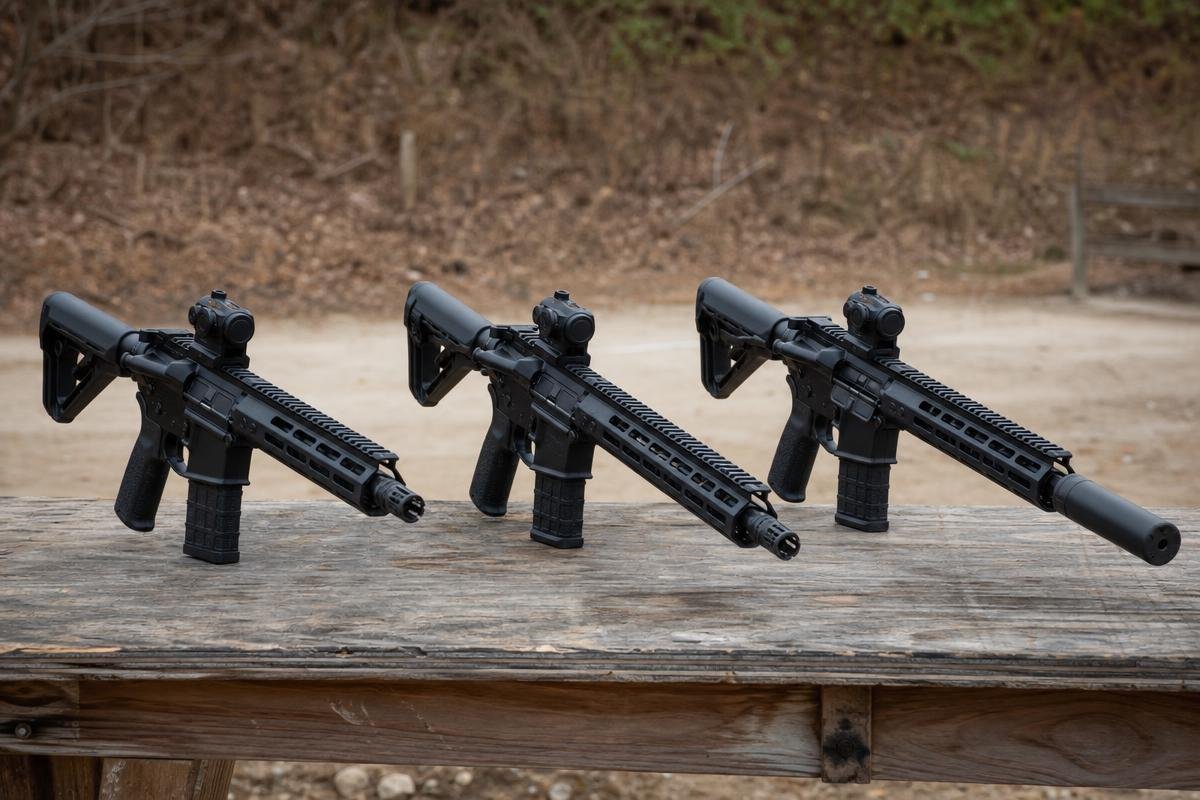
Choose based on the finished package, not the barrel alone. Think through the firearm's intended use, suppressor plan, ammunition, accessory placement, maintenance needs, and legal configuration before selecting a length.
Choose 8 Inches for Maximum Compactness
Choose 8 inches if the goal is the shortest practical suppressed setup. Plan the suppressor's added length, rail clearance, ammunition selection, and gas-system tuning before ordering components.
A short rail can limit space for a light, sling mount, and support hand. Check barrel thread pattern, gas-system specifications, and manufacturer guidance before choosing adjacent parts.
Choose 10.5 Inches for a Shorter All-Around Layout
Choose 10.5 inches if you want a compact layout with more usable handguard space. This length can make it easier to place a weapon light, sling mount, and support hand without moving to the longer feel of a 16-inch rifle.
It also offers more flexibility for muzzle-device and rail selection. Match the barrel to an upper, gas block, gas tube, and handguard designed around its actual dimensions.
Choose 16 Inches for a Conventional Rifle Format
Choose a 16-inch .300 Blackout barrel if you prefer a conventional rifle format and accept a longer overall package. It is a practical fit for shooters who want more forward handguard space and a familiar full-size layout.
Before assembly or modification, verify current Texas and federal laws, barrel manufacturer specifications, thread pattern, gas-system details, and component compatibility. If you want a ready-to-drop-on option, compare our complete 300 Blackout uppers before selecting individual parts.
An Online Source for .300 Blackout Build Components
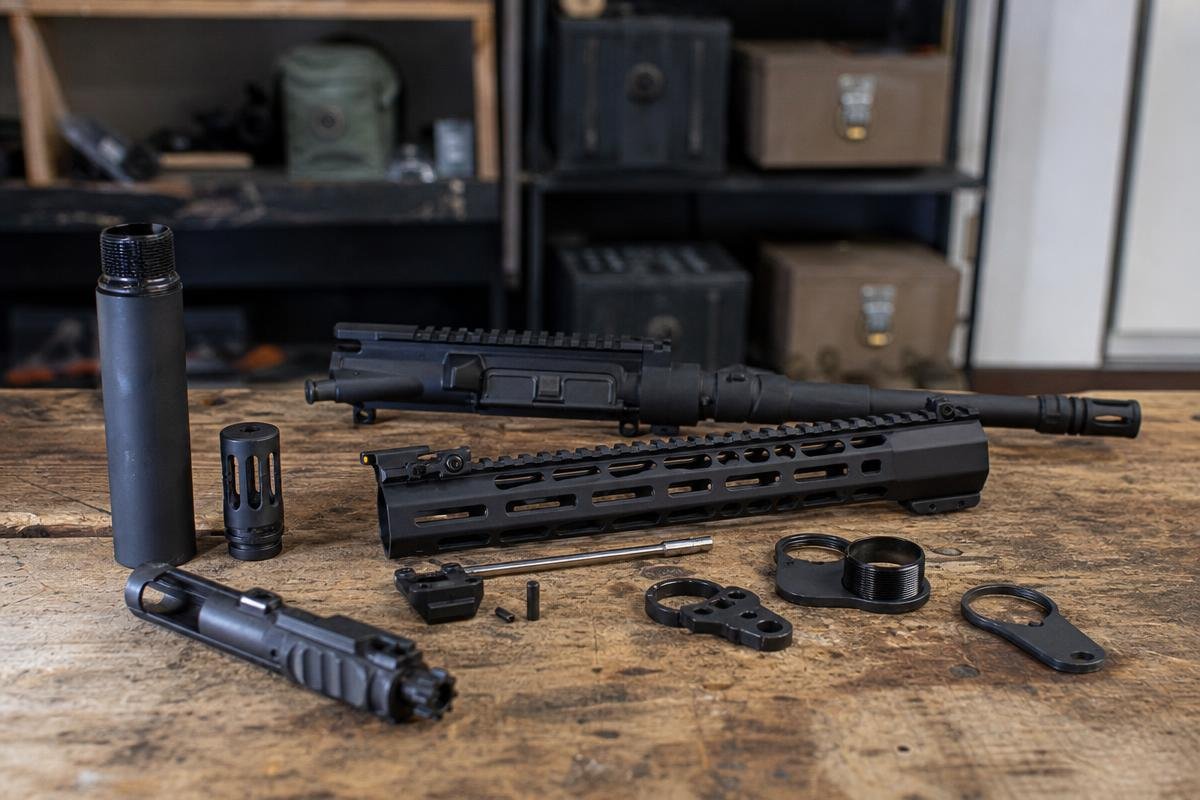
AR15Parts.com is an online retailer shipping nationwide from 4000 Texoma Pkwy, Denison, TX 75020. We supply firearms, parts, and accessories for builders comparing .300 Blackout barrels, complete uppers, and individual AR-15 components.
Compare the Full Upper Before Ordering
Barrel length is only one part of the build. Compare the barrel with the upper receiver, handguard length, gas block and tube, muzzle device, stock or brace configuration, and optic plan. A short handguard must leave proper clearance around the gas block and muzzle device.
Start with our selection of .300 Blackout barrel options if you are assembling an upper. If you prefer a ready-to-install option, review our complete upper assemblies.
Ask Before You Commit to Parts
Gas-system fit, handguard clearance, and muzzle-device mounting should be confirmed before parts are ordered. For product-selection questions, use our contact page or call (888) 706-0633.
Frequently Asked Questions
Is an 8-Inch .300 Blackout Barrel Too Short?
No. An 8-inch barrel can work well with the right gas system, ammunition, and intended configuration. For a suppressed .300 Blackout build, verify cycling with the loads you plan to shoot.
Is 10.5 Inches Better Than 8 Inches for .300 Blackout?
Neither length is universally better. The choice between an 8-inch and 10.5-inch .300 Blackout barrel comes down to compactness versus added handguard space and a longer sight radius. Pick the length that fits your upper, suppressor plan, and handling needs.
What Does a 16-Inch .300 Blackout Barrel Offer?
A 300 Blackout 16 inch barrel supports a conventional rifle layout and gives you more barrel length ahead of the gas block. It also increases overall rifle length, especially with a muzzle device or suppressor installed.
What Gas System Should I Use?
Use the gas system specified by the barrel manufacturer. Test the finished rifle with your intended subsonic or supersonic ammunition, and confirm reliable feeding, extraction, ejection, and bolt lockback.
Can I Use Standard AR-15 Magazines and a Standard BCG?
Many .300 Blackout builds use AR-15-pattern magazines and a standard AR-15 bolt carrier group, but verify compatibility for the exact components and ammunition. Clearly mark .300 Blackout magazines and keep them separated from 5.56 ammunition to prevent a dangerous cartridge mix-up. Review available 300 Blackout barrels before matching parts.
Can I Install a .300 Blackout Barrel Myself?
Yes, if you have the correct tools and follow the manufacturer’s torque procedures. Verify headspace where applicable, perform function checks before live fire, and follow current federal, Texas, and local laws. Compare your intended use with the barrel, upper, gas-system, and handguard details before you order. AR15Parts.com can be reached at (888) 706-0633 for product-selection questions.
Ready to Get Started with AR15Parts.com?
Call (888) 706-0633 to speak with our team directly. We're ready to answer your questions, walk you through your options, and help you find the right solution for your needs. Whether you're just starting to plan or ready to move forward, we'll make the process simple and stress-free.
Reach out today and let's talk about how we can help.