
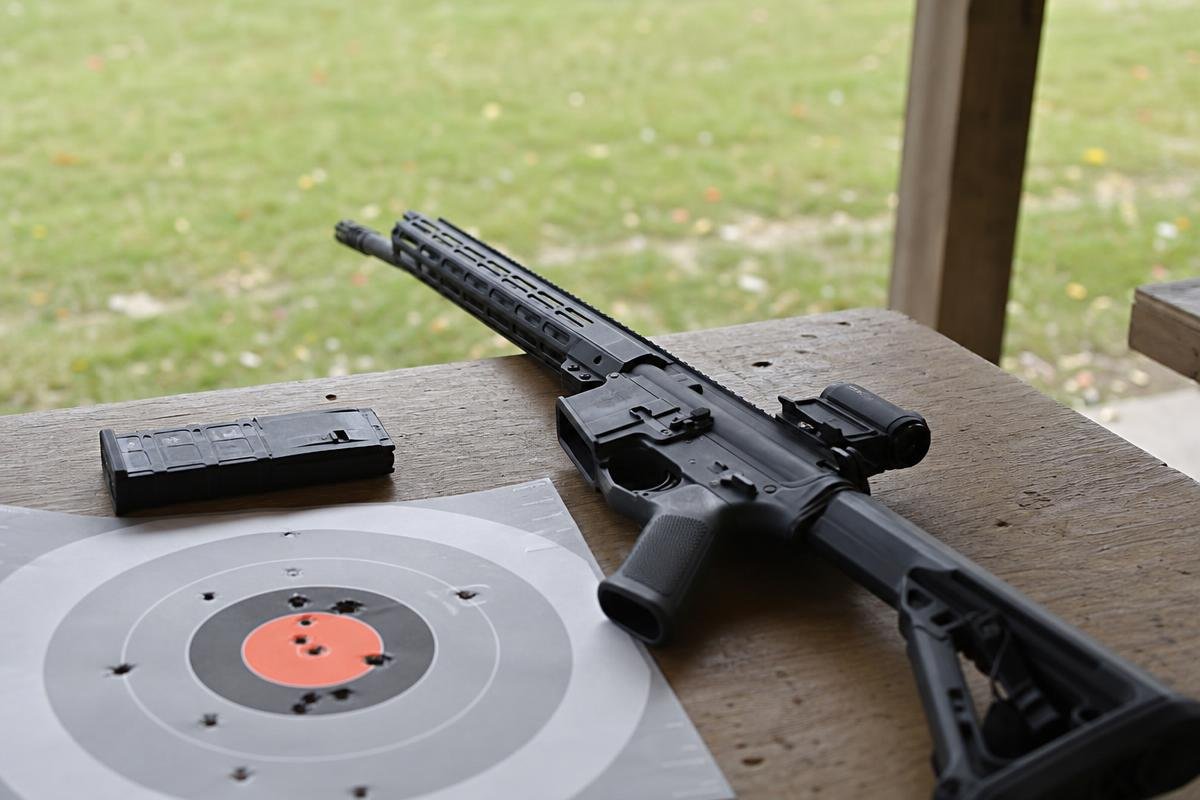
A 50-yard zero on an AR-15 commonly places many .223 and 5.56 loads close to point of aim again near 200 yards, but it is an approximation that must be proven with your rifle, ammunition, barrel length, and sight height.
We ship from our Denison, TX facility. At the range, use a legal shooting facility that allows centerfire rifle fire, has a suitable backstop, and offers a measured 50-yard firing distance. Review that facility's posted caliber rules, target rules, cease-fire procedures, and lane-distance markings before setting up.
Building a dependable zeroing setup? Choose the sighting system and support gear that fit your rifle.
Key Takeaways
- A 50-yard zero can place many .223 and 5.56 loads near zero again around 200 yards.
- Use measured distances, supported groups, and the same ammunition you plan to train or carry with.
- Most 50-yard-zeroed AR-15 rifles impact above point of aim near 100 yards.
- Adjust from the center of a three-shot or five-shot group, then document the finalized load and setup.
What Does a 50-Yard Zero Mean for an AR-15?
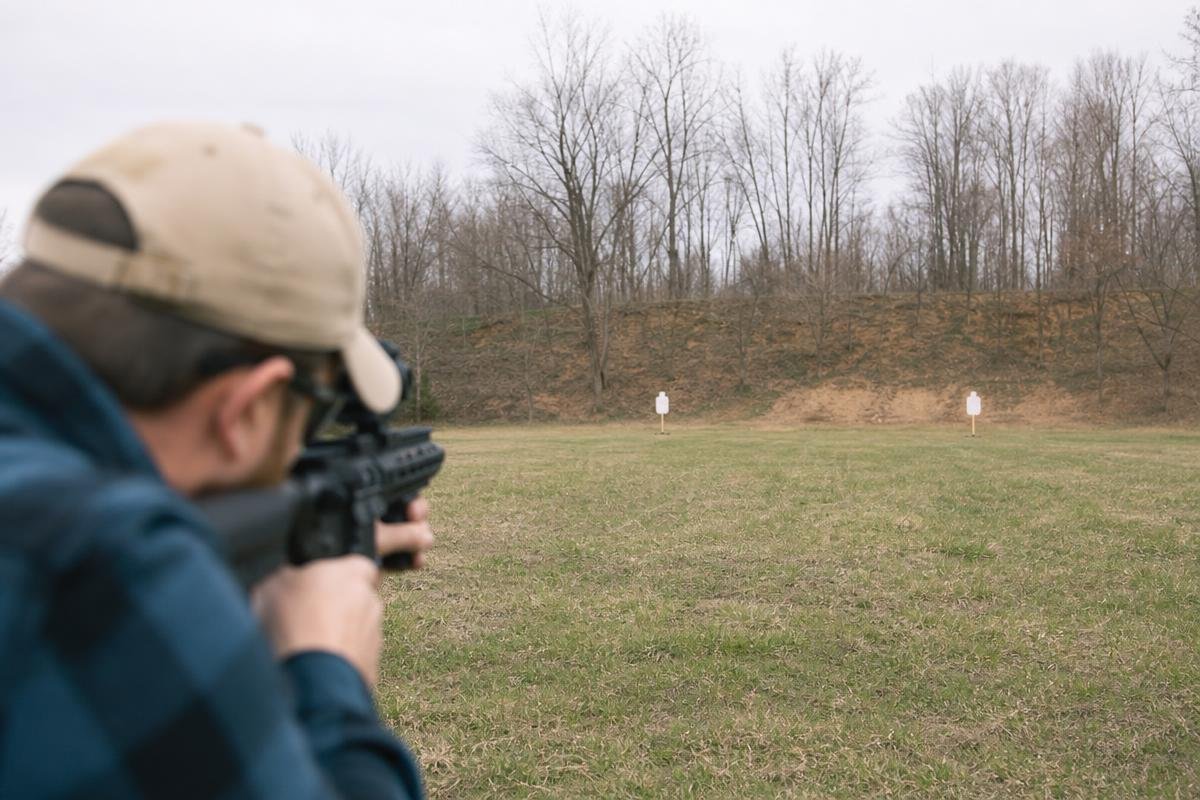
A 50-yard zero, sometimes called a 50/200-yard zero, means a typical .223 or 5.56 bullet may meet your sight line near 50 yards, then again near 200 yards. It is an approximate trajectory, not a fixed rule for every AR-15, load, or optic setup. An AR-15 zero at 50 yards commonly prints above the point of aim at 100 yards before the bullet drops back to the second intersection.
Why the Bullet Crosses the Sight Line Twice
The bore axis is the centerline of the barrel. The sight line is the straight line from your eye through the optic or iron sights to the target. Because the bore sits below the sight line, the bullet starts below your aiming point.
The barrel is angled slightly upward during zeroing. The bullet rises through the sight line near 50 yards, continues upward relative to your point of aim, then gravity pulls it back through the sight line near 200 yards. This is why a 100-yard group is often high, even though the rifle is zeroed at 50 yards.
Variables That Change the Second Intersection
Do not assume every 50-yard group creates an exact 200-yard zero. Bullet weight, muzzle velocity, barrel length, optic height over bore, chamber, ammunition lot, and actual lane distance all change the trajectory. Wind and temperature can also affect your results wherever you shoot.
A 55-grain load from a 16-inch barrel can behave differently than a heavier load from a shorter or longer barrel. If you are setting up one of our 5.56 NATO complete upper receivers, validate the finished setup with the load you intend to use at both 50 yards and the longer distance available at your range.
How to Set a 50-Yard Zero Safely and Methodically
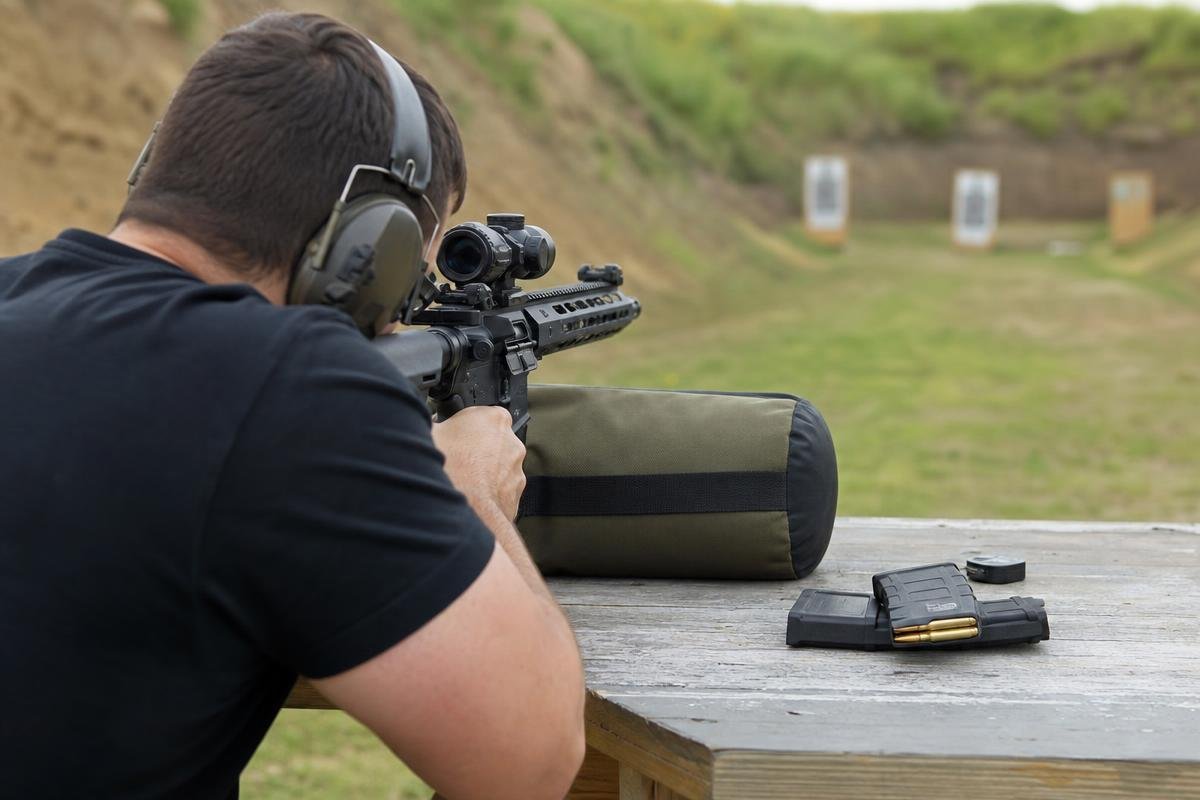
To zero an AR-15 at 50 yards: use a measured 50-yard lane and appropriate backstop, secure the rifle on stable support, fire a three-shot or five-shot group, adjust from the group center using your sight's stated click value, and repeat until the group centers at your chosen point of aim.
- Check the facility's rifle-caliber, target, and firing-line procedures before loading.
- Use a stable front rest and rear bag, then confirm the optic mount or iron sights are secure.
- Fire a deliberate group at a measured 50 yards.
- Calculate the needed correction from the group center, not from one shot.
- Shoot another group, record the final load and configuration, then test your holds at longer available distances.
Start With a Safe, Stable Rifle Setup
Verify the rifle is unloaded before mounting an optic, tightening fasteners, or making sight adjustments. Wear eye and ear protection. Use the same ammunition you plan to shoot after zeroing, since different bullet weights and loads can shift point of impact.
Set the rifle on a solid bench with a front rest and rear bag, or another stable supported position. Inspect optic mount fasteners according to the optic maker's instructions. A loose mount can make a good group impossible. Confirm the upper is correctly seated on the lower before firing.
Shoot a Group Before Making Adjustments
Fire a deliberate three-shot or five-shot group at the center aiming point. Do not adjust from one shot. Read the center of the group, then measure how far it sits from your intended point of impact. A 25-yard target can help get initial shots on paper, especially after mounting a new optic. It does not establish a final 50-yard zero. Move to the facility's measured 50-yard lane for your final adjustment groups.
Adjust, Confirm, and Record the Result
Turn the adjustment in the direction shown in your optic or sight manual. Click values and turret markings differ by model, so do not assume every optic moves one-quarter inch per click at 100 yards.
For a practical example, 1 MOA is approximately 0.52 inch at 50 yards. A scope with 1/4 MOA clicks moves impact about 0.13 inch per click at 50 yards. If the center of your group is 2 inches low, the correction is about 4 MOA, or roughly 16 clicks on a 1/4 MOA turret. On a 0.1 MIL optic, one click is about 0.18 inch at 50 yards, so a 2-inch correction is approximately 11 clicks. Check your specific optic manual before dialing.
Fire another three-shot or five-shot group after each adjustment. Continue until the group center matches your point of aim at 50 yards. Record the load, distance, optic, weather conditions, and zero date. Recheck after transport, a hard impact, or a change to the optic, mount, barrel, or ammunition.
Build a Printable 50-Yard Zero Target
A useful 50-yard zero target needs a clear center aiming point, a grid or adjustment reference, fields for the date and load, and a visible safety note. Print several copies so each group has its own record.
For a simple printable target, use a letter-size page with a one-inch grid, a bold center dot, and lines to record rifle, upper, optic, ammunition, distance, group size, and final adjustment. At 50 yards, each one-inch grid square represents about 2 MOA, making it easier to estimate corrections before checking the optic's actual adjustment value.
We ship from our Denison, TX facility. If you need parts and compatibility advice before zeroing, review our complete AR-15 rifles or call (888) 706-0633.
What Should Your .223 or 5.56 Impact Look Like at 25, 50, 100, and 200 Yards?
A 50-yard zero does not produce one fixed trajectory for every .223 or 5.56 load. Your actual point of impact depends on the load, barrel length, muzzle velocity, sight height, ballistic coefficient, and the data used in your calculator.
A Qualitative 50-Yard Zero Trajectory Reference
The following is an illustrative example only, not a replacement for firing your rifle. It assumes a common 55-grain 5.56-style load, roughly 3,000 feet per second from a 16-inch barrel as an illustrative muzzle velocity that varies by ammunition brand and lot, an optic approximately 2.6 inches over bore, and a 50-yard zero. Different loads, barrels, atmospheric conditions, and optic heights will change these estimates.
| Distance | Illustrative impact with a 50-yard zero |
|---|---|
| 25 yards | Below point of aim because the sight line sits above the bore. |
| 50 yards | Point of aim, point of impact after the rifle-specific group is centered. |
| 100 yards | Typically above point of aim with this type of setup. |
| 200 yards | Often close to point of aim, but the actual second intersection must be tested on paper. |
A 50-yard setup can reduce large hold changes through close-to-mid-range distances. It does not remove the need to read your own groups, document confirmed holds, and test the distances relevant to your use.
Why a 25 Yard Check Cannot Replace a 50 Yard Group
A 25-yard target can establish an initial reference, but it cannot replace a measured 50-yard group. Use a marked firing line or rangefinder rather than estimating distance. A target placed short or long of 50 yards can create a misleading result.
Use a 25-yard check to get close, then fire a supported group at 50 yards and adjust from the group center. Barrel twist rate affects bullet stabilization, but it does not determine your zero by itself. If you need help selecting parts for a consistent setup, call (888) 706-0633 or contact our team.
50-Yard Zero Vs. 100-Yard Zero: Which Fits Your Use?
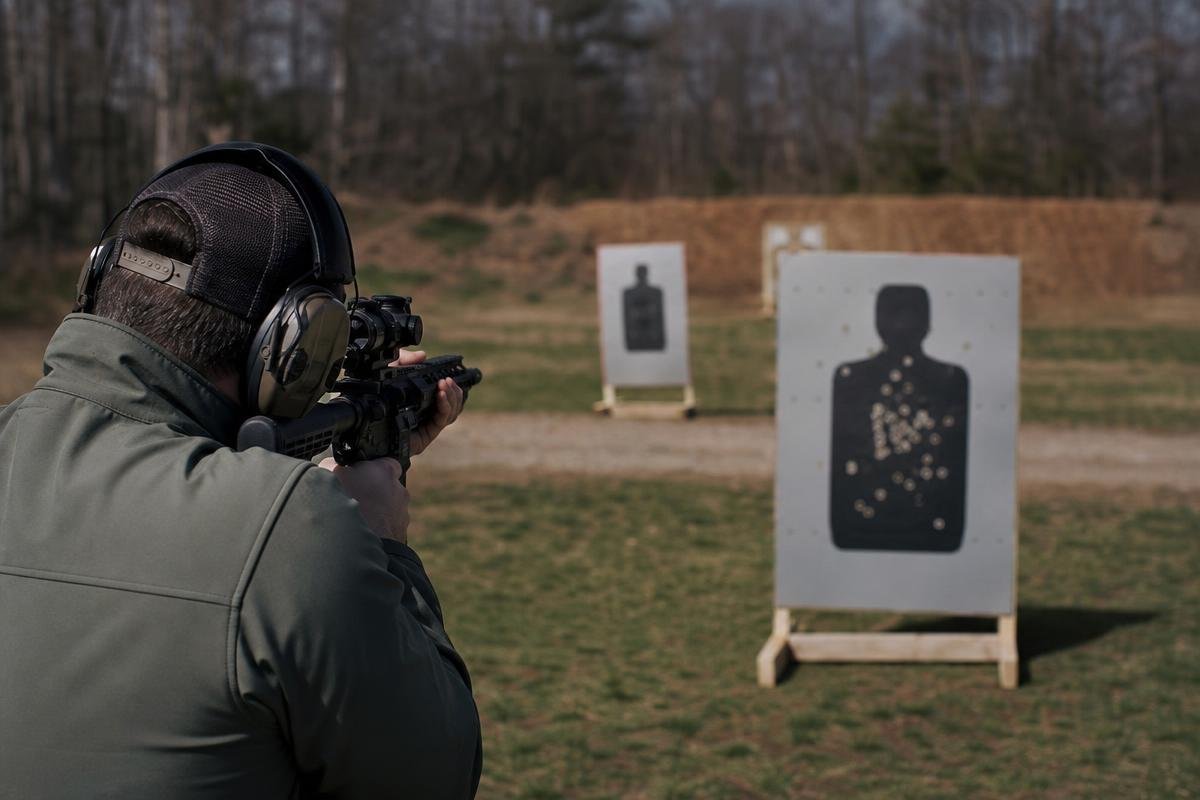
A 50-yard zero is not automatically better than a 100-yard zero. Your choice should match your ammunition, sight height, rifle setup, and the distances you can safely test at a properly equipped range.
How the Two Zero Choices Differ
The 100-yard zero vs 50-yard zero decision comes down to trajectory and reference points. A 50-yard zero may cross the line of sight near 50 yards and again near 200 yards, depending on load, barrel length, and optic height. Between those points, your .223 or 5.56 impact will usually be higher than your point of aim.
A 100-yard zero gives you a direct point-of-aim, point-of-impact reference at 100 yards. It is often easier to read on paper and easier to validate. You still need to know your holds at 25, 50, 200, and farther distances.
Match the Zero to Your Rifle Configuration
A general-purpose carbine used from close range through 200 yards may fit a 50-yard zero well. A rifle used mainly for deliberate 100-yard groups may be easier to manage with a 100-yard zero. Neither choice replaces testing actual impact with the ammunition you intend to shoot.
Optic type matters. Red dots, magnified optics, and backup sights can sit at different heights over the bore and use different adjustment systems. Recheck your point of impact after changing mounts, optics, ammunition, or a complete upper. The final setting belongs to your rifle and load.
For parts and compatibility advice for a new build, contact our team.
Pros, Limits, and Common Errors With a 50-Yard Zero
A 50-yard zero gives your AR-15 a practical reference for close-to-mid-range shooting, but it is not a substitute for checking actual impacts. Your rifle can seem zeroed one day and off the next because the load, mount, support, or sight settings changed.
What a 50-Yard Zero Can Do
An AR-15 zero at 50 yards can keep your point of impact close to your point of aim through common carbine distances. With many .223 and 5.56 loads, the bullet rises above the line of sight at intermediate distances and returns near zero around 200 yards. Exact results depend on barrel length, optic height, ammunition, and environmental conditions.
This setup reduces the amount of hold correction needed for general rifle use, but you still need to know your holds. Test your rifle with the exact load you carry or train with, especially after installing a new upper or changing sighting equipment.
False-Zero Problems to Catch Before You Leave the Range
A tight group matters more than a single good hole. Fire a consistent three-shot or five-shot group from stable support, then adjust from the group center. Chasing individual shots can move a properly zeroed rifle away from its true point of impact.
- Wrong firing-line measurement: A target set short or long of 50 yards changes the result.
- One-shot adjustments: One round does not show your rifle's average point of impact.
- Ammunition changes: Bullet weight, velocity, and lot variation can shift impact.
- Loose optic mounts: Movement at the mount or rings makes the zero wander.
- Inconsistent support or cheek weld: Different head position and rifle support can move the group.
- Assumed click values: Confirm your optic's adjustment value instead of guessing.
Events That Call for a New Confirmation Group
Recheck your zero after changing optic mounts, installing a barrel, swapping upper assemblies, changing ammunition, or dropping the rifle. A new complete AR-15 upper needs its own zero, even if it uses the same optic.
Keep a written record in the range bag with the load, barrel or upper, optic, mount, distance, and final group location. That record makes later point-of-impact changes easier to diagnose.
A Range-Ready 50-Yard Zeroing Checklist
A careful 50-yard zero starts before you reach the firing line. Select an established facility that permits the rifle caliber you are using, provides a suitable backstop, and has a clearly measured lane. Check current posted rules before each visit because facility policies can change.
What to Pack Before You Leave
Pack the rifle unloaded and cased if required by the location. Bring eye and ear protection, the exact ammunition you intend to zero, optic adjustment tools, a stable rest or bags, targets, a pen, and a notebook.
- A 50-yard zero target and a way to verify the distance, such as a marked range lane or laser rangefinder.
- Enough matching ammunition to fire several groups, not mixed loads from different boxes.
- Any magazines needed for your setup. Review our 5.56 NATO complete upper receivers if you are setting up a dedicated 5.56 rifle.
What to Confirm at the Firing Line
Follow all facility commands and keep the muzzle pointed in a safe direction. Confirm the target is actually 50 yards away before firing. Check that the optic mount is tight and the rifle support cannot shift during the group.
What to Record After the Final Group
Write down the exact load, bullet weight, optic, target distance, final group location, and zero date. That record helps you identify later point-of-impact changes caused by different ammunition, a loose mount, or a changed optic setting. If you need parts and compatibility advice, contact AR15Parts.com at (888) 706-0633 or review our complete AR-15 rifles.
Frequently Asked Questions
Is a 50-Yard Zero the Same as a 200 Yard Zero?
No. A 50-yard zero may return close to point of aim near 200 yards with many .223 and 5.56 loads, but it is not exact for every rifle. Test your actual group at 200 yards where a measured distance and appropriate backstop are available.
Where Will a 5.56 or .223 Round Hit at 100 Yards?
Most rifles zeroed at 50 yards will print above the point of aim at 100 yards. The height depends on bullet weight, velocity, barrel length, and sight height, so treat any 5.56 zero chart as a reference rather than a final setting.
Can a 25-Yard Target Replace a 50 Yard Confirmation?
No. A 25-yard target can establish an initial reference, but it cannot replace a measured 50-yard group. Confirm at the distance you intend to zero.
Does Changing Ammunition Change My Zero?
Yes. Different 5.56 loads can shift point of impact due to bullet weight, velocity, and barrel harmonics. Recheck your zero after changing duty, training, or hunting ammunition.
Do I Need to Re-Zero After Changing an Upper or Optic Mount?
Yes. A new upper or optic mount can change sight alignment and point of impact. Fire a confirmation group after installing 5.56 NATO complete upper receivers or moving an optic.
Can I Zero a Red Dot and Iron Sights the Same Way?
Yes, both can be zeroed at 50 yards. Their sight heights and adjustment systems differ, so zero each sighting system separately.
Need parts or accessories for your next range setup? Call (888) 706-0633, or shop online for firearms shipped to your FFL for transfer, complete AR-15 uppers, optics-ready components, and AR-15 accessories shipped from our Denison, TX facility.
Ready to Get Started with AR15Parts.com?
Call (888) 706-0633 for parts and compatibility advice, or contact our team online. We can help you compare AR-15 components before you order. Orders ship from our Denison, TX facility.