
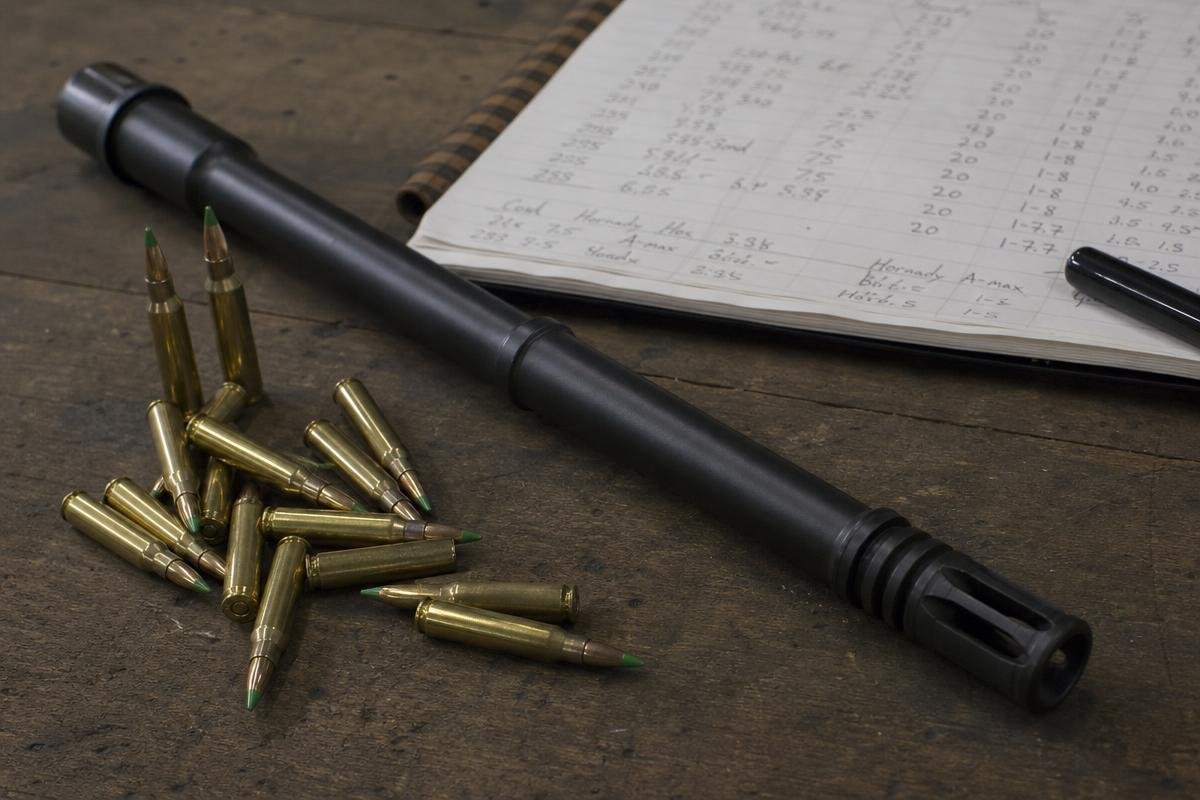
We help builders nationwide compare AR-15 component specifications online at AR15Parts.com before ordering. A 5.56 twist rate affects bullet stability, particularly when moving from short 55-grain practice bullets to longer 62-grain M855-style projectiles and 75-grain or 77-grain match bullets. We ship from our Denison, TX facility at 4000 Texoma Pkwy, Denison, TX 75020, and product listings should be reviewed for the barrel’s chamber, length, gas-system configuration, and twist specification.
Need help pairing a barrel with your preferred 5.56 ammunition?
Key Takeaways
- A 1:7 barrel makes one full bullet rotation for every seven inches of barrel travel.
- Many 55-grain and 62-grain 5.56 loads work well in common 1:8 twist barrels, but results depend on the specific projectile and barrel.
- A 1:7 twist is often selected when longer match bullets from 69 to 77 grains are part of the plan.
- Your 5.56 twist rate should be evaluated by projectile length and construction, not grain weight alone.
Choosing the Right Twist Rate for Your AR-15 Build
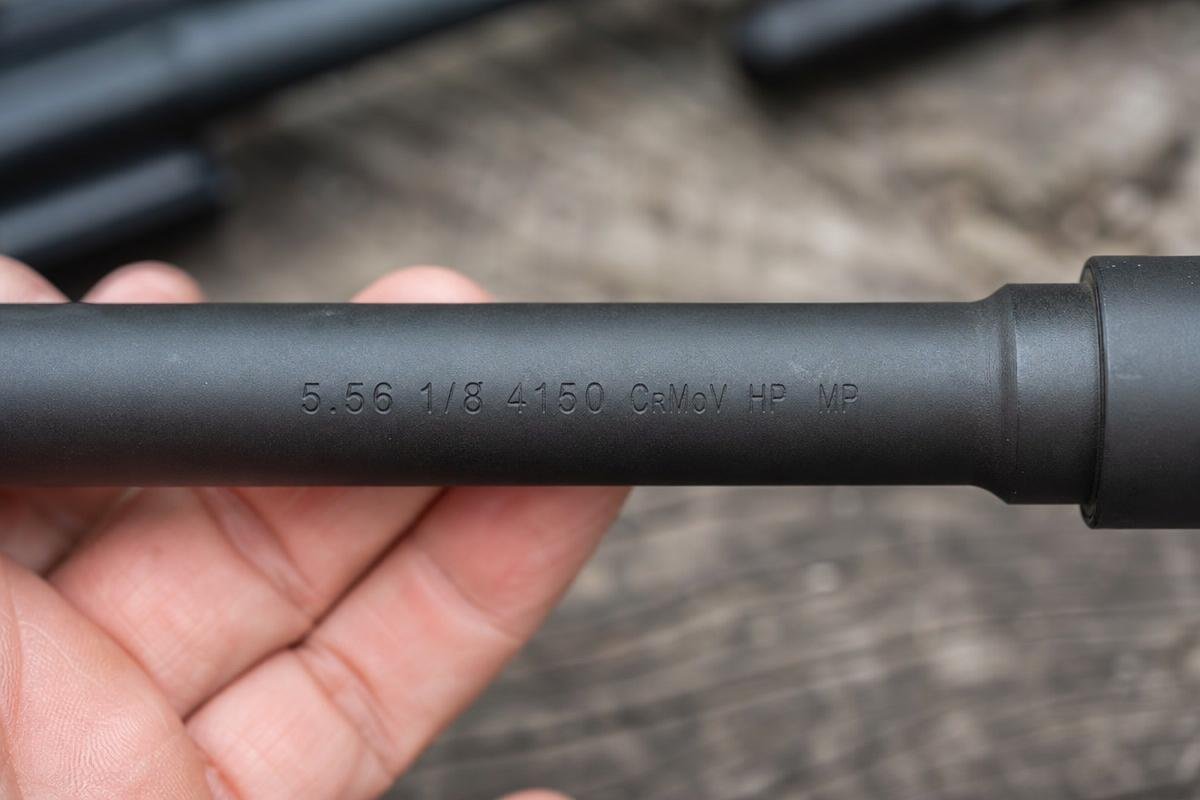
Rifling twist determines how quickly a bullet spins as it travels through the bore. Before selecting an upper or barrel, read the listed chamber and twist marking rather than assuming every 5.56 configuration is intended for the same ammunition. For customers comparing products online, 5.56 NATO complete upper receivers provide a useful starting point for comparing assembled barrel, gas-system, and handguard configurations.
A 1:7, 1:8, or 1:9 barrel can all be appropriate depending on the projectile profile you use. The decision becomes more important with longer bullets, especially 75-grain and 77-grain match designs. Use the ammunition manufacturer’s recommendations and confirm performance with your own rifle after proper assembly and safe range setup.
What Does a 5.56 Twist Rate Mean?
A 5.56 twist rate states the distance in inches a barrel needs to make one full bullet rotation. It tells you how quickly the rifling spins the bullet after it leaves the chamber. A smaller second number means a faster twist and more spin.
Barrel twist is only one part of stability. Projectile length, jacket and core construction, muzzle velocity, bore condition, and the individual barrel all matter. Check the barrel stamp and product listing before assembly, then make sure the chamber, gas system, and receiver pattern fit the components you selected.
How to Read 1:7, 1:8, and 1:9 Barrel Markings
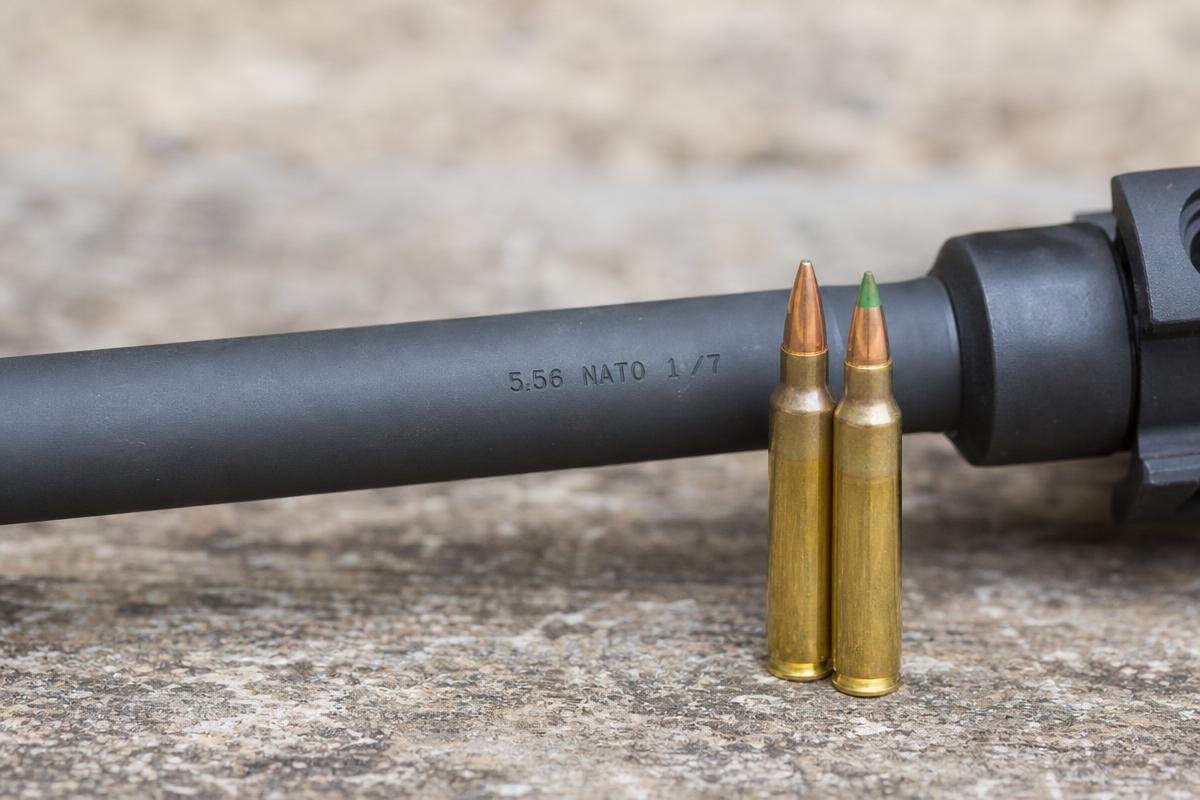
A 1:7 marking means the bullet completes one full rotation in seven inches of barrel travel. It is faster than 1:8 and 1:9. A 1:8 barrel makes one rotation in eight inches, while a 1:9 barrel makes one rotation in nine inches.
These rifling rates are common on 5.56 NATO barrels and .223 Wylde barrels. The marking may appear near the chamber or toward the muzzle, depending on the manufacturer. When comparing a complete upper, review the product listing for the actual twist rather than relying on caliber alone.
Why Bullet Length Matters Along With Grain Weight
Grain weight is a useful shorthand, but it does not tell the whole story. Longer bullets generally need more spin than shorter bullets of the same weight. A 75-grain open-tip match projectile can have a different profile from another 75-grain design, and 77-grain match bullets are commonly long enough that builders favor a faster twist.
Velocity also affects the stability margin. A shorter barrel can produce lower muzzle velocity than a longer barrel with the same load, which may matter most when a bullet is already near the edge of what a given twist will stabilize. A 62-grain M855 load and another 62-grain bullet can differ in length and construction. Start with the ammunition and barrel maker’s guidance, then confirm results on paper with your rifle. If you need help sorting out a barrel or upper choice, contact AR15Parts.com.
5.56 Twist Rate Chart for Common AR-15 Bullet Weights
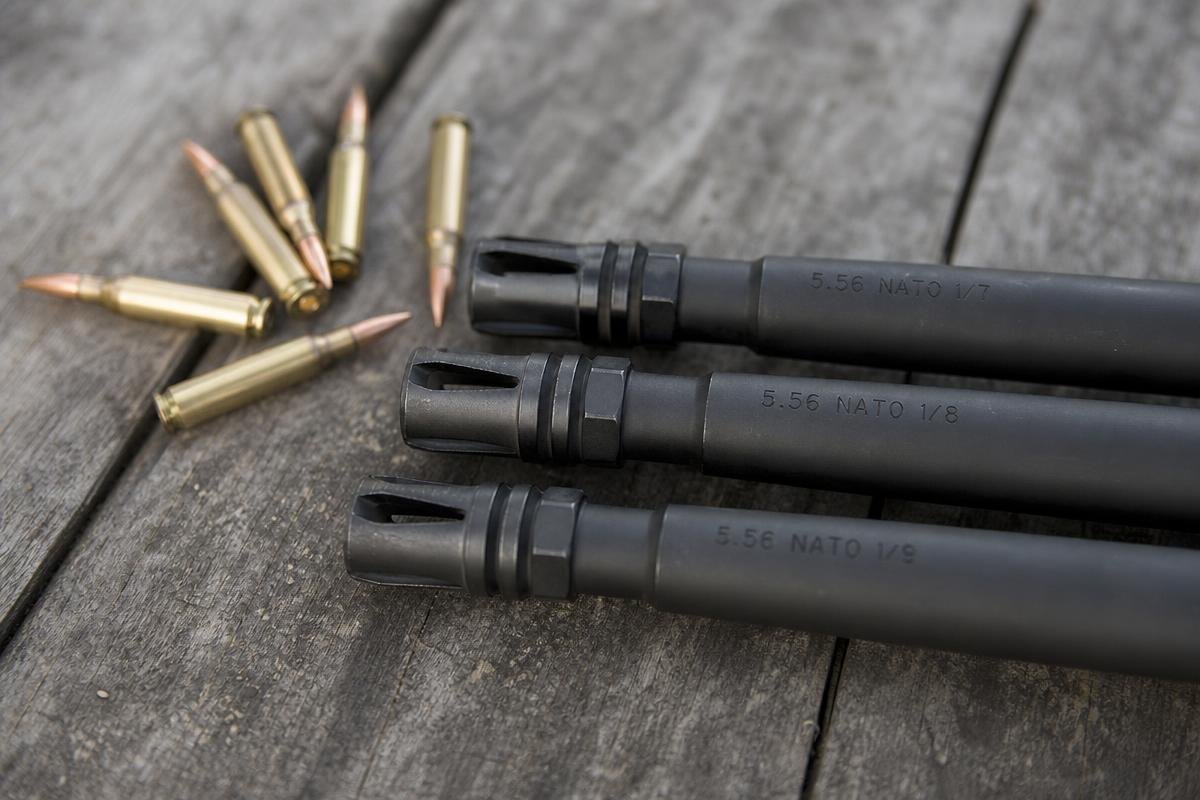
This chart is a general starting point, not a guarantee of stability or accuracy. Bullet length, construction, muzzle velocity, weather conditions, and barrel quality can change results. The ranges below describe common tendencies, so use the exact projectile and the barrel manufacturer’s guidance when making a final selection.
| Twist rate | General starting point | Common examples | Important caveat |
|---|---|---|---|
| 1:7 | Often chosen for standard loads through longer match-style bullets | 55-grain FMJ, 62-grain M855, 69-grain match, many 75 to 77-grain match loads | Fast twist gives longer bullets more stability margin, but test the actual load. |
| 1:8 | Often a flexible option for mixed ammunition | 55-grain FMJ, 62-grain M855, many 69-grain and heavier match loads | Results with the longest 75 to 77-grain profiles vary by projectile and velocity. |
| 1:9 | Commonly used with shorter, lighter projectiles | 45-grain through 62-grain loads and some 69-grain match loads | Longer 69-grain, 75-grain, and 77-grain bullets can be marginal or unsuitable in some barrels. |
1:7 Twist for Longer and Heavier Bullets
A 1:7 barrel is commonly selected for longer 75-grain and 77-grain match ammunition. It also commonly handles 55-grain FMJ and 62-grain M855 loads, which makes it a familiar choice on 5.56 NATO barrel configurations.
Consider 1:7 when heavier match loads will be a regular part of your ammunition supply, not simply an occasional experiment. Confirm the listed barrel details and use the load manufacturer’s published guidance before firing unfamiliar ammunition.
1:8 Twist for Mixed Ammunition
A 1:8 barrel commonly works across a wide mix of 55-grain practice ammunition, 62-grain M855-style loads, and many heavier match bullets. It is a practical middle ground for a rifle that will not be dedicated to one projectile type.
In a 1:7 versus 1:8 versus 1:9 comparison, 1:8 often provides broad flexibility, but it is not a universal answer. When testing a new load, use a safe range, fire enough rounds to evaluate the group rather than one shot, and inspect targets for clean, round bullet holes. Elongated or keyholed impacts can indicate a stability issue and should be investigated before continuing with that ammunition.
1:9 Twist for Lighter Range Loads
A 1:9 twist is commonly paired with lighter and shorter bullet designs, including many 55-grain FMJ loads. It can be a sensible option for a rifle used primarily with conventional practice ammunition.
Some 1:9 barrels stabilize 62-grain M855 or 69-grain match loads well, while others produce less consistent results with longer projectiles. That variation is why grain weight alone is not enough. Compare chamber, barrel length, and listed twist across our complete AR-15 uppers before you buy.
Is 1:8 Twist Good for 5.56?
Yes. A 1:8 twist barrel is a strong all-around choice for many 5.56 builds when the rifle may see 55-grain, 62-grain, and selected heavier match-style loads. It gives many builders a useful middle ground without limiting the rifle to one common practice load.
A Practical Choice for 55-Grain and 62-Grain Loads
A 1:8 barrel commonly handles 55-grain range ammunition and 62-grain M855 well. M855 is generally suitable in a 1:8 barrel, though 1:7 and 1:9 barrels may also shoot it well depending on the individual barrel, velocity, and ammunition lot.
If you rotate through several common loads, a 1:8 specification can prevent the build from being centered on one narrow bullet type. Compare the chamber, barrel length, and stated twist in the listing, then select the setup that fits the ammunition you expect to use most.
When a 1:7 Barrel May Fit Better
A 1:7 barrel may fit better if your setup is centered on 75-grain and 77-grain ammunition. The faster twist provides a larger stability margin for these longer bullets, particularly when lower muzzle velocity or changing weather could make a marginal combination less forgiving.
Builders who only shoot light 45-grain to 55-grain ammunition may prioritize a different rifling rate. For a general-purpose rifle that sees mixed ammunition, a 1:8 barrel remains a sensible choice. Browse complete AR-15 uppers to compare barrel specifications before your next range session.
Choose Twist Rate with Barrel Length, Chamber, and Gas System in Mind
Rifling rate is only one barrel specification. Barrel length, chamber, and gas-system length each answer a different build question. Compare all four listed specifications before selecting a barrel or complete upper.
Twist Rate and Barrel Length Are Separate Specifications
A shorter 5.56 barrel does not automatically need a faster twist. Twist controls bullet stabilization, while barrel length affects muzzle velocity. A 10.5-inch and a 16-inch barrel can both use 1:7, 1:8, or 1:9 rifling if the twist fits the projectile you intend to fire.
Lower velocity does not automatically make a load unusable, but it can reduce the stability margin for a long projectile in a marginal twist combination. Check ammunition guidance, establish a safe zero, and evaluate target impacts with the actual barrel and load instead of relying on a chart alone.
Match the Chamber and Gas System to the Build
A .223 Wylde chamber is not the same thing as a barrel twist rate. The chamber controls cartridge fit and pressure specifications. Rifling twist controls how quickly the bullet rotates after it enters the bore.
A 5.56 NATO chamber is intended for 5.56 NATO ammunition and .223 Remington. A .223 Wylde chamber is commonly selected for shooters who want to fire both while pursuing careful .223 accuracy. Review the listed chamber, twist, barrel length, and muzzle-thread specifications on any .223 Wylde complete upper before purchase.
Gas-system length must match the barrel configuration for reliable cycling. Carbine, mid-length, and rifle gas systems place the gas port at different distances from the chamber. That changes dwell time and the gas curve that operates the action. Check the barrel listing and the gas-system length guide before assembling parts, then confirm bolt carrier compatibility with the BCG guide.
For help comparing the specifications shown on a product listing, use the contact page or call the team before placing an order.
Need help matching barrel, chamber, and gas system parts? Call (888) 706-0633.
A Practical 5.56 Barrel Selection Checklist
Start with the ammunition you expect to shoot most. That choice informs the appropriate twist specification, then you can confirm the barrel, gas system, and upper parts fit your intended use.
Before You Add a Barrel or Upper to Cart
Verify the caliber and chamber marking first. A barrel marked 5.56 NATO handles 5.56 NATO and .223 Remington ammunition. A .223 Wylde chamber is another common option for shooters using both cartridge types.
- Identify your usual projectile types and weights. Confirm the listed twist is appropriate for those loads, including 55-grain practice ammunition, 62-grain M855, or longer match bullets.
- Confirm barrel length and gas-system length. The gas block journal, gas tube, and handguard must fit that configuration.
- Review muzzle threads, barrel profile, and gas-block clearance before selecting a muzzle device or handguard.
- Confirm the barrel extension and upper receiver are standard AR-15 pattern parts for your existing mil-spec lower receiver.
- Check magazine compatibility for the ammunition you plan to run.
Handguard fit depends on barrel length, gas-block size, and gas-system position. A free-float handguard needs clearance around the gas block, while a drop-in handguard requires the correct front sight base or retainer arrangement.
Complete Upper or Individual Parts Build
A complete upper is the easier route if you want the barrel and gas system configured as one unit. Review upper listings for barrel length, chamber, twist, handguard details, and included components before pairing the assembly with a compatible mil-spec lower receiver.
A parts build gives you more control, but every interface needs review. Verify the barrel, gas tube, gas block, handguard, upper receiver, charging handle, and bolt carrier group work together before assembly.
Compare product specifications side by side instead of selecting parts by appearance. If you need help sorting through complete AR-15 uppers or barrel details, contact AR15Parts.com at (888) 706-0633.
Compare 5.56 Barrels and Uppers Before Ordering
We ship from our Denison, TX facility at 4000 Texoma Pkwy, Denison, TX 75020. When comparing products online, evaluate barrel twist, chamber, barrel length, and gas system before choosing components for an AR-15 build.
Compare Listed Specifications Before Ordering
Start with the barrel listing. Confirm the rifling rate, 5.56 NATO or .223 Wylde chamber, barrel length, gas-system length, muzzle-thread pitch, and gas-block journal diameter. Those details determine whether the barrel fits your intended ammunition and remaining components.
Compare complete assemblies the same way. A matched upper can be a practical option when you want the barrel and gas system configured together. Check the listed handguard length, muzzle device, bolt carrier group, and charging handle before you order.
Confirm Your Zero with the Load You Chose
Re-zero your optic after changing ammunition because bullet weight, velocity, and bullet shape can shift point of impact. A 55-grain practice load and 62-grain M855 may not print in the same place, even from the same barrel.
Confirm your zero with the load you plan to shoot most often. Follow safe range procedures, use the ammunition manufacturer’s instructions, and inspect target groups and bullet holes for consistency. If a load produces erratic groups or keyholing, stop using that combination until the cause is understood. Contact us at (888) 706-0633 if you need help comparing barrel or upper specifications before purchase.
Frequently Asked Questions
What Twist Rate Is Best for 55-Grain 5.56 Ammunition?
1:7, 1:8, and 1:9 barrels commonly shoot 55-grain 5.56 ammunition well. The best twist rate for 5.56 depends on your plans for heavier bullets. Choose 1:7 or 1:8 if you also expect to shoot 69-grain through 77-grain loads.
Is 1:8 Twist Good for M855?
Yes, 1:8 twist is commonly suitable for 62-grain M855 ammunition. Individual barrel and ammunition results can vary, so confirm accuracy with your rifle and chosen load. It remains a practical middle ground in the 1:7 vs 1:8 vs 1:9 twist comparison.
Can a 1:7 Barrel Shoot 55-Grain Ammunition?
Yes, a 1:7 barrel commonly shoots 55-grain ammunition successfully. Accuracy still depends on the specific barrel, bullet construction, and load. A 5.56 bullet weight chart is a starting point, not a substitute for range confirmation.
Does a .223 Wylde Chamber Determine Twist Rate?
No, a .223 Wylde chamber and rifling twist are separate barrel specifications. The chamber controls cartridge fit, while twist stabilizes the bullet. Review both details when comparing complete AR-15 uppers for your build.
Where Is the Twist Rate Marked on an AR-15 Barrel?
Twist rate markings are often stamped near the chamber or muzzle, depending on the manufacturer. A barrel may read “5.56 NATO 1:7” or “1:8,” with the first marking identifying the chamber and the second identifying twist.
Compare the chamber, barrel length, gas-system setup, and twist marking before you buy. If you need help finding the right upper or component for your build, contact AR15Parts.com at (888) 706-0633 or use our contact page.
Does Barrel Length Determine Twist Rate?
No. Barrel length and rifling twist are separate specifications. Barrel length affects muzzle velocity, while twist rate affects bullet stabilization. Compare both specifications with the ammunition you plan to use.
Get Help Choosing a 5.56 Barrel or Upper
Call (888) 706-0633 to ask our team about 5.56 barrel twist, chamber compatibility, and complete upper options. We can help you compare listed specifications before you order.