
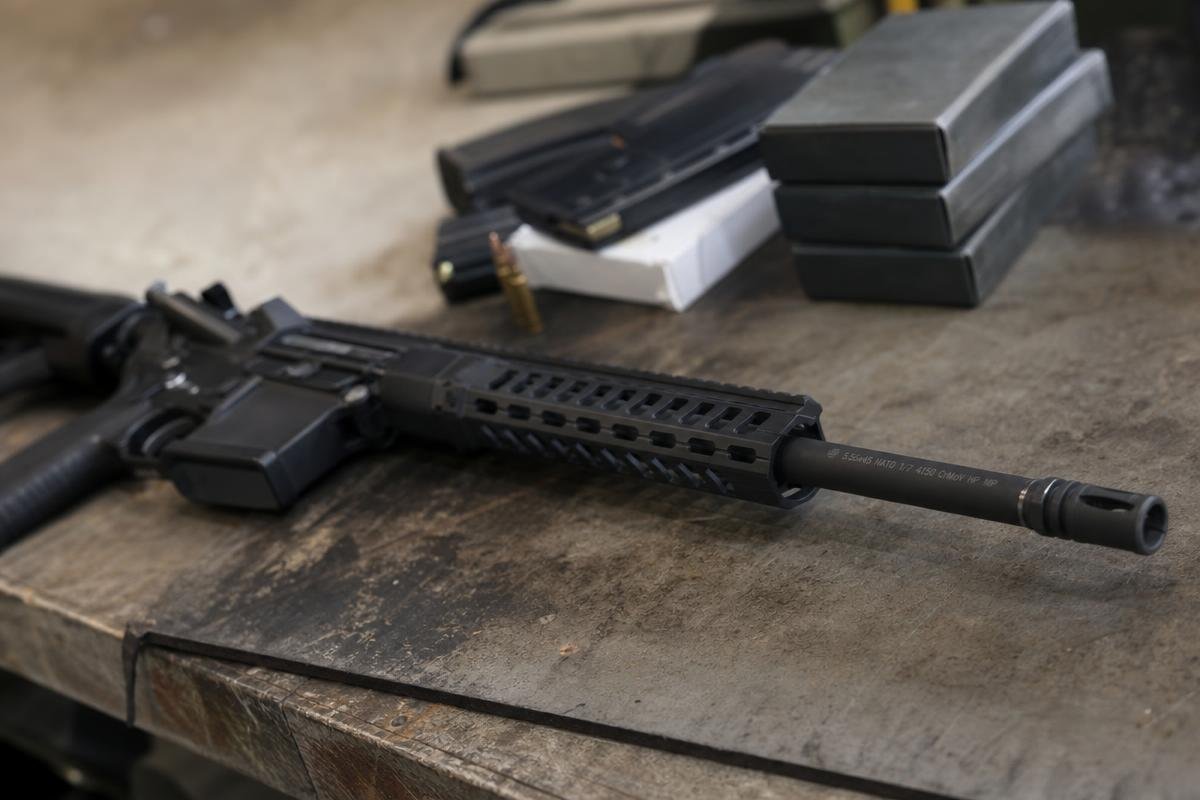
For most AR-15 owners, the safe 5.56 vs 223 rule is straightforward: a barrel marked 5.56 NATO can generally use both 5.56 NATO and .223 Remington ammunition, while a barrel marked .223 Remington should use .223 Remington unless its manufacturer specifically approves 5.56 NATO. Chamber geometry, not the nearly identical appearance of the cartridges, determines compatibility.
AR15Parts.com is located at 4000 Texoma Parkway, Denison, TX 75020. Before selecting an upper or ammunition, compare the barrel marking, published product specifications, and the load you intend to use for range practice or hunting.
Need help identifying the chamber specification on an upper before ordering?
Key Takeaways
- A 5.56 NATO chamber can generally fire both 5.56 NATO and .223 Remington ammunition.
- A .223 Remington chamber should use .223 Remington ammunition unless the barrel maker states otherwise.
- The 5.56 vs 223 difference involves chamber dimensions, pressure specifications, and throat length.
- .223 Wylde chambers are designed to handle 5.56 NATO and .223 Remington ammunition.
What Is the Difference Between 5.56 NATO and .223 Remington?
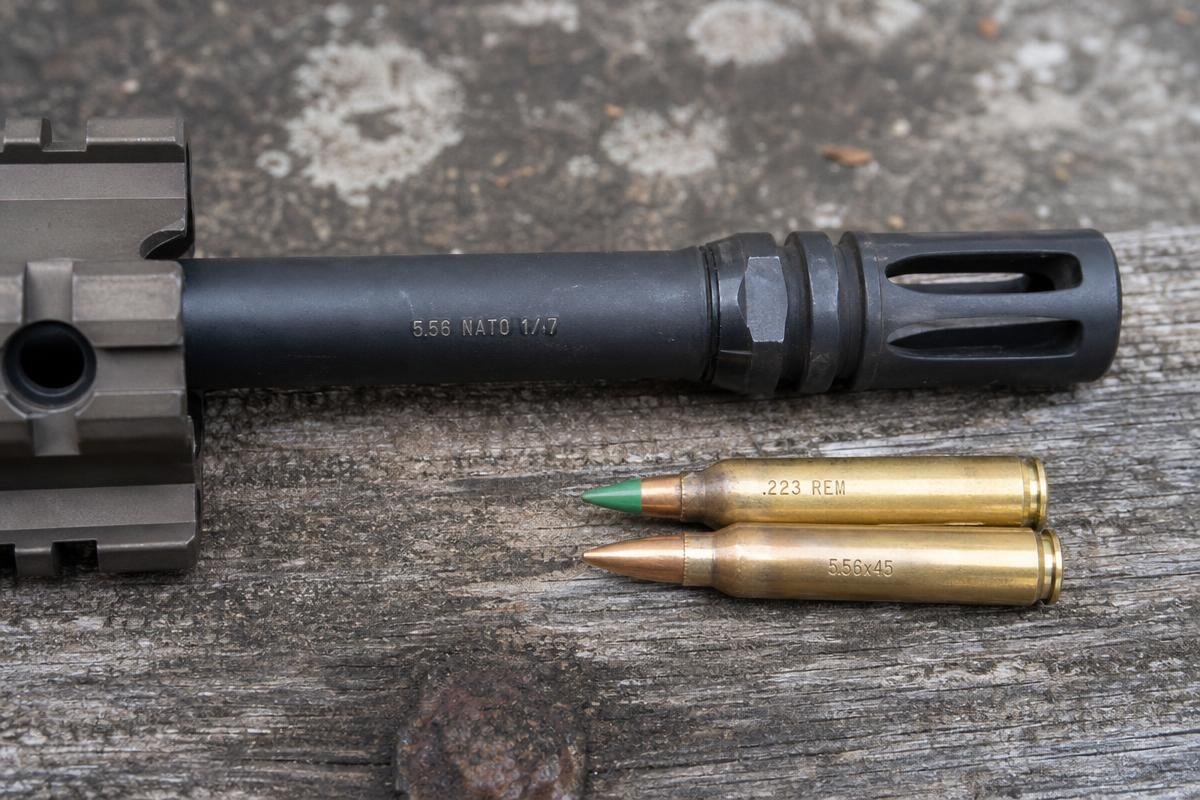
5.56 NATO and .223 Remington cartridges are dimensionally similar, but their chamber standards differ. The practical 5.56 NATO vs .223 Remington rule is simple: do not assume a barrel marked .223 Remington is approved for 5.56 NATO ammunition. Verify the barrel stamp and manufacturer specifications before buying ammunition or an upper.
Cartridge Dimensions Versus Chamber Geometry
A cartridge specification describes the ammunition case, bullet, and overall dimensions. A chamber specification describes the space inside the barrel where that cartridge is fired. Similar outside cartridge dimensions do not mean the chambers are built to the same internal geometry.
A 5.56 NATO chamber is generally designed with different throat geometry than a .223 Remington chamber. That difference affects how the bullet enters the rifling after ignition. If you are comparing a 5.56 NATO upper receiver listing, the chamber marking matters more than the cartridges looking nearly identical on the bench.
Why Freebore and Throat Design Matter
Freebore is the smooth section ahead of the chamber before the rifling begins. In plain terms, it is the short area where the bullet travels before it contacts the rifling. A 5.56 NATO chamber generally has a longer freebore and a different throat shape than a .223 Remington chamber.
That extra space can change pressure behavior with a given load because the bullet starts its travel differently. Pressure figures are not directly interchangeable between NATO and SAAMI test methods, so internet comparisons can be misleading. The safe approach is to follow the barrel maker's approved ammunition guidance.
Buyers reviewing complete AR-15 uppers should compare the barrel marking, product details, and intended ammunition before ordering. This avoids making a 5.56 vs 223 decision based only on cartridge appearance.
Which Ammunition Can You Safely Use in Each AR-15 Chamber?
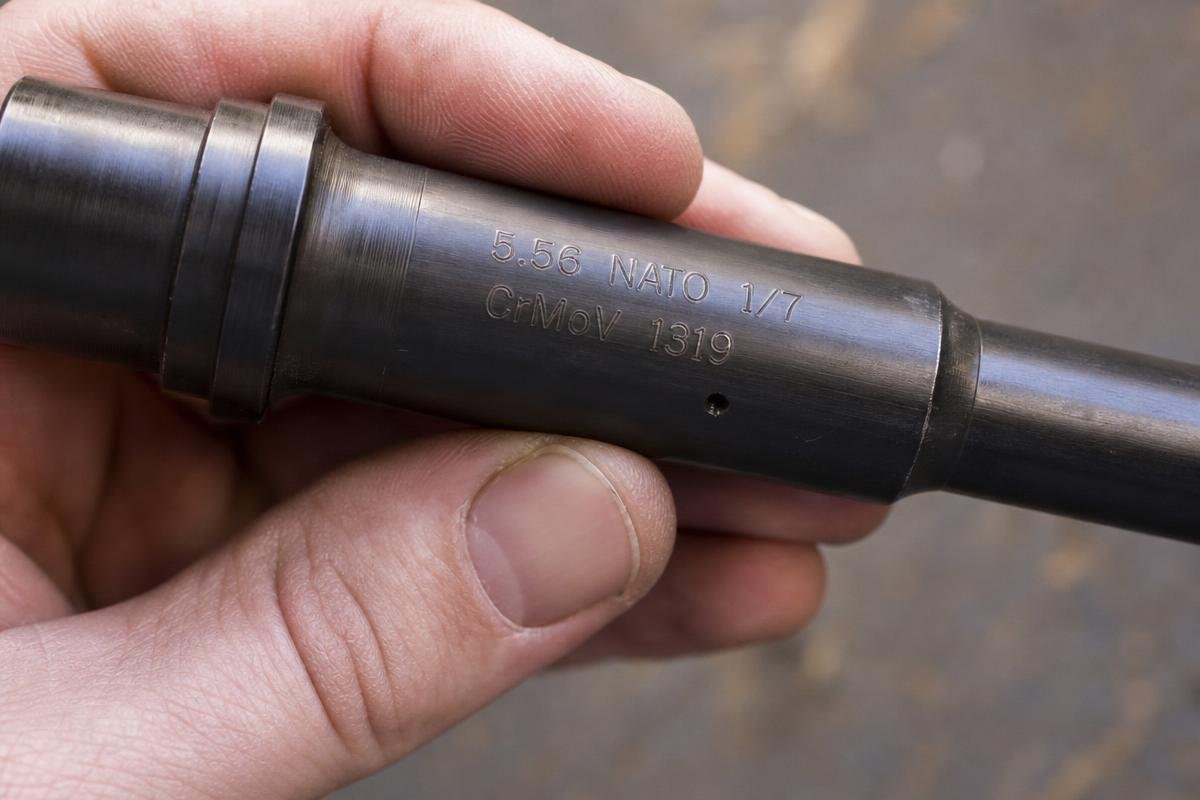
A 5.56 NATO chamber can generally fire both .223 Remington and 5.56 NATO ammunition. A .223 Remington chamber should be limited to .223 Remington ammunition unless the firearm manufacturer expressly approves 5.56 NATO use. This is especially important with used uppers, barrels with worn markings, or ammunition purchased without confirming the rifle's chamber.
Quick 5.56 and .223 Compatibility Table
This table is a quick reference, not a substitute for the barrel maker’s instructions. Use the barrel marking and the manufacturer’s documentation as the final authority.
| Barrel chamber marking | .223 Remington ammunition | 5.56 NATO ammunition |
|---|---|---|
| 5.56 NATO | Generally appropriate | Generally appropriate |
| .223 Remington | Appropriate | Do not use unless the manufacturer expressly approves it |
| .223 Wylde | Generally appropriate | Generally appropriate |
For a straightforward build, review our 5.56 NATO complete uppers and confirm the listed chamber specification before ordering. Want to compare chamber options before selecting an upper?
What a .223 Wylde Chamber Means
A .223 Wylde chamber is a chamber type, not a cartridge. It was designed to accommodate both .223 Remington and 5.56 NATO ammunition while using dimensions often selected for accuracy-focused AR-15 builds.
The exact barrel marking and manufacturer instructions still control. If you want that chamber specification in a ready-to-drop-on-your-lower assembly, review our .223 Wylde complete uppers and verify the listed barrel details.
Signs That Don't Confirm 5.56 vs .223 Compatibility
Never determine 5.56 and .223 compatibility from magazine markings, cartridge appearance, online comments, or another shooter’s advice. Standard AR magazines may hold either cartridge type, but they do not identify the chamber in your barrel.
Use a simple verification checklist: inspect the barrel stamp, review the upper or barrel manufacturer’s documentation, and consult the firearm manual. If a marking is worn, absent, or unclear, do not rely on assumption. Obtain confirmation from the manufacturer before loading ammunition.
How Do 5.56 and .223 Loads Compare for Hog and Predator Hunting?
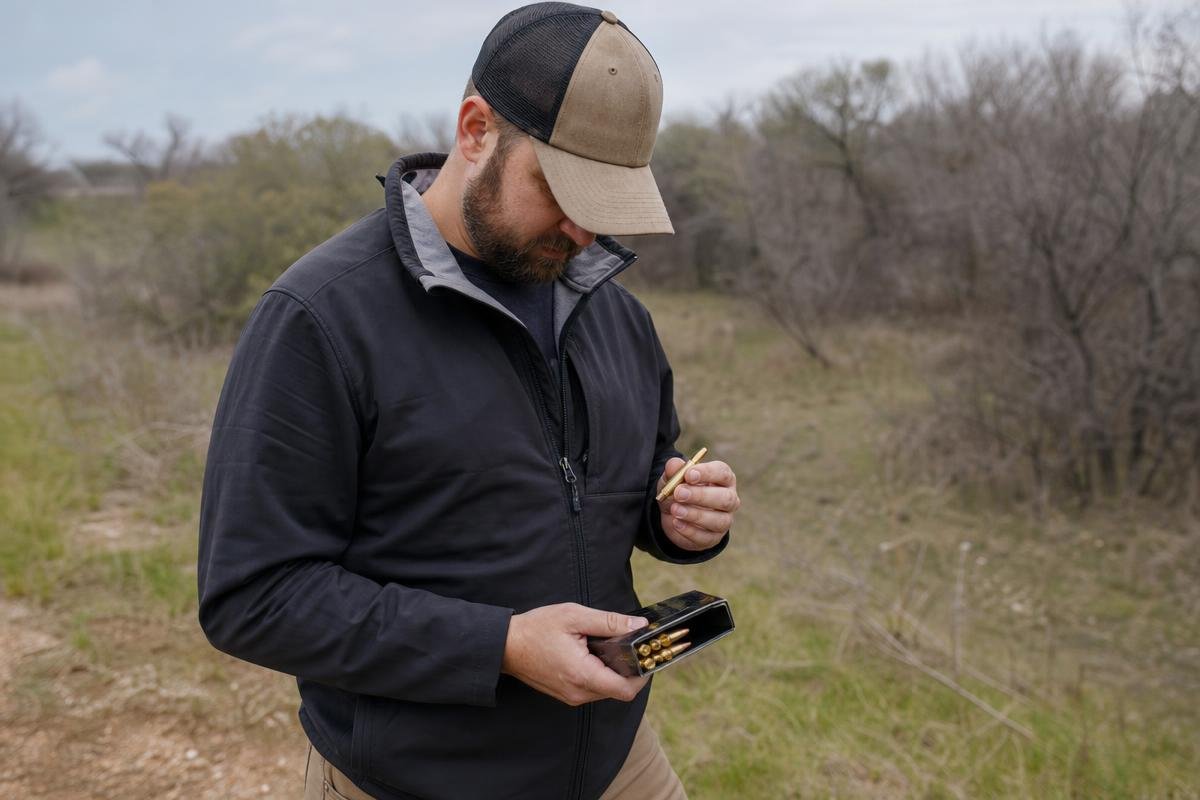
Neither headstamp alone determines hunting performance. Projectile construction, impact velocity, shot placement, barrel length, distance, and a safe backstop matter more when comparing 5.56 vs 223 loads for hogs or predators.
In the Denison and Texoma area, a hunt can move from open pasture or field edges to thick brush and wooded cover. Feral hog activity can increase around food, water, and cover, particularly during changing seasonal conditions, but hunters should plan around the specific property rather than assumptions about animal movement.
Load Design Matters More Than the Headstamp
For predators, choose a bullet construction appropriate to the animal and the distance you expect to shoot. Lighter, rapidly expanding or fragmenting varmint-style bullets are commonly considered for smaller predators, while the load still needs to function reliably and produce acceptable accuracy from your rifle.
For hogs, consider controlled-expansion or deeper-penetrating bullet designs appropriate for the animal’s size and the shot angle you may encounter. Avoid treating bullet weight alone as a guarantee of performance. Review the ammunition maker’s intended-use information, test function and accuracy in your rifle, and keep shot placement and a solid backstop central to the plan.
A 5.56 NATO upper receiver gives you flexibility to run compatible 5.56 NATO and .223 Remington ammunition. A .223 Remington AR-15 barrel should be fed only ammunition approved by its barrel maker.
Field Factors to Consider Before a Hunt
Barrel length influences handling and observed velocity. A shorter barrel may be easier to carry through brush or use from a vehicle where lawful, while a longer barrel may produce different velocity with the same load. Test the actual rifle and ammunition combination rather than relying on published velocity from a different barrel length.
Before hunting, establish a dependable zero with the ammunition you plan to carry and verify it at distances relevant to the property. In North Texas heat, changing wind, and mirage can make range observations less repeatable, so use a stable rest and record your results.
Texas hunting rules can change, and legal hunting methods can differ by species, season, land type, and location. Review current Texas Parks and Wildlife guidance before a hunt. On private land, obtain landowner permission and confirm property-specific rules. Also check local discharge restrictions and any applicable rules for nighttime hunting, artificial light, thermal equipment, or other methods of take before using them.
For a new build, review our complete AR-15 uppers and confirm the chamber marking before ordering ammunition.
Need help matching an upper and load for your planned hunt? Call us at (888) 706-0633.
What Should You Check Before Buying a 5.56 or .223 Upper?
Check the barrel marking, ammunition plan, and component specifications before you order. A 5.56 NATO upper receiver is a practical choice if you expect to buy both 5.56 NATO and .223 Remington loads. A .223 Wylde chamber is another option for shooters who want to run both cartridge types with a chamber designed around accuracy and compatibility.
Seven Checks Before You Order
- Chamber marking: Match the stamp to your ammunition plan. A 5.56 NATO chamber can fire 5.56 NATO and .223 Remington ammunition. Follow the barrel maker’s guidance for a .223 Remington AR-15 barrel.
- Intended ammunition: Choose bullet weights and load types you can actually buy and use. Hog loads often differ from lighter predator loads in bullet construction and weight.
- Barrel length: Length affects handling, velocity, and gas-system options. Pick a length that fits your hunting setup and transport needs.
- Gas system length: The gas system must match the barrel configuration, not visual preference. Carbine, mid-length, and rifle systems have different port locations and operating characteristics.
- Twist rate: Select twist around the bullet weights you expect to shoot. The barrel maker’s bullet-weight recommendations control, especially with longer hunting bullets.
- Muzzle device: Confirm thread pattern and device fit. Also check the rules at the range where you will test the rifle, since some facilities limit blast-forwarding devices or certain muzzle setups.
- Magazine and lower fit: Use magazines in good condition and made for the cartridge family. Capacity and product specifications still matter. Confirm the upper is compatible with your lower receiver before ordering.
Bring the ammunition you expect to hunt with when testing a new setup, and keep notes on function and point of impact. For product and chamber-specification questions, call AR15Parts.com at (888) 706-0633 before placing an order.
Complete Upper or Parts Build?
A complete upper is easier to buy because the barrel, receiver, handguard, gas system, and bolt carrier group can be selected as one configured assembly. Our 5.56 NATO complete uppers give you a direct path to an upper ready to drop onto a compatible lower.
A parts build gives you more control over each component, but it requires correct parts selection and safe assembly practices. You must match the barrel, gas tube, gas block, bolt carrier group, handguard, muzzle device, and receiver parts. If you want fewer fitment decisions, review our complete AR-15 uppers before buying individual components.
Denison Range Preparation Before You Test a New Load
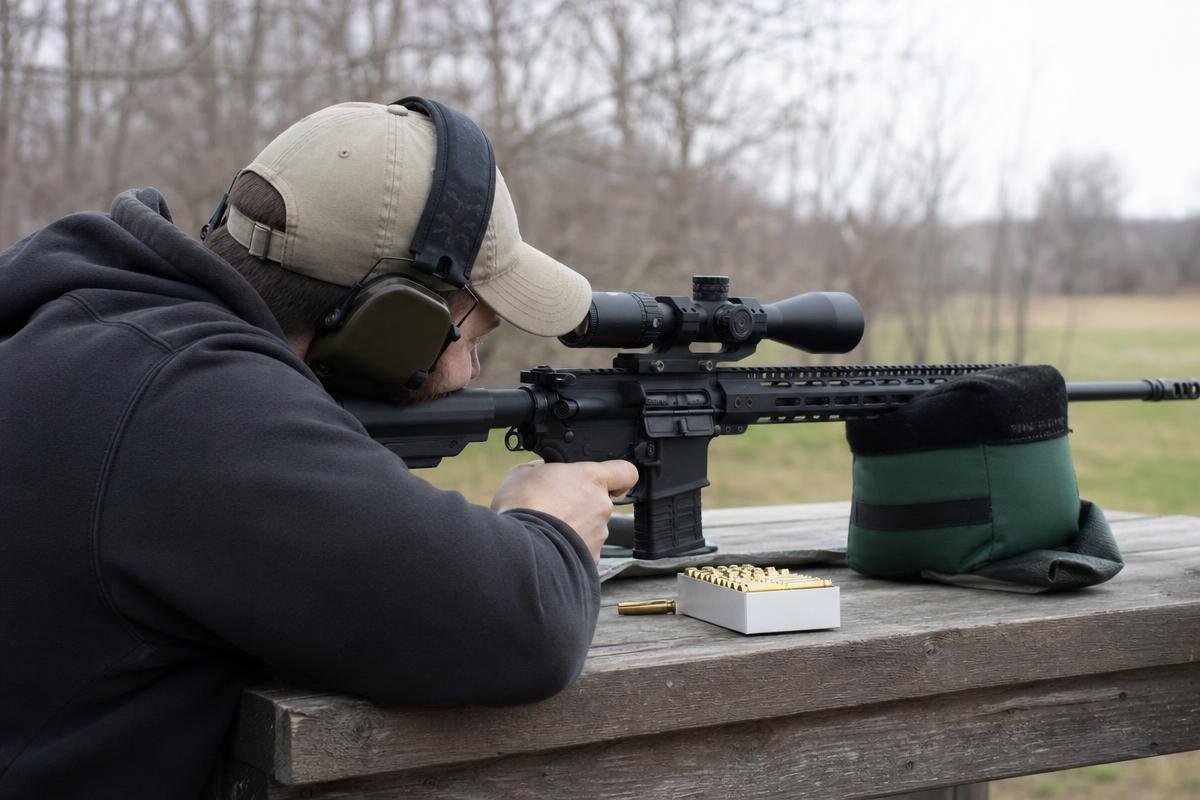
A new ammunition type, bullet weight, or load can shift point of impact. Confirm the rifle’s zero with the ammunition you plan to carry, even if it already groups well with another .223 or 5.56 load.
Set up on a safe range with eye and ear protection, a stable bench or prone rest, and a target that clearly shows your group. Heat, wind, and mirage can influence what you see on target from one session to the next, so keep the setup repeatable.
Confirm Zero With the Exact Load
Re-zero after changing from one .223 or 5.56 load to another. Bullet weight, velocity, and bullet design can move point of impact enough to matter on a hog or predator shot.
Start at a known distance, fire a measured group, then adjust your optic from the group center. Confirm the adjustment with another group before calling the rifle ready. If you are setting up a new build, our 5.56 NATO complete uppers provide chamber-marked options for common 5.56 and .223 compatibility.
Record Conditions and Results
Write down the load label, bullet weight, lot number if available, distance, optic settings, and observed point of impact. Note wind direction, temperature, and any support used under the rifle.
Those notes help you separate a load change from a setup or weather change. Keep the record with your rifle case or range bag, especially if you switch between hunting loads and practice ammunition. Product questions can be directed to AR15Parts.com at (888) 706-0633.
Choose the Right Chamber and Load Before Your Hunt
Choose the chamber first, then select ammunition the barrel maker approves. A 5.56 NATO chamber generally provides the broadest flexibility for common .223 Remington and 5.56 NATO ammunition, while a .223 Remington-marked barrel requires closer attention to approved loads. For hogs and predators, select a bullet designed for the intended game, verify reliable function and point of impact, and follow current Texas Parks and Wildlife guidance along with landowner and local rules.
Whether you are comparing a complete upper or planning a parts build, review the published chamber specification before placing an order. You can browse 5.56 NATO complete uppers, compare .223 Wylde complete uppers, or explore complete AR-15 uppers for your build plan.
Have a chamber or upper-selection question before ordering? Call AR15Parts.com at (888) 706-0633.
Frequently Asked Questions
Can I Shoot .223 Remington in a 5.56 NATO Chamber?
Yes. A 5.56 NATO chamber is generally intended to accommodate both .223 Remington and 5.56 NATO loads. Read the barrel marking and confirm the firearm manufacturer’s guidance before loading any ammunition.
Can I Shoot 5.56 NATO in a .223 Remington Chamber?
No, you should not assume 5.56 NATO is appropriate in a .223 Remington-marked chamber. Use .223 Remington ammunition unless the barrel manufacturer specifically states that 5.56 NATO is approved.
Is .223 Wylde a Cartridge or a Chamber?
.223 Wylde is a chamber specification, not a cartridge. A properly marked .223 Wylde chamber is commonly designed to fire both .223 Remington and 5.56 NATO ammunition, subject to manufacturer guidance.
Do I Need to Re-Zero for Different Loads?
Yes. Different bullet weights, velocities, and bullet designs can move your point of impact. Confirm zero with the exact hunting load, especially after changing from practice ammunition or shooting in hot, windy conditions.
How Do I Choose the Right Upper?
Choose the chamber marking around the ammunition you plan to shoot. A 5.56 NATO upper receiver fits shooters who want to use both common loads, while a .223 Wylde chamber may suit a build focused on load flexibility and accuracy testing.
What Should Hunters Consider Before Choosing a Load?
Choose a load with a bullet built for your intended game, then verify feeding, function, and zero in your rifle. Before you order an upper or test a new load, read the barrel marking, confirm manufacturer guidance, and choose the chamber that fits your ammunition. For chamber-marked complete AR-15 uppers and complete rifle categories, contact AR15Parts.com at (888) 706-0633.
Ready to Get Started with AR15Parts.com?
Call (888) 706-0633 to speak with our team directly. We're ready to answer your questions, walk you through your options, and help you find the right solution for your needs. Whether you're just starting to plan or ready to move forward, we'll make the process simple and stress-free. Reach out today and let's talk about how we can help.