
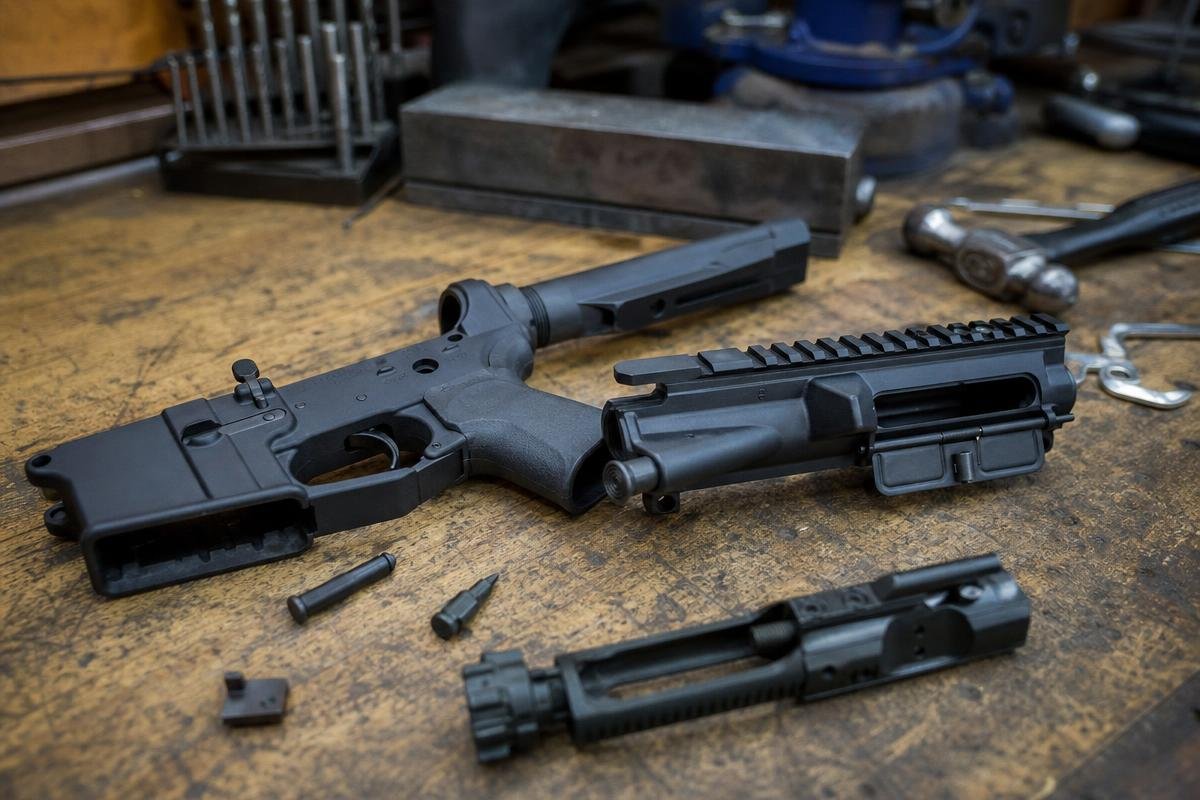
Planning an AR-15 assembly starts with a few specification checks that can prevent incorrect orders, avoidable returns, and unsafe assumptions. Below, we cover six common planning mistakes, from receiver pattern selection through magazines and sights, so you can compare the parts that must work together before checkout. AR15Parts.com ships from our Denison, TX facility at 4000 Texoma Pkwy, Denison, TX 75020. We offer firearms, parts, and accessories for builders reviewing their carts carefully.
Need help reviewing a parts list before you build? Send the part numbers, chambering, and receiver pattern you are considering.
Key Takeaways
- Confirm receiver pattern and component specifications before ordering pins, controls, and furniture.
- AR-15 assembly problems often begin with mismatched small parts or an incorrect receiver extension.
- Keep detents, springs, and pins organized so similar parts are not installed in the wrong location.
- Choose an upper, bolt carrier group, and barrel chambered for the same cartridge.
How to Plan an AR-15 Parts List Before You Order
Many stalled projects come from comparing individual product names instead of the interfaces between them. Your receiver, barrel, gas system, buffer system, and magazine system each have specifications that affect the next choice. For Denison and greater Texoma buyers, a written cart note makes it easier to ask focused product questions by phone or through the contact page before committing to an order.
This is a parts compatibility guide, not a build procedure. Follow manufacturer instructions, use proper tools, handle all firearms safely, and have a qualified professional inspect work when needed. Start with a written parts list before ordering pins, springs, furniture, and caliber-specific components.
A complete AR-15 upper can simplify upper-side selection when it is matched to a compatible AR-15-pattern lower, chambering, and magazine system. The next six sections show where first-time plans commonly go wrong.
Mistake 1: Ordering Parts Before Confirming Your Receiver Platform
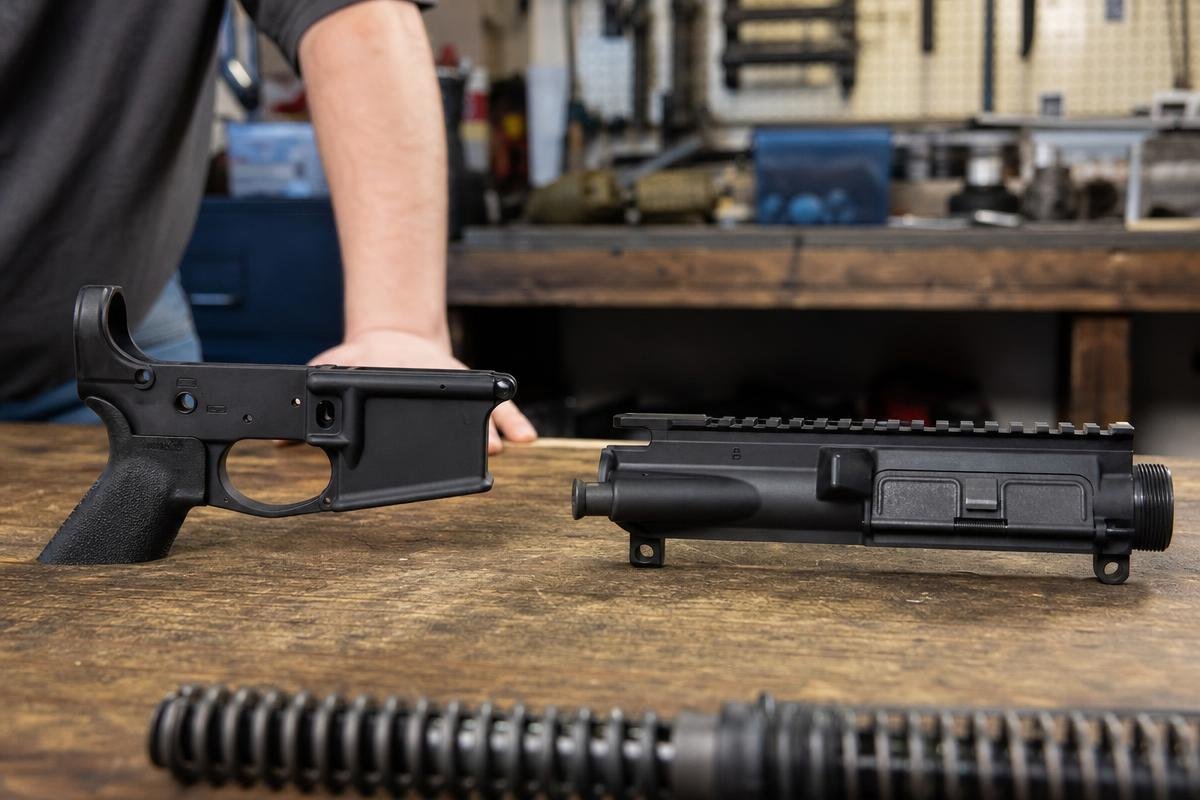
Ordering by caliber alone creates avoidable fit problems. Confirm the receiver pattern, intended chambering, and whether you are using a complete upper or separate upper components. The receiver platform, not the finish or accessory list, determines many of the dimensions and interfaces that follow.
What parts must match an AR-15 receiver platform?
Your lower receiver pattern must match the upper receiver family, pivot and takedown pin arrangement, magazine system, grip interface, receiver extension, and fire-control components. AR-15-pattern parts do not automatically transfer to larger-frame AR platforms, which can use different receiver geometry, pin locations, bolt carrier dimensions, and magazines.
Start With the Lower Receiver Pattern
Your lower receiver controls the fire-control group, magazine interface, pivot and takedown pin arrangement, grip interface, receiver extension, and stock setup. Standard AR-15 pattern parts are not automatically compatible with larger-frame AR platforms. A larger receiver can use different pin locations, magazine dimensions, bolt carrier dimensions, and upper receiver geometry.
Confirm that your lower is an AR-15 pattern lower before selecting an upper. Then verify the chambering and magazine requirements for the build. This platform check helps buyers avoid a cart full of parts that cannot work together.
Choose Between a Complete Upper and Separate Components
A complete upper reduces the number of upper-side interfaces you need to compare. Review the product description for its stated chambering, barrel configuration, bolt carrier group inclusion, and magazine requirements, then confirm those details against the lower you plan to use.
Building an upper from separate components requires closer comparison. Check the barrel extension, gas system length, gas block journal, gas tube length, bolt carrier group chambering, handguard mounting system, and upper receiver pattern before ordering. Keep a written build plan beside your cart so every part has a confirmed match.
Mistake 2: Mixing Barrel, Gas System, and Handguard Specifications

A barrel, gas system, and handguard can all be made for an AR-15 and still fail to fit together. Verify barrel chambering, gas-system length, gas-block journal diameter, and handguard mounting requirements against the published product specifications.
What must match on an AR-15 upper?
The barrel chambering, bolt face, gas-port location, gas tube length, gas-block journal, barrel nut, and handguard mounting system must be evaluated as a set. A correct chamber marking alone does not establish fit. Use the barrel maker's stated dimensions as the reference point for the gas and handguard components.
Match Chambering and Gas-System Length
Barrel length and gas-system length set up the operating system. A carbine, mid-length, or rifle-length gas tube is not interchangeable with the other lengths. The gas port location on the barrel determines the tube you need.
Confirm the barrel’s chamber marking before selecting the rest of the upper. Compare published specifications on precision barrels from Wilson Combat, Ballistic Advantage, and Satern, then match the gas tube and block to that exact barrel configuration. A complete upper can be a useful option when you prefer the barrel, gas components, and handguard to be selected together.
Check Gas Block and Handguard Clearance
The gas-block journal is the barrel diameter where the block mounts. Common journals include .625, .750, and .936 inches, so a block must match the barrel’s measured specification.
A handguard can fail even if it fits an AR-15 upper receiver. It must clear the outside dimensions of your chosen gas block, especially with low-profile blocks under a free-float rail. It also must use a barrel nut and mounting arrangement made for that handguard.
For a useful cart note, list the barrel brand and chambering, barrel length, gas-system length, journal diameter, gas block model, gas tube length, and handguard model. For help comparing those details, contact our parts team with the specifications you have selected.
Mistake 3: Treating the Lower Parts Kit as One Universal Package
Not every lower parts kit fits every AR-15 lower receiver in the same way. A kit is a collection of component groups, not a guarantee that every part matches your receiver, trigger choice, grip, and stock setup. Read the included-parts list and compare it against the receiver manufacturer’s specifications.
Review Each Lower Component Group
Break the kit into its actual groups: magazine catch, trigger guard, bolt catch, trigger assembly, safety selector, takedown and pivot pins, grip, and receiver extension hardware. A basic kit may include standard controls but omit the trigger, grip, or receiver extension you want.
Choose the trigger and safety selector for the intended lower receiver assembly, not just because they appear in a bundled listing. Match the grip to the receiver pattern, and select the receiver extension around the stock interface covered in the next step of your build plan. Our parts support contact page is available if you need help reviewing product specifications before ordering.
Check for Proprietary Receiver Features
Some lowers have an integrated trigger guard, so a separate trigger guard from the kit is unnecessary. Others may use manufacturer-specific pins, controls, or dimensions that require parts outside a standard mil-spec kit.
Check the receiver maker’s specifications for pivot and takedown pins, bolt catch hardware, selector fit, and trigger guard design. Do not assume a kit covers every preferred configuration just because it is labeled as an AR-15 lower parts kit.
When comparing a lower with an upper, write down the receiver pattern, chambering, magazine type, and any proprietary features first. We ship from our Denison, TX facility at 4000 Texoma Pkwy, Denison, TX 75020, and you can reach our team at (888) 706-0633 with a parts-list question.
Mistake 4: Choosing a Buffer Tube and Stock Without Checking the Interface
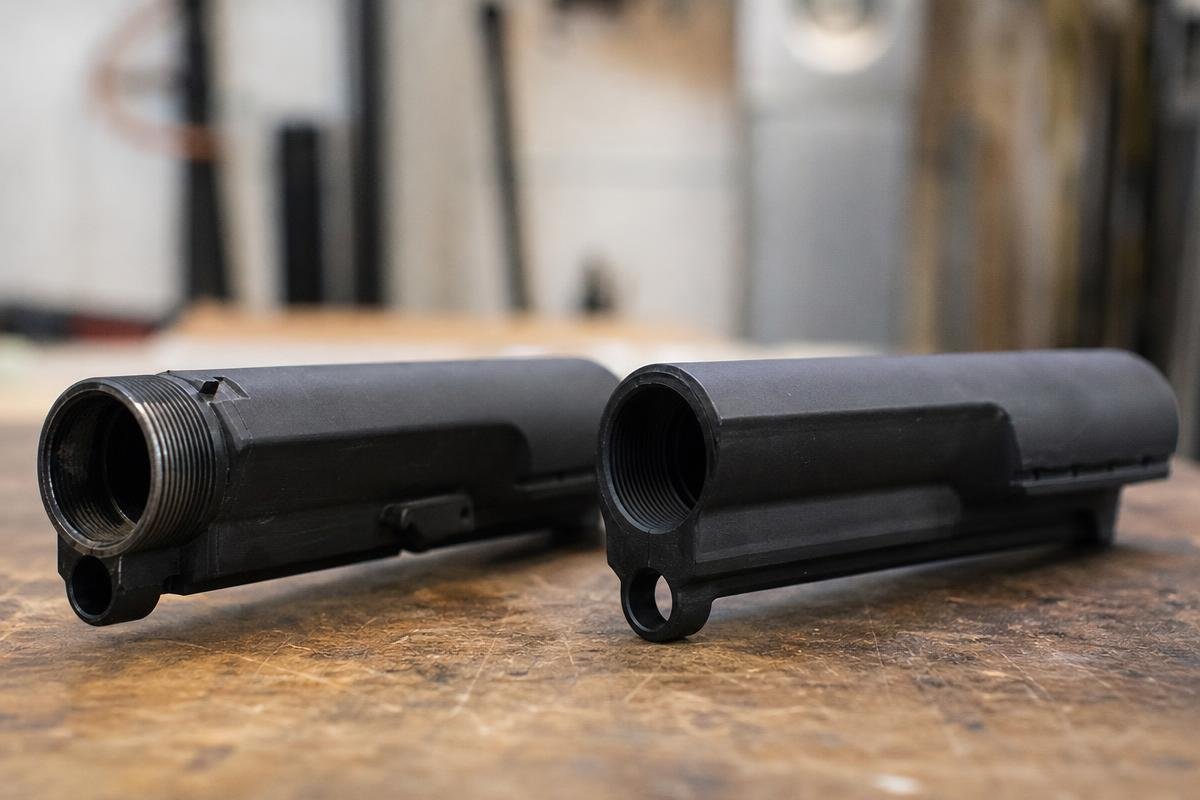
An adjustable stock must match the receiver extension profile, or it can fit loosely, bind, or fail to install. Confirm whether your buffer tube is mil-spec or commercial, then compare the stock maker's fitment notes.
Match the Stock to the Receiver Extension Profile
A mil-spec stock is made for a mil-spec receiver extension. It will not correctly fit a commercial extension, which commonly has a slightly larger outside diameter and an angled rear profile. Check the product specifications before checkout. This simple fitment review helps prevent return-prone mistakes and keeps your lower receiver plan on track.
Choose Stock Features After Confirming Fitment
Once the interface matches, choose stock features based on your preferred length of pull and general range or field use. Storage compartments, cheek weld shape, sling-mount locations, and adjustment lever design matter only after the stock fits the extension.
Add the extension type, buffer, spring, and stock to your parts list. If you need help sorting through specifications, contact AR15Parts.com before placing the order.
Need a second set of eyes on stock and buffer tube fitment? Call (888) 706-0633.
Mistake 5: Assuming Any Bolt Carrier Group Works With Any Barrel
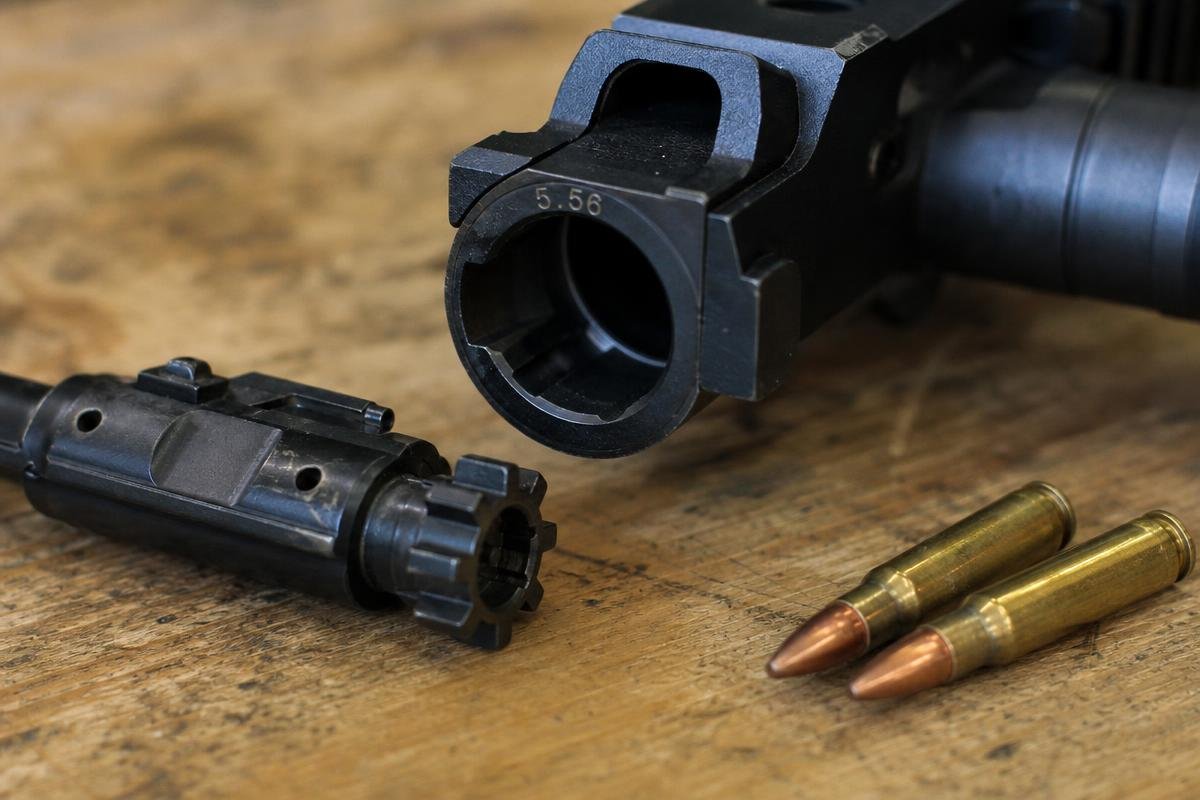
A bolt carrier group is not a universal match for every barrel. Start with the cartridge, barrel chamber, and bolt face, not the carrier finish or brand.
What bolt carrier group matches my barrel?
Match the bolt face to the cartridge case head and the barrel's stated chambering. Standard .223/5.56 bolt faces are commonly used with 5.56 NATO and .223 Wylde barrels, while other cartridges may require dedicated bolts, magazines, or a different receiver platform. Always follow the barrel and bolt manufacturer’s documentation.
Match the Bolt Face to the Cartridge and Chamber
The bolt face must fit the cartridge case head your barrel chamber is made to fire. A 5.56 NATO or .223 Wylde barrel generally uses a standard .223/5.56 bolt face. Cartridge requirements vary among .350 Legend, .458 SOCOM, and 6.5 Creedmoor, so confirm the bolt, magazine, and receiver platform for the exact barrel and cartridge before ordering.
Do not assume two cartridges use the same bolt because they fit an AR-style rifle. Confirm barrel markings, cartridge specifications, and manufacturer guidance before ordering a BCG. Upper assemblies sold with matched components can reduce the number of individual comparisons, but their listed specifications still need to match your lower and magazine system.
Treat Headspace as a Safety-Critical Relationship
Headspace is controlled by the relationship between the barrel chamber and bolt locking lugs. It cannot be confirmed by appearance, and a bolt that physically fits into a carrier is not proof it is suitable for that barrel.
Follow the barrel and bolt manufacturer’s guidance. Seek qualified inspection if compatibility is uncertain. Do not assume a headspace-related claim applies unless it is specifically stated in the product description or manufacturer documentation.
If you need help sorting part numbers before you order, contact AR15Parts.com at (888) 706-0633. The team can help review product-selection details without representing inspection or diagnosis services.
Mistake 6: Skipping a Final Build Plan for Magazines, Sights, and Safe Function Checks
Your final order review should cover magazines, sights, and unloaded-condition checks before parts arrive. Add these items to your written parts list so each component supports your cartridge, upper, and intended use.
Match Magazines to the Cartridge and Receiver Platform
Magazine choice follows cartridge and receiver platform, not appearance alone. Check caliber markings, capacity, and manufacturer compatibility notes before ordering. A magazine made for 5.56 NATO may not be appropriate for cartridges that require a different magazine body or follower.
Review a complete upper with its stated cartridge and magazine requirements. Keep packaging and markings together until you confirm every item on your order.
Plan Sights Around the Upper and Handguard
Backup sights and red dots must fit your upper receiver rail and handguard configuration. Confirm rail space, sight height, mounting pattern, and clearance around any fixed front sight base. Follow the optic or sight manufacturer’s instructions for mounting and zeroing. Include required drivers, torque tools, and other AR-15 assembly tools in your final parts list.
Use Manufacturer Instructions and Qualified Help When Needed
Use unloaded-condition checks, safe handling practices, and each manufacturer’s instructions before treating a build as ready. Do not guess about unclear fitment or function. If a component does not match its documentation, stop and seek qualified professional assistance. You can contact AR15Parts.com for product-selection questions before placing another order.
Build Planning Resources for Denison Parts Buyers
We ship firearms, parts, and accessories from our Denison, TX facility at 4000 Texoma Pkwy, Denison, TX 75020. Compare complete rifles, complete AR-15 uppers, barrels, bolt carrier groups, charging handles, handguards, lower parts, muzzle devices, stocks, upper receivers, upper parts, and magazines as one coordinated order rather than as unrelated products.
Use a Pre-Purchase Parts Checklist
A written parts list keeps your order tied to one receiver platform and caliber. For each item in your cart, record the manufacturer, part number, receiver pattern, chambering, gas-system length where applicable, and the product specification that confirms fit. This makes it easier to identify missing companion parts before checkout.
- Receiver platform, chambering, and magazine type
- Barrel model, gas-system length, journal diameter, and bolt-face requirement
- Gas block, gas tube, barrel nut, and handguard mounting system
- Stock, receiver extension profile, buffer, and spring
- Sighting setup, rail space, and required mounting tools
Ask Product Questions Before You Order
Call (888) 706-0633 with applicable product questions before ordering. You can also contact AR15Parts.com with part numbers and the specifications you have already selected. Providing the receiver pattern, chambering, and the exact components you intend to pair helps keep the discussion focused on documented product fitment.
Frequently Asked Questions
What Tools Do I Need for AR-15 Assembly?
You need AR-15 assembly tools matched to your selected components and each manufacturer’s instructions. Common items include a bench vise, receiver blocks, torque wrench, armorer’s wrench, roll-pin punches, and a small hammer. Check instructions for your handguard, barrel nut, and lower receiver assembly parts before buying tools.
Will a Complete Upper Fit Any Lower Receiver?
No, a complete upper must match your receiver pattern, caliber, and product specifications. Most standard AR-15 uppers are made to fit a mil-spec AR-15 lower, but AR-10 and other large-frame patterns are not interchangeable. Review specifications on our complete AR-15 uppers before ordering.
How Do I Choose a Bolt Carrier Group?
Choose a bolt carrier group that matches your barrel chambering and the manufacturer’s stated compatibility requirements. A 5.56 NATO bolt works with 5.56 NATO and .223 Wylde barrels, while other chamberings may require a dedicated bolt. If markings, bolt face dimensions, or headspace requirements are unclear, have a qualified professional inspect the parts.
How Do I Choose a Compatible Stock?
Choose a stock that matches your receiver extension type. A collapsible stock needs a carbine-style extension, while a fixed stock uses its own compatible extension and hardware. Confirm commercial versus mil-spec tube dimensions before ordering.
How Do I Choose Magazines for My Setup?
Choose magazines made for your cartridge and receiver pattern. Standard 5.56 NATO magazines can support some related cartridges, but many calibers need dedicated feed geometry or a different magazine body. Check cartridge specifications before adding magazines to your build plan.
Where Can I Ask Product Questions in Denison?
AR15Parts.com ships firearms, parts, and accessories from our Denison, TX facility at 4000 Texoma Pkwy, Denison, TX 75020. Before you place your order, compare every product specification against your receiver pattern, chambering, and intended setup. For applicable product questions, contact AR15Parts.com at (888) 706-0633 or use our contact page.
Ready to Get Started with AR15Parts.com?
Call (888) 706-0633 to speak with our team directly. We're ready to answer your questions, walk you through your options, and help you find the right solution for your needs. Whether you're just starting to plan or ready to move forward, we'll make the process simple and stress-free. Reach out today and let's talk about how we can help.