
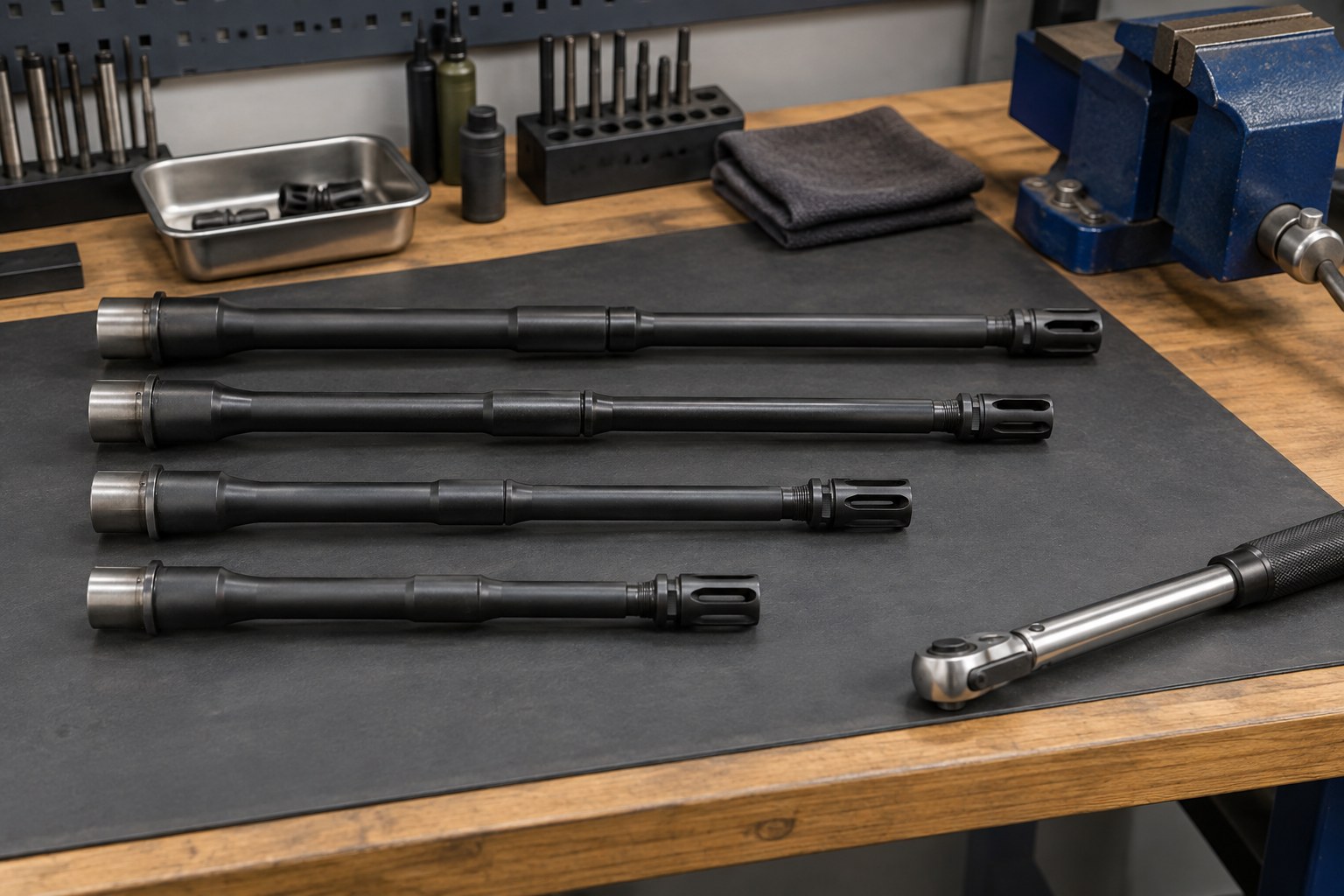
Choosing the right 350 Legend barrel length shapes how a rifle handles in a ground blind, carries through brush, and performs with or without a suppressor during a North Texas deer or hog season. AR15Parts.com ships barrels for this straight-wall cartridge from its Denison, Texas facility. Below, we compare six common 350 Legend barrel length options so you can match one to your blind, stand, or brush conditions. Have questions about a specific build?
Key Takeaways
- A 350 Legend barrel length between 16 and 20 inches covers most Denison-area deer and hog hunting situations without adding excess weight to a blind or stand setup.
- Pistol-length barrels around 10.5 to 11.5 inches trade some velocity for a shorter, lighter platform that is easier to maneuver in thick brush or a tight blind.
- Any 350 Legend barrel shorter than 16 inches on a rifle-configured firearm is a short-barreled rifle under federal law and requires ATF registration before use.
- Winchester developed the 350 Legend as a straight-walled centerfire cartridge, and SAAMI accepted its cartridge and chamber specifications in 2019.
- Barrels commonly ship with a 1:16 twist rate for the 350 Legend, though some manufacturers offer alternatives, so always confirm the twist against your ammunition choice.
- Always check current Texas Parks and Wildlife Department (TPWD) hunting regulations before the season, since firearm and cartridge rules can be updated year to year.
Why Does 350 Legend Barrel Length Matter for Texoma Hunters?
Winchester introduced the 350 Legend as a medium-bore, straight-walled centerfire cartridge intended to give hunters in states with straight-wall cartridge deer seasons a rifle option with AR-15 compatible components. The Sporting Arms and Ammunition Manufacturers' Institute (SAAMI) accepted the 350 Legend cartridge and chamber standard in 2019, which gives manufacturers a common reference for chamber dimensions and pressure limits when building 350 Legend barrels.
Barrel length affects a 350 Legend build in three practical ways: how much velocity the bullet carries downrange, how the rifle balances and swings in a blind or through brush, and whether the barrel falls under National Firearms Act (NFA) rules. A shorter barrel favors a compact, easy-to-carry rifle for hog hunting in dense cover, while a longer barrel favors a bit more reach and a heavier, steadier hold from a fixed stand.
Twist rate is part of the same conversation. Barrels chambered in 350 Legend commonly ship with a 1:16 right-hand twist, which manufacturers and Winchester's own published guidance describe as suitable for stabilizing a range of bullet weights. A different twist rate is not automatically wrong, but always confirm the twist stamped on a specific barrel against the bullet weight you intend to shoot, and follow the ammunition manufacturer's guidance if you are unsure.
Six 350 Legend Barrel Length Options Ranked for Blind and Brush Hunting
The list below walks through six common barrel length categories, from short pistol-style builds to longer rifle-length barrels. Pros and cons focus on handling in a blind or brush, suppressor compatibility, and how velocity generally trends with length, described qualitatively rather than with exact published numbers, since ballistics vary by ammunition and individual barrel.
1. 10.5 to 11.5 Inch Pistol-Style Barrels
A 10.5 to 11.5 inch 350 Legend barrel on an AR-pistol configuration is the shortest common option and the most maneuverable in a tight blind, a ground hide, or thick brush where a long barrel can catch on branches. Velocity runs lower than longer barrels of the same cartridge, since the powder has less barrel length to burn through before the bullet exits. A pistol-length build is not classified as a short-barreled rifle as long as it is legally configured as a pistol with no shoulder stock, but any change to a rifle stock or shouldering brace can affect that classification, so confirm your configuration before hunting with it.
2. 14.5 Inch Pinned and Welded Barrels
A 14.5 inch barrel falls below the 16 inch federal minimum for a rifle-configured firearm, so builders typically pin and weld a muzzle device to bring the total barrel length to 16 inches or more, keeping the rifle outside short-barreled rifle territory without ATF paperwork. This length sits between the pistol builds and full 16 inch options for balance, though the pinned device adds a small amount of permanent length and cannot be removed later without gunsmith work. It is a middle-ground choice for hunters who want slightly more barrel than a pistol build without registering a short-barreled rifle.
3. 16 Inch Barrels
Sixteen inches is the most common length for a standard rifle-configured AR-15, since it clears the federal minimum without any pinning or registration. A 16 inch barrel balances well for still hunting from a stand, still handles reasonably in brush, and works with most factory ammunition loads without the significant weight of a longer barrel. Wilson Combat offers a 16 inch 350 Legend barrel with a 1:15 twist, giving hunters a shorter rifle-length option without falling under NFA rules.
4. 18 Inch Barrels
An 18 inch 350 Legend barrel adds a bit more forward weight and generally trends toward slightly more velocity than a 16 inch barrel with the same load, at the cost of a little extra length to manage in a blind or thick cover. Shaw Barrels offers an 18 inch 350 Legend barrel with a 1:16 twist, which is a common choice for hunters who want more barrel without moving into the longer, heavier rifle-length options. This length suits open stand hunting or larger blinds better than dense brush.
5. 20 Inch Barrels
A 20 inch barrel is on the longer end for a 350 Legend AR-15 build and trends toward more velocity retention than shorter options, but the added length and weight can make a rifle feel front-heavy in a small blind or when moving through brush. Hunters who post up in a fixed box blind or elevated stand and rarely relocate during a hunt tend to tolerate the extra length better than those covering ground on foot.
6. 22 Inch Barrels
Twenty-two inch 350 Legend barrels are less common on AR-15 platforms and are best suited to a dedicated bench or stand rifle rather than a carry gun for brush or blind hunting. The extra length can offer marginal velocity gains over shorter barrels with the same load, but the tradeoff in weight and length is significant for a rifle you carry any distance. Most Denison-area hunters find a 16 to 18 inch barrel a better balance for typical blind and brush conditions, reserving longer barrels for open-country or bench use.
| Barrel Length | Handling in Blind or Brush | Suppressor Fit | NFA Status (Rifle Config) |
|---|---|---|---|
| 10.5 to 11.5 inch (pistol) | Very maneuverable, best in tight brush | Compact overall length with a can attached | Not an SBR as a properly configured pistol |
| 14.5 inch (pinned) | Compact, slightly longer than pistol | Shorter overall length than a full 16 inch barrel with a can | Not an SBR once pinned to 16 inches or more |
| 16 inch | Balanced for most blinds and stands | Common length for a suppressed hunting setup | Not an SBR |
| 18 inch | Good for open stands, less ideal in dense brush | Longer overall length with a can | Not an SBR |
| 20 inch | Best for fixed blinds, front-heavy on the move | Long overall length with a can | Not an SBR |
| 22 inch | Best for bench or stationary use | Longest overall length with a can | Not an SBR |
How Does Barrel Length Affect 350 Legend Velocity and Suppressor Use?
Velocity in a straight-wall cartridge like the 350 Legend generally trends upward as barrel length increases, since the bullet has more distance to accelerate before leaving the muzzle, but the gains taper off with each additional inch and depend heavily on the specific load. Rather than quoting exact velocity figures, which vary by ammunition brand, bullet weight, and individual barrel, plan around the general trend: shorter barrels sacrifice some velocity for handling, and longer barrels gain a bit of velocity at the cost of weight and length.
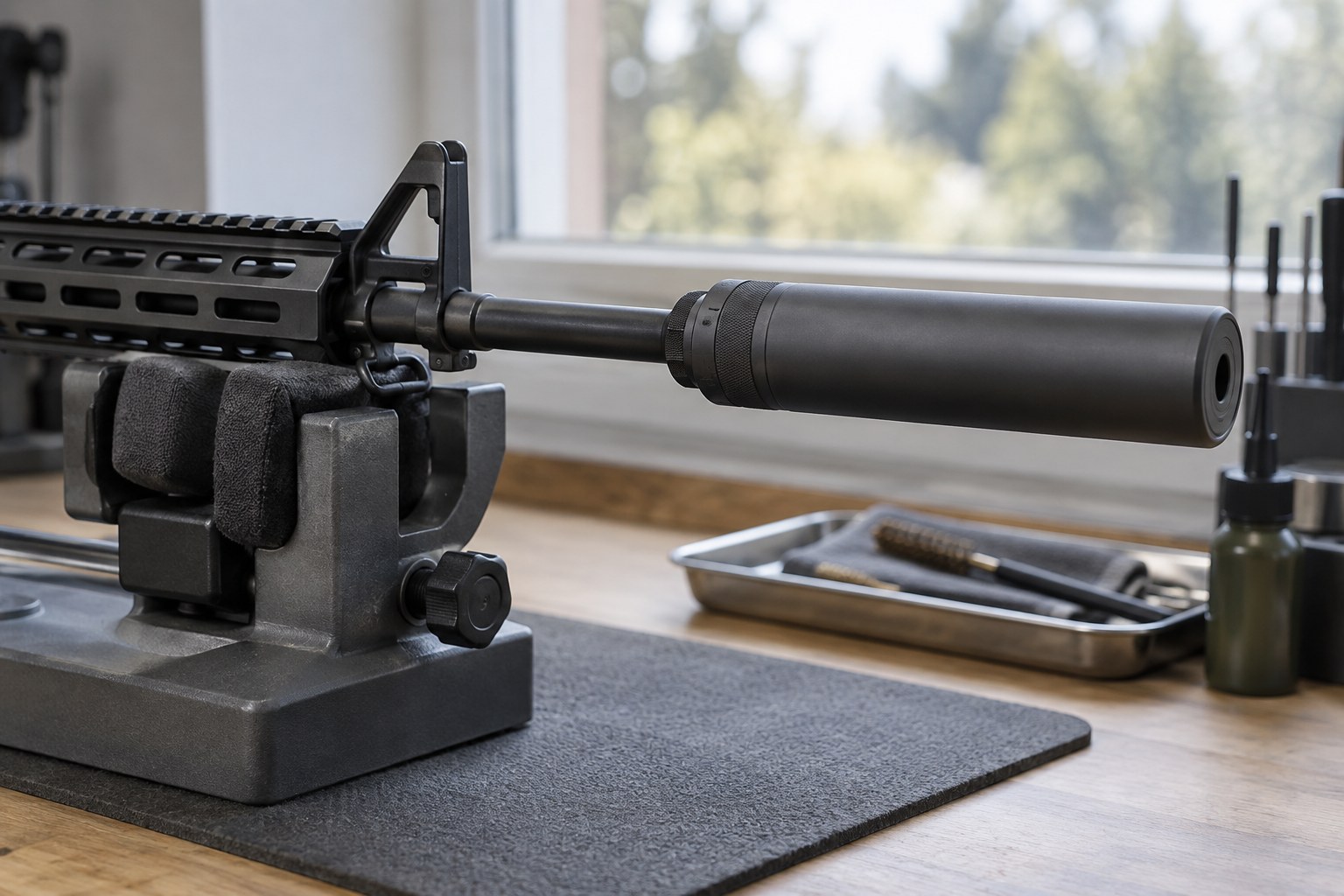
Suppressor use adds another layer to the length decision. Attaching a suppressor to a shorter barrel keeps the overall rifle length closer to what an unsuppressed longer barrel would measure, which many hunters prefer for blind and brush work. A 16 inch barrel with a suppressor often lands in a similar overall length range to an 18 or 20 inch barrel without one, so factor in suppressor use before settling on a length. Our AR Upper Hub guide to building a 350 Legend upper walks through additional component considerations for a suppressed or unsuppressed build.
Always follow the suppressor and ammunition manufacturer's published specifications for compatibility, and never modify a gas port or drill a barrel to compensate for a suppressor or a length change. If a build is not cycling reliably after adding a can, a qualified gunsmith can evaluate the gas system rather than guessing at a fix.
What Should You Know About NFA Rules Below 16 Inches?
A rifle barrel under 16 inches on a rifle-configured 350 Legend build makes the firearm a short-barreled rifle under the National Firearms Act, and a short-barreled rifle still requires registration with the Bureau of Alcohol, Tobacco, Firearms and Explosives (ATF) before it can be built or acquired in that configuration. This applies regardless of whether the shorter barrel is intended for hunting, and the registration process and waiting period exist independently of any tax due.
The federal making and transfer tax for short-barreled rifles has been reduced to zero since January 1, 2026, under the One Big Beautiful Bill Act, but the registration and approval requirements themselves have not changed. A 14.5 inch barrel pinned and welded to a muzzle device that brings total barrel length to 16 inches or more is a common way builders keep a shorter-feeling rifle without registering it as a short-barreled rifle, but the pinning must be done correctly and permanently. If you are unsure whether a build qualifies, a qualified gunsmith or the ATF itself is the right resource, not a guess.
Choosing the Right 350 Legend Barrel, Upper, or Magazine
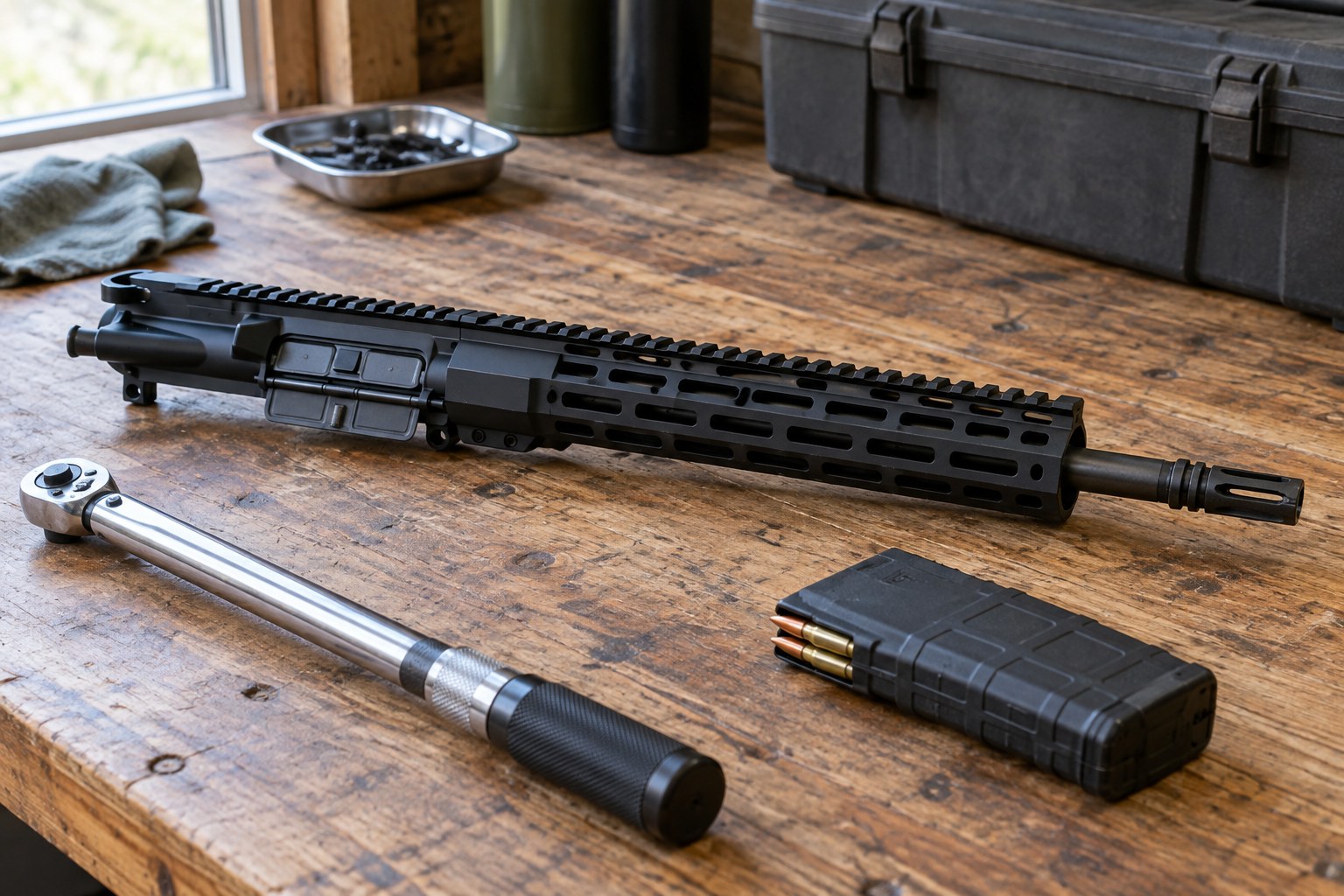
Barrel length is only one part of a 350 Legend build. The barrel needs to match your upper receiver, handguard length, gas system, and magazine to function reliably, and mismatched components are a common source of cycling problems. Browse current 350 Legend barrels to compare available lengths, twist rates, and finishes before deciding on a specific build.
If you are starting from a complete platform rather than building up from a stripped upper, a complete 350 Legend upper pairs a barrel with a matched bolt, gas system, and handguard so you are not sourcing every part separately. Complete uppers are assembled in-house, headspaced, and function-checked before they ship, which removes one variable from a hunting-season build timeline.
Magazine capacity and feeding reliability also depend on matching the right magazine to your rifle and cartridge. Review current 350 Legend magazines to confirm compatibility with your specific lower receiver before the season starts. For a deeper comparison of the cartridge against a traditional deer rifle option, our AR Upper Hub guide comparing the 350 Legend to the 30-30 covers how the two cartridges differ in practice.
350 Legend Barrel Length Help for Denison and Texoma Hunters
Humidity and heat around Lake Texoma can affect how a rifle feels during long hours in a blind, and hunters in North Texas often want a barrel that stays comfortable to carry through a full morning of deer or hog hunting. A shorter, lighter barrel reduces fatigue on a still hunt through brush, while a longer barrel can be worth the extra weight for a fixed stand where the rifle rarely moves.
Range days before the season are the best time to confirm point of impact, function, and suppressor fit for a new barrel length, rather than discovering an issue once deer season opens. Always start with an unloaded rifle on the bench, follow the barrel and component manufacturer's instructions for installation and torque, and have a qualified gunsmith check headspace on any barrel swap if you are not confident doing it yourself.
Denison and Texoma-area hunters can reach AR15Parts.com at 4000 Texoma Parkway, Denison, TX 75020 or by phone at (888) 706-0633 with questions about matching a 350 Legend barrel to a specific build or hunting situation.
Frequently Asked Questions
What Is the Best 350 Legend Barrel Length for Hunting in Brush?
A shorter barrel in the 16 inch range, or a pistol-style build around 10.5 to 11.5 inches, generally handles better in dense brush than an 18 to 22 inch barrel. Shorter barrels swing and maneuver more easily around branches and tight cover, though they trade some velocity for that handling advantage.
Is a 16 Inch 350 Legend Barrel Legal Without ATF Paperwork?
Yes, a 16 inch barrel on a rifle-configured 350 Legend build meets the federal minimum and does not require short-barreled rifle registration. Anything shorter than 16 inches on a rifle configuration falls under NFA rules unless it is legally built as a pistol or brought to 16 inches with a pinned and welded muzzle device.
Does a Longer Barrel Always Mean More Velocity for 350 Legend?
Generally yes, longer barrels trend toward higher velocity for the same load, but the gains shrink with each additional inch and vary by ammunition. A 20 or 22 inch barrel will not dramatically outperform an 18 inch barrel with the same load, so weigh the modest velocity gain against the added weight and length.
What Twist Rate Should a 350 Legend Barrel Have?
Most 350 Legend barrels ship with a 1:16 twist rate, which is commonly cited as suitable for a range of bullet weights in this cartridge. Some manufacturers offer other twist rates for specific bullet weights, so always confirm the twist stamped on a barrel against your chosen ammunition.
Can I Hunt Deer in Texas With a 350 Legend Rifle?
Check the current Texas Parks and Wildlife Department (TPWD) hunting regulations before the season, since legal firearm and cartridge rules for deer hunting can change and vary by hunt type. TPWD's published outdoor annual regulations are the authoritative source, not a general buying guide.
Do I Need a Gunsmith to Install a New 350 Legend Barrel?
Not always, but headspace must be verified correctly for safe function, and a qualified gunsmith is the right call if you are unsure about the process or do not have the tools to check headspace properly. Follow the barrel and receiver manufacturer's published instructions either way, and never modify a gas port to fit a barrel change.
Ready to Get Started with AR15Parts.com?
Call (888) 706-0633 or email [email protected] to talk through 350 Legend barrel length options with our team before the season starts. We're available Monday through Friday, 8:00 AM to 4:00 PM Central, to help you match a barrel, upper, or magazine to your specific build and hunting plans.