
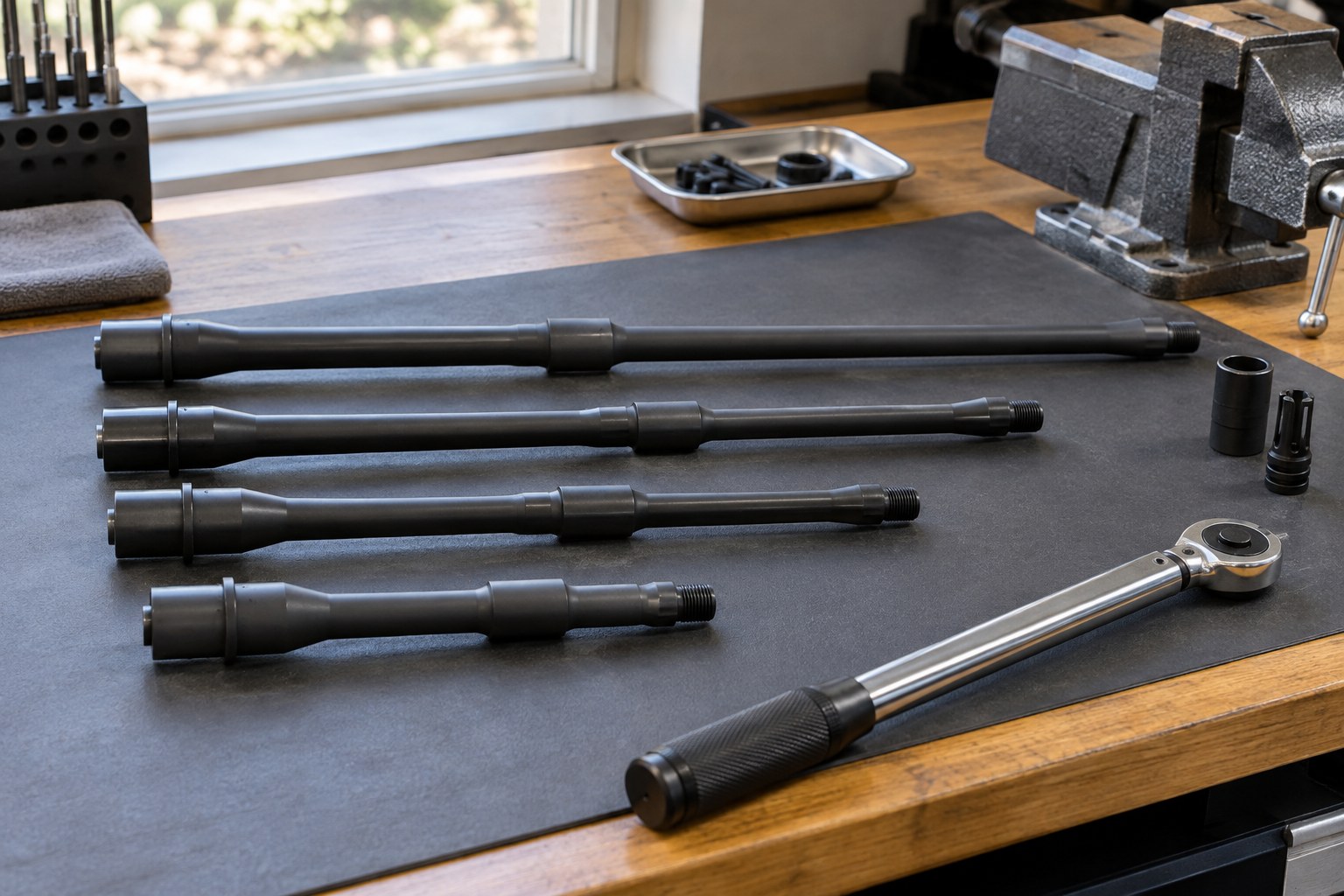
Picking the right 458 SOCOM barrel length shapes how a big-bore AR carries, cycles, and performs on everything from a Texoma range bay to a hog blind. AR15Parts.com ships barrels and complete uppers to builders across the country, including shooters in Denison and the surrounding North Texas region. Shorter barrels handle faster in tight cover, while longer ones give powder more room to work, and the length you choose also determines whether a build needs paperwork under federal law. If you want help matching a barrel to your receiver, bolt, and gas system before you order, our team can walk through the options with you.
Key Takeaways
- 458 SOCOM barrels generally run from short pistol-length options around 10.5 inches up to rifle-length barrels of 20 inches or more.
- A rifled barrel under 16 inches on a shouldered rifle configuration meets the federal definition of a short-barreled rifle (SBR) and requires registration with the Bureau of Alcohol, Tobacco, Firearms and Explosives (ATF).
- A 14.5 inch barrel with a muzzle device permanently attached by pinning and welding can reach a 16 inch or longer overall barrel length without SBR paperwork, but the attachment method has to meet ATF requirements.
- Most 458 SOCOM barrels on the market, including the current 458 SOCOM barrel listings at AR15Parts.com, use a 1:14 twist rate to stabilize the cartridge's heavy subsonic and supersonic bullets.
- Barrel length affects handling, suppressor balance, and how much velocity a given load can develop, but exact numbers vary by ammunition and individual barrel.
- Hog hunters in North Texas should confirm current Texas Parks and Wildlife Department (TPWD) regulations and any land-specific rules before choosing a barrel length for a hunting build.
What Should You Consider Before Choosing a Barrel Length?
Choosing a barrel for a 458 SOCOM build usually comes down to three questions: how the rifle will be carried, whether a suppressor is part of the plan, and whether the finished configuration needs to stay clear of the short-barreled rifle rules. Each of those factors pulls in a different direction, so it helps to rank them before picking a barrel.
Intended Use Drives the Decision
A truck gun or hog rifle that spends time moving through brush benefits from a shorter, lighter barrel that swings quickly. A range or precision-leaning build can carry a longer barrel without the same handling tradeoff. Match the barrel to the role the rifle will actually fill rather than defaulting to the longest option available.
Suppressor Plans Change the Math
458 SOCOM is popular as a suppressor host because the cartridge was designed with subsonic loads in mind. Adding a suppressor lengthens the overall package regardless of barrel length, so shooters who plan to run one often lean toward a shorter barrel to keep the suppressed rifle manageable. Anyone considering a suppressor purchase should also plan for the separate ATF approval process that applies to suppressors themselves.
Legal Configuration Comes First
Before ordering a barrel under 16 inches for a rifle-configured build, confirm how the receiver is currently registered. Getting this wrong is not a paperwork inconvenience, so verify directly with the ATF before you buy.
How Does 458 SOCOM Barrel Length Affect Handling and Velocity?
Barrel length changes the balance point, muzzle blast, and how efficiently a cartridge burns its powder charge before the bullet leaves the muzzle. With 458 SOCOM, those effects are easier to describe qualitatively than to reduce to a single number, since bullet weight and powder charge both move the result.
Shorter Barrels Handle Quicker but Trade Away Some Velocity Potential
A shorter 458 SOCOM barrel is lighter out front and easier to maneuver in a blind, a truck cab, or dense brush. A shorter barrel also gives the powder charge less time to burn before the bullet exits, which generally means lower velocity than the same load fired from a longer barrel. The size of that difference depends on the specific powder and bullet weight.
Longer Barrels Favor Stability and Full Powder Burn
Rifle-length 458 SOCOM barrels let slower-burning powders finish combustion closer to the muzzle and add a bit more forward weight, which can steady the rifle for slow, deliberate shots from a bench or blind. That stability comes at the cost of a longer, heavier rifle that is less convenient to carry through timber or move quickly in a hunting scenario.
6 Common 458 SOCOM Barrels by Length
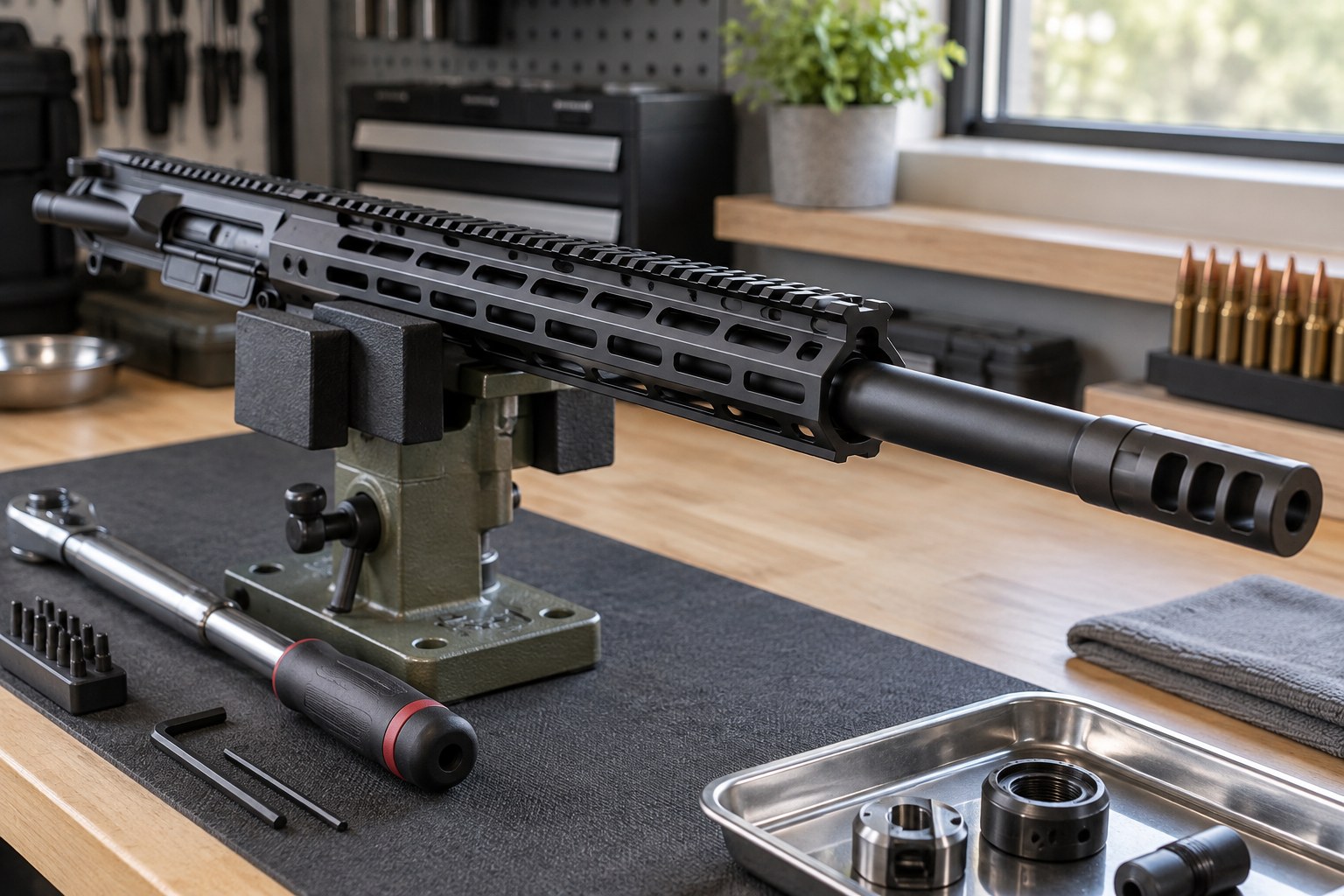
The table below lines up six lengths that show up across the 458 SOCOM market, from short pistol-length barrels to full rifle-length options. Availability and exact configurations change, so browse current options on the 458 SOCOM barrels and 458 SOCOM uppers pages rather than relying on any specific list.
| Length | Typical Configuration | Handling and Use Notes |
|---|---|---|
| 10.5 inches | Pistol (no shoulder stock) | Very compact and light up front; strong suppressor host on a pistol build, but a rifle-configured 10.5 inch barrel is an SBR under federal law. |
| 12.5 inches | Pistol (no shoulder stock) | A common pistol-length choice that balances compactness with slightly more barrel than the shortest options; still an SBR if built as a shouldered rifle. |
| 14.5 inches | Rifle, with permanently attached muzzle device | Needs a muzzle device attached by pinning and welding (or another ATF-compliant permanent method) to bring the barrel to 16 inches or more overall so the rifle is not an SBR. |
| 16 inches | Rifle | The most common non-NFA rifle length; no permanent muzzle device attachment is required to clear the federal barrel-length threshold. |
| 18 inches | Rifle | Adds forward weight and a bit more barrel time; a middle ground for shooters who want more stability without a full rifle-length build. |
| 20 inches | Rifle | Full rifle-length option favored for bench use and maximum powder burn; heaviest and least maneuverable of the group. |
1. 10.5 Inches: The Shortest Common Pistol Configuration
A 10.5 inch 458 SOCOM barrel is about as compact as the cartridge gets on an AR platform. Built as a pistol with no shoulder stock, it stays outside the SBR rules that apply to shouldered rifles, but stabilizing brace regulations have shifted in recent years, so confirm current requirements before finalizing a pistol build. This length suits a lightweight truck gun or a suppressed pistol build where compactness matters most.
2. 12.5 Inches: A Slightly Longer Pistol Option
A 12.5 inch barrel keeps most of the handling advantage of a shorter pistol build while giving the bullet a little more barrel time. Like the 10.5 inch option, a 12.5 inch barrel on a rifle configured to be fired from the shoulder falls under the SBR definition, so this length is typically built as a pistol.
3. 14.5 Inches: The Pinned and Welded Rifle Length
A 14.5 inch barrel sits just under the 16 inch federal threshold, so builders commonly attach a muzzle device by pinning and welding it in a way the ATF recognizes as permanent, bringing the total barrel length to 16 inches or more. Done correctly, this keeps the rifle out of SBR territory while giving the barrel a slightly different profile and balance than an off-the-shelf 16 inch barrel. This approach depends on getting the attachment method right, so many builders have a qualified gunsmith perform or verify the pin-and-weld work.
4. 16 Inches: The Baseline Rifle Length
A 16 inch barrel is the shortest length that clears the federal SBR threshold on its own, without a permanently attached muzzle device. It is a common default for a general-purpose 458 SOCOM rifle build because it balances handling and barrel time without any pin-and-weld work.
5. 18 Inches: A Middle Ground for Stability
An 18 inch barrel adds forward weight and a bit more burn time compared with a 16 inch barrel, without moving into full rifle-length territory. Some hunters and bench shooters prefer it as a compromise between 16 inch handling and 20 inch stability.
6. 20 Inches: The Full Rifle-Length Choice
A 20 inch barrel is the longest length commonly seen on 458 SOCOM builds. It gives the powder charge the most room to burn and adds the most forward weight of the group, which can help steady the rifle for careful, deliberate shots. The tradeoff is a longer, heavier rifle that is less convenient to carry through brush or maneuver in a blind.
What Does the ATF Say About Short 458 SOCOM Barrels?
Federal law defines a rifle with a rifled barrel under 16 inches as a short-barreled rifle, regulated under the National Firearms Act and requiring registration with the Bureau of Alcohol, Tobacco, Firearms and Explosives (ATF) before it is built or acquired in that configuration. This applies to any AR-platform rifle, including 458 SOCOM builds, once the barrel drops below 16 inches and the configuration is fired from the shoulder.
Pistol Configurations Follow Different Rules
A short 458 SOCOM barrel built on a pistol receiver, without a shoulder stock, is not automatically an SBR, but stabilizing brace regulations have changed more than once in recent years, so verify current rules directly with the ATF before assembling a short-barreled pistol build. Our AR Upper Hub guide to AR-15 pistol uppers covers the general tradeoffs of a pistol-configured build in more depth.
Registering an SBR Is an Option, Not a Shortcut
Shooters who want a true SBR configuration can apply to register one with the ATF rather than relying on a pinned-and-welded muzzle device. As of January 1, 2026, the federal making and transfer tax for short-barreled rifles and other regulated NFA items other than machine guns dropped to zero under the One Big Beautiful Bill Act, though the registration and approval process itself still applies. Confirm current requirements and processing steps with the ATF before starting a build.
How Does Twist Rate Relate to Barrel Length on a 458 SOCOM?
Twist rate and barrel length are separate specifications, but they work together to determine how well a given barrel stabilizes a bullet. Most 458 SOCOM barrels on the market use a 1:14 twist rate regardless of length, a specification built to stabilize the cartridge's typically heavy bullet weights across both subsonic and supersonic loads.
Why 1:14 Twist Is the Common Standard
A 1:14 twist gives the rifling one full turn every 14 inches of barrel, and that rate shows up across 458 SOCOM barrels from multiple manufacturers, including the current 458 SOCOM barrel listings at AR15Parts.com. Because the twist rate is expressed per inch of travel rather than per total barrel length, a 10.5 inch barrel and a 20 inch barrel with the same 1:14 twist spin the bullet at the same rate; the longer barrel simply gives the bullet more total rotations before it exits the muzzle.
Bullet Weight Still Matters
Heavier or longer-for-caliber 458 SOCOM bullets generally need more spin to stabilize than lighter, shorter bullets, which is part of why the cartridge settled on a relatively fast 1:14 twist. If you are working with an unusual bullet weight or a specialty load, check the twist rate recommendation on the manufacturer's packaging or spec page before assuming any barrel will stabilize it well.
Choosing the Right Barrel for Hog Hunting in North Texas
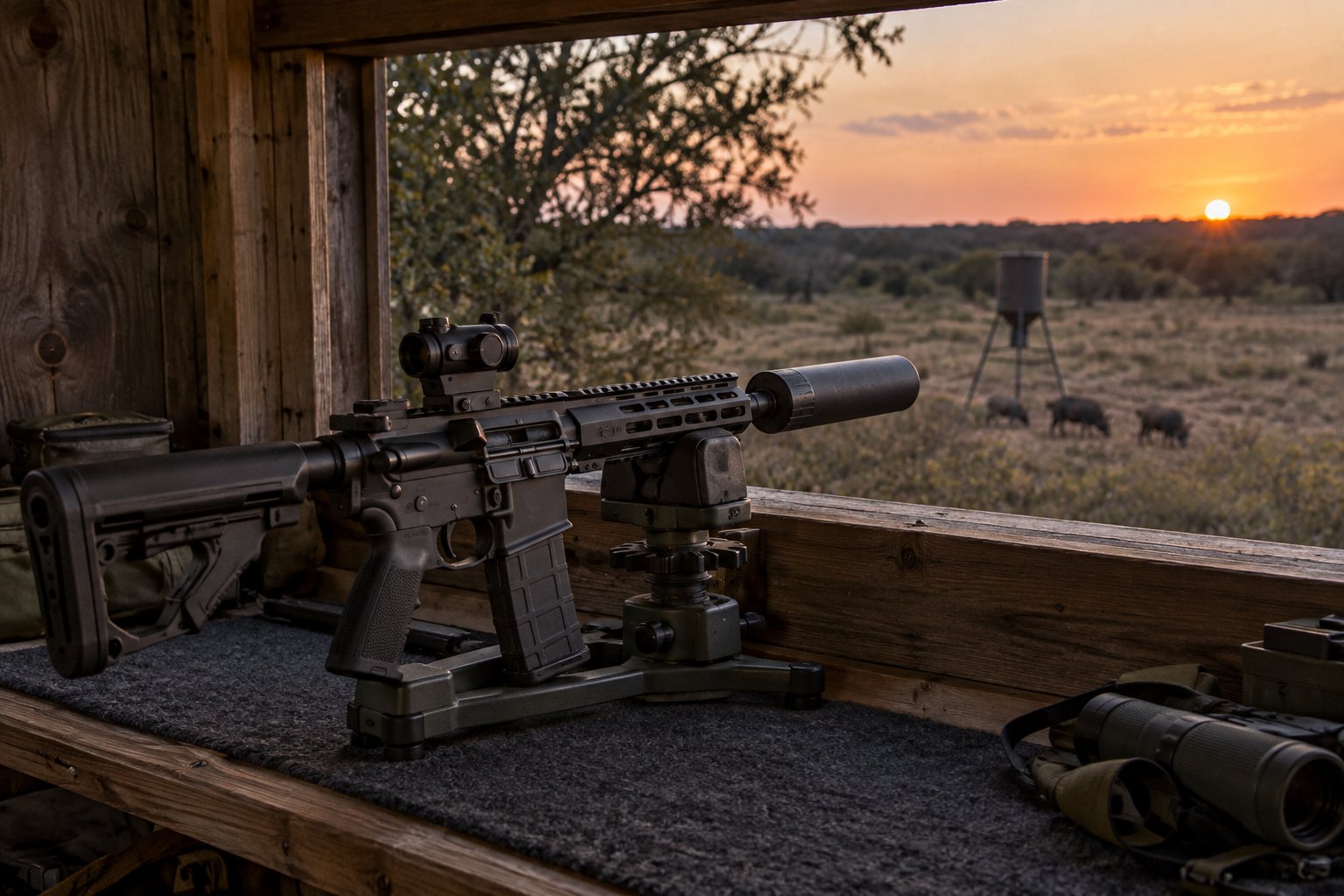
458 SOCOM built its reputation partly as a hard-hitting option for hog hunting, and North Texas has plenty of feral hog activity to put that reputation to the test. Barrel choice for a hog gun usually comes down to how the rifle will be carried and whether a suppressor is part of the setup. Pairing the right barrel with the right 458 SOCOM magazine and bolt combination rounds out a dedicated hunting build.
Blind and Feeder Setups Favor Shorter, Suppressed Builds
Hunters shooting from a fixed blind or over a feeder often prioritize a quieter, more compact rifle, which points toward a shorter barrel paired with a suppressor. A 16 inch barrel is a common starting point for this style of hunting because it avoids the SBR threshold without any pin-and-weld work, while a 14.5 inch pinned-and-welded build is another way to reach a similar overall footprint.
Spot-and-Stalk Hunting Rewards Maneuverability
Hunters who move through brush or thick cover to close the distance on hogs often prefer a lighter, shorter rifle that swings quickly, since carrying a rifle over uneven ground and dense vegetation for hours favors handling over maximum barrel time.
Check Current Regulations Before You Hunt
Texas Parks and Wildlife Department (TPWD) currently treats feral hogs as an unprotected, non-game species, and landowners or hunters with landowner authorization can generally pursue them without a closed season on private land in Texas. Rules, license requirements, and any local restrictions can change, so confirm current TPWD regulations and get clear landowner permission before heading out, regardless of the barrel length or rifle you choose.
458 SOCOM Barrel Help for Denison and Texoma Builders
North Texas heat and Texoma humidity put real demands on a rifle's finish and function, whether it spends the season in a truck, a blind near Lake Texoma, or a range bag. A 458 SOCOM build meant for both deer and hog season benefits from a barrel finish and length chosen with mixed use in mind.
Builders in and around Denison often start with a general-purpose 458 SOCOM barrel and adjust the length from there once they know how the rifle will actually be carried, whether that is a stand, a blind, or a longer walk through brush. Our AR Upper Hub barrel length guide walks through the same handling and legal tradeoffs in more general terms across AR calibers. If a build needs a barrel swap, a new upper, or help sorting through twist rate and gas system questions, our team can talk through the options for your receiver and intended use.
AR15Parts.com ships from its Texas facility and can be reached at 4000 Texoma Parkway, Denison, TX 75020 or by phone at (888) 706-0633. Complete uppers are assembled in-house, headspaced, and function-checked before they ship, and any headspace check or barrel install you are not comfortable performing yourself should go to a qualified gunsmith.
Frequently Asked Questions
What Is the Best Barrel Length for a First 458 SOCOM Build?
A 16 inch barrel is the most common starting point for a first 458 SOCOM build because it clears the federal SBR threshold without any pin-and-weld work and works well across range, truck-gun, and hunting uses. Shooters with a specific need for a shorter or longer configuration should weigh the handling and legal tradeoffs described above before deciding.
Is a 14.5 Inch 458 SOCOM Barrel Legal Without SBR Registration?
A 14.5 inch barrel can avoid SBR classification if a muzzle device is permanently attached, typically by pinning and welding, in a way that brings the total barrel length to 16 inches or more and meets ATF requirements for a permanent attachment. Confirm the specific attachment method and any current ATF guidance before assuming a particular configuration is compliant.
Do Short 458 SOCOM Barrels Require ATF Registration?
A rifled barrel under 16 inches on a rifle configured to be fired from the shoulder meets the federal definition of a short-barreled rifle and requires ATF registration under the National Firearms Act. Pistol-configured builds without a shoulder stock follow different rules that have changed in recent years, so verify current requirements with the ATF before building a short-barreled configuration.
What Twist Rate Do Most 458 SOCOM Barrels Use?
Most 458 SOCOM barrels use a 1:14 twist rate regardless of barrel length, since the rate is designed around stabilizing the cartridge's typically heavy bullets. A longer barrel with the same twist simply gives the bullet more total rotations before it leaves the muzzle rather than changing the twist itself.
Does Barrel Length Affect Suppressor Performance on 458 SOCOM?
Barrel length affects the overall length and balance of a suppressed 458 SOCOM rifle more than it changes how the suppressor itself functions. Shooters planning a suppressed build often choose a shorter barrel to keep the combined barrel-and-suppressor length manageable, while longer barrels can still be suppressed if overall length is less of a concern.
Is 458 SOCOM a Good Choice for Hog Hunting in Texas?
458 SOCOM is a popular choice among Texas hog hunters because of its heavy bullet weights and AR-platform compatibility, though the right barrel length depends on whether the hunt involves a fixed blind, a suppressor, or spot-and-stalk movement through brush. Always confirm current Texas Parks and Wildlife Department (TPWD) regulations and landowner permission before hunting feral hogs.
Ready to Get Started with AR15Parts.com?
Call (888) 706-0633 or email [email protected] to talk through 458 SOCOM barrel length options for your build. Our team is available Monday through Friday, 8:00 AM to 4:00 PM Central, to answer fitment questions and help you find the right configuration for your receiver and intended use.