

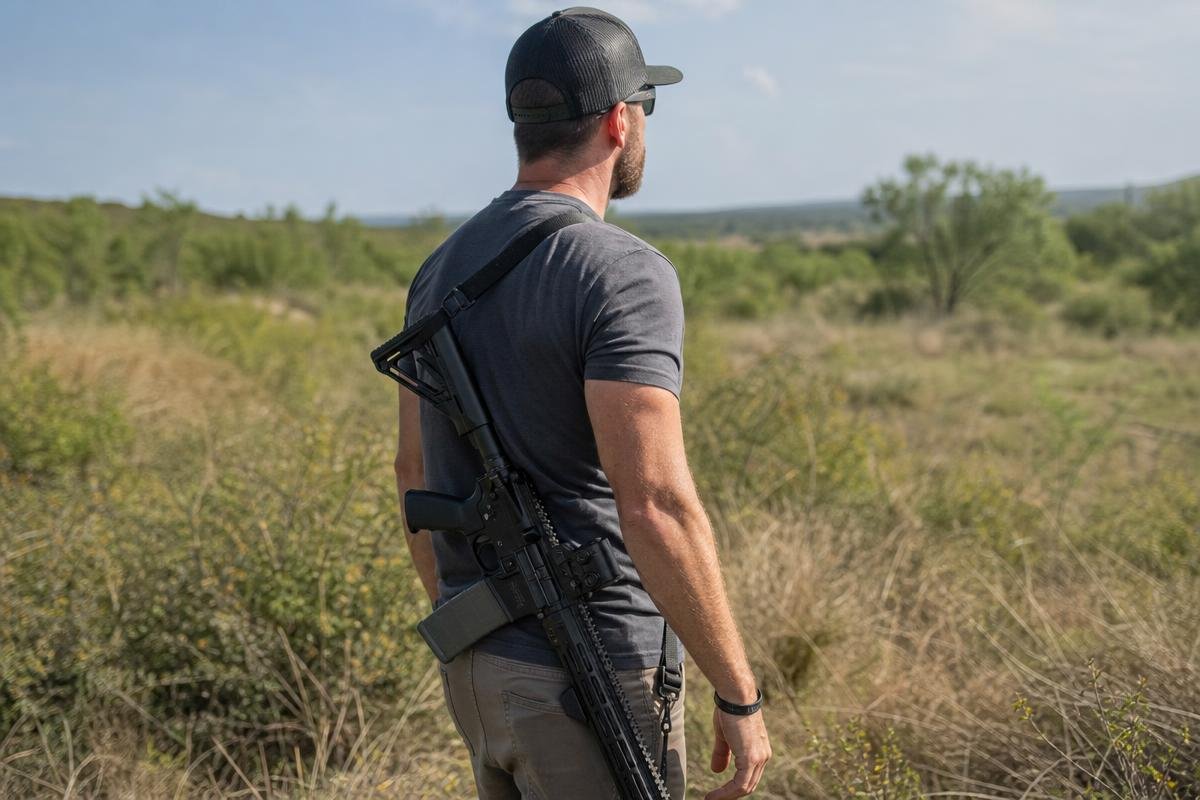
AR15Parts.com helps Denison shooters choose the best rifle sling for field carry, range work, and long walks with an AR platform. For Texoma hog hunting, a carry strap should stay manageable around cedar, mesquite, fence lines, and uneven ground while remaining comfortable in North Texas heat. We cover six practical sling configurations, the mounting hardware they require, and fitment checks to make before heading to the range or private hunting property.
Need help matching a sling to your rifle and mounting points? Call us at (888) 706-0633.
Key Takeaways
- The best rifle sling matches your carry distance, rifle weight, clothing layers, and mounting points.
- For most AR field setups, a quick-adjust two-point arrangement offers the best balance of muzzle control and access.
- A 1-inch to 1.25-inch webbing sling suits lighter rifles, while a wider shoulder pad can help with optic-heavy or suppressed setups.
- Inspect QD swivels, stitching, keepers, and adjustment hardware before use, especially after dust, sweat, or wet-brush exposure.
Compare Rifle Sling Types Before Choosing a Setup
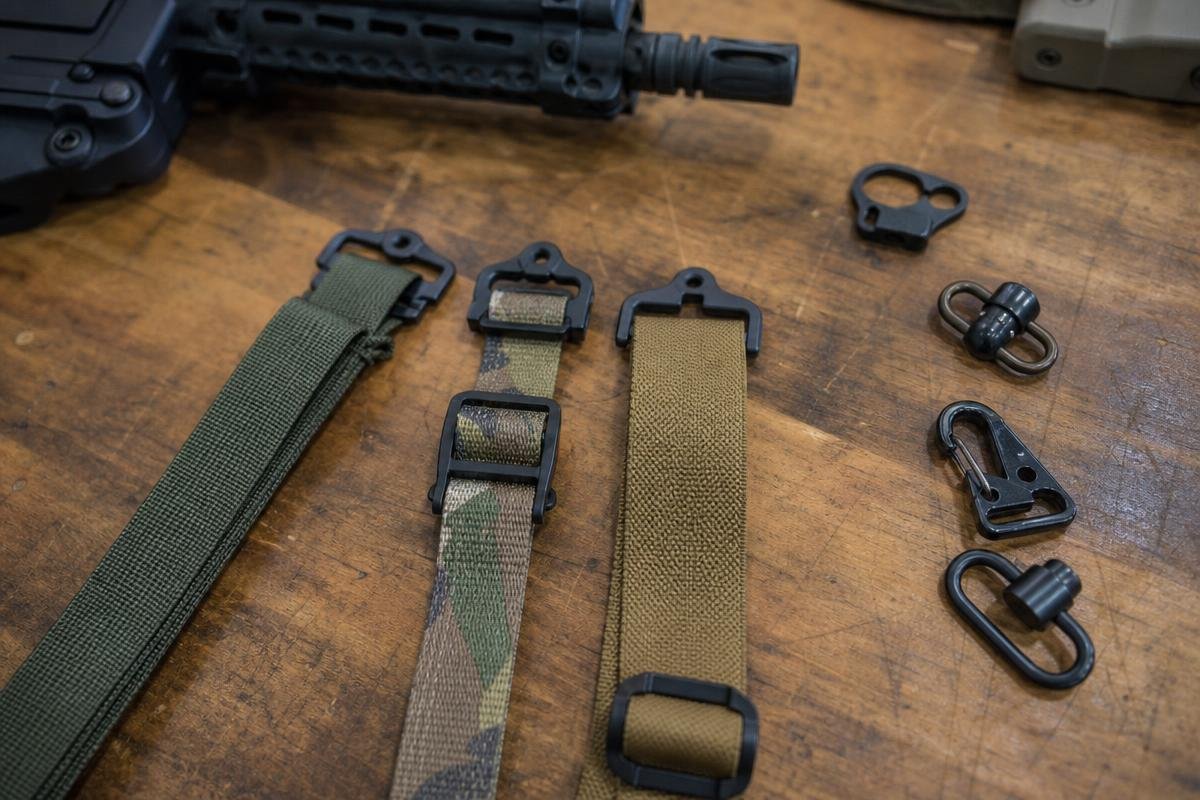
Choose the sling layout before choosing the hardware. A two-point setup is the most versatile option for many AR owners because it uses a front and rear connection to control the rifle while walking. One-point and traditional stud-mounted straps still have specific uses, but each involves a different tradeoff in stability, access, and mounting compatibility.
| Sling setup | Best use | Primary advantage | Tradeoff | Typical attachment method |
|---|---|---|---|---|
| Quick-adjust two-point sling | Hunting, range carry, longer walks | Controls muzzle and rifle movement | Requires front and rear mounting points | QD swivels, fixed loops, loop-through slots |
| Padded two-point sling | Heavier rifles and extended carries | Reduces shoulder pressure | Adds bulk and can retain dust or moisture | QD swivels, fixed loops, loop-through slots |
| Minimal webbing two-point sling | Lightweight rifles and range use | Low bulk and quick drying | Can concentrate weight on the shoulder | QD swivels, slots, or webbing loops |
| One-point sling | Short-distance movement and transitions | Keeps the rifle immediately accessible | Rifle swings more while moving | Rear receiver or stock-mounted QD socket |
| Traditional carry strap | Stud-equipped hunting rifles | Simple, familiar shoulder carry | Limited adjustment and AR compatibility | Rifle studs and swivels |
| Convertible sling | Users who need one- and two-point options | Can change configurations | Extra hardware may add noise and snag points | QD sockets, hooks, or fixed loops |
Two-Point Slings for Controlled Carry
A two-point sling connects near the stock and toward the front of the handguard. That geometry keeps the rifle closer to the torso and reduces pendulum swing when walking through brush, stepping over uneven ground, or getting in and out of a vehicle. For most AR field rifles, this is the configuration to start with.
Before ordering, identify the front and rear mounting locations on your complete AR-15 rifle. Some rifles have built-in QD cups, while others use slots, fixed loops, or a handguard-mounted adapter. The sling, swivels, and rifle mounts must work together as a system.
Where One-Point Slings Fit
One-point slings attach at the rear of the receiver or stock and keep the rifle close at hand for short movement. They can work when immediate access matters more than long-distance carry, but the rifle has more freedom to swing while walking, climbing, or moving through cover.
Use one only when its limitations match the job. A secure rear QD socket is not a substitute for the separate front mount needed to stabilize a rifle during longer field movement.
Traditional Stud-Mounted Carry Straps
Traditional carry straps fit rifles equipped with conventional sling studs and compatible swivels. They are not interchangeable with AR-style QD sockets, loop-through slots, or fixed loops without the correct adapter.
For a simple hunting rifle setup, studs can provide reliable shoulder carry. For an AR built around 5.56 NATO complete uppers, verify the swivel fits the stud correctly and check that the rifle remains secure when the strap is under load.
What Makes a Two-Point Sling the Better Choice for Hog Hunting?
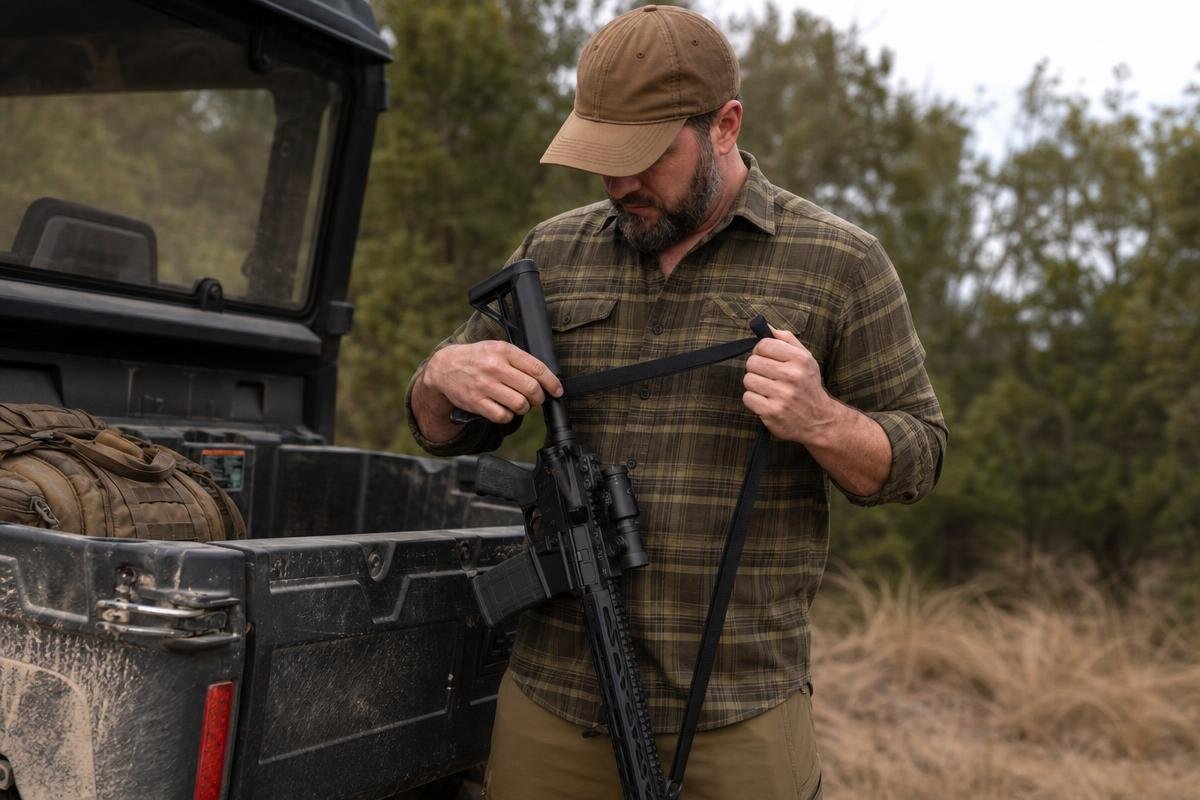
For most Texoma hog-hunting setups, a quick-adjust two-point sling is the practical choice because it can cinch the rifle close during movement and release enough length for a stable shoulder mount. It is especially useful around brush, pasture gates, creek-bottom cover, and vehicle stops where a loose rifle can strike vegetation, gear, or your legs.
How Quick Adjustment Works in the Field
Quick-adjust designs use a pull tab, loop, or sliding adjuster to change length without removing the rifle. Set the sling short enough that the rifle does not bounce while walking, then test whether you can add enough length to shoulder the rifle without fighting the webbing.
Fit it while wearing the clothing you expect to use. A setup that works over a T-shirt may be too short over a jacket, and a rifle with a suppressor, optic, light, and loaded magazine often needs more shoulder support than a basic range rifle. Keep the firearm handled, transported, and carried in accordance with applicable law, landowner rules, and safe firearm practices.
Pull Tabs, Adjustment Loops, and Snag Risk
Pull-handle adjusters are easy to grip with gloves, but a large exposed handle can catch on brush, seat belts, or clothing. Low-profile loop adjusters reduce bulk, though they can require a more deliberate grip when dusty or wet.
Secure excess webbing with an elastic keeper or similar retention method. The best adjustment system is one you can operate consistently without a long loose tail, oversized buckle, or dangling hardware creating a snag point.
Is a Padded Rifle Sling Worth It for Hog Hunting?
Yes, padding is worth considering when the rifle is heavy or stays on your shoulder for extended periods. A padded section spreads pressure over a broader area, which helps with rifles carrying a larger optic, light, suppressor, and loaded magazine.
For shorter walks in warm conditions, plain webbing is often cooler, lower profile, and easier to rinse clean after dust or wet grass. Keep the padded section on the shoulder rather than extending it across adjustment hardware, where extra bulk can interfere with smooth length changes.
Choose Sling Materials and Padding for the Way You Carry
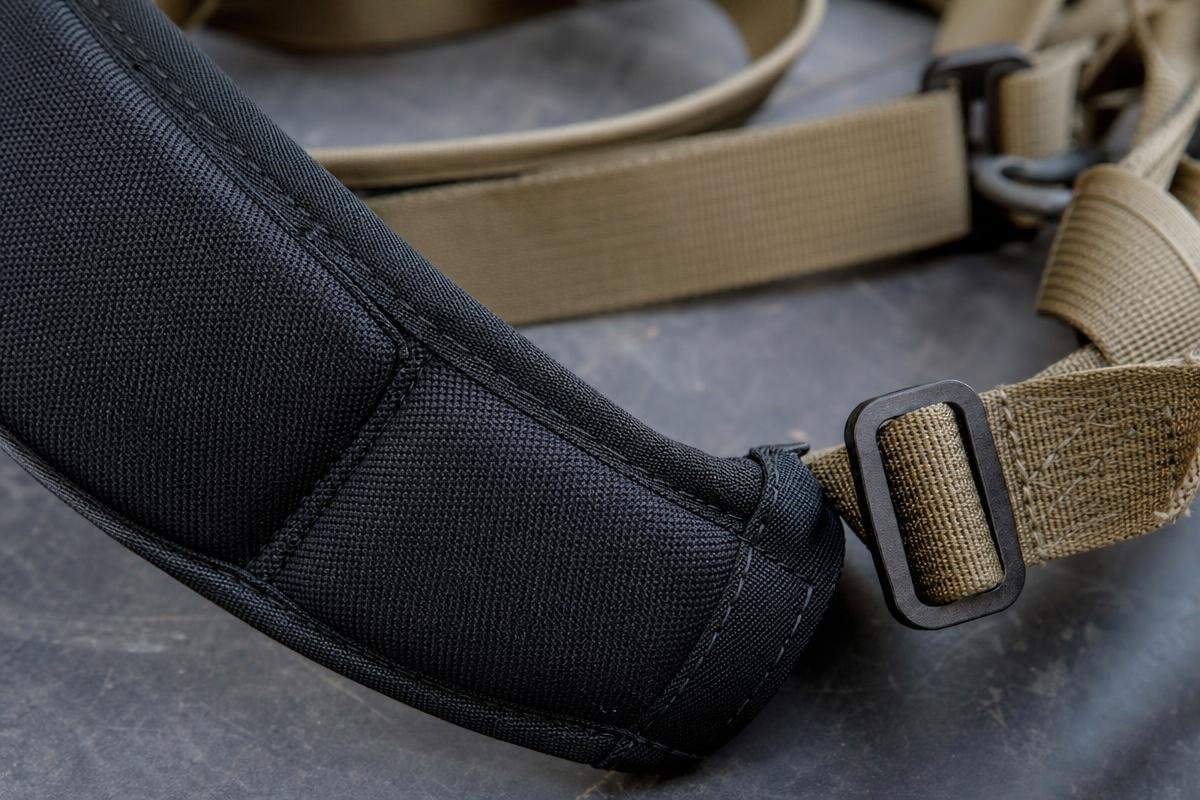
Material and construction affect comfort, noise, durability, and adjustment speed. Instead of choosing based on appearance alone, inspect webbing width, stitched load points, hardware shape, and how the sling feels with the rifle at its actual field weight.
Nylon Webbing for Modern AR Carry
Nylon webbing is a common choice for AR carry because it is light, dries quickly, and works with QD swivels, fixed loops, and loop-through attachment points. One-inch webbing keeps a lighter rifle compact, while 1.25-inch webbing or a wider padded shoulder section can distribute the weight of a heavier setup more comfortably.
Check for clean stitching at reinforced sections, smooth webbing edges, and adjusters that do not slip under tension. Before relying on any sling, pull firmly on each attachment point and confirm the buckle or slider holds its position. After dusty outings, brush grit from the webbing path so the adjuster does not drag or wear prematurely.
When Padding Helps, and When It Adds Bulk
Padding helps most when the rifle is carried on one shoulder for long periods. It can make a noticeable difference on an optic-heavy rifle, but more padding also means more bulk against the chest, more material to manage around a vehicle seat, and more surface area that can collect burrs or moisture.
A thin webbing sling often makes more sense for shorter range sessions or a lighter rifle. For a heavier hog setup, compare the actual carry weight of your 5.56 NATO complete upper, optic, light, muzzle device, and loaded magazine before selecting the amount of shoulder padding.
Traditional Leather Slings and Conventional Rifles
Leather is appropriate for conventional rifles with sling studs or fixed swivels. It can become comfortable after break-in, but it requires more care after rain, sweat, and repeated heat exposure than synthetic webbing.
Leather is generally less convenient for frequent length changes on an AR. Inspect it for cracking, stretched holes, dried edges, and separation near the swivel attachment. Replace a sling when the material or hardware no longer inspires confidence.
What Sling Mounts Do You Need for an AR-15?
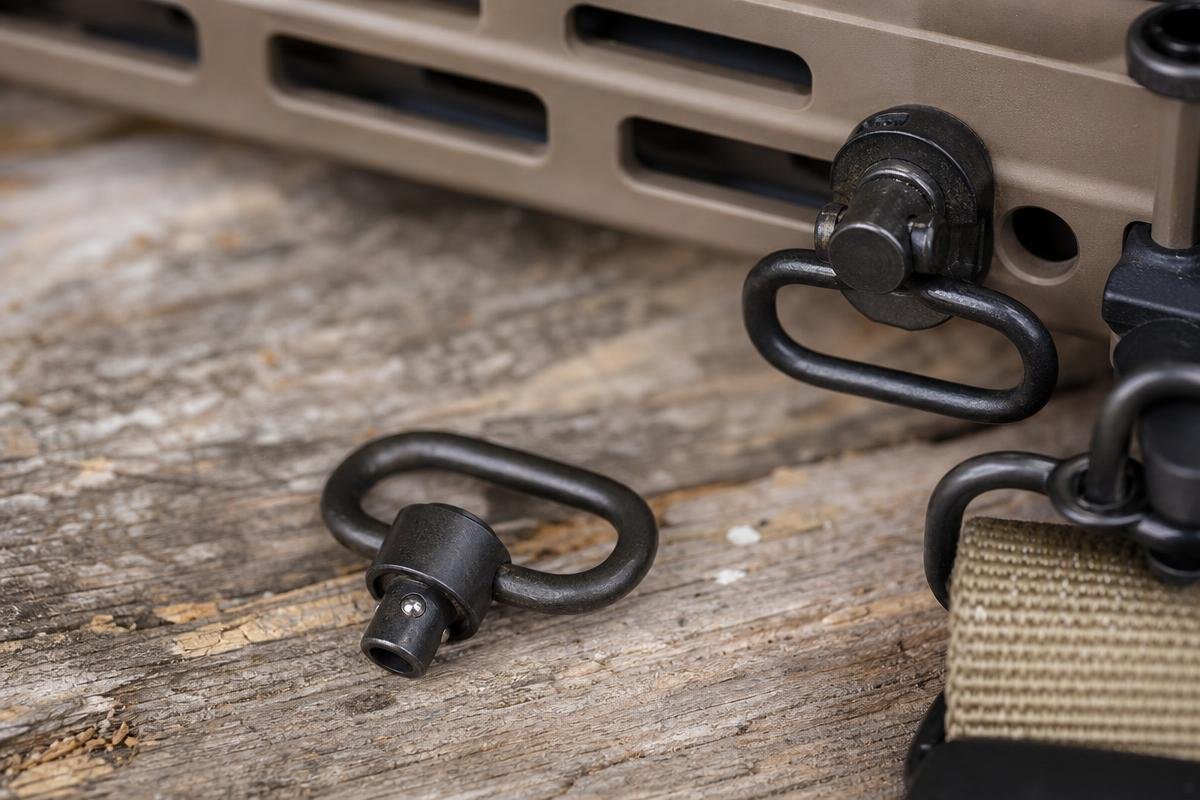
You need a compatible front and rear attachment point, plus swivels, loops, or adapters that match both the rifle and the sling. Confirm mounting geometry before buying hardware, especially when pairing a sling with one of our complete AR-15 rifles or changing handguards.
QD Cups and Push-Button Swivels
QD cups accept push-button swivels that lock into a recessed socket on the stock, receiver end plate, or handguard. Use a quality swivel that seats fully in the cup, and test it every time it is installed by pulling in several directions after the button has released.
Check the swivel’s button action for grit, corrosion, or incomplete movement. A swivel that does not lock fully can release under motion. Also confirm that the handguard location does not place the sling against a hot barrel or suppressor during normal carry.
Sling Slots and Fixed Loops
Sling slots use loop-through webbing. Thread the webbing through the slot and back through the sling’s retention hardware according to the manufacturer’s instructions, leaving enough tail for adjustment but not enough to hang loose.
Fixed loops may accept webbing directly or compatible hooks and clips. Stud mounts need conventional stud swivels. QD sockets, slots, loops, and rifle studs are different interfaces, so do not force one style of attachment into another.
Fitment Checklist Before You Order
Check these points before you set up new AR-15 sling attachments:
- Identify the front attachment point on the handguard, front sight base area, or approved adapter.
- Identify the rear point on the stock, receiver, or buffer tube area.
- Confirm swivel size, loop width, and webbing width match the mount and sling.
- Verify you can shorten and lengthen the sling while wearing it.
- With the rifle unloaded, test carry positions, shoulder mounting, and muzzle control.
Do the unloaded fit check before range trips, transport, or field carry. A sling is a retention and carry aid, not a substitute for a proper rifle case during transport or for safe firearm handling. Need help matching sling hardware to your rifle? Call our team at (888) 706-0633.
Build a Rifle Sling Setup for Range Days, Hunting, or Long Walks
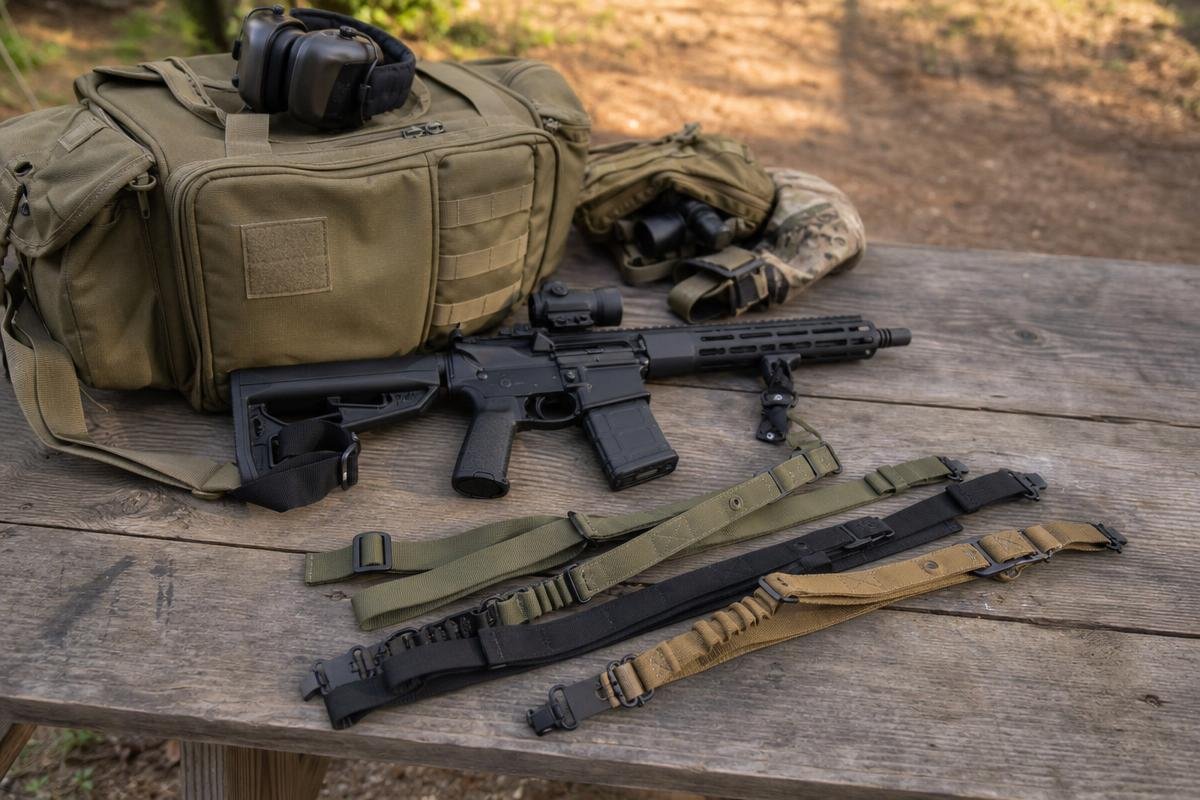
The best AR-15 sling depends on the rifle’s weight, how far you carry it, and whether you need frequent adjustment. Set the sling for its intended job, then test every position with the rifle unloaded before range transport, field carry, or storage in a rifle case.
Simple Range Setup
A short range session calls for a simple, low-bulk carry setup that is easy to adjust or remove. Use front and rear attachment points that keep the rifle close without extra buckles or long webbing tails interfering with benches, cases, or controls.
A basic nylon sling works well for moving between the vehicle and firing line. If you are starting with a new rifle, compare our complete AR-15 rifles and confirm that the stock and handguard accept the mounting hardware you plan to use.
Low-Profile Hog-Hunting Setup
For hog hunting, select a quick-adjust arrangement with secure front and rear mounts and low-profile hardware that is less likely to catch on vegetation or clothing. Mounting the front connection on the support-side portion of the handguard can help keep the rifle from rolling outward while carried across the chest.
Use padding only when the weight and carry time justify it. Check the pull tab, QD retention, and webbing after sweat, dust, and vegetation exposure. A compact build using one of our 5.56 NATO complete uppers can help keep total carry weight manageable.
Lightweight Setup for Longer Walks
Long walks favor light webbing, minimal loose material, and one dependable adjustment system. Thin webbing dries quickly and adds less bulk, but it can become uncomfortable when paired with a heavy rifle.
- Choose a two-point layout with the quick-adjust section reachable from your support side.
- Secure excess webbing so it cannot snag on brush, fencing, or vehicle interiors.
- Inspect swivels, loops, stitching, and adjustment hardware before each trip.
- Use a suitable case for unloaded transport, then check sling function before field use.
For sling and mount compatibility questions, call us at (888) 706-0633 or contact our team online.
Rifle Slings in Denison, TX: Local Carry and Setup Considerations
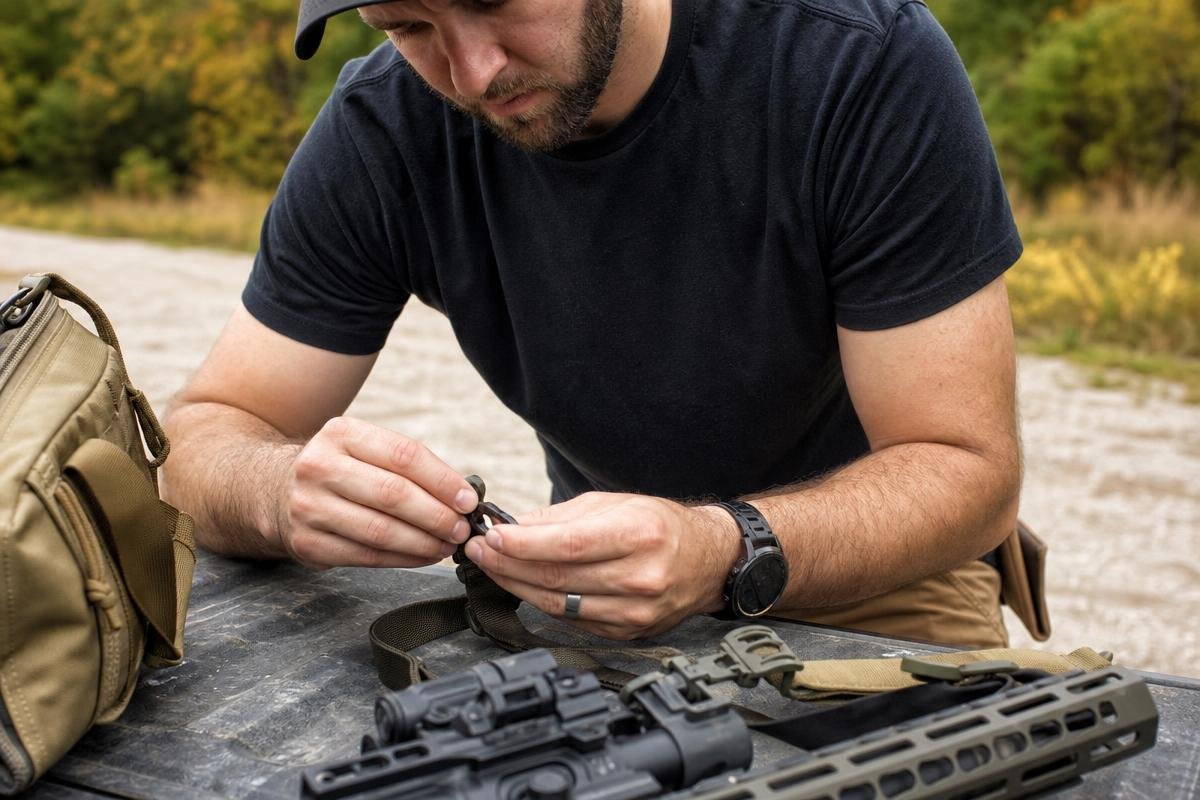
Texoma weather and terrain make routine sling inspection important. Summer heat can leave sweat and fine dust in webbing and hardware, while wet grass, creek-bottom vegetation, and thorny brush can add moisture, debris, and snag risk. AR15Parts.com is located at 4000 Texoma Parkway, Denison, TX 75020.
Heat, Sweat, Dust, and Sling Inspection
Warm conditions can leave sweat and dust in nylon webbing, adjustment loops, buckles, and QD sockets. Brush and seed material can also collect around attachment points during a walk through cover.
- Check webbing for fraying, cuts, stiff spots, and flattened sections.
- Inspect metal hardware for corrosion, cracks, bent gates, or loose fasteners.
- Run the adjustment hardware through its full range before loading the rifle.
- Remove dirt from buckles, swivels, and QD sockets with a dry brush or clean cloth.
A lightweight sling with a smooth adjuster is often easier to manage in hot conditions. Include the sling in your normal rifle inspection, especially after a range day or time on private land.
Separate Field Carry From Safe Transport
Field carry and transport in a rifle case are different jobs. Loosen, fold, or remove the sling if it prevents an AR-15 from lying flat in its case or catches on zippers, foam, and other gear.
Keep the rifle unloaded and secured for transport, then reinstall and function-check the sling before use. Follow applicable Texas laws, property-owner requirements, and any range rules. If you need help selecting a suitable rifle sling for your AR setup, contact AR15Parts.com for compatibility guidance.
Frequently Asked Questions
What Is the Most Versatile Sling Configuration for an AR-15?
A two-point rifle sling is the most versatile setup for most AR-15 owners. It keeps a rifle controlled during movement and adjusts quickly for a shoulder mount. For many shooters, it is the best AR-15 sling for range work, field carry, and longer walks.
Do I Need a Padded Rifle Sling?
Choose a padded rifle sling if rifle weight and carry time create shoulder pressure. Unpadded webbing keeps bulk down for short carries and lighter rifles. Check webbing and stitching after exposure to sweat, dust, and brush.
Will My Sling Hardware Fit My Rifle?
AR-15 sling attachments must match your rifle’s existing mounts. A QD socket needs a QD swivel, while a fixed loop or stud may need a compatible swivel or adapter. Confirm fitment with an unloaded rifle before carrying it.
How Can I Reduce Sling Snags?
Use low-profile hardware and secure loose adjustment webbing with an elastic keeper. Excess strap can catch on brush, clothing, magazine pouches, and case interiors. Keep pull tabs close to the sling body without blocking adjustment.
How Should a Two-Point Sling Fit?
A two-point sling should hold an unloaded rifle close to your body without preventing a safe shoulder mount. Set it snug for walking, then loosen it enough to mount and operate the rifle without binding.
Should I Remove a Sling Before Putting a Rifle in a Case?
Often, yes. Loosen, fold, or remove a sling if it bunches inside a case, presses on controls, or prevents the rifle from lying securely. Safe unloaded transport in a case is different from field carry, so confirm the packed rifle cannot shift before closing and moving the case.
Ready to Get Started with AR15Parts.com?
Call (888) 706-0633 to speak with our team directly. We're ready to answer your questions, walk you through your options, and help you find the right solution for your needs. Whether you're just starting to plan or ready to move forward, we'll make the process simple and stress-free. Reach out today and let's talk about how we can help.