
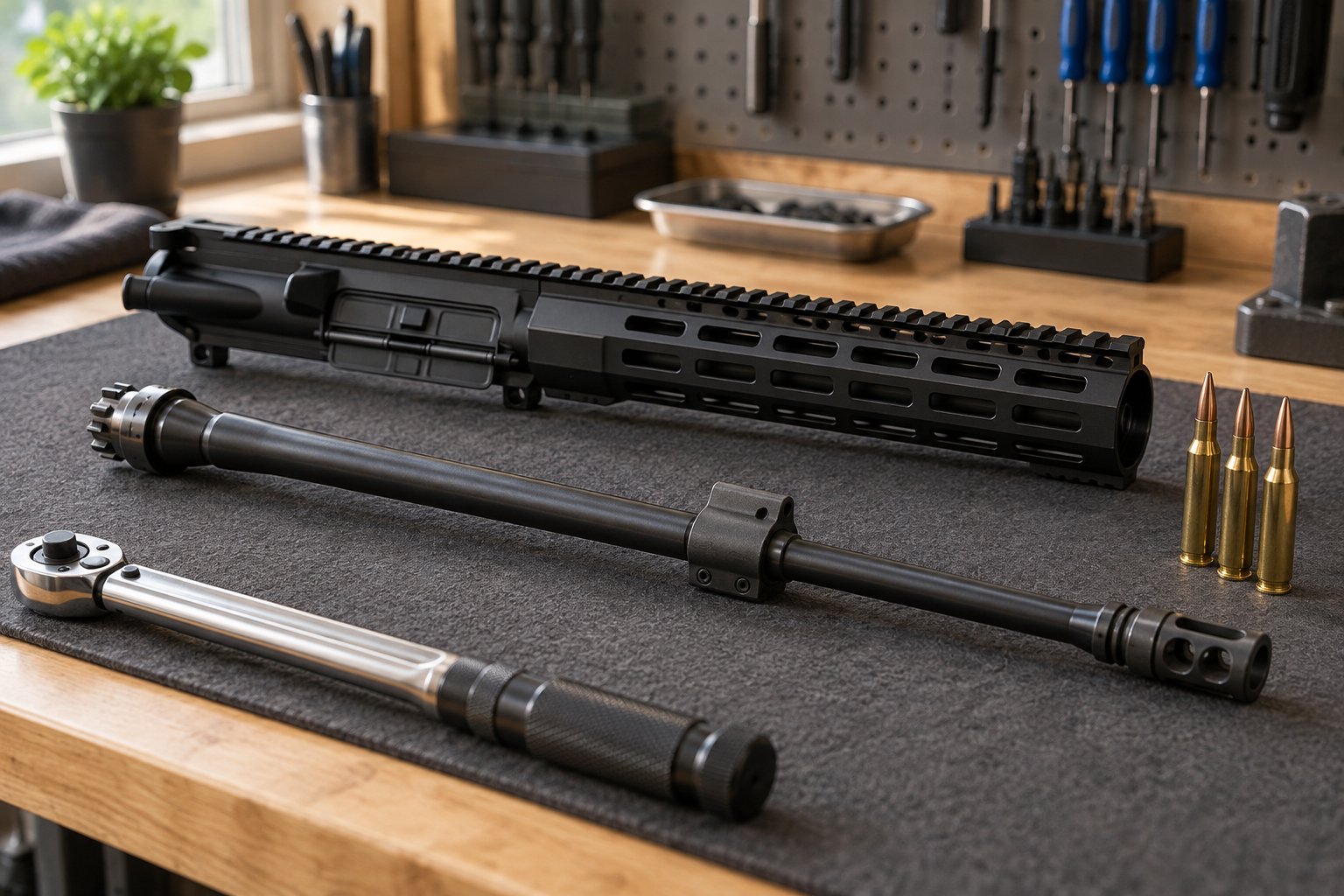
Choosing the right 6mm ARC twist rate is the first decision that shapes how a barrel performs, because the wrong twist can leave a heavy, high-BC bullet unstable at distance. AR15Parts.com carries 6mm ARC barrels across the common twist options so Denison and Texoma-area builders can match a barrel to the bullets they actually plan to shoot. The sections below explain what Hornady recommends, how 1:7, 1:7.5, and 1:8 twists differ in practice, and what a matched 6mm ARC upper needs beyond the barrel itself.
Have a specific bullet weight or barrel length in mind? Our team can help you compare options before you order.
Key Takeaways
- Hornady designed the 6mm ARC around a 1:7.5 twist rate to stabilize the 105- to 108-grain high-BC bullets the cartridge was built for.
- A faster 1:7 twist is commonly chosen when a shooter wants extra stabilization margin for the heaviest 6mm ARC bullets or colder conditions.
- A 1:8 twist can still handle lighter to mid-weight 6mm bullets but gives up some margin with the longest, heaviest projectiles.
- The correct 6mm ARC twist rate depends on which bullet weights a shooter actually intends to load and fire.
- AR15Parts.com barrels in 6mm ARC are offered in both 1:7 and 1:7.5 twist depending on the model, so check the listing before ordering.
- A complete 6mm ARC build also needs a 6.5 Grendel-pattern bolt and compatible magazines, not 5.56 NATO parts.
What Is the 6mm ARC and Why Does Twist Rate Matter?
The 6mm ARC, short for 6mm Advanced Rifle Cartridge, is a 6mm (.243 caliber) cartridge that Hornady introduced in 2020 for use in AR-15 pattern rifles. Hornady built the cartridge around long, high ballistic coefficient bullets so shooters could get flatter trajectories and better wind resistance from a magazine-fed semi-automatic platform.
Twist rate describes how quickly the rifling inside a barrel spins a bullet, usually written as one full rotation per a given number of inches, such as 1:7.5. A longer, heavier-for-caliber bullet needs a faster twist (a smaller second number) to spin fast enough for stable flight. A twist that is too slow for a given bullet can produce keyholing or poor accuracy at distance, while a twist rate faster than necessary rarely causes a problem with correctly loaded ammunition.
How Hornady Engineered the Cartridge Around Twist Rate
Because the 6mm ARC was designed from the start around long 6mm bullets, twist rate was part of the original specification rather than an afterthought. Hornady's own 6mm ARC load data lists an 18-inch barrel with a 1:7.5 twist as the reference test barrel for its 105-grain BTHP and similar loads, which reflects the twist the cartridge was engineered to use.
Why the Same Caliber Can Need Different Twist Rates
Bullet length, not just bullet weight, drives twist rate needs. A short, blunt 6mm bullet can stabilize in a slower twist than a long, sleek, high-BC bullet of similar weight. That is why 6mm ARC barrels are cut faster than many older 6mm cartridges like .243 Winchester, which were designed around shorter bullets.
This distinction matters when a shooter compares twist recommendations across different 6mm cartridges. A twist rate that works fine for a short 6mm varmint bullet in another cartridge will not necessarily stabilize the longer 105- to 108-grain match bullets that 6mm ARC ammunition typically uses. Matching twist rate to bullet length and weight, rather than caliber alone, is the more reliable way to plan a build.
What Twist Rate Does Hornady Recommend for 6mm ARC?
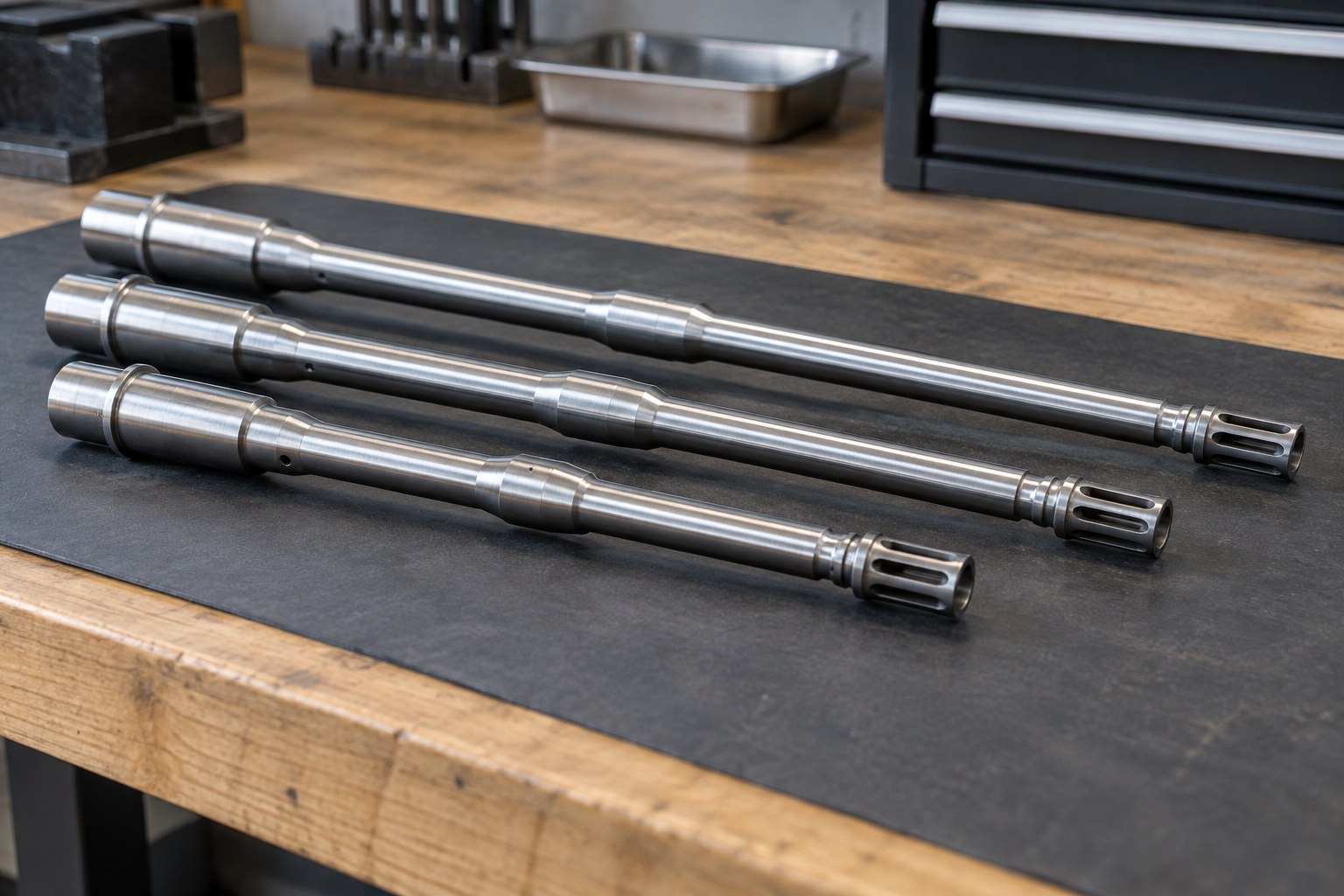
Hornady's published load data and cartridge specifications point to 1:7.5 as the reference twist rate for 6mm ARC, and that twist is commonly cited as the standard for the cartridge's 105- to 108-grain match and hunting bullets. Some 6mm ARC barrels are cut with a faster 1:7 twist, which is often chosen to add stabilization margin for the heaviest bullets in the lineup or for shooting in colder air, since colder, denser air requires slightly faster spin to stabilize the same bullet compared to warm air.
A 1:8 twist is also seen in some 6mm barrels and can stabilize lighter and mid-weight 6mm bullets, but it gives up margin with the longest 105- to 108-grain projectiles the 6mm ARC was built around. Because the practical difference between 1:7 and 1:7.5 is small, many shooters treat either as suitable for the cartridge's typical bullet weights, while reserving 1:8 for lighter bullet plans.
1:7 Twist
A 1:7 twist spins a bullet slightly faster than 1:7.5 and is commonly chosen when a shooter wants extra margin for the heaviest 6mm ARC match bullets, or plans to shoot in a wide range of temperatures and altitudes. It has no trouble stabilizing lighter bullets either.
1:7.5 Twist
A 1:7.5 twist is the rate most closely associated with the 6mm ARC as Hornady designed it, and it is commonly described as ideal for the 105- to 108-grain high-BC bullets that define the cartridge's long-range performance.
1:8 Twist
A 1:8 twist can still stabilize many mid-weight 6mm bullets and is sometimes offered on 6mm ARC barrels built with lighter bullet plans in mind. It is worth checking a bullet manufacturer's stabilization guidance before choosing 1:8 if you intend to shoot the heaviest 105- to 108-grain loads.
How Temperature and Altitude Factor Into the Decision
Air density affects how much spin a bullet needs to stay stable. Colder, denser air at the muzzle generally asks for slightly faster spin than warm air to stabilize the same bullet, and higher altitude with thinner air generally needs less. A shooter who plans to hunt in cold North Texas winter mornings and also shoot summer range sessions with the same rifle may lean toward the faster 1:7 twist for extra margin across those conditions, while a shooter who sticks to a narrower set of bullets and conditions can be comfortable with 1:7.5.
Have questions about which twist fits your bullet plan? Our team can talk through the tradeoffs before you buy.
Which 6mm ARC Barrels Does AR15Parts.com Carry?
AR15Parts.com offers 6mm ARC barrels from Ballistic Advantage, Satern Barrels, and Wilson Combat, in a mix of twist rates and barrel lengths. Because product availability changes, browse current options on the 6mm ARC barrels page rather than relying on a fixed list, but the table below shows the twist rate and construction each brand is currently offering.
| Brand | Twist Rate | Barrel Material | Notable Finish Options |
|---|---|---|---|
| Ballistic Advantage | 1:7 | 416R stainless or QPQ-treated 416R stainless | Premium and Premium Black Series |
| Satern Barrels | 1:7.5 | 416R stainless | Medium, heavy, and straight flute stainless profiles |
| Wilson Combat | 1:7.5 | 416R stainless | Glass bead stainless, tactical hunter fluted profile |
All three brands machine their 6mm ARC barrels from 416R stainless steel, a material commonly chosen for precision rifle barrels because it machines and finishes consistently. QPQ, used on some Ballistic Advantage models, is a salt-bath nitride treatment applied to the barrel's surface rather than a different base material.
Matching Barrel Length to Your Twist Rate Choice
Barrel length and twist rate are separate decisions. A shorter barrel loses some velocity compared to a longer barrel in the same twist, but it does not change how fast the rifling spins the bullet. Choose barrel length based on how you plan to carry and shoot the rifle, and choose twist rate based on the bullet weights you plan to run, then confirm the combination is available in the barrel you are considering.
Stainless, Nitride, and Fluted Options
Beyond twist rate, the barrels above differ in finish and profile. Glass bead stainless finishes leave a matte, low-glare surface, while QPQ nitride treatment adds a dark, corrosion-resistant surface layer over the 416R stainless underneath. Fluted profiles remove some barrel material along the length to reduce weight without changing the bore or twist rate. None of these finish choices affect which bullet weights a given twist rate will stabilize, so pick finish for handling and appearance and pick twist rate for your bullet plan.
What Does a Complete 6mm ARC Upper Need Besides the Barrel?
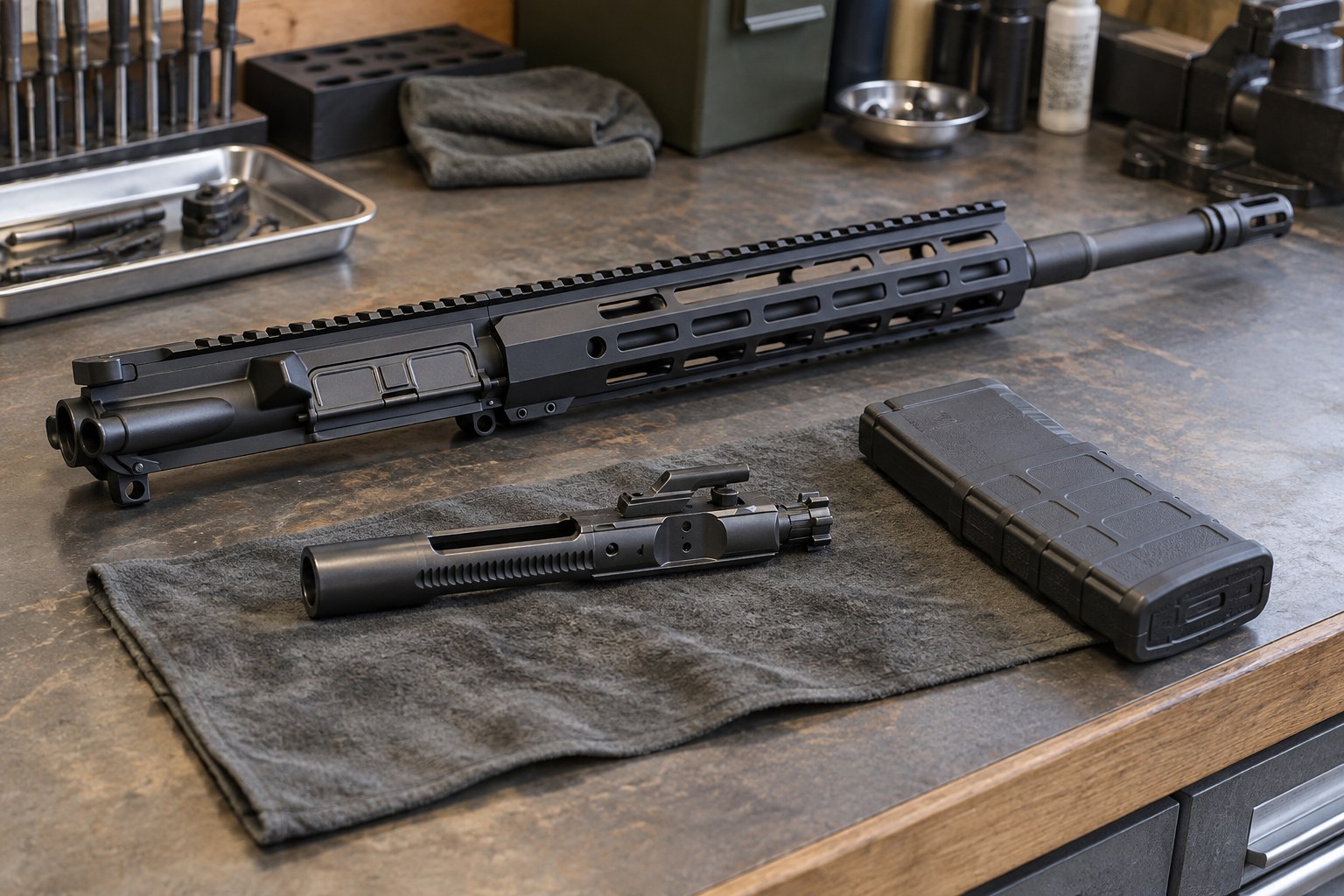
A 6mm ARC upper needs more than a correctly twisted barrel to function. Because the 6mm ARC shares its case head dimensions with the 6.5 Grendel, a 6mm ARC build uses a 6.5 Grendel-pattern bolt rather than a standard 5.56 NATO bolt, and it feeds from 6.5 Grendel-pattern magazines. A 5.56 NATO bolt does not match the 6mm ARC's larger case head, so it cannot be used interchangeably, and confirming bolt compatibility before ordering parts is essential.
AR15Parts.com's 6mm ARC complete uppers are assembled in-house, headspaced, and function-checked before they ship, which removes the guesswork of matching a bolt to a barrel chamber. If you are building from parts instead, confirm the bolt is marked for 6.5 Grendel or 6mm ARC use, and check compatible 6mm ARC magazines before assembling the rest of the rifle.
Why Bolt Face Compatibility Comes Before Twist Rate
A barrel with the right twist rate for your bullets still will not function safely if the bolt does not match the cartridge's case head and headspace requirements. Always confirm bolt and barrel are matched for the same cartridge and, if you are unsure how to verify headspace on a new build, have a qualified gunsmith check it before firing.
Building From Parts Versus Buying a Complete Upper
Building a 6mm ARC upper from individual parts means sourcing a barrel in the twist rate you want, a matched 6.5 Grendel-pattern bolt, a barrel extension cut for the 6mm ARC chamber, and a bolt carrier group compatible with that bolt. Each part has to agree with the others, and a mismatched bolt or barrel extension can prevent a rifle from headspacing correctly. Buying a complete upper removes that coordination step, since the barrel, bolt, and barrel extension already arrive matched and function-checked as a unit. Either path can produce a reliable rifle as long as the bolt, barrel, and magazines are confirmed compatible before the first live-fire session.
Our AR Upper Hub guide to AR-15 twist rate basics covers how twist selection works across other AR-15 calibers if you are comparing builds. For a deeper look at 6mm ARC barrel options specifically, see our guide to 6mm ARC barrels for precision shooting.
Ready to compare 6mm ARC barrels by twist rate and brand?
6mm ARC Twist Rate Help for Denison and Texoma Builders
Denison and Texoma-area shooters run 6mm ARC rifles for a mix of range days and North Texas deer and hog hunting, and both uses benefit from getting the twist rate right before you buy ammunition or components. Humid Texoma summers and Lake Texoma outings do not change what twist rate a bullet needs, but they are a good reminder to keep a stainless or nitride-finished barrel clean and dry between range trips.
If you are planning a first 6mm ARC build or upgrading an existing upper, our team can walk through twist rate, barrel length, and bolt compatibility together so the parts you order work as a system. AR15Parts.com ships from its Texas facility and answers fitment questions by phone, email, or the contact form.
A hunting-focused 6mm ARC build and a range or match-focused build often end up with different priorities even when both use the same twist rate. A hunter chasing North Texas hogs and deer may prioritize a shorter, lighter barrel for carrying through brush, while a shooter focused on distance work at the range may prefer a longer barrel to capture more velocity from the same twist rate and bullet weight. Either way, always check current Texas Parks and Wildlife Department (TPWD) regulations before hunting with a new caliber, since legal cartridge and equipment rules can change and TPWD is the authoritative source.
Reach AR15Parts.com at 4000 Texoma Parkway, Denison, TX 75020, by phone at (888) 706-0633, or by email at [email protected], Monday through Friday from 8:00 AM to 4:00 PM Central.
Frequently Asked Questions
What Twist Rate Does 6mm ARC Use?
6mm ARC barrels are commonly cut in 1:7, 1:7.5, or 1:8 twist, with 1:7.5 widely cited as the reference rate Hornady used when developing the cartridge around its 105- to 108-grain bullets. Faster 1:7 twist barrels are also common and add extra stabilization margin for the heaviest loads.
Is 1:7.5 or 1:7 Better for 6mm ARC?
Both twist rates stabilize the 6mm ARC's typical 105- to 108-grain bullets, so the difference in practice is small. A 1:7 twist offers slightly more margin for the heaviest bullets and colder shooting conditions, while 1:7.5 matches the rate most closely associated with the cartridge's original design.
Can a 1:8 Twist Barrel Shoot 6mm ARC's Heaviest Bullets?
A 1:8 twist can stabilize many mid-weight 6mm bullets, but it has less margin with the longest 105- to 108-grain match bullets the 6mm ARC was designed around. Check the bullet manufacturer's stabilization guidance before pairing a 1:8 barrel with the heaviest loads.
Does 6mm ARC Use the Same Bolt as 6.5 Grendel?
Yes, 6mm ARC shares its case head dimensions with 6.5 Grendel, so a 6mm ARC build uses a 6.5 Grendel-pattern bolt rather than a standard 5.56 NATO bolt. A 5.56 NATO bolt does not match the 6mm ARC's larger case head and cannot be used interchangeably.
Do 6mm ARC Rifles Use 6.5 Grendel Magazines?
Yes, 6mm ARC was designed to feed from the same magazines used for 6.5 Grendel, since both cartridges share a similar overall length and body dimensions sized to fit standard AR-15 magazine wells.
Does Barrel Length Affect Which Twist Rate I Need?
No, barrel length and twist rate are independent choices. A shorter barrel changes velocity, not how fast the rifling spins the bullet, so pick twist rate based on the bullet weights you plan to shoot and barrel length based on handling and intended use.
Ready to Get Started with AR15Parts.com?
Call (888) 706-0633 or email [email protected] Monday through Friday from 8:00 AM to 4:00 PM Central to talk through 6mm ARC twist rate, barrel, and bolt options with our team before you order.