
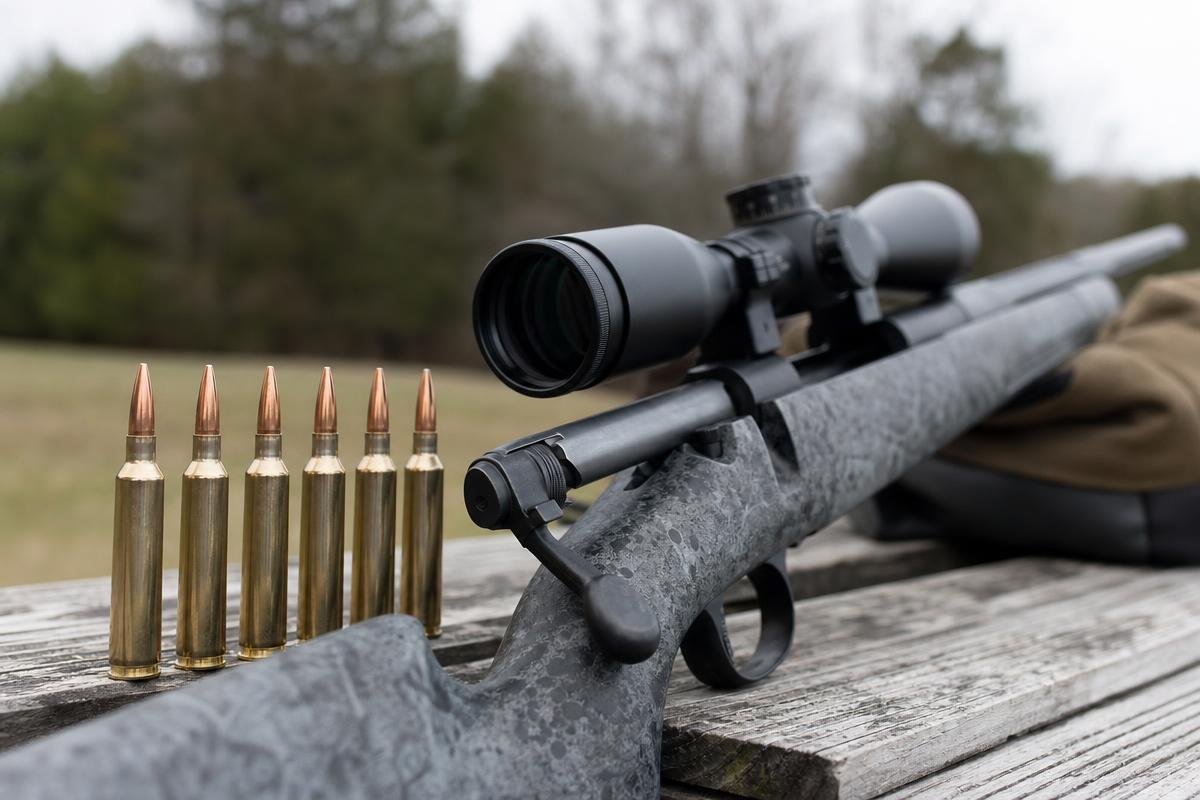
308 ballistics are well documented in general terms, but most charts stop at 500 yards and skip the component variables that actually matter to a builder. Below, we compare velocity, muzzle energy, bullet drop, and retained energy out to 1,000 yards across multiple major ammo manufacturers, with real numbers you can use to match a barrel length and twist rate to your intended load. We ship .308 Win uppers and components nationwide from Denison, and we put this data together to help builders match barrel and load choices to a defined use. Need a .308 upper or barrel to match your ballistic requirements? We can help.
Key Takeaways
- 308 ballistics vary meaningfully by bullet weight, with 168 gr loads generally retaining more energy than 150 gr loads past roughly 400 to 500 yards, though the faster 150 gr load starts with more muzzle energy.
- Barrel length changes velocity by roughly 25 to 35 fps per inch, which compounds into a measurable energy difference downrange.
- Bullet drop at 1,000 yards with a 100-yard zero can exceed 350 inches depending on bullet BC and muzzle velocity.
- Federal, Hornady, and Winchester each publish different velocity and energy figures for the same bullet weight, and those differences affect your zero distance.
- Barrel length, twist rate, and chamber spec all affect how a given .308 load performs downrange.
The .308 Winchester has been a standard cartridge since NATO adopted its military twin, the 7.62x51mm, in the early 1950s. It runs in bolt-action hunting rifles, semi-automatic precision platforms, and AR-10 pattern builds alike. That versatility is exactly why understanding 308 ballistics matters. The cartridge sits at the crossroads of practical hunting range and genuine long-range precision work.
We cover velocity, muzzle energy, bullet drop to 1,000 yards, recoil figures, and a head-to-head comparison with the .30-06 Springfield. Ballistic data pulls from Federal, Hornady, and Winchester factory loads so you can read across manufacturers. We also connect those numbers to component selection. AR15Parts.com ships .308 Win complete uppers and parts nationwide, and the cartridge earns its keep locally on whitetail across the open pasture and river-bottom cover of Grayson County.
What Makes .308 Winchester Ballistics Worth Understanding?
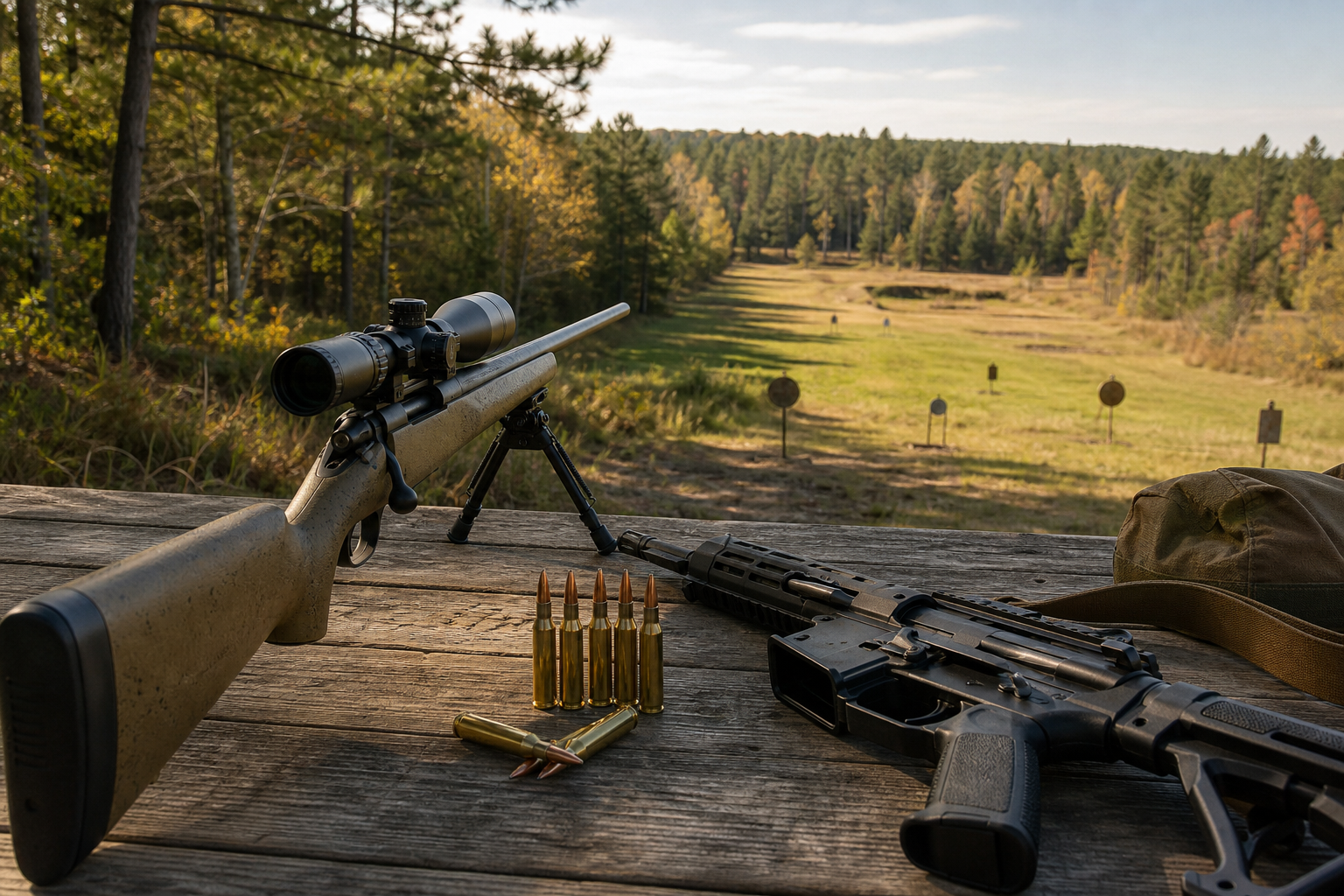
The .308 Winchester is worth understanding because it covers three distinct use cases, hunting to 400 yards, precision steel past 600, and reliable semi-auto feeding, each requiring different bullet weights and barrel specs. Understanding 308 ballistics means knowing which load to run for your specific use, not just picking a box off the shelf.
Bullet Weight Range and Its Effect on Performance
Factory .308 Winchester ballistics data spans a wide weight range. At 110 gr, you get high velocity for varmint work but limited downrange energy. The 147 to 150 gr range covers military surplus and general hunting loads. At 168 gr, the Sierra MatchKing becomes the standard for precision shooting out to 600 yards. The 175 gr SMK takes over past that, retaining better velocity and energy at distance. Hunting loads at 180 gr carry significant terminal energy but give up some muzzle velocity.
Barrel twist rate matters here. Most .308 platforms run a 1:10 or 1:11 twist, which stabilizes bullets from 150 gr through 175 gr reliably. Check your AR-10 barrel’s twist specification before committing to a heavy match load. For field shooting on the pastureland ranches that dominate this county, where shots at 200 to 400 yards are common, bullet weight selection is a practical decision, not just a range exercise. Matching a load to your barrel twist? Browse our in-stock .308 barrels and complete uppers.
308 Ballistics Chart: Velocity, Energy, and Drop by Manufacturer
The Federal and Hornady 168gr tables below use a 100-yard zero. The Winchester 150gr table uses the 200-yard zero stated in that section. Values assume standard atmospheric conditions unless otherwise noted. Barrel length matters. In the displayed barrel table, the 24-inch reference is approximately 250 fps faster than the 16-inch example. If you are running a shorter .308 Win upper, expect your real-world velocity to sit toward the lower end of these figures.
Federal Gold Medal Match 168 gr SMK
Federal's GMM 168 gr Sierra MatchKing is the benchmark load for long-range .308 Winchester ballistics. Muzzle velocity runs 2,650 fps with 2,619 ft-lbs of muzzle energy. The high BC keeps it competitive past 600 yards, but 308 bullet drop at 1000 yards is significant at the zero distance noted above.
| Distance (yds) | Velocity (fps) | Energy (ft-lbs) | Drop (in) |
|---|---|---|---|
| 0 | 2,650 | 2,619 | 0.0 |
| 100 | 2,480 | 2,294 | 0.0 |
| 200 | 2,316 | 2,000 | -3.7 |
| 300 | 2,158 | 1,737 | -13.5 |
| 400 | 2,006 | 1,500 | -30.4 |
| 500 | 1,862 | 1,293 | -53.9 |
| 600 | 1,726 | 1,111 | -88.0 |
| 700 | 1,598 | 952 | -135.0 |
| 800 | 1,478 | 815 | -197.0 |
| 900 | 1,368 | 698 | -276.0 |
| 1,000 | 1,268 | 600 | -375.0 |
Running a 16-inch or 18-inch .308 upper? Get one headspaced and function-checked in-house.
Hornady Match 168 gr ELD-M
The Hornady Match 168 gr ELD-M carries a G1 BC of 0.523, slightly higher than the SMK. Both loads list 2,650 fps at the muzzle, but they use different bullets. The ELD-M's higher stated BC helps explain why its estimated drop at 1,000 yards is -353.0 inches versus -375.0 inches for the SMK, with both tables using a 100-yard zero. Their listed velocities and energies at 1,000 yards are nearly identical, so these estimates do not establish a retained-energy advantage for either load there. Verify the trajectory and wind drift of your specific load with a ballistic solver.
| Distance (yds) | Velocity (fps) | Energy (ft-lbs) | Drop (in) |
|---|---|---|---|
| 0 | 2,650 | 2,619 | 0.0 |
| 100 | 2,487 | 2,308 | 0.0 |
| 200 | 2,328 | 2,023 | -3.6 |
| 300 | 2,175 | 1,765 | -13.1 |
| 400 | 2,027 | 1,532 | -29.5 |
| 500 | 1,884 | 1,324 | -53.8 |
| 600 | 1,748 | 1,139 | -87.2 |
| 700 | 1,617 | 975 | -131.5 |
| 800 | 1,493 | 832 | -188.9 |
| 900 | 1,376 | 707 | -262.0 |
| 1,000 | 1,265 | 597 | -353.0 |
Winchester Super-X 150 gr Power-Point
Winchester Super-X in 150 gr leaves the muzzle faster at 2,820 fps and 2,648 ft-lbs of muzzle energy. That speed advantage is real inside 300 yards. Past 500 yards the lower BC causes it to shed velocity faster than either match load. For whitetail hunting in the open pasture and rolling terrain around Denison, this load performs well at the 200 to 400 yard distances most hunters actually shoot. A 200-yard zero keeps point of impact within about 3 inches from 0 to 250 yards, which is practical for field shots without holdover adjustments.
| Distance (yds) | Velocity (fps) | Energy (ft-lbs) | Drop (in) |
|---|---|---|---|
| 0 | 2,820 | 2,648 | 0.0 |
| 100 | 2,594 | 2,243 | +1.8 |
| 200 | 2,378 | 1,883 | 0.0 |
| 300 | 2,172 | 1,572 | -8.1 |
| 400 | 1,974 | 1,298 | -24.0 |
| 500 | 1,786 | 1,063 | -49.5 |
| 600 | 1,610 | 863 | -86.8 |
| 700 | 1,447 | 697 | -138.5 |
| 800 | 1,300 | 563 | -208.0 |
| 900 | 1,175 | 460 | -299.0 |
| 1,000 | 1,075 | 385 | -414.0 |
308 Velocity and Energy: What the Numbers Mean for Your Build
Velocity and .308 muzzle energy are not just numbers on a chart. They tell you whether your barrel length will cycle reliably, whether your load has enough energy at distance, and whether your build fits the terrain you're hunting. The tables above give you the raw data. This section explains what to do with it.
Muzzle Velocity and Energy by Barrel Length
Barrel length is the single biggest hardware variable in muzzle velocity. The table below shows approximate figures for the Federal GMM 168 gr load across common barrel lengths, calculated from a published muzzle velocity of roughly 2,650 fps at 24 inches with a loss of about 25 to 35 fps per inch below that. Verify against your own chronograph, since individual barrels vary.
| Barrel Length | Muzzle Velocity (fps) | Muzzle Energy (ft-lbs) |
|---|---|---|
| 16 in | 2,400 | 2,148 |
| 18 in | 2,480 | 2,293 |
| 20 in | 2,550 | 2,424 |
| 24 in | 2,650 | 2,619 |
That works out to a spread of roughly 470 ft-lbs of muzzle energy between a 16-inch and a 24-inch barrel with the same load. For many semi-auto builds, 18 inches balances velocity and handling. Reliable operation also depends on the gas system, recoil system, ammunition, and component compatibility. If you're choosing barrel length for a complete upper in one of 19-plus calibers, the 18-inch .308 Win configuration covers most hunting and precision shooting needs without the bulk of a full-length tube.
Retained Energy at Distance
Terminal energy thresholds matter for hunting decisions. Energy figures can inform hunting decisions, but 1,000 ft-lbs for deer and 1,500 ft-lbs for elk are rules of thumb rather than universal legal or biological thresholds. In the displayed Federal table, the 168gr load is above 1,000 ft-lbs through 600 yards and measures 952 ft-lbs at 700 yards. Confirm bullet construction, impact velocity, current regulations, and shooter proficiency.
Around Grayson County, most whitetail shots across open pasture fall in the 200 to 400 yard range. That puts 308 trajectory data and retained energy squarely in the decision. At 300 yards, a 168 gr load is still producing well above 1,500 ft-lbs. The numbers support the cartridge for this terrain. Not sure which barrel length fits your energy goals? Browse .308 uppers by configuration.
308 Bullet Drop and Trajectory: Zeroing for Real-World Use
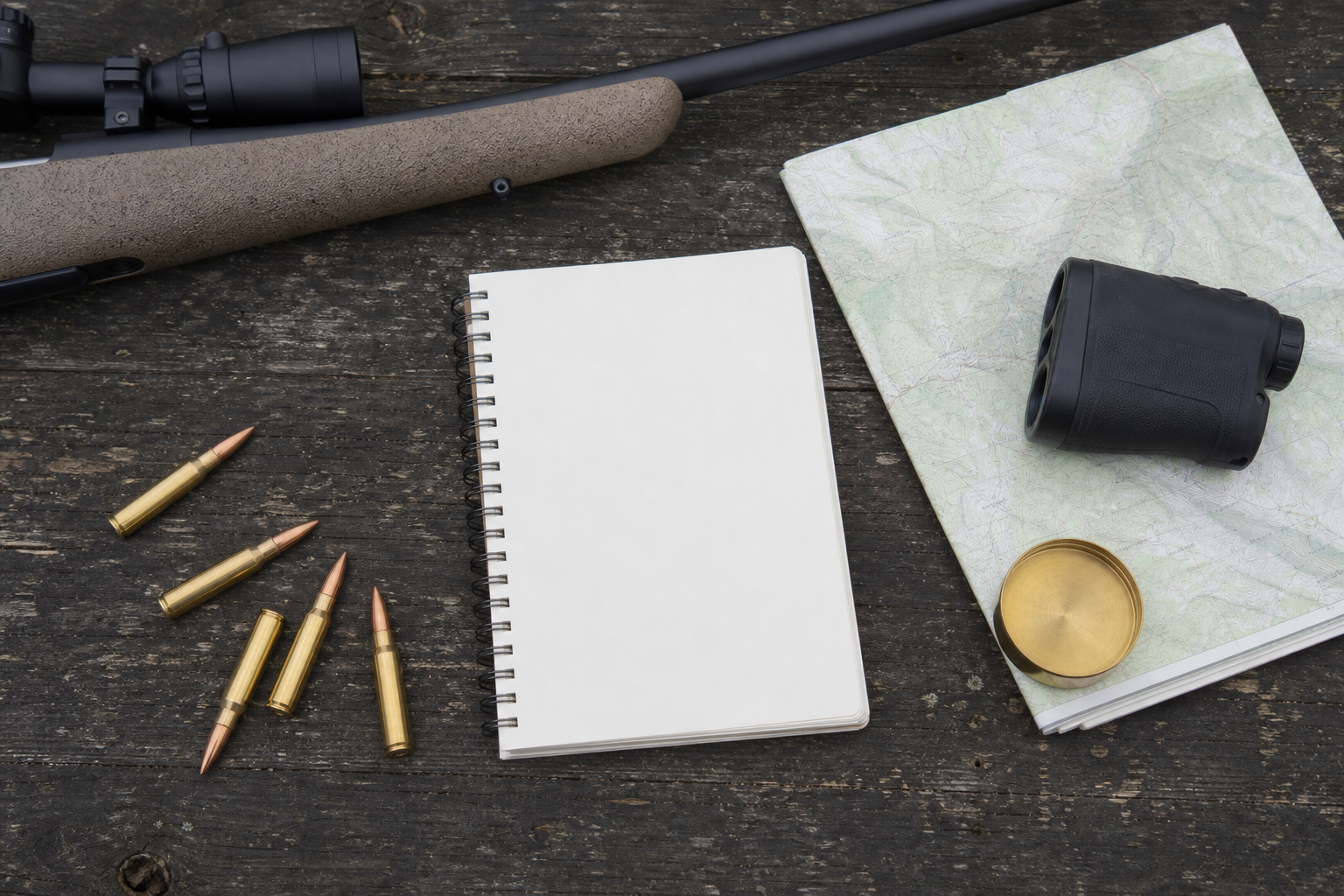
Bullet drop is where .308 Winchester ballistics get practical fast. In the displayed 100-yard-zero tables, the 168gr loads are approximately 3.6 to 3.7 inches low at 200 yards, 13.1 to 13.5 inches low at 300 yards, and 53.8 to 53.9 inches low at 500 yards. Verify the exact load, barrel, sight height, and atmosphere in a current ballistic solver.
100-Yard Zero vs. 200-Yard Zero
Hunters in open country tend to prefer a 200-yard zero. With a 168 gr load zeroed at 200 yards, you run about 1.5 inches high at 100, dead-on at 200, and drop roughly 6 inches at 300. That tighter mid-range arc means less holdover on any shot inside 250 yards, which matters when a whitetail steps into a field and you have seconds to shoot.
Long-range precision shooters usually stick with a 100-yard zero and dial elevation on calibrated turrets rather than holding over. Holding over at 500 or 800 yards introduces too much error. Dialing keeps your reticle centered and your point of aim precise. If you are running a dedicated precision build, dialing is the right call.
Wind Drift at 500 and 1,000 Yards
Wind is the bigger problem at distance, especially across open pasture. A 10 mph full-value crosswind requires a load-specific correction. Sierra lists the 168gr MatchKing at G1 0.462 and G7 0.224. Use the correct drag model, muzzle velocity, atmosphere, and wind angle in a current ballistic solver.
Sierra lists the 175gr MatchKing at G1 0.505 and G7 0.250. Compare wind drift with the correct drag model and the exact load rather than relying on a generalized correction. If you are building for extended range work, our .308 Win complete uppers in multiple configurations are a practical starting point for matching your barrel twist and chamber to the 175 gr load.
308 vs. 30-06 Springfield: Ballistics Comparison
Many hunters along the Red River corridor grew up shooting bolt-action .30-06 rifles and are now looking at semi-auto builds. The ballistic comparison is closer than most people expect, and the platform question settles the argument fast.
Velocity and Energy Head-to-Head
With a 150 gr load, the .30-06 Springfield produces roughly 2,910 fps muzzle velocity and around 2,820 ft-lbs muzzle energy. The .308 Winchester comes in at approximately 2,820 fps and 2,648 ft-lbs. That gap looks significant at the muzzle.
At 500 yards, the exact velocity and energy difference depends on the two specific loads being compared. Do not generalize across unlike projectiles or barrel lengths. For practical hunting inside 500 yards, the ballistic difference between 308 vs 30-06 ballistics is minor. Either cartridge puts whitetail deer down cleanly at the ranges common across the pasture and rolling terrain of this region.
Which Cartridge Fits Which Platform?
The .30-06 does not fit a standard AR-10 or DPMS-pattern semi-auto receiver. The cartridge is too long for the magazine well. The .308 Winchester was designed around a shorter overall length that works in semi-auto actions.
If you are building a semi-auto hunting rifle, the choice is straightforward. Our .308 Win complete uppers are assembled, headspaced, and function-checked in-house and ready to install on a compatible-pattern lower. If you want to compare other semi-auto options, we also carry 6.5 Grendel complete uppers for shooters weighing cartridge options for a new build.
Building a semi-auto .308 platform? Call us at (888) 706-0633 or browse our complete upper options to find the right fit for your build.
308 Recoil: What to Expect and How It Affects Follow-Up Shots
.308 Winchester sits in the moderate range for recoil. It hits harder than a .223 Rem (roughly 4 to 5 ft-lbs free recoil) and noticeably more than 6.5 Creedmoor (12 to 14 ft-lbs), but it is not a punishment round. In a 9-lb rifle, a 168 gr .308 load produces approximately 18 to 20 ft-lbs of free recoil energy. That is manageable, especially in a semi-auto platform.
Free Recoil Energy by Load and Rifle Weight
Rifle weight is the single biggest variable. A heavier build absorbs more impulse. A 9-lb AR-10 pattern rifle running 168 gr Federal Gold Medal produces around 18 to 20 ft-lbs. Drop to a 7.5-lb bolt gun and that same load feels considerably sharper. The .30-06 Springfield runs 20 to 22 ft-lbs in the same 9-lb rifle, so .308 gives noticeably less recoil for similar terminal performance at common hunting ranges.
Load selection also moves the needle. Lighter 150 gr loads trim recoil by 1 to 2 ft-lbs. Heavier 175 gr match loads add a small amount back. The difference is real but not dramatic.
Managing .308 Recoil in a Semi-Auto Platform
A semi-auto action bleeds off a portion of felt recoil through the cycling process. An AR-10 or DPMS-pattern complete upper in a .308 build is noticeably softer than a bolt-action of equal weight. Shooters running high-volume range sessions often add a muzzle brake or compensator, which can cut felt recoil by 30 to 50 percent on a semi-auto .308 platform.
An adjustable stock also matters. Proper length of pull puts the recoil pad squarely against your shoulder, which shortens reset time and speeds follow-up shots. Building a lower-recoil alternative is one option, but a well-fitted .308 semi-auto with a muzzle device is a practical long-range setup for most shooters.
Choosing Components to Match Your .308 Ballistic Goals
Your 308 ballistics data only matters if your hardware can deliver on it. Barrel length, twist rate, and bolt carrier group all shape whether your build performs the way the charts predict. Get these wrong and your 308 trajectory data will not match what you see downrange.
Barrel Length and Twist Rate
As covered earlier, longer barrels push more velocity. A 20-inch or 24-inch barrel is the right call for long-range work. Compared with the 24-inch reference in the displayed table, the displayed 16- and 18-inch figures are approximately 250 fps and 170 fps slower. Whether that trade suits the build depends on the exact load and intended use.
Twist rate is where many builders make mistakes. For 168 gr match loads, a 1:10 twist is standard and handles them well. For 175 gr and heavier long-range loads, stay with 1:10 or 1:11. You can compare AR-10 barrel specifications before committing to a .308 build.
Bolt Carrier Group Considerations for .308 Semi-Auto Builds
A .308 semi-auto platform runs a larger BCG than a standard AR-15 BCG. The two are not interchangeable. The .308 BCG is longer and heavier, sized for the AR-10 pattern receiver.
Gas system length also matters. A 20-inch barrel with a rifle-length gas system slows bolt velocity and reduces felt recoil compared to running a mid-length system on a shorter barrel. An adjustable gas block lets you fine-tune the gas curve across different ammo weights, which is useful when you are running both 150 gr hunting loads and 175 gr match loads from the same rifle.
.308 Ballistics in Context: What Denison-Area Shooters Are Using It For
The Grayson County terrain tells you a lot about why .308 Win stays so popular here. Open pasture, rolling hills, and mixed brush along the river bottoms mean shots on whitetail commonly run 200 to 400 yards. That is exactly the range where 308 ballistics shine.
Hunting Applications Near the Red River
Whitetail hunters working the ground around Hagerman National Wildlife Refuge and the leased pasture ranches south of the reservoir need a cartridge that performs across varied terrain. A 150 to 168 gr .308 load holds above 1,500 ft-lbs of retained energy past 300 yards. That may support a suitable hunting load in open pasture when the target and backdrop are unobstructed and the bullet’s impact requirements are met.
Most hunters in this area run 18 to 20 inch barrels. That length keeps velocity up while staying manageable in the field. If you are building a hunting rig, our complete uppers in 19-plus calibers include configurations built around those practical field lengths.
Long-Range Precision Shooting at Local Ranges
The area has a strong precision shooting culture, and .308 Win is one of the most common cartridges run at 600 to 1,000 yard ranges. In the two displayed 168gr tables, velocity remains approximately 1,265 to 1,268 fps at 1,000 yards. The transonic distance varies by load and atmosphere, so verify it with current solver data. A 175gr load may offer different transonic performance, but confirm the exact bullet and velocity. Shooters comparing AR-10 options for extended-range work may also look at 6.5 Creedmoor complete uppers.
Frequently Asked Questions
What is the muzzle energy of a .308 Winchester?
It depends on bullet weight. A 150 gr load produces roughly 2,648 ft-lbs at the muzzle. A 168 gr match load runs about 2,619 ft-lbs. Step up to a 180 gr hunting load and you get closer to 2,743 ft-lbs. Always verify against the manufacturer's published data, since muzzle velocity varies by barrel length and lot.
How far does a .308 bullet drop at 500 yards?
With a 100-yard zero and a 168 gr match load, expect roughly 53 to 55 inches of drop at 500 yards depending on muzzle velocity and conditions. A 200-yard zero reduces midrange holdover but still requires solver-confirmed elevation at 500 yards. At these distances, dial your elevation turret rather than holding over. Holdover estimates at 500 yards introduce too much error.
Is .308 Win the same as 7.62x51 NATO?
The cartridges share similar external dimensions, but their chamber and ammunition standards differ. Commercial .308 Win ammunition can be loaded to higher peak pressures than some 7.62x51 NATO-rated rifles allow, and NATO chambers may have more generous headspace. SAAMI and NATO pressure figures use different test methods and are not directly comparable. Follow the firearm manufacturer’s chamber marking and ammunition guidance; have a qualified gunsmith inspect an uncertain chamber or headspace condition.
Which bullet weight shoots best at 1,000 yards?
Sierra lists the 175gr MatchKing at G1 0.505 and G7 0.250. Its performance relative to the 168gr SMK depends on the exact load, muzzle velocity, atmosphere, and drag model. Transonic distance varies by load and atmosphere, so verify it with current solver data rather than assuming both loads cross the same threshold near 1,000 yards.
How does .308 Win compare to 6.5 Creedmoor for long range?
The 6.5 Creedmoor produces less recoil, roughly 12 to 14 ft-lbs versus 18 to 20 ft-lbs for .308 Win, and its higher-BC bullets drift less past 600 yards. The .308 Win carries more raw energy and has a much larger factory ammo selection. Both run well on an AR-10 platform. If you are comparing uppers for either cartridge, browse our 6.5 Creedmoor complete uppers or our full complete uppers in 19-plus calibers to see what fits your build goals.
How much does barrel length affect .308 velocity?
A 24-inch barrel produces roughly 2,640 to 2,700 fps with a 168 gr match load. An 18-inch barrel drops that to about 2,450 to 2,500 fps. Each inch below 24 costs approximately 25 to 35 fps. Inside 500 yards, verify the resulting trajectory, impact velocity, and bullet-performance window for the exact load.
If you are building a .308 Win semi-auto platform and want to match your components to the ballistic data shown above, our team ships complete uppers and individual components nationwide from 4000 Texoma Parkway, Denison, TX 75020. Call us at (888) 706-0633 or browse our full selection of complete AR uppers at AR15Parts.com to find the barrel length, twist rate, and gas system that fits your build.
Ready to Get Started with AR15Parts.com?
Call (888) 706-0633 to speak with our team directly. We're ready to answer your questions, walk you through your options, and help you find the right solution for your needs. Whether you're just starting to plan or ready to move forward, we'll make the process simple and stress-free. Reach out today and let's talk about how we can help.