
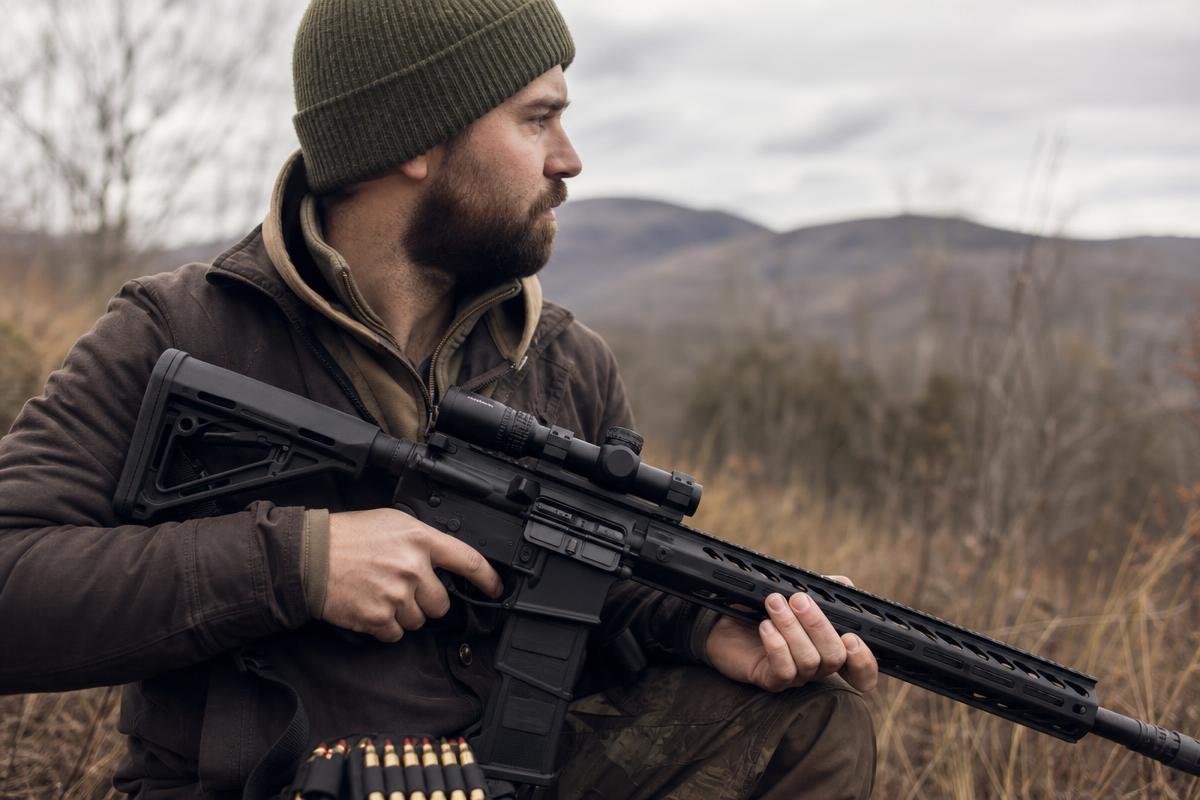
6.8 SPC is an AR-15 cartridge built to deliver more frontal diameter and hunting-focused bullet options than 5.56 NATO while keeping the familiar smaller-frame rifle platform. This 6.8 SPC ballistics breakdown uses representative factory-load examples to show how bullet weight, velocity, energy, trajectory, wind drift, and practical hunting distance can change from one load to another. Need help matching 6.8 SPC parts to your build?
Key Takeaways
- 6.8 SPC balances AR-15 handling with useful hunting energy at practical field distances.
- Representative factory loads range from fast 90-grain varmint ammunition to 110- and 120-grain hunting loads with more retained momentum.
- With a 100-yard zero, many 6.8 SPC hunting loads remain practical around 200 to 300 yards when the bullet still meets its maker’s expansion guidance and the shooter has confirmed dope.
- 6.8 SPC requires a dedicated barrel, bolt, and magazine, not standard 5.56 components.
What Does 6.8 SPC Ballistics Look Like on Paper?
The representative 6.8 SPC factory loads below use current manufacturer data ranging from 2,460 to 2,850 fps and about 1,550 to 1,625 ft-lb at the muzzle. The figures are examples, not universal rifle results. Published manufacturer velocity, stated test barrel, atmospheric conditions, and bullet lot should always be the baseline for your own rifle.
How Bullet Weight Changes the Numbers
Common 6.8 SPC bullet weights run from about 90 to 130 grains. Lighter bullets can start faster and shoot flatter at short distances. Heavier hunting bullets generally start slower, but their construction, sectional density, and ballistic coefficient can help them retain velocity and momentum farther downrange.
| Representative Factory Load | Bullet Weight and Type | Published Test Barrel | Published Muzzle Velocity | Calculated Muzzle Energy | Common Role |
|---|---|---|---|---|---|
| Federal Fusion MSR | 90 grain bonded soft point | Not stated on current product page | 2,850 fps | 1,623 ft-lb | Deer and hog hunting |
| Hornady V-MAX | 110 grain polymer-tip varmint bullet | 16 inches | 2,575 fps | 1,619 ft-lb | Varmint and predator use |
| Hornady SST | 120 grain polymer-tip hunting bullet | 16 inches | 2,460 fps | 1,612 ft-lb | Deer and hog hunting |
| Federal Fusion | 115 grain bonded soft point | Not stated on current product page | 2,470 fps | 1,558 ft-lb | Controlled-expansion hunting |
Sources: current Federal Premium and Hornady ammunition specifications. Muzzle energy is calculated as bullet weight in grains multiplied by velocity squared, divided by 450,240. Do not treat any published test-barrel velocity as a promise for a different rifle.
Why Barrel Length and Test Conditions Matter
A shorter barrel may produce less velocity than the published test barrel, although the actual change depends on powder, chamber, bore, and temperature. Do not treat a published muzzle velocity as a promise for a different barrel length.
For comparison work, use the barrel length printed in the ammunition maker’s specifications, then chronograph your own rifle if exact turret or hold data matters. If you are selecting a new setup, our 6.8 SPC II complete uppers give you a clear starting point for matching chamber and ammunition information.
How to Read Muzzle Energy Without Overreading It
Muzzle energy is useful for comparing loads, but retained velocity and bullet construction decide more about downrange terminal behavior. A bonded 115-grain hunting bullet and a 110-grain varmint bullet can begin with similar energy yet be intended for very different impacts.
Read energy beside the bullet maker’s intended-use and expansion information. For help checking component fitment or published load data, contact our team or call (888) 706-0633.
Original 6.8 SPC and SPC II Chambers Affect Ammunition Selection
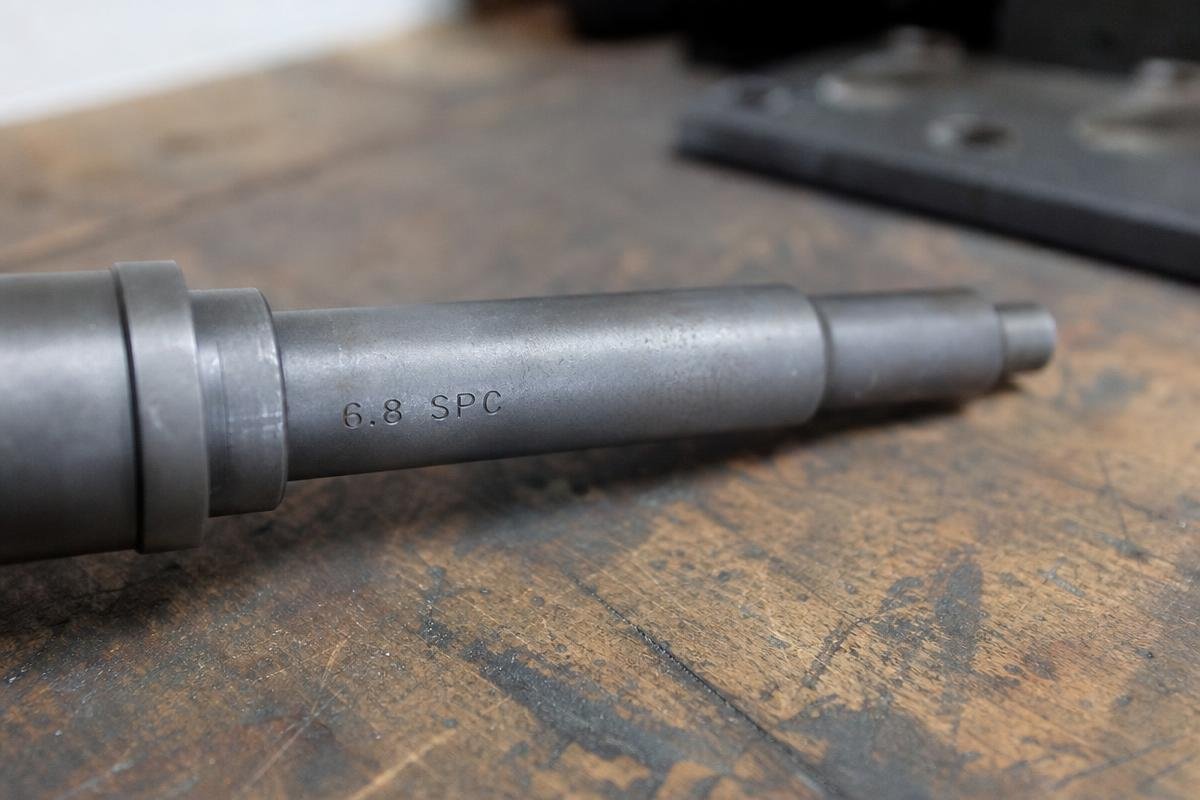
The original 6.8 SPC chamber, sometimes called Spec I, and the later SPC II chamber differ in throat and freebore. Both use 6.8 Remington SPC ammunition, but some higher-pressure loads are labeled or recommended specifically for SPC II chambers. Follow the barrel and ammunition manufacturers' guidance, especially with older or used barrels.
Why the Chamber Marking Matters
No shooter should assume every barrel marked “6.8 SPC” has the same chamber specification. Check the barrel stamp, the upper manufacturer’s product description, and the barrel maker’s documentation before selecting ammunition.
A cartridge box alone does not identify the chamber details of your rifle. The barrel marking and the manufacturer’s instructions are the starting point, especially when buying used parts or assembling a rifle from separate components.
What SPC II Changes in Practical Terms
In practical terms, an SPC II-marked barrel gives the owner a clearly identified chamber configuration commonly used in modern 6.8 SPC performance builds. It does not make pressure limits irrelevant, and it does not authorize using handloads or ammunition outside the barrel and ammunition manufacturer’s recommendations.
For a new hunting build, start with a clearly marked chamber. Our 6.8 SPC II complete uppers are designed to fit a properly assembled mil-spec-pattern AR-15 lower when used with compatible 6.8 SPC magazines and the appropriate lower components. Check the chamber marking and ammunition guidance before use.
Safe Load Selection and Handloading Boundaries
Use ammunition exactly as directed by its manufacturer and the maker of your barrel. Published ammunition figures are reference data, while your rifle’s chamber, barrel length, optic height, and zero determine the final field result.
Handload development is for experienced reloaders using current published load data. Do not use these ballistics examples to set powder charges, seating depth, or pressure limits.
If you need help matching an upper, barrel, bolt, and magazines, contact our team before ordering chamber-marked components, or call (888) 706-0633.
Effective Range Depends on the Load, Zero, and Hunting Conditions
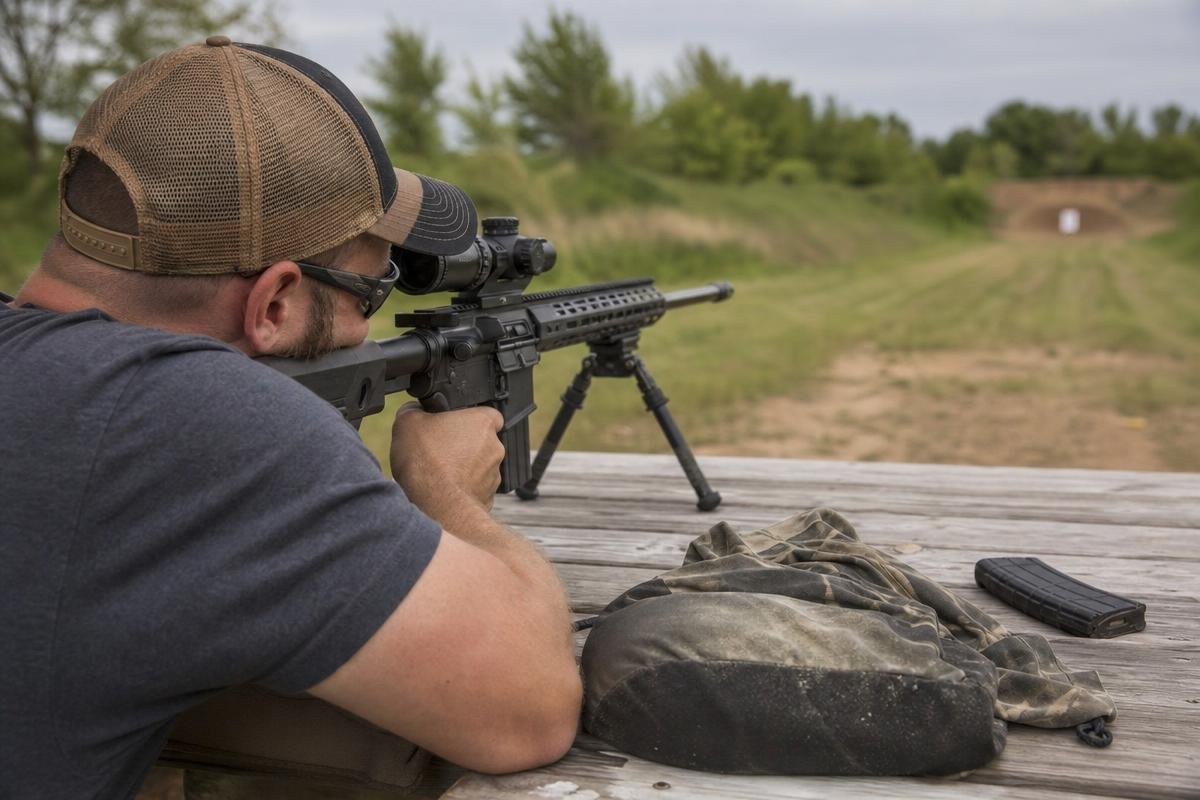
For a representative 110- to 120-grain hunting load, 200 yards is a straightforward field distance for many properly zeroed 6.8 SPC rifles, while 250 to 300 yards can be practical when the hunter has confirmed trajectory, wind holds, and the bullet remains above its maker’s stated expansion threshold. Texas deer and hog hunting often involves brushy edges, feeder lanes, and open pasture shots, so a confirmed 200-yard zero check is more useful than relying on a generic maximum-range claim.
A Trajectory Chart Is Not an Ethical Shot Decision
The following representative trajectory comparison assumes a 100-yard zero, a 1.5-inch sight height, standard atmosphere at sea level, and a 10 mph full-value crosswind. Values are approximate calculations using current manufacturer-published muzzle velocities and G1 ballistic coefficients. Confirm every hold on a safe range with your own rifle.
| Load | 100 Yards | 200 Yards | 300 Yards | 300-Yard Velocity / Energy | 10 mph Wind Drift at 300 Yards |
|---|---|---|---|---|---|
| Hornady 110 grain V-MAX, 2,575 fps | 0 inches | About -5 inches | About -18 inches | About 1,905 fps / 885 ft-lb | About 10 inches |
| Hornady 120 grain SST, 2,460 fps | 0 inches | About -5.5 inches | About -19 inches | About 1,855 fps / 915 ft-lb | About 10 inches |
| Federal 115 grain Fusion MSR, 2,470 fps | 0 inches | About -5.5 inches | About -19 inches | About 1,840 fps / 860 ft-lb | About 10 inches |
Do not substitute any published trajectory for your rifle’s confirmed data. The table illustrates the difference bullet design, ballistic coefficient, and starting velocity can make, not a guaranteed drop card.
Wind Drift, Ballistic Coefficient, and Confirmed Dope
At 300 yards, a 10 mph full-value wind can move these representative 6.8 SPC loads about 10 inches under the stated assumptions, enough to turn a center hold into a poor shot on game. A higher ballistic coefficient generally reduces drift, but wind direction, gusts, and distance estimation still matter more than a single printed BC.
Use the ammunition maker's listed velocity and ballistic coefficient in your calculator. Confirm your dope at a safe range with your rifle, barrel length, optic height, and hunting load. Do not rely on generic 6.8 SPC ballistics tables alone.
Build a Stable Setup Before the Hunt
A stable setup reduces the variables that turn a calculated shot into a miss. Use a secure optic mount, a compatible sighting system, and support you can repeat from prone, seated, or a solid field rest.
Confirm that your upper, magazines, and ammunition work together before the season. A complete upper provides a matched barrel, bolt, and gas-system assembly, while the lower receiver, optic, and magazines still need to be checked as a system. For component-fitment questions, contact our team at AR15Parts.com.
Where 6.8 SPC Fits for Deer, Hogs, and General AR Hunting Builds
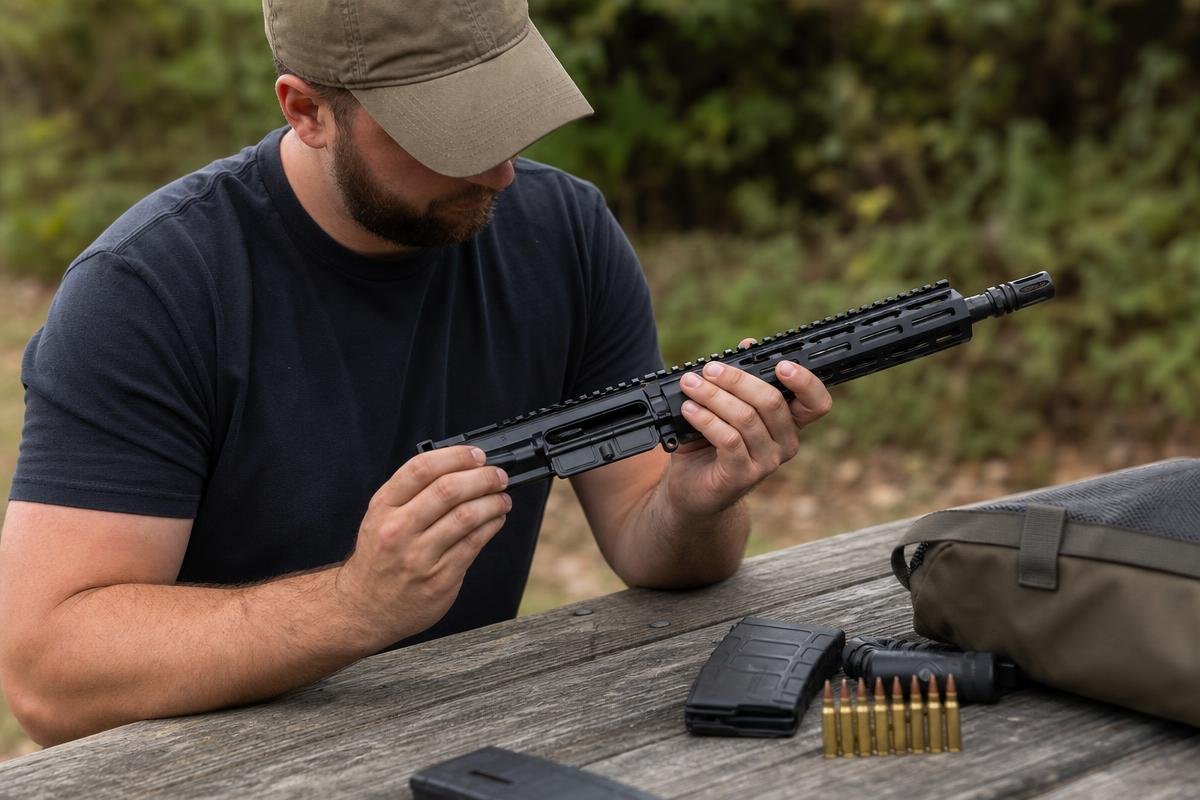
6.8 SPC fits hunters who want more bullet diameter than 5.56 NATO from an AR-15 pattern rifle. With a purpose-built hunting bullet, confirmed zero, and impact velocity within the bullet maker’s recommended range, it remains a practical choice for deer and hog hunting at common field distances.
Choose Hunting Bullets by Construction and Intended Use
Hunting ammunition should be chosen by bullet construction, not just the number on the box. Bonded soft points such as Federal Fusion are designed to hold together through tissue and bone, while bullets such as the Hornady SST are designed for rapid expansion. Varmint bullets may produce dramatic results on small game but are not automatically the right selection for larger animals.
Many expanding rifle bullets have a practical minimum impact-velocity window, often near 1,800 fps, but the exact threshold is bullet-specific. Consult the ammunition or bullet manufacturer instead of applying one expansion number to every 6.8 SPC load.
Handling and Rifle Setup
Most hunters consider 6.8 SPC because it keeps the familiar AR-15 layout while using a larger-diameter cartridge. Recoil is generally manageable in a properly configured AR-15, but it is noticeably greater than typical 5.56 NATO recoil and substantially lighter than many 7.62x51mm NATO rifles of similar configuration.
Confirm your zero with the exact hunting load before a trip. Check feeding, ejection, magazine fit, and point of impact from field positions instead of relying only on bench groups.
Complete Upper or Component Build?
A compatible 6.8 SPC complete upper is designed to fit a properly assembled mil-spec-pattern AR-15 lower when used with compatible 6.8 SPC magazines and the appropriate lower components. A matched upper simplifies the barrel, bolt, and gas-system portion of the build before your range-confirmation session.
A component build requires the barrel, bolt, gas system, upper receiver, and magazines to match. Do not assume every 6.8 SPC bolt or magazine shares identical specifications. Verify product details before purchase, especially if you are combining parts from different makers.
Need help matching a 6.8 SPC upper, bolt, and magazines before your next range session? Call us at (888) 706-0633.
6.8 SPC Compared with 6.8 Western and 7.62x51mm NATO
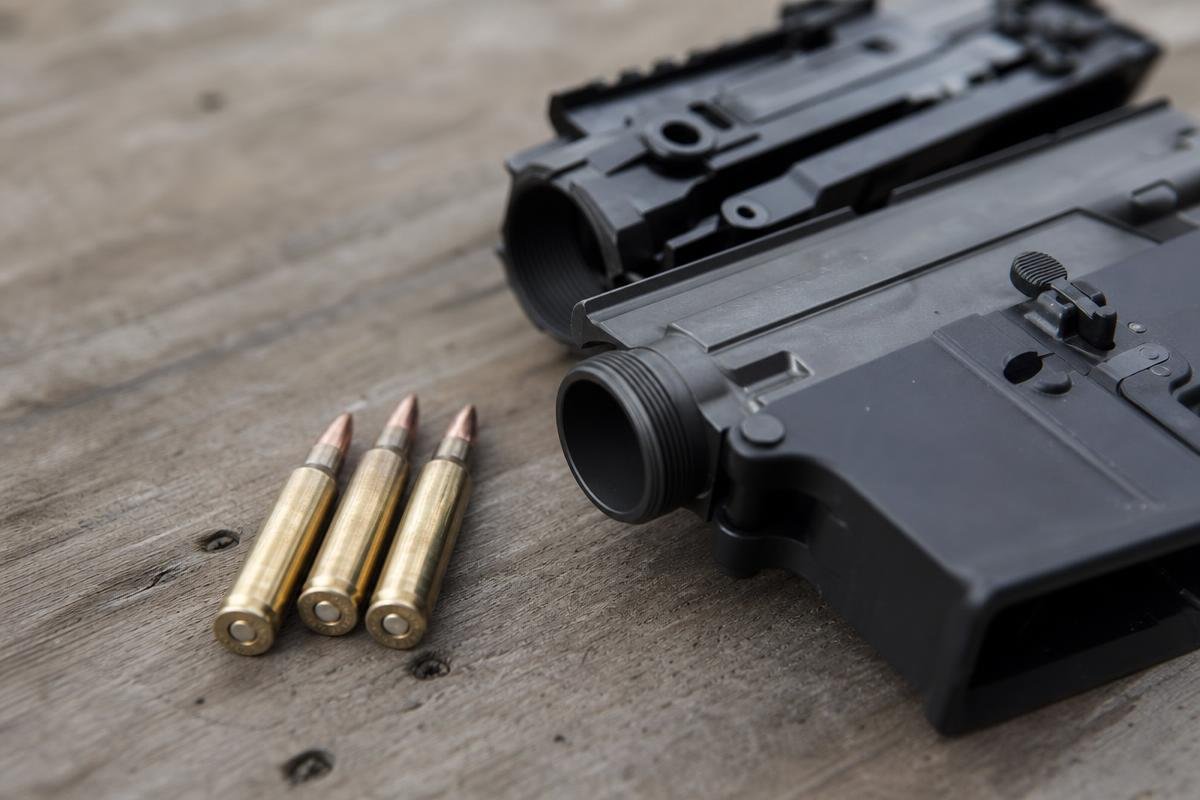
Cartridge names can look close while requiring completely different rifles, bolts, magazines, and ammunition. Compare the platform first, then compare the load, bullet weight, velocity, and downrange energy under equivalent test conditions.
6.8 SPC and 6.8 Western Are Not Interchangeable
No, you cannot use 6.8 Western ammunition in a 6.8 SPC rifle. Both use a nominal .277-inch bullet diameter, but the cases, overall cartridge dimensions, chamber designs, and pressure specifications are different.
The 6.8 SPC, also called 6.8x43mm or 6.8 Remington SPC, was designed around the AR-15 platform. The 6.8 Western is a larger, higher-capacity cartridge intended for larger bolt-action rifle systems. A 6.8 SPC upper needs the correct barrel, bolt, and magazines, such as our 6.8 SPC II complete uppers.
6.8 SPC vs 7.62x51mm NATO Starts with the Rifle Platform
The 6.8 SPC vs 7.62 NATO comparison starts with rifle size. A 6.8 SPC runs in an AR-15-size receiver, while 7.62x51mm NATO generally requires an AR-10-pattern rifle or another larger action.
The 7.62x51mm case holds more powder and supports heavier bullets. That can provide more energy at longer distances, but it also brings a larger rifle, different magazines, and more recoil. The 6.8 SPC keeps the lighter AR-15 handling many hunters prefer for deer and hog work.
A Practical Cartridge Selection Framework
Start with the game you hunt and the distance you expect. Then confirm ammunition availability, rifle weight, magazine capacity, and the performance of your chosen load from your barrel length.
- Choose 6.8 SPC for an AR-15 hunting build with 90 to 130 grain bullet options.
- Choose 7.62x51mm NATO if your hunting plan calls for a larger-frame rifle and heavier bullets.
- Choose 6.8 Western only with a rifle chambered specifically for that cartridge.
Do not buy parts based on the 6.8 name alone. Confirm barrel chambering, bolt compatibility, and correct magazines before ordering, or contact AR15Parts.com at (888) 706-0633 for build-support questions.
Why Denison Shooters Should Confirm Their Setup Before the Season
Before field use, confirm that your rifle, magazines, optic, and hunting load work together. North Texas hunting conditions can range from close shots in timber and brush to longer opportunities across fields, making a verified zero and known wind hold more valuable than a generic ballistic chart. We ship orders from our Denison, TX facility; firearms and lowers ship to the buyer's FFL for transfer.
Check Chamber, Magazine, and Component Compatibility
Read your barrel marking before loading ammunition. Confirm that your chamber is marked SPC II if you plan to use ammunition recommended for that chamber specification. Check feed lips, follower movement, and magazine seating with unloaded magazines.
Inspect the bolt, extractor, gas block, and muzzle device for looseness or visible damage. If you are changing assemblies, review the specifications of the complete upper, barrel, bolt, and magazines as a matched system before ordering.
Confirm Function and Zero with Your Selected Load
Function-check safely with the exact hunting load you plan to carry. Confirm feeding, extraction, ejection, bolt lockback, and magazine reliability before relying on a stated 6.8 SPC effective range.
Zero with that same bullet weight and load lot whenever possible. A 90-grain load and a 120-grain hunting load can print differently, even from the same barrel. Confirm your point of impact at your expected hunting distance, then record the load, zero distance, and any hold data.
For component-fitment questions, contact AR15Parts.com or call (888) 706-0633 before the season starts.
Frequently Asked Questions
What Bullet Weights Are Available for 6.8 SPC?
Common 6.8 SPC bullet weight options run roughly 90 to 130 grains. Lighter loads favor velocity, while 110-grain and 120-grain loads are common hunting choices. Check current manufacturer data for available loads and listed velocity.
Are 6.8 SPC, 6.8x43 mm SPC, and 6.8 Remington SPC the Same?
Yes, these names commonly refer to the same cartridge family. Ammunition boxes, barrel markings, and published data may show different naming, so read markings closely before selecting ammunition.
Can I Use Any 6.8 SPC Load in Any 6.8 SPC Rifle?
No, load compatibility depends on your chamber and barrel manufacturer guidance. The original 6.8 SPC chamber (often called Spec I) and SPC II have different throat and freebore dimensions; some higher-pressure loads are recommended only for SPC II. Follow both manufacturers' guidance.
What Is the Effective Range of 6.8 SPC?
6.8 SPC effective range depends on bullet construction, velocity, your zero, and required terminal energy. Confirm trajectory and impact performance with your exact load at realistic distances before hunting.
Will a 6.8 SPC Upper Work with My AR-15 Lower?
Many 6.8 SPC builds run on a standard AR-15 pattern lower receiver. Your upper, bolt, barrel, and magazines must all be made for 6.8 SPC. Review our 6.8 SPC II complete uppers for a matched assembly designed to fit a properly assembled mil-spec-pattern AR-15 lower when used with compatible 6.8 SPC magazines and the appropriate lower components.
What Should I Check Before Buying a 6.8 SPC Upper?
Verify chamber marking, barrel length, twist rate, gas system, bolt, and magazine compatibility before ordering. Also confirm how your intended load compares in 6.8 SPC vs 7.62 NATO recoil, magazine capacity, and downrange energy.
Before your next range session or hunt, confirm your chamber marking, upper components, magazines, optic mount, and zero with the exact load you plan to use. For component-fitment questions, contact AR15Parts.com or call (888) 706-0633.
Ready to Get Started with AR15Parts.com?
Call (888) 706-0633 to speak with our team directly. We're ready to answer your questions, walk you through your options, and help you find the right solution for your needs. Whether you're just starting to plan or ready to move forward, we'll make the process simple and stress-free. Reach out today and let's talk about how we can help.