
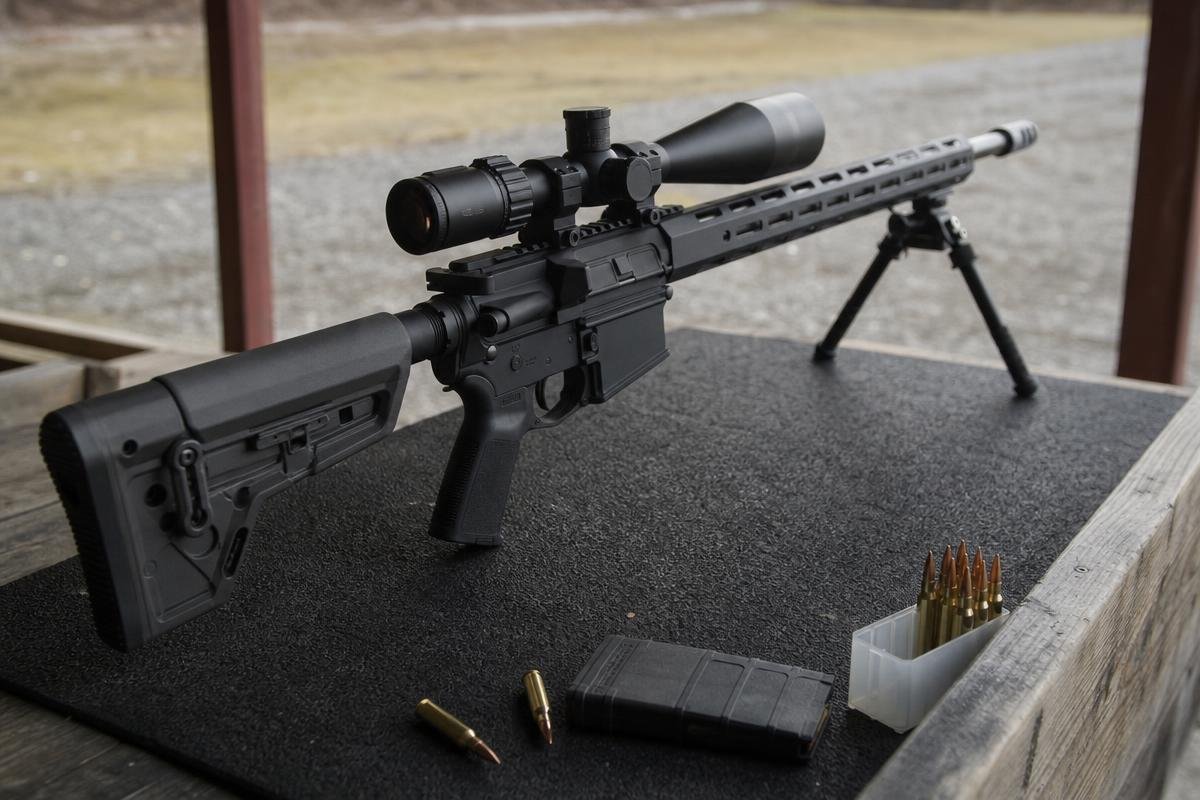
AR15Parts.com provides rifles, parts, and accessories from Denison. We explain .260 Remington ballistics for precision shooting and hunting, including bullet weight, muzzle velocity, ballistic coefficient, drop, wind drift, and the rifle-specific inputs that matter before you dial an optic. Need help selecting compatible parts for a precision rifle build?
Key Takeaways
- The .260 Remington fires efficient .264-inch, 6.5mm bullets that can retain velocity and reduce wind drift at distance.
- Common hunting and target bullet weights run from 120 through 140 grains.
- A useful ballistic solution requires the exact bullet, measured muzzle velocity, sight height, zero distance, and current atmospheric inputs.
- Barrel length, bullet design, wind direction, and temperature can materially change trajectory and impact correction.
How Should You Read .260 Remington Ballistic Data?
.260 Remington is a short-action 6.5mm cartridge valued for manageable recoil and access to streamlined bullets. Published charts are useful for comparing loads, but they are not a firing solution for every rifle. Use the chart below as an illustrative example, then build corrections around the ammunition, barrel, optic, and conditions you actually use.
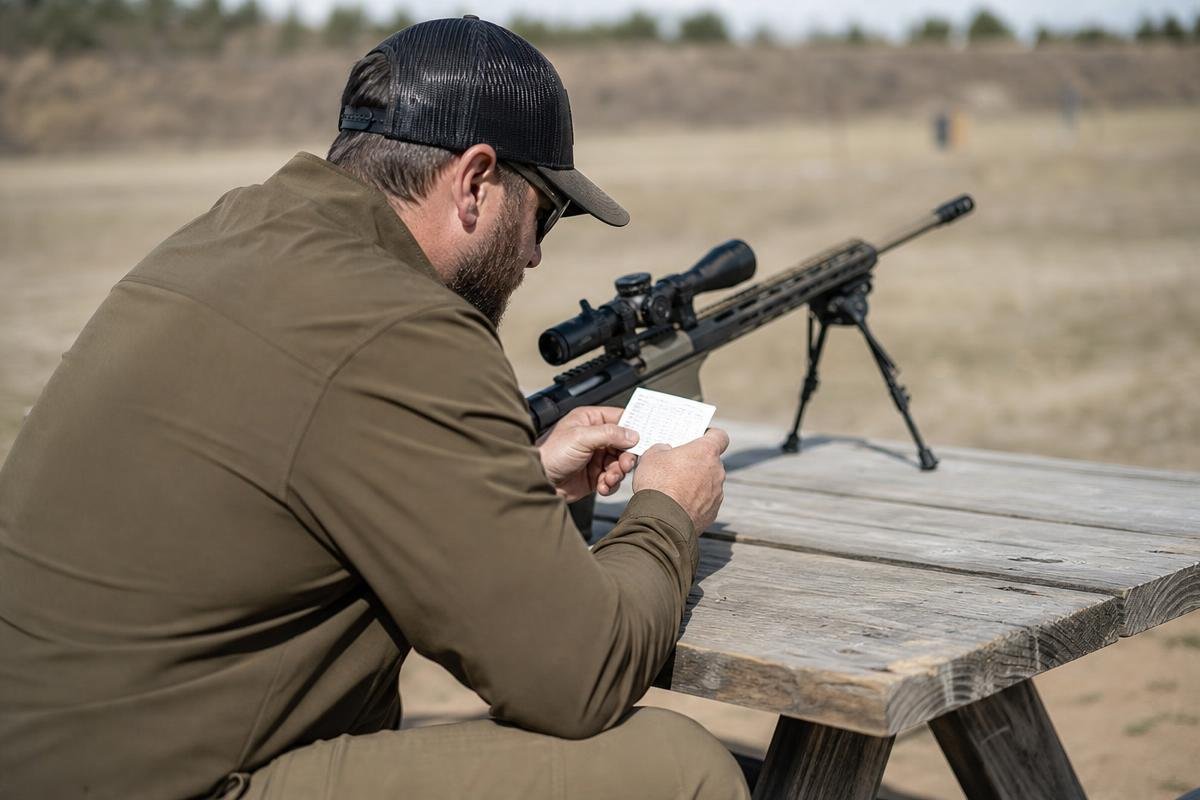
For a practical starting setup, compare manufacturer load information for the exact ammunition you buy, then record a chronograph average from your rifle. A shooter near Denison may see meaningful seasonal changes between cool mornings and hot, windy afternoons, so a notebook that records temperature, wind, ammunition lot, zero, and observed impacts is more useful than a copied online trajectory chart. For other chamberings, browse our complete rifle selection.
What Makes .260 Remington Ballistics Work at Distance?
.260 Remington performs well at distance because it launches .264-inch bullets with relatively high ballistic coefficients from a short-action case. High-BC bullets shed velocity more slowly and experience less wind deflection than a lower-BC bullet launched under the same conditions. Typical published muzzle velocities vary by load and barrel, often ranging from roughly 2,700 to 2,950 fps.
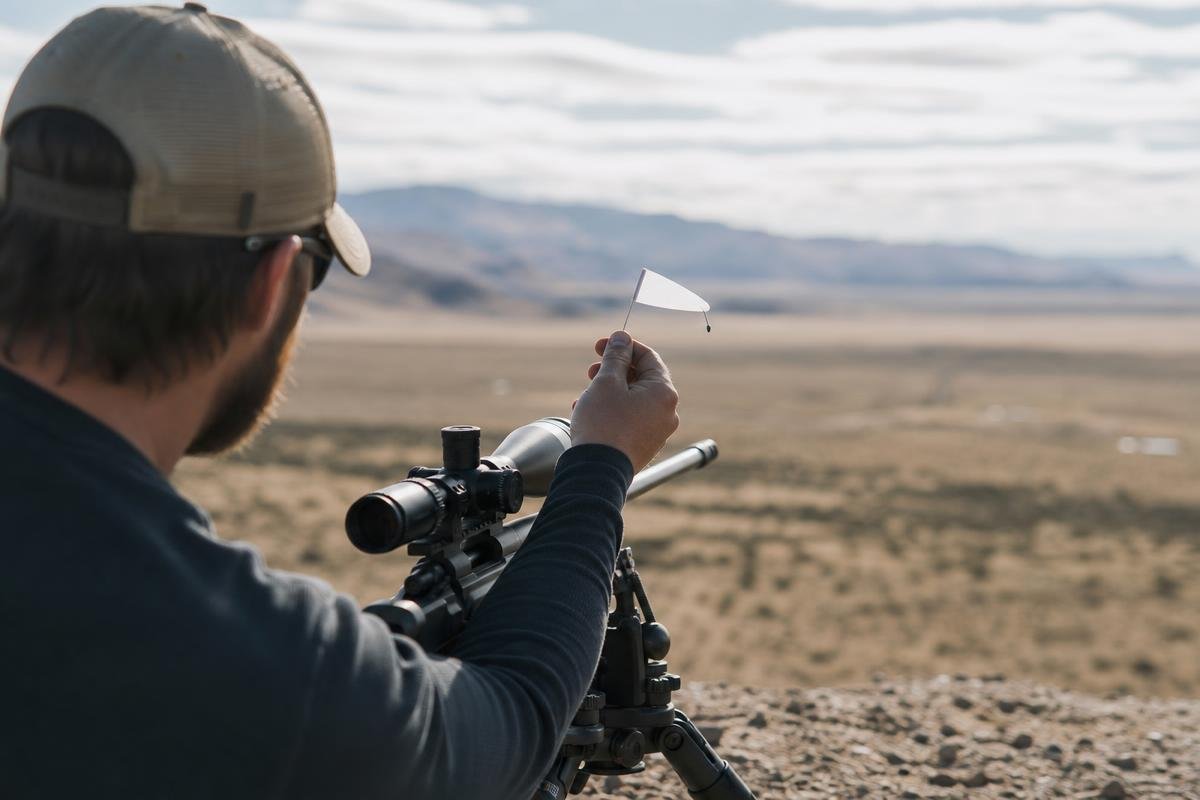
The advantage is not immunity from wind. A light, full-value crosswind can move a bullet enough to miss a small target at longer ranges, particularly where open terrain leaves little protection from changing gusts.
Ballistic Coefficient and Bullet Shape
Ballistic coefficient, or BC, describes a bullet's resistance to air drag. Higher BC values generally indicate better velocity retention and less drift, although a bullet's published BC must be entered in the correct format, G1 or G7, for the calculator being used.
.260 Remington bullet weights commonly include 120-, 129-, 130-, and 140-grain designs. A 120-grain hunting bullet often begins faster, while many 129- through 140-grain bullets have longer, more aerodynamic profiles that can become advantageous as range increases. Twist rate, magazine length, barrel length, and the bullet's intended purpose all belong in that decision.
Illustrative 140-Grain Trajectory and Wind Example
The following figures are illustrative calculator outputs, not AR15Parts.com test results. Assumptions are a 140-grain .264-inch match bullet with a G7 BC of 0.310, 2,750 fps muzzle velocity from a 24-inch barrel, a 100-yard zero, 1.75-inch sight height, sea-level pressure, 59°F, and a 10 mph full-value crosswind. Actual ammunition data, BC, barrel velocity, and conditions will change these values.
| Distance | Approximate drop | Approximate 10 mph wind drift | Approximate retained energy |
|---|---|---|---|
| 100 yards | 0 inches | About 1 inch | About 2,100 ft.-lb. |
| 300 yards | About 13 inches | About 5 inches | About 1,670 ft.-lb. |
| 500 yards | About 51 inches | About 15 inches | About 1,310 ft.-lb. |
| 700 yards | About 123 inches | About 32 inches | About 1,010 ft.-lb. |
Velocity variation matters. In this type of 140-grain scenario, a 50 fps difference in muzzle velocity can shift elevation by several inches at 500 yards and more at longer distances. That is why the velocity printed on an ammunition box is a reference point, not a substitute for your own measured average.
.260 Remington Ballistics by Bullet Weight
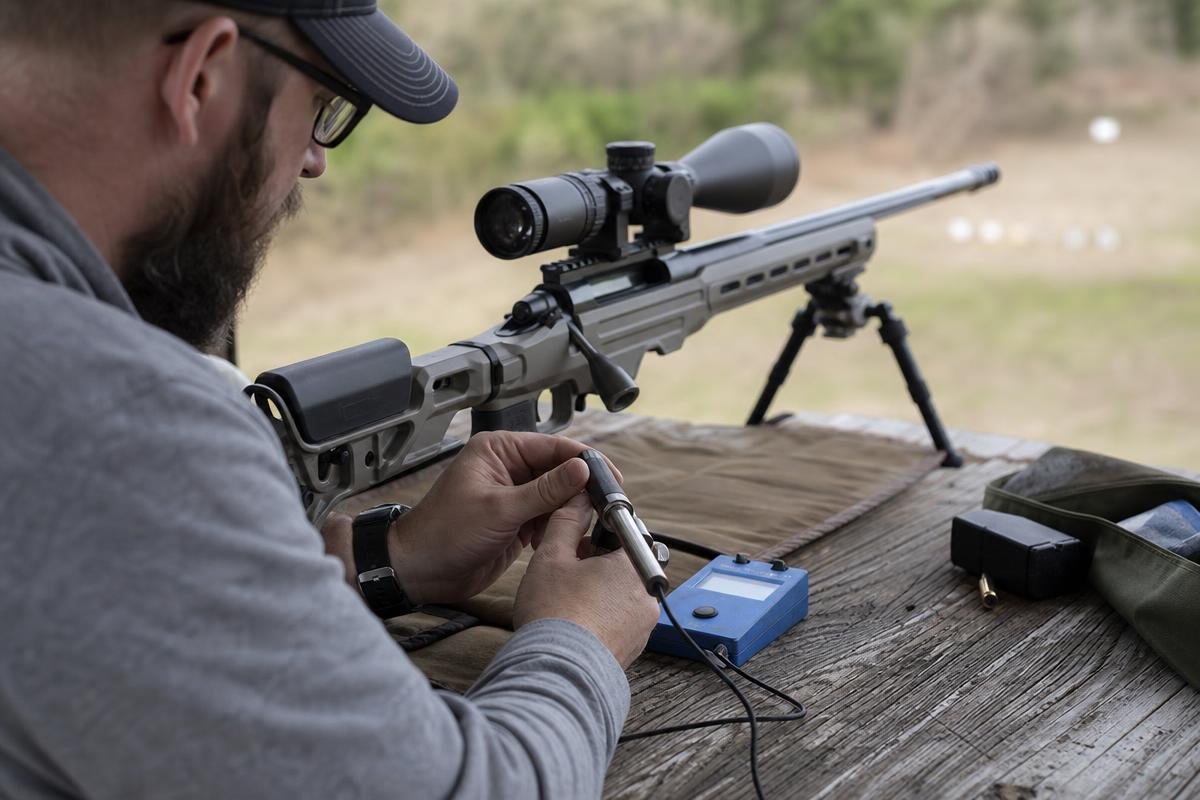
How do .260 Remington bullet weights affect performance? Lighter bullets commonly start faster, while longer, heavier bullets may carry their speed and resist wind better at extended range. The ranges below are general published-velocity expectations, not guaranteed velocities from a particular rifle.
| Bullet weight | Typical muzzle velocity range | Intended use | BC tendency | Recoil tendency | Key setup consideration |
|---|---|---|---|---|---|
| 120 grain | About 2,850 to 2,950 fps | Hunting and flatter short-range trajectory | Lower to moderate | Lower | Bullet construction and expected impact velocity |
| 129 grain | About 2,800 to 2,900 fps | General-purpose hunting and target work | Moderate to high | Moderate | Exact bullet model and stated BC type |
| 130 grain | About 2,750 to 2,900 fps | Hunting and precision shooting | Moderate to high | Moderate | Barrel length and zero distance |
| 140 grain | About 2,700 to 2,800 fps | Long-range target work and wind-sensitive shots | Generally high | Moderate | Twist rate, magazine space, and actual velocity |
How 120 to 140 Grain Loads Differ
A 120-grain load can offer higher initial velocity and a flatter path at nearer distances. For hunting, terminal performance depends on the exact projectile, including whether it is designed for controlled expansion at the impact velocity expected in the field.
A 140-grain match-style bullet may offer a wind advantage at longer distances when it is properly stabilized and its BC is used correctly. It is not automatically the best hunting or target option, because rifle twist, available magazine length, shooting distance, and intended target all matter.
Do not substitute 6.5 Grendel data for .260 Remington ballistics. Grendel is a separate cartridge with different case capacity and operating performance, though it remains relevant for shoppers considering complete AR-15 uppers across multiple calibers.
How Do You Build a Reliable Dope Card?
A reliable dope card starts with one defined load and one confirmed zero. Record the exact bullet model, bullet weight, ammunition lot, barrel length, measured average muzzle velocity, sight height, zero distance, temperature, pressure or density altitude, and wind value. Enter the manufacturer's stated G1 or G7 BC exactly as labeled.
Next, shoot at known distances at a lawful range and record observed elevation and wind corrections rather than calculator predictions alone. Keep the card with the same ammunition lot whenever possible. If you change loads, alter optic height, re-zero, or make a major change to velocity, build a new card.
Planning a compatible precision-rifle setup?
.260 Remington Cartridge Specifications That Affect Performance
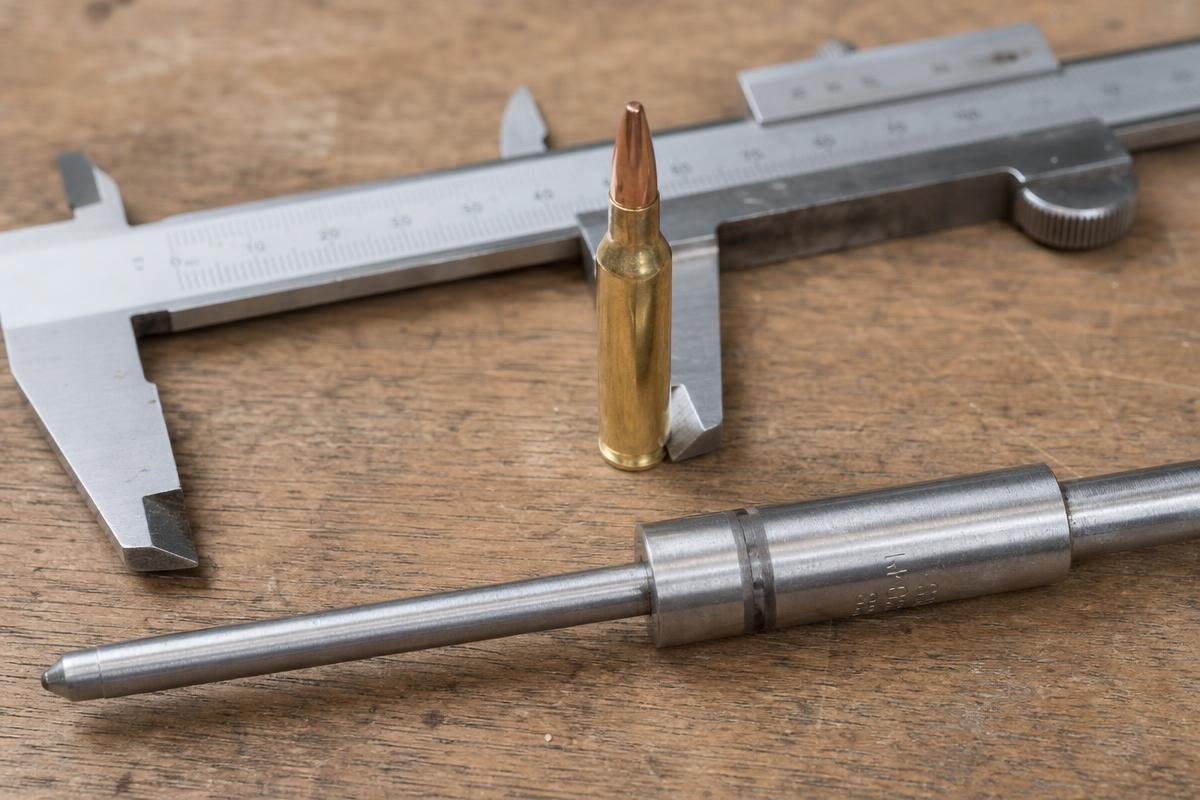
.260 Remington performance begins with a short-action case designed around .264-inch bullets. Case capacity, chamber dimensions, throat length, seating depth, and barrel length affect the velocity a load can safely produce.
Core Dimensions and Pressure Limits
| Specification | .260 Remington |
|---|---|
| Bullet diameter | .264 inch |
| Case length | 2.035 inches |
| Maximum average pressure | 60,000 PSI |
| Maximum overall length | 2.800 inches |
The 60,000 PSI maximum average pressure is a cartridge standard, not a handloading recipe. It does not identify a safe powder charge for a particular rifle, brass lot, primer, powder lot, bullet, or seating depth.
Follow current powder and bullet manufacturer data. Begin at the listed starting charge and work up carefully. Pressure signs are not a replacement for published data, a chronograph, and disciplined load development.
Rifle Configuration and Safe Compatibility
.260 Remington is generally associated with short-action rifles, but safe fit depends on the chamber throat, magazine length, seating depth, bolt face, and complete rifle configuration. A long, high-BC bullet may fit the cartridge overall length limit but still contact the lands if it is seated incorrectly.
A standard AR-15 receiver, bolt, barrel extension, and magazine system are not chambered for .260 Remington. Do not treat it as an improvised AR-15 conversion. The .260 Remington is typically found in bolt-action or purpose-built large-frame precision rifles. Our complete rifle selection may not include .260 Remington; check each rifle's listed chambering, and look to a retailer offering that chambering if we do not carry it.
For compatibility questions, contact our team.
How Does .260 Remington Compare with .308 Winchester and 6.5 Creedmoor?
.260 Remington, .308 Winchester, and 6.5 Creedmoor all serve hunting and precision roles, but they differ in bullet diameter, recoil character, ammunition availability, and chamber design. The best choice is the one supported by the rifle you intend to use and the ammunition you can obtain consistently.
Practical Differences Between the Three Cartridges
Compared with .308 Winchester, .260 Remington uses smaller-diameter .264-inch bullets that are often available in more aerodynamic profiles for their weight. In rifles of similar weight, .308 Winchester commonly produces more recoil, while .308 ammunition and rifle support are often easier to find.
| Cartridge | Bullet Diameter | Typical Bullet Weights | Recoil Tendency | Ammunition Access | Practical Use |
|---|---|---|---|---|---|
| .260 Remington | .264 inch | 120 to 140 grain | Moderate | More limited | Precision and hunting |
| .308 Winchester | .308 inch | 150 to 180 grain | Moderate to heavier | Widely available | Hunting, general-purpose rifles |
| 6.5 Creedmoor | .264 inch | 120 to 147 grain | Moderate | Common | Precision and hunting |
The .260 Remington versus 6.5 Creedmoor comparison is closer because both use .264-inch bullets and occupy similar roles. Their case designs and chamber dimensions differ. Loaded ammunition is not interchangeable, and neither cartridge should be fired in the other chamber.
Choose the Rifle and Ammunition Path First
Before selecting a chambering, check what ammunition you can keep on hand and what your rifle accepts. A .308 can make sense for broad availability, while a 6.5mm chambering can appeal to shooters who want efficient bullet profiles for longer-range work.
Magazine and action length also matter. If comparing other chamberings, review our complete rifle selection and confirm the chambering, magazine pattern, and ammunition source before you buy. Ballistic comparisons only have value when bullet weight, barrel length, zero, velocity, and atmospheric conditions are held consistent.
Need help sorting out a rifle chambering? Call us at (888) 706-0633.
Where .260 Remington Fits for Hunting and Precision Shooting
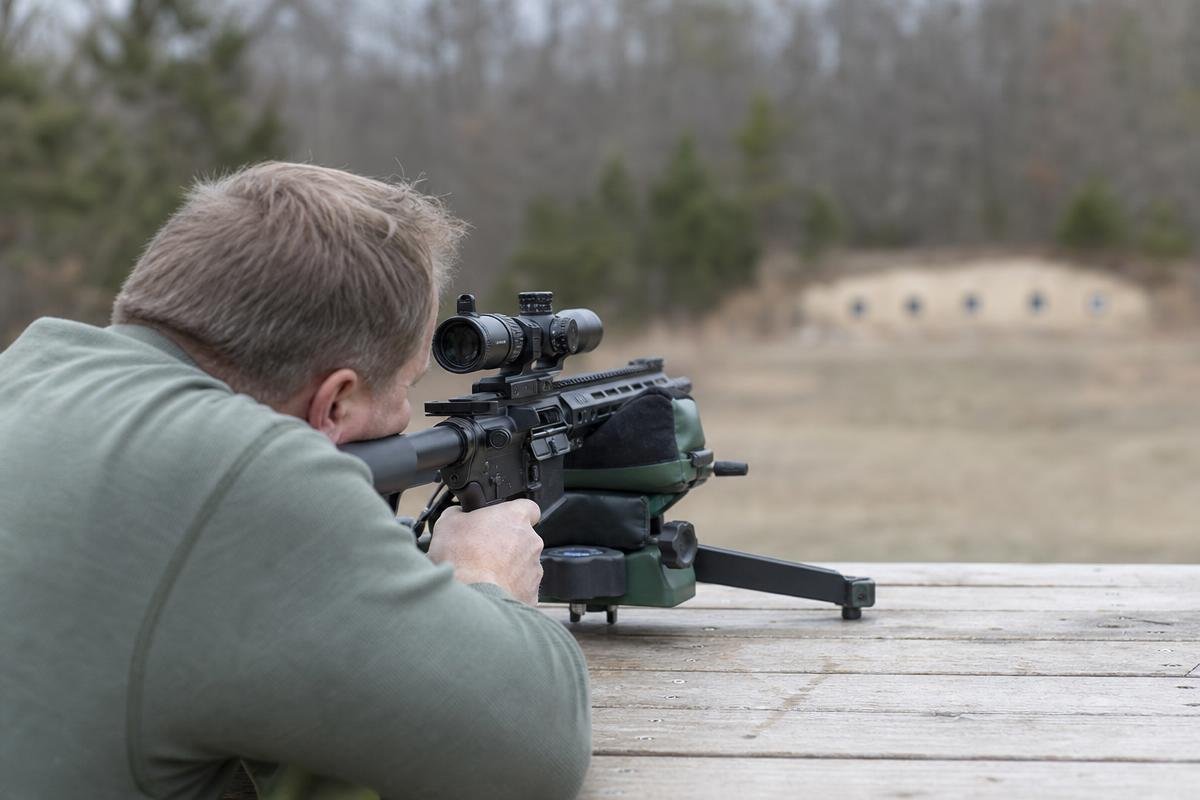
.260 Remington can fit deer hunting and precision shooting when the load, rifle setup, distance, and conditions are appropriate. For hunting, bullet construction, impact velocity, shot placement, and the shooter's ability matter more than a cartridge label. Follow applicable regulations and use safe, lawful shooting locations.
For precision work, use a stable rifle, a confirmed zero, repeatable ammunition, and a data card matched to your optic height and environmental conditions. Wind-reading skill becomes increasingly important as distance grows, even with an efficient 6.5mm bullet.
How Far Is .260 Remington Effective for Hunting?
.260 Remington is effective for deer-sized game only as far as the shooter can place an appropriate hunting bullet accurately while maintaining sufficient impact performance. There is no universal yardage limit. Evaluate the specific bullet maker's impact-velocity guidance, your field position, wind, terrain, and the legal conditions of the hunt.
Match bullets should not be assumed suitable for hunting. Many match designs prioritize accuracy and ballistic coefficient, while controlled-expansion hunting bullets are built to expand and penetrate across a defined impact-velocity range.
Read the bullet maker’s intended-use guidance before loading or buying ammunition. A bonded, partition-style, or controlled-expansion projectile is generally the more appropriate choice for game than a match bullet of equal weight.
Managing Recoil for Better Observation
.260 Remington recoil is generally moderate, roughly 12 to 20 ft.-lb. depending on rifle weight and load. Actual recoil changes with rifle weight, stock design, load, muzzle device, and your shooting position.
Lower recoil can help you preserve your sight picture and observe impacts from a supported position. It does not guarantee better shooting, since trigger control, follow-through, and wind calls still matter. If you are comparing rifle platforms, check chamber markings and component compatibility before deciding.
Building a Reliable .260 Remington Data Card in Denison
Build a .260 Remington data card around your specific rifle, not an internet chart. The practical sequence is to confirm chambering, chronograph the exact ammunition lot, establish a zero, enter complete inputs into a ballistic calculator, and validate the predicted corrections at known distances.
A Field-Tested Data Card Sequence
Start by confirming your ammunition matches your rifle chamber and manufacturer guidance. Reloading data for another cartridge does not transfer to .260 Remington, even if bullet weight and powder type appear similar.
- Chronograph a representative string from your rifle with the exact ammunition lot.
- Record bullet model, grain weight, measured average velocity, and extreme spread.
- Enter that data into a reputable ballistic calculator with the bullet’s listed ballistic coefficient.
- Confirm your zero distance and optic settings before recording elevation corrections.
- Validate .260 Remington trajectory and wind holds at known distances where legal and safe.
Write observed corrections in a range notebook, not just calculator predictions. Include ammunition lot, zero distance, temperature, optic magnification, turret clicks, and actual impacts.
Conditions That Can Change Your Holds
Temperature, pressure, humidity, and wind can shift point of impact. Wind is often the largest variable, especially once a light crosswind becomes a meaningful hold at longer distances. Record whether the wind was full value, half value, steady, or switching when you log results.
Keep separate entries for different range days and compare predicted corrections with actual impacts before updating a card.
Good .260 Remington ballistic data is rifle-specific. If you need help selecting compatible components or a complete setup, contact our team at (888) 706-0633.
Frequently Asked Questions
Is .260 Remington Good for Long-Range Shooting?
Yes. .260 Remington ballistics support long-range work with a stable rifle, suitable bullet, verified velocity, correct optic adjustment, and wind-reading skill. A 140-grain high-BC bullet is a common choice for holding velocity and limiting wind drift.
What Bullet Weights Are Common in .260 Remington?
Common .260 Remington bullet weights include 120, 129, 130, and 140 grains. Rifle twist rate and intended use should guide your choice. Lighter bullets can suit hunting loads, while 129- through 140-grain bullets are often selected for precision work.
How Does .260 Remington Recoil Compare?
.260 Remington recoil is generally lighter than .308 Winchester in similar rifle weights. That reduced recoil can help you spot impacts and maintain position through longer shot strings.
Can .260 Remington Use 6.5 Creedmoor Bullets?
Yes, both cartridges use .264-inch bullets. Loaded ammunition and chamber dimensions are not interchangeable, so .260 Remington vs 6.5 Creedmoor compatibility ends at bullet diameter. Use ammunition marked for your rifle’s chamber.
Is .260 Remington Suitable for Deer Hunting?
Yes. A properly constructed hunting bullet in the 120- to 140-grain range provides suitable penetration and expansion for deer-sized game. Confirm your zero and bullet performance at expected field distances before hunting.
Will .260 Remington Work in a Standard AR-15?
No. .260 Remington is not a standard AR-15 cartridge and requires a firearm safely designed and chambered for it. For chambering questions, call us at (888) 706-0633.
Ready to Get Started with AR15Parts.com?
Call (888) 706-0633 to speak with our team directly. We're ready to answer your questions, walk you through your options, and help you find the right solution for your needs. Whether you're just starting to plan or ready to move forward, we'll make the process simple and stress-free. AR15Parts.com ships from our Denison, TX facility at 4000 Texoma Pkwy, Denison, TX 75020. Contact our team with questions about available chamberings.