
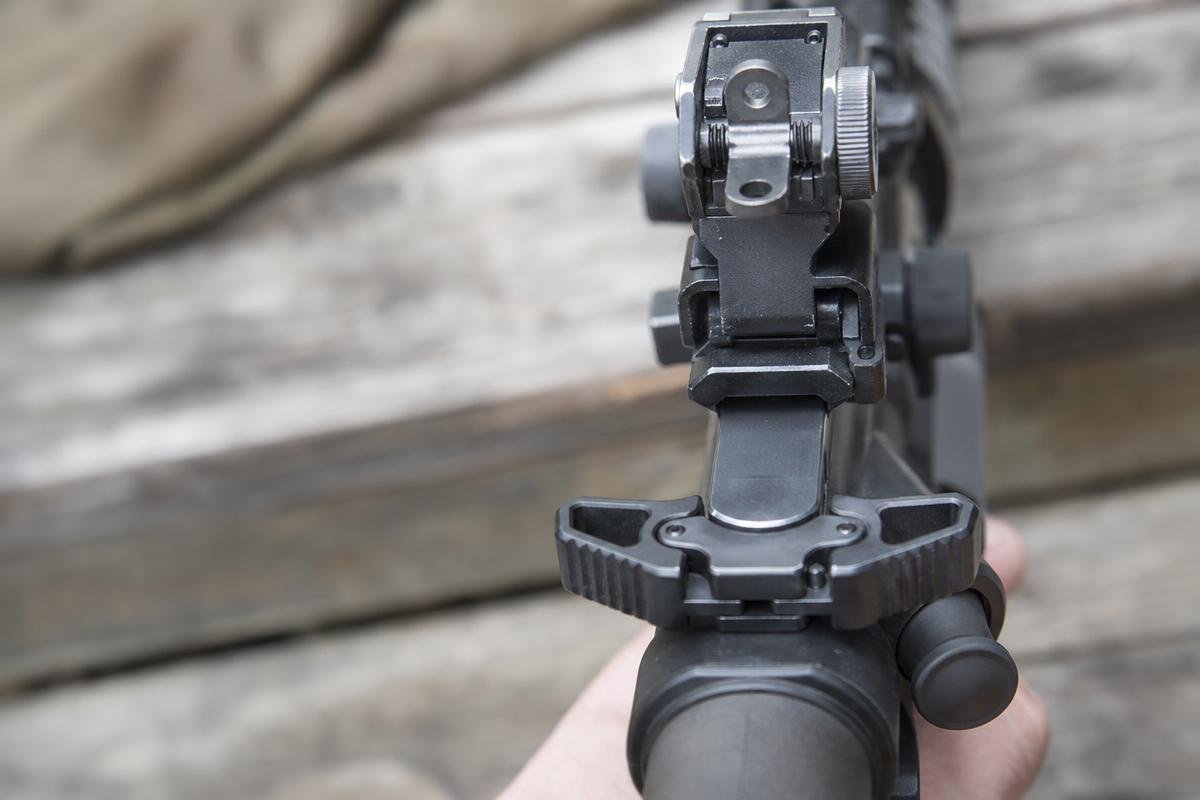
Choosing an ambidextrous charging handle comes down to easier manual control of an AR-15 from either side of the receiver. It can be especially useful around rear-mounted optics, gloves, slings, and support-side handling. The handle is a manual control. It does not change how the rifle cycles while firing.
Key Takeaways
- An ambidextrous charging handle lets you release and pull the handle from the left or right side of an AR-15.
- Extended latch surfaces can improve purchase when optics, gloves, or hand position limit access.
- Support-hand operation can help keep your firing hand in place during administrative handling and practiced malfunction-clearing procedures.
- The benefit depends on your shooting position, optic setup, gloves, and intended use.
An ambidextrous charging handle provides two latch surfaces for manually chambering a round, unloading the rifle, inspecting the chamber, or locking the action open. When the rifle fires, the bolt carrier group cycles independently of the handle through the gas and recoil system. The upgrade changes how you reach the control, not the firing cycle.
Useful Even on a Properly Running Rifle
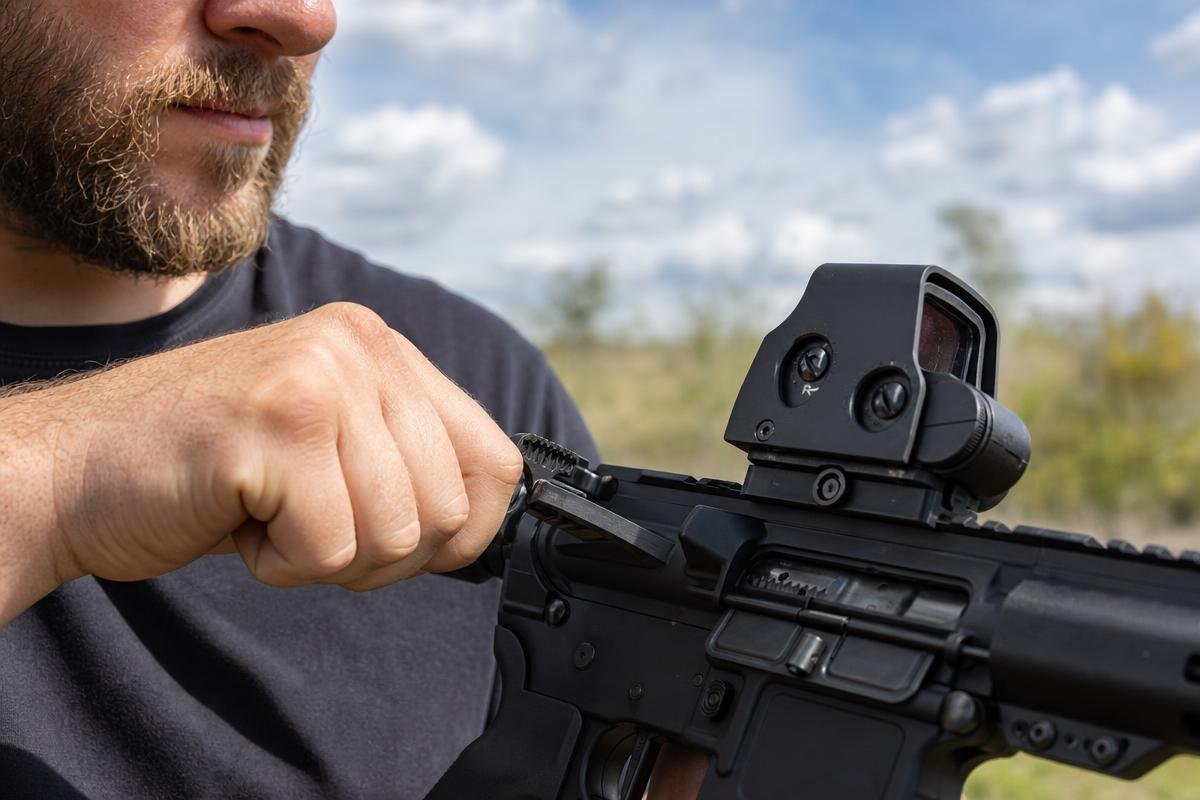
An AR-15 charging handle upgrade can improve manipulation even when a rifle already functions properly. Dual latches add options around an optic, sling, or gloved hand without altering the rifle’s operating system. The best choice depends on receiver compatibility, latch geometry, clearance behind the optic, and how the rifle is actually carried or used. If you are planning a new setup, start with the upper configuration when reviewing our complete AR-15 uppers.
What Does an Ambidextrous Charging Handle Change During AR-15 Operation?
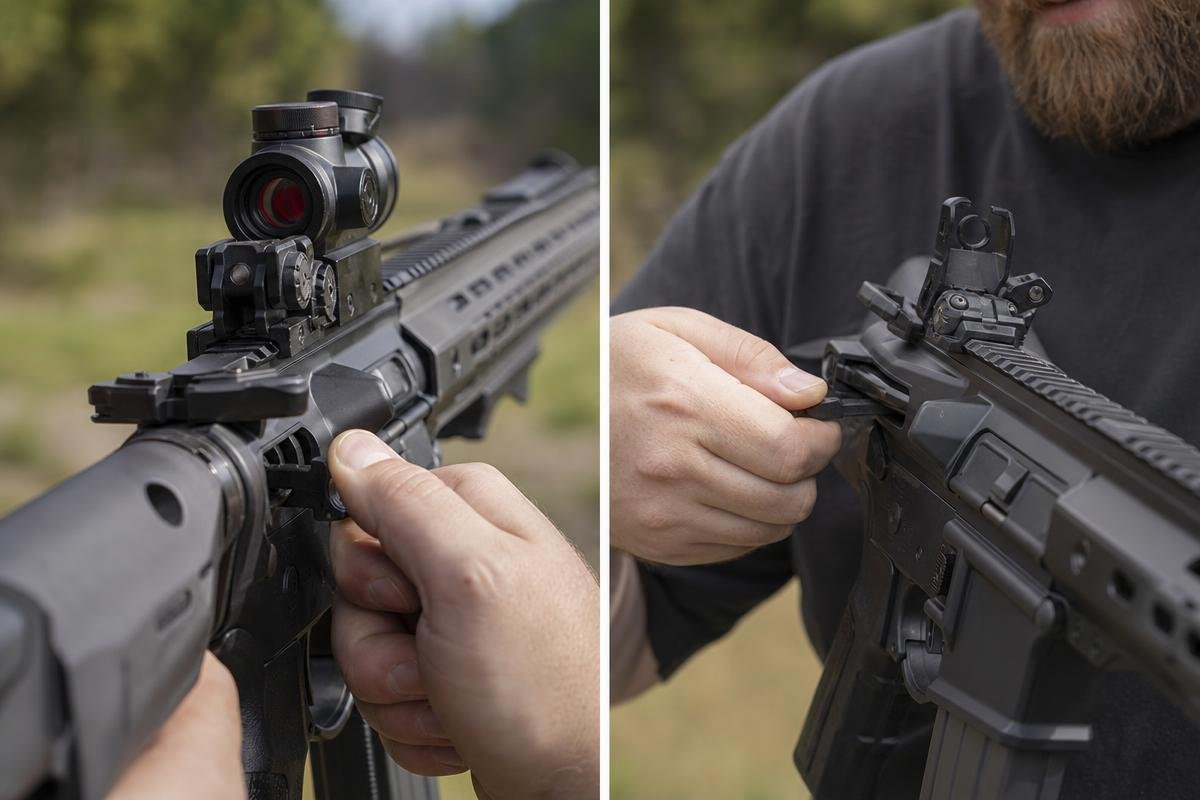
An ambidextrous charging handle changes how you release the latch and pull the bolt carrier group during manual operation. Instead of relying on one latch position, you can use the side that offers the clearest reach for your grip, optic arrangement, or shooting side.
Manual Cycling and Bolt Carrier Group Contact
The charging handle engages the bolt carrier group when you pull it rearward by hand. Common uses include chamber checks, loading, unloading, locking the bolt open, and returning the rifle to operation after a stoppage. A properly fitted handle should move smoothly in the receiver channel, latch securely, and provide enough gripping surface without creating unnecessary bulk.
A standard handle is generally released from one side. An ambidextrous design adds a second release point while using the same receiver track and carrier interface. It can improve reach, but the result still depends on the upper receiver, optic mount position, latch shape, and practiced handling technique.
Control Options Around the Receiver
Dual-latch designs are useful when your firing hand remains on the pistol grip or when your support hand approaches the receiver from a different angle. This can matter when a sling, barricade, glove, or rear-mounted optic limits the cleanest path to a conventional latch.
Fitment remains the first requirement. Select a handle specifically listed for an AR-15 pattern upper receiver, then verify clearance with your optic mount, rear sight, and receiver. Larger-frame AR platforms and proprietary receiver designs may require different parts.
Standard Vs. Ambidextrous Charging Handles: Where the Difference Shows Up
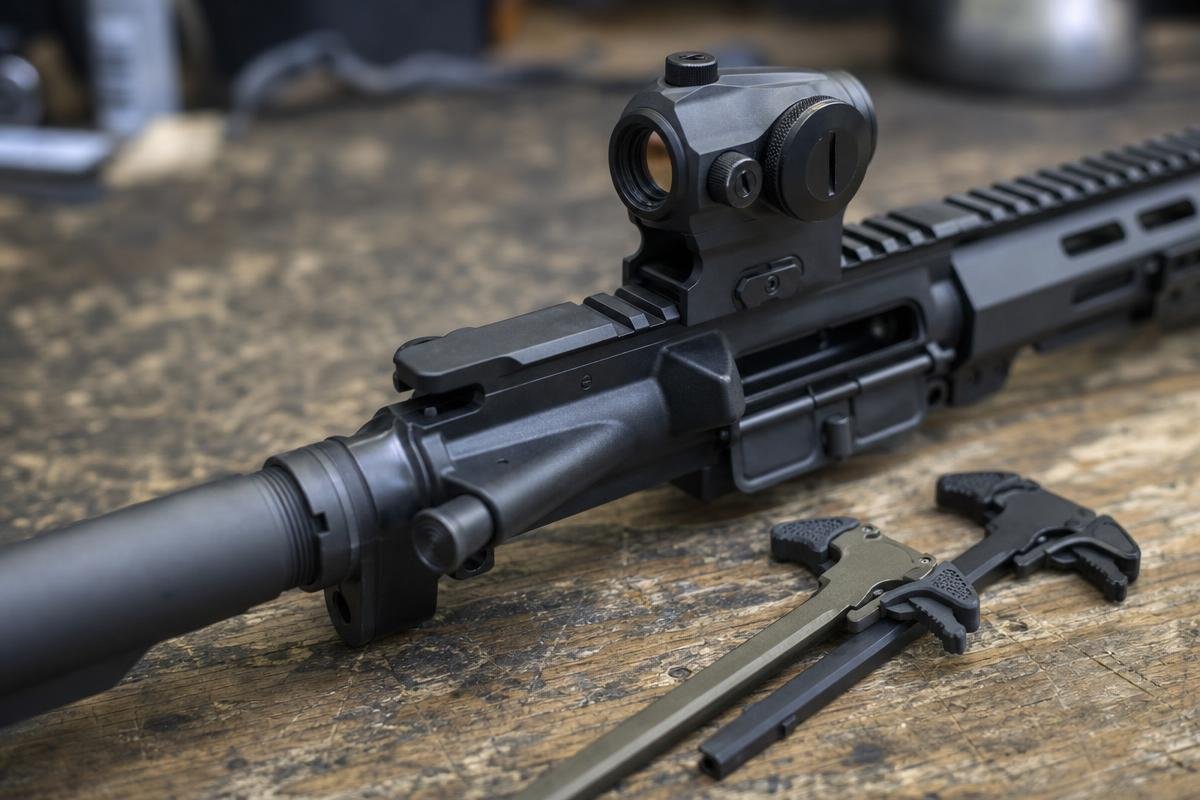
A standard charging handle uses a single-sided latch, while an ambidextrous charging handle offers left and right release points. The meaningful difference is flexibility, particularly when the rifle is configured with a large optic, magnifier, rear sight, or equipment that changes how your hands reach the receiver.
| Feature | Standard Charging Handle | Ambidextrous Charging Handle |
|---|---|---|
| Latch access | Single-sided latch | Left and right latch access |
| Support-hand options | More limited reach angles | More options from either side |
| Latch profiles | Usually standard or extended | Low-profile, medium, and extended options |
| Optic clearance | Can be tight behind large optics | Latch geometry can improve available finger room |
| Gloved use | Small latch may be harder to catch | Larger contact surface can improve purchase |
Compare your upper, optic, and latch preferences before selecting a handle.
Support-Hand Manipulation and Shooter Access
Your support hand may approach the receiver differently than your firing hand, especially during administrative handling. A second latch surface gives you more choices without requiring a major change to the AR-15 manual of arms.
This does not make an ambidextrous handle mandatory for left-handed shooters, nor does it offer one universal solution for every right-handed shooter. The value is in choosing the latch position and size that works with your own rifle configuration, stock position, sling routing, and handling preference.
Optic Clearance and Rear Sight Space
Large rear optic housings, magnifiers, and folded rear sights can reduce finger room behind the upper receiver. A standard handle may still be perfectly usable, but reaching a small latch can become less convenient when the optic sits low and close to the receiver.
Latch shape often matters more than maximum size. A medium latch may provide positive purchase while preserving room around an optic mount. An overly wide latch can crowd adjacent equipment, brush against a sling, or add a snag point that is not worthwhile for your build.
Gloves, Latch Surface, and Snag Risk
Gloves reduce fingertip feedback and can make a small latch difficult to catch. An extended latch provides more surface area for a firm pull, which can be useful with work gloves or cold-weather gloves.
Bigger is not automatically better. Low-profile latches stay closer to the receiver and are often preferred for rifles carried close to the body. Medium latches are a practical middle ground for many optic-equipped rifles. Extended designs are best evaluated against the actual optic mount, sling path, chest rig, and hand position rather than selected by appearance alone.
How an Ambidextrous Handle Fits Into Malfunction Clearing and Administrative Handling

An ambidextrous charging handle can support administrative handling and practiced malfunction-response procedures because either latch can be used to match your technique. Safe handling still begins with muzzle direction, firearm-status verification, and the firearm manufacturer’s manual.
Consistent Latch Access Under Pressure
A dual-latch handle gives you an additional contact point when gloves, an optic, or your chosen support-hand method makes one side less convenient. Its value is consistent access to the control, not a promise of faster results.
Choose latch geometry that you can grasp without interfering with the rear of the receiver or optic mount. Before installation, compare the product’s stated AR-15 compatibility with your upper. This is particularly important for a build based on one of our 5.56 NATO upper receivers.
What a Charging Handle Cannot Fix
A new charging handle will not diagnose or repair magazine, ammunition, extractor, gas-system, chamber, or bolt carrier group problems. It provides a better manual point of contact, but it does not correct gas pressure, extractor tension, magazine feed geometry, or carrier movement.
Repeated failures deserve inspection before more parts are added. Check the bolt carrier group for wear, confirm the gas system is properly assembled, inspect magazines, and use ammunition appropriate for the chamber. Follow the firearm manufacturer’s guidance and practice only in a lawful, controlled setting.
If you need help selecting compatible parts for a build, contact AR15Parts.com with your upper, caliber, optic, and current component details.
When Does a Suppressed AR-15 Need More Than a Standard Charging Handle?
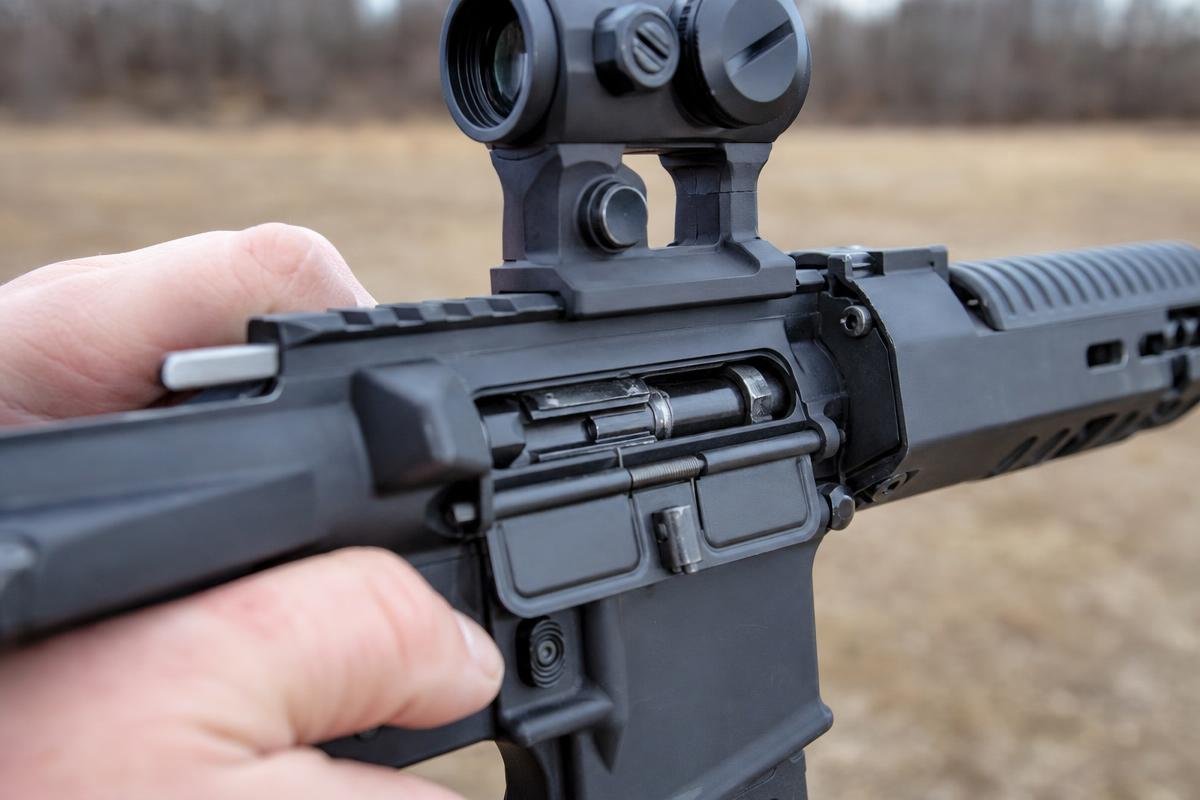
A suppressed AR-15 does not automatically need an ambidextrous charging handle. A handle with product-specific gas-management geometry may improve comfort for some configurations, but it is not a substitute for evaluating the complete rifle setup.
Backpressure and Gas at the Receiver
A suppressor can increase backpressure and send more gas through the action toward the charging-handle opening. This may be more noticeable on short barrels, suppressed 300 Blackout configurations, or rifles using higher-pressure ammunition.
Gas system length, barrel configuration, ammunition, buffer system, bolt carrier group condition, and suppressor setup all influence the result. Review the rifle as a system before treating a charging handle as the only answer to gas at the receiver.
Gas-Redirecting Features Must Be Verified
Some charging-handle designs use raised rear geometry, relief cuts, or vent paths intended to redirect part of the gas away from the shooter. Those features are product-specific. Confirm them in the exact product listing before ordering, because an extended latch or ambidextrous operation alone does not indicate gas-management capability.
A charging handle may reduce gas reaching the shooter on some builds, but it cannot replace proper gas control. An adjustable gas block, appropriate buffer weight, a bolt carrier group in sound condition, ammunition selection, and the suppressor itself may matter more. For suppressed 300 Blackout and specialty configurations, evaluate each part as part of the complete system.
Need help checking compatible parts for a suppressed build?
How to Choose an Ambidextrous Charging Handle for Your Build
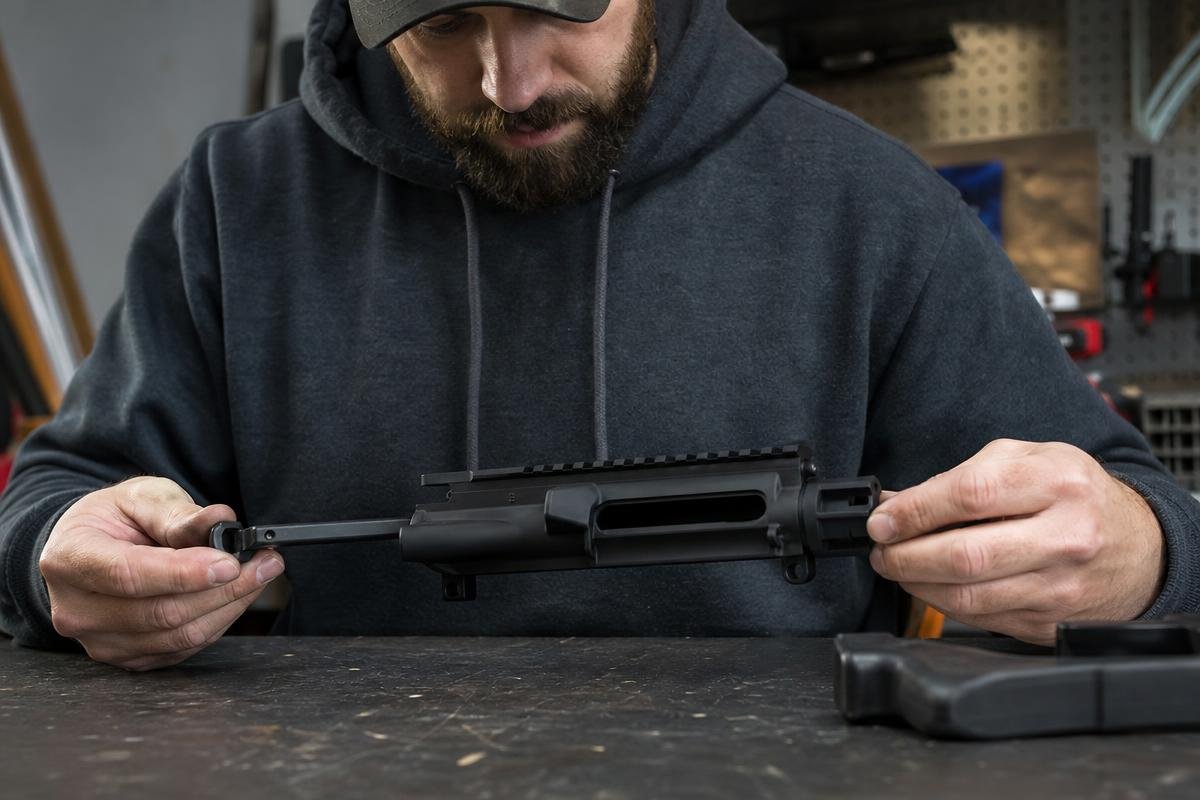
Start with a pass-or-fail checklist. The correct ambidextrous charging handle must match your receiver platform and the role of your build. Confirm the upper pattern, latch profile, product materials, and any stated gas feature before you order.
Confirm the Receiver Platform First
Check that the handle is listed for an AR-15 pattern upper receiver. Do not assume an AR-15 charging handle upgrade fits every rifle platform, including larger-frame AR variants, side-charging designs, or proprietary receiver systems.
Review product notes against your upper before ordering. Receiver pattern is more important than caliber alone, although the complete upper’s stated compatibility should always guide the selection.
Choose a Latch Profile Around Your Setup
Choose latch size around your optic, sling, gloves, and normal handling position. A low-profile latch stays close to the receiver and reduces snag points, making it a sensible option for rifles carried close to the body or used with gear that crowds the receiver area.
A medium latch adds usable purchase without extending far from the upper and is often a balanced choice for optic-equipped rifles. An extended latch provides the most gripping surface for gloves or tight finger clearance behind a large optic, but it can contact equipment or catch on a sling. User preference matters here, so compare the handle’s dimensions with your actual setup.
Review Material, Finish, and Product Notes
Read the listing beyond the finish color. Check the stated alloy, machining details, coating type, latch design, manufacturer fitment notes, and compatibility limits. These details are more useful for assessing expected wear and fit than appearance alone.
Finish and coating can affect cleaning and wear resistance, but they do not correct poor fitment, a damaged upper receiver, or an out-of-spec part. Match the handle to the receiver first, then choose the feature set that supports your intended use.
Select Gas Mitigation Only When It Is Listed
Expect gas mitigation only if the exact product description says the handle includes it. A suppressed AR-15 charging handle may use relief cuts, vents, or a raised rear shelf, but designs vary by manufacturer.
Do not treat ambidextrous latches as proof of gas control. Check the listed features, then compare them with your barrel, gas system, ammunition, and suppressor setup. If you need help confirming upper compatibility, contact AR15Parts.com before placing the order.
Why Denison AR-15 Owners Should Check Fitment Before Ordering
Fitment should be checked before ordering an ambidextrous charging handle. AR15Parts.com ships from our facility at 4000 Texoma Pkwy, Denison, TX 75020. Customers can use the product and contact information available through AR15Parts.com to ask questions about component compatibility before ordering.
Have Your Existing Components Ready
Start with your upper receiver pattern and caliber. A 5.56 NATO upper receiver is a common AR-15 configuration, but rear sight placement, optic mounts, and receiver-specific dimensions can affect latch clearance.
Have the make of your upper, bolt carrier group, rear sight, optic mount, and intended use ready. Photos from the left and right sides of the receiver can also help identify potential interference before an AR-15 charging handle upgrade is ordered. Review our 5.56 NATO upper receivers if you need to compare common upper configurations.
Ask Product Questions Before You Buy
An ambidextrous charging handle should be evaluated against your existing upper and optic arrangement before purchase. Ask about latch width, rearward travel, clearance around a folding rear sight, receiver-platform compatibility, and whether the product includes any stated gas-management feature.
Call us at (888) 706-0633 or use our contact page with your component details. We can help you narrow down the right fit without relying only on a product photo.
Frequently Asked Questions
Is an Ambidextrous Charging Handle Worth It for a Right-Handed Shooter?
Yes, an ambidextrous charging handle can be worthwhile for a right-handed shooter. Value depends on your preferred manipulation method, optic setup, gloves, and need for access from either side. The difference between standard and ambidextrous charging handles is most noticeable during administrative handling and support-side operation.
Will an Ambidextrous Charging Handle Fit Any AR-15?
No, fitment is not automatic across every AR-pattern rifle. Confirm your receiver platform and read the exact product listing before ordering. Check fitment carefully if you are selecting parts for complete AR-15 uppers or assembling a custom upper.
Does a Charging Handle Improve Reliability?
No, a charging handle improves access, not the rifle's underlying reliability. It cannot repair worn magazines, ammunition problems, gas-system issues, or bolt carrier group faults. Diagnose those parts separately before treating the handle as the cause.
How Do I Choose a Latch Size Around an Optic?
Choose a latch that gives you enough purchase without interfering with your optic mount. An extended charging handle latch helps with gloves and tight clearance, but an oversized latch can snag gear or crowd a large scope mount. Cycle the handle fully and check clearance before live fire.
Does an Ambidextrous Handle Help on a Suppressed AR-15?
It can help, but only handles specifically identified with gas-management features may reduce gas reaching the shooter. A suppressed AR-15 charging handle does not change the rifle's gas port, buffer setup, or ammunition pressure. Results vary by rifle configuration and suppressor.
Do I Need to Replace the Bolt Carrier Group Too?
No, you normally do not need to replace the bolt carrier group when replacing the charging handle. A compatible AR-15 charging handle works with a standard carrier group. Before ordering an ambidextrous charging handle, confirm your upper pattern, optic clearance, latch preference, and any gas-management feature listed for the exact product. For product questions, contact AR15Parts.com at (888) 706-0633.
Ready to Get Started with AR15Parts.com?
Call (888) 706-0633 to speak with our team directly. We're ready to answer your questions, walk you through your options, and help you find the right solution for your needs. Whether you're just starting to plan or ready to move forward, we'll make the process simple and stress-free. Reach out today and let's talk about how we can help.