
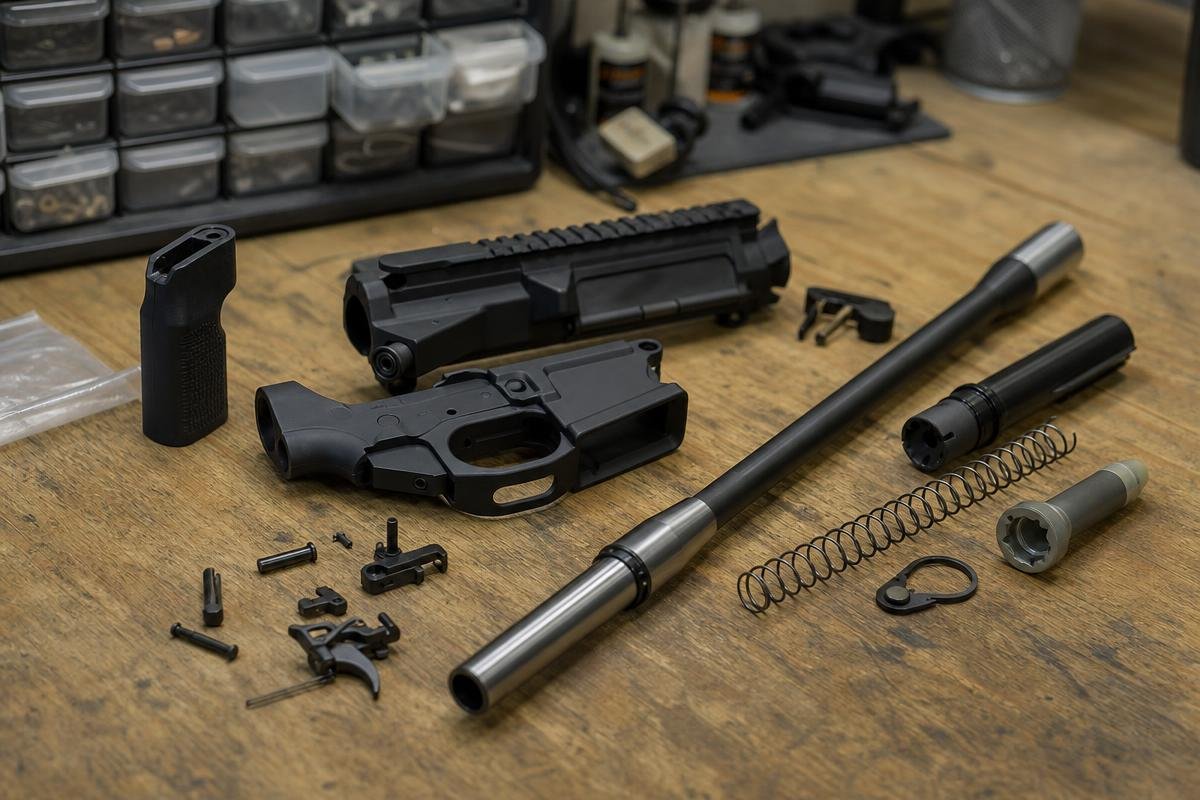
An AR-10 parts list starts with intended use and manufacturer-documented compatibility, not parts that merely carry an “AR-10” label. At AR15Parts.com, we recommend listing the receiver pattern, chambering, barrel, bolt, gas system, and buffer system before ordering. Compare manufacturer specifications for each item, then call us at (888) 706-0633 with product questions.
Key Takeaways
- AR-10 and LR-308 parts are not universally standardized across receiver patterns and manufacturers.
- Choose your caliber based on intended use, such as general .308 shooting or longer-range precision work.
- Confirm the upper and lower pairing, barrel extension and bolt relationship, gas system, handguard mounting system, magazine pattern, and buffer system before ordering.
- A written, manufacturer-specific parts list reduces fitment issues, missing components, and unnecessary returns.
AR-10 Parts List Decisions Before Buying
Decide the rifle’s role, chambering, receiver pattern, and complete upper or separate-component path before adding parts to your cart. A general .308 rifle, a hunting setup, and a precision-oriented rifle can call for different barrel lengths, gas systems, stocks, optics, and weight priorities.
An AR-10 build is less interchangeable than an AR-15 build because large-frame receiver patterns vary by manufacturer. Upper and lower fit, rail height, bolt carrier dimensions, barrel nuts, buffer setup, buffer weight, and spring length must be confirmed as a group. Do not assume a part marked “AR-10” will fit every large-frame rifle.
Before ordering, define the intended use, choose a caliber, select a matched receiver pattern, and make a complete list of compatible components. Keep manufacturer specifications handy when planning assembly and inspection.
Start With a Matched Plan
.308 Winchester remains a practical starting caliber because ammunition, magazines, bolts, and .308 Winchester complete upper receivers are widely available. Your upper, lower, bolt carrier group, barrel extension, magazines, and buffer system still need to match the same platform specification.
Build the list before ordering individual parts. Keep the product links, manufacturer names, model numbers, and listed specifications together. If you need help identifying the items that must work as a system, contact our team with product questions before committing to an order.
Choose the Rifle's Role Before Listing Parts
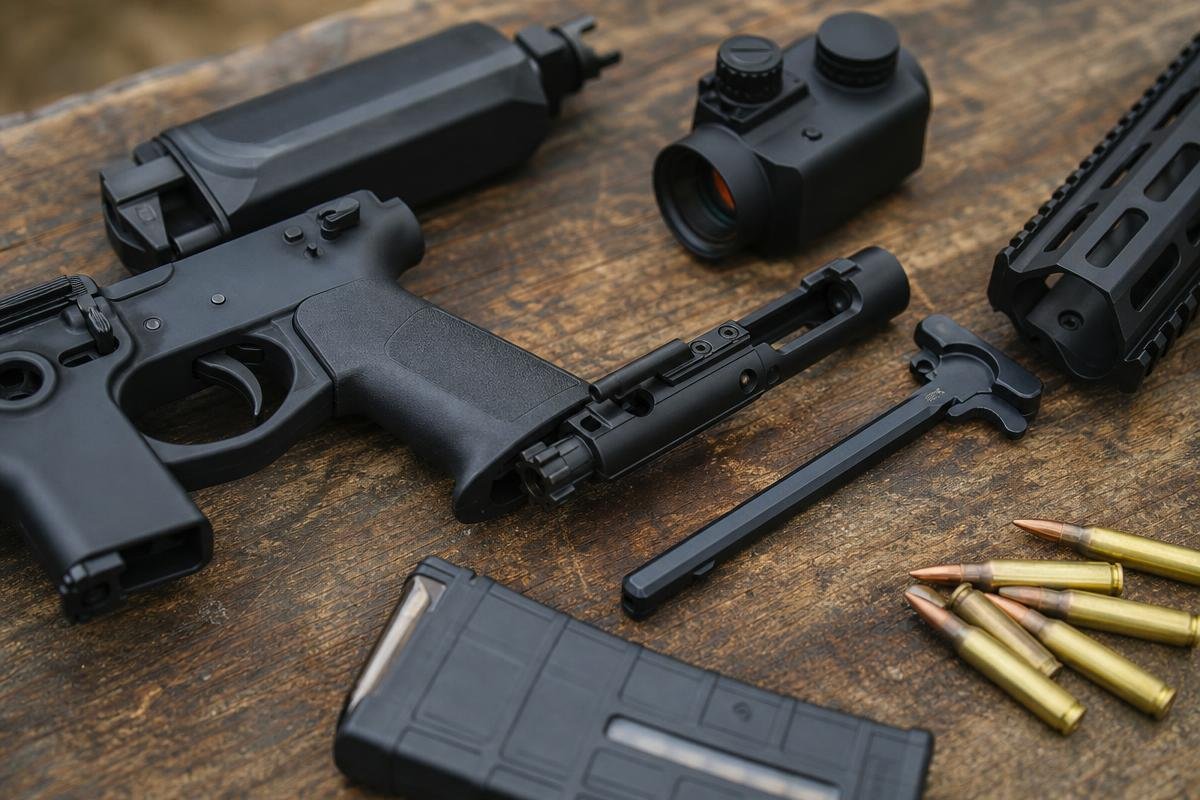
Your rifle’s intended job should set the caliber, barrel length range, optic plan, stock style, and weight target before parts are ordered. Planning a first AR-10 build becomes easier when you decide how far you expect to shoot, how often you will carry it, and what ammunition you can regularly obtain.
AR-10 caliber options affect recoil, barrel selection, ammunition availability, and practical distance. Start with a defined use, then select parts that support that use instead of adding weight or magnification you do not need.
General-Purpose .308 Winchester Parts
.308 Winchester is a practical choice for a first AR-10 build because it is widely available and works across many field and range roles. It gives you a familiar large-frame cartridge without requiring a specialized chamber or hard-to-find ammunition.
A balanced .308 setup often uses a barrel length that fits your expected shooting distance and carry needs. A moderate-power optic, adjustable stock, and practical handguard length can keep the rifle useful without turning it into a heavy bench gun. Review our .308 Winchester complete upper receivers if you want to begin with a configured upper assembly.
Precision-Focused Large-Frame Configurations
Precision work places more demand on barrel consistency, optic mounting, and shooter support. These configurations commonly use a longer or heavier-profile barrel, a free-float handguard, a stable stock, and ammunition matched to the chamber.
Those choices can improve steadiness and reduce barrel movement from sling pressure or support contact, but they also add weight. Choose barrel profile and length based on your actual firing positions, not only group size from a bench. Our .308 Winchester AR barrels let you compare barrel options before committing to the rest of the upper.
Hunting Priorities: Cartridge, Terrain, and Carry Weight
For a hunting-focused AR-10 build, prioritize lawful cartridge selection, expected distance, terrain, and carry weight. A large-frame rifle can become tiring quickly once you add a heavy barrel, long handguard, large optic, bipod, and loaded magazine.
Texoma-area conditions can include heat, humidity, rain, brush, and changing seasonal weather, so consider a practical carry setup and protect exposed metal from moisture during transport and storage. Keep the rifle focused on the distances and shooting positions you expect, and check current Texas hunting regulations, ammunition requirements, and any range-specific rules independently before finalizing the build.
AR-10 and LR-308 Parts Are Not Universally Interchangeable
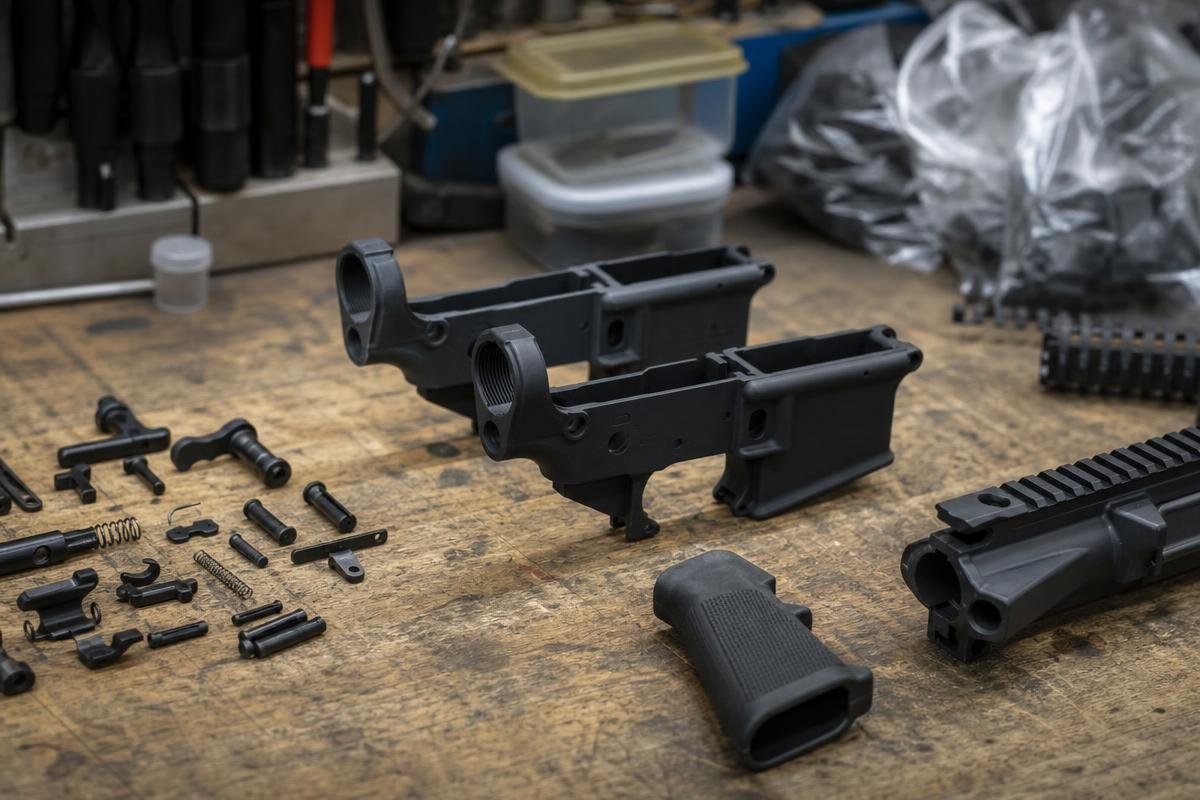
No. Large-frame AR components vary by receiver pattern and manufacturer, so compatibility must be confirmed before purchase. “AR-10,” “LR-308,” and “.308” are often category labels, not a universal fitment standard.
Why Large-Frame Receiver Patterns Matter
AR-10 and LR-308 parts are not automatically interchangeable. Upper and lower receiver geometry, takedown pin locations, rail height, barrel nut threads, charging-handle dimensions, magazine interface, and bolt carrier dimensions can differ between pattern families.
A matched upper and lower receiver set from the same manufacturer and pattern family is the lowest-risk route for a first AR-10 build. The receivers are designed to mate correctly, which removes one of the most common fitment problems before you order the remaining parts.
Complete upper assemblies can also reduce the number of variables. Our .308 Winchester complete upper receivers provide an assembled upper path while you focus on selecting a compatible lower, stock, magazine, and buffer system.
Match the Barrel, Bolt, Gas System, and Buffer System
The barrel extension and bolt carrier group must be compatible with each other. Confirm the chamber, bolt face, extension type, bolt design, and receiver pattern in manufacturer documentation before purchase. A .308 Winchester chamber normally requires a .308 bolt face, but that alone does not confirm carrier, upper, or lower compatibility.
Gas parts must match the barrel. Verify the barrel gas-system length, gas journal diameter, gas block bore, and gas tube length. A low-profile gas block must fit the journal diameter exactly, and the gas port must align with the block port. Misalignment can cause short stroking, weak ejection, or inconsistent cycling.
Buffer systems need the same level of attention. Receiver extensions, buffers, and springs vary by large-frame pattern and stock configuration. Never assume AR-15 carbine buffers, rifle buffers, or springs will fit your large-frame receiver extension or provide the correct bolt travel.
If you are selecting a barrel separately, compare the listed extension, gas length, journal diameter, and chamber details against your receiver and bolt choice. Our .308 Winchester AR barrels are a useful starting point after you have confirmed the pattern and component specifications.
Pre-Purchase Compatibility Checklist
Written manufacturer specifications are the standard for a first AR-10 build. Appearance is not a specification, and a part labeled “AR-10 style” does not confirm it will fit your receiver set.
- Identify the exact upper and lower receiver pattern, preferably as a matched set from the same manufacturer.
- Confirm upper-to-lower pairing, takedown and pivot pin arrangement, and the magazine pattern identified by the receiver maker.
- Match the barrel extension, chamber, bolt face, and bolt carrier group using the barrel and bolt manufacturer specifications.
- Confirm the handguard and its barrel nut are made for that upper receiver pattern, thread specification, and rail height.
- Verify barrel gas length, gas journal diameter, gas block bore, and the correct gas tube length.
- Confirm the receiver extension, buffer, and spring are specified together for your large-frame pattern and stock setup.
- Check that the charging handle, lower parts kit, and magazines are listed for your selected receiver pattern.
- Save manufacturer documentation and ask about any unclear fitment detail before ordering.
For a useful compatibility conversation, have manufacturer part numbers ready and ask these questions: “Is this upper intended for this lower?” “Which buffer and spring does this receiver set require?” “Does this handguard include the correct barrel nut for this upper?” Builders can contact AR15Parts.com for parts questions or call before ordering a buffer system or mixing parts from different large-frame product lines.
AR-10 vs. AR-15: Key Parts Differences
An AR-10 is a larger, heavier large-frame platform that uses pattern-specific core components and commonly chambers more powerful cartridges than an AR-15. For an AR-15 owner planning an AR-10 build, familiar controls can make the platforms look alike, but the receiver set, bolt carrier group, barrel, magazines, and buffer system require different buying decisions.
Large-Frame and Small-Frame Parts at a Glance
Large-frame receivers need more material because they house longer cartridges and a larger bolt assembly. That added receiver size, heavier barrel profile, and larger magazines are why AR-10 rifles generally weigh more and produce more recoil than a typical 5.56 AR-15.
| Component | AR-10 / Large Frame | AR-15 / Small Frame |
|---|---|---|
| Receiver size | Larger, pattern-specific | Smaller, broadly standardized |
| Common chamberings | .308 Win., 6.5 Creedmoor | 5.56 NATO, .223 Wylde chamber, .300 AAC Blackout |
| Magazine pattern | Usually SR-25 or pattern-specific | STANAG pattern |
| BCG and barrel extension | Large-frame specific | AR-15 specific |
| Buffer system | Length and weight vary by pattern | Common carbine and rifle standards |
| Handguard fitment | Must match upper receiver height and rail pattern | More common fitment standards |
| Weight and recoil | Heavier with more recoil impulse | Lighter with less recoil impulse |
If .308 is your starting caliber, compare barrel extension and gas specifications before ordering .308 Winchester AR barrels. Gas-system length must match the selected barrel and large-frame platform specification, not an AR-15 setup you already know.
What May Transfer, and What Must Be Verified
Some AR-15 accessories may transfer, including certain stocks, pistol grips, triggers, sights, slings, and muzzle devices. Fit still depends on the thread, receiver design, and manufacturer specification.
Receivers, bolts, barrels, magazines, charging handles, handguards, and buffer components require confirmation for AR-10 versus LR-308 compatibility. A standard AR-15 bolt carrier is not a substitute for a large-frame carrier, even if both parts appear similar on the bench.
Before choosing a complete-upper route, review our .308 Winchester complete upper receivers and confirm the stated receiver pattern, magazine type, and buffer-system requirements against the rest of your build.
Complete Your AR-10 Parts List Before Ordering
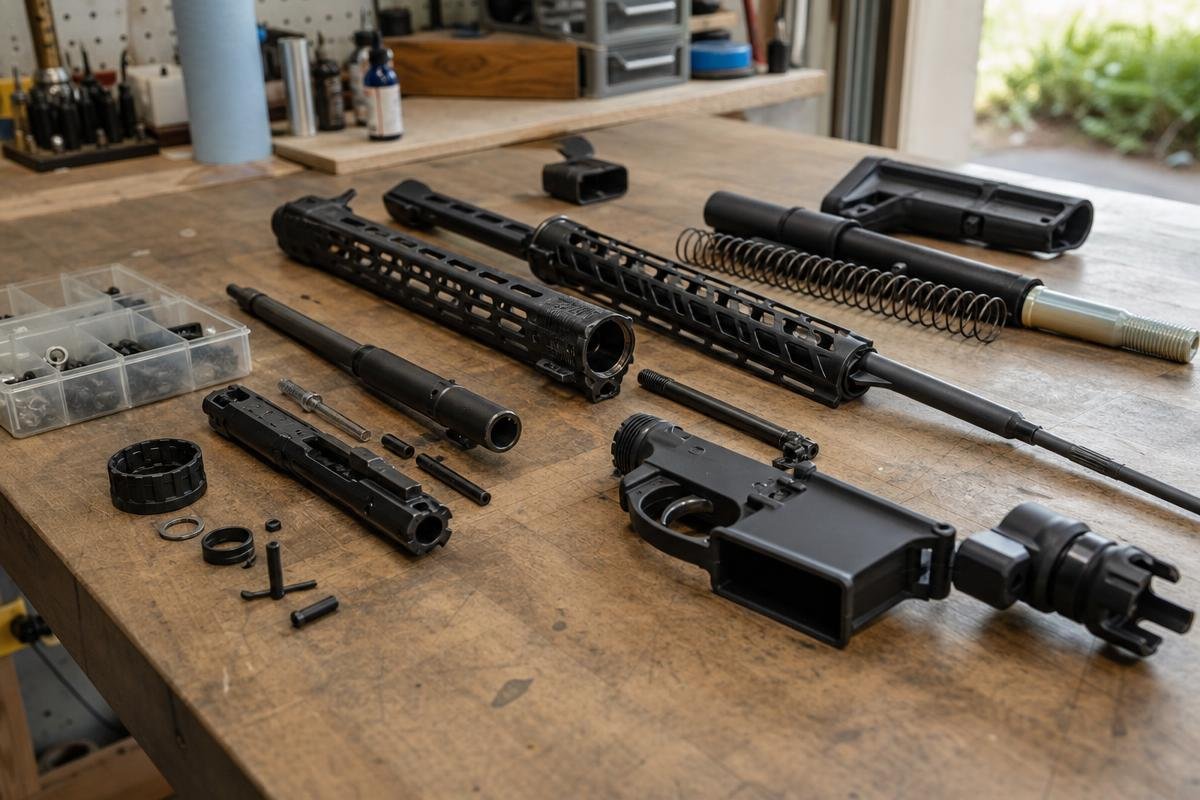
A complete AR-10 parts list prevents the common first-build problem of ordering parts that fit individually but not together. Start with one receiver pattern, then compare every related part against that pattern before placing an order. A written worksheet also makes it easier to ask focused questions before buying.
Core Lower and Operating Components
Your lower receiver, upper receiver, bolt carrier group, buffer system, and magazines must be selected as a matched group. AR-10 and LR-308 dimensions vary by manufacturer, so do not assume a large-frame part fits every receiver set.
- Matched upper and lower receiver set
- Pattern-compatible lower parts kit
- Trigger and trigger pins
- Large-frame bolt carrier group matched to the barrel chambering and extension
- Charging handle that fits the selected upper
- Magazine type specified for the receiver pattern
- Receiver extension, buffer, and recoil spring matched as a system
- Stock, pistol grip, and required mounting hardware
Confirm buffer tube length, buffer length, buffer weight, and spring type before buying. A carbine receiver extension does not automatically mean a standard AR-15 carbine buffer and spring will work in your AR-10 build.
Upper Assembly and Gas-System Components
The upper assembly controls chambering, gas timing, and handguard fit. Your barrel extension and bolt must match, and the gas block journal must match the barrel’s measured journal diameter.
- Barrel in the selected caliber and length
- Gas block sized for the barrel journal
- Gas tube matched to the gas-system length
- Handguard
- Barrel nut supplied for that handguard system
- Muzzle device and any required shims or crush washer
- Forward assist, ejection port cover, and mounting hardware if not included
Free-float handguards require close attention. The handguard must fit your receiver pattern and use its intended barrel-nut system. Do not mix a barrel nut from one handguard line with another rail unless the manufacturer confirms compatibility. If you are building around .308 Winchester, compare chamber, gas-system length, and contour details on our .308 Winchester AR barrels before finalizing gas components.
When a Complete Upper Makes Sense
A complete upper makes sense if you want fewer upper-assembly fitment decisions on a first AR-10 build. It combines the barrel, bolt carrier group, gas system, handguard, and upper receiver into one configured assembly.
It does not eliminate compatibility checks. Verify the lower receiver pattern, magazine type, charging-handle fit, and buffer system before assuming an assembly is ready to mate with your lower. Review the configuration details on our .308 Winchester complete upper receivers, then compare them line by line with your lower parts list.
Keep the list beside you while ordering. Mark each part as pattern-confirmed, caliber-confirmed, and included or still needed. That simple check catches missing springs, mismatched rails, and duplicate components before they reach your bench.
Have questions about listed parts for your AR-10 parts list? Call us at (888) 706-0633 for product information.
Follow a Safe Assembly Roadmap and Inspection Plan
A first AR-10 build should move in stages, with an inspection after each major assembly. Follow every component manufacturer’s instructions, use the correct tools, and stop if a part does not fit as expected.
Set Up the Correct Tools and Receiver Support
A home bench needs stable support before you apply torque to an upper or lower receiver. Use a bench vise with a proper receiver block or reaction rod made for your receiver pattern. Do not clamp the receiver directly in vise jaws.
Gather a torque wrench, barrel-nut-compatible armorer’s wrench, punches, a small hammer, and the required hex or Torx drivers. Keep manufacturer-specified grease or thread treatment on hand. A chamber-appropriate headspace gauge set is also required for the barrel and chamber you selected.
Headspace cannot be confirmed by looking into the chamber or cycling the bolt by hand. The correct gauges check the relationship between the bolt lugs, chamber shoulder, and cartridge case dimensions. If you are choosing components for a .308 setup, review our .308 Winchester AR barrels before ordering gauges and barrel parts.
Assemble in Stages and Check Fitment
Build the lower first, then inspect each installed group before moving forward. Check that springs and detents are seated correctly, the trigger moves and resets properly during an unloaded check, and the buffer retainer holds the buffer and spring in place.
Install the upper components in a separate stage. Follow the barrel manufacturer’s torque procedure exactly. Confirm that the barrel extension seats fully, the gas block aligns with the gas port, the gas tube enters the upper without binding, and the handguard clears the gas block and barrel.
Do not force a gas tube, selector, takedown pin, or bolt carrier group into place. Resistance can point to incorrect parts, improper alignment, or a receiver-pattern mismatch. A complete upper can reduce the number of assembly steps, and our .308 Winchester complete upper receivers are a useful option for builders who want an assembled upper.
Perform Safe Function Checks Before Use
Keep the rifle unloaded and remove all ammunition from the work area before function checks. Confirm the safety selector blocks trigger movement when engaged. Then check trigger movement and reset with the selector in the fire position, following the trigger manufacturer’s instructions.
Check that the charging handle and bolt carrier move without unusual drag. Confirm magazine catch operation with an empty magazine. Verify chamber-specific headspace with the correct gauges before use, especially if you installed the barrel and bolt yourself.
Stop and ask a qualified gunsmith for help if headspace is uncertain, the gas system will not align, parts require force, or the trigger and safety do not function correctly. For help identifying specification questions before ordering additional parts, contact AR15Parts.com for parts questions.
Order AR-10 Parts from Our Denison, TX Facility
We ship online orders from our Denison, TX facility at 4000 Texoma Pkwy, Denison, TX 75020. Call (888) 706-0633 or contact our team with questions about listed product specifications before ordering.
Keep Manufacturer Specifications Handy
For product questions by phone or through our contact form, have the manufacturer and model numbers of the parts you are considering handy. We can help clarify listed product specifications; confirm cross-brand compatibility against the relevant manufacturers' documentation.
Your AR-10 parts list should identify the upper and lower pairing, buffer tube, buffer, spring, bolt carrier group, and handguard attachment pattern. This prevents purchases based on AR-15 fitment assumptions, which can cause problems with large-frame receiver dimensions and buffer-system lengths.
Ask Parts Questions Before Ordering
Call (888) 706-0633 with product part numbers before placing an order. Ask about listed receiver patterns and other published product specifications, and verify component compatibility against the manufacturers' documentation.
If you are planning a .308 configuration, review our .308 Winchester complete upper receivers and compare the listed specifications with your lower and stock plan. You can also contact our team with product questions before ordering components.
Frequently Asked Questions
Are AR-10 and LR-308 Parts the Same?
No. AR-10 and LR-308 are broad terms for large-frame rifle patterns, not one universal specification. Confirm the receiver maker’s pattern, upper and lower pairing, buffer system, bolt carrier group, handguard height, and magazine fit before ordering.
What Caliber Fits a First AR-10 Parts List?
.308 Winchester is a common first choice because ammunition, magazines, barrels, and bolt components have broad support. Your AR-10 caliber options should still match your intended use, available ammunition, barrel length, and gas-system plan. Start with compatible .308 Winchester AR barrels if you are building around a .308 chamber.
Can AR-15 Parts Be Used on an AR-10?
Some accessories may transfer, including many grips, stocks, triggers, optics, and muzzle devices with the correct thread pattern. Core large-frame parts do not automatically interchange. Receivers, barrels, bolts, charging handles, handguards, buffer parts, and magazines need pattern-specific confirmation.
Why Are Matched Receivers Helpful for a First Build?
Matched receivers reduce fitment questions because the upper and lower are made for the same pattern family. Pin locations, receiver contours, rail height, and magazine interface are more likely to align correctly. They are a practical starting point for managing AR-10 vs LR-308 compatibility.
What Tools Matter Most for an AR-10 Build?
A proper receiver support fixture, vise, torque wrench, armorer’s wrench, roll-pin punches, and chamber-appropriate headspace gauges matter more than a large collection of generic tools. Use the barrel maker’s torque guidance and verify headspace with gauges that match your chambering.
Is a Complete Upper Easier for a First-Time Builder?
Yes. A complete upper removes barrel installation, gas-block alignment, and bolt-to-barrel setup from your first build. Our .308 Winchester complete upper receivers can simplify the upper half, but you still need to confirm lower, magazine, stock, buffer tube, buffer, and spring compatibility.
Before you order, write down your chambering, receiver pattern, barrel and gas-system specifications, stock plan, and every component you already own. If a fitment detail is unclear, contact AR15Parts.com for parts-selection questions at (888) 706-0633 before adding the next item to your cart.
Ready to Get Started with AR15Parts.com?
Call (888) 706-0633 or contact our team online with product questions before completing your AR-10 parts list. We ship orders from our Denison, TX facility.