

The right iron-sight setup starts with your optic, upper configuration, and available rail space. Choose AR-15 backup sights by matching sight height, front-sight location, folded clearance, and intended shooting distance.
We ship from our facility at 4000 Texoma Pkwy, Denison, TX 75020. Use the fitment details below to narrow down whether fixed, flip-up, offset, or carry-handle-style irons make sense for your rifle.
Need help identifying the correct front-and-rear sight arrangement for your build?
Key Takeaways
- Choose fixed sights for constant readiness and flip-up sights for an uncluttered optic view.
- Match front and rear sight heights to the same rail plane for a usable zero.
- Offset iron sights provide a fast alternate sight picture beside a magnified optic.
- Start with your existing front sight base, optic mount, handguard rail height, and intended distance.
Should I Choose Fixed, Flip-Up, Offset, or Carry-Handle Sights?
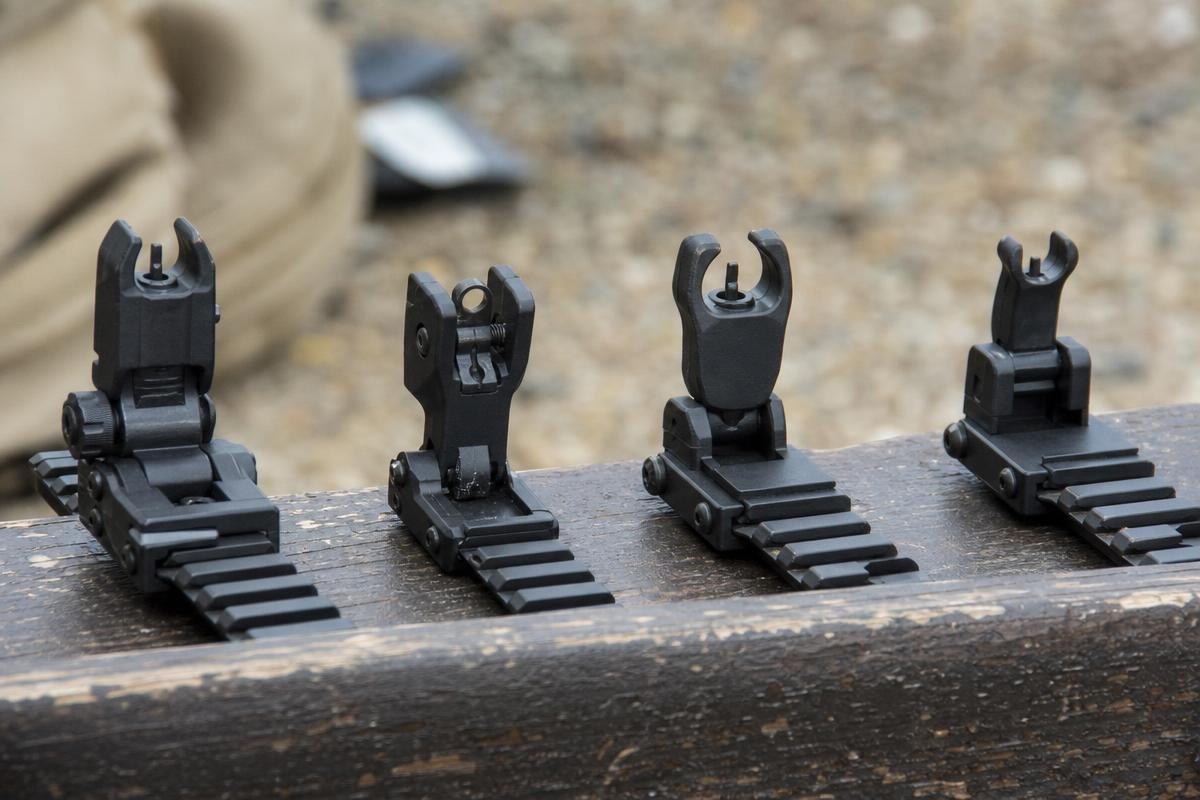
Choose fixed sights when immediate access matters most, flip-up sights when optic clearance is the priority, offset sights for a rifle with a magnified optic, and carry-handle arrangements for an A2-style configuration. Every front-and-rear pair must share the same AR-height sight plane or it may not zero correctly.
| Design | Best Fit | Strength | Limitation | Setup Check |
|---|---|---|---|---|
| Fixed | Rifles without a large optic | Always ready | Stays in optic area | Confirm optic clearance |
| Flip-up | Optic-equipped rifles | Folds out of the way | Requires deployment | Check folded height |
| Offset | Magnified optic setups | Fast transition by rifle cant | Uses side rail space | Confirm handguard clearance |
| Carry-handle | A2-style builds | Durable rear sight assembly | Higher profile | Match upper configuration |
Fixed Sights
Fixed irons are immediately available because there is nothing to deploy. They work well with many red-dot setups, although they remain visible through the optic window and can crowd the sight picture of some magnified scopes.
A barrel-mounted fixed front sight base already provides the front reference. In that case, you may only need a compatible rear sight rather than a complete set. Review our complete AR-15 uppers to identify whether an upper uses a fixed front sight base, a rail-mounted front, or a low-profile gas block.
Standard and Low-Profile Flip-Up Sights
Flip-up AR-15 sights fold down until needed, leaving more room around a red dot, scope, or magnifier. Standard models may have a larger body and easier-to-grip controls, while low-profile or micro designs sit closer to the rail.
Low-profile does not guarantee clearance under every optic mount. Compare the manufacturer’s current folded-height measurement for the exact sight model against the mount, scope body, lens caps, and rail space available on your rifle.
Offset Backup Sights
Offset backup sights mount at roughly 45 degrees from the top rail. A slight roll of the rifle brings them into view, which is useful when a scope or other magnified optic blocks a conventional straight-through iron-sight picture.
They work best when the receiver and handguard provide enough uninterrupted space for both units. Make sure the front and rear pieces align on the same plane and do not contact the optic mount, weapon light, sling hardware, or controls.
Carry-Handle and A2-Style Arrangements
Carry-handle and A2-style arrangements provide a full-height rear sight with familiar elevation and windage controls. They are a natural fit for retro-oriented builds and rifles already configured around an A2 front sight base.
These assemblies occupy more space than low-profile designs and can limit optic placement. For help identifying the rear sight style that matches your upper, contact our team for product guidance.
How Do I Choose AR-15 Backup Sight Height and Rail Placement?
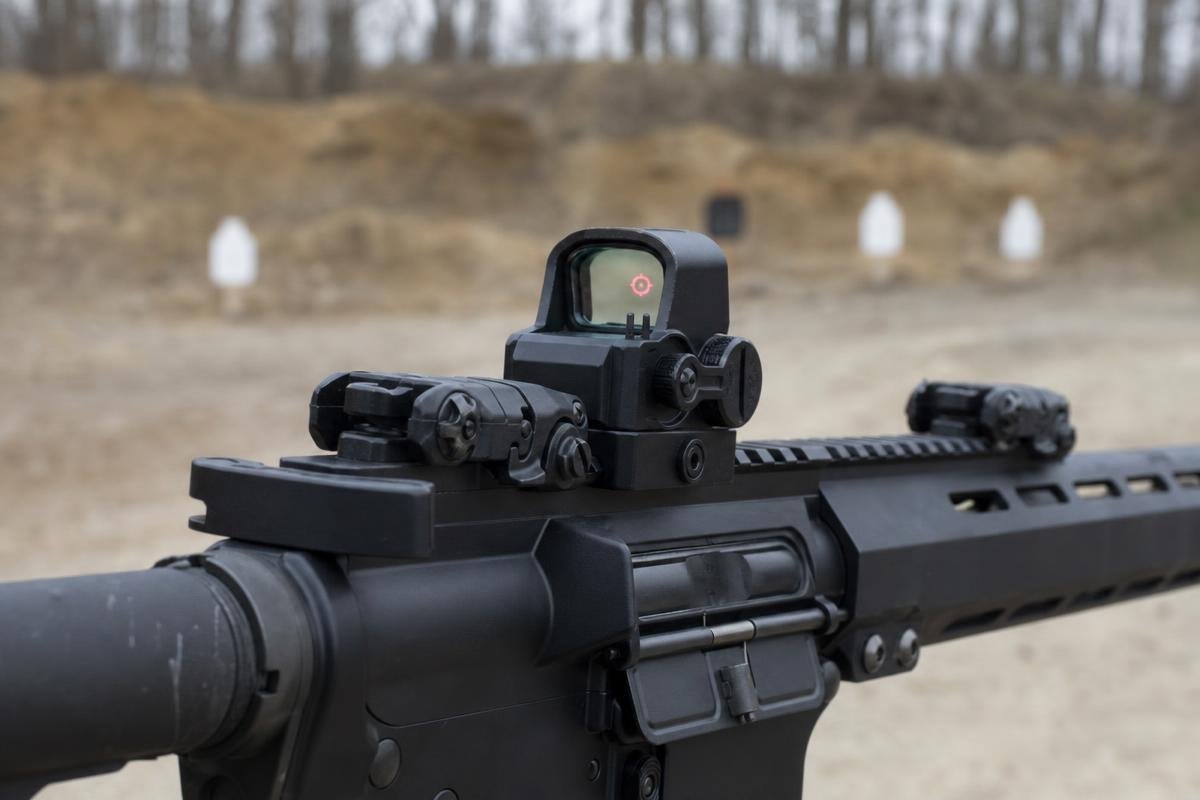
Choose matched AR-height front and rear components, mount them on stable aligned rails, and confirm clearance around the optic before ordering. A sight pair that works on one rifle can sit too low, too high, or out of alignment on another.
Can AR-15 Backup Sights Co-Witness With a Red Dot?
Yes, compatible iron sights can co-witness with a non-magnified red dot when the optic mount is built for the appropriate height. Absolute co-witness places the aligned sights near the center of the optic window, while lower-third co-witness places them lower in the window.
With the dot turned off, an absolute co-witness setup lets you align the front post and rear aperture through the center area of the optic. A lower-third arrangement leaves more open glass above the irons, but requires an optic mount designed for that height. Do not assume every red-dot mount supports either arrangement.
Where Should the Front Sight Mount?
The front and rear need a straight, stable relationship to each other. A rail-mounted front can work on a compatible free-float handguard only when its top rail is truly aligned with the receiver rail and the handguard is rigidly installed.
Do not mount a front sight on a rail section that sits lower than the receiver, shifts under pressure, or is not intended to support a sight. An A2 front sight base does not need a rail-mounted replacement, while a low-profile gas block generally requires a properly aligned rail-mounted front. Check the rail height on complete AR-15 uppers before choosing profile iron sights.
Magnified Optics Change the Setup
Co-witness is generally a red-dot or holographic-sight concept, not a practical solution for a magnified scope. Scope eye relief, mount height, and magnification prevent a normal straight-through iron-sight picture.
For a scoped rifle, offset irons or a removable optic mount are often more practical. If your optic occupies the receiver rail and your front sight must sit on the handguard, verify both rail alignment and the clearance needed for the offset bases. If you need help matching AR-15 backup sights to your mount, contact our product team before you buy.
What Materials, Apertures, and Controls Should I Choose?
Choose a sight construction, aperture, and adjustment system that you can operate around your optic and that suits the way the rifle will be used. The exact model matters because folded height, rail footprint, locking method, and adjustment controls vary within the same brand.
Polymer and Metal Sight Construction
Polymer backup sights can be a sensible choice for a general-purpose rifle where lower weight matters. The Magpul MBUS (MAG247) is a polymer flip-up sight pattern, but buyers should confirm current manufacturer specifications and compatibility for the exact front and rear models selected.
Aluminum or steel designs may offer a slimmer folded profile and more rigid construction. The MBUS Pro is a low-profile, all-steel sight pattern. Confirm its current folded height and operating clearance, especially when the optic sits close to the rail.
Deployment, Locking, and Adjustment Controls
Material is only one part of the decision. Compare how the sight deploys, how it locks open, and whether you can access its release and adjustments around the optic, sling, light, or magnifier.
- Spring-assisted or manual deployment
- Positive lock-up in the raised position
- Small or large rear aperture options
- Tool-free or tool-required windage and elevation adjustments
- Folded height and included mounting hardware
A small aperture can support more precise alignment in good light, while a larger aperture is often easier to acquire quickly at close range. Inspect these details on the AR-15 complete upper or rifle configuration you plan to run. A sight may fit the rail but still interfere with an optic mount or charging-handle access.
Compare the Model, Not Just the Brand
Compare the exact model specifications, not only the name on the package. Magpul, Troy, Knight's Armament, and FAB Defense offer different patterns, and aperture design, rail footprint, adjustment method, mounting screws, and folded dimensions can vary by model.
For support with product specifications before ordering, call AR15Parts.com at (888) 706-0633 or use the contact page to describe your upper, handguard, front sight arrangement, and optic mount.
Have an A2 front sight base, a low-profile gas block, or a tight optic mount to work around?
How Far Can I Use AR-15 Backup Sights and How Should I Zero Them?
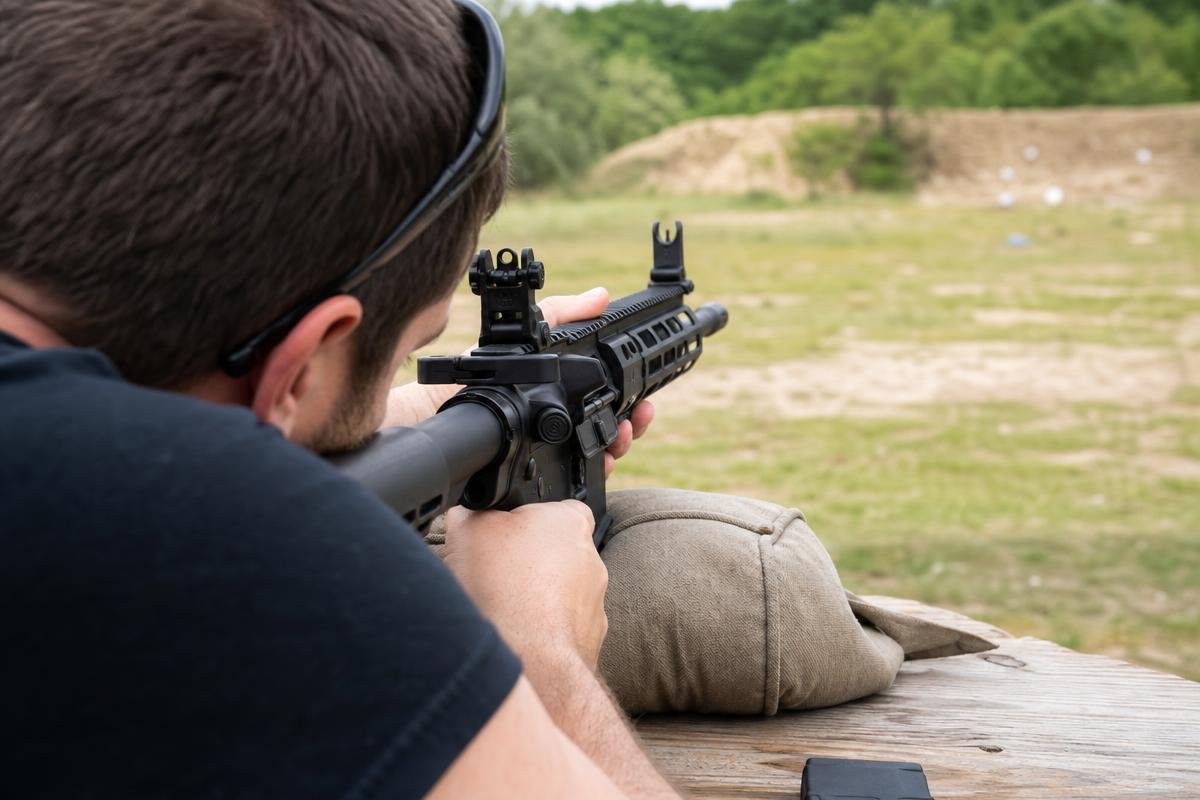
Usable iron-sight distance depends on sight radius, target size, ammunition, lighting, shooter skill, and a confirmed zero. Use a safe, lawful range session to establish the practical limits of your own rifle rather than relying on a universal distance claim.
What Affects Usable Iron-Sight Distance
A longer sight radius can make precise front-sight alignment easier, but it does not replace practice or a proper zero. A full-size silhouette is easier to index than a small bullseye, particularly in reduced light or with a coarse front post.
Set realistic expectations for BUIS for AR-15 rifles. Iron sights can be a dependable close-to-medium-range aiming option, but your actual limit should come from repeatable groups with the ammunition and targets you intend to use.
A Basic Zeroing Workflow
- Verify the rifle is unloaded before handling or mounting the matched sight set.
- Confirm both sights are locked into their intended positions and the rail hardware is secure.
- Set up at a safe range and fire a controlled group at your chosen zero distance.
- Adjust according to the instructions for your specific sight model.
- Fire additional groups to confirm the point of impact stays consistent.
Use the same ammunition you expect to keep with the rifle. A different load can shift impact enough to matter, particularly on smaller targets. If you are building around one of our complete AR-15 uppers, zero the finished rifle after your optic, sights, and preferred ammunition are in place.
Adjust the Correct Sight
The rear sight commonly controls windage. Move the rear aperture in the direction you need the group to move, then confirm with another controlled group.
Elevation depends on the design. Some rear sights have elevation adjustments, while many setups use a fixed rear aperture and an adjustable front post. Follow the manufacturer’s directions for your sight model because click values and adjustment methods vary.
If you need help identifying whether a set uses front-post elevation, rear elevation, or both, contact our team with product questions or call (888) 706-0633.
What Should I Confirm Before Ordering AR-15 Backup Sights?
Confirm your upper style, existing front sight, rail alignment, optic-mount clearance, and matched sight height before placing an order. We ship from our facility at 4000 Texoma Pkwy, Denison, TX 75020. Final fitment depends on the components installed on your specific rifle.
Five Fitment Checks Before You Order
- Verify that your upper has a flat-top receiver with a Picatinny rail.
- Determine if a fixed front sight base is already installed. You may only need a rear sight.
- Check your handguard for a true, continuous top rail if the front sight mounts there.
- Read your optic mount specifications for folded-sight clearance and co-witness height.
- Choose matched front and rear AR-height components. Mixing heights can prevent a proper zero.
Questions to Ask Before Choosing a Sight Set
Ask whether your optic leaves room for standard flip-ups or requires low-profile iron sights. Compare folded height against the mount’s stated clearance, not only the open space visible around the optic.
Also ask whether you need a complete front-and-rear set, a rear sight to pair with an A2 front sight base, or a rail-mounted front for a low-profile gas-block setup. Review compatible AR-15 complete uppers before selecting rail-mounted front sights. Plan a safe range session after installation to confirm zero.
Call (888) 706-0633 or contact AR15Parts.com with product questions before placing an order. We can help you confirm product specifications, but final fitment depends on your rifle’s components.
Frequently Asked Questions
Do I Need Backup Sights With a Red Dot?
No. AR-15 backup sights are optional with a red dot, but they give you a mechanical aiming option if an optic loses power or is damaged. They make the most sense on rifles kept for defensive use, training, or general-purpose shooting.
Can I Use a Fixed Front Sight With a Flip-Up Rear Sight?
Yes, provided both sights share the same AR-height sight plane. A fixed front sight base paired with a folding rear is common on rifles with a front tower and a rear-mounted optic.
Are Offset Sights Necessary?
No. Offset backup sights are useful with magnified optics because a slight rifle roll gives you a close-range sight picture. Standard flip-ups are usually simpler for a red dot or low-power optic setup.
How Do I Check Optic Clearance?
Check folded-height measurements from the sight manufacturer and compare them with your optic mount, scope body, and lens caps. Flip-up AR-15 sights need enough rail space to deploy without contacting the optic or mount hardware.
What Is the Difference Between MBUS and MBUS Pro?
Magpul MBUS sights use reinforced polymer, while MBUS Pro sights use steel construction. Compare the current folded dimensions for the exact front and rear models before choosing one for tight rail space.
Can I Mount Backup Sights on a Free-Float Handguard?
Yes, if the handguard has a continuous, rigid top rail aligned with the upper receiver. Confirm the rail is designed for a front sight before mounting it. Review our complete AR-15 uppers if you are matching sights to a new build.
Before ordering, confirm your upper style, front sight setup, optic mount clearance, and matched sight height. For product questions, contact AR15Parts.com at (888) 706-0633 before choosing your backup sight setup.
Ready to Get Started with AR15Parts.com?
Call (888) 706-0633 to speak with our team directly. We're ready to answer your questions, walk you through your options, and help you find the right solution for your needs. Whether you're just starting to plan or ready to move forward, we'll make the process simple and stress-free. Reach out today and let's talk about how we can help.