
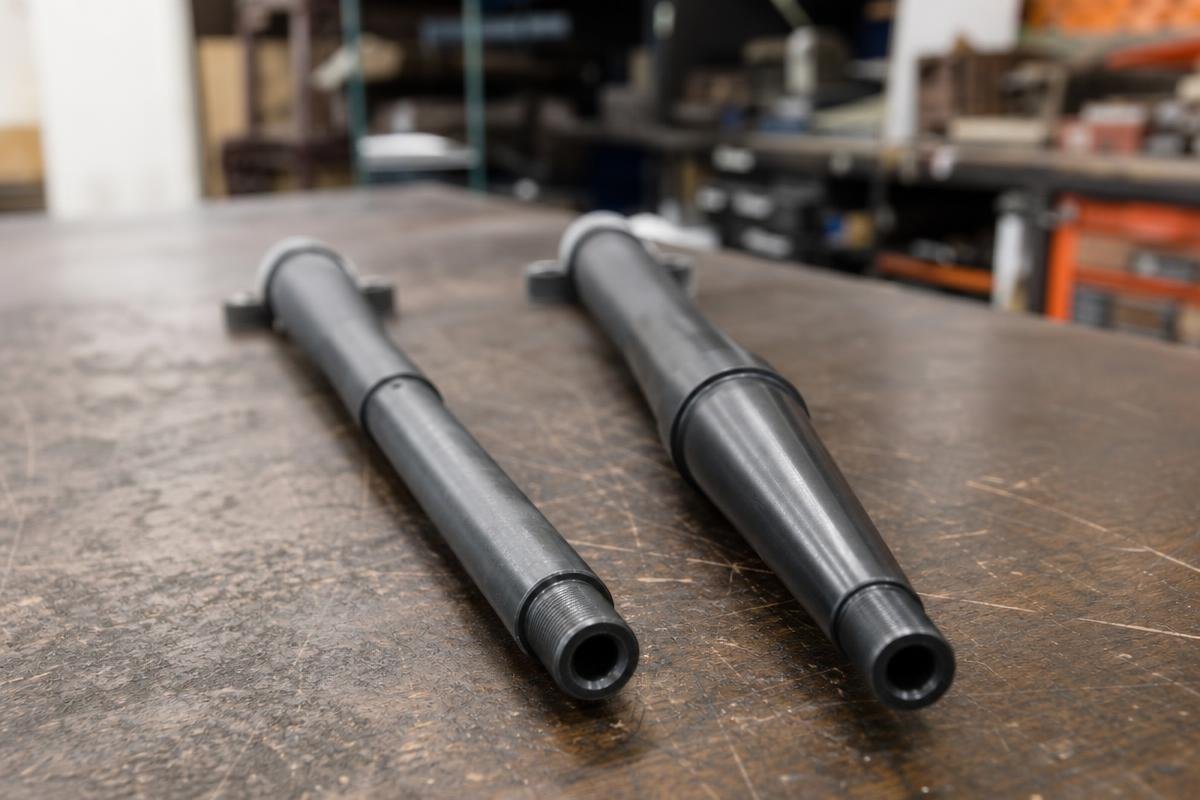
AR15Parts.com is an online retailer that stocks AR-15 barrels and complete upper components, shipping nationwide from our Denison, Texas facility at 4000 Texoma Pkwy. Below, we compare AR-15 Government, Pencil, and HBAR barrel profiles, along with other common contours, so you can choose a barrel that suits a lightweight carbine, general-purpose rifle, or heavier range build.
Need help comparing barrel contour, gas-system length, gas-block journal, and handguard clearance for your build?
Key Takeaways
- Pencil barrels reduce front-end weight and carry fatigue, but heat up faster during extended firing strings.
- Government profiles use a stepped contour with a thinner section under the handguard and extra material forward of the gas block.
- HBAR and bull barrels add stiffness and thermal mass, but make a rifle heavier forward.
- Below, we compare Government, Pencil, HBAR, SOCOM, Gunner, SPR, and bull contours.
Why AR-15 Barrel Profile Matters
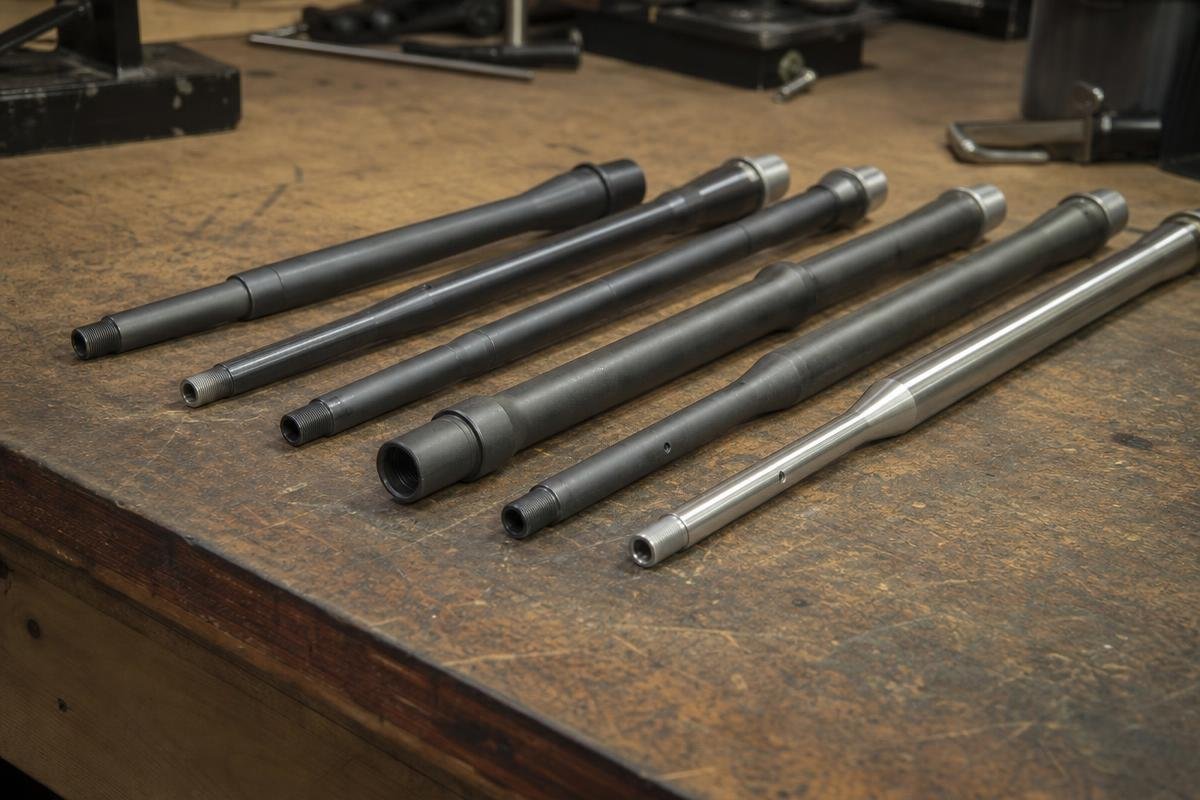
Two AR-15 barrels can share the same length and chambering yet feel very different because contour determines where steel remains. A barrel’s outside shape influences the rifle’s carried weight, muzzle balance, resistance to heating during a firing string, and how it behaves as temperature rises.
AR15Parts.com is an online retailer for firearms, parts, and accessories, shipping nationwide from 4000 Texoma Pkwy, Denison, TX 75020.
Profile is not barrel length, chamber, twist rate, gas-system length, gas-block journal, or muzzle-thread specification. Check each of those details before selecting a barrel or a complete AR-15 upper.
What Is the Difference Between a Government and Pencil AR-15 Barrel?
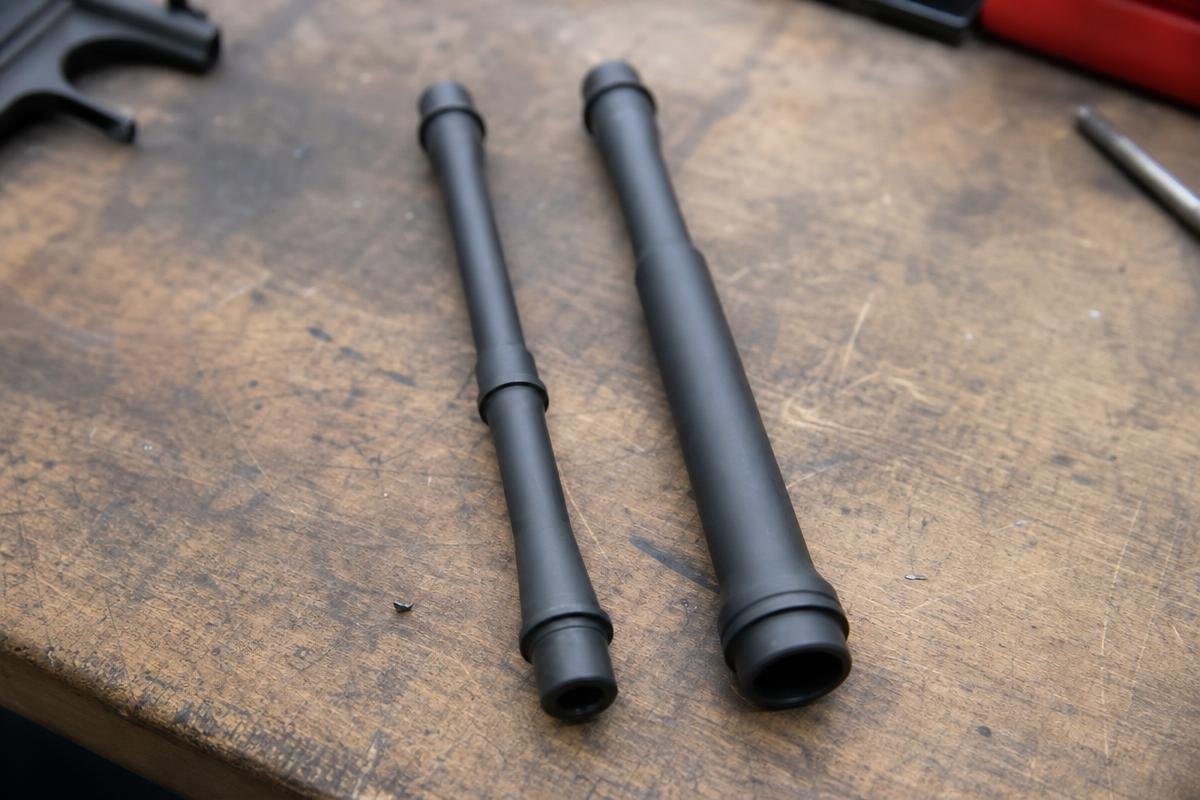
A Pencil barrel stays slim over much of its length to reduce weight, while a Government contour uses a stepped shape with more material forward of the gas block and less material under the handguard.
Neither is automatically better, because the right choice depends on barrel length, accessories, firing cadence, suppressor use, and how the rifle needs to balance.
- Pencil profiles keep front-end weight low for lightweight builds.
- Government profiles fit familiar general-purpose configurations.
- HBAR and Bull barrels add mass for extended firing and supported shooting.
- Gunner profiles balance a lighter front end with useful material near the chamber.
- SOCOM profiles place added material under the handguard.
- SPR profiles suit precision-oriented builds, while M4 contours retain the M203 cut.
How Barrel Contour Changes Weight, Heat, Balance, and Stiffness
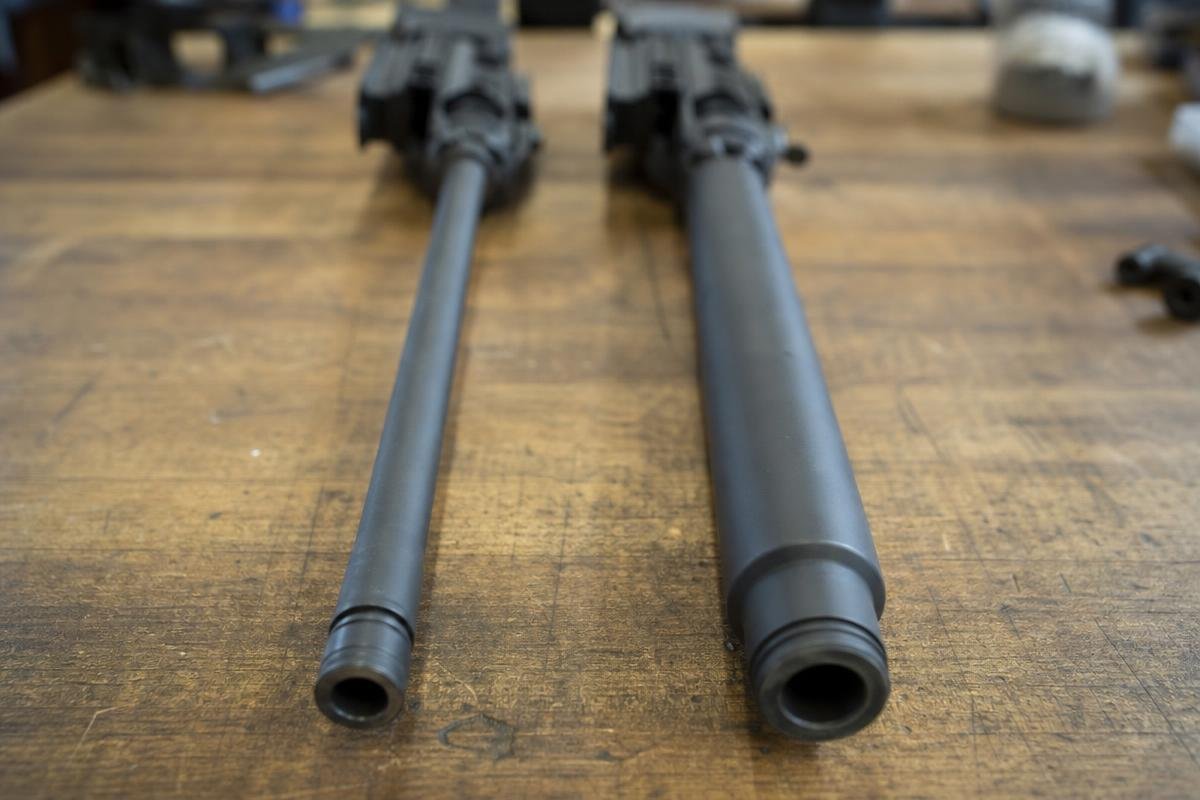
AR-15 barrel profiles describe the outside diameter and taper pattern along a barrel. Barrel length is measured according to the applicable manufacturer and regulatory method. Contour changes how the rifle carries and responds to heat, but it does not change the stated barrel length.
Profile Is Outside Shape, Not Barrel Length
A 16-inch Pencil barrel and a 16-inch HBAR can use the same receiver, handguard length, chamber, and muzzle-device thread pattern. The difference is the amount of steel left around the bore at points such as the chamber area, under the handguard, and forward of the gas block.
Gas-system length is a separate specification. A carbine, mid-length, or rifle gas port must be drilled in the correct location for that system, regardless of contour. Read the published barrel specifications before ordering individual parts or complete AR-15 uppers.
What More or Less Steel Changes During Use
More steel adds mass. A heavier contour generally absorbs more heat during repeated firing and can resist heat-related point-of-impact movement longer as the barrel warms. It also moves balance toward the muzzle, which may feel steadier from a bench, barricade, bipod, or other supported position.
Less steel reduces carry weight and can make the rifle quicker from low ready or during transitions. A slim contour may be a strong choice for a rifle carried for long periods, but it will warm more quickly during rapid, extended strings. That is a handling and firing-schedule decision, not a simple accuracy rating.
Contour alone does not make a barrel accurate. Bore quality, chamber dimensions, crown condition, ammunition consistency, optic setup, shooter input, and barrel thermal state all affect results. A quality barrel with the right contour for your use matters more than choosing the heaviest profile by appearance.
Representative 16-inch barrel weights vary substantially by manufacturer, steel, finish, chamber, and gas system, but a Pencil contour is often around the low-to-mid 1-pound range, a Government contour commonly falls around the mid-1-pound range, and HBAR designs can approach or exceed 2 pounds. Use the listed product weight rather than profile name alone when ounces matter to the finished rifle.
We recommend comparing contour, chamber, gas system, and intended firing schedule together. Our 5.56 NATO barrels list contour, chamber, and gas-system details for each SKU so you can compare specifications side by side.
Government, Pencil, and HBAR Profiles Compared
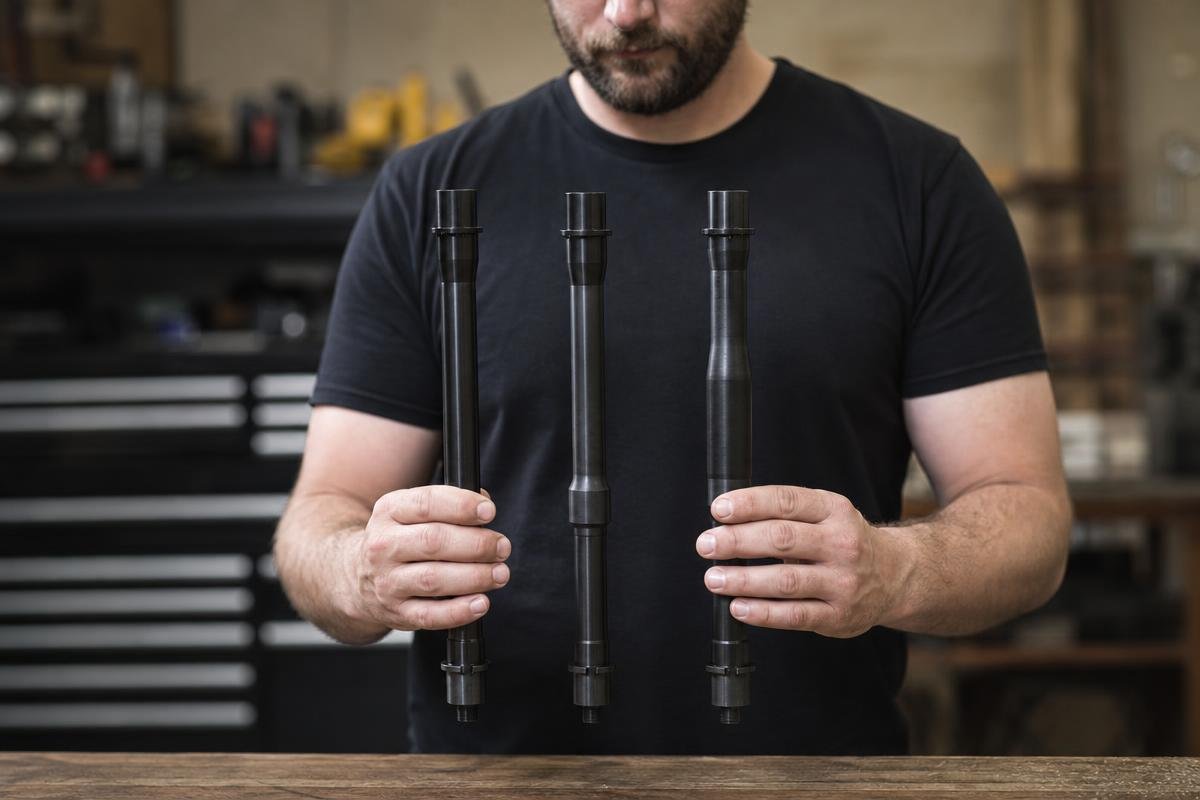
These three AR-15 barrel profiles trade front-end weight against heat capacity and steadiness. A Pencil barrel favors carry, a Government contour suits many conventional 5.56 NATO configurations, and an HBAR retains more steel for longer range sessions and supported shooting.
| Profile | Contour Character | Relative Weight | Heat Tolerance | Balance | Common Build Fit |
|---|---|---|---|---|---|
| Pencil | Slim through most of the length | Light | Lower during sustained fire | Fast, rearward-biased | Field carry and lightweight builds |
| Government | Stepped contour, thinner under the handguard | Medium | Moderate | Familiar general-purpose feel | General-purpose 5.56 NATO rifles |
| HBAR | More steel across much of the barrel | Heavy | Higher during extended strings | Steadier, front-heavy | Range and supported shooting |
Comparing a lightweight barrel with a complete upper? Review chamber, gas-system, journal, and handguard details before you order.
Pencil Profile for Carry-Focused Builds
A Pencil profile is often a strong choice when reducing rifle weight matters more than firing long, fast strings. Its slim contour removes steel from the barrel, making the rifle easier to carry and quicker to bring between targets.
It can work especially well for field carry, lighter carbines, and short to moderate firing schedules. The tradeoff is faster heat buildup, which can shift point of impact during sustained fire. Short barrels, suppressors, heavy muzzle devices, long handguards, and mounted accessories can change the final balance, so evaluate the complete configuration rather than contour in isolation.
Government Profile for Familiar General-Purpose Setups
A Government profile is a practical option when you want a familiar middle-weight setup for ordinary range use and broad general-purpose shooting. The contour is stepped, with a thinner section under the handguard and more material forward of the gas block.
The added forward material is a feature of the traditional pattern, not a guarantee of greater accuracy. It can give the barrel a more conventional feel than a Pencil design, while the reduced diameter under the handguard helps avoid the weight of a fully heavy contour. It remains a common fit for many 5.56 NATO complete upper receivers where moderate weight and thermal capacity are priorities.
Is an HBAR Barrel More Accurate?
No. An HBAR can be steadier and may hold its point of impact more consistently through a longer firing string, but contour by itself does not determine accuracy. Bore quality, chamber, crown, ammunition, optics, assembly, and shooter technique remain critical.
An HBAR retains more steel over much of the barrel, helping it absorb heat during longer strings. It can feel more stable from a bench, barricade, or supported position, but it adds noticeable weight forward of the receiver. HBAR vs bull barrel is not the same comparison, because a Bull barrel is usually heavier still and maintains a more uniform, large diameter. Browse our AR-15 barrel selection to compare HBAR, Bull, and lighter contours across chamberings.
M4, SOCOM, Gunner, SPR, and Bull Profiles Fill the Gaps
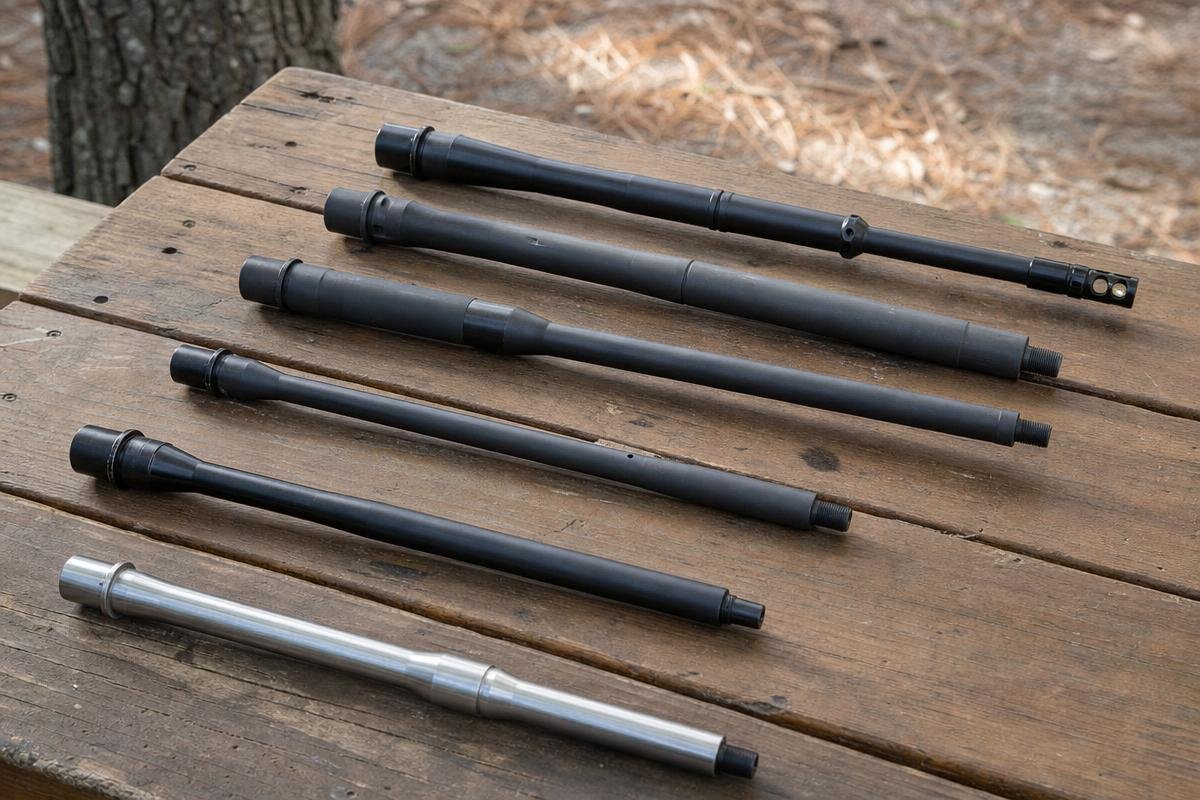
These AR-15 barrel profiles cover the space between a light field rifle and a heavy precision setup. Profile names are not fixed industry dimensions, so compare the manufacturer contour drawing, gas-block journal, barrel length, and listed weight before ordering.
M4 and SOCOM Contours
An M4 contour has a reduced section forward of the gas block. That cutout was associated with clearance for an attached device on the original pattern. It is not an accuracy feature, and it removes material from an area that could otherwise add stiffness.
A SOCOM barrel profile retains more material under the handguard than a standard M4 contour. That added steel can slow heat buildup during longer firing strings, but it also adds weight closer to the receiver. Many 5.56 NATO barrels use these familiar contour families.
Gunner Profile as a Modern Compromise
A Gunner barrel profile is a hybrid contour. It generally keeps the rear section lighter for better carry balance while retaining more material toward the muzzle than a Pencil contour.
Compared with SOCOM, a Gunner profile typically carries less mass under the handguard. Compared with a Pencil barrel, it usually retains more forward material. Exact dimensions vary by maker, but the concept can be a useful middle ground for rifles carried often and fired in regular, moderate strings.
SPR and Bull Profiles for Precision-Focused Builds
SPR contours are commonly used on precision-oriented AR-15 setups. They usually carry a medium-heavy contour that supports stiffness without the full weight of a Bull barrel. Barrel quality, chamber, crown, ammunition, and optic setup still matter more to group size than contour alone.
Bull barrels prioritize outside diameter and stiffness, with a substantial weight penalty. In an HBAR vs bull barrel comparison, both are heavy contours, but a Bull barrel is usually larger in diameter over more of its length. They are not the same type of precision barrel, even though both can suit supported shooting.
For help matching contour, chamber, and length to your build, review our AR-15 barrel selection or contact our team by phone or through our contact page.
Choose a Barrel Profile by How You Actually Use the Rifle
Choose the profile that supports how you carry, fire, and configure the rifle, not simply the profile with the most steel. Consider expected round count per range session, whether shooting is mostly supported or offhand, barrel length, accessories, and whether a suppressor will remain installed.
- Pencil for lightweight carry and modest firing schedules.
- Government or Gunner for broad general-purpose use.
- SOCOM or HBAR for repeated firing strings where added weight is acceptable.
- SPR or Bull for precision-focused configurations and supported shooting.
Lightweight and Carry-Focused Builds
A Pencil barrel is usually a good fit if you carry the rifle for long periods or want faster transitions between targets. Less steel forward of the receiver keeps the rifle from feeling nose-heavy, especially with a 13-inch or longer handguard.
The choice changes once you add accessories. A weapon light, loaded magazine, optic, suppressor, or heavy muzzle device all affect the finished rifle’s balance. A suppressor adds its weight at the muzzle, so a lighter contour can be worth considering for a suppressed carry build, while a heavier barrel may be preferable when frequent rapid fire is expected.
General-Purpose and Sustained-Fire Builds
A Government or Gunner barrel fits many range, training, and defensive-use rifles. The Government contour is a familiar middle ground. The Gunner barrel profile removes weight where it may be most noticeable while retaining more material than a Pencil pattern in other areas.
Consider a SOCOM barrel profile or HBAR if your use includes longer firing strings and you place less emphasis on easy carry. Their added mass can slow heat buildup and reduce heat-related point-of-impact movement as the barrel gets hot. Review our 5.56 NATO barrels to compare SOCOM and HBAR contour options across available lengths.
Precision-Focused Configurations
SPR and Bull contours make sense for rifles set up around deliberate shots, magnified optics, and supported positions. Their extra stiffness can help maintain consistency through longer shot strings, but the rifle will carry more weight forward.
Check the whole setup before ordering. Handguard length affects balance and gas-block clearance. Barrel selection also requires a compatible bolt and correct headspace. If you need help matching a barrel or upper to your build, contact AR15Parts.com at (888) 706-0633.
Need a second set of eyes on your barrel and upper setup? Call (888) 706-0633.
Check These Compatibility Details Before Ordering a Barrel or Upper
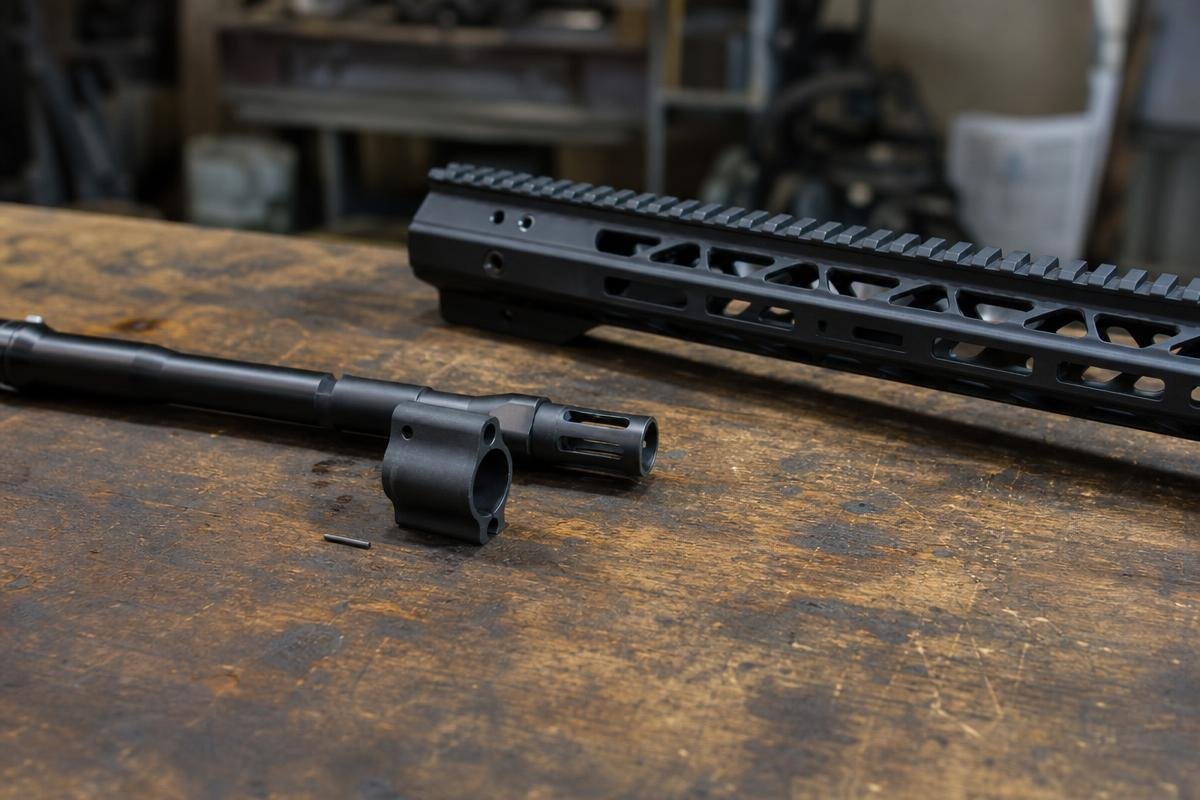
AR-15 barrel profiles affect fit under a handguard, but chamber, gas parts, and bolt compatibility decide whether a build can run correctly. Check each specification before ordering individual components.
Match the Chamber and Cartridge First
Start with the chamber marking and cartridge. .223 Wylde and 5.56 NATO are distinct chamber labels, even though both are commonly selected for .223 Remington and 5.56 NATO ammunition.
- 300 Blackout needs a cartridge-specific barrel. Review our 300 Blackout barrels before pairing parts.
- 6mm ARC and 338 ARC require appropriate barrels, bolts, magazines, and upper components.
- Choose a twist rate around your intended projectile-weight range, not profile alone.
For any cartridge other than standard 5.56 NATO, confirm bolt selection and verified headspace with the barrel maker’s specifications.
Confirm Gas System, Journal, and Handguard Clearance
The gas block must match the barrel’s journal diameter, while the gas tube must match the barrel’s gas-system length. Common AR-15 journal diameters include .625-inch, .750-inch, and .936-inch, and the gas block must match the exact journal outside diameter.
Handguard clearance also matters. Not every handguard fits every barrel contour, gas block, or adjustable gas block. Check the handguard’s listed inner diameter against larger under-handguard sections, especially on an HBAR or Bull configuration. Also confirm that the gas tube corresponds with the barrel’s carbine, mid-length, rifle, or other listed gas-system length.
Confirm Muzzle Device and Barrel-Length Requirements
Verify the muzzle-thread pitch before choosing a flash hider, brake, compensator, or suppressor mount. Many AR-15 barrels use 1/2x28 threads, but thread pitch is a product specification and should never be assumed.
Barrel length also has legal implications. Federal rules generally distinguish rifles with barrels at least 16 inches long from short-barreled rifle configurations regulated under the National Firearms Act. A permanently attached muzzle device may affect measured length only when installed according to applicable requirements. Confirm current federal, state, and local laws before building, possessing, or modifying a firearm.
Decide Between a Barrel Build and a Complete Upper
An individual barrel build from our AR-15 barrel selection gives you control over profile, gas system, muzzle device, and handguard. It also puts fitment, torque, gas-block alignment, bolt selection, and headspace checks on you or your gunsmith.
A complete upper reduces those compatibility steps. Our complete AR-15 uppers are a practical choice if you want a configured assembly ready to drop onto a compatible mil-spec lower receiver. Confirm the caliber, receiver fit, and magazine requirements before ordering.
An Online Source for AR-15 Parts and Build Components, Shipping from Denison
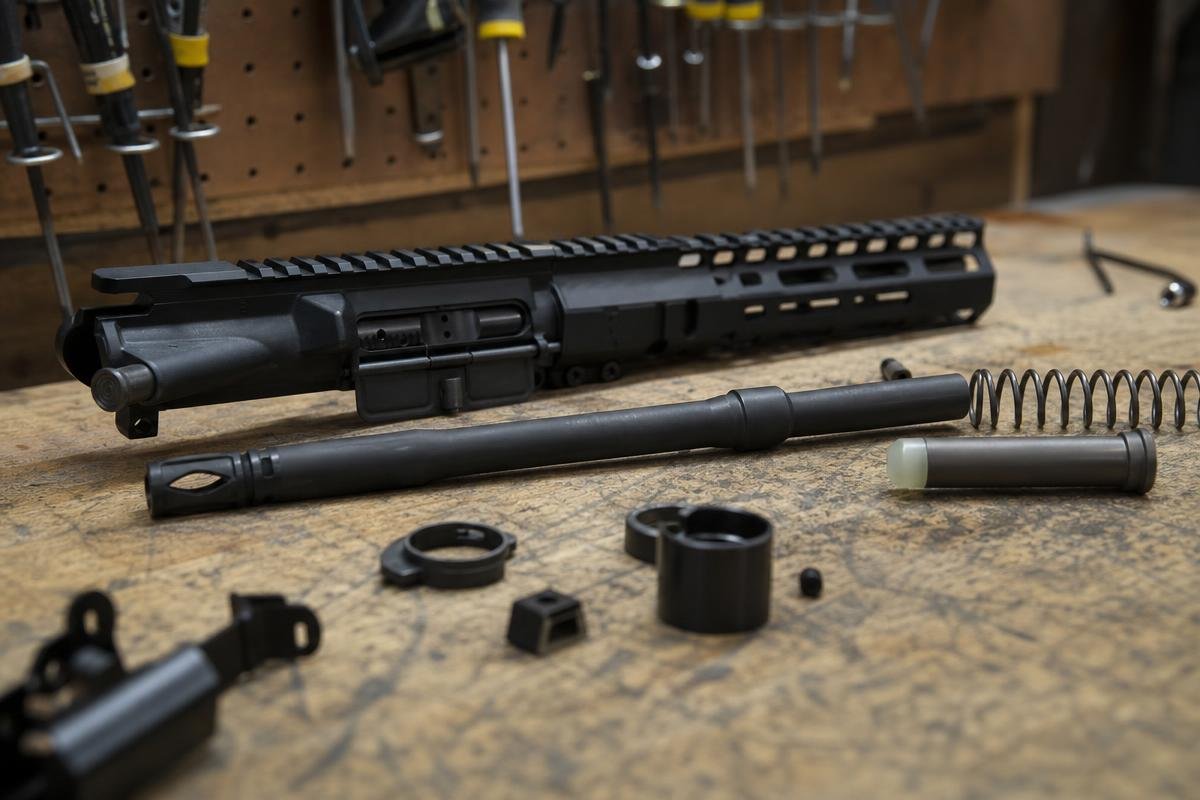
AR15Parts.com provides firearms, parts, and accessories from 4000 Texoma Pkwy, Denison, TX 75020, and ships nationwide. Use this comparison as a starting point, then let the individual barrel’s published contour drawing, chamber, gas system, journal diameter, length, thread pitch, and listed weight drive your final order.
Confirm Fit Before You Order
Compare contour drawings, chambering, gas-system length, gas-block journal diameter, muzzle thread pitch, and handguard clearance. A barrel can fit an AR-15 upper receiver while still requiring a different gas tube, gas block, bolt, or muzzle device.
Our team can help answer a product-fit question before you order. Contact AR15Parts.com through our contact page or call (888) 706-0633 with the parts already on your build list.
Choose a Finished Rifle or Build Components
A finished rifle makes sense if you want a complete, matched configuration out of the box. Review our complete AR-15 rifles if you would rather avoid sourcing individual components and checking each interface yourself.
Frequently Asked Questions
Does a Heavier AR-15 Barrel Profile Improve Accuracy?
No. A heavier contour can resist heat-related point-of-impact movement during longer strings, but chamber, bore quality, crown, ammunition, and assembly still control accuracy.
What Is the Difference Between a Government-Profile and Pencil Barrel?
Government profile vs pencil barrel is mainly a contour and handling choice. Pencil barrels reduce front-end weight, while Government contours add material around portions of the barrel for a steadier feel.
What Separates HBAR and Bull Barrels?
HBAR vs bull barrel is not defined by fixed industry dimensions. An HBAR is generally heavier than a standard contour, while a bull barrel usually stays thick for more of its length. Check each manufacturer's drawing and listed weight.
Will Any Handguard Fit Any Barrel Profile?
No. A free-float handguard needs enough inside diameter to clear an HBAR or SOCOM barrel profile, gas block, and any installed hardware. Confirm handguard ID before ordering.
Does Barrel Profile Determine Gas-System Compatibility?
No. Gas-system compatibility depends on barrel length, gas-port location, and gas-journal diameter. A .750-inch gas block will not fit a .625-inch pencil-barrel journal without changing components.
How Does a Suppressor Affect Barrel Balance?
A suppressor adds weight at the muzzle with any contour. A lighter barrel can reduce overall front-end weight, while a heavier contour adds more forward mass.
Should I Buy a Barrel or a Complete Upper?
A complete upper is easier if you want matched parts out of the box. If you want to select your own contour, browse our AR-15 barrel selection and compare contour drawing, chamber, gas-system specification, journal diameter, and listed weight before you buy. For component-fit questions, contact AR15Parts.com or call (888) 706-0633.
Ready to Get Started with AR15Parts.com?
Call (888) 706-0633 to speak with our team directly. We're ready to answer your questions, walk you through your options, and help you find the right solution for your needs. Whether you're just starting to plan or ready to move forward, we'll make the process simple and stress-free.
Reach out today and let's talk about how we can help.