
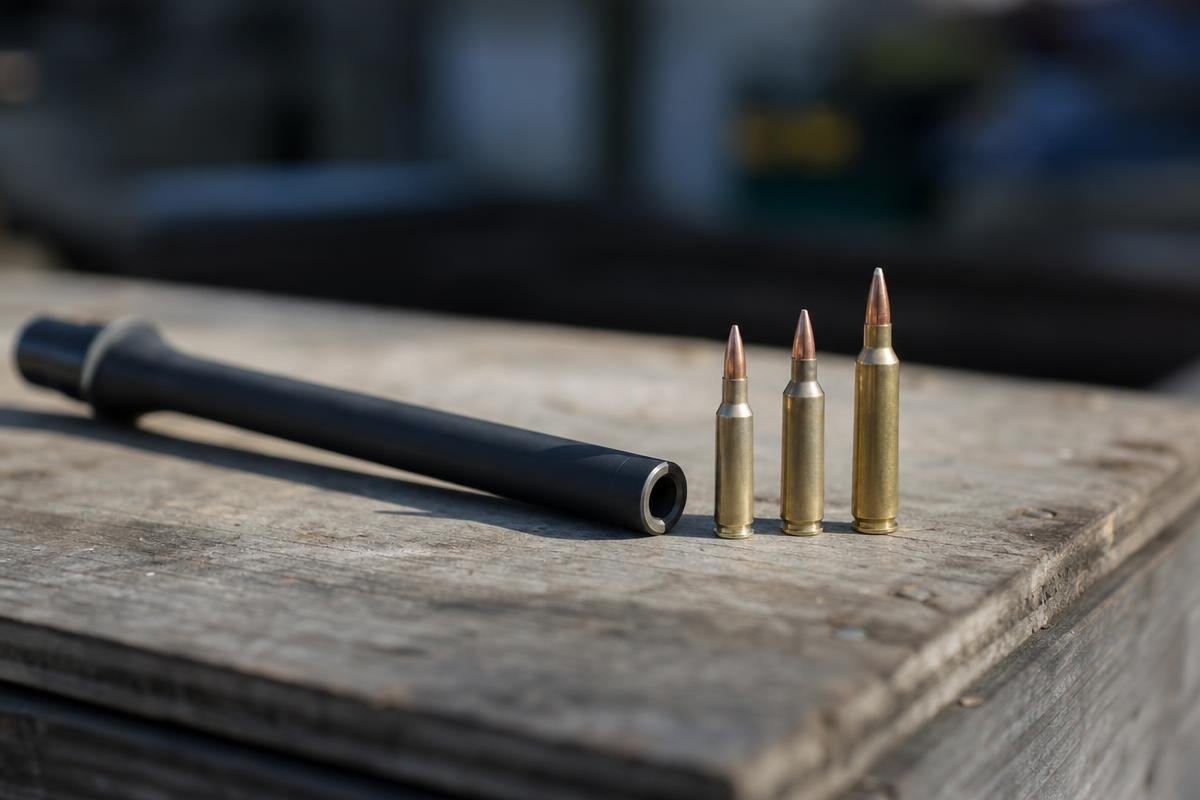
For most 5.56 NATO and .223 Remington builds, choose twist based on the longest bullet you expect to shoot, not grain weight alone. A 1:7 rate is a strong starting point for longer 62 to 77 grain projectiles, 1:8 is a versatile all-around option, and 1:9 is commonly suited to lighter practice and varmint-style loads.
AR15Parts.com is an online retailer shipping barrels and complete upper assemblies nationwide from Denison, Texas, for builders comparing chambering, barrel length, gas-system configuration, and rifling twist. Below, we explain how to narrow your build before ordering.
Need help matching a barrel to your ammunition and build?
Key Takeaways
- Use bullet length and construction, not grain weight alone, to select a rifling rate.
- For a rifle that will regularly fire long match, duty-style, or copper projectiles, start by checking the bullet manufacturer’s stated twist recommendation.
- Shorter barrels produce less muzzle velocity, which can reduce stability margin when a bullet and twist combination is already marginal.
- Chambering, barrel length, suppressor use, intended distance, and the exact load all matter alongside twist rate.
What Does an AR-15 Barrel Twist Rate Mean?
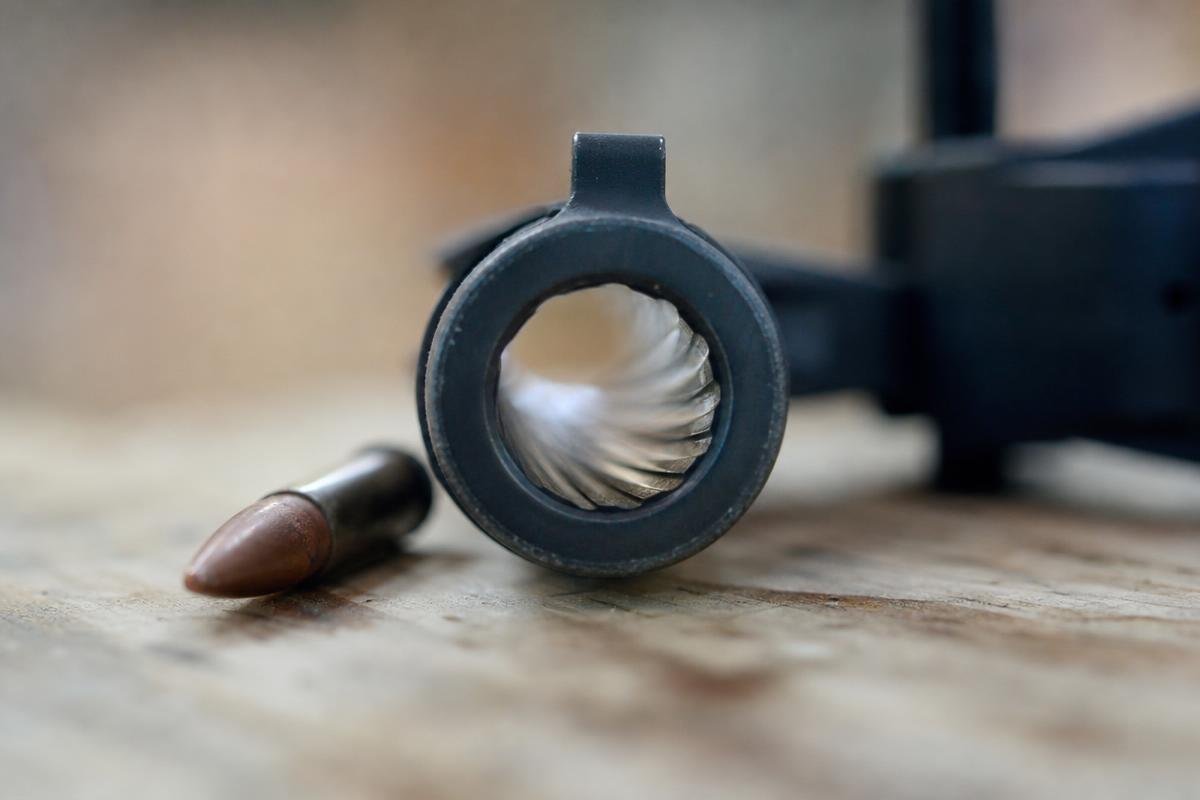
AR-15 barrel twist rate describes how quickly the rifling spins a bullet as it travels through the bore. That spin creates gyroscopic stability, which helps the bullet fly point-forward instead of yawing or tumbling.
How Rifling Rotation Is Measured
Twist rate is written as a ratio. A 1:7 barrel makes one full rifling rotation in seven inches, while a 1:9 barrel makes one rotation in nine inches.
1:7 is faster than 1:9. The shorter distance required for one rotation means the bullet receives more spin. A 1:8 rate falls between them and is commonly selected for general-purpose 5.56 NATO and .223 Remington builds.
Why Bullet Length Matters as Much as Grain Weight
Bullet weight is connected to twist selection, but grain weight does not tell the whole story. Longer projectiles usually need more spin because their length makes them harder to stabilize in flight.
Two bullets with the same grain weight can need different rifling rates. An all-copper bullet is often longer than a lead-core bullet of equal weight, so it may call for a faster rate. Treat any twist chart as a starting point, not a final answer.
Check the bullet maker’s recommended twist rate before loading heavy match bullets, long copper projectiles, or specialty ammunition. This matters on 5.56 NATO barrels as much as it does on a complete upper build.
Stability and Accuracy Are Not the Same Thing
A stable bullet does not always produce the smallest groups. Stability means the projectile can fly correctly, while group size also depends on ammunition consistency, chamber dimensions, crown condition, optic setup, shooter input, and wind.
A properly matched twist gives you a sound starting point. Your barrel length, gas system, and intended ammunition still need to work together. See our AR-15 barrel selection before finalizing a complete upper or barrel build.
Is 1:7 or 1:8 Twist Better for an AR-15?
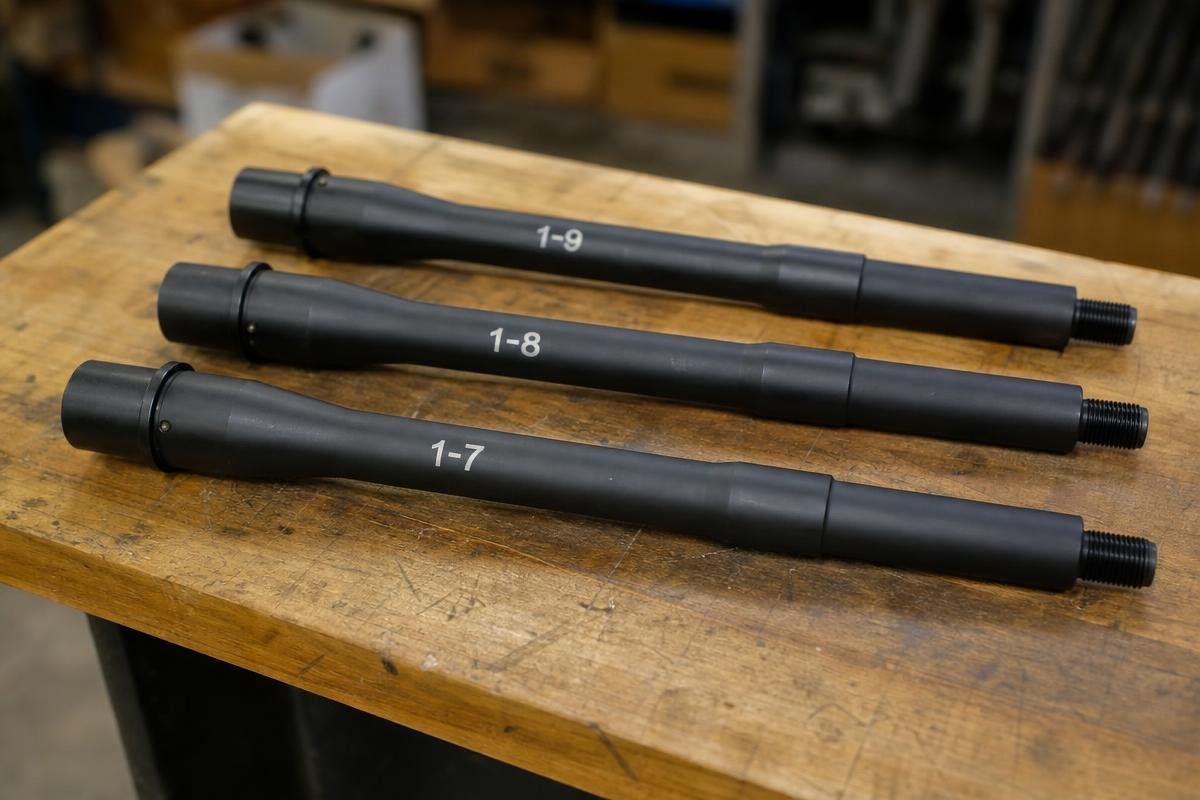
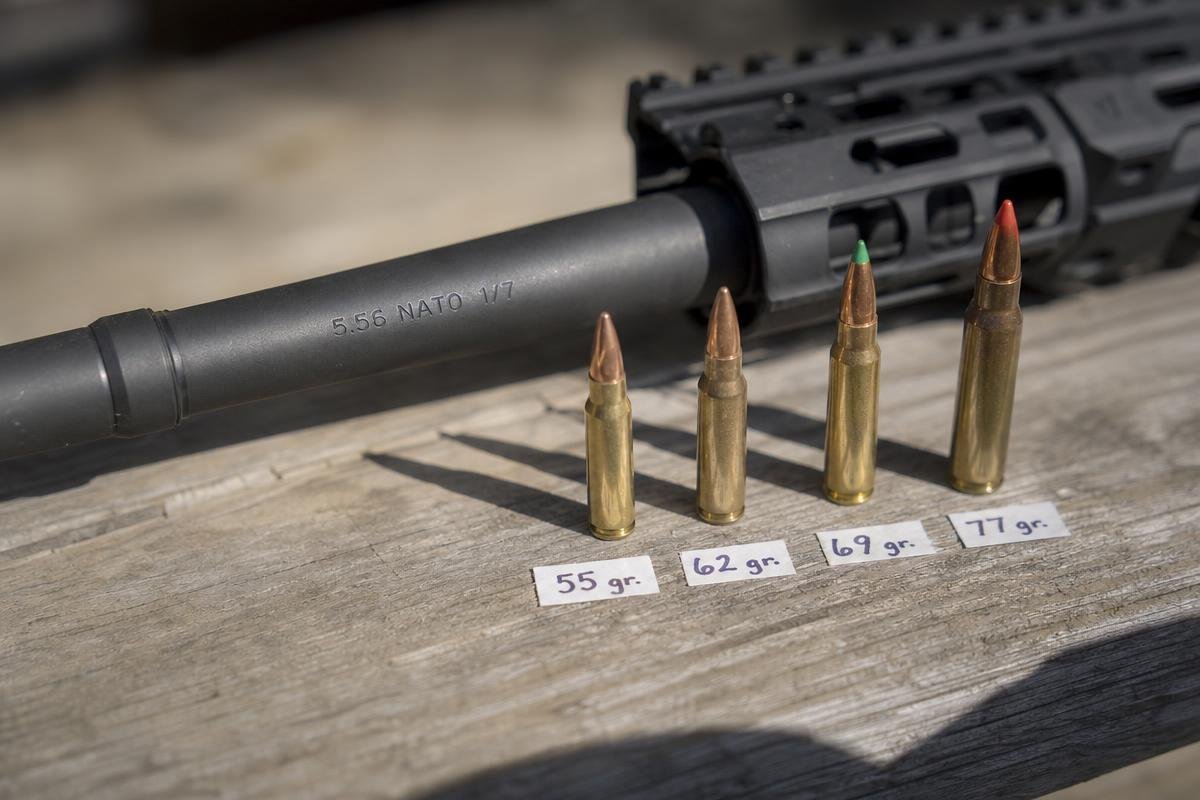
Neither is universally better. Choose 1:7 when long 62-grain and heavier projectiles, including 75 or 77-grain OTM loads, are central to your plan. Choose 1:8 for a broad mix of common 55-grain ammunition and mid-weight target loads. Confirm the recommendation for the exact bullet, especially with monolithic copper designs.
Your ammunition should drive the choice. Compare projectile length first, then consider the loads you can realistically buy and test in your rifle.
AR-15 Barrel Twist Rate Chart
| Twist Rate | Common Bullet-Weight Range | Typical Use | Important Caveat |
|---|---|---|---|
| 1:7 | 62 to 77 grain | 5.56 NATO loads and longer match-style bullets | Some light, thin-jacketed varmint bullets may not be a good match at high velocity. |
| 1:8 | 55 to 75 grain | Mixed general-purpose and target ammunition | It is flexible, but it does not automatically stabilize every long, heavy projectile. |
| 1:9 | 40 to 62 grain | Lighter and mid-weight practice or varmint loads | Some barrels may handle heavier loads, but results vary by bullet design and velocity. |
Common Loads and What to Check Before Buying
| Common Load Type | What It Tells You | Buying Check |
|---|---|---|
| M193-style 55 grain FMJ | A common practice load with a relatively short lead-core bullet. | Often works in 1:7, 1:8, and 1:9 barrels. Test your preferred brand for group size. |
| M855-style 62 grain penetrator load | Construction and length differ from typical 62 grain lead-core bullets. | Check the barrel maker’s intended use and the ammunition manufacturer’s guidance. |
| 69 grain match bullet | A popular target weight that may suit an all-purpose rifle. | 1:8 and 1:7 are common starting points, with results depending on the exact bullet and velocity. |
| 75 or 77 grain OTM | Longer match-style bullets frequently used for target and practical rifle applications. | Favor the projectile manufacturer’s twist recommendation. A 1:7 is a common choice. |
| Long monolithic copper bullet | Copper construction can make a bullet longer than a lead-core projectile of the same weight. | Do not select by grains alone. Follow the bullet maker’s stated minimum twist requirement. |
The Practical 1:7 Versus 1:8 Decision
A 1:7 barrel is commonly selected for 62-grain duty-style loads, 69-grain match ammunition, and longer 75 to 77-grain projectiles. It gives shooters a practical starting point when heavier or longer bullets will be used regularly.
A 1:8 barrel may be a fit if you shoot a regular mix of 55-grain range ammunition and heavier 69 to 75-grain loads. Neither option is automatically more accurate. Barrel quality, projectile length, ammunition availability, and intended distance matter more than the number alone. Our 5.56 NATO barrels provide chamber and rifling options for matching a build to your preferred loads.
Why 1:9 Still Has a Place
A 1:9 twist remains practical for shooters who mainly run lighter and mid-weight ammunition. It commonly works well with 40 to 62-grain bullets, including common 55-grain practice loads.
A 1:9 barrel can work with heavier ammunition, but it should be tested with the exact load you plan to use. Chambering and twist rate are separate specifications. A 5.56 NATO or .223 Wylde chamber does not determine twist rate by itself. For a mixed-load setup, review our .223 Wylde barrels before choosing your barrel configuration.
How Barrel Length Changes the Way You Choose a Twist Rate
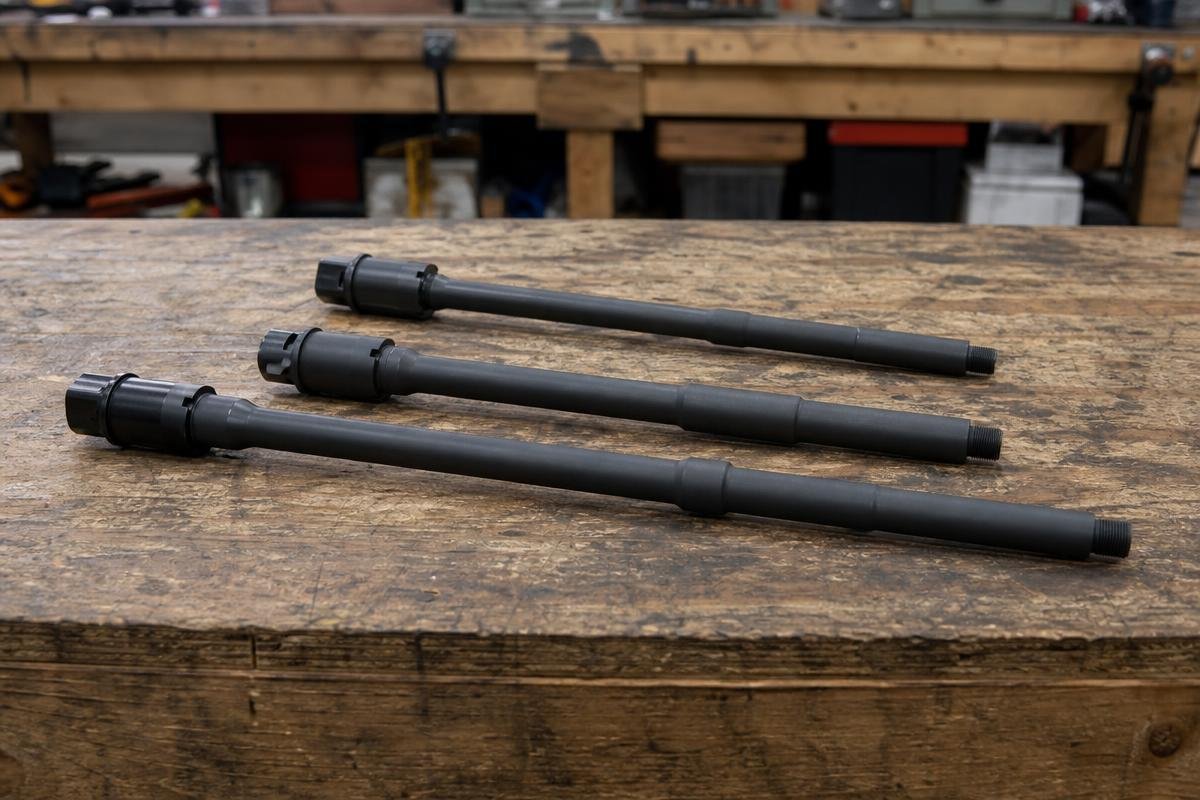
Barrel length and twist rate are separate specifications, but you should choose them together. Length affects velocity, handling, and gas-system planning. Twist still controls how well a given projectile is stabilized.
Short Barrels for Compact Configurations
A shorter AR-15 does not automatically need a faster rate. A 10.5-inch, 11.5-inch, or 14.5-inch barrel can use 1:7 or 1:8, depending on the bullet design you plan to shoot.
Short barrels generally produce lower muzzle velocity than longer barrels. Lower velocity can reduce the stability margin of a marginal bullet-and-twist combination, particularly with long projectiles. If you plan to run longer bullets from a compact setup, favor the bullet manufacturer’s recommended twist rate and test your chosen load at the distances you actually use.
Mid-Length Barrels for General-Purpose Builds
A 16-inch general-purpose rifle commonly works well with either 1:7 or 1:8 twist. Select 1:7 if you expect to run longer 69 to 77 grain ammunition often. Select 1:8 if your ammunition mix includes common 55 grain, 62 grain, and mid-weight loads.
For a 5.56 NATO barrel, the chamber and ammunition plan matter as much as the length. Browse our AR-15 barrel selection to compare rifling rate, length, and profile across chamberings.
Longer Barrels for Added Velocity and Distance
Longer barrels can add velocity for longer-distance target work, but added velocity does not replace proper stabilization. A 20-inch or 24-inch barrel still needs a rifling rate that fits the bullet you intend to fire.
For longer builds, select the rate for your projectile first, then choose barrel length for the velocity and handling you need. AR15Parts.com ships from 4000 Texoma Pkwy, Denison, TX 75020, and the team can help compare barrel and upper options by phone or through the contact page.
How Do You Choose Twist Rate by Rifle Role and Cartridge?
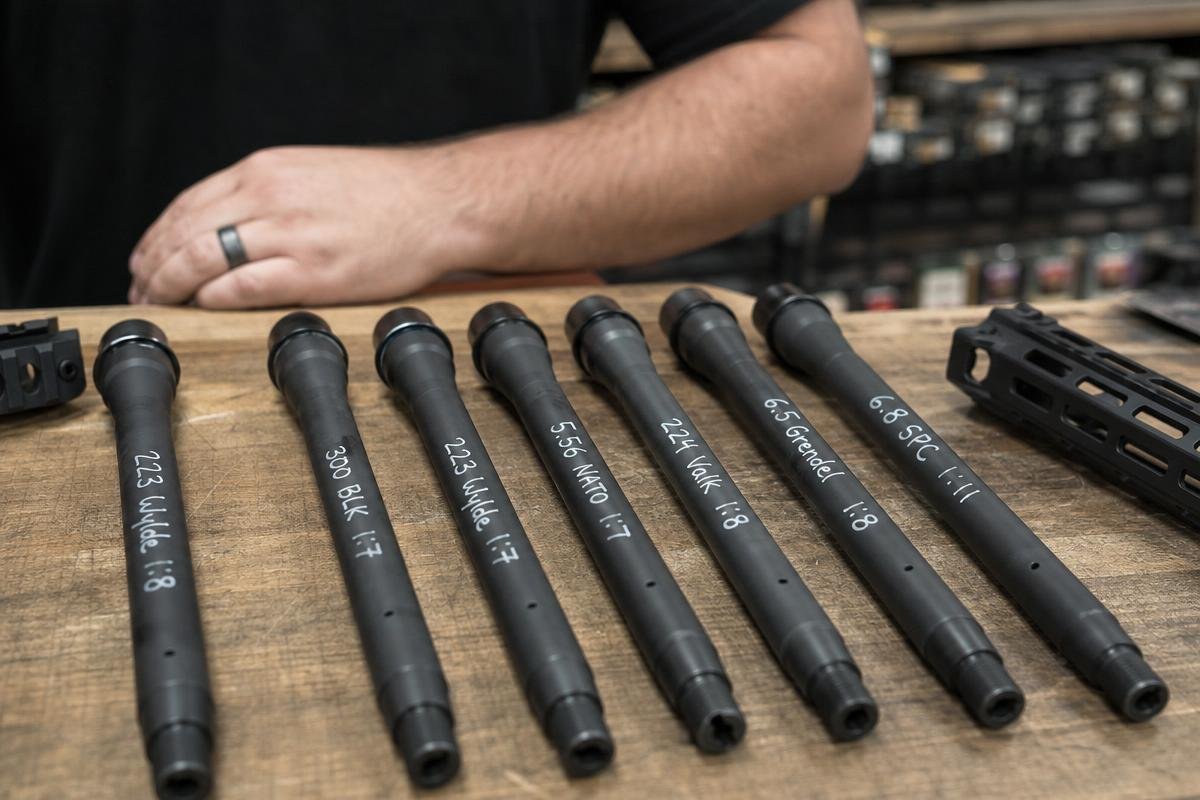
Start with the cartridge and the longest bullet you expect to use. Next, choose barrel length for handling and desired velocity, then confirm the barrel maker’s twist specification. If suppressor use, a short barrel, or longer-range shooting is part of the plan, test the exact load because velocity and projectile design can affect real-world results.
- Identify the chambering marked on the barrel.
- List the ammunition weights and bullet types you expect to shoot, including bullet construction.
- Choose barrel length based on your intended range, handling needs, and rifle role.
- Confirm the barrel manufacturer’s stated twist rate and the bullet manufacturer’s recommendation.
- Safely test several loads at your intended distance after the build is complete.
Chambering and Twist Rate Are Different Specifications
Chambering tells you what cartridge the barrel accepts. Twist rate tells you how quickly the rifling spins the bullet. A 5.56 NATO or .223 Wylde chamber can be paired with 1:7, 1:8, or 1:9 rifling, depending on the barrel maker’s intended use.
Suppressor use and planned distance affect the full build plan. They do not replace checking the chamber, gas system, barrel length, and twist specification together. A suppressor can also change the way the rifle runs, so evaluate the complete setup rather than selecting a barrel by twist alone.
Matching 5.56 and .223 Wylde Builds to Planned Ammunition
For a 5.56 NATO build intended for longer 62 to 77 grain projectiles, shooters often start with 1:7 or 1:8. Those rates generally provide a better starting point for heavier match and duty-style bullets than 1:9.
Your load choice still matters. Test the actual ammunition you intend to buy, since bullet length, construction, muzzle velocity, atmospheric conditions, and barrel condition all affect practical accuracy. A .223 Wylde build follows the same basic process: verify the chamber, identify the projectile, and match it to the stated rifling specification.
Do Not Transfer 5.56 Twist Assumptions to Other Cartridges
.300 Blackout, 6mm ARC, .224 Valkyrie, and .338 ARC use different bullet diameters, lengths, and common twist requirements. A 5.56 rule of thumb does not carry over to those chamberings.
Check the barrel maker’s recommendation for the specific cartridge and load type. Review available .300 Blackout barrels for subsonic or supersonic build plans, compare 6mm ARC barrels when your role calls for a different cartridge, and see our 224 Valkyrie barrels for long-range .224 projectile work.
Need help checking chambering, twist rate, and planned ammunition before you order? Call us at (888) 706-0633.
Common Twist-Rate Mistakes to Avoid Before Buying a Barrel
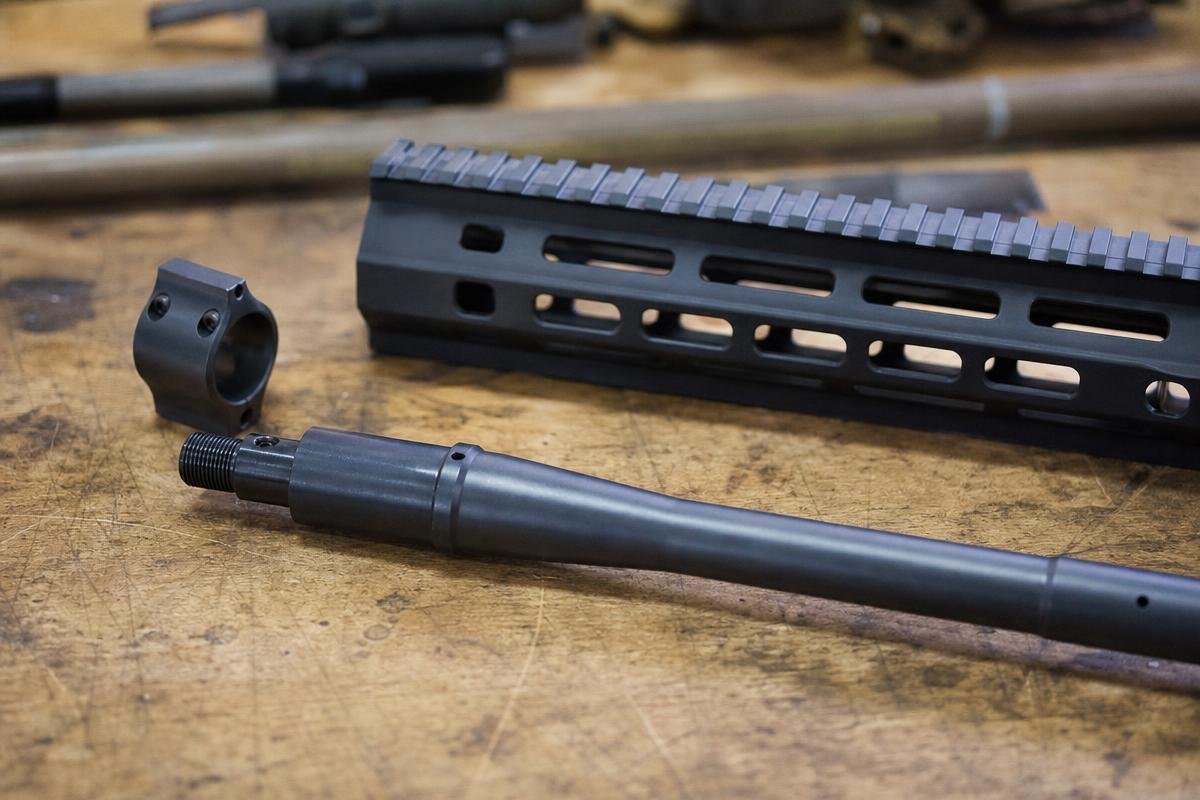
A barrel order can go wrong before you ever install the part. Check bullet design, chambering, and every interface in the upper before you buy.
Choosing by Grain Weight Alone
Grain weight is a useful starting point, but it does not tell the whole stability story. Projectile length, jacket material, core material, bearing surface, muzzle velocity, and atmospheric conditions can all change the result.
A long 77-grain open-tip match bullet generally needs more rotational speed than a shorter bullet of similar weight. Use a twist chart as a starting point, then confirm the bullet maker’s recommended range. The best check is safe testing with the actual load at your intended distance.
Confusing Chambering With Rifling Twist
A 5.56 NATO chamber is not the same thing as a 1:7 barrel. The chamber controls cartridge dimensions and pressure clearance, while the rifling rate controls how fast the barrel spins the bullet.
A 5.56 NATO barrel can have 1:7, 1:8, or 1:9 rifling. A .223 Wylde chamber can also use any of those rates. If you want to compare rifling options, browse our 5.56 NATO barrels alongside the ammunition you expect to use most.
Forgetting the Rest of the Upper Build
The barrel must fit the rest of your upper, not just your ammunition. Confirm gas-system length, gas block journal diameter, gas tube length, muzzle thread pattern, handguard clearance, upper receiver fit, and bolt carrier group selection before placing an order.
- Match the gas block to the barrel journal diameter.
- Match the gas tube to the barrel’s gas-system length.
- Confirm your handguard clears the gas block and barrel profile.
- Confirm muzzle threads fit your planned device.
Our AR-15 barrel selection covers profiles, lengths, and rifling options across chamberings so you can match the barrel to the rest of your build. For a custom build, verify the intended handguard and gas block against the barrel specifications first.
AR-15 1:7 Twist Barrels Shipped from Denison, TX
AR15Parts.com ships nationwide from 4000 Texoma Pkwy, Denison, TX 75020. If you are comparing a barrel-only purchase with a complete upper, gather your chambering, barrel length, ammunition, and preferred twist rate before contacting the team.
What to Have Ready Before You Ask About Barrel Options
Bring the details that affect fit and ammunition compatibility. Have your chambering, desired barrel length, likely ammunition weights, bullet style, and preferred twist rate ready.
- Chambering, such as 5.56 NATO or .223 Wylde
- Barrel length and intended rifle role
- Common ammunition weights and the specific loads you plan to use most
- Bullet style, such as FMJ, soft point, open-tip match, or monolithic copper
Those details help narrow barrel or upper options without guessing. They also help separate a barrel-only build from a ready-to-drop-on-your-lower upper assembly.
Product Questions for Our Team
Call (888) 706-0633 for product questions about a 1:7 twist barrel, compatible parts, or complete upper options. You can also contact our product team with your build details.
For background on our business and ordering process, read about AR15Parts.com.
Frequently Asked Questions
Can a 1:7 Twist Barrel Shoot 55 Grain Ammunition?
Yes, most 1:7 twist barrels can shoot 55 grain ammunition well. Individual barrel, bullet construction, and load quality still affect group size, so test the ammunition you plan to keep on hand.
What Bullet Weight Is Best for a 1:7 Twist Barrel?
A 1:7 twist barrel bullet weight commonly falls between 62 and 77 grains. Longer bullets generally need more rotational stability, but bullet length and design matter as much as the grain number stamped on the box.
Is 1:8 Better Than 1:7 for an AR-15?
No, 1:8 is not universally better than 1:7 for an AR-15. In the 1:7 vs 1:8 vs 1:9 twist rate comparison, 1:8 often covers a broad range of common loads, while 1:7 remains a practical choice for longer 62 to 77 grain projectiles.
Barrel quality, chamber dimensions, ammunition, and your intended use determine accuracy. A good 1:7 barrel can shoot very well with lighter loads, and a good 1:8 barrel can stabilize many heavier loads.
Can You Shoot .223 Remington in a 5.56 NATO Chamber?
Yes, .223 Remington ammunition can generally be fired in a 5.56 NATO chamber. Follow the firearm and ammunition manufacturer guidance for your specific upper, especially if you are comparing chamber markings and 5.56 NATO barrel twist rate options.
Does a Faster Twist Rate Make an AR-15 More Accurate?
No, a faster twist rate does not automatically make an AR-15 more accurate. Twist rate provides stability for a given bullet, while precision also depends on barrel manufacturing, crown condition, chamber, optics, ammunition consistency, and shooter technique.
How Can I Find My AR-15 Barrel Twist Rate?
Check the barrel markings, the original product listing, or the barrel manufacturer documentation. Do not guess by barrel length, since similar-length barrels are sold with different twist rates.
If you are shopping for a new rifling rate, browse our AR-15 barrel selection and filter by chambering, length, and twist. If you have your chambering, barrel length, and likely ammunition weights picked out, contact AR15Parts.com at (888) 706-0633 for help narrowing down barrel or upper options.
Ready to Get Started with AR15Parts.com?
Call (888) 706-0633 to speak with our team directly. We're ready to answer your questions, walk you through your options, and help you find the right solution for your needs. Whether you're just starting to plan or ready to move forward, we'll make the process simple and stress-free.
Reach out today and let's talk about how we can help.