
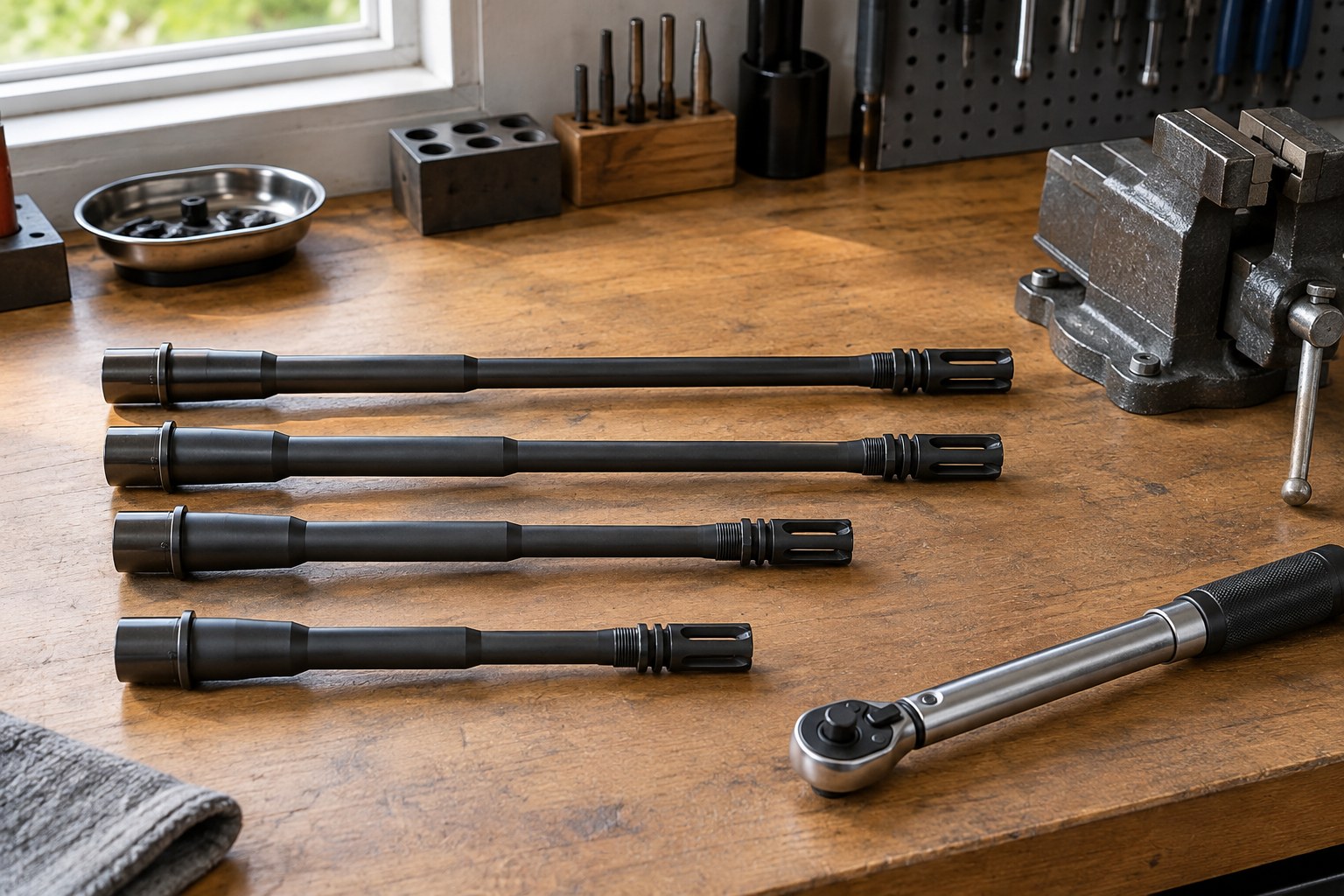
AR-15 barrel twist rates describe how many inches of barrel it takes for the rifling to spin a bullet one full turn, and that number changes which bullet weights will fly straight out of a given barrel. AR15Parts.com stocks barrels across a wide range of AR-15 and AR-10 calibers and twist specifications, which matters for Denison and Texoma-area shooters choosing a build for the range or the deer lease. This guide compares twist rates caliber by caliber across the AR platform rather than focusing on a single cartridge. Getting the twist rate wrong is one of the most common reasons a new barrel shoots worse than the one it replaced.
Have questions about which twist rate fits your caliber and bullet weight?
Key Takeaways
- An AR-15 barrel twist rate, written as 1:7 or 1 in 7, tells you how many inches of barrel the rifling needs to spin the bullet one complete revolution.
- A faster twist rate (a smaller second number, such as 1:7) spins the bullet more quickly per inch of travel and generally stabilizes longer, heavier bullets for that caliber.
- A slower twist rate (a larger second number, such as 1:12 or 1:24) spins the bullet less per inch and suits shorter, lighter bullets for that caliber.
- Twist rate needs are driven mainly by bullet length rather than bullet weight alone, since two bullets of the same weight can have different lengths depending on construction.
- Common AR-15 and AR-10 platform calibers each have a narrow band of twist rates that manufacturers commonly use, and matching your bullet choice to that band is the practical goal.
- AR15Parts.com barrels are marked with a twist specification, such as 1x7 or 1x12, in the product title so you can confirm compatibility before ordering.
What Does an AR-15 Barrel Twist Rate Actually Mean?
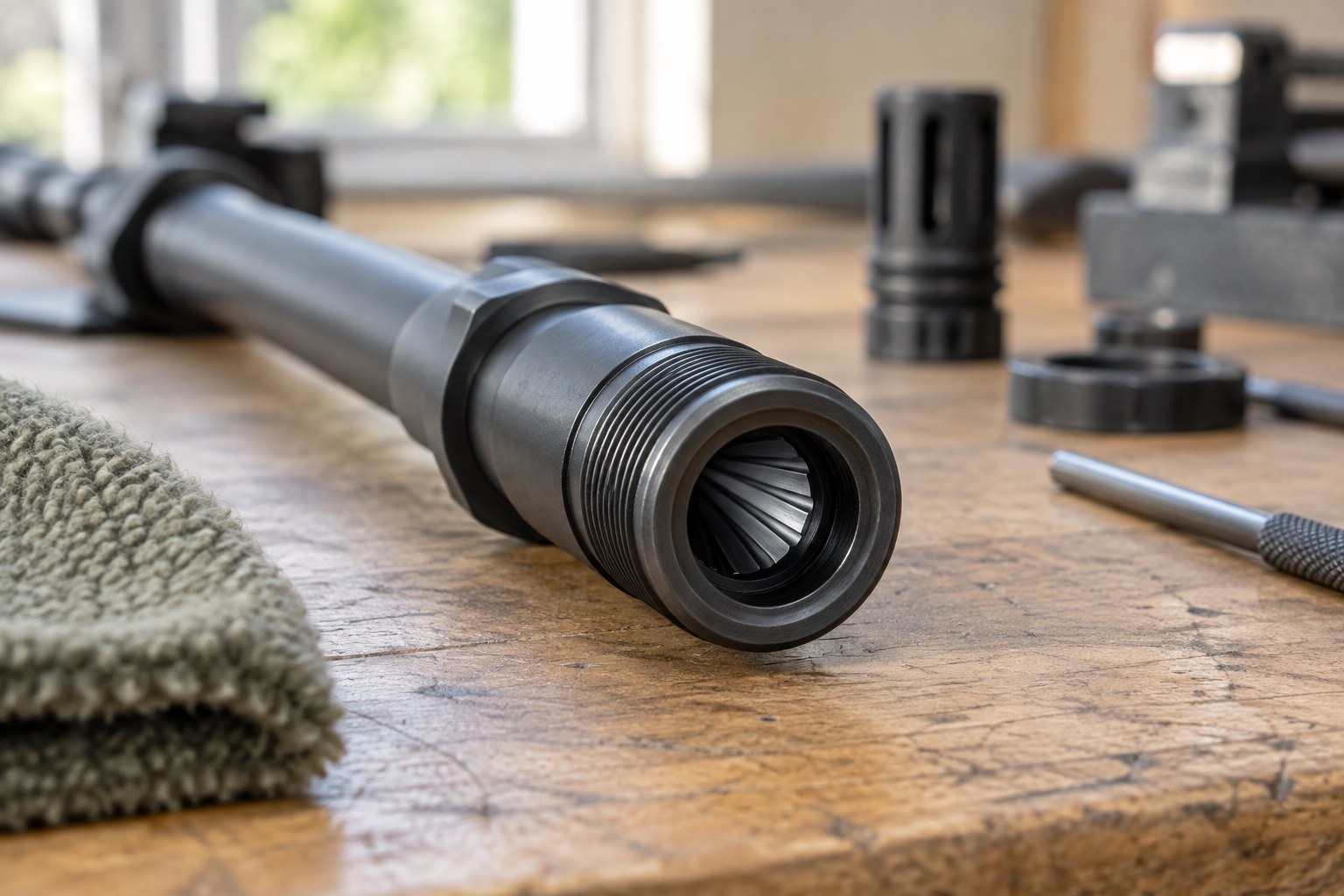
A twist rate is a ratio, not a single measurement of speed. A 1:7 twist means the rifling grooves make one complete rotation over 7 inches of barrel length, while a 1:12 twist takes a full 12 inches to complete that same single rotation. The smaller the second number, the faster the twist and the more spin the bullet receives per inch of barrel it travels through.
Spin is what keeps a spitzer bullet flying nose-first instead of tumbling once it leaves the muzzle. Without enough rotational speed, a bullet can yaw, keyhole through paper targets, or simply lose accuracy at distance. Too much spin for a very short or lightweight bullet is rarely a stabilization problem, though it can add unnecessary rotational stress to some thin-jacketed varmint bullets at high velocity.
Reading a Twist Rate Callout on a Barrel Listing
On an AR15Parts.com product page you will see the twist written as something like 1x8 or 1x7.5. That is the same 1:8 or 1:7.5 ratio described above, just formatted with an "x" instead of a colon. Barrel listings also show caliber, length, gas system length, and material, so you can confirm the twist rate lines up with the bullets you plan to shoot before you order.
Why Twist Rate Is a System Decision, Not Just a Barrel Spec
Twist rate works together with barrel length, chamber, and the ammunition you feed the rifle. A barrel with the right twist for your intended bullet weight still needs a chamber cut for your exact cartridge, whether that is 5.56 NATO, .223 Remington, or .223 Wylde. If you are unsure how twist rate interacts with your planned build, our AR-15 parts and accessories selection includes barrels sorted by caliber to make comparison easier.
How Does Bullet Length Determine the Right Twist Rate?
Bullet length, more than bullet weight alone, drives how much spin a bullet needs to stay stable in flight. A longer bullet has more surface area working against gyroscopic stability, so it needs a faster twist rate to spin fast enough to resist tumbling. Two bullets of the same weight can have different lengths depending on their construction, jacket material, and boat-tail design, which is why "weight range" recommendations from ammunition makers are always approximate.
Engineers have used a classic rule of thumb known as the Greenhill formula for well over a century to estimate a workable twist rate from a bullet's length and diameter. The Greenhill approach is a starting estimate rather than an exact prediction, since it does not fully account for velocity, bullet material, or drag, but it explains the general pattern seen across AR platform cartridges: as commonly available bullets get longer, twist rates get faster.
Not building from scratch? Our complete upper receivers come assembled, headspaced, and function-checked.
Why Heavier Does Not Always Mean Longer
A denser bullet material, like an all-copper monolithic design, can weigh the same as a lead-core bullet while being noticeably longer, because copper is less dense than lead. That longer copper bullet can need a faster twist rate than a lead-core bullet of the identical listed weight. If you plan to switch bullet types within the same caliber, check the twist rate the bullet or ammunition manufacturer recommends rather than assuming grain weight alone tells the whole story.
What Happens When Twist Rate and Bullet Length Do Not Match
A twist rate that is too slow for a given bullet length can leave the bullet under-stabilized, showing up as keyholed holes on paper, inconsistent groups, or bullets that appear to tumble at longer distances. A twist rate that is too fast for a very short, lightweight bullet is less commonly a stability problem, but manufacturers of frangible or thin-jacketed varmint bullets sometimes warn against excessive rotational speed at high velocity. When in doubt, match your twist rate to the bullet weight range the ammunition manufacturer publishes for that load.
What Twist Rate Does 5.56 NATO and .223 Wylde Use?
5.56 NATO barrels built to military specification commonly use a 1:7 twist, which was adopted to stabilize the 62 grain M855 ball bullet used in service rifles. Slower twist rates, historically 1:12, were common decades ago when .223 Remington was mainly a varmint round loaded with lighter, shorter bullets. Today most .223 Wylde and 5.56 NATO barrels sold for AR-15 builds use 1:7 or 1:8 twist, which covers the common 55 to 77 grain bullet range that most shooters run. AR15Parts.com stocks .223 Wylde and 5.56 NATO barrels in both 1x7 and 1x8 twist, so confirm which weight range you plan to shoot most before choosing. For a deeper look specifically at 5.56 and .223 twist selection, our AR Upper Hub guide on AR-15 twist rate covers that caliber pairing in more detail.
What Twist Rate Fits 300 Blackout, 6.5 Grendel, and Other Popular AR-15 Calibers?
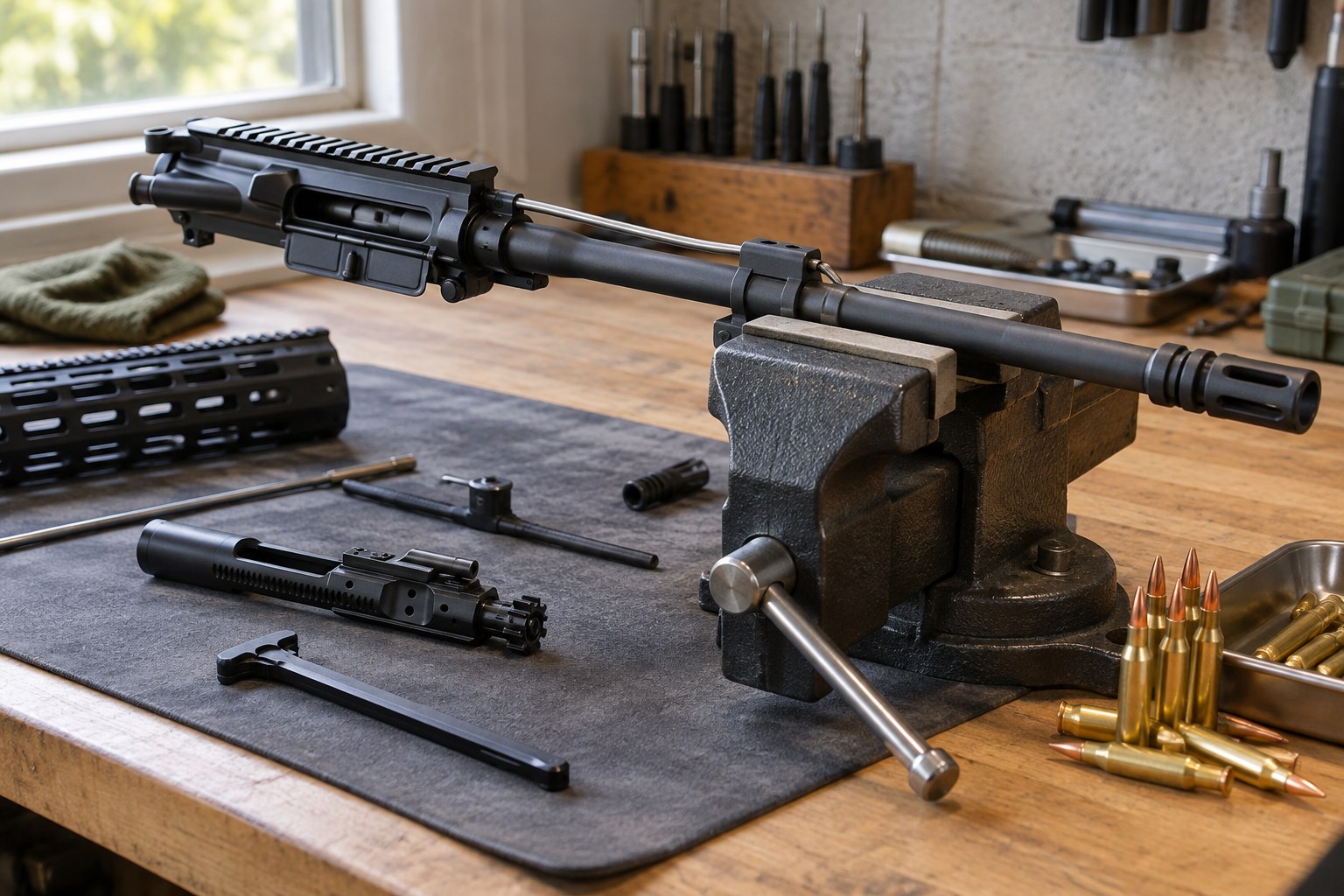
Different AR-15 and AR-10 platform calibers settled on different common twist rates because their typical bullet weights and lengths vary widely. The table below lists twist rates commonly found on AR15Parts.com barrel listings for each caliber, gathered from current product specifications.
| Caliber | Common Twist Rate | Typical Bullet Range |
|---|---|---|
| 5.56 NATO / .223 Wylde | 1:7 to 1:8 | 55 to 77 grain |
| 300 AAC Blackout | 1:7 to 1:8 | 110 to 220+ grain, including subsonic loads |
| 6.5 Grendel | 1:8 | 90 to 130 grain |
| 6mm ARC | 1:7 to 1:7.5 | 95 to 110+ grain |
| .224 Valkyrie | 1:7 | 60 to 90 grain, including long-for-caliber match bullets |
| 350 Legend | 1:15 to 1:16 | 124 to 180 grain |
| 458 SOCOM | 1:14 | 250 to 300+ grain |
| 450 Bushmaster | 1:20 to 1:24 | 250 to 300 grain |
| 50 Beowulf | 1:20 | 325 to 400+ grain |
| .204 Ruger | 1:12 | 32 to 40 grain |
300 AAC Blackout is a useful example of how far a single caliber's twist rate range can stretch. Lighter, shorter supersonic bullets around 110 to 125 grain can run well in a 1:8 twist, while heavy subsonic bullets in the 200 to 220 grain range are commonly paired with a 1:7 twist because those longer bullets need the extra spin to stabilize at subsonic velocity. Browse current 300 Blackout barrels to compare twist and length side by side. 6.5 Grendel and 6mm ARC both use long-for-caliber bullets designed for extended range, which is why their common twist rates run faster than many similarly sized cartridges of past decades. Current 6.5 Grendel barrels are available in the common twist specification noted above.
Large-Bore AR Platform Calibers Use Much Slower Twist Rates
450 Bushmaster, 458 SOCOM, and 50 Beowulf are all large-diameter, heavy-bullet cartridges built on the AR-15 or AR-10 platform, and each uses a twist rate far slower than 5.56 NATO. That is expected: these bullets are short relative to their diameter, so they need comparatively little spin per inch of travel to stay stable. Do not assume a slow twist rate is a lesser barrel. It is simply matched to a very different bullet profile. Current options include 458 SOCOM barrels, 450 Bushmaster barrels, and 50 Beowulf barrels.
Shop AR-15 and AR-10 Barrels by Caliber and Twist Rate
Once you know the twist rate range your bullets need, browse current options by caliber to compare twist, length, and material side by side.
Confirming Twist Rate Before You Order
Every barrel listing on AR15Parts.com includes the twist rate in the product title, alongside caliber, length, gas system, and material such as 416R stainless steel or 4150 chrome moly (CMV) steel. Some listings also note QPQ, a salt-bath nitride (nitrocarburizing) surface treatment applied to the bore and exterior for wear resistance. If a listing does not make the twist rate clear enough for your build, contact our team by phone or the contact form before ordering.
Matching Twist Rate to Your Actual Ammunition
The twist rate on the barrel only matters relative to the specific ammunition you plan to shoot. If you reload or plan to run a bullet outside the common weight range for your caliber, check the twist rate the bullet manufacturer recommends for that specific projectile rather than relying on general caliber averages. A barrel that is a poor match for your chosen bullet will not damage the rifle in most cases, but it can produce accuracy that never meets the barrel's real potential.
Twist Rate Help for Denison and Texoma Builders
North Texas humidity around Lake Texoma and the surrounding area does not change what twist rate a bullet needs, but it does affect how quickly a barrel's bore can collect fouling and moisture between range days. Getting AR-15 barrel twist rates right before you order helps you avoid ending up with a barrel that never matches your ammunition. Clean and lightly protect your bore after wet-weather range sessions or hunting trips, and always confirm your rifle is unloaded before cleaning or handling it.
Shooters building a rifle for North Texas deer and hog hunting often ask which twist rate suits a heavier hunting bullet in calibers like 350 Legend or 6.5 Grendel. Before hunting season, check current Texas Parks and Wildlife Department (TPWD) regulations for legal calibers and equipment in your hunting zone, since rules can vary and change.
If you are comparing barrel options for a build project on the range or in the field, AR15Parts.com can be reached at 4000 Texoma Parkway, Denison, TX 75020, or by phone at (888) 706-0633. Our team answers fitment and compatibility questions by phone, email, or the contact form.
Frequently Asked Questions
What Does a 1:7 Twist Rate Mean on an AR-15 Barrel?
A 1:7 twist means the rifling completes one full rotation every 7 inches of barrel length. It is a common twist rate for 5.56 NATO, 300 AAC Blackout, and 6mm ARC barrels because it stabilizes longer, heavier bullets within those calibers. A faster twist like 1:7 generally handles a wider range of bullet weights than a slower twist in the same caliber.
Can I Use a Slower Twist Rate for Lighter Bullets?
Yes, a slower twist rate is commonly matched to shorter, lighter bullets within a given caliber, such as a 1:12 twist for lighter varmint-weight .223 Remington loads. Using a bullet that is too long for a slow twist barrel risks under-stabilization. Always check the ammunition or bullet manufacturer's twist rate recommendation for the specific load you plan to shoot.
Does a Faster Twist Rate Hurt Accuracy With Light Bullets?
Not typically for standard bullet construction, though some manufacturers of very light or frangible varmint bullets caution against excessive rotational speed at high velocity. For most common jacketed bullets, a faster twist than strictly necessary is far less likely to cause problems than a twist rate that is too slow for a long, heavy bullet.
Why Do 458 SOCOM and 450 Bushmaster Use Such Slow Twist Rates?
458 SOCOM commonly uses a 1:14 twist and 450 Bushmaster commonly uses a 1:20 to 1:24 twist because both fire short, large-diameter, heavy bullets that need comparatively little rotational speed per inch of travel to stabilize. Slower twist rates are normal and expected for these big-bore AR platform cartridges, not a sign of a lesser barrel.
Is Barrel Twist Rate Related to Barrel Length?
Twist rate and barrel length are separate specifications that both affect a build. A shorter barrel gives a bullet less time in the bore under acceleration, but it does not change how many inches the rifling needs to complete one rotation. Note that a rifle barrel under 16 inches makes a short-barreled rifle under federal law, which still requires Bureau of Alcohol, Tobacco, Firearms and Explosives (ATF) registration regardless of caliber or twist rate.
Should I Ask a Gunsmith Before Choosing a Twist Rate?
If you are unsure which twist rate fits your intended bullets, or if you are installing a new barrel and need a proper headspace check, a qualified gunsmith is the right resource for hands-on fitting and inspection. Our team can help you confirm caliber, twist rate, and gas system compatibility on a barrel before you order, but installation and headspacing should go through a qualified gunsmith.
Ready to Get Started with AR15Parts.com?
Call (888) 706-0633 or email [email protected] to talk through which twist rate fits your caliber and bullet choice. Understanding AR-15 barrel twist rates up front makes it easier to choose the right barrel the first time. Our team is available Monday through Friday, 8:00 AM to 4:00 PM Central, to help you compare barrel specifications before you order.