
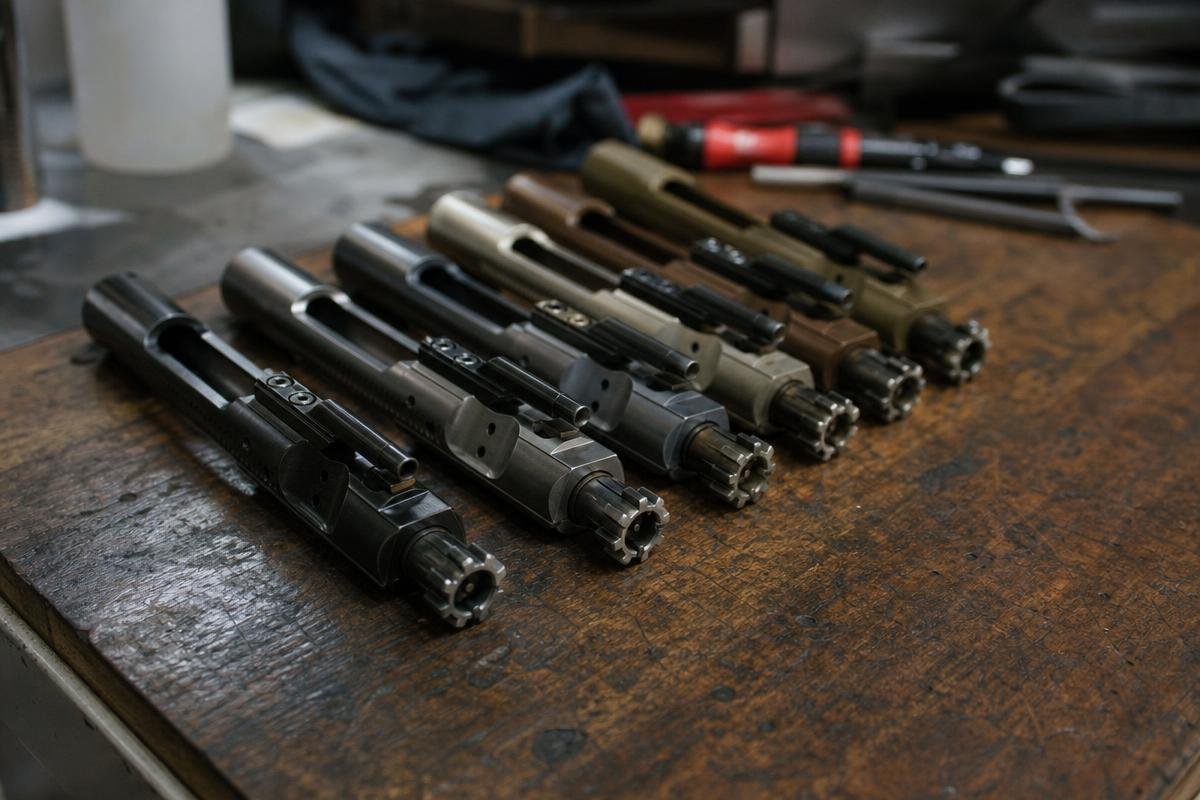
An AR15Parts.com buyer comparing bolt carrier group finishes should start with the basics: phosphate is economical and retains oil well, nitride is smoother and more corrosion resistant, Nickel Boron is easy to wipe down when applied well, and chrome is durable and corrosion resistant. Below, we also cover Nickel Boron and chrome because finish can influence maintenance, but it cannot compensate for poor carrier dimensions, weak staking, improper bolt heat treatment, or an incompatible build.
Need help choosing the right BCG finish for your build?
Key Takeaways
- Phosphate is a proven, value-focused finish that performs best with a consistent lubricant film.
- Nitride is a surface treatment with strong corrosion resistance and a smoother surface that generally simplifies cleanup.
- Nickel Boron can reduce fouling adhesion, but coating quality and dimensional control are especially important.
- Chrome offers a hard, corrosion-resistant plated surface, but carrier construction and maintenance still determine service life.
- Before selecting any finish, inspect the bolt material, gas-key staking, extractor components, gas-ring condition, and overall compatibility with your upper.
Which AR-15 BCG Finish Is Right for Your Rifle?
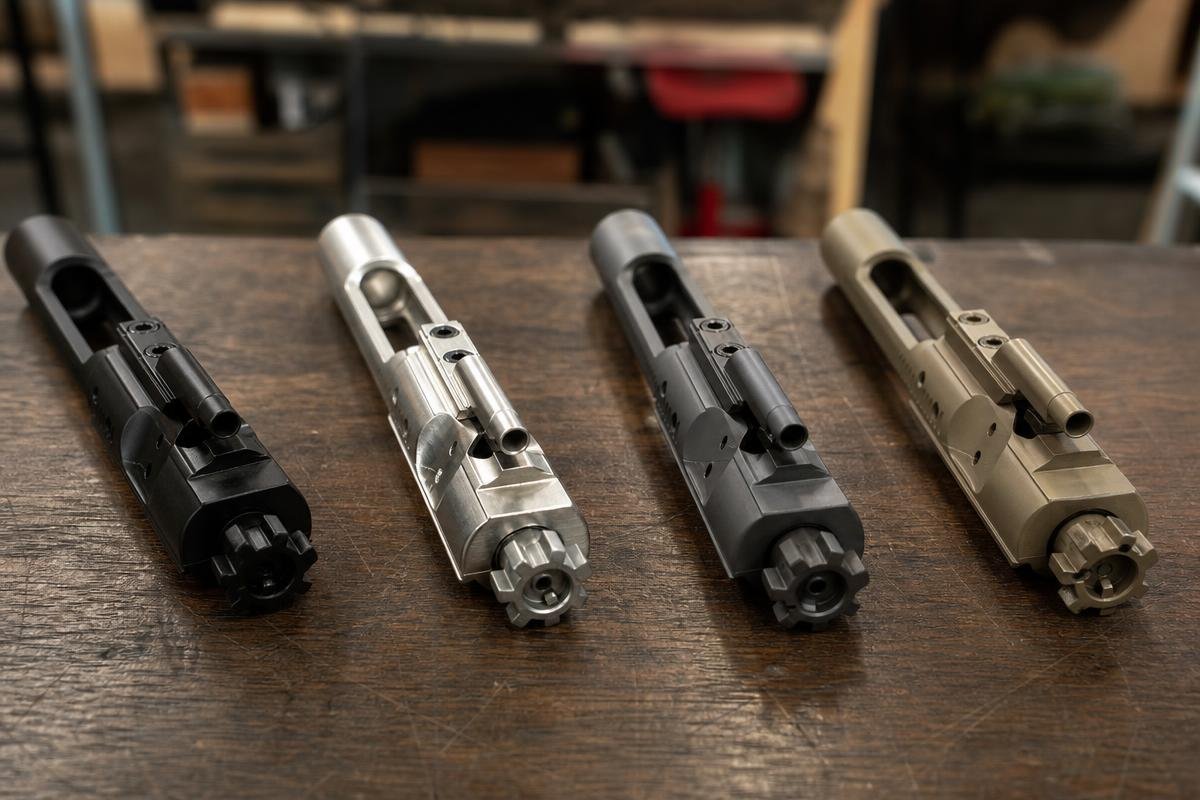
The right finish depends on how you maintain, store, and use the rifle. Phosphate is a sensible choice for a traditional build that will be lubricated regularly. Nitride is often preferred for a general-purpose rifle where corrosion resistance and faster cleanup matter. Nickel Boron and chrome can also work well, provided the carrier, bolt, gas key, and critical bearing surfaces are manufactured correctly.
A finish is only one part of the assembly. The bolt locks into the barrel extension, while the carrier rides in the upper receiver and contains the cam-pin path, gas-key interface, and firing-pin bore. Check for a securely staked gas key, a correctly assembled extractor, intact gas rings, and clean machining at the carrier rails and internal bore. Those details generally matter more to function than whether the exterior is black, silver, matte, or glossy.
Compare finish, bolt material, and gas-key staking side by side in our AR-15 bolt carrier groups before matching a carrier to your upper. A standard 5.56 bolt can also be used with .300 Blackout, but cartridges with different case-head dimensions require the correct bolt face.
Is a Nitride BCG Better Than Phosphate?
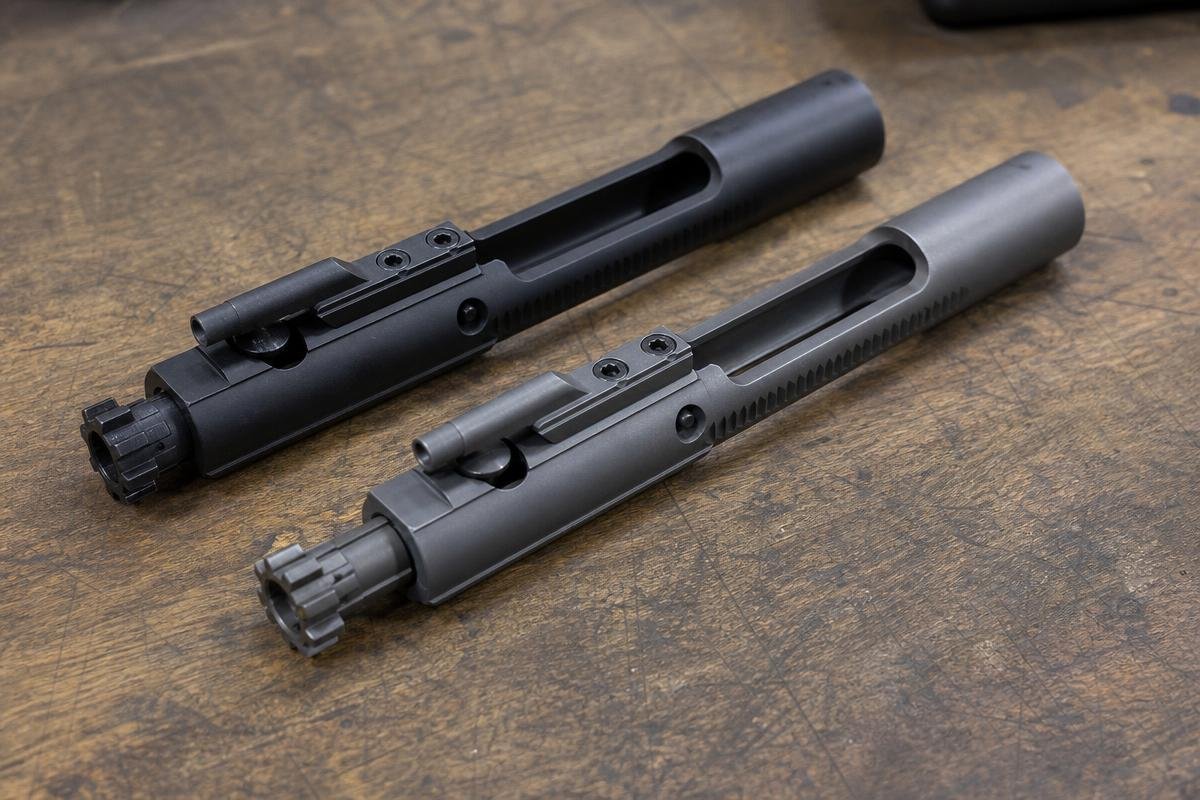
Neither is universally better. Nitride usually offers better inherent corrosion resistance and a smoother surface, while phosphate remains a reliable, lower-cost option that holds lubricant effectively. Both need cleaning, inspection, and lubrication at the bearing surfaces.
Side-by-Side Finish Comparison
| Feature | Phosphate | Nitride | Nickel Boron | Chrome |
|---|---|---|---|---|
| Process | Manganese phosphate conversion coating | Ferritic nitrocarburizing surface treatment, often called QPQ | Applied nickel-boron coating | Applied chrome plating |
| Surface character | Matte, textured, oil-retentive | Smooth, dark treated surface | Light-colored, slick-feeling coated surface | Bright, hard, smooth plated surface |
| Corrosion resistance | Relies heavily on lubricant coverage | Strong inherent resistance | Varies with coating quality and coverage | Strong when plating is properly applied |
| Cleaning | Usually requires more brushing | Carbon often wipes away more easily | Fouling may release readily, though staining can remain | Smooth surface can simplify wipe-down cleaning |
| Lubrication | Requires a visible oil film | Still requires oil on contact surfaces | Still requires lubrication despite low-friction claims | Still requires lubrication despite a hard plated surface |
| Dimensional consideration | Minimal conversion-coating buildup | Changes the steel surface rather than adding a thick layer | Coating thickness and prep must be controlled | Plating thickness and consistency must be controlled |
| Typical fit | Budget and traditional builds | General-purpose, low-maintenance preference | Buyers seeking a slick silver finish | Buyers seeking a hard, corrosion-resistant plated finish |
Compare available carriers with the rest of your build before ordering.
Shop AR-15 Bolt Carrier Groups
Manganese phosphate creates the matte surface found on many traditional carriers. Nitrocarburizing, by contrast, diffuses nitrogen and carbon into the steel surface rather than building a separate external layer. Nickel Boron and chrome are plated or deposited finishes, so coating preparation and thickness control matter at close-tolerance surfaces such as the carrier bore, cam-pin channel, and rail areas.
Do not assume the carrier and bolt necessarily receive the same treatment. Some assemblies use a finished carrier with a separately treated bolt. The bolt is the pressure-bearing part that locks into the barrel extension, so material selection, heat treatment, lug geometry, extractor setup, and inspection are more consequential than matching the carrier's appearance.
What a Finish Can and Cannot Tell You
Finish can indicate likely cleaning behavior and corrosion resistance, but it does not verify quality. A dependable carrier group should have clean machining, proper gas-key staking, a gas key that seals correctly, a smoothly functioning firing pin, sound gas rings, and an extractor configuration appropriate to the caliber and gas system.
Match the BCG to the rest of your rifle, including the barrel and gas system in your complete upper. Headspace is determined by the relationship between the specific bolt and barrel extension, not by the finish. When assembling or changing critical components, use appropriate gauges and follow the barrel and component manufacturer's instructions.
Do Phosphate BCGs Need Lubrication?
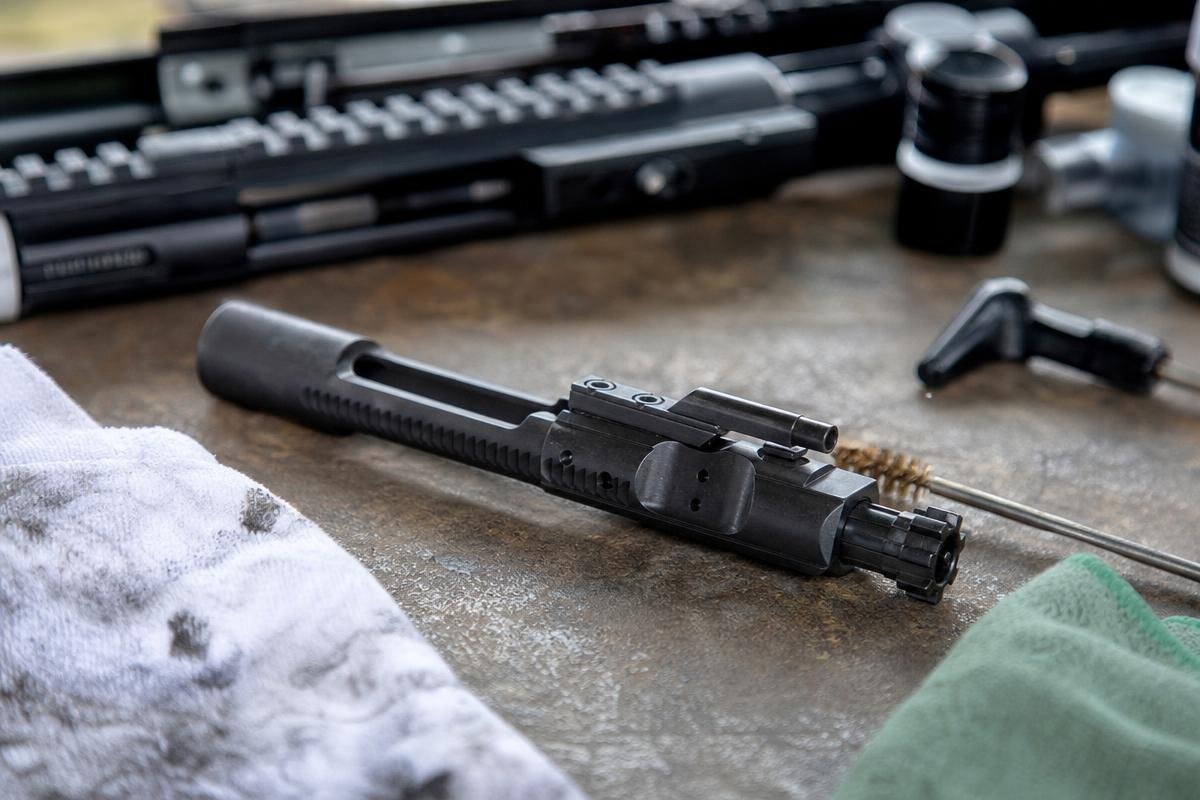
Yes. A phosphate carrier should be lubricated on the specified bearing surfaces. Its textured surface can retain an oil film, but the carrier should not be operated dry.
Manganese phosphate is common on mil-spec-style carriers because it is practical, durable in service, and economical. The finish does not create a seal against moisture, so a stored rifle should be cleaned and lightly protected after exposure to rain, humidity, sweat, or wet range conditions.
Why the Matte Surface Holds Lubricant
The phosphate texture gives lubricant small surface areas to cling to. Apply oil to the carrier rails, cam pin, bolt body, and other bearing surfaces according to the lubricant manufacturer's directions. The gas rings and bolt should not be treated as maintenance-free simply because the carrier retains oil.
During cleaning, focus on function rather than making every part look new. Remove loose fouling from the carrier, bolt tail, locking lugs, extractor area, and firing-pin channel. Inspect the cam pin for unusual wear, confirm the gas rings are intact, and look for signs that the gas key has shifted or the staking is inadequate.
Who a Phosphate Carrier Fits Best
A phosphate carrier fits a budget-conscious range rifle, a conventional build on a normal lubrication schedule, or a shooter who prefers the familiar matte appearance. It is also a practical option for training use when the owner is willing to keep the action wet enough for the firing schedule.
Finish alone does not establish mil-spec status. Carrier steel, bolt material, heat treatment, dimensions, gas-key staking, testing practices, and assembly details all matter. For build questions, contact our team at (888) 706-0633.
Why Are Nitride BCGs Easier to Clean and More Corrosion Resistant?
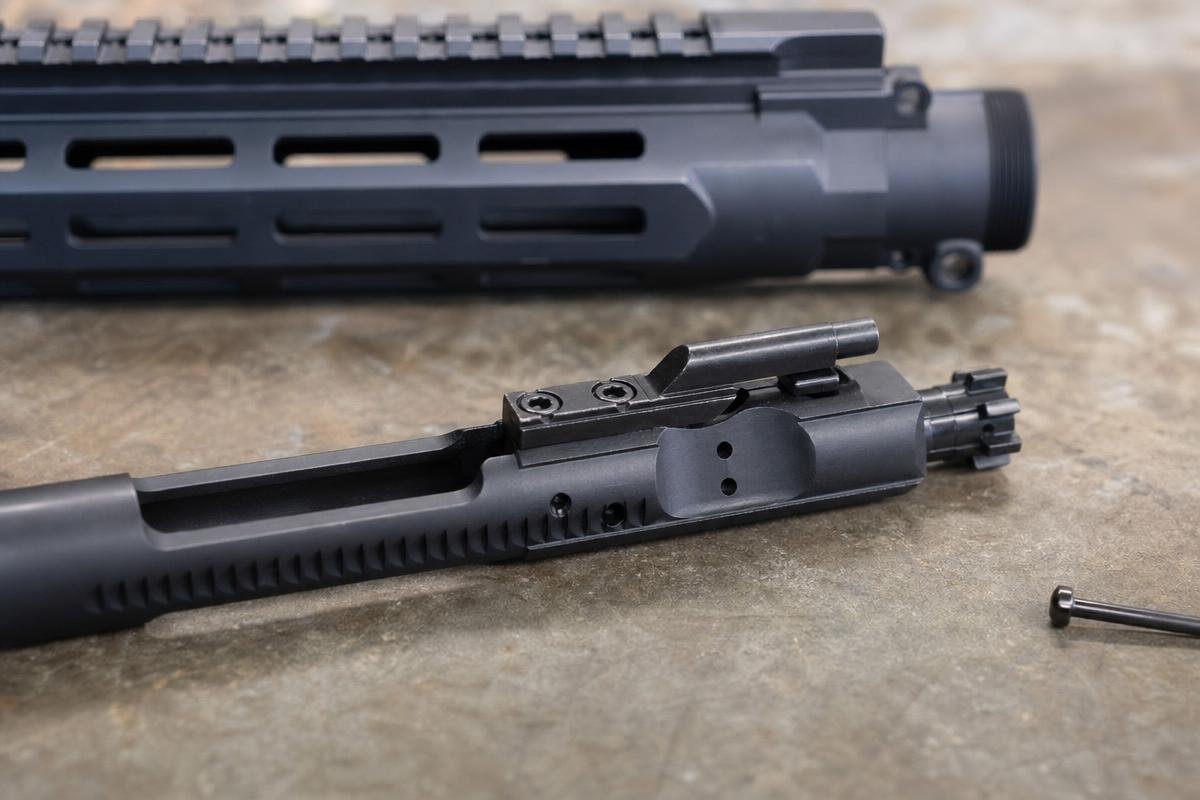
Nitride-treated carriers are generally easier to wipe down because their smoother surface gives carbon less texture to cling to than phosphate. The treatment also provides better corrosion resistance, which can be useful for rifles carried or stored in humid North Texas conditions, provided the rifle is still cleaned and lubricated.
Nitride does not make a carrier dry-running. Lubricant remains necessary on the bolt, cam pin, gas rings, carrier rails, and other moving contact points. A suppressed rifle can deposit more carbon and blowback residue into the action regardless of finish, so inspection and lubrication intervals should be based on actual use.
What QPQ Nitride Does to the Surface
QPQ nitride is a thermochemical process, commonly described as salt-bath ferritic nitrocarburizing with post-treatment steps. It changes the outer surface of the steel instead of depositing a comparatively thick coating over it.
That process is associated with improved surface hardness, wear resistance, and corrosion resistance. It does not eliminate the need for careful dimensional control before treatment, however. A rough internal carrier bore, poor gas-key fit, improperly cut cam-pin path, or out-of-spec bolt cannot be fixed by a black nitride appearance.
When Nitride Makes Sense
Nitride makes sense for a frequently used range rifle, a rifle stored where moisture may be present, or a build where simpler cleanup is a priority. It is often a practical middle ground between a standard phosphate carrier and specialty plated options.
For a phosphate vs. nitride BCG decision, choose nitride when corrosion resistance and easy wipe-down maintenance rank higher than the oil-retaining texture and lower upfront cost of phosphate. Keep it lubricated, inspect the gas key and extractor periodically, and confirm compatibility with the rest of the rifle.
Where Nickel Boron and Chrome Fit in the Finish Decision
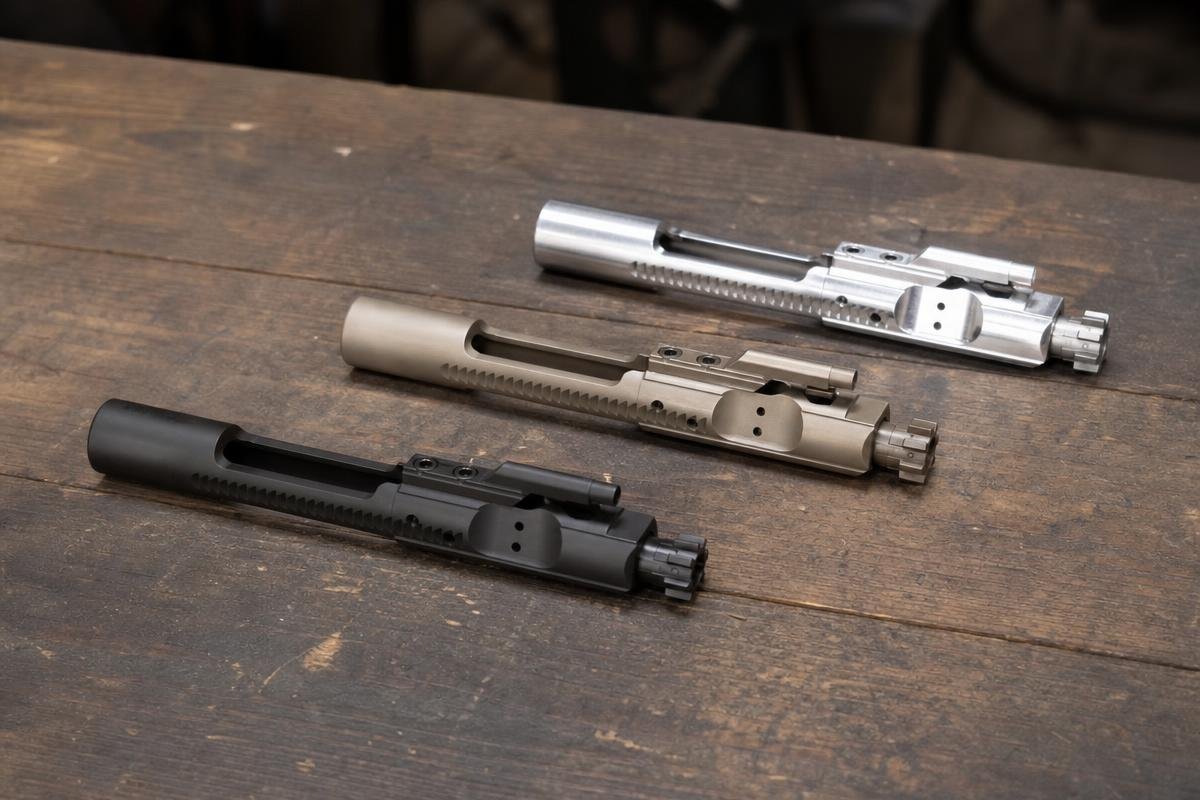
Nickel Boron and chrome deserve consideration alongside phosphate and nitride, but neither is an automatic upgrade. Their real value depends on coating quality, dimensional consistency, intended use, and whether the rest of the assembly meets the same standard.
Nickel Boron
Nickel Boron is often selected for its light silver appearance and slick surface feel. Fouling can be easier to see and may wipe away readily, but the finish can discolor with heat and carbon even when it remains serviceable. Appearance alone is not a reliable indicator of wear or cleanliness.
Because Nickel Boron is an applied coating, surface preparation and thickness control are important. Excessive or inconsistent buildup can affect close-tolerance areas, while poor adhesion can create problems that a quality phosphate or nitride carrier would avoid. It should still be lubricated at the bearing surfaces and maintained like any other carrier group.
Chrome, DLC, NP3, and QPQ Terms
Chrome is a hard, corrosion-resistant plated finish used on some carrier applications. A quality chrome carrier can be easy to clean, but chrome does not by itself make a carrier suitable for high-round-count, suppressed, or defensive use. Those roles depend on the complete assembly, the gas system, ammunition, magazines, lubrication, and function testing.
DLC is a dark, low-friction carbon coating. NP3 is an electroless nickel finish with PTFE particles. QPQ, often listed on nitride carriers, identifies the nitrocarburizing process rather than a separate finish competing with nitride.
Before selecting a bolt carrier group, check the fundamentals:
- Correct bolt steel and heat treatment
- Properly staked gas key
- Consistent carrier and bolt dimensions
- Correct extractor, spring, and insert components
- Compatibility with your caliber and gas system
Need help sorting BCG finishes and build compatibility? Call us at (888) 706-0633.
Choose the Right BCG Finish for Your Rifle's Use Case
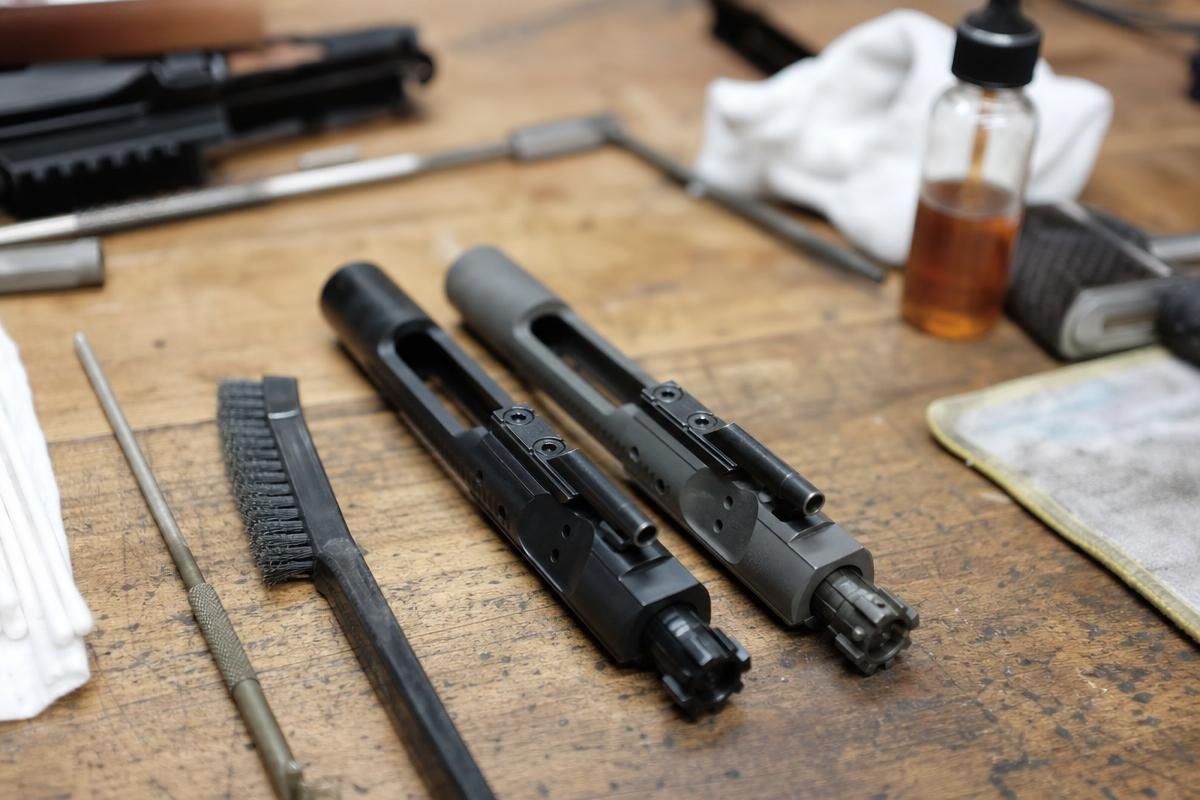
Choose the finish around the rifle's actual use and your maintenance habits. Phosphate remains a sound value choice, nitride suits many general-purpose builds, Nickel Boron appeals to buyers who want a light-colored slick finish, and chrome can be appropriate when a properly made plated carrier is available.
Choose Phosphate
Choose phosphate for a conventional or budget-focused build if you plan to maintain a visible lubricant film and do not mind more hands-on cleanup. It remains a practical choice for regular range use and training, especially when the balance of the build budget is better spent on a quality barrel, magazines, ammunition, and proper assembly.
For wet storage or exposure to rain and humidity, clean and protect phosphate promptly. The finish holds oil effectively, but corrosion resistance depends heavily on that protective oil coverage.
Choose Nitride
Choose nitride if you shoot often, store your rifle where moisture is a concern, or prefer a smoother surface that generally needs less brushing after range use. It is a strong fit for a general-purpose rifle and can be convenient for owners who clean after frequent sessions.
For suppressed use, nitride may simplify cleanup, but it does not reduce the need to monitor fouling, lubrication, gas-ring condition, extractor wear, and the cam-pin path. Suppressors change the operating environment, so tune and maintain the complete system accordingly.
Keep the Whole Rifle Compatible
For defensive or duty-style use, finish should be low on the priority list after reliability fundamentals. Start with a quality BCG, then confirm compatible magazines, correct ammunition, proper assembly, safe headspace verification, and function testing before relying on the rifle.
No finish replaces checking caliber, bolt face, upper configuration, gas system, and buffer setup. A 5.56 bolt should match a compatible upper, such as our 5.56 NATO complete uppers. Receiver extension and handguard choices are separate from BCG finish, though every component still needs to fit the completed rifle correctly.
If you need help matching parts for a build, contact our team before ordering.
An Online Source for AR-15 Parts and Build Information
AR15Parts.com is an online retailer shipping from 4000 Texoma Pkwy, Denison, TX 75020. Customers nationwide can contact our team by phone or through our contact page with their build details before ordering, and use the same product-question support for compatible-component research.
Have Your Build Details Ready
Have your cartridge, barrel length, gas system length, upper configuration, and buffer setup ready for the discussion. Carrier finish affects cleaning and corrosion resistance, but it does not replace correct bolt, barrel extension, gas, and buffer compatibility.
A phosphate or nitride comparison applies to both 5.56 NATO and 300 Blackout builds. Your bolt must still match the cartridge and barrel extension. Review our AR-15 bolt carrier groups alongside your upper, barrel, and buffer configuration before ordering.
Ask Before You Order
If you need help sorting out a bolt carrier group, upper, barrel, or buffer combination, contact AR15Parts.com with your build details. You can also call (888) 706-0633 for product questions and compatible-component research.
Frequently Asked Questions
Is Phosphate or Nitride Better for an AR-15 BCG?
Neither finish is universally better. A nitride vs phosphate BCG choice comes down to maintenance and conditions. Phosphate favors oil retention and traditional value. Nitride offers stronger corrosion resistance and a surface that usually cleans with less effort.
Do Phosphate and Nitride BCGs Need Lubrication?
Yes, every bolt carrier group needs appropriate lubrication on its bearing surfaces. Phosphate BCG oil retention helps hold lubricant, but it should never be treated as a dry-running finish. Nitride feels smoother and sheds fouling more easily, yet it still needs oil on the bolt, cam pin, gas rings, and carrier rails.
Is Nickel Boron Easier to Clean Than Nitride?
Nickel Boron’s light surface can make fouling easier to see. Cleaning behavior depends on coating quality, surface finish, fouling, and maintenance products. A Nickel Boron vs nitride BCG decision should still account for coating quality, carrier dimensions, and regular cleaning. No finish corrects poor gas key staking or a worn extractor.
Does BCG Finish Affect Accuracy?
BCG finish is not a primary accuracy driver. Barrel quality, ammunition consistency, optic setup, trigger control, and shooter input matter far more. A properly functioning carrier supports reliable cycling, which matters for target shooting and self-defense, but it does not turn an average barrel into a match-grade barrel.
Will Any AR-15 BCG Work With Any Upper?
No. Match the bolt face and bolt to the cartridge family, then confirm carrier dimensions and upper configuration. A standard 5.56 bolt works with 5.56 NATO and .300 Blackout, but not cartridges requiring a different bolt face. Compare compatible options in our AR-15 bolt carrier groups before ordering.
What Should I Check Before Buying a BCG?
Before ordering, confirm the caliber, bolt face, upper and gas-system compatibility, buffer setup, bolt material, extractor configuration, and gas-key staking. Browse our AR-15 bolt carrier groups or call (888) 706-0633 for help matching a carrier to your build.
Ready to Get Started with AR15Parts.com?
Call (888) 706-0633 to speak with our team directly. We're ready to answer your questions, walk you through your options, and help you find the right solution for your needs. Whether you're just starting to plan or ready to move forward, we'll make the process simple and stress-free.
Reach out today and let's talk about how we can help.