
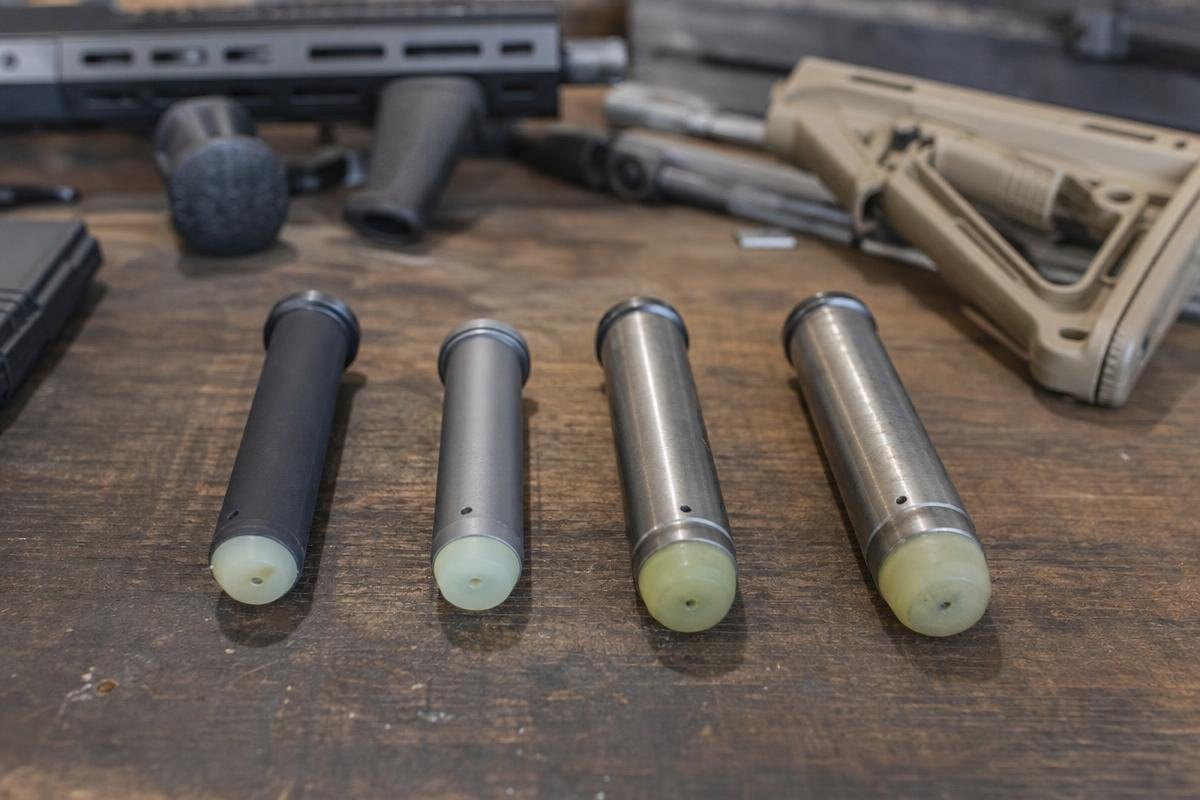
Getting the AR-15 buffer weight wrong costs you reliability. Too light and your bolt carrier group slams back hard, battering your lower and causing failures to feed. Too heavy and the carrier drags, giving you failures to eject. We offer buffer options from carbine weight through H3 and beyond, shipping from our Denison, TX facility. Below, we cover common standard and heavy buffer options so you can match the right weight to your gas system, barrel length, and build. Need help picking the right buffer for your build? We can point you in the right direction.
Key Takeaways
- AR-15 buffer weight directly controls bolt carrier velocity and determines whether your rifle cycles reliably.
- Carbine buffers run approximately 3.0 oz; H1 through H3 heavy buffers range from 3.8 oz up to 5.4 oz.
- Suppressed builds typically require an H2 or H3 buffer to manage the increased back-pressure from a can.
- Gas system length, barrel length, and ammunition type all factor into choosing the correct buffer weight.
- Swapping buffer weight is one of the least expensive ways to tune a cycling problem on an existing build.
Why Buffer Weight Is the Variable Most Builders Overlook
Most AR-15 builders install a mil-spec carbine buffer at 3 oz and never touch it again. That works until you swap uppers, change calibers, or thread on a suppressor. At that point the buffer weight becomes the variable controlling how fast your bolt carrier group cycles, and the wrong weight causes real problems: short-stroking, failure to feed, brass getting beaten against the feed ramp, or a BCG slamming home hard enough to accelerate wear on the carrier key and bolt face.
AR15Parts.com helps builders compare buffers, springs, and complete uppers for different configurations. A factory carbine buffer can be a baseline, but the correct setup depends on the complete gas and recoil system.
We cover common AR-15 buffer categories by ounce, receiver-extension compatibility, spring pairing, suppressed-build considerations, and gas-system diagnostics. If your rifle seems to function fine, that is not the same as running the right buffer. Brass condition, felt recoil, and long-term BCG wear tell the real story. The next section explains exactly how the buffer controls that cycle.
What Does an AR-15 Buffer Actually Do?
The Buffer's Role in the Cycle of Operations
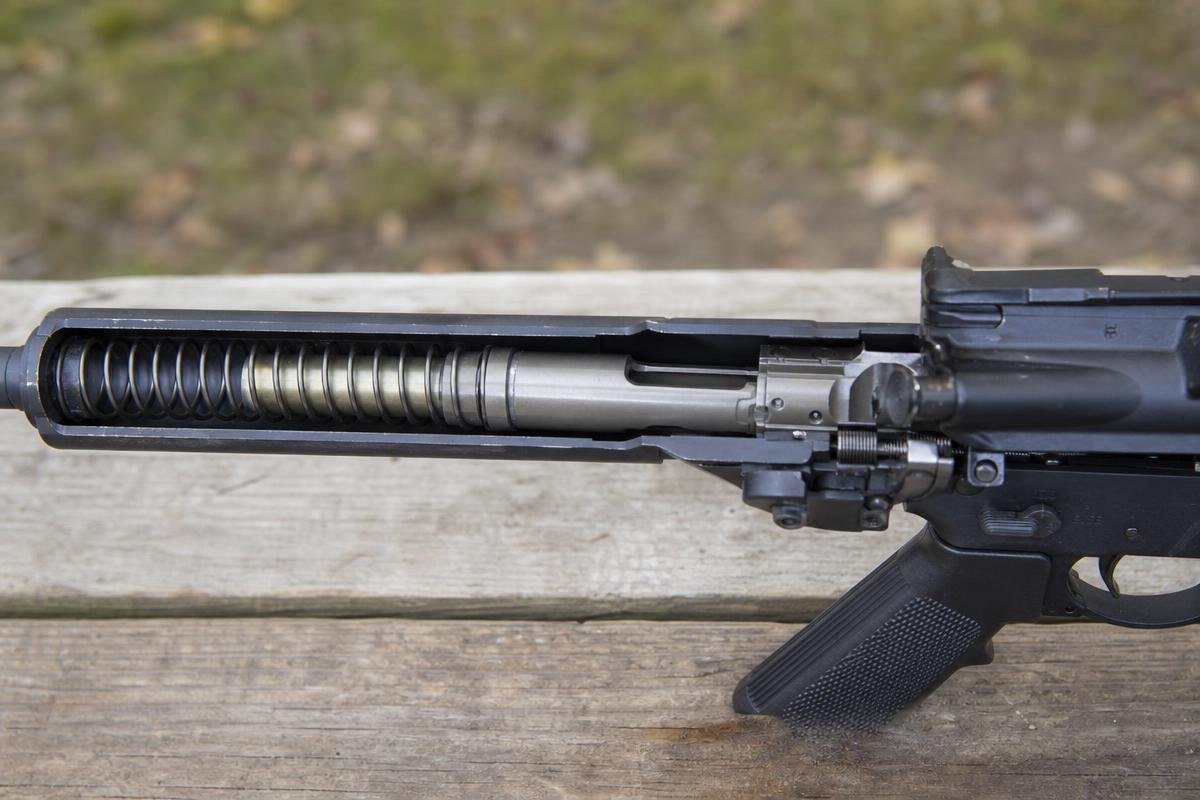
When your AR-15 fires, high-pressure gas bleeds off the barrel through the gas port and travels back through the gas tube into the bolt carrier group. That gas drives the BCG rearward. The buffer sits inside the buffer tube directly behind the BCG and takes that rearward impact. Its weight slows the BCG's travel, giving chamber pressure time to drop to a safe level before the bolt unlocks.
Buffer mass is essentially a timing tool. Add mass and the carrier accelerates more slowly, extracting later in the pressure curve and returning to battery with less violence. Remove mass and the whole cycle speeds up. The goal is a carrier that travels far enough to reliably strip a fresh round and lock the bolt open on an empty magazine, without hammering the rear of the extension. Getting that balance right depends on your gas system, barrel length, and the ammunition you feed it.
Buffer Tube Types: Carbine, Rifle, and Pistol
Carbine receiver extensions vary in stock-position count; the commonly cited 1.148-inch mil-spec dimension is an outside diameter, not an internal diameter. Carbine and rifle systems use different extension depths, buffer body lengths, and springs. Mixing incompatible buffer lengths can permit excessive carrier travel and damage, so follow the component manufacturer’s complete-system specifications.
Pistol configurations often use carbine-dimension receiver extensions, buffers, and springs; gas-system length does not determine the receiver-extension type. A shoulder stock on a short-barreled firearm can change its legal classification, so verify current federal and state requirements and follow the component manufacturer’s specifications.
AR-15 Buffer Weight Chart: Common Categories by Ounce
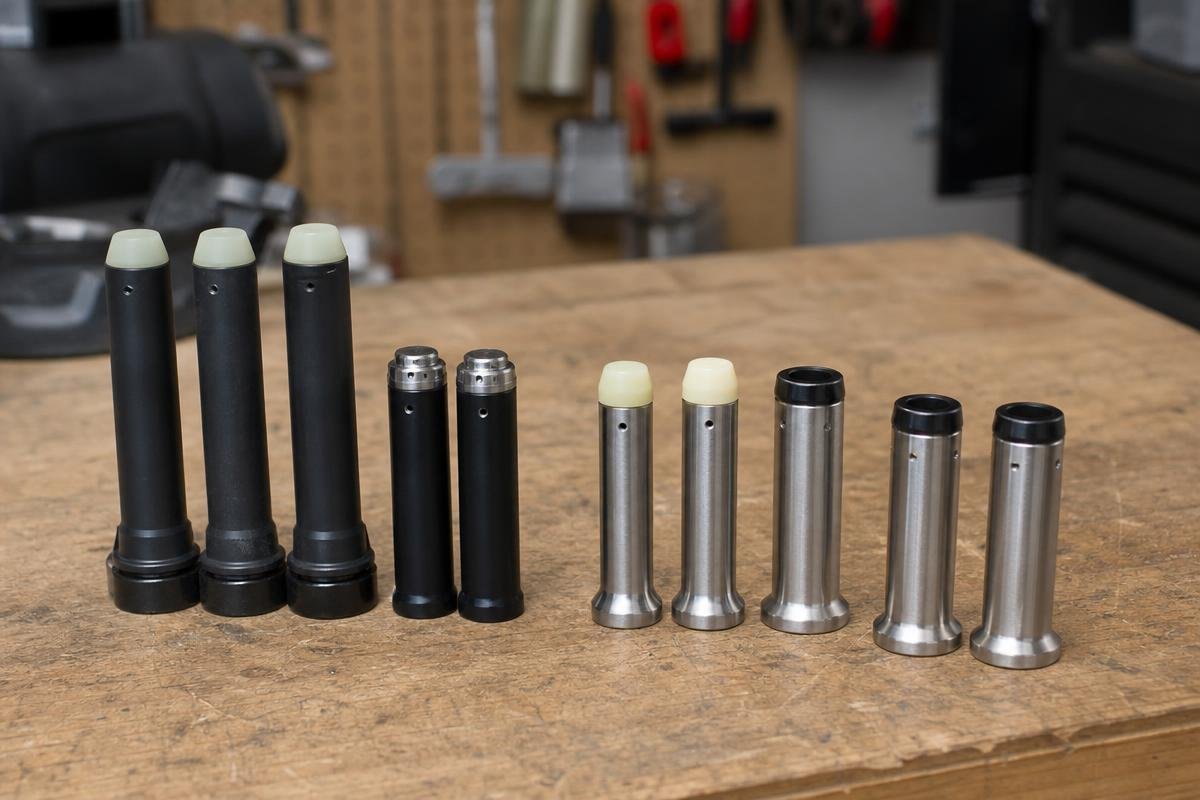
Many conventional AR-15 buffers are differentiated by the number of steel and tungsten weights inside the body, while specialty systems use other designs. The table below gives you a reference for common types, approximate manufacturer-dependent weight, receiver-extension family, and typical use.
| Buffer Type | Weight (oz) | Gas System | Ideal Use Case | Notes |
|---|---|---|---|---|
| Carbine | 3.0 | Carbine extension | Standard factory builds | Three steel weights; mil-spec baseline |
| H1 | 3.8 | Carbine extension | Mildly overgassed carbines | One tungsten, two steel weights |
| H2 | 4.6 / 4.7 | Carbine extension | Suppressed-ready builds | Two tungsten, one steel weight |
| H3 | Approximately 5.4 | Carbine extension | Heavily overgassed or suppressed builds | Three tungsten weights in a short carbine body |
| Rifle | 5.0 / 5.4 | Rifle extension | A2-style fixed stock builds | Longer body; not compatible with carbine tube |
| Pistol / Specialty | 5.0 / 8.5 | System-specific | Short-barreled and SBR builds | Includes JP SCS-style systems |
A note on the 5.0 oz overlap: An H3 and a rifle buffer can both land near 5.0 oz, but they are not interchangeable. The H3 packs three tungsten weights into a short carbine-length body sized for a carbine or pistol tube, while the rifle buffer uses a longer body sized only for a rifle-length extension. Same weight on paper, different physical length and different tube. Always match the buffer body to your tube, not just the ounce rating.
Carbine Buffer (3.0 oz)
The carbine buffer ships in most factory AR-15s and uses three steel weights for a total of 3.0 oz. It is the mil-spec baseline for carbine and mid-length gas systems running standard pressure ammunition.
H1 Buffer (3.8 oz)
The H1 swaps one steel weight for a tungsten weight, bringing the total to 3.8 oz. It may be an appropriate test when other evidence indicates excessive carrier speed, but brass landing past 4 o’clock alone can point to weak or delayed ejection and does not justify adding buffer weight.
When Should You Use an H2 Buffer? (4.6, 4.7 oz)
The H2 runs two tungsten weights and one steel weight. Ejection at 3 to 4 o’clock is often workable. Consider H2 only after the upper or component manufacturer’s guidance and other diagnostics indicate excessive carrier speed. It also serves as a suppressed-ready baseline for 300 Blackout complete uppers built for suppressed configurations.
H3 Buffer (Approximately 5.4 oz)
Three tungsten weights commonly bring an H3 to approximately 5.4 oz, although manufacturer specifications vary. Use it on carbine-length suppressed builds or any setup that runs excessively hot even after an H2 fails to tame the cycle.
Rifle Buffer (5.0, 5.4 oz)
The rifle buffer is designed for rifle-length receiver extensions and compatible fixed-stock recoil systems; gas-system length alone does not determine buffer type. Its longer body does not fit a carbine buffer tube, so confirm your stock configuration before ordering.
Pistol and Specialty Systems (Manufacturer-Specific)
Short-barreled builds vary widely in gas and recoil-system requirements. The JP Silent Captured Spring is a mechanical captured-spring system, not a hydraulic buffer. Select specialty systems by receiver-extension compatibility and manufacturer guidance rather than a universal weight range. Ready to increase your buffer weight? Shop our in-stock buffers or get a tuning recommendation matched to your gas system.
How to Pair Your Buffer Weight with the Right Spring
Understanding Spring Rate and Coil Count
Your buffer spring does half the work. A standard mil-spec carbine spring runs 37 to 42 coils and is designed around a 3 oz carbine buffer. Change the buffer weight without thinking about the spring and you may be leaving reliability on the table. Rifle-length systems use a longer spring, roughly 41 to 43 coils and about 13 inches uncompressed. That spring is not interchangeable with a carbine spring. Swapping them creates cycling problems that no buffer weight change will fix.
Matching Spring Rate to Buffer Weight
In most standard builds, a mil-spec spring handles H1 and H2 buffers without issue. The heavier buffer slows the carrier on its own, and the spring keeps up. Where this breaks down is in suppressed configurations or low-mass BCG setups. Suppressors can increase backpressure, while low-mass carrier systems are normally tuned with reduced or adjustable gas. Spring selection must account for the complete configuration.
That is where an upgraded spring from Sprinco, JP Enterprises, or a Tubb Flatwire spring becomes worth the cost. If you are running a 300 Blackout complete upper for a suppressed configuration, pairing an H2 buffer with a heavier spring is a common and reliable starting point.
When to Replace Your Buffer Spring
Inspect the spring against the manufacturer’s minimum free-length and condition specifications, and replace it if it is kinked, damaged, or out of specification. Normal spring noise is not proof of wear. Diagnose short-stroking from the complete ammunition, gas, carrier, buffer, spring, magazine, lubrication, and fouling system.
Choosing an AR-15 Buffer Weight for Suppressed Builds
How a Suppressor Changes Gas System Behavior
Adding a suppressor to your AR-15 increases backpressure in the gas system. That extra pressure speeds up carrier rearward travel, which means faster unlock, harder extraction, more felt recoil, and accelerated wear on your BCG and buffer face. The rifle cycles faster than it was designed to. A standard 3 oz carbine buffer may or may not suit a suppressed build, depending on port size, ammunition, suppressor design, dwell time, carrier mass, spring, and receiver extension.
Suppressor possession and use require compliance with current federal and state law. Verify current ATF and Texas requirements before configuring or using a suppressed firearm.
Buffer Weight Recommendations for Suppressed Rifles
The right AR-15 buffer weight for suppressed builds depends on barrel length and gas system. Here are the baseline starting points:
- Suppressed 16-inch mid-length builds (.223 Wylde, 5.56): Use the upper, suppressor, and recoil-system manufacturers’ recommendations as the starting point; H2 may suit some configurations but is not universal.
- Suppressed short-barreled systems: Start with the upper, suppressor, and recoil-system manufacturers’ recommendations, then change one variable at a time after confirming safe function.
- Pistol-length gas systems with a suppressor: Buffer requirements remain receiver-extension- and manufacturer-specific. Do not assume that a dedicated heavy buffer is required solely because the gas system is pistol length.
300 Blackout is a common suppressed caliber. Follow the exact upper, suppressor, ammunition, receiver-extension, spring, and buffer manufacturers’ guidance rather than adding buffer weight from gas-system length alone.
Adjustable Gas Blocks as a Second Tuning Variable
Buffer weight alone may not fully solve overgassing on a suppressed build. An adjustable gas block gives you a second tuning variable. Reducing gas flow at the block lets you run a lighter buffer while still controlling cycle speed. For precision suppressed builds, this is the preferred approach. Dial the gas down, then find the lightest buffer that still cycles reliably. That combination reduces bolt velocity, extends component life, and keeps felt recoil manageable.
Diagnosing Overgassing and Undergassing in Your AR-15
Ejection pattern is one diagnostic clue, but ammunition, extractor and ejector condition, magazines, lubrication, fouling, suppressor behavior, and gas and recoil-system setup must also be checked. Watch where spent cases land after each shot. Consistent ejection at 3 to 4 o'clock means your AR-15 buffer weight and gas system are in a workable range. A pattern outside that window can prompt a broader diagnosis, but it does not identify one cause or one buffer correction by itself.
Signs Your Rifle Is Overgassed
Overgassing is the more common condition in factory-configured carbines. The carrier is moving rearward faster and harder than it needs to.
- Brass ejecting at 1 or 2 o'clock, or straight back toward your face
- Torn or heavily marked case rims after ammunition and chamber-pressure concerns have been ruled out
- Carrier contacting the buffer face harshly or showing excessive bolt bounce
- Excessive felt recoil relative to the caliber
- Accelerated wear on the bolt cam pin and carrier key
If primer flattening or cratering appears, stop testing and rule out ammunition, chamber pressure, headspace, firing-pin, and bolt factors before changing buffer weight.
Signs Your Rifle Is Undergassed
Undergassing usually appears after adding a heavier buffer without compensating elsewhere. The bolt is not traveling far enough rearward to complete the cycle.
- Failure to fully cycle or feed the next round
- Bolt not locking back on the last round
- Short-stroking and stovepipe jams
Buffer Weight as the First Tuning Variable
Before changing any buffer or gas component, unload and clear the firearm, wear eye protection around the compressed action spring, and follow the upper and component manufacturers’ specifications. Seek a qualified gunsmith for pressure signs or unexplained malfunctions. If brass ejects forward of 3 o’clock with harsh cycling, first rule out ammunition and pressure problems, then test one manufacturer-approved buffer or gas change at a time. If you added a heavier buffer and the rifle started short-stroking, step back down one increment or open the gas block slightly. One variable at a time. If you are building a new rifle and want a verified starting point, browse our complete AR-15 rifles ready to configure to see how we spec buffer weights from the factory.
Not sure which AR-15 buffer weight your build needs? Call us at (888) 706-0633 and our team will walk you through it.
Specialty Buffer Systems: A5, Hydraulic, and Low-Mass Options
Standard buffer weights cover most builds, but three specialty systems exist for situations where a simple weight swap is not enough. Each one addresses a specific mechanical problem that a heavier or lighter buffer alone cannot fix.
A5 Buffer System
VLTOR states that the A5 was developed at the request of the U.S. Marine Corps. It uses an intermediate-length receiver extension approximately 3/4 inch longer than a carbine extension, an A5 buffer, and a rifle-length action spring. A5 components must be selected as a compatible system, and current buffer weights vary by model.
Hydraulic and Captured Buffers
Hydraulic buffers use fluid damping, while captured-spring systems use a mechanical spring-and-weight assembly. The JP Silent Captured Spring is a captured-spring system, not a hydraulic buffer. Verify each product’s receiver-extension compatibility and installation requirements.
Low-Mass Buffers for Competition
Competition shooters running a compensator sometimes drop to a sub-carbine buffer as light as 1.5 oz to speed up cycling and tighten split times. It only works on a rifle with a properly tuned adjustable gas block. Low-mass buffers increase bolt velocity and accelerate AR-15 parts wear on the carrier. They are a tuned-system tool, not a general reliability upgrade.
Buffer Weight for Common AR-15 Calibers and Build Types
5.56 NATO and .223 Wylde Builds
A standard buffer weight of 3 oz is the mil-spec baseline for most 16-inch builds. Factory uppers are typically overgassed for broad ammo compatibility, so brass ejecting at the 1 to 2 o'clock position or excessive bolt bounce is common. An H1 (3.8 oz) or H2 (4.6 oz) is the most common first upgrade. If you are building or buying a .223 Wylde complete upper, start with an H1 and adjust from there.
300 Blackout and Subsonic Builds
Many 300 Blackout uppers use pistol-length gas, but configurations vary. Supersonic and subsonic loads can require different tuning, and buffer selection must match the receiver extension, spring, carrier, gas port, suppressor, and upper manufacturer’s guidance. An adjustable gas block can reduce available gas but cannot add gas beyond the barrel’s port supply.
An adjustable gas block can reduce gas for a specific load, but switching between subsonic and supersonic ammunition may still require readjustment or another configuration change. See our 300 Blackout complete uppers for suppressed configurations built around this gas system.
6.5 Grendel, 6mm ARC, and Larger-Bore Calibers
The 6.5 Grendel complete uppers we carry use configuration-specific gas systems. Follow the upper manufacturer’s recoil-system guidance rather than assuming a standard carbine or H1 buffer fits every build. Larger-bore calibers such as .458 SOCOM and .50 Beowulf have configuration-specific recoil and gas requirements. Follow the upper or barrel manufacturer’s buffer and spring recommendations rather than choosing a heavy buffer from caliber alone. Check our 458 SOCOM complete uppers page for build-specific component notes.
AR-15 Buffer Weight for Shooters in Denison, TX
Ammunition Temperature and Cycling Conditions
High ammunition temperatures can affect cycling behavior. If you see increased recoil or primer deformation, stop testing and rule out ammunition, chamber pressure, headspace, firing-pin, and bolt factors before changing buffer weight.
After dusty range days, inspect and clean your buffer, spring, and receiver extension according to the component manufacturers’ guidance.
Build Types and Buffer Selection
For 16-inch mid-length 5.56 NATO or .223 Wylde builds, buffer choice depends on the complete gas and recoil system. For those builds, H1 or H2 may suit some configurations, but verify manufacturer guidance and function before treating either as an upgrade.
Competitive 3-gun shooters running compensators and adjustable gas blocks can usually stay with a standard carbine or H1 buffer once the gas system is properly dialed. If you are building from scratch and want a turnkey starting point, browse our complete AR-15 rifles ready to configure. AR15Parts.com ships from 4000 Texoma Parkway, Denison, TX 75020. Call us at (888) 706-0633 with build-specific questions.
Frequently Asked Questions
What is the standard AR-15 buffer weight?
The mil-spec standard is the carbine buffer at 3.0 ounces. It uses three steel weights inside an aluminum body. Most factory AR-15s ship with this buffer. Many shooters find that stepping up to an H1 or H2 improves reliability and reduces felt recoil without any other changes to the rifle.
What is the difference between an H1, H2, and H3 buffer?
The difference comes down to tungsten weight count. H1 uses one tungsten weight and two steel weights, totaling 3.8 oz. H2 uses two tungsten and one steel, landing at 4.6 to 4.7 oz. H3 uses three tungsten weights and commonly weighs approximately 5.4 oz, although manufacturer specifications vary. Heavier buffers slow the carrier's rearward travel, which is useful for overgassed rifles and suppressed builds.
Do I need a heavier buffer for a suppressed AR-15?
A suppressor can change backpressure and carrier velocity, but the required buffer depends on the suppressor, gas system, ammunition, carrier, spring, and receiver extension. Start with manufacturer guidance and confirm safe function one change at a time.
Can I use a carbine buffer in a rifle-length buffer tube?
No. Carbine and rifle receiver extensions differ primarily in internal depth and require compatible buffer body lengths and springs. An incompatible short buffer can allow excessive carrier travel and damage, not merely rattle. Always match the buffer to the tube it is designed to run in.
How do I know if my AR-15 buffer is too heavy?
The most common sign is short-stroking. The bolt does not travel far enough rearward to strip the next round from the magazine, causing a failure to feed. The bolt may also fail to lock back on the last round. Step back one buffer increment or open your adjustable gas block slightly and retest.
What buffer weight should I use for 300 Blackout?
Many 300 Blackout uppers use pistol-length gas, but configurations vary. Select the buffer, spring, and receiver extension from the upper and recoil-system manufacturers’ guidance, then verify both supersonic and subsonic function safely. If you are building a suppressed configuration, see our 300 Blackout complete uppers for suppressed configurations for a ready-to-run starting point.
If you are building or tuning an AR-15 and want to confirm the buffer, spring, and gas system are matched correctly for your upper and caliber, our team at 4000 Texoma Parkway, Denison, TX 75020, is a phone call away. Reach us at (888) 706-0633 with your build details and we will point you toward the right setup before you order.
Ready to Get Started with AR15Parts.com?
Call (888) 706-0633 to speak with our team directly. We're ready to answer your questions, walk you through your options, and help you find the right solution for your needs. Whether you're just starting to plan or ready to move forward, we'll make the process simple and stress-free. Reach out today and let's talk about how we can help.