
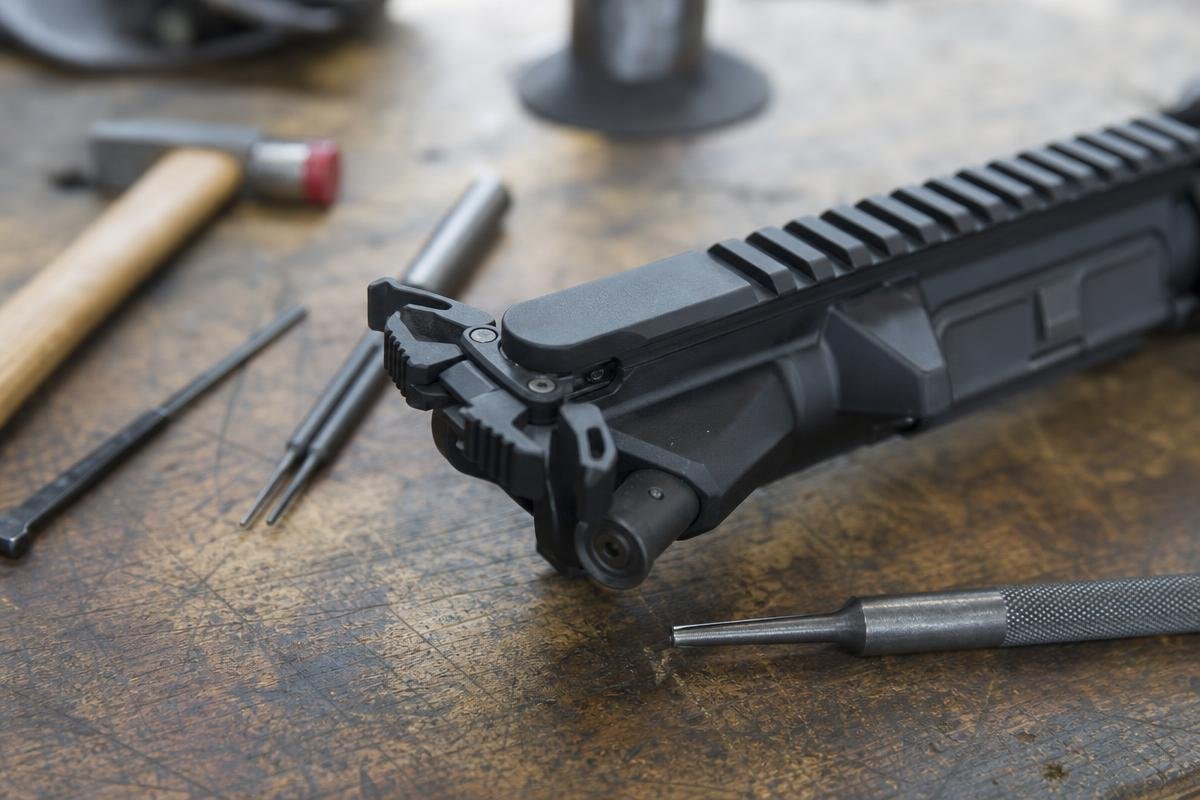
The AR-15 charging handle is one of the most handled parts on your rifle, and most shooters don't replace it until it fails. We stock charging handles from established manufacturers and ship them nationwide from our Denison, TX facility. If you run your AR in dusty bottomland along the river or at an outdoor range in July heat, the handle, latch design, material, and finish matter more than most people expect. Need help picking the right charging handle for your build or caliber? Contact our team.
Key Takeaways
- The AR-15 charging handle comes in standard GI-pattern, extended latch, and ambidextrous designs, each suited to different shooting styles and use cases.
- 7075-T6 aluminum with Type III hard-coat anodizing or Cerakote holds up better than Type II anodizing in high-heat, high-humidity environments.
- Ambidextrous charging handles give a real field advantage in dense cover where one-handed operation is common.
- Latch size and gas blowback management are the two most important features to evaluate before buying.
Most builders pick an AR-15 charging handle once, accept whatever ships with the upper, and never think about it again. That works until it doesn't. A stuck case, a gas-to-the-face problem, or a one-handed operation requirement in the field will make you wish you had paid attention to this part.
Standard military-specification and ambidextrous charging handles differ in their materials, latch geometry, gas-deflection features, and fit for a particular build. These differences matter across a wide range of AR-15 calibers and build types, and we ship nationwide. The information here applies whether you are building a range rifle or a field gun for bottomland hog hunting along the Red River.
What Does an AR-15 Charging Handle Actually Do?
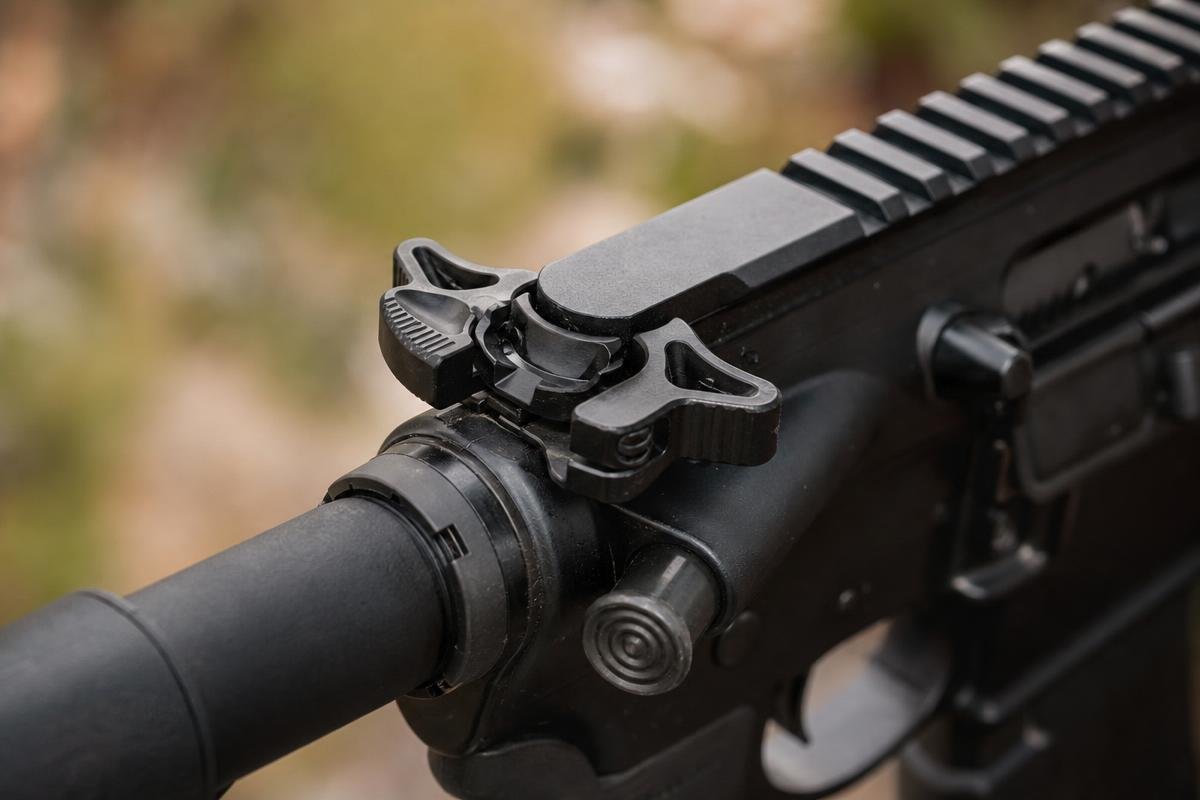
The AR-15 charging handle is a non-reciprocating control that rides in a dedicated track inside the upper receiver. You pull it rearward to move the bolt carrier group, then release it. That is the full extent of its mechanical contact with the BCG during normal operation.
The Charging Handle's Role in the Operating Cycle
One of the most common points of confusion for new AR-15 owners is that the charging handle does not move when the rifle fires. On an AK-pattern rifle, the charging handle is attached to the bolt carrier and cycles with every shot. On the AR-15, the handle stays put. Gas pressure cycles the BCG directly, and the charging handle sits completely clear of that process.
You use the AR-15 charging handle in three specific situations: charging the rifle from a closed bolt, locking the bolt to the rear for chamber inspection or malfunction clearance, and performing a press-check to confirm a round is chambered. If you are running an AR upper in any caliber, the charging handle function is identical across all of them.
What Happens If the Charging Handle Fails
Two failure modes show up most often under hard use. First, latch breakage. A broken latch means you cannot hook the handle to retract the BCG with one hand. That turns a simple malfunction clearance into a two-handed problem at the worst possible moment. Second, receiver-track binding from an undersized or out-of-spec handle body. A handle that binds in the track can interfere with manual charging and should be inspected or replaced.
Neither failure is dramatic, but both are avoidable. Buying a correctly dimensioned, in-spec handle is the straightforward fix.
Mil-Spec vs. Ambidextrous Charging Handles: Which Design Is Right for You?
The AR-15 charging handle market splits into two clear categories: single-latch GI-pattern designs and ambidextrous or extended-latch designs. Knowing which one fits your build keeps you from paying for features you don't need, or skimping on ones you do.
Standard Single-Latch Design
The standard GI-pattern AR-15 charging handle uses a 7075-T6 aluminum body with a single left-side latch from the shooter’s perspective. A latch pin and spring hold it in place. It fits any mil-spec upper receiver without modification and pricing varies by manufacturer and finish.
The design is proven and simple. No snag points, universal fit, low cost. The limitation is that the standard latch provides actuation from only one side. Under a low-mounted optic, that small latch surface is hard to grip, especially with gloves on. For a basic range rifle or a right-handed shooter running iron sights, it does the job without complaint.
Ambidextrous and Extended-Latch Designs
Two sub-types exist here and they are not the same thing. An extended-latch handle keeps a single latch but enlarges the paddle, giving you more surface area for one-handed or gloved operation. A true ambidextrous handle adds right-side actuation so either hand can operate it. Pricing varies for extended-latch and fully ambidextrous designs based on material, finish, and manufacturer.
The upgrade makes sense in specific situations: suppressed shooting where a gas-deflecting body keeps blowback out of your face, left-handed shooters, competition shooters running a thumb-over-bore grip, and duty or defensive use requiring one-handed manipulation. Hunters working the Red River bottomlands know this firsthand. In a tight blind or a stand in dense cover, one-handed charging is a real field advantage, not a range-only feature. Also consider how your bolt carrier group selection interacts with your charging handle choice, and confirm both parts fit your upper receiver.
Side-by-Side: Key Differences
- Latch count: The stock design has one left-side latch from the shooter’s perspective. A true ambidextrous design provides actuation from both sides.
- Latch width: The standard latch is narrow. Extended-latch paddles provide a wider gripping surface, with dimensions varying by product.
- Gas deflection: Most ambidextrous designs include a raised or flared body that redirects gas away from the shooter's face. Standard bodies do not.
- Pricing: Costs vary by design, material, finish, and manufacturer.
- Best use case: Standard for typical right-hand builds. Extended-latch for gloved or one-handed use. Full ambidextrous for left-handed shooters, suppressed builds, and duty applications.
For most standard AR-15 charging handle types, the stock design holds up fine. If your use case falls into any of the categories above, the mil-spec vs ambidextrous charging handle question answers itself based on how you actually shoot. Ready to shop? Browse our in-stock charging handles and matching parts today.
Charging Handle Materials: Aluminum, Titanium, and What the Difference Costs You
Most AR-15 charging handle upgrades come down to three variables: alloy grade, material type, and surface finish. Each one affects durability, weight, and how well the handle holds up in real use. Getting these right matters more than most shooters expect, especially if the rifle sees outdoor range time in Texas heat and humidity.
7075-T6 Aluminum
7075-T6 aluminum is the standard for a reason. 7075-T6 aluminum is generally stronger than 6061, which is why it is often preferred for hard-use parts. For a range rifle that stays clean and sees light use, 6061 is passable. For a hard-use build, a duty rifle, or anything that takes regular abuse, 7075-T6 is often preferred. The cost difference varies by manufacturer and finish, so compare current listings for the specific products under consideration.
When you are pairing a charging handle with an AR upper, the alloy grade of the handle should match the intent of the build. A precision upper deserves a 7075-T6 handle. A budget plinker upper can tolerate less.
Titanium Charging Handles
Titanium models can be engineered for lower weight, but material alone does not determine final weight; compare published weights for specific products. For an ultralight or competition build where every ounce counts, that is a real number. For most shooters, it is negligible. Pricing varies substantially by design and manufacturer. Titanium also does not anodize the same way aluminum does, so surface treatment options are more limited. If weight savings is not a specific goal of your build, 7075-T6 aluminum gives you better value.
Coatings and Finishes
Finish is not cosmetic on a rifle stored or used in this region. Summer humidity along the river corridor regularly exceeds 70%, and outdoor range sessions in Grayson County add fine dust and grit to the equation. Type III hard-coat anodizing is the military-specification standard. It provides solid corrosion resistance and surface hardness that holds up under those conditions. Type II anodizing is softer and degrades faster under prolonged UV exposure and heat. Cerakote adds color options and additional corrosion resistance, making it a practical choice for rifles that spend time in wet bottomland terrain.
Bare aluminum or Type II anodizing is not the right call for this climate. A hard-anodized or Cerakote finish may provide useful corrosion and wear resistance for regular outdoor use in this region.
How to Choose the Right Charging Handle for Your Build
The right AR-15 charging handle depends on three things: your optic setup, whether you run a suppressor, and how you actually use the rifle. Get those three factors right and the choice is straightforward. Get them wrong and you end up with a handle that fights your setup every time you run the gun.
Matching the Charging Handle to Your Optic Setup
Low-mounted scopes are the most common reason a standard latch stops working. Limited clearance between the scope body and upper receiver can make a small single latch harder to operate, especially with gloves. This comes up constantly with large-objective scopes, especially 50mm and larger. Hunters running AR-platform rifles at outdoor ranges around Sherman and Denison deal with this regularly, particularly when mounting scopes sized for bright sunlight and heat shimmer over open ground.
An extended-latch or ambidextrous design may provide better access around an optic. Raptor-style handles use bilateral side levers that permit ambidextrous actuation and may provide more accessible gripping surfaces around an optic. If your optic sits low, this is the AR-15 charging handle upgrade that actually solves the problem. Verify the headspace and function of the barrel-and-bolt combination before adding accessories.
Suppressed Builds: Why Gas Deflection Matters
Running a suppressor increases back-pressure in the system. That pressure finds the path of least resistance, and on most standard handles, that path runs straight through the charging handle body gap and into your face. It is not a comfort issue. It is a real problem that affects your ability to stay on target and keep your eyes open.
For a dedicated suppressed build, consider a gas-deflecting or gas-buster-style handle based on the complete gas setup and shooter needs. These designs redirect gas downward and away from the shooter's face using an internal seal or deflector channel. Consider this feature for a suppressed rifle based on the complete gas setup and shooter needs. If you are building a suppressed 5.56 or larger-caliber platform, evaluate this feature alongside gas-system tuning and shooter needs.
Competition, Home Defense, and General-Purpose
For competition, prioritize latch ergonomics and weight. An ambidextrous extended-latch handle in titanium or 7075-T6 shaves grams and supports fast, consistent manipulation under time pressure.
For home defense, reliability and one-handed operation matter more than weight savings. A full ambidextrous design in 7075-T6 with a hard-anodized finish may be a suitable option. One-handed charging may be useful in confined spaces, and the harder finish holds up to the heat and humidity that accelerates surface wear on stored firearms.
For general-purpose range use, a standard single-latch handle in 7075-T6 is sufficient. It is cost-effective, proven, and works with the vast majority of optic setups without modification.
Not sure which handle fits your build? Call us at (888) 706-0633 and we will point you to the right option for your optic, suppressor setup, or use case.
Fitment and Installation: What You Need to Know Before You Buy
One of the most common ordering mistakes we see is a shooter buying an AR-15 charging handle for an AR-10 build, or the reverse. These parts are not interchangeable. Get the platform right before you add anything to your cart.
AR-15 vs. AR-10 / LR-308 Compatibility
AR-10 and LR-308 upper receivers are longer and wider than a standard AR-15 upper. A charging handle sized for the AR-15 will not seat correctly in an AR-10 upper. It is a fitment mismatch, not a brand issue. Always verify your platform first.
We carry uppers in a range of calibers, and we also stock .308 Win complete uppers for AR-10 platform builds. If you are not certain which upper you are running, check the lower receiver markings or contact us before ordering.
Installing a Charging Handle
Before beginning, remove the magazine, unload and clear the firearm, visually and physically verify an empty chamber, and follow the manufacturer’s instructions. A standard AR-15 charging handle swap typically requires no specialized tools.
- Remove the bolt carrier group from the upper receiver.
- Insert the charging handle into the upper receiver track from the rear. Align the latch with the notch cut into the upper.
- Slide the bolt carrier group back in behind the charging handle, engaging the cam pin slot.
- Function-check by pulling the charging handle fully rearward and releasing. It should return forward freely with no binding.
If you feel resistance or the latch does not seat cleanly, stop. Forcing it risks damaging the upper receiver channel. Recheck alignment before proceeding.
Charging Handles for Texas Shooters: Local Conditions Worth Knowing
The climate along the Texas-Oklahoma border is hard on metal. Summer humidity regularly runs above 70 percent, and temperatures push past 100°F for weeks at a stretch. That combination accelerates surface oxidation on bare or lightly finished aluminum faster than most shooters expect. If you are storing an AR-15 in a truck or a gun safe out here, finish matters. As covered in the materials section, a hard-anodized coating holds up significantly better than Type II under these conditions. A well-protected AR-15 charging handle is not a luxury in this climate. It is the practical choice.
Heat, Humidity, and Dust in Grayson County
The bottomland terrain west of Grayson County produces fine, silty dust that works into upper receiver channels and charging handle tracks during field use. A standard handle leaves enough body clearance that dust clears easily. Tighter-tolerance ambidextrous designs can trap grit in the latch mechanism if you are pushing through brush or hunting near the water. That is not a reason to avoid ambidextrous handles. It is a reason to clean them more often after field use. A wipe-down after use can help reduce accumulated grit; follow the component manufacturer’s maintenance instructions.
Range Use Cases Around Denison
Outdoor ranges near Eisenhower State Park and across the county deal with direct summer sun and heat shimmer off the ground. If you are running a large-objective scope, an extended-latch handle clears the eyepiece without awkward grip adjustments. That matters at a hot outdoor bench more than it does indoors.
For hog and deer hunters working dense cover along the lake, an ambidextrous or extended-latch design gives you one-handed charging from a blind or stand without repositioning your support hand. Pairing the right handle with a field-ready build also means thinking about your AR-15 stock options for the same environment.
Frequently Asked Questions
What is the difference between a mil-spec and an ambidextrous charging handle?
A mil-spec charging handle has a single latch on the left side from the shooter’s perspective. It fits any mil-spec upper receiver and costs less than most upgraded options. An ambidextrous design adds right-side actuation so either hand can operate it. That matters for left-handed shooters, one-handed drills, and competition shooters running a thumb-over-bore grip. If you are sorting through mil-spec vs ambidextrous charging handle options and are not sure which fits your build, call us before you order.
Do I need a special charging handle for a suppressed AR-15?
A standard mil-spec handle works mechanically, but it is not built for suppressed use. Suppressors increase back-pressure, which pushes gas through the charging handle body gap toward your face. A gas-deflecting or gas-buster design redirects that gas away. If you are running a can regularly, the upgrade is worth it. Check our complete AR-15 uppers if you are building a suppressor-ready upper from scratch.
Can I use an AR-15 charging handle on an AR-10 or .308 build?
No. AR-10 and LR-308 charging handles are longer and wider than AR-15 handles. Installing the wrong one produces a loose fit or prevents the bolt carrier group from seating correctly. The two platforms are not interchangeable. Make sure you are ordering the right handle for your receiver before you buy.
How often should I clean and inspect my charging handle?
Inspect the latch, latch pin, and spring at intervals recommended by the manufacturer and more often after hard, wet, or dusty use. Inspect the component again after any wet or dusty range session. Wipe the body channel clean and apply a light coat of oil to contact surfaces. Replace the latch spring if it does not snap back positively. If you are unsure which AR-15 charging handle types hold up best for your conditions, call us at (888) 706-0633. We ship nationwide from 4000 Texoma Parkway, Denison, TX 75020, and our team will sort out the right fit before you order.
Ready to Get Started with AR15Parts.com?
Call (888) 706-0633 to speak with our team directly. We're ready to answer your questions, walk you through your options, and help you find the right solution for your needs. Whether you're just starting to plan or ready to move forward, we’ll help explain the available options and next steps. Reach out today and let's talk about how we can help.