
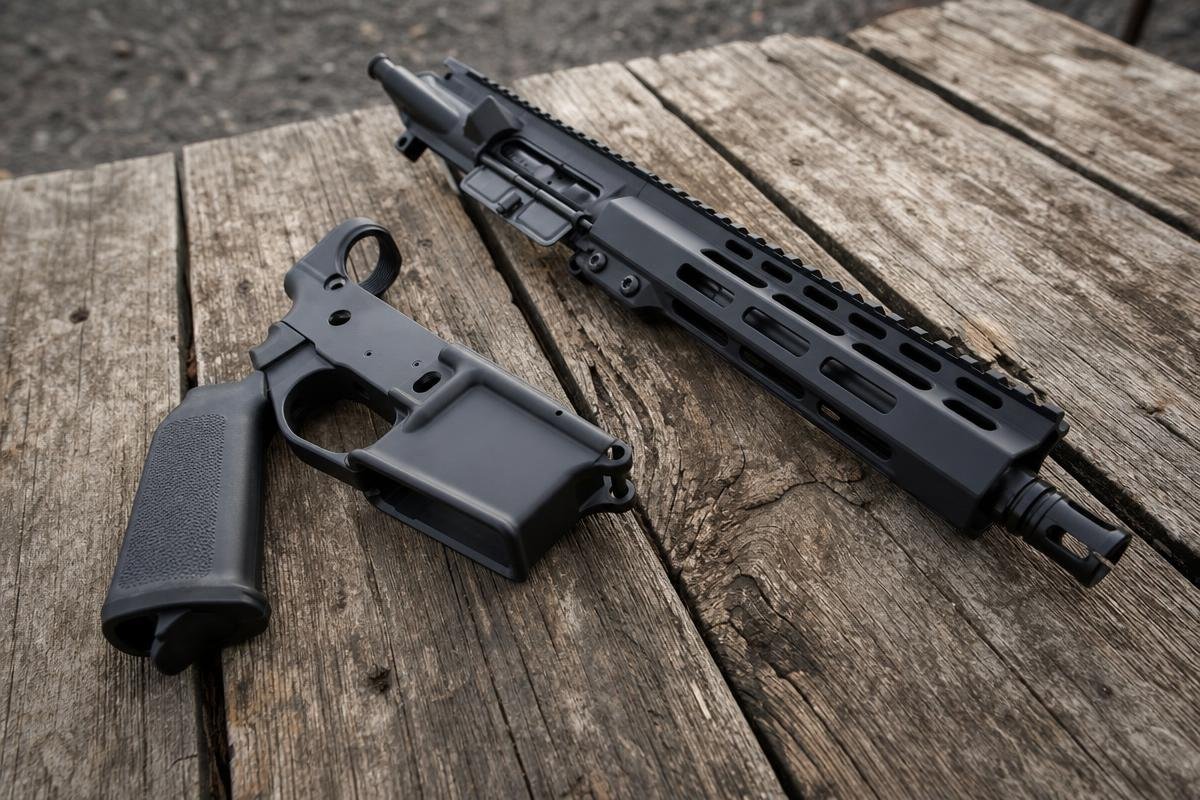
A complete AR-15 upper is an assembled top-end unit, while an upper receiver may be only the receiver body. The practical difference is the work and parts left to source: a complete upper commonly combines the receiver, barrel, gas system, and handguard, whereas a stripped receiver is the starting point for a custom build.
Key Takeaways
- A stripped upper receiver is the housing that supports the barrel, bolt carrier group, charging handle, and related upper components after installation.
- A barreled upper generally has the receiver and barrel installed, with the gas system and handguard varying by configuration.
- A complete upper is the fastest route to a preselected barrel, gas system, and handguard combination, but manufacturer definitions of “complete” vary.
- Use the included-parts checklist below to identify what you still need before pairing an upper with a compatible lower.
Complete Upper vs. Receiver at a Glance
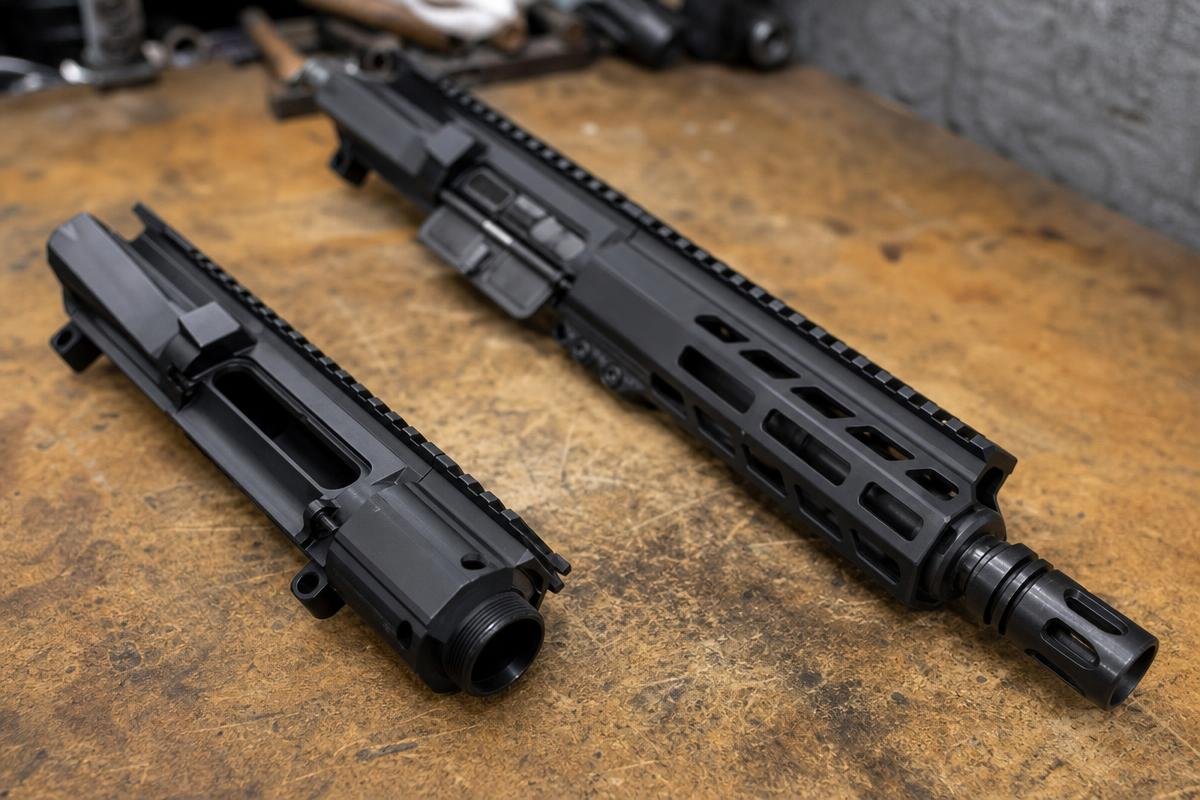
An upper receiver can mean the receiver body alone. A complete upper is an assembled package, but it is important to distinguish the product title from the actual included-parts list. The difference between an AR-15 complete upper and an upper receiver is best answered by identifying the barrel, gas system, handguard, bolt carrier group, and charging handle included with the exact configuration.
Below, we explain stripped receivers, barreled uppers, and complete configurations, plus the compatibility and assembly considerations that matter before ordering. Start with our selection of AR-15 complete uppers if you want to compare ready-to-pair configurations.
What Is the Difference Between a Complete Upper and an Upper Receiver?
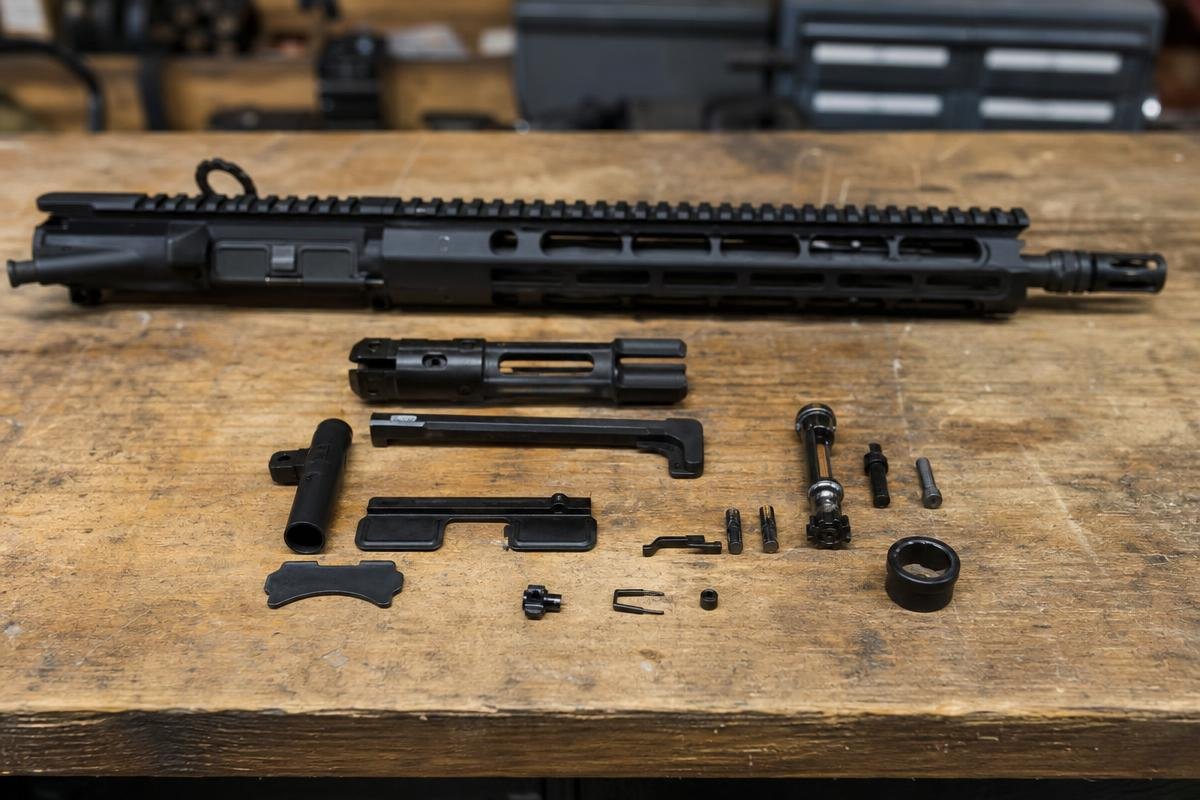
A complete upper is an assembled group of parts, while an upper receiver can mean only the receiver body. A stripped upper receiver is not the same thing as a complete upper receiver. That difference determines whether you are selecting a finished assembly or taking on barrel installation, gas-system installation, handguard fitment, and final assembly yourself.
Stripped Upper Receiver
A stripped upper is the basic housing that supports the barrel, bolt carrier group, charging handle, forward assist, and ejection-port cover after those parts are installed. It is normally an aluminum receiver body with no barrel, gas system, handguard, bolt carrier group, or charging handle.
A stripped receiver may also omit the forward assist, ejection-port cover, and their installation hardware. This option suits a build where you want to choose the barrel, gas block, handguard, muzzle device, and internal components individually. It also requires the proper fixtures, torque tools, and familiarity with manufacturer installation specifications.
Barreled Upper
A barreled upper usually means the receiver has a barrel installed. Depending on the configuration, the gas block, gas tube, handguard, and muzzle device may already be installed as well.
The barreled upper versus complete upper distinction is usually about the remaining hardware. A barreled assembly can reduce the need for barrel installation tools while still leaving you to choose a handguard, bolt carrier group, charging handle, or muzzle device. If you are selecting your own tube and chamber, our AR-15 barrels page is a useful starting point.
Complete Upper
A complete upper commonly includes the receiver, barrel, gas system, and handguard. It is often the most practical option for buyers who want a preconfigured top end instead of sourcing each interface and component separately.
“Complete” is not a universal industry parts list. Use the checklist in the next section to confirm whether the particular assembly includes a bolt carrier group and charging handle, along with the other components needed for your intended setup.
What Should Be Included in a Complete AR-15 Upper Listing?
A useful complete upper listing identifies the installed upper components, not only the caliber and barrel length. Manufacturer terminology varies, so the specification list is more important than the product category name.
Complete Upper Listing Checklist
Start with the receiver and work forward through the assembly. A clear listing for AR-15 complete uppers should state the following:
- Upper receiver type, material, finish, and installed forward assist or ejection-port cover status
- Barrel length, profile, material, twist rate, chamber, and barrel extension
- Gas-system length, gas block style, and gas tube
- Handguard length, barrel-nut or mounting interface, and accessory attachment system
- Muzzle device, thread pattern, and whether the device is installed
- Whether a bolt carrier group and charging handle are included
- Caliber, compatible magazine type, and any lower, buffer, or proprietary-system requirements
Check the chamber marking and the listing specifications together. Cartridge labeling can be broader than the actual chamber. For example, a .223 Wylde chamber is marked differently from 5.56 NATO, even though both relate to .223 and 5.56 ammunition choices.
Parts That Are Often Assumed, But Not Always Included
The components most often left out of upper packages are the bolt carrier group and charging handle. Other variables can include the muzzle device, ejection-port cover assembly, forward assist, sights, and handguard hardware.
Rather than relying on a product photo, compare the listing against the checklist above. A photo may show accessories or components that are not part of the shipped package. This simple review also helps prevent ordering a caliber-specific upper without the correct magazine, bolt, or barrel configuration.
Lower Receiver Compatibility
Most standard AR-15-pattern uppers fit standard AR-15-pattern lowers, but fit and function are not universal. Confirm caliber, magazine type, buffer-system requirements, bolt compatibility, and any proprietary-component restrictions before buying.
Larger-frame patterns, proprietary receiver sets, and specialty calibers need separate compatibility confirmation. AR15Parts.com is an online retailer shipping nationwide from Denison, Texas, and can help answer questions about a product listing before an order. You can also contact AR15Parts.com at (888) 706-0633 with the configuration you are considering.
Should You Buy a Complete Upper or Build Your Own?
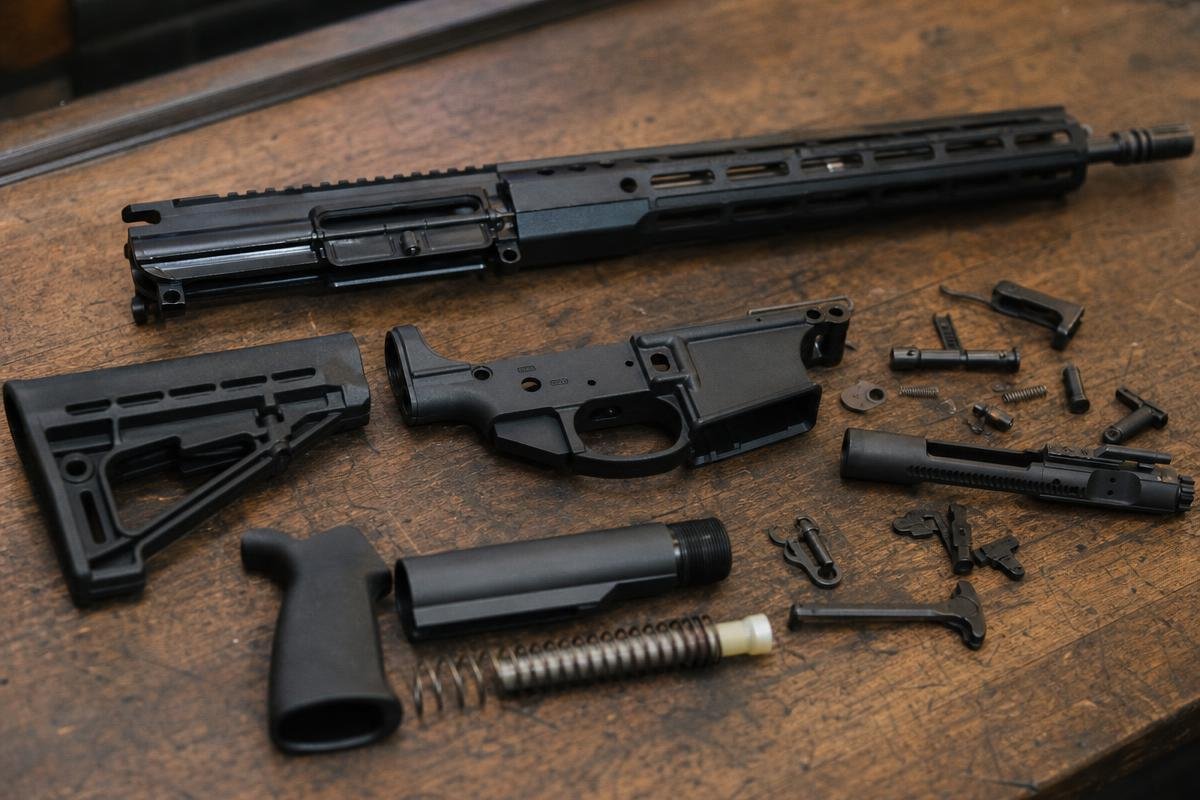
Buy a complete upper if you want a ready-to-pair top-end assembly without sourcing and fitting every component yourself. Build your own if a specific chamber, barrel profile, gas setup, handguard interface, or muzzle-device plan is central to the project. The right choice depends on the level of customization you need and your comfort with upper assembly.
Choose a Turnkey Upper for a Preselected Configuration
A turnkey upper makes sense when you already know the barrel length, chambering, and handguard style you need. It avoids the need to install and align a barrel, gas block, gas tube, barrel nut, and handguard from separate parts.
For a straightforward 5.56 setup, review our 5.56 NATO complete uppers. Pair the chosen upper only with a compatible lower and supporting components, then use the included-parts checklist to identify any remaining items.
Build an Upper for Specific Component Choices
Build your own upper if you need a specific barrel length, chamber, handguard length, muzzle device, or gas-system configuration. This route lets you select individual AR-15 barrels and match them to the intended role of the rifle.
Building also puts the fit and installation work on you. Confirm receiver and barrel compatibility, gas-block journal diameter, gas-tube length, handguard mounting system, torque requirements, and required tools before ordering parts. Follow the component manufacturers’ specifications for installation and inspection rather than mixing parts based on appearance alone.
Compare Total Project Cost, Not Just Sticker Price
Do not compare only the listed upper price. A self-built upper can require a vise block or receiver fixture, torque wrench, barrel-nut wrench, receiver rod, punches, thread treatment, gauges, and the individual parts not included with the receiver or barrel.
Buying complete can reduce those added purchases, especially for a first upper. Building can still be the right call when your selected parts create a configuration that is not available as a preassembled unit. AR15Parts.com is located at 4000 Texoma Pkwy, Denison, TX 75020, and customers can call (888) 706-0633 for product-specific compatibility help before ordering.
How Do Barrel Length, Chambering, and Gas System Affect Your Choice?
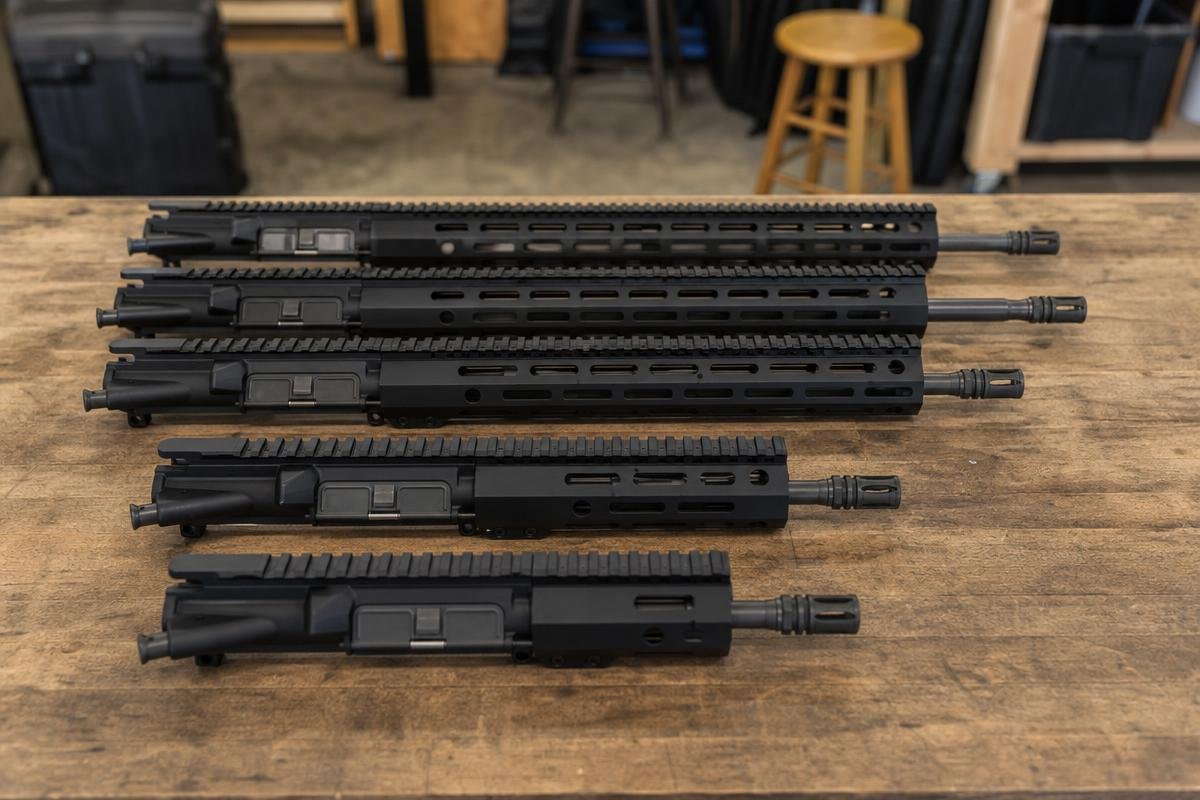
Start with the cartridge, the distance you plan to shoot, and how you need the rifle to handle. Barrel length and gas-system placement are tied together, so choose the full configuration before focusing on the receiver itself.
Start With Intended Use and Compatible Components
A short barrel can make the rifle easier to handle, while a longer barrel changes sight radius with fixed sights and affects the available gas-system configurations. The bolt, barrel extension, magazine, and cartridge must match the chambering you select, even where AR-15-pattern receiver dimensions are similar.
When comparing assembled options, identify the chamber, barrel length, gas system, and magazine requirements first. Then use the included-parts checklist to determine whether the package covers the remaining upper components you need.
5.56 NATO, .223 Wylde, and .300 Blackout
5.56 NATO and .223 Wylde are chamber designations, not interchangeable names for the same chamber. Follow the barrel marking and the manufacturer’s ammunition guidance. We stock 5.56 NATO complete uppers and .223 Wylde complete uppers for different build requirements.
300 Blackout is a separate chambering. It does not use the same barrel as 5.56 NATO or .223 Wylde, even though AR-15 platforms can share a similar receiver pattern. Keep ammunition clearly separated and use a barrel marked for 300 Blackout.
Gas-System Length and Barrel Configuration
Gas-system length matters because it is matched to the barrel configuration and routes gas back to cycle the action. Pistol-length, carbine-length, mid-length, and rifle-length systems are not cosmetic differences. They use different gas-tube lengths and are selected around barrel length and gas-port location.
Do not treat a gas system as an add-on after choosing the barrel. Review the listed configuration, then compare available AR-15 barrels if you are planning a custom upper. For gas-system questions, contact our team before ordering rather than attempting installation or tuning from a generic guide.
Need help matching a barrel, chamber, and gas system? Call us at (888) 706-0633.
Receiver Details That Matter Before You Choose an Upper
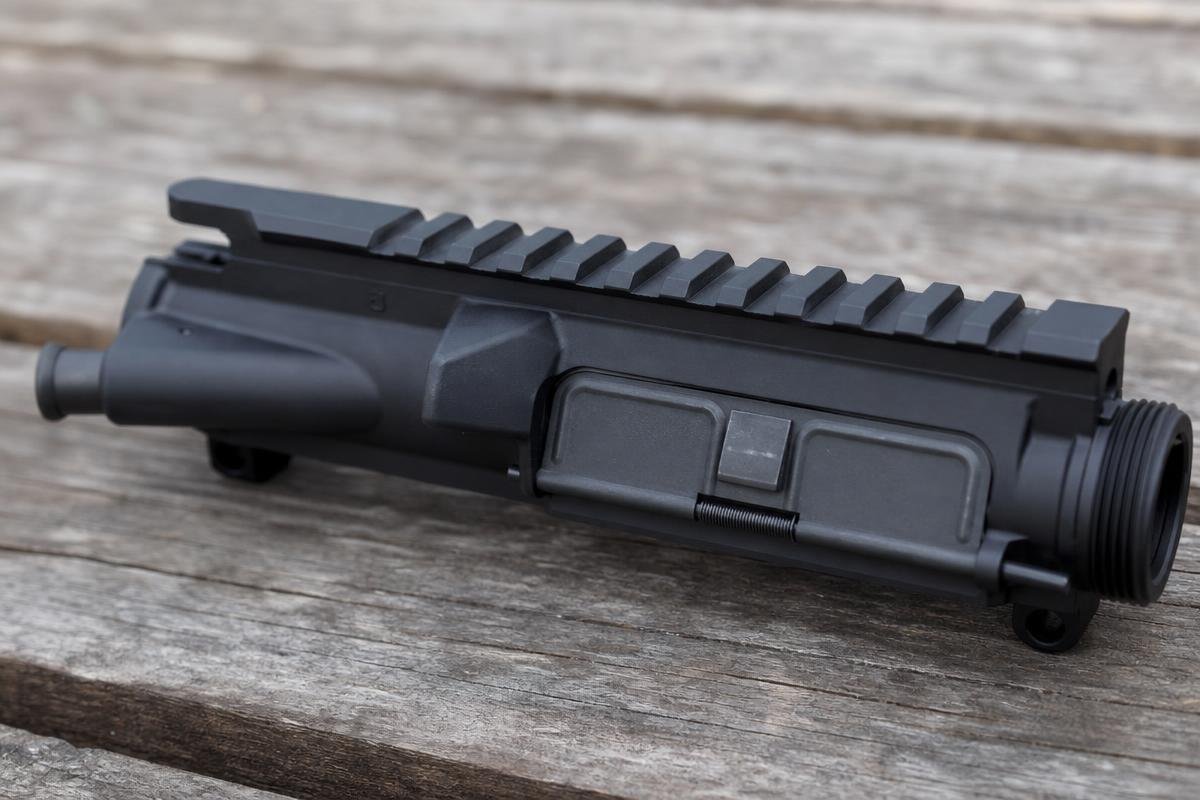
Small receiver details affect fit, accessory choices, and the parts required to finish a build. For a complete upper versus stripped upper comparison, read the listed specifications instead of assuming features from the product photo.
Forged and Billet Receiver Descriptions
Forged and billet describe how the receiver was made, not an automatic quality ranking. Forged receivers start as shaped aluminum blanks, while billet receivers are machined from solid aluminum stock.
Check the stated material, finish, dimensions, shell deflector, and fit with any compatible AR-15-pattern lower. A billet receiver may have different exterior contours or handguard requirements, so verify the manufacturer’s compatibility notes before buying.
Feed Ramps, Forward Assist, and Ejection-Port Cover
Feed ramps, a forward assist, and an ejection-port cover are configuration details worth reviewing. Inspect the listing for M4 feed ramps, receiver cuts, and whether the barrel extension matches the receiver configuration.
Some stripped receivers ship without a forward assist or dust cover assembly. Those AR-15 upper receiver components may need to be installed separately, especially on slick-side or specialty receiver designs.
Handguard Interface, Rail Choice, and Muzzle Threads
The receiver’s handguard interface is not the same thing as the rail or accessory mounting system on the handguard. The interface determines how the handguard attaches to the upper and barrel nut. M-LOK, KeyMod, and Picatinny describe accessory attachment positions on the handguard itself.
Verify barrel thread pitch before ordering a flash hider, brake, suppressor mount, or thread protector. Most .223 and 5.56 barrels use 1/2x28 threads, but caliber-specific barrels can differ. Review the listed configuration on our AR-15 complete uppers before selecting muzzle accessories, and compare thread details with available AR-15 barrels if you plan a custom setup.
Why This Comparison Matters for Online Buyers
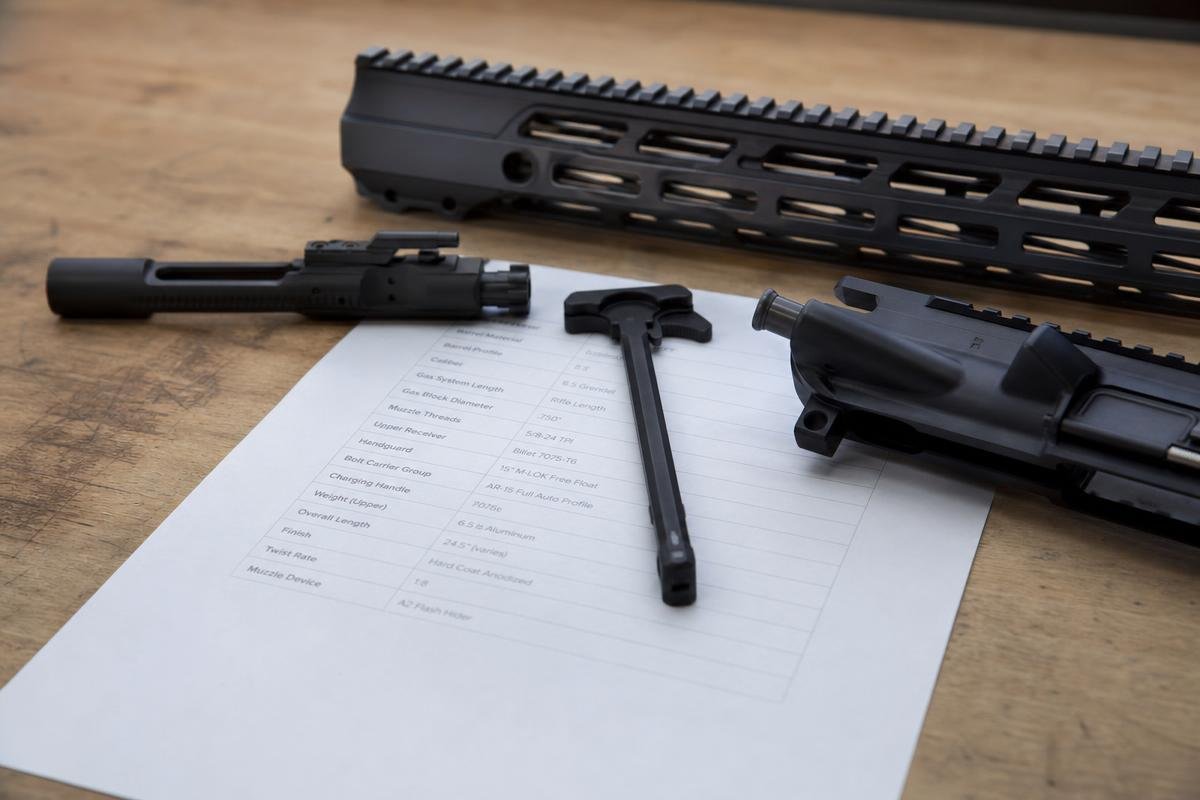
For buyers ordering online, the value of this comparison is knowing whether an upper is ready for a lower you already own or whether it is the foundation of a larger build. A clear component list helps avoid buying duplicate parts, overlooking a caliber-specific requirement, or choosing an upper intended for a different receiver pattern.
Use the Same Checklist for Every Order
Use the same review process for every upper. First identify it as stripped, barreled, or complete. Then compare the stated receiver, barrel, gas block, gas tube, handguard, muzzle device, bolt carrier group, charging handle, chamber, and compatibility details with your planned build.
Photos can show a component that is not part of the package. Read the specifications, then compare the included-parts list against the configuration you need. Our AR-15 complete uppers give you a direct starting point for comparing chamberings and assemblies.
Know When a Complete Rifle Makes More Sense
A complete upper is only the top portion of the platform. You still need a compatible lower receiver, buffer system, stock or brace configuration where lawful, magazine, and other required components.
If you need the entire firearm rather than an upper for a lower you already own, review our complete AR-15 rifles. For a product-specific question before ordering, contact our team through the contact page or call (888) 706-0633.
Frequently Asked Questions
Does a Complete AR-15 Upper Include a BCG and Charging Handle?
Not always. BCG and charging handle inclusion varies by listing, so verify both items in the product description before ordering.
Will a Complete Upper Fit Any AR-15 Lower?
Most standard AR-15 pattern uppers fit compatible mil-spec AR-15 lowers. Confirm the listing first, especially with larger-frame, proprietary, or nonstandard platforms.
What Is the Difference Between a Stripped Upper and a Barreled Upper?
An AR-15 complete upper vs stripped upper comparison starts with installed parts. A stripped receiver is the bare housing, while a barreled upper has the barrel and usually the gas system installed. A barreled upper vs complete upper comparison often comes down to the handguard, BCG, and charging handle.
Do I Need Tools to Use a Complete Upper?
A compatible, fully equipped upper may attach without specialized assembly tools. Verify the included parts and follow the upper and lower manufacturers’ instructions. Building from individual parts requires tools and assembly knowledge.
Is .223 Wylde the Same as 5.56 NATO?
No. A .223 Wylde chamber is designed to fire .223 Remington and 5.56 NATO ammunition, but barrel markings and manufacturer guidance control ammunition selection. Review our .223 Wylde complete uppers and confirm the barrel marking before use.
Is a Complete Upper the Same as a Complete Rifle?
No. A complete upper does not include a lower receiver, stock, trigger group, or other lower components. A complete rifle is supplied as a full firearm, while an upper is ready to drop onto your compatible lower.
Before ordering, compare the listing to the included-parts checklist and confirm the receiver pattern, barrel, gas system, handguard, chambering, and lower compatibility. Shop AR-15 complete uppers for ready-to-pair options, or compare AR-15 barrels for a custom build. For help verifying a specific configuration, call (888) 706-0633 or contact AR15Parts.com.
Ready to Get Started with AR15Parts.com?
Call (888) 706-0633 to speak with our team directly. We're ready to answer your questions, walk you through your options, and help you find the right solution for your needs. Whether you're just starting to plan or ready to move forward, we'll make the process simple and stress-free.
Reach out today and let's talk about how we can help.