
AR15Parts.com helps shoppers nationwide compare practical AR-15 configurations for lawful home protection, property use, hunting, and range practice. We explain how barrel length, chamber, gas system, optics, magazines, and maintenance priorities work together, so you can narrow options before buying parts. Compare upper options, ask about upper-to-lower compatibility, or call to confirm current inventory before ordering.
Key Takeaways
- Home-defense rifles need manageable length, dependable magazines, positive target identification, and secure storage.
- Ranch rifles benefit from weather-conscious maintenance, protected optics, and a practical carry setup for outdoor property use.
- AR-15 configurations should match your intended distance, ammunition choice, compatible parts, and current legal requirements.
- Range practice confirms zero, handling, and function before you depend on a chosen configuration.
What Should Your AR-15 Configuration Be Built to Do?
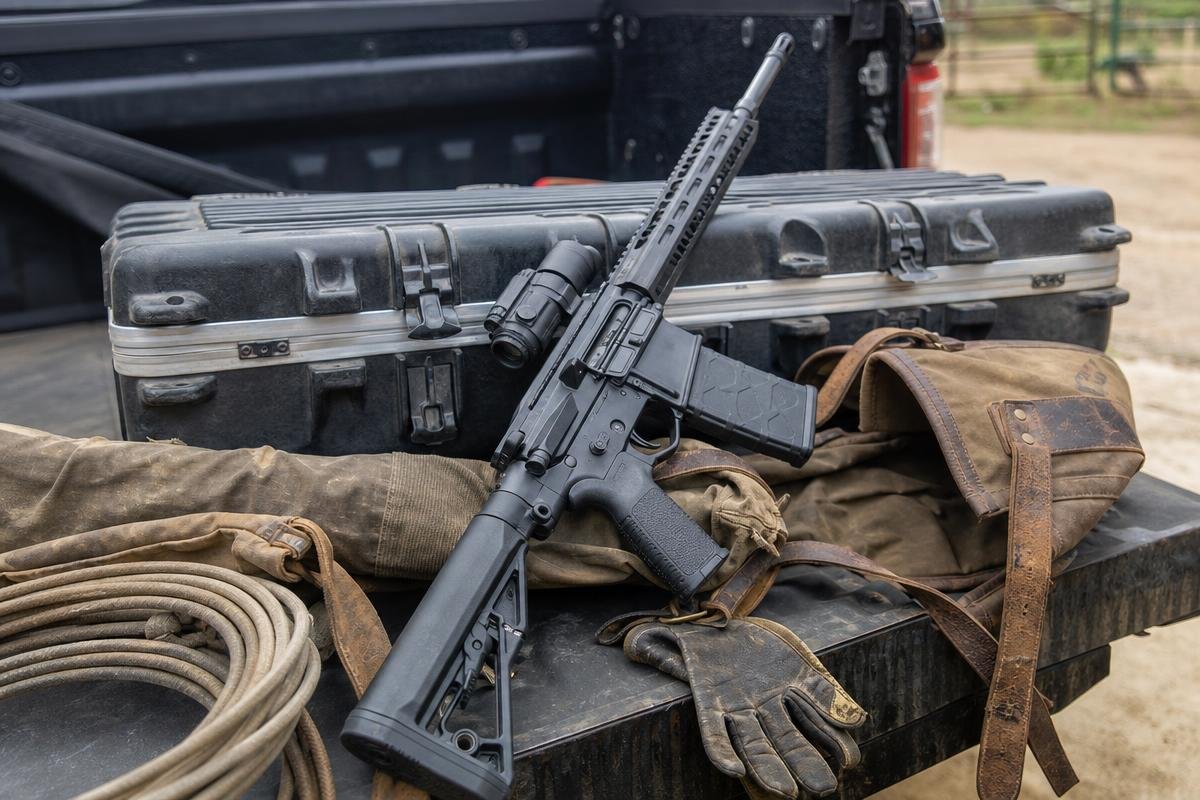
The right AR-15 configuration starts with one defined job. A rifle stored at home has different priorities than one carried on rural property, used for hunting, or set up for regular target practice. Decide how it will be stored, carried, transported, and practiced with before choosing an upper, optic, or accessories.
Home Defense and Secure Storage
A rifle kept for home defense needs manageable handling, positive target identification, and secure storage. A dependable white light helps identify what is in front of you, while a simple red dot or fixed-sight setup can keep the sight picture uncluttered in low light.
Choose a configuration you can handle safely indoors and store in a locked safe or secured cabinet. If you transport a rifle, keep it unloaded, contained in a secure case, and out of view. Avoid leaving any firearm unsecured in a vehicle.
Many shooters begin with 5.56 NATO complete uppers because 5.56 NATO and .223 Remington ammunition are commonly available and the chamber is generally designed to support both when the barrel is properly marked.
Ranch Carry, Hunting, Competition, and Range Use
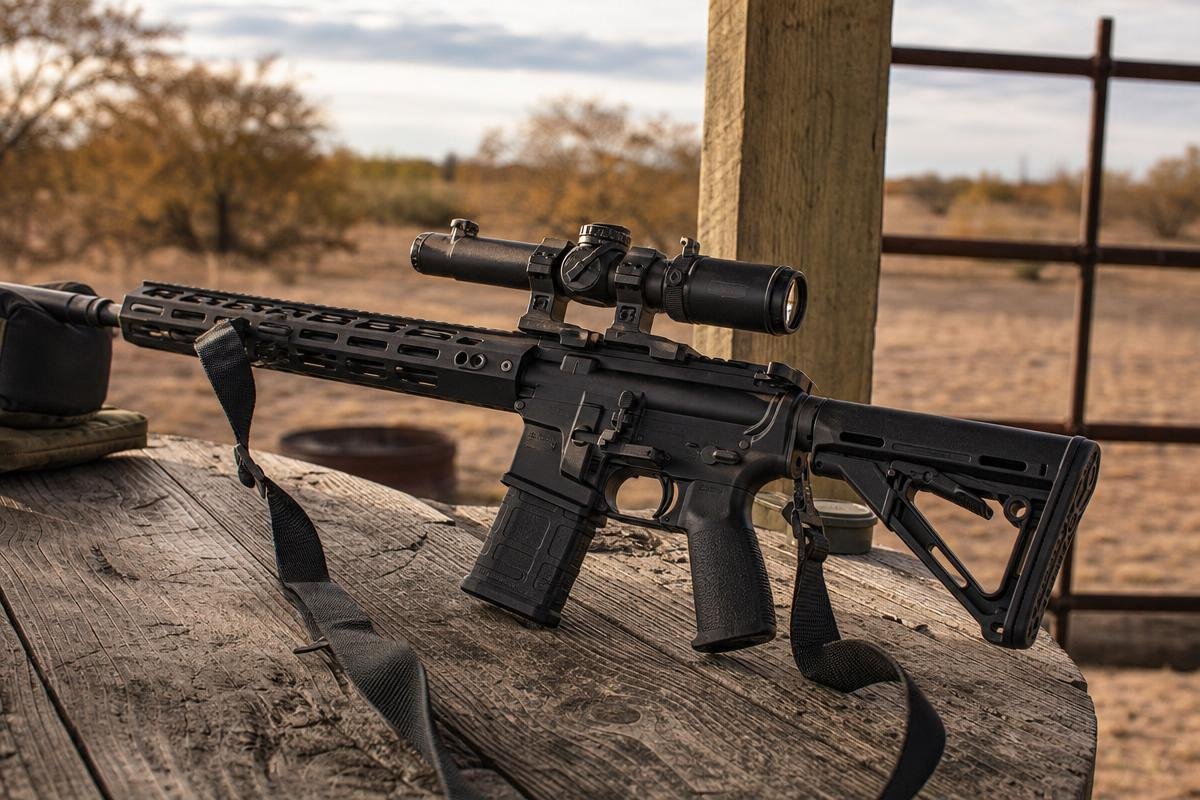
For outdoor property use, a field rifle may spend time in a truck, on an ATV or UTV, or carried across open ground. Heat, dust, and wind can put fine grit on exposed optics, magazines, and action components. Moderate weight, protected lenses, a secure two-point sling, and sensible lubrication often matter more than adding unnecessary accessories.
An AR-15 hunting setup for hogs or predators may call for a different caliber, optic, and barrel profile than a target-focused rifle. Hunting setups often favor practical magnification and carry weight, while longer-range work benefits from added magnification and a barrel selected for consistent accuracy.
Start with complete AR-15 uppers matched to your intended cartridge and barrel length. Then confirm your zero, handling, and function at a suitable range before carrying the rifle during property work.
Which AR-15 Configuration Fits Common Uses?
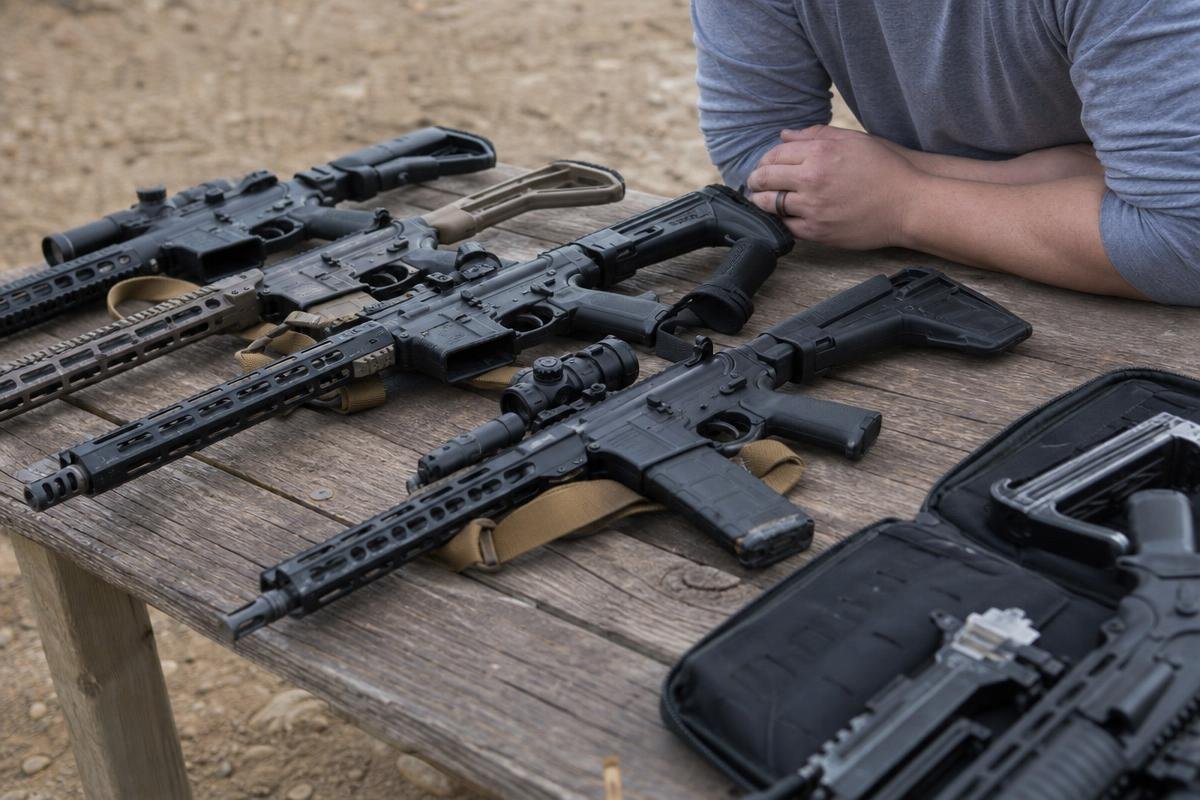
AR-15 configurations work best when the upper, barrel length, optic, and supporting parts are selected for the same role. Keep the initial setup simple, verify compatibility, then add only the equipment that improves safe handling or practical use.
Configuration Comparison Table
| Purpose | Upper or Caliber Category | Barrel Length | Gas System | Optic or Sight | Handguard and Supporting Parts |
|---|---|---|---|---|---|
| Home defense | 5.56 NATO or .223 Wylde | 10.5 to 16 inches | Carbine or mid-length | Durable red dot | Free-float rail, weapon light, two-point sling, chamber-appropriate magazines |
| Ranch and hog hunting | 5.56 NATO, 300 Blackout, or larger-caliber upper | 16 to 18 inches | Mid-length or rifle-length | Red dot, LPVO, or low-power scope | Free-float handguard, sling, protected optic lenses |
| Predator hunting | 5.56 NATO or flat-shooting small-caliber upper | 16 to 20 inches | Mid-length or rifle-length | Magnified optic | Stable forend, bipod mounting point, adjustable sling |
| 3-gun competition | 5.56 NATO or .223 Wylde | 16 to 18 inches | Mid-length | LPVO or red dot with magnifier | Long free-float handguard, tuned trigger, fast magazine changes |
| Range practice | 5.56 NATO or .223 Wylde | 16 inches | Mid-length | Iron sights or red dot | Simple handguard, standard sling, reliable magazines |
| Long-range targets | Precision .223 Wylde or specialty upper | 18 to 24 inches | Rifle-length | Magnified scope | Rigid free-float handguard, match trigger, bipod support |
Barrel-length and firearm-classification note: A barrel shorter than 16 inches can involve different federal, Texas, and local requirements depending on the complete firearm configuration, including whether it is configured as a rifle, pistol, or regulated short-barreled rifle. Rules can change and depend on the full build. This is not legal advice, so verify current applicable federal, state, and local requirements before purchasing or assembling components.
For a field rifle, ammunition availability, recoil tolerance, expected distance, and optic choice should guide the caliber decision. A 5.56 NATO upper can cover many general range and property-use roles, while an AR-15 hunting setup may justify 300 Blackout or a larger-caliber platform when the specific hunting need and compatible components support it.
Long-range target builds place more weight on barrel profile, chamber, twist rate, trigger break, and magnified optics. Compact layouts trade some stability and velocity for easier movement. For outdoor field use, covered optics, light lubrication, and regular post-use checks are practical priorities.
Upper Categories and Compatible Lower Receivers
A complete upper can be installed on an existing mil-spec AR-15 lower receiver when the caliber uses the standard AR-15 platform and the manufacturer specifies compatibility. Do not assume every upper, bolt carrier group, buffer system, magazine, or cartridge uses the same pattern. Confirm the upper maker’s specifications, the required magazine type, bolt compatibility, and any buffer-system requirements before installation.
We carry complete AR-15 uppers for builds that need a defined purpose instead of a parts mix. Ask about upper-to-lower compatibility and call (888) 706-0633 to confirm current inventory before placing an order.
How Do Barrel Length, Chamber, and Gas System Work Together?
Barrel length, chamber, gas system, bolt carrier group, and buffer system work as a package. Choosing parts in isolation can create avoidable fit or function questions. A matched upper provides a clearer starting point, but the complete firearm still needs safe inspection and function testing.
What AR-15 Barrel Length Works Best for Home Defense?
A 16-inch barrel is often a straightforward general-purpose choice because it balances useful velocity with manageable handling for range practice, property use, and lawful defensive planning. A 14.5-inch barrel can reduce overall length when configured lawfully, but the full configuration and any muzzle-device attachment method matter. A 10.5-inch setup is more compact, but it produces more muzzle blast, gives up velocity, and requires particular attention to legal classification and manufacturer compatibility.
Longer 18- and 20-inch barrels favor velocity and target-oriented use. Lightweight profiles reduce carry weight, government profiles balance weight and heat, and heavier profiles can better tolerate longer firing strings at the cost of front-end weight.
Chrome-moly barrels are common for hard-use rifles and routine field use. Stainless barrels are often selected for accuracy-focused builds. A matched upper assembly can simplify selection by pairing the barrel, receiver, and gas system as one package.
Can a 5.56 NATO Chamber Fire .223 Remington?
Yes, a barrel marked 5.56 NATO can generally fire .223 Remington ammunition. A .223 Wylde chamber is also commonly designed to support both 5.56 NATO and .223 Remington. Do not assume the reverse is true for a barrel marked only .223 Remington. Read the barrel markings and follow the firearm and ammunition manufacturer’s documentation for the specific chamber.
Carbine-length gas systems are common on compact barrels and have a shorter gas path. Mid-length systems are often used on 14.5- and 16-inch barrels, while rifle-length systems are typically used on longer barrels. Actual cycling depends on the manufacturer’s gas-port design, ammunition, carrier, buffer, spring, and complete configuration.
Before firing, confirm the bolt carrier group and barrel are compatible, use the correct magazine for the cartridge, and follow the manufacturer’s assembly and inspection instructions. If there is uncertainty about headspace, fit, or function, have the rifle inspected by a qualified gunsmith.
For outdoor use, inspect the action, magazine well, optic lenses, and muzzle after wind, dust, and heat exposure. Clean away visible grit, use only a light film of lubricant where recommended by the manufacturer, and recheck fasteners after range sessions.
What Supporting Components Should Be Chosen After the Upper?
Your upper sets the cartridge, barrel length, gas system, and basic role. The supporting parts should fit that package. A practical order is: choose the upper and chamber, confirm lower and magazine compatibility, select sights or optic, add a sling and light where appropriate, then verify the setup through safe range practice.
Handguard, Stock, Grip, and Sling Fit
A free-float handguard reduces outside pressure on the barrel and gives you space for a light, sling mount, and support hand. Match handguard length to the barrel, gas block clearance, and accessories you plan to mount. A handguard that runs too close to the muzzle can limit mounting room and collect more blast residue.
Set adjustable stock length of pull and grip angle for your own shooting position. These are fit choices, not universal upgrades. For a rifle carried during property work, use a secure two-point sling with attachment points that do not interfere with your grip, light, or safe muzzle control.
Optics, Lights, Magazines, and Controls
A red dot supports fast work at close distances. A magnified optic gives you more detail at longer ranges. Add backup sights only if they clear the optic mount, and choose a weapon light with a mount that fits your handguard slots without blocking controls.
Heat, wind, and dust during outdoor use can affect exposed lenses and moving parts. Use lens covers for a carried rifle, inspect the optic mount after practice, and use the optic manufacturer’s torque and battery recommendations rather than guessing.
Before buying magazines, verify the cartridge, magazine pattern, and capacity fit your upper. Confirm the bolt carrier group matches the chamber and cartridge system, and make sure the charging handle fits the upper receiver. A 5.56 NATO AR-15 generally uses standard AR-15-pattern magazines and bolt components, while other cartridges may require different magazines, bolts, or lower receivers.
Need help matching an upper, magazines, and supporting parts? call (888) 706-0633 for parts guidance and current inventory.
How Should You Test, Zero, and Store a New Configuration?
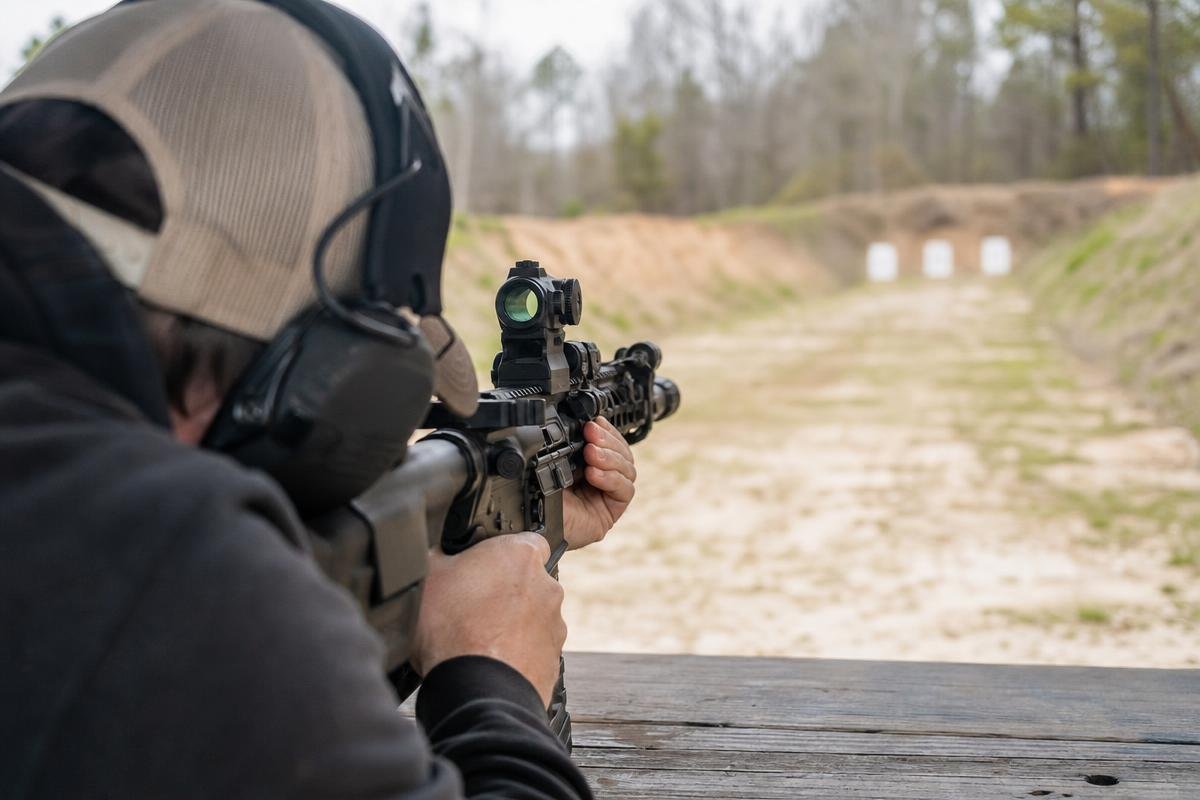
A rifle configuration is not ready for regular use when the parts are installed. It needs inspection, safe function checks, optic confirmation, and controlled range practice with the ammunition you intend to use.
Confirm Function Before Regular Use
Follow each component manufacturer’s manual and confirm fastener torque to its stated specification. Check optic mounts, sling hardware, magazines, and handguard attachments before range use. A complete upper can save assembly time, but it still needs inspection after installation. See our complete AR-15 uppers for ready-to-install options.
Practice at a suitable range to confirm safe handling and function with the rifle configured as carried or stored. For dusty conditions, inspect the bolt carrier group and magazine area after shooting, wipe lenses with appropriate optic-cleaning materials, and avoid over-oiling parts that may collect grit. Ask a qualified gunsmith for help if parts do not fit correctly, function is uncertain, or compatibility is unclear.
Match Your Zero and Storage Plan to the Rifle's Role
Choose a zero distance that matches the rifle’s role and confirm it with the exact ammunition you plan to keep on hand. A 50-yard zero is common for general-purpose carbines. Recheck your optic settings after any mounting or ammunition changes.
Secure storage belongs in every home-defense plan. Store the rifle to prevent unauthorized access while keeping its condition, magazines, and optic protection consistent with your household plan. A useful AR-15 build guide ends with repeatable practice, not just a finished parts list.
What Outdoor Conditions Matter for Rifle Setups?
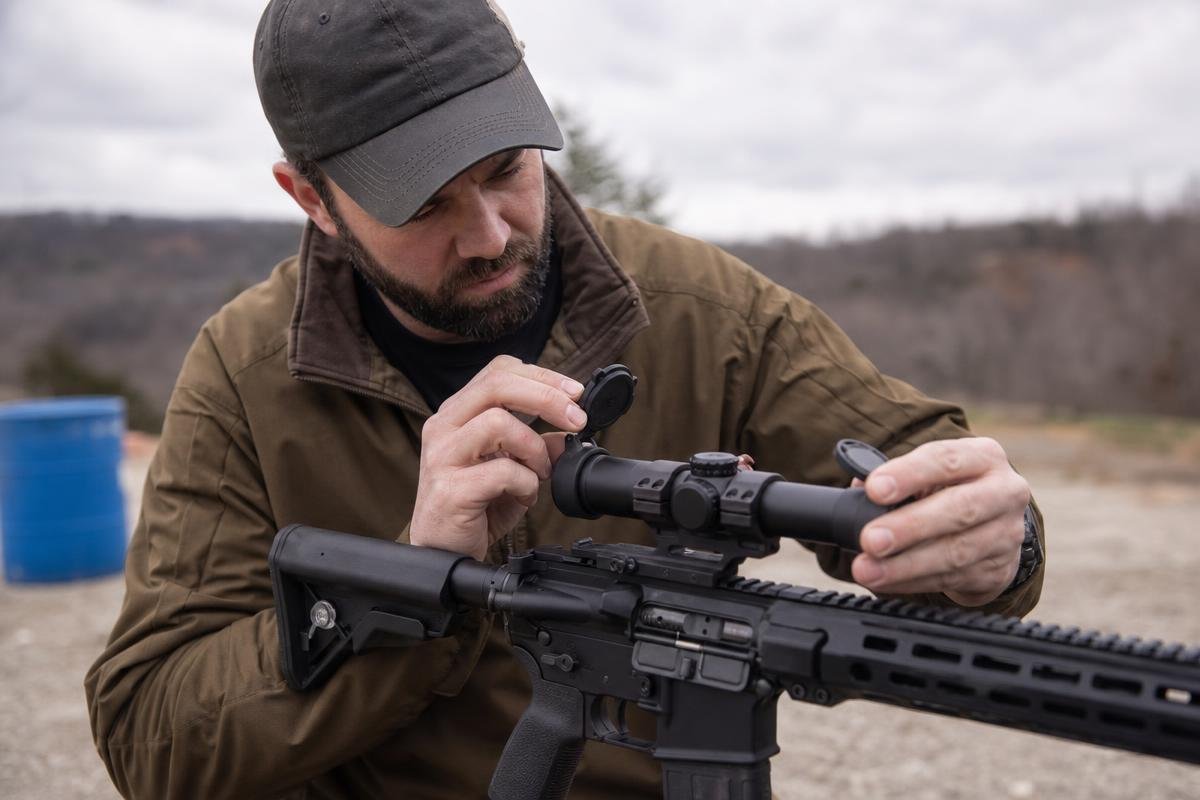
Outdoor use puts different demands on a rifle than indoor storage does. For property owners and shooters, windblown dust, high heat, changing seasonal conditions, and long periods of carry can make lens protection, secure mounts, sling fit, and basic maintenance especially important. Verify current applicable federal, state, and local firearm requirements before buying, transporting, carrying, or assembling components.
Heat, Wind, Dust, and Optic Protection
Heat, wind, and dust can obscure lenses, loosen poorly installed mounts, and contaminate excess lubricant. Use lens covers during transport, confirm mount fasteners are tightened to the manufacturer’s specification, and inspect the optic body, battery compartment, and adjustment caps after outdoor use.
Apply only enough lubricant to keep the bolt carrier group moving smoothly. Heavy oil can collect grit. Before a range visit, confirm your zero under the conditions you expect to shoot in, then inspect the upper for loose hardware, visible fouling, or debris around the action and magazine well.
Practice With the Equipment You Actually Carry
Practice with the sling, optic, magazines, light, and support gear that will remain on the rifle. A sling changes how the rifle hangs and mounts. An optic changes your head position and sight picture. Those details matter more than a bench-only zero.
Bring eye and ear protection, a chamber flag, ammunition appropriate for your chamber, and basic tools for mount or sight adjustments. Check the range's current rules before you go. To compare available options, review our AR-15 complete rifles or contact us at (888) 706-0633.
How Do You Choose Parts for Your Intended AR-15 Configuration?
Once you know the job, caliber category, barrel-length range, and accessory plan, you can narrow your AR-15 configurations without buying parts twice. AR15Parts.com carries firearms, parts, and accessories for home defense, ranch use, hunting, and range setups.
Complete Upper or Individual Parts
Start with a complete upper if you want a practical assembly ready to pair with a compatible lower receiver, subject to manufacturer specifications. A complete upper lets you choose the chamber, barrel length, handguard, and gas-system package as one assembled unit.
Verify the Lower Before Installation
Confirm receiver compatibility, buffer system, magazine type, bolt requirements, and the upper manufacturer’s specifications before pairing components. Your AR-15 build guide should also account for the optic, sling, light, and magazines you plan to run.
Compare Turnkey Rifle Options
If you need a complete starting point, compare our AR-15 complete rifles with upper assemblies. Practice at a range to confirm zero, safe handling, and optic protection after dusty outdoor use.
Frequently Asked Questions
What Is the Best All-Purpose AR-15 Configuration?
The best all-purpose configuration fits your lawful intended use, available ammunition, and comfort handling the rifle. A 5.56 NATO upper with a 16-inch barrel is a common starting point, but your sights, sling, and practice matter as much as the parts.
Is a 16-Inch Barrel a Good General-Purpose Choice?
Yes, a 16-inch barrel is a common balance of handling and velocity for a general-purpose rifle. AR-15 barrel length should match the job, since a shorter barrel handles differently and a longer barrel adds weight and sight radius.
How Should I Choose a Caliber and Chamber?
Choose the chamber based on the ammunition you plan to buy and the manufacturer’s chamber guidance. Read the barrel markings, confirm compatible magazines and bolts, and compare 5.56 NATO complete uppers if you want a widely available general-use option.
What Accessories Matter for a Home-Defense Setup?
A home defense AR-15 setup needs secure storage, positive target identification, reliable sights or optic, and regular safe-handling practice. Add accessories only after confirming they do not interfere with safe storage, controls, or your ability to identify what is beyond the target.
Can One Rifle Work for Ranch Carry and Range Practice?
Yes, one rifle can cover ranch carry and range practice if it remains manageable, reliable, and suited to your lawful needs. A ranch rifle configuration should be protected from dust and wind, then checked at the range after optic changes or maintenance.
Are Complete Uppers Easier Than Building From Parts?
Yes, complete uppers remove several assembly and compatibility steps. Our complete AR-15 uppers are ready to install on compatible lower receivers when the caliber, bolt, magazine, and buffer system match the manufacturer’s specifications, giving you a direct path to a matched barrel, gas system, and bolt carrier group.
Once you have your intended use, caliber category, barrel-length range, and accessory plan, compare compatible complete rifles and upper assemblies from AR15Parts.com. If you need help narrowing component categories, call (888) 706-0633 before placing your order.
Ready to Get Started with AR15Parts.com?
Call (888) 706-0633 for parts and compatibility advice, or contact our team through our online form. We ship from our Denison, TX facility and can help you check parts before you order.