
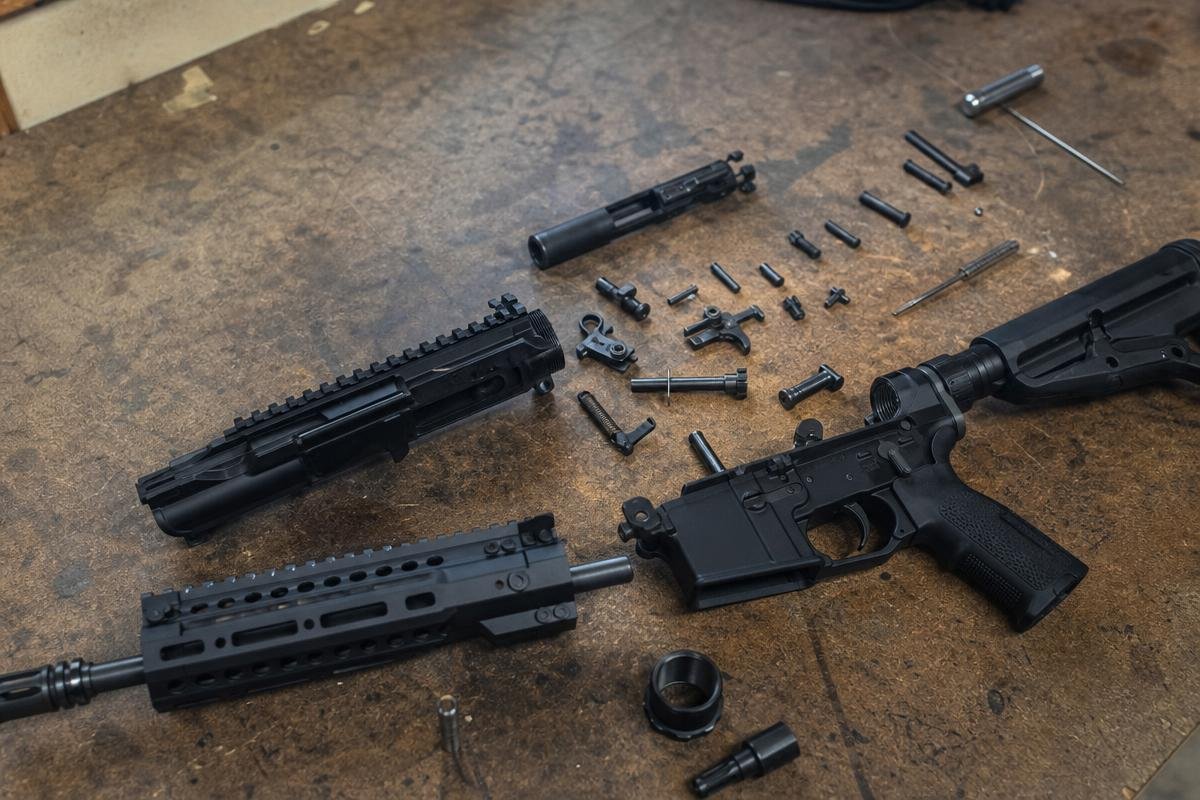
The AR-15 is one of the most modular rifles ever made, and that modularity is exactly what makes it confusing at first. We break down every major part, caliber choice, and build decision a new shooter needs to understand before buying. We ship complete uppers, barrels, and parts nationwide from our Denison, TX facility, so whether you're a first-time buyer nearby or reading this anywhere else in the country, we can get you what you need. Start with the essentials before you choose your first AR-15.
Not sure which upper fits your goals? Tell us your use case, whether that's home defense, target work, or deer hunting, and we'll recommend the right caliber and barrel. Browse uppers by caliber or call us to talk it through.
Key Takeaways
- The AR-15 is a semi-automatic rifle with a two-part receiver design that makes swapping calibers and parts straightforward.
- For AR-15 beginners, a complete upper assembly is the fastest way to get a functional rifle without building from scratch.
- Caliber choice matters: 5.56 NATO suits most general use, while 300 Blackout and 350 Legend fit hunting and suppressor applications.
- Gas system length directly affects recoil and reliability, and it must match your barrel length to function correctly.
- Texas firearm laws can change, so buyers should verify current federal, state, and local requirements before purchasing or building an AR-15.
How the AR-15 Is Built: a Part-By-Part Breakdown
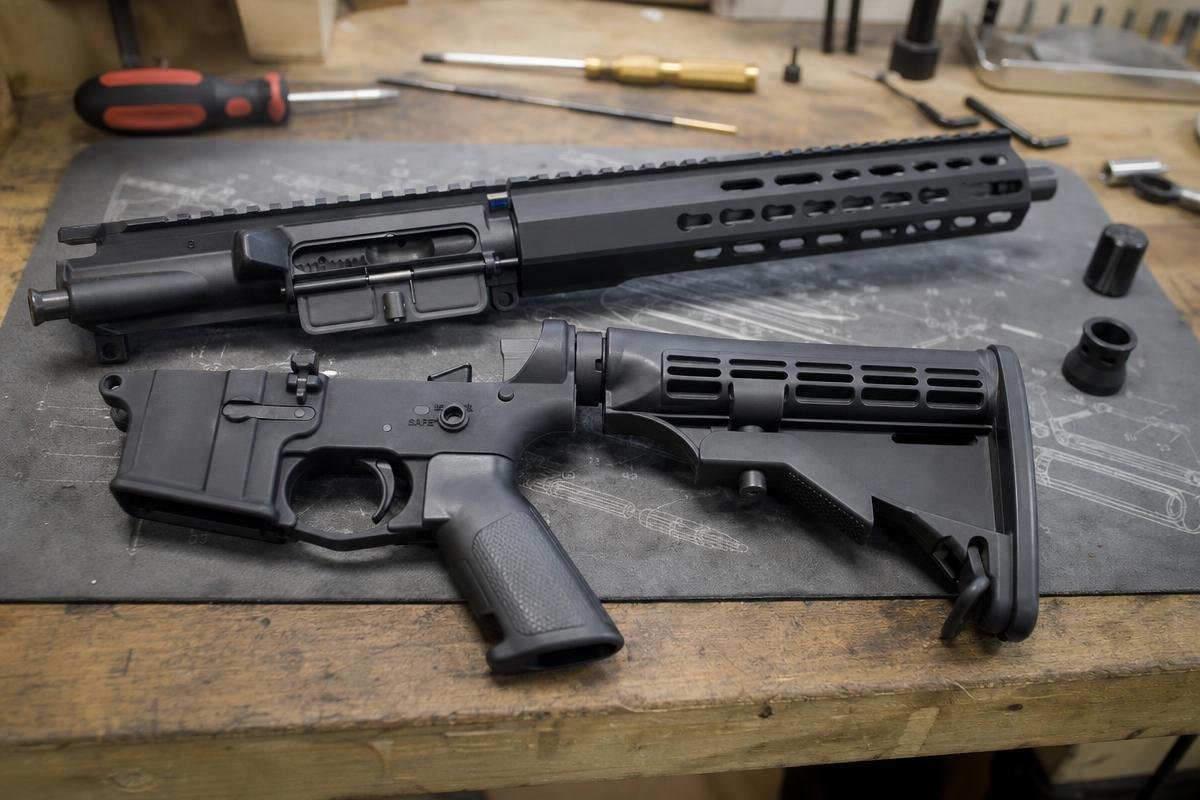
The AR-15 is two separate assemblies pinned together: an upper receiver and a lower receiver. Understanding that split is the foundation of any beginner's parts education. Buy the wrong upper for your intended use, or skip a component in your lower parts kit, and you will have a rifle that does not function correctly. Knowing each half before you spend money prevents that.
The Upper Receiver and What Lives Inside It
The upper receiver houses the barrel, the bolt carrier group, and the charging handle. A complete upper generally ships directly without an FFL transfer, but buyers should verify current federal, state, and local requirements before ordering. Inside the upper, the bolt carrier group does the real work: the bolt itself locks into the barrel extension, the cam pin rotates it, the firing pin strikes the primer, and the extractor pulls the spent case free. The forward assist lets you manually close the bolt if it fails to go fully into battery.
The dust cover keeps debris out of the action when the rifle is not in use. We carry complete AR-15 uppers in a range of calibers, and every one is built to order, assembled, headspaced, and function-checked in-house before shipping. Headspacing confirms that the chamber and bolt fit within specification.
The Lower Receiver and Lower Parts Kit
The lower receiver is the serialized component. It carries the federal serial number, and purchasing one requires going through a licensed FFL dealer. Most other lower components generally ship without an FFL transfer, subject to applicable law. The lower parts kit contains the trigger, hammer, disconnector, safety selector, magazine catch, bolt catch, and both takedown pins. You need every one of those pieces.
Leave one out and the rifle either will not fire or will not stop firing. The buffer tube, buffer, and recoil spring attach to the rear of the lower and manage the rearward energy of each shot. The pistol grip and stock complete the assembly.
The Barrel, Gas System, and Handguard
Gas system length controls how long the expanding gas pushes the bolt carrier rearward after the bullet passes the gas port. Carbine-length systems place the gas port approximately 7 inches from the chamber, mid-length systems approximately 9 inches, and rifle-length systems approximately 12 inches. Those figures describe approximate gas-port distances, not gas tube lengths. The carbine- and mid-length gas-port distances here assume a 16-inch barrel. Longer gas systems spread that pressure over more time, which softens felt recoil and reduces wear on the bolt carrier over thousands of rounds. A 16-inch barrel paired with a mid-length gas system is the most forgiving combination for a first build.
Handguards come in two basic types: drop-in and free-float. A free-float handguard attaches only at the upper receiver and never contacts the barrel, which removes a variable that can shift your point of impact under pressure. M-LOK is the current standard for attaching accessories along the handguard rail. Picatinny sections can be added where you need them. Free-float with M-LOK is what we recommend for most new builders.
Which Caliber Should a Beginner Choose?
Caliber is the first real decision you make as a new AR-15 owner. Get it wrong and you end up with a rifle that costs too much to feed, doesn't fit your use case, or requires a complete rebuild later. Here's a practical breakdown of the calibers that matter most for new shooters, including the ones that make sense for hunters in this part of North Texas.
5.56 NATO and .223 Wylde: The Standard Starting Point
Most beginners should start here. 5.56 NATO is the military-standard chambering, and it has the widest ammo availability and the lowest per-round cost of any AR caliber. You can find it at nearly every sporting goods counter in the region.
The follow-up question we hear constantly: can you shoot .223 Remington through a 5.56 NATO barrel? Yes. Can you shoot 5.56 through a .223 Remington barrel? Not safely unless the barrel manufacturer specifically confirms compatibility. That is exactly the problem .223 Wylde solves. The .223 Wylde chamber accepts both cartridges safely and cuts a tighter leade than a standard 5.56 chamber, which tightens groups at distance. Our .223 Wylde complete uppers and 5.56 NATO complete uppers are ready to drop onto a compatible mil-spec AR-15 lower receiver.
300 Blackout: When You Want Suppressor-Ready Versatility
300 Blackout was engineered to run in a standard AR-15 lower with a barrel swap only. Same bolt, same magazines, same lower. You do not need a different rifle. Where it earns its place is with subsonic loads through a suppressor, where 220-grain bullets can cycle reliably with the right setup and produce a reduced sound signature. Suppressed fire can still damage hearing, so appropriate hearing protection remains necessary.
If suppressor ownership is in your plans, this is the chambering to build around from day one. Our 300 Blackout complete uppers run a 1:8 twist barrel that stabilizes both supersonic and heavy subsonic loads, so the same upper handles range plinking and quiet suppressed work without a barrel change.
Other Calibers Worth Knowing About
Three calibers deserve a mention for specific use cases. 6.5 Grendel complete uppers push reliable performance past 600 yards, making them a serious option if long-range shooting is your goal. 6mm ARC complete uppers bridge precision shooting and hunting in a lighter package. 350 Legend is another option for whitetail hunting near the Red River.
Texas does not require straight-wall cartridges for deer hunting. Some other states have straight-wall-only rules, so check the regulations wherever you hunt. Start with 5.56 or .223 Wylde, then add a second upper when your use case expands.
Know the caliber you want but not sure on barrel length or twist rate? Call us at (888) 706-0633 and we'll spec the right complete upper for how you actually plan to shoot. Our complete uppers are built to order and generally ship without an FFL transfer, subject to applicable law.
Complete Rifle or Build Your Own: Which Makes More Sense for a First-Time Buyer?
This is the first real decision most new buyers face. Both paths work. The right one depends on how fast you want to shoot and how much control you want over the specs.
One thing that makes this decision easier in our area: Firearm requirements vary by jurisdiction and can change. Verify current magazine, registration, feature, and waiting-period requirements before buying or building. For a Denison-area buyer, the serialized lower still requires the applicable federal FFL transfer, and current federal, state, and local requirements should guide the build.
The Case for Buying a Complete Rifle
A complete AR-15 rifle is the fastest path from purchase to range day. Everything is already assembled, headspaced, and function-checked. You take delivery through your local FFL, run a function check, and you are ready to go. No assembly decisions, no compatibility questions, no gunsmith required.
The tradeoff is less control over individual specs. You get the barrel length, handguard, and caliber the manufacturer chose. For most beginners, that is not a problem. A standard 16-inch 5.56 carbine covers home defense, range work, and general use without compromise.
One practical note: complete rifles are serialized and must transfer through a local FFL dealer. If you are not close to one, factor that transfer step into your timeline.
The Case for Building From Parts
The most popular middle path for beginners is pairing a stripped or forged lower receiver with a complete AR-15 upper. The lower is the serialized part and requires an FFL transfer. The upper ships direct to your door with no FFL required, whether you're nearby or ordering from across the country.
Because our uppers arrive already headspaced and function-checked, the upper half drops onto your lower with no gunsmith work. You control the caliber, barrel length, and handguard while we handle the precision assembly. This approach is how to build an AR-15 for beginners without taking on unnecessary risk.
If you want a specific chambering, say 300 Blackout for suppressed use or 6.5 Grendel for longer range work, the upper-plus-lower path gives you that flexibility without starting from scratch on every component.
What a Realistic Budget Looks Like at Each Tier
Entry tier: mil-spec carbine components, 5.56 NATO or .223 Wylde chamber, standard handguard, chrome-lined or phosphate barrel. Covers home defense and range use without overspending.
Mid-range tier: chrome-moly or stainless barrel, free-float handguard, upgraded BCG coating. Noticeable improvement in accuracy and heat management over extended range sessions.
Premium tier: match-grade barrel, full free-float rail, precision BCG, optics-ready upper. Built for precision shooting where every component is chosen for consistency.
The short decision rule: if you want to shoot this weekend, buy a complete rifle. If you want a specific caliber or barrel spec, pair a complete upper with a lower and let us handle the assembly. Either way, browse our complete AR-15 rifles or call before you order and we'll match the build to your budget.
AR-15 Safe Handling and Range Fundamentals for New Shooters
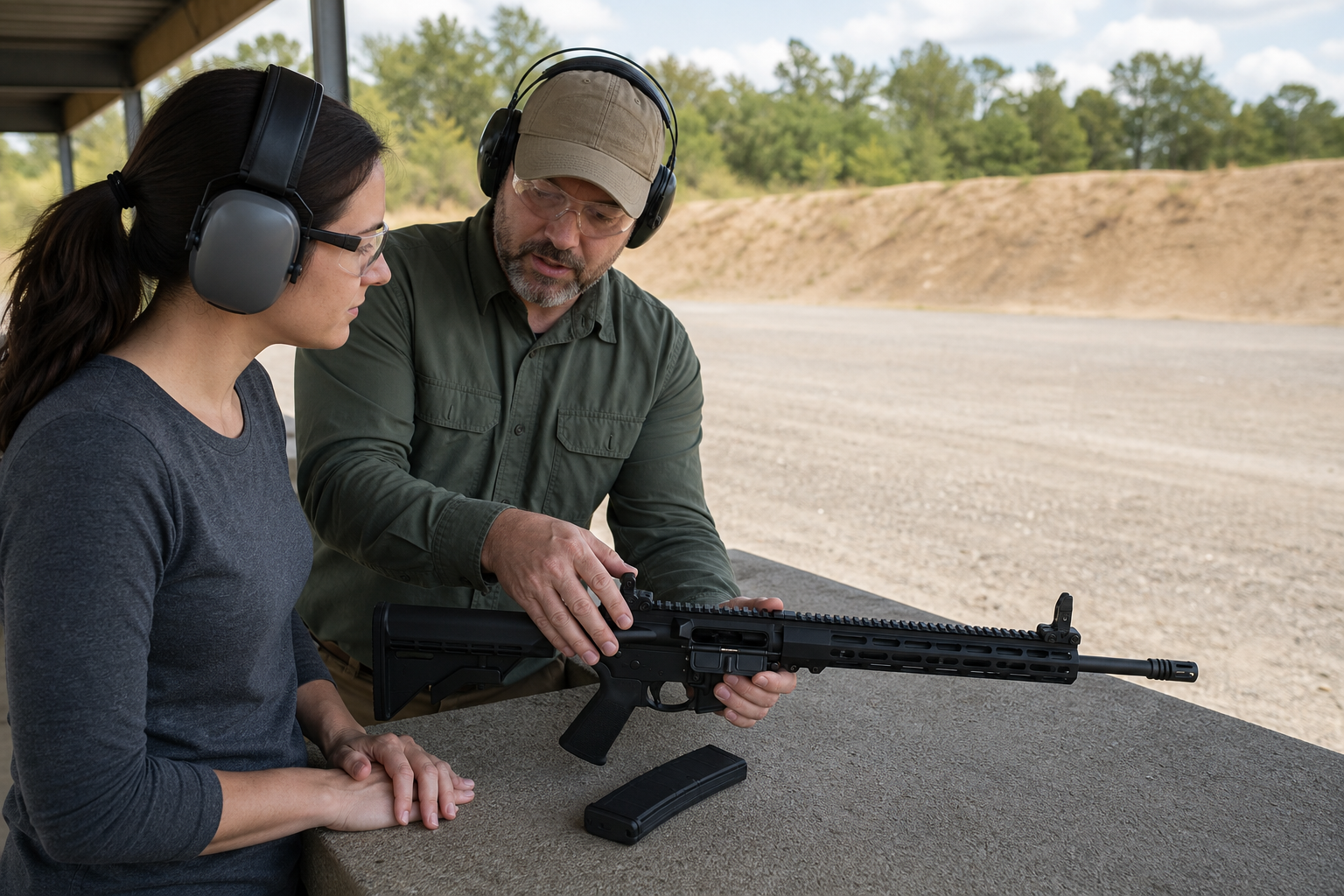
Some readers in our area have M4 experience from service and already know this material cold. If that's you, treat this as a quick review. If you're new to the AR-15 platform, read every word. Safe handling is not optional, and no one assumes you already know it.
The Four Rules Every AR-15 Owner Must Know
These four rules apply every time you touch a firearm. No exceptions.
- Treat every firearm as if it is loaded, always.
- Never point the muzzle at anything you are not willing to destroy.
- Keep your finger off the trigger until your sights are on target and you have decided to fire.
- Know your target and what is beyond it.
Violating one rule is a mistake. Violating two at the same time is how people get hurt. These rules exist because the AR-15 for beginners learning curve is steep enough without skipping the fundamentals.
Loading, Charging, and Clearing the Rifle
To load: insert a loaded magazine until it clicks, rack the charging handle fully rearward and release it to chamber a round, then rotate the safety selector to SAFE. The forward assist seats the bolt fully if it does not go into battery on its own. Close the dust cover when you are not actively shooting. It protects the chamber from debris and keeps the action cleaner between strings of fire.
To clear: rotate the selector to SAFE, remove the magazine, lock the bolt rearward using the bolt catch, then visually and physically inspect the chamber. If a round is present, it will eject when you lock the bolt back. Do not skip the physical inspection.
Stance, Grip, and Trigger Control Basics
Stand with feet shoulder-width apart, dominant foot slightly back, weight shifted forward onto the balls of your feet. This puts your body into the recoil rather than away from it. Grip the pistol grip firmly but not white-knuckle tight. Place your support hand as far forward on the handguard as comfortable. More forward hand placement gives you better muzzle control on follow-up shots.
Press the trigger straight to the rear without disturbing your sight picture. A standard mil-spec trigger breaks between 5.5 and 8.5 lbs. That pull weight is heavier than most people expect. Aftermarket triggers can reduce that significantly for precision work, but they are not something a new shooter needs on day one. Learn the platform first.
Questions about getting started? Call us at (888) 706-0633 or contact our team. We are happy to point you toward the right complete AR-15 rifles for a first build or purchase.
How to Clean and Maintain Your AR-15
You just got home from your first range trip. The rifle ran fine, but now it smells like powder and the BCG is coated in carbon. Cleaning an AR-15 is straightforward once you know the sequence. Regular cleaning matters because a dirty rifle is a rifle that will eventually fail you.
What You Need in a Basic AR-15 Cleaning Kit
You do not need an expensive kit. You need the right items. Pick up a caliber-matched bore brush, a chamber brush, a patch holder with cotton patches, and a cleaning rod or bore snake. Add a carbon scraper or dental pick for the bolt tail and gas key. For lubrication, a CLP like Slip 2000 or a separate solvent and oil will cover everything.
Outdoor ranges around North Texas kick up real dust, especially through the dry stretch of summer. Keep a clean rag in your range bag for a quick post-session wipe-down between full cleanings.
The Field-Strip and Clean Sequence
Order matters here. Follow this sequence every time.
- Remove the magazine and lock the bolt back. Visually and physically clear the chamber.
- Push out both takedown pins and separate the upper from the lower.
- Pull the charging handle and bolt carrier group rearward and out of the upper.
- Compress and remove the buffer and recoil spring from the buffer tube.
- Run a wet solvent patch through the bore first. Let it soak for two minutes, then follow with dry patches until they come out clean.
- Scrape carbon from the bolt tail, cam pin area, and gas key on the BCG. Wipe the carrier body clean.
- Wipe the upper interior and lower receiver.
- Re-lubricate the BCG at the bolt cam pin, carrier key, and all four rail surfaces before reassembly.
How Often Should You Clean Your AR-15?
Clean after every range session while you are still learning the rifle. Once you know how it runs, a well-lubricated mil-spec BCG can go 500 to 1,000 rounds between full cleanings without reliability issues.
Chrome-lined and nitride-coated BCGs shed carbon more easily than bare steel. If you are running one of our 5.56 NATO complete uppers or a 300 Blackout complete upper, check the BCG finish spec before you buy. A nitride-coated carrier cuts cleaning time noticeably between sessions.
Buying AR-15 Parts and Rifles in Denison, TX: What You Need to Know
Buying your first AR-15 in North Texas is straightforward once you understand what requires a dealer and what ships straight to your door. Knowing which items require an FFL transfer helps you avoid ordering the wrong item.
FFL Transfers and Texas Law Basics
Complete rifles and complete lower receivers must transfer through a licensed FFL dealer. That applies whether you order online or walk into a shop. Current state and federal requirements can change, so verify the applicable rules before purchasing.
Most parts ship direct with no FFL required. Barrels, handguards, bolt carrier groups, and complete AR-15 uppers all go straight to your address. Every upper we build is inspected and function-checked in-house before it ships from our Denison, TX facility. If you order a complete AR-15 rifle, plan to route it through your local FFL for the transfer paperwork.
Why Shooters in North Texas Choose AR15Parts.com
We build, headspace, and function-check complete uppers in-house, then ship from our facility at 4000 Texoma Pkwy, Denison, TX 75020. Reach us at (888) 706-0633 before you order if you need help matching a caliber to your use case.
We ship nationwide, but buyers can reach our team with questions before ordering. We stock mil-spec-compatible parts for a range of builds.
Frequently Asked Questions
What caliber should a beginner start with?
5.56 NATO and .223 Wylde are the right starting point for most new shooters. Ammo is widely available, recoil is manageable, and cost per round stays low for practice. The .223 Wylde chamber is the better pick if you want flexibility: it safely accepts both .223 Remington and 5.56 NATO without pressure concerns. Browse our .223 Wylde complete uppers or 5.56 NATO complete uppers to see what fits your build.
Do I need a background check to buy AR-15 parts or just the lower receiver?
The lower receiver generally requires an FFL transfer and an applicable background check. The upper receiver, barrel, handguard, bolt carrier group, and most other components generally ship directly, but buyers should verify current federal, state, and local requirements. If you need a complete upper, we ship it straight to you from our location at 4000 Texoma Parkway, Denison, TX 75020.
What is the legal minimum barrel length for a civilian AR-15 rifle?
Federal law sets the minimum rifle barrel length at 16 inches. A 16-inch barrel meets that requirement with margin, works well with carbine or mid-length gas systems, and balances velocity against handling. A rifle with a barrel under 16 inches generally qualifies as a short-barreled rifle (SBR) unless a permanently attached muzzle device brings the barrel to at least 16 inches. As of January 1, 2026, the federal NFA tax for SBRs is $0 under the One Big Beautiful Bill Act, but ATF Form 1 or Form 4 registration and approval are still required before making or receiving an SBR. Always verify current federal and local regulations before purchasing.
What is the practical difference between direct impingement and piston-driven AR-15s?
Direct impingement routes gas back through the gas tube into the bolt carrier group. A piston system uses a rod to push the BCG rearward, keeping more carbon out of the receiver. DI is lighter, less expensive, and the standard setup on most AR-15s. Piston runs cleaner between cleanings but adds weight and cost. Most beginners start with DI and never need to switch.
How long does it take to build an AR-15?
Lower assembly from a parts kit takes most first-timers one to three hours with an armorer's block, punch set, and torque wrench. Dropping a complete upper onto a finished lower receiver takes under a minute. Starting with a complete AR-15 upper in one of a wide range of calibers cuts the build time and the margin for error significantly.
Ready to move from reading to buying? Browse our full catalog of complete AR-15 rifles and individual components at AR15Parts.com. If you have a build question before you order, call us at (888) 706-0633. Our team is here to help you put together the right rifle for your use case, not just the most expensive one.
Ready to Get Started with AR15Parts.com?
Call (888) 706-0633 to speak with our team directly. We're ready to answer your questions, walk you through your options, and help you find the right solution for your needs. Whether you're just starting to plan or ready to move forward, we'll make the process simple and stress-free. Reach out today and let's talk about how we can help.