
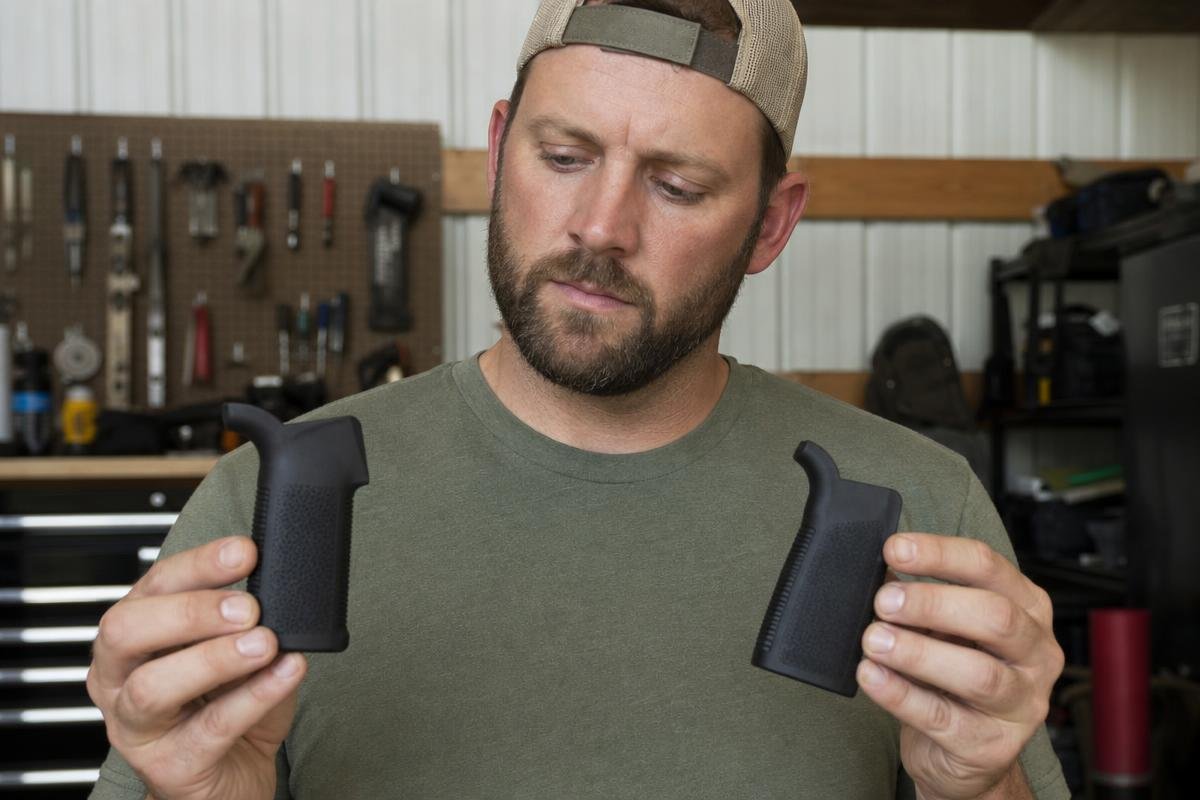
AR-15 grip types include traditional A2, 15-degree, 17-degree, and near-vertical rear pistol grips, each with a different feel at the wrist. The rear pistol grip, meaning the firing-hand grip behind the trigger, affects wrist alignment, trigger reach, and how consistently you can establish your firing grip. A small change in grip geometry can make a rifle feel more natural with the stock, optic, and shooting position you actually use.
AR15Parts.com ships from our Denison, TX facility. We focus on practical rear pistol-grip fit for AR-15 owners comparing parts for a new build or an ergonomic update.
Comparing grip profiles for an AR build? Get compatibility help before selecting parts.
Key Takeaways
- Rear pistol-grip angle changes the position of your firing wrist and index finger behind the trigger.
- Near-vertical rear pistol grips often suit shorter stock settings and squared shooting positions.
- More rearward-swept grips may feel better when the stock is extended and the firing elbow sits farther behind the receiver.
- Compare grip angle with circumference, beavertail shape, backstrap contour, and trigger reach, not degree labels alone.
AR-15 Grip Types: How Angle and Shape Affect Fit
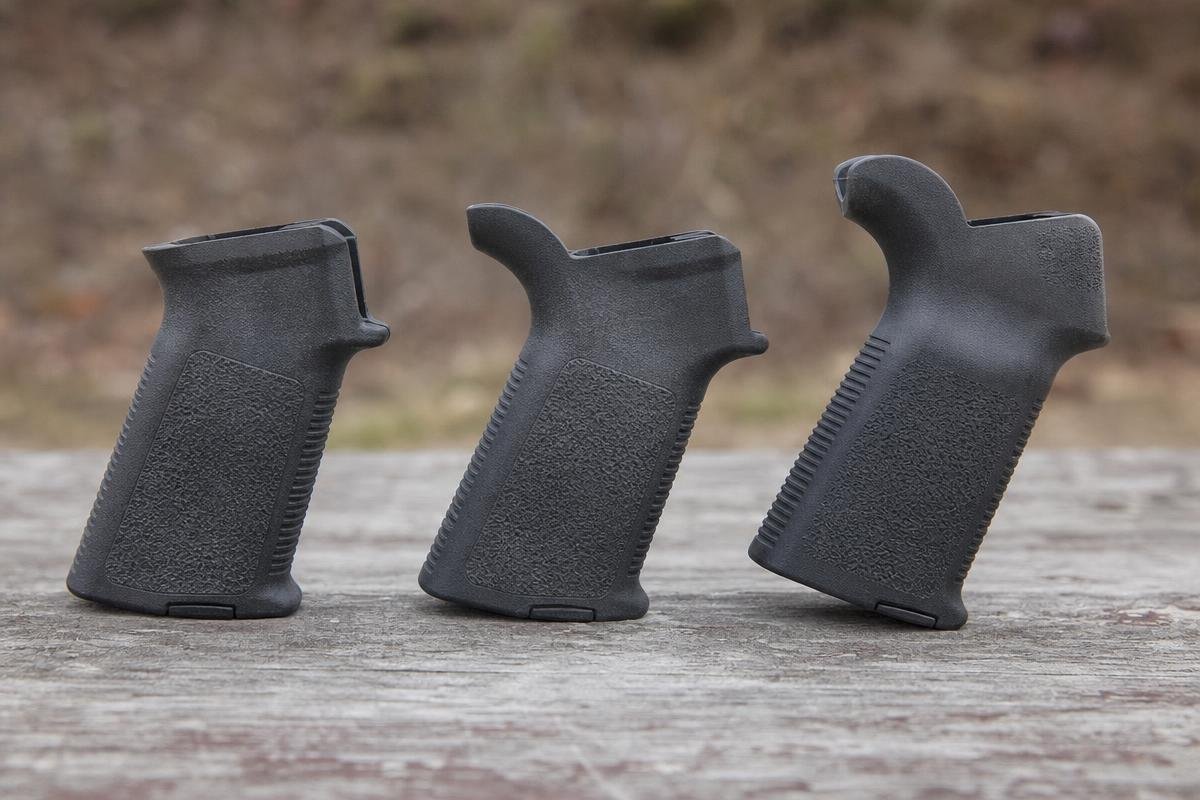
AR-15 grip angle is the rearward or upright orientation of the rear pistol grip relative to the lower receiver. It affects how much your firing wrist bends when you shoulder the rifle and where your index finger naturally meets the trigger face.
Grip Angle Is About Wrist Position
The purpose of grip angle is to place the firing hand in a comfortable working position behind the receiver. A more upright profile can reduce rearward wrist bend when the stock is set short or the rifle is held close to the body. A more swept profile can feel natural when the stock is extended and the shooter uses a conventional standing position.
Neutral alignment does not mean every wrist should look identical. Hand size, length of pull, trigger shape, optic height, and stance all change fit. Evaluate a grip with the rifle configuration you plan to use, including a complete AR-15 upper when the upper is part of the intended setup.
What Grip Angle Does Not Measure
Angle alone does not describe circumference, texture, palm swell, beavertail height, backstrap contour, or storage compartments. Those details affect how the grip fills your hand and how high your hand rides behind the receiver.
Manufacturers do not always publish angles from the same reference point. Compare degree labels only when measured using the same manufacturer convention. Across brands, the actual grip shape, trigger reach, and position of your wrist are more useful than a number on a product listing.
Why Small Changes Can Feel Noticeable
A small geometry change may be hard to detect during a brief handling check, then become apparent after repeated shouldering or a longer range session. The difference often shows up as a bent-back wrist, tension in the thumb web, or an index finger that no longer lands naturally on the trigger.
Grip angle is one element of rifle fit, not a replacement for proper stock placement or sound trigger technique. If you need help sorting components for a build, contact AR15Parts.com for product guidance.
15-Degree, 17-Degree, A2, and Vertical AR-15 Grip Types Compared
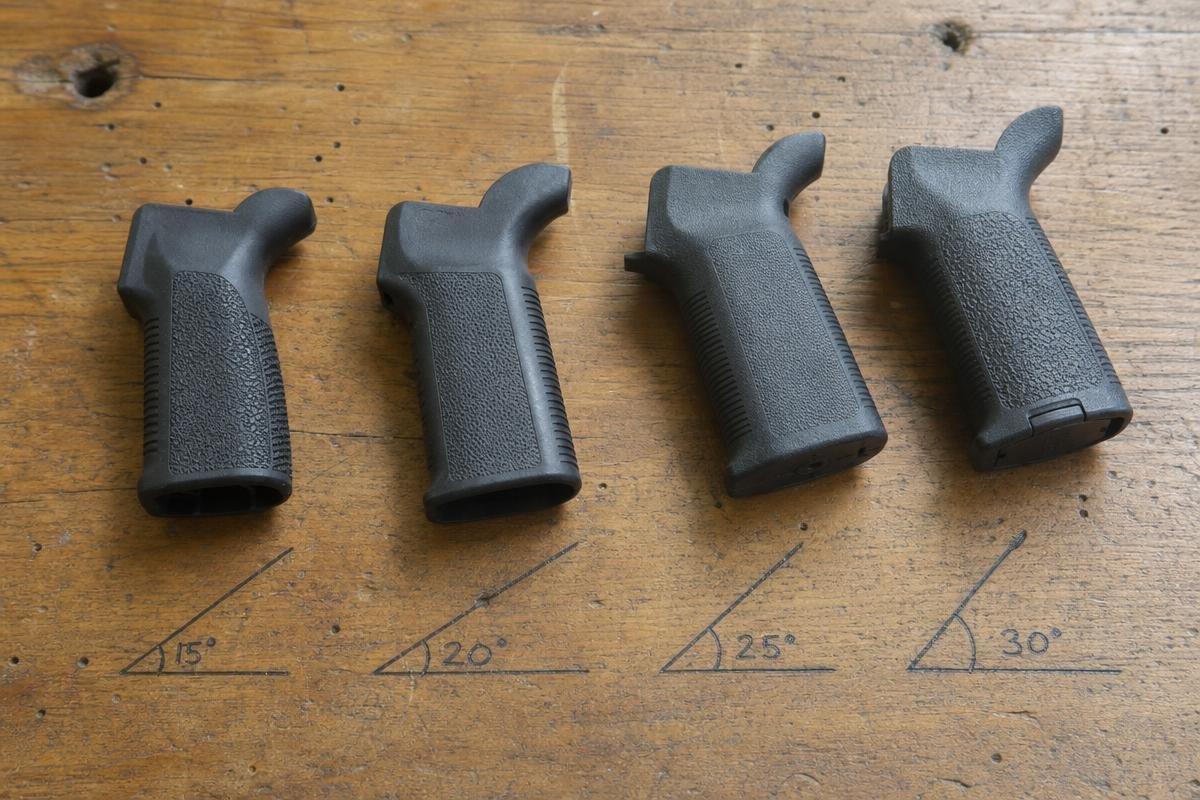
When brands use the same measurement convention, a 15-degree grip is generally more upright than a 17-degree grip. Traditional A2 grips, often described as roughly 25 degrees, have more rearward sweep, while a near-vertical rear pistol grip places the hand more directly behind the trigger. These labels are useful starting points, but they do not replace handling the complete geometry of the grip.
Is a 15-degree or 17-degree AR-15 Grip Better?
Neither is automatically better. A 15-degree profile may favor a closer stock setting, while a 17-degree profile can be a useful middle ground for general-purpose rifle setups.
The two-degree difference can matter for some shooters, but grip thickness and backstrap shape may create a larger change in trigger reach. Check the grip with your normal stock position before deciding which profile is right for you.
How to Read the Grip-Angle Comparison
The table compares broad categories, not fixed rules. Beavertail height, palm swell, trigger reach, stock length, and how you mount the rifle determine the final fit.
| Grip category | Approximate wrist posture | Common shooting position | Stock relationship | Likely benefit | Fit consideration |
|---|---|---|---|---|---|
| 15-degree | More upright | Squared stance, rifle held close | Shortened or collapsed stock | Can reduce rearward wrist bend | May feel cramped with a long stock setting |
| 17-degree | Moderately upright | Standing or general-purpose use | Mid-length stock position | Balanced transition from swept profiles | Grip width can still alter trigger reach |
| Traditional slanted | More rearward sweep | Conventional standing posture | Longer stock position | Familiar feel on many standard rifle setups | Can increase wrist bend when held close in |
| Near-vertical rear pistol grip | Most upright | Compact setups and squared stance | Shortened stock position | Places the hand more directly behind the trigger | May not suit an extended stock position |
Use this chart to narrow the field, then perform an unloaded fit check with the stock, trigger, and optic setup you expect to use.
What Each Grip Category Usually Changes
A 15-degree or 17-degree grip can be a sensible choice for shooters who want an upright hand position without moving all the way to a near-vertical profile. Traditional slanted grips retain more rearward sweep and can suit a rifle carried with a longer length of pull.
Here, “near-vertical rear pistol grip” means the firing-hand grip on the lower receiver. It does not mean a front vertical grip mounted on the handguard, which is a separate support-hand accessory decision.
Browse complete AR-15 rifles and related build components when you want to compare furniture as part of a complete configuration. For compatibility questions, call (888) 706-0633.
How Grip Angle Affects Wrist Alignment, Recoil Control, and Fatigue
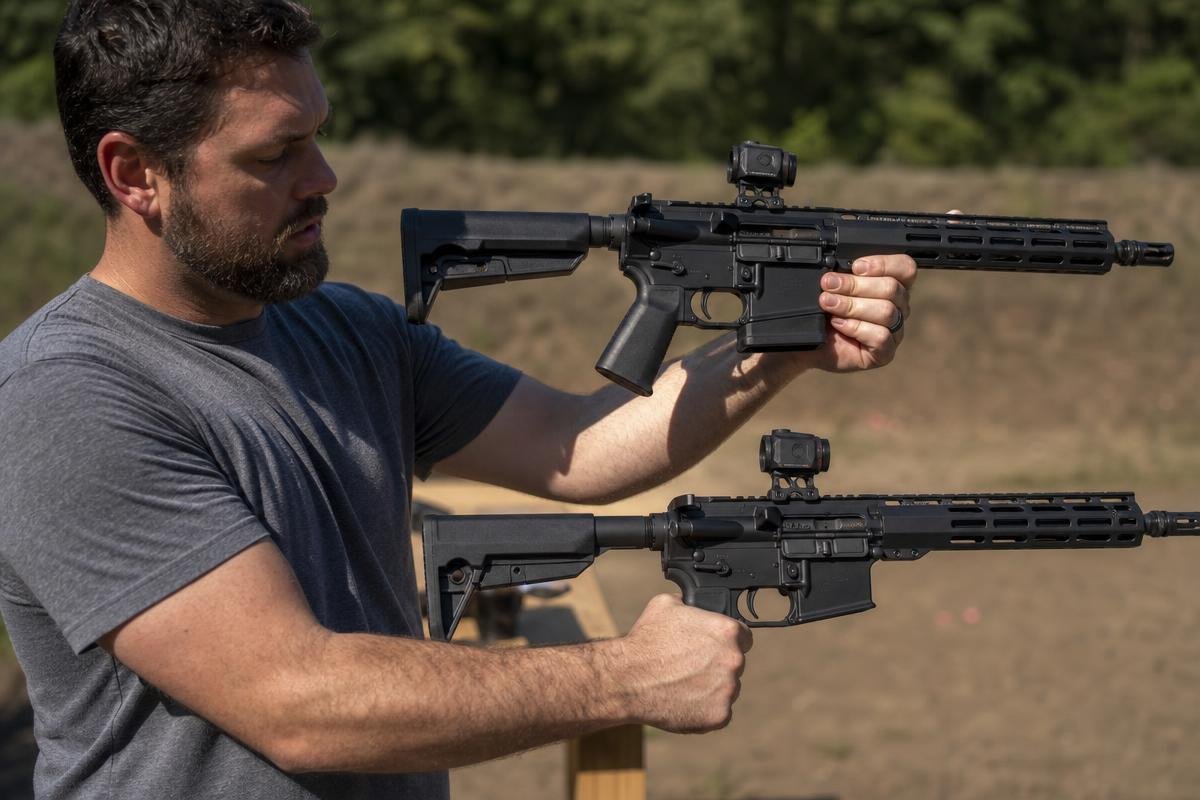
Grip angle affects the physical connection between your firing hand, trigger, and stock. A profile that suits your normal posture can reduce unnecessary hand pressure and help you return to the same firing-hand position after each shot.
Grip angle does not alter cartridge energy, gas-system function, or cycling. It changes ergonomics, which can influence how consistently you hold the rifle during practice.
Does a Vertical AR-15 Grip Reduce Wrist Strain?
A near-vertical rear pistol grip may reduce wrist strain when it matches a shorter stock setting and your normal stance. It is not universally more comfortable, especially when the stock is extended farther from the body.
Look for a relaxed wrist, a comfortable thumb web, and a trigger finger that reaches the face of the trigger without shifting your hand. If those points worsen, a more upright angle may not be the better fit for your setup.
Control Is Not the Same as Recoil Reduction
An AR-15 pistol grip does not reduce recoil by itself. Ammunition, rifle weight, muzzle-device choice, stock placement, stance, and training affect felt recoil and muzzle movement. How grip angle affects control is more about repeatability. A grip that lets you apply steady firing-hand pressure can make it easier to maintain your hand position and trigger-finger contact between shots.
Trigger Reach and Hand Tension
Grip geometry can change where the pad of your index finger lands on the trigger. If the grip is too thick, too narrow, too upright, or too swept for your hand and stock setting, you may reach with a finger joint or change your hand position to find the trigger.
Signs of poor fit include a bent-back wrist, excessive squeeze pressure, forearm tension, a crowded trigger guard, or discomfort after several magazines. Grip fit also depends on hand size and trigger reach. If you are selecting a rifle rather than changing parts, compare the receiver layout and furniture on our complete AR-15 rifles.
A Safe Wrist-Position Self-Check
Check grip fit only after removing the magazine, locking the action open, verifying the chamber and magazine well are empty, and pointing the rifle in a safe direction. Keep the finger indexed outside the trigger guard during an ordinary fit check.
- Set the stock to the length you normally use.
- Shoulder the rifle in a safe direction with your normal stance.
- Place your firing hand high on the backstrap without twisting your wrist to reach the grip.
- Assess whether your indexed trigger finger can reach the trigger area naturally without placing it on the trigger.
- Check for wrist extension, pressure in the thumb web, finger crowding, or a hand that must shift to reach the trigger.
Repeat the check from standing, kneeling, or supported positions you actually use. For help matching a grip to the rest of a build, contact AR15Parts.com.
Match Your Grip Type to Your Shooting Position and Rifle Setup
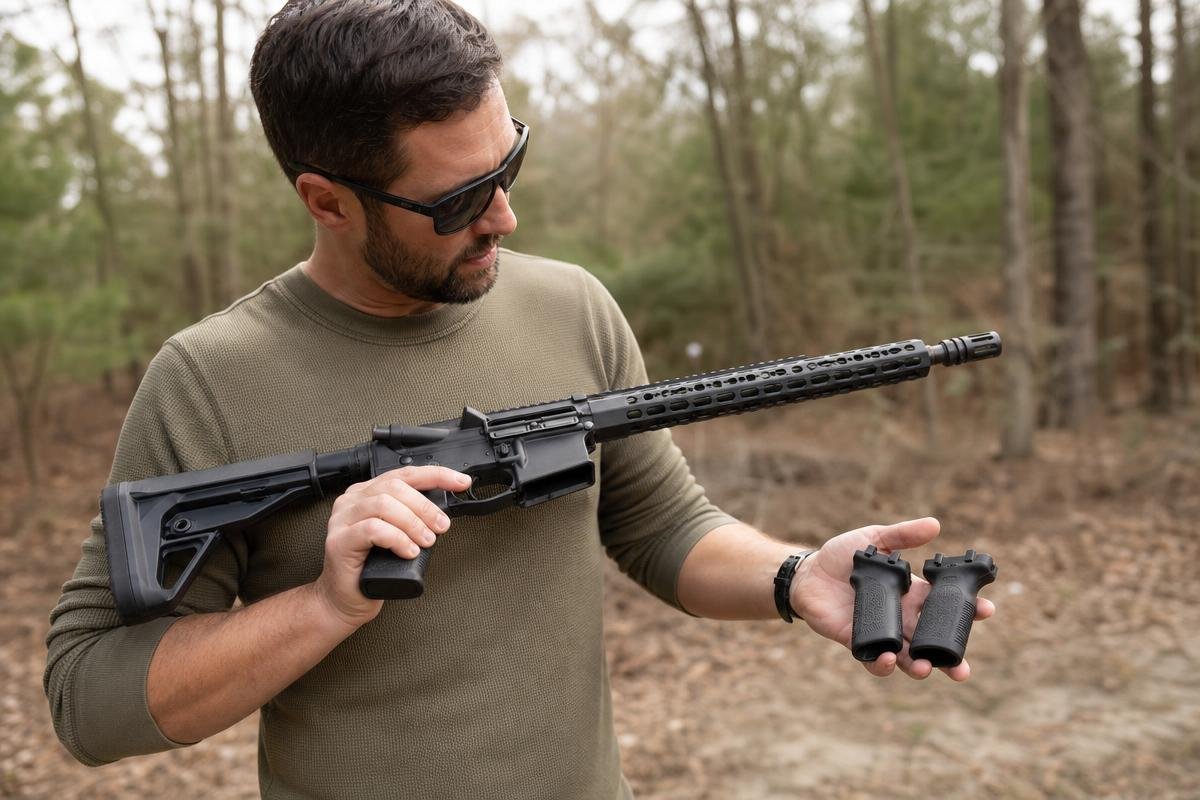
The best grip angle is the one that gives you a relaxed wrist and repeatable trigger reach in the positions you use most. Start with stock length and posture, then assess angle, circumference, and backstrap shape together.
Standing With a Conventional Stock Position
A moderately swept or traditional grip often feels familiar when the stock is extended to a normal length. In that position, the firing elbow may sit farther behind the receiver and a more rearward grip angle can follow the natural line of the hand.
If you are selecting from complete AR-15 rifles, shoulder the rifle first and confirm that your trigger finger reaches the shoe without stretching forward or curling sharply inward.
Compact Handling and Closer Stock Positions
A near-vertical rear pistol grip can feel more natural when the stock is shortened and the rifle is held closer to the chest. This is common with a squared stance and compact carbine handling.
The upright profile may reduce rearward bend as the firing hand moves closer to the receiver. It does not guarantee better recoil management, but it can support a more repeatable hand position for some shooters.
Bench-Supported and Prone Considerations
Bench and prone positions change elbow placement and can change which stock setting feels comfortable, as well as how trigger reach and wrist angle feel. A grip that feels right while standing may place the wrist less comfortably once the rifle is supported and the shooter is lower behind the optic.
Test the unloaded rifle in the positions you expect to use. Confirm that you can reach the trigger with the pad of your finger while maintaining a firm, natural firing-hand grip and proper muzzle direction.
Fit Factors Beyond Grip Angle
Hand size matters as much as angle for many shooters. A larger circumference can move the trigger farther from short fingers, while a slim grip may not provide enough support for a larger hand. A taller beavertail can also change how high your hand sits behind the receiver.
Trigger shoe shape matters too. A flat shoe, curved shoe, or wider face can change finger placement even when the grip stays the same. If you are pairing a grip with one of our complete AR-15 uppers, assess the complete rifle rather than selecting a grip by angle alone.
We ship parts and accessories from our Denison, TX facility. Complete rifles and lowers ship to the buyer's FFL for transfer.
Need to compare grip-to-stock fit before ordering parts? Call us at (888) 706-0633.
Rear Pistol Grip Fit and Front Hand Support Are Different Decisions
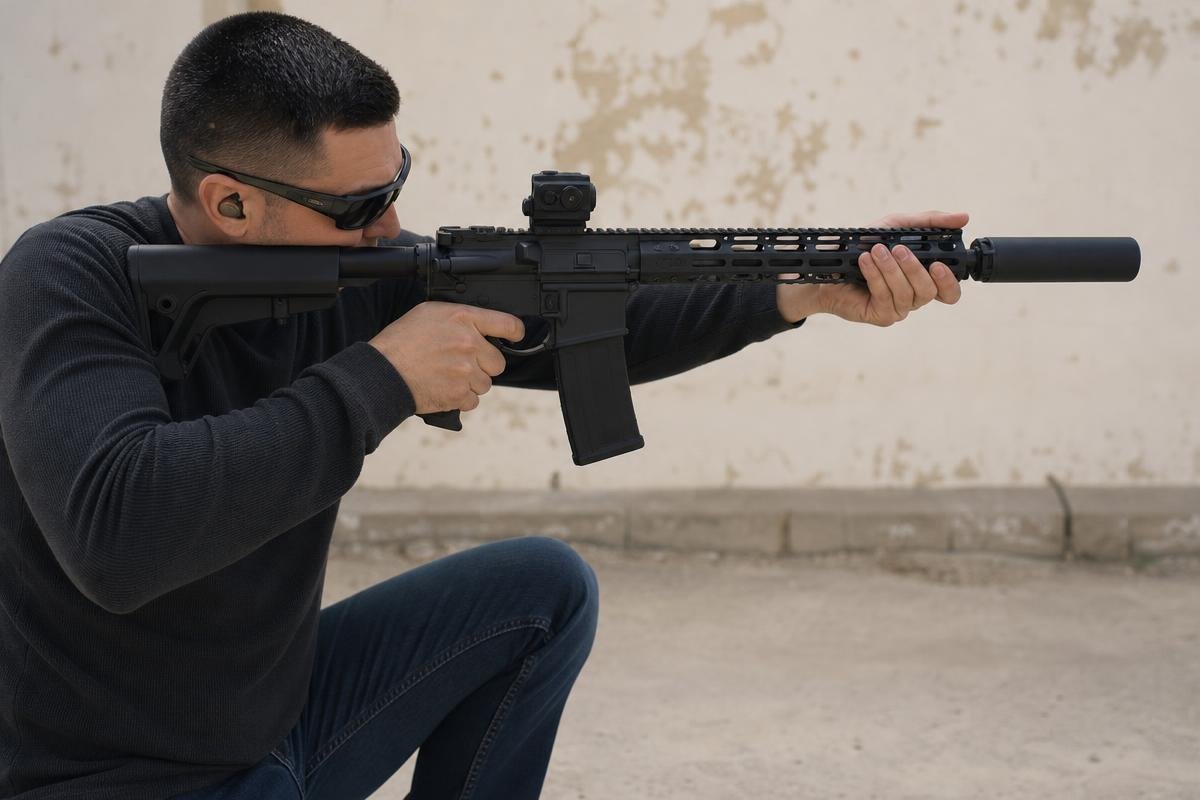
Your rear pistol grip and front support work together, but they serve different roles. The rear grip establishes firing-hand placement and trigger reach, while the handguard determines support-hand reach and control of the front of the rifle.
What the Rear Pistol Grip Controls
The rear pistol grip controls firing-hand placement, trigger reach, and wrist alignment behind the receiver. Its shape determines whether your hand settles comfortably when you establish a firing grip.
An upright rear grip may suit a compact configuration or squared stance. A more swept grip can feel natural with a longer length of pull or conventional shoulder-fired position. In either case, check that your trigger finger reaches the trigger face without stretching or crowding the trigger guard.
What the Handguard Controls
An AR-15 handguard is not the same thing as a vertical grip. The handguard provides support-hand reach, accessory mounting space, heat management, and control of the front end. A front vertical grip is an accessory mounted to the handguard. It can change support-hand contact, but it does not replace the rear pistol grip or correct poor firing-hand trigger reach.
Evaluate the Rifle as a Connected System
Grip fit depends on more than angle. Length of pull, handguard length, optic height, rifle balance, and upper configuration all influence how the rifle settles into your shoulder and hands.
A tall optic mount can raise head position, and a front-heavy setup can change how far forward your support hand must reach. Compare grip choices alongside the intended upper, stock setting, and support-hand placement, especially when selecting from complete AR-15 rifles or building around one of our complete AR-15 uppers.
Perform installation and fit checks with the firearm unloaded, pointed in a safe direction, and in line with applicable laws and manufacturer instructions. For parts compatibility questions, contact AR15Parts.com.
A Practical AR-15 Grip Fit Test Before You Commit to a Build
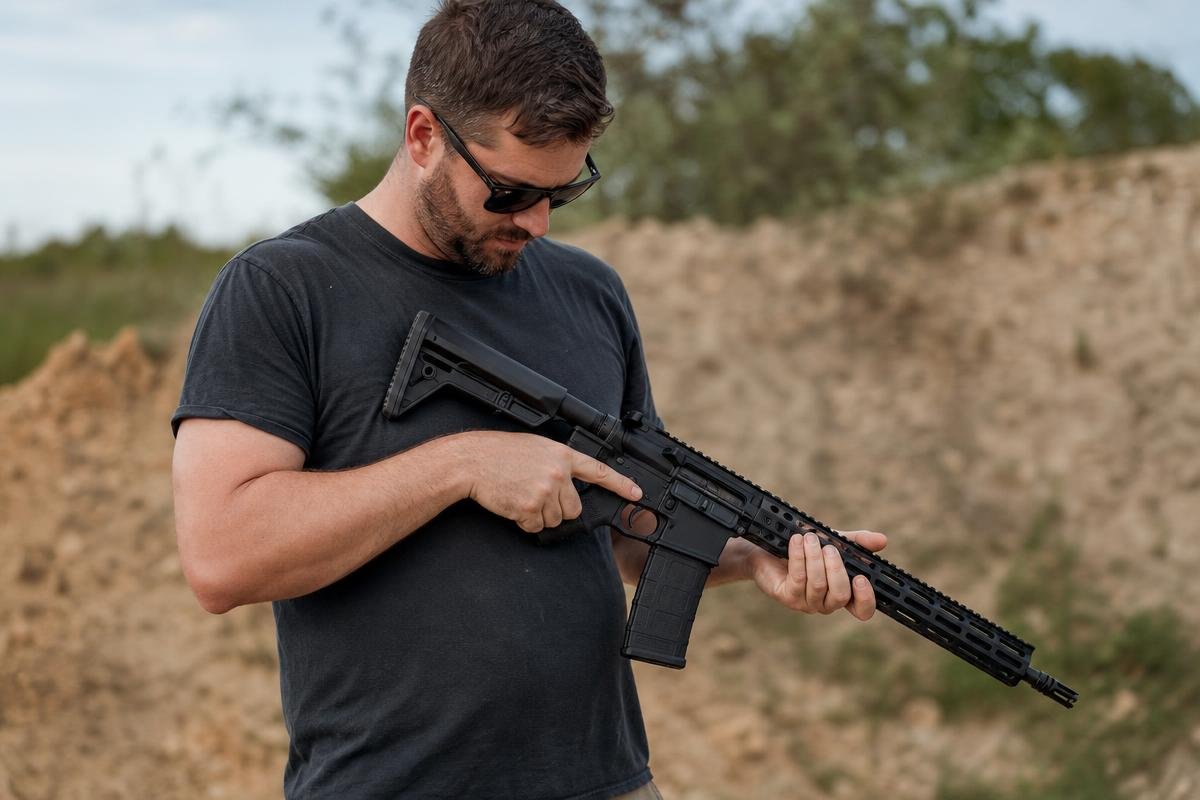
An unloaded-rifle fit check can reveal poor trigger reach, uncomfortable wrist position, and hand pressure before a grip becomes part of your build. Keep the stock, optic, and shooting posture consistent so you can identify what the grip itself changes.
1. Verify the Rifle Is Unloaded and Safe to Handle
Point the muzzle in a safe direction. Remove the magazine, lock the bolt open, and visually and physically inspect the chamber, bolt face, and magazine well. Keep live ammunition away from the work area and keep the finger outside the trigger guard during an ordinary fit check. If actual trigger reach must be evaluated, use an inert training replica or a manufacturer-approved unloaded dry-fire procedure with a safe backstop.
2. Set the Stock Where You Normally Use It
Set the stock at the length you normally use from standing or prone. A short stock changes elbow position and trigger reach, which can make one grip feel better or worse than it will during actual use. Shoulder the rifle with your normal cheek weld. This gives you a useful baseline before comparing a grip on a lower receiver or one of our complete AR-15 rifles.
3. Check Natural Trigger Reach
Place your firing hand high on the backstrap, then index your trigger finger outside the trigger guard while evaluating natural reach. Your indexed finger should align naturally with the trigger area without stretching forward, curling sharply inward, or shifting your hand around the grip. Poor reach often shows up as pressure in the web of your hand or a finger that lands at the first joint. That position can affect trigger press consistency and control.
4. Repeat the Check From More Than One Position
Check the same grip from standing, seated, and a supported position. Use a bench rest, barricade, or bag support if that matches how you normally shoot. Watch for wrist strain, forearm tension, pressure at the web of your hand, and an elbow that must flare or tuck unnaturally. A grip can feel fine during a brief standing check but create fatigue during a longer supported session.
5. Change One Ergonomic Variable at a Time
Change the grip first, then repeat the same stock setting and optic setup. Do not swap the grip, stock length, optic height, and handguard position at once. One change at a time helps identify what corrected the fit problem. If you need help selecting parts for a build, contact AR15Parts.com with your rifle setup and normal shooting position.
AR-15 Parts and Support from Denison, Texas
We ship from our Denison, TX facility. When comparing build components, assess grip fit alongside the lower receiver, trigger, stock position, and intended upper configuration.
Grip angle is one part of a lower parts setup. Consider grip mounting, trigger reach, stock length, and intended use before choosing a rear pistol grip. Review our complete AR-15 uppers if you are planning a rifle around a specific barrel length or caliber.
Build Fit Around the Rifle's Intended Role
A grip should fit how you plan to shoot, not simply how it feels during a quick handling check. A compact rifle may favor a more upright hand position, while a bench or prone-oriented setup may feel better with a more traditional sweep.
Confirm that the grip works with your lower receiver and does not interfere with your preferred stock position or trigger access. For part questions or help matching components, contact AR15Parts.com at (888) 706-0633.
Frequently Asked Questions
Is a More Vertical Grip Better for a Short Rifle Setup?
A more vertical grip often feels natural on a short rifle with a closer stock position. It can place your wrist nearer a neutral position when using an AR-15 from a squared stance. Your hand size, length of pull, and preferred shooting position still decide if it fits better.
Does Grip Angle Reduce Recoil?
No, grip angle does not reduce cartridge recoil. A suitable AR-15 grip angle may support better wrist alignment, helping you maintain consistent grip pressure and recoil control through a string of shots. Gas system, buffer weight, rifle mass, and ammunition determine recoil impulse.
Is a 15-Degree Grip Better Than a 17-Degree Grip?
No, a 15-degree grip is not automatically better than a 17-degree grip. When measured from the same reference point and using the same convention, a 15-degree AR-15 pistol grip angle is more upright than a 17-degree angle. Test both with your stock set to your normal length before committing to a build.
Can Grip Geometry Change Trigger Reach?
Yes, grip geometry can change where your trigger finger lands on the trigger shoe. Grip width, backstrap shape, and angle all affect finger placement. You want a repeatable trigger press without shifting your firing hand or adding side pressure.
Do I Need a New Stock When I Change Pistol Grips?
No, you do not need a new stock for every grip change. Check your stock position first, because a different grip may feel better with one or two adjustment positions changed. Compare grip options with your complete lower setup and complete AR-15 rifle configuration in mind.
What Are Signs That My Current Grip Does Not Fit?
Forced wrist extension, excess hand pressure, forearm tension, and inconsistent trigger-finger placement are common warning signs. You may also notice that your hand shifts after recoil or that your wrist becomes sore during longer range sessions. A grip should let you establish the same firing-hand position each time.
Compare grip options with the rest of your lower and stock setup in mind. For product questions, call us at (888) 706-0633 or contact our team online.
Ready to Get Started with AR15Parts.com?
Call (888) 706-0633 to speak with our team directly. We're ready to answer your questions, walk you through your options, and help you find the right solution for your needs. Whether you're just starting to plan or ready to move forward, we'll make the process simple and stress-free. Reach out today and let's talk about how we can help.