
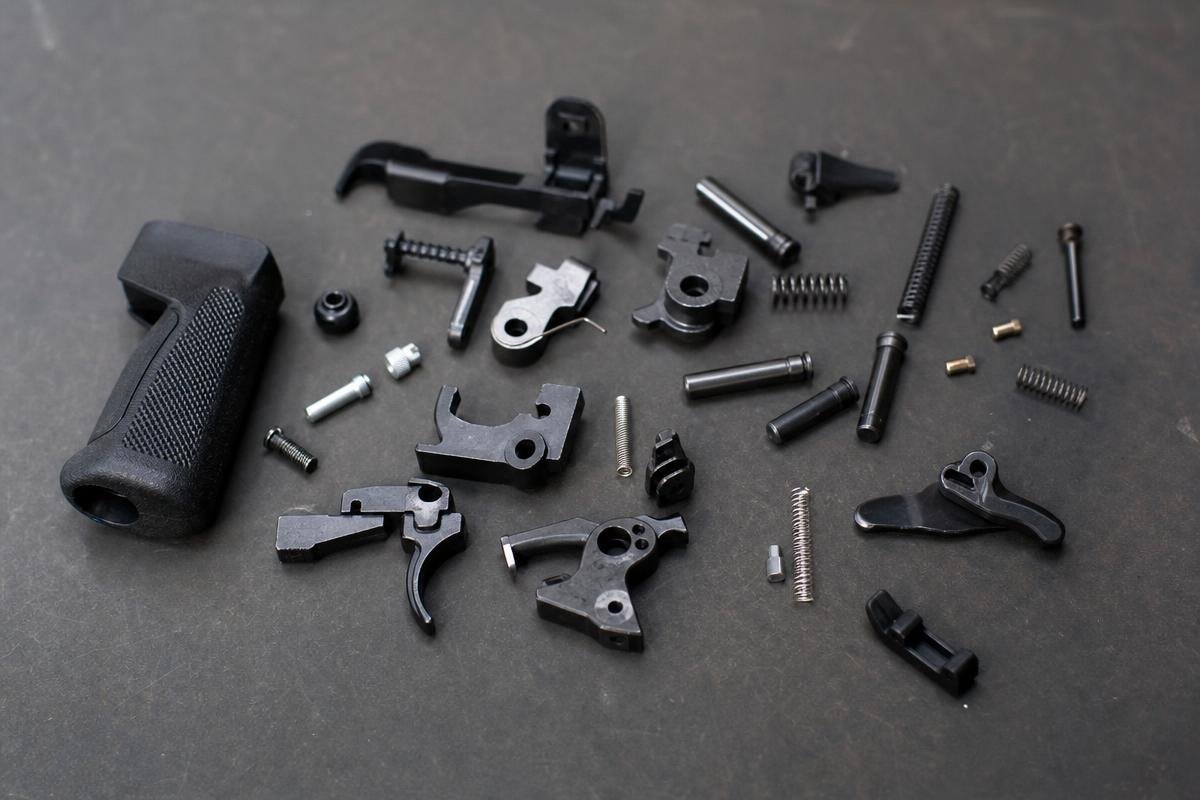
A complete AR-15 lower parts kit is what turns a stripped lower receiver into a functional, fire-ready firearm. Every trigger, hammer, spring, pin, detent, and buffer-retainer component has a job. We offer lower parts kits online and ship orders nationwide from our Denison, TX facility. Check individual kit contents and current availability before ordering. Need help choosing the right kit for your build? We can point you in the right direction.
Key Takeaways
- A complete AR-15 lower parts kit typically includes numerous components spanning the trigger group, safety group, catches, pins, detents, and buffer-retainer assembly. Exact contents vary by manufacturer.
- Skipping or substituting a single detent, spring, or pin can cause malfunctions or prevent the lower from functioning at all.
- Mil-spec-pattern kits are designed for compatible mil-spec-pattern receivers, but kit contents and manufacturer requirements must be checked before installation.
- Upgraded trigger group components are available as drop-in replacements within a standard kit footprint for builders who want better pull weight.
- Texas law places no state-level restrictions on home assembly of an AR-15 from a stripped lower and a commercial parts kit for eligible individuals.
What Is an AR-15 Lower Parts Kit?
An AR-15 lower parts kit is the collection of small internal components that installs into a stripped lower receiver to make it mechanically functional. It covers the fire control group, safety selector, magazine catch, bolt catch, pistol grip hardware, and related pins and springs. What it does not include is the stripped receiver itself, the stock, the buffer tube, or any part of the buffer system. Those are separate purchases.
Stripped Lower vs. Complete Lower vs. Lower Parts Kit
These three terms get mixed up constantly, so here is the clear breakdown. A stripped lower receiver is the serialized aluminum housing with no internal parts installed. It is the regulated component, the one that requires an FFL transfer. A complete lower is a stripped receiver with the full internal kit installed plus a stock and buffer tube assembly. A lower parts kit sits in the middle: just the internal components, no receiver, no stock, no buffer hardware.
If you already have a stripped lower and a stock assembly, an AR-15 lower parts kit is exactly what you need to bridge the gap. Pair it with a compatible complete upper in 5.56 NATO, 300 Blackout, 6.5 Grendel, or another supported caliber, and you have the basis for a functional rifle after compatibility and function checks.
Mil-Spec vs. Enhanced Kits
Manufacturers use different materials, finishes, and dimensional specifications for lower-parts kits. Review the listed component specifications and confirm compatibility with the receiver before ordering.
Enhanced kits swap the standard trigger group for a drop-in cassette or a skeletonized trigger shoe. Some add an ambidextrous safety selector or an upgraded pistol grip. The added cost is real. For most builders, a quality mil-spec trigger group is enough. If you are already weighing trigger upgrades, give us a call before you buy and we will walk you through single-stage versus two-stage options for your intended use.
Every Part in a Standard AR-15 Lower Parts Kit: a Full Checklist
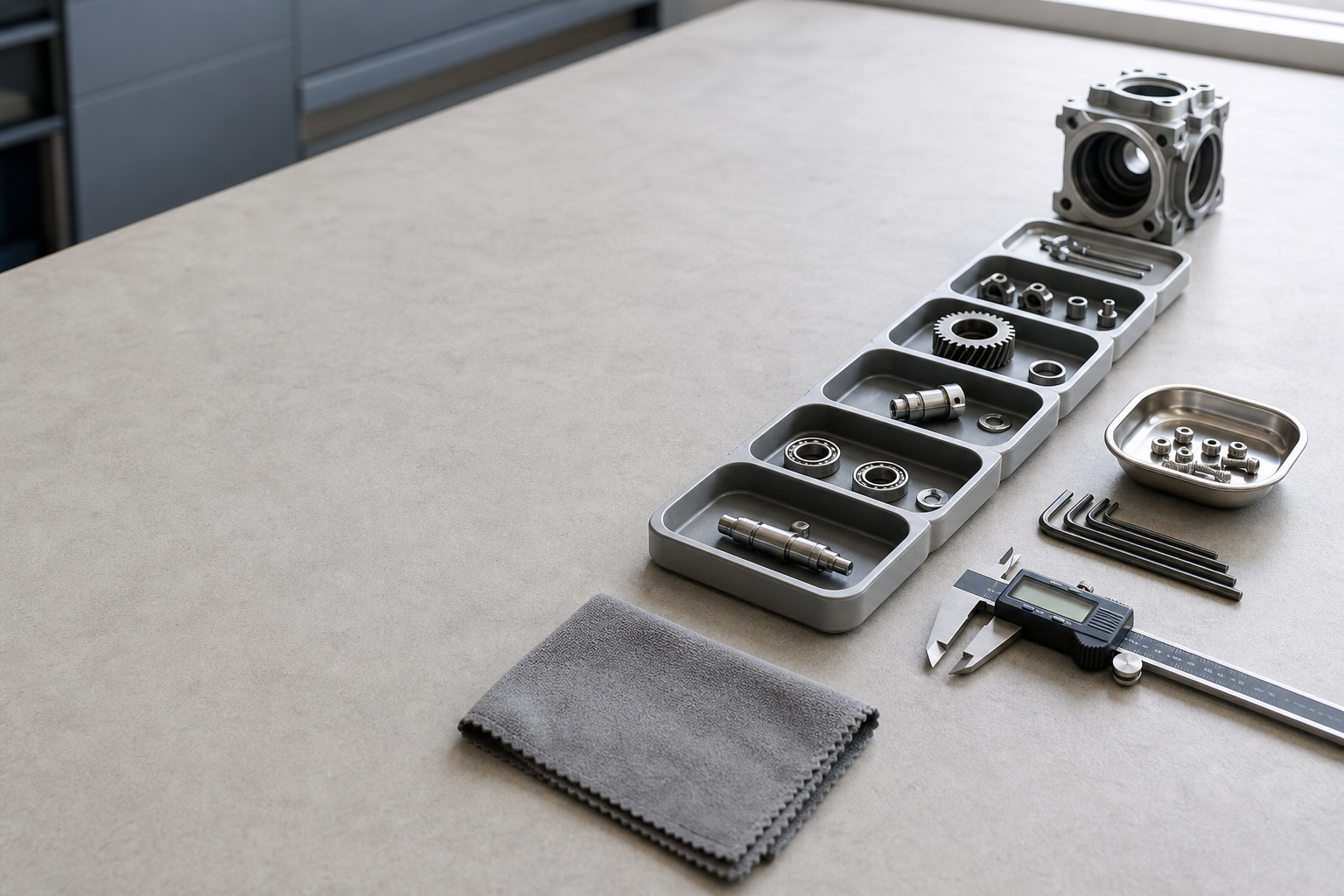
A standard mil-spec-pattern kit may contain dozens of components across several groups, including fire control, safety and grip hardware, magazine and bolt catches, takedown and pivot pins, the buffer retainer, and the trigger guard. Exact contents vary by manufacturer. Every one of them has a job. Miss one during assembly and your rifle either won't function or won't function safely. This checklist covers each part by name and function so nothing gets overlooked.
Fire Control Group
The fire control group is the mechanical core of the assembly. It controls when the rifle fires and resets between shots. A standard mil-spec-pattern fire control group includes the following core parts.
- Trigger: Pivots on the trigger pin. Releases the hammer when you press it rearward.
- Hammer: Pivots on the hammer pin. Strikes the firing pin forward when released. Held in reset position by the disconnector.
- Disconnector: Catches the hammer during cycling and holds it until the trigger resets.
- Disconnector spring: Supports the disconnector and must be installed in the manufacturer-specified orientation.
- Trigger spring: Returns the trigger forward after each press.
- Hammer spring: Drives the hammer forward with enough force to reliably detonate a primer.
- Trigger pin: Retains the trigger and disconnector in the lower receiver.
- Hammer pin: Retains the hammer in the lower receiver.
Safety Selector, Pistol Grip, and Grip Hardware
The safety selector rotates 90 degrees between SAFE and FIRE on standard mil-spec lowers. It is retained by a selector detent and a selector detent spring. The detent spring seats inside the pistol grip cavity, which is why it launches across the room the moment you lift the grip before the screw is seated. Keep a finger over that hole. The grip screw and grip screw lock washer secure the grip to the lower and trap the spring in place.
Magazine Catch and Bolt Catch
A conventional magazine-catch assembly includes the catch, magazine-catch spring, and threaded release button. The bolt catch holds the bolt carrier group open on an empty magazine. Its conventional assembly includes the catch, roll pin, plunger, and plunger spring. Confirm the exact parts supplied with the kit before starting.
Takedown and Pivot Pins
Two pins allow the upper and lower receivers to separate for field-stripping. Each pin has a dedicated detent and a detent spring. The front pivot pin detent spring is the single most commonly lost part in any kit. It installs under spring tension, and the spring and detent can eject if they are not controlled. Use a proper pivot-pin installation tool and follow the receiver manufacturer’s instructions so the pivot pin captures the detent correctly.
Buffer Retainer and Spring
The buffer retainer is a small plunger that drops into the rear of the lower receiver before the buffer tube threads on. It prevents the buffer from backing out of the receiver extension during disassembly. The buffer retainer spring sits beneath it. Both parts must be seated and captured by the buffer tube before the tube is torqued down. Without the retainer, the buffer and action spring will not remain contained when the receivers are separated.
Trigger Guard
On a conventional removable trigger guard, the front commonly uses a spring-loaded detent and the rear is secured by a roll pin. Follow the receiver and trigger-guard manufacturers’ instructions because attachment designs vary. The roll pin is small and easy to damage if you drive it without a block. Note that some polymer lowers have an integral trigger guard molded in, making this part redundant. On a standard forged aluminum lower, the trigger guard and its roll pin are required components in the complete kit.
Ready to order your complete lower parts kit? Check current availability and shipping details with our team before ordering.
What Is NOT Included in a Lower Parts Kit?
A standard kit gives you the fire control group, grip, safety selector, and all the small pins and springs that go inside the lower receiver. What it does not give you is a complete, functional lower assembly. Three major components are sold separately, and skipping any one of them means your rifle will not cycle.
Buffer Tube, Buffer, and Buffer Spring
The buffer tube, also called the receiver extension, threads into the rear of the lower and houses the action spring and buffer. It is not included in many standard lower-parts kits, so verify the specific kit contents. You need to buy it separately.
Buffer weight matters for your specific build. A carbine-length gas system typically runs a standard 3.0 oz carbine buffer. Buffer requirements depend on the complete operating system, ammunition, and manufacturer guidance. Mil-spec and commercial carbine receiver extensions have different outside profiles and diameters, so the stock body must match the tube specification.
Stock or Pistol Brace
The stock or brace attaches to the buffer tube and is also sold separately. Fixed, adjustable, and folding stocks each have different buffer tube compatibility requirements. Give us a call if you need help sorting out which fixed, adjustable, or folding option fits your build intent.
Lower Receiver
The serialized lower receiver is the legal firearm. It transfers through an FFL dealer and is never bundled into a parts kit. The internal kit installs into it. You need the receiver in hand before any of your other parts have a home.
Once your lower is complete, it pairs with any mil-spec upper. We carry complete uppers in 5.56 NATO, 300 Blackout, 6.5 Grendel, and more, ready to drop onto your finished lower.
Mil-Spec Materials: What to Look for in a Quality Kit
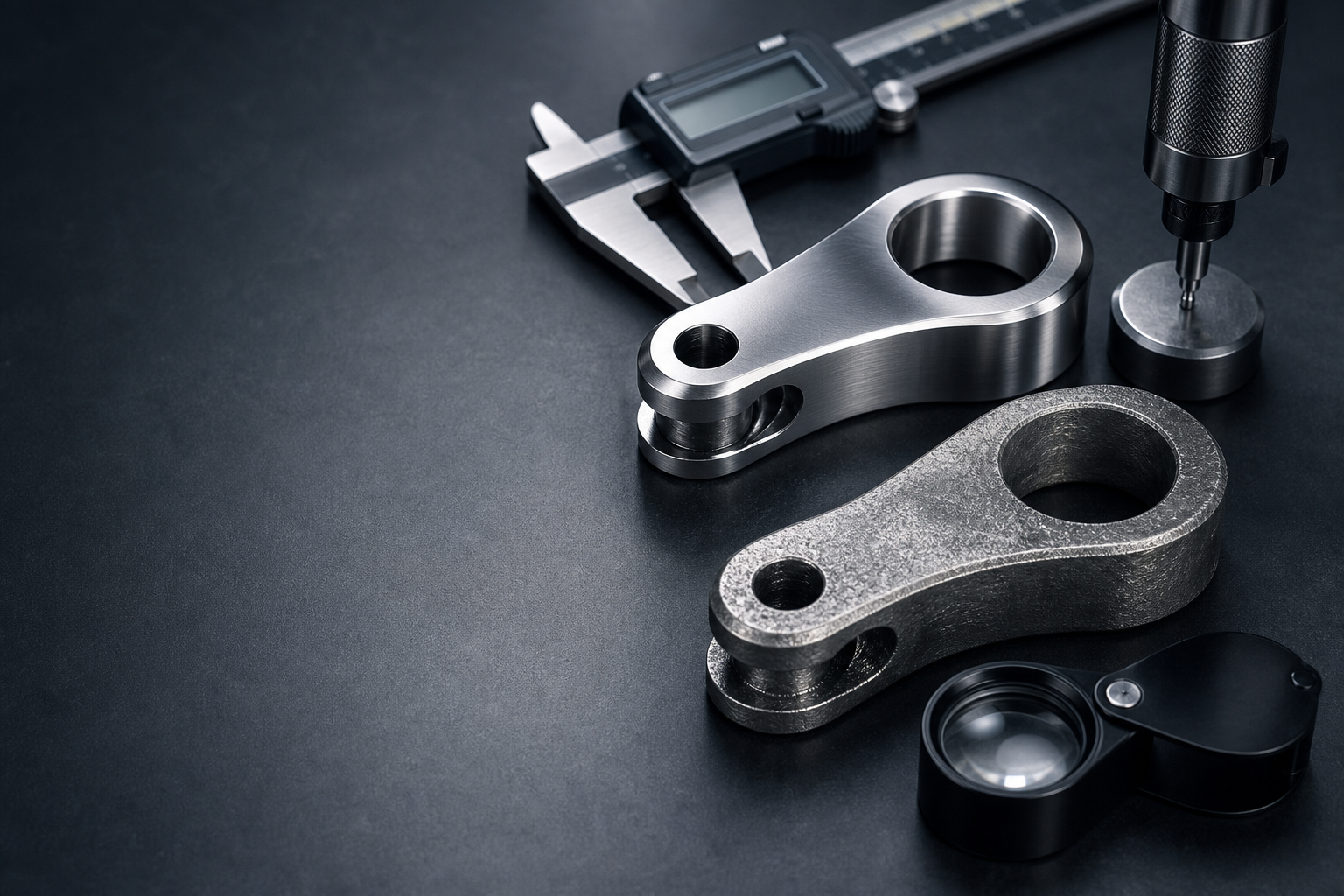
Not all lower parts kits are built to the same standard. The difference between a reliable build and a frustrating one often comes down to the steel grade, heat treatment, and finish on the parts inside the kit. Here is what the spec actually means in measurable terms.
Steel Grades and Finishes
The trigger, hammer, and disconnector in a quality kit should be investment-cast or machined from 8620 or 9310 steel, then case-hardened. These grades hold up under repeated impact stress. Springs should be music wire or chrome-silicon, both of which resist fatigue over thousands of cycles.
For corrosion protection, look for phosphate (Parkerized) or nitride (Melonite/QPQ) finishes on the fire control group. Both protect against moisture. Nitride runs slightly slicker out of the box. Avoid kits that list fire control parts as MIM with no manufacturer named. Metal injection molding is acceptable for some components, but quality varies significantly depending on who made them and how they were processed.
7075-T6 Aluminum and Hard Coat Anodizing
The lower receiver itself is not part of the kit, but it directly affects which parts work for your build. The receiver should be 7075-T6 aluminum, not 6061. The approximate ultimate tensile strength is 83,000 psi for 7075-T6 versus 45,000 psi for 6061-T6; these are material-strength figures, not chamber pressures. Hard coat anodizing per MIL-A-8625 Type III brings surface hardness to 60 to 70 Rockwell C. That surface resists wear at the pin holes and selector detent channel, where most lower receivers show wear first.
Forged vs. Billet vs. Polymer Receivers
Many forged, billet, and polymer receivers accept standard AR-15 lower components, but proprietary features can change which parts are required.
- Forged: Made from 7075-T6 hammered into shape under pressure. Grain structure follows the part geometry. This is what military spec calls for.
- Billet: Machined from a solid block. Allows design features like flared mag wells and integrated trigger guards. Not inherently stronger than forged.
- Polymer: Lightweight and less expensive. May not retain the trigger guard roll pin as securely under hard use.
If you are pairing a receiver with a new upper, the receiver material and finish matter as much as the parts kit going inside it. Have questions about which kit fits your receiver or build? Call us at (888) 706-0633 and we will point you to the right parts.
Building an AR-15 in Texas: What the Law Says
Firearm laws and classifications can change, and requirements depend on the builder, receiver, configuration, and jurisdiction. Verify current federal, state, and local requirements with official sources or a qualified firearms attorney before starting a home build.
The stripped lower is the serialized firearm, so it must transfer through an FFL, and federal rules still govern who may possess a firearm and how home-built firearms may be sold. This is a factual observation, not legal advice. Consult an attorney if you have questions about your specific situation.
For eligible builders across North Texas, that clarity is exactly why home builds are so popular here. You choose the parts, you do the work, and the finished rifle is set up the way you want it.
How to Choose the Right Kit for Your Build
Standard Mil-Spec LPK
Most builders do not need anything beyond a standard mil-spec kit. If you are putting together a general-purpose carbine, a home-defense rifle, or a range gun, the standard kit covers every function you need. Trigger pull weight varies by manufacturer; mil-spec-pattern triggers are commonly cited at approximately 5.5 to 9.5 lbs. That is the right call for the majority of AR-15 lower builds.
Enhanced LPK
Competition shooters and precision builders are the exception. An enhanced kit typically swaps the standard trigger group for a single-stage or two-stage drop-in cassette that breaks at 3 to 4 lbs with minimal creep. Some enhanced kits also include an ambidextrous safety selector and a flared mag well grip. If you are not shooting competitively or building a dedicated precision rifle, the added cost is hard to justify.
Caliber Considerations
One of the most practical things about the AR-15 platform is that the lower is caliber-agnostic. Many standard lower components can support compatible configurations in 5.56 NATO, .223 Wylde, 300 Blackout, 6.5 Grendel, .224 Valkyrie, and other AR-15 calibers. Magazine, buffer, bolt, receiver, and manufacturer requirements can vary by caliber. The only exception is the AR-10/.308 platform, which requires a larger kit designed for that receiver.
That flexibility pays off around the Red River. You can build one lower and run a 5.56 upper for range days, then swap to 300 Blackout complete uppers for feral hog hunting. We carry complete uppers in a wide range of calibers, designed for compatible mil-spec-pattern lower receivers; confirm the magazine, buffer, bolt, and manufacturer requirements for the chosen caliber.
Common Assembly Mistakes and How to Avoid Them
Even experienced builders make the same three mistakes during lower assembly. Small springs under tension, tight cavities, and a few directional parts catch people off guard. Knowing where the problems happen keeps your fire control parts seated correctly and your build moving forward without a trip to the hardware store.
Losing the Pivot Pin Detent Spring
The pivot-pin detent spring is under compression during installation and can eject if it is not controlled. Use a proper pivot-pin installation tool and follow the receiver manufacturer’s instructions while seating the pivot pin. If this spring goes missing, the pivot pin has nothing to hold it and your upper will not stay attached to the lower.
Crushing the Selector Detent Spring
The selector detent spring sits inside the pistol grip cavity, directly beneath the safety selector detent. The spring must be seated against the detent before you tighten the grip screw. If you torque the grip screw down before the spring is properly positioned, it crushes or cants the spring and the selector will not hold its position.
Installing the Hammer Spring Backwards
Install the hammer spring in the orientation shown by the parts manufacturer. Incorrect orientation can cause ignition or reset problems. If you are running an enhanced trigger group with anti-rotation pins such as KNS pins, those pins are directional. Check the manufacturer's orientation diagram before pressing them in. Once the pins are seated, confirm the hammer spring legs are positioned correctly before closing the lower.
Building Your AR-15 in Denison, TX: Local Resources
Denison sits in Grayson County, right along the Texas-Oklahoma border in the Lake Texoma region. Home builds are common here, and the freedom to complete a stripped lower with a commercial AR-15 lower parts kit is a big part of why. North Texas has a strong hunting and recreational shooting culture, which can shape how builders choose parts.
Why Local Builders Source Parts Directly
AR15Parts.com ships orders nationwide from our Denison, TX facility. For current availability and estimated shipping times, contact our team.
Regional hunting runs toward feral hog and whitetail deer, which makes larger-bore calibers like 450 Bushmaster and 458 SOCOM genuinely useful here. Your standard mil-spec lower will accept an upper in either caliber without modification.
Pairing Your Lower Build with the Right Upper
Once your lower is assembled, the next decision is which upper to run. Our complete uppers are built to order, assembled in-house, headspaced, and function-checked before shipping. Check compatibility with your lower and other components before ordering. For longer-range shooting across open North Texas terrain, 6.5 Grendel complete uppers are a strong fit. For a full breakdown before you order, review our AR-15 BCG types and coatings guide.
Frequently Asked Questions
How many parts are in a standard lower parts kit?
A standard mil-spec AR-15 lower parts kit contains between 28 and 32 individual components. That count includes every spring, pin, detent, and small hardware piece. Some manufacturers market a "31-piece" kit when the trigger guard and its roll pin are included. Count the small parts before you start. Losing a detent spring mid-assembly is a common and avoidable delay.
Does a lower parts kit include the buffer tube and stock?
No. The AR-15 lower parts kit does not include the buffer tube (receiver extension), buffer, buffer spring, or stock. Those come in a separate buffer tube kit or stock kit. You need both to build a functional lower. Budget for both before you order.
What does 'mil-spec' actually mean for a lower parts kit?
It means the components are dimensioned and finished to military specifications. Fire control parts are typically 8620 or 9310 steel with a phosphate or nitride finish. Springs are made to MIL-SPEC wire standards. A mil-spec AR-15 lower parts kit is the correct baseline for most builds. "Enhanced" or "commercial" kits substitute upgraded trigger groups, ambidextrous controls, or improved grips, but mil-spec is the proven starting point.
Can I use the same lower parts kit for different calibers?
Yes. The AR-15 fire control group parts and all lower components are caliber-agnostic. The lower receiver does not contact the cartridge. One compatible kit can support configurations in 5.56 NATO, .223 Wylde, 300 Blackout, .224 Valkyrie, and other AR-15 calibers, but magazine, buffer, bolt, and manufacturer requirements can vary. The one exception is the AR-10 or .308 platform, which uses a larger lower and a different kit entirely.
What tools do I need to install a lower parts kit?
- Armorer's lower vise block (captures the mag well, prevents receiver damage)
- Roll pin punches: 1/16-inch and 3/32-inch
- Hammer
- Needle-nose pliers
- Torque wrench set to the grip and fastener manufacturer’s specification
Support the receiver with an appropriate fixture while driving roll pins to reduce the risk of scratches, bent pins, or receiver damage.
How much does a lower parts kit cost?
Pricing varies by manufacturer, included components, trigger group, buffer assembly, and stock. Compare current kit contents and product pricing before ordering, then browse compatible complete uppers in 5.56 NATO, 300 Blackout, and other supported calibers.
Your lower build starts with the right parts in the right kit. Browse our complete selection of mil-spec and enhanced lower parts kits, complete uppers in 19-plus calibers, and everything else you need to finish your build at AR15Parts.com. Questions before you order? Call us at (888) 706-0633. We are based in Denison, TX, and our team can help with product and compatibility questions.
Ready to Get Started with AR15Parts.com?
Call (888) 706-0633 to speak with our team directly. We're ready to answer your questions, walk you through your options, and help you find the right solution for your needs. Whether you're just starting to plan or ready to move forward, we'll make the process simple and stress-free. Reach out today and let's talk about how we can help.