
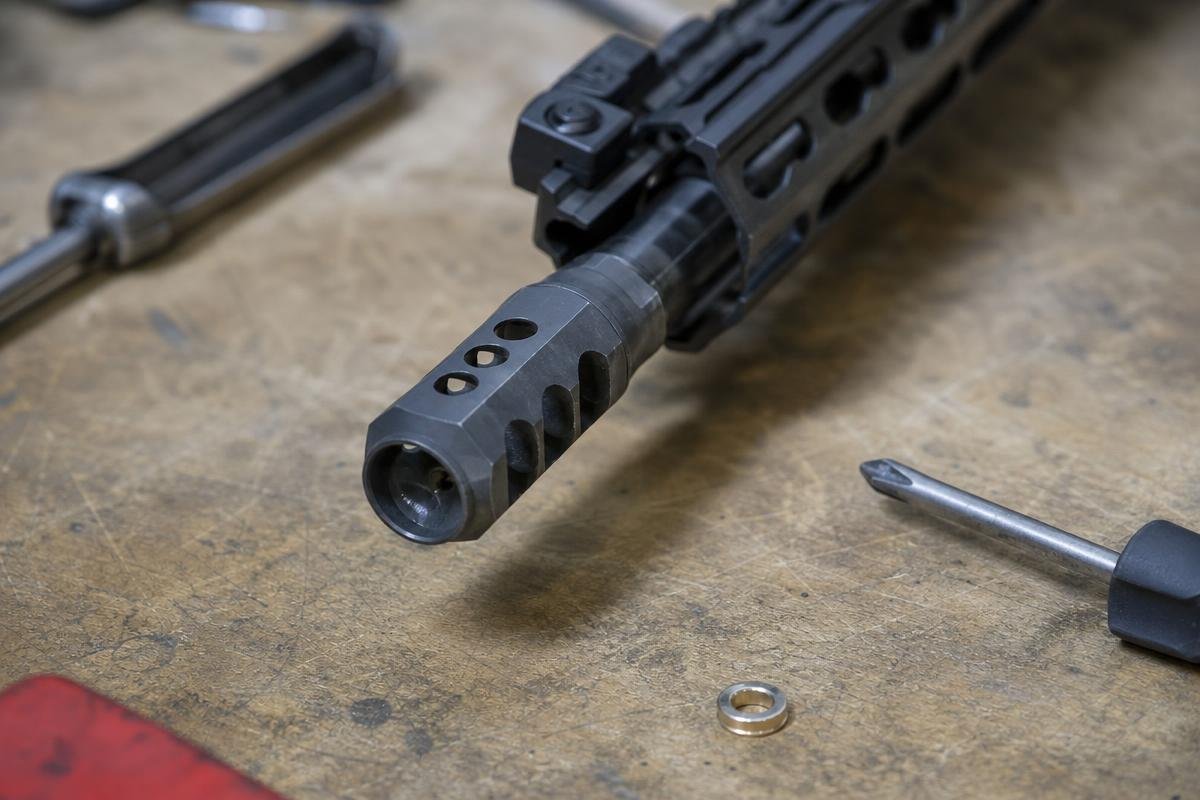
An AR-15 muzzle brake redirects propellant gas to reduce felt recoil, but its side blast makes it a better fit for some shooting environments than others. We compare brakes with other muzzle devices, explain when a brake helps, and note why suppressor use, not the brake alone, can call for a closer look at the buffer system.
We ship muzzle devices, buffer springs, and other AR-15 components from our Denison, TX facility. Below, we explain when a brake helps, how it compares with other muzzle devices, and why suppressor use can change the buffer setup. Not sure which option fits your build? Contact our team for help comparing parts.
Key Takeaways
- The AR-15 buffer spring controls how fast the bolt carrier group travels rearward and how quickly it returns to battery, directly shaping felt recoil and reliability.
- A suppressor can increase backpressure and change cycling, while an ordinary muzzle brake primarily changes recoil and blast at the muzzle.
- Standard muzzle brakes, flash hiders, and compensators are generally not NFA items by themselves, but confirm current federal, state, and local rules for the exact device and firearm configuration.
- A standard carbine spring and 3 oz buffer is the correct baseline for most 16-inch 5.56 builds, but suppressor use or a low-mass setup may call for reassessing gas flow, buffer weight, or spring rate.
- An adjustable gas block gives you the most precise control, letting you tune gas to reliable function regardless of the muzzle device you run.
How an AR-15 Muzzle Brake Works With the Recoil System
What Happens at the Muzzle When You Fire
The moment a round exits your barrel, high-pressure propellant gas follows it out in a roughly symmetrical cone. That gas produces a visible flash signature and drives the muzzle upward in a rotational movement around your support hand. That upward rotation is muzzle flip. It is mechanically distinct from felt recoil, which is the rearward push transmitted through the stock into your shoulder. Both happen in the same fraction of a second, but they have different causes and respond to different fixes. The muzzle device manages the gas at the crown, while the buffer spring manages the energy that reaches the bolt carrier group inside the receiver.
On a 16-inch carbine chambered in 5.56 NATO, crown pressure is significant enough to affect split times during rapid-fire strings. You may not notice it on a single shot at a bench. Run a 3-gun stage at a local outdoor range and the muzzle rise compounds with each trigger pull, and the buffer spring's job of settling the carrier back into battery quickly becomes just as important. That is where component selection stops being optional.
How the Gas System Ties Them Together
Gas system length affects how much pressure reaches the BCG before the bullet clears the muzzle, which shapes the impulse the buffer spring absorbs. A carbine-length gas system on a 16-inch barrel generally exposes the system to a different pressure curve than a mid-length setup. A conventional muzzle brake primarily changes recoil and blast after the bullet reaches the muzzle, while a suppressor can add backpressure and materially change cycling. Treat suppressor use, gas-system setup, spring rate, and buffer weight as the main tuning variables.
AR-15 Muzzle Brake vs. Other Muzzle Devices
A conventional brake redirects gas after the bullet exits the muzzle; a suppressor can also affect cycling. Compare these device types by recoil, muzzle rise, flash, and blast before choosing one.
Flash Hiders
Flash hiders are the mil-spec standard for a reason. The A2 birdcage is the most common example: its tines disperse the burning gas fireball exiting the muzzle, reducing visible signature in low-light conditions. Flash hiders do not meaningfully reduce felt recoil, and they have almost no effect on the gas impulse reaching your buffer spring. They are the right call for general-purpose builds, night shooting, or any build where you want to keep the recoil cycle at its baseline.
Muzzle Brakes
A muzzle brake uses lateral ports or multi-chamber venting to redirect propellant gas sideways as the bullet exits. That redirected gas pushes back against rearward movement, reducing felt recoil to a degree that depends on design, caliber, and ammunition. The trade-off is real: concussive blast to the sides increases noticeably. A conventional brake does not reduce the gas already tapped at the barrel's gas port. On larger calibers like 6.5 Creedmoor, a quality brake makes a measurable difference in fatigue over a full range session. If you are running a 6.5 Creedmoor upper, a brake is worth serious consideration.
Compensators
Compensators address muzzle flip rather than raw recoil. Upward-angled ports vent gas toward the top of the bore, pushing the muzzle down as the gun cycles. Competitive shooters running IDPA or 3-gun formats prefer compensators because faster target reacquisition between shots matters more than overall push. If split times are your priority, a compensator is the better choice over a brake.
Linear Compensators
Linear compensators funnel gas forward and away from the shooter instead of venting it sideways. They reduce perceived concussion at the shooter's position without meaningfully cutting recoil. They are popular on 10.5-inch and 11.5-inch pistol uppers where blast management is a real concern. Linear compensators are not NFA items and require no ATF registration.
Hybrid Muzzle Devices
Hybrid devices combine lateral and upward porting in one unit, addressing both recoil and muzzle flip simultaneously. Suppressor-ready hybrids with quick-detach mounts are worth considering if a suppressor is anywhere in your future build plan. You get the brake's recoil benefit now and a clean mount point later without swapping the device, though adding that suppressor down the road is exactly when your buffer spring choice comes back into play.
Comparing brakes, comps, and hybrids for your build?
How to Match Your Muzzle Device to Your Build
Match the Device to Your Primary Use Case
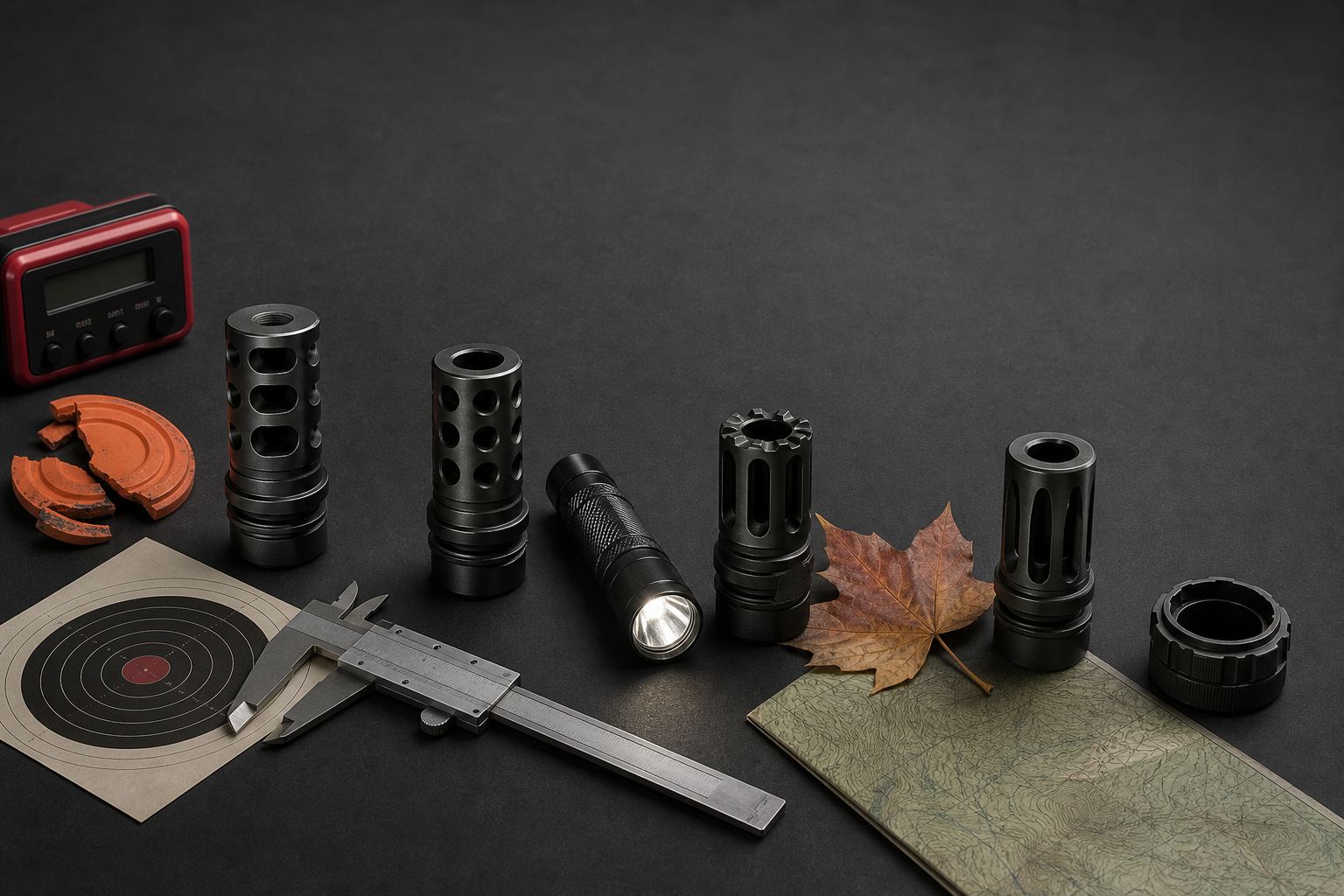
The fastest way to narrow down the right muzzle device for your build is to name one primary use and buy for that. Here is how that breaks down:
- Competition and 3-gun: Compensator or hybrid device. You need muzzle rise controlled fast between targets.
- Precision bench shooting: Multi-chamber muzzle brake. Maximum recoil reduction keeps your sight picture intact through the shot.
- Home defense or general use: A2 birdcage or linear compensator. Consider flash and blast in confined spaces; neither device eliminates the need for hearing protection.
- Hunting in the Red River bottoms: Linear comp or low-port brake. Consider blast direction and the shooting environment; always use hearing protection.
- Suppressor-ready builds: Hybrid device with a QD mount. This gives you brake function now and a direct suppressor attachment later.
Thread Pitch and Barrel Profile Compatibility
Thread pitch is where most ordering errors happen. Most 5.56 NATO and .223 Wylde barrels use 1/2x28 thread pitch. If you are running a .300 Blackout upper, the thread pitch is typically 1/2x28. Large-frame .308 Win and 6.5 Creedmoor barrels typically use 5/8x24. Ordering a 1/2x28 device for a 5/8x24 barrel is the most common mistake we see. Check the spec table on the product page before you add anything to your cart.
Material: Steel vs. Titanium vs. Aluminum
For most shooters, 4140 chrome-moly or 17-4 stainless steel is the right call. Both handle sustained heat and gas pressure without degrading. Titanium saves roughly 1.5 to 3.5 ounces at a higher price point. That weight savings matters on a precision or competition build where you are already counting ounces. Aluminum is not suitable for muzzle brakes. Gas pressure and heat will degrade it quickly. Do not let a low price tag on an aluminum brake factor into your decision.
When torquing a steel brake, most manufacturers spec 15 to 30 ft-lbs. Use a crush washer for standard installs. If timing matters, peel washers let you dial in alignment without over-torquing the device.
Does an AR-15 Muzzle Brake Require Buffer Changes?
Most shooters pick a muzzle brake for recoil reduction and stop there. A conventional brake and the buffer system address different parts of recoil, so a brake alone usually does not require a spring change. A suppressor can increase backpressure and may require changes to gas, buffer, or spring settings.
What the Buffer Spring Does in the Recoil Cycle
The buffer spring sits inside the buffer tube and controls how fast the bolt carrier group travels rearward and how quickly it returns to battery. Spring rate, measured in pounds of force, determines both. Too light a spring and the BCG slams rearward too hard, causing felt recoil spikes and over-travel. Too heavy a spring slows the BCG enough that you risk short-stroking or failure to feed, especially with lower-pressure loads.
A standard carbine spring paired with a standard 3 oz carbine buffer is the correct baseline for most 16-inch 5.56 builds. That pairing assumes a factory gas port, a standard BCG, and no muzzle device that significantly alters gas behavior. A conventional brake alone does not generally call for a buffer change, while suppressor use may warrant reassessment.
When Suppressor Use Affects Buffer Spring Selection
A conventional muzzle brake vents gas after it exits the muzzle and does not reduce the gas already tapped at the barrel's gas port. Buffer and spring tuning becomes more relevant when a suppressor adds backpressure, when a low-mass BCG changes carrier speed, or when an adjustable gas block changes gas flow. Diagnose the complete system before changing spring rate or buffer weight.
If you plan to run both a brake and a suppressor on the same host, the gas dynamics shift considerably. A suppressor adds back-pressure that a brake alone does not produce. The setup may warrant adjustments to gas flow, buffer weight, or spring rate after checking cycling.
When Suppressor Use Calls for a Buffer Review
Start with the standard 3 oz carbine buffer and standard spring on a 16-inch 5.56 build with a brake. That covers most configurations. If you add a high-efficiency brake with a low-mass BCG, step up to an H buffer at 3.8 oz. Running a suppressor with a brake typically calls for an H2 at approximately 4.7 oz or an H3 at 5.4 oz, paired with a heavier spring such as a Sprinco or equivalent. These are starting points, not guarantees. Actual tuning depends on your gas port size, BCG mass, and ammunition.
The most precise path is an adjustable gas block. It lets you dial gas to the minimum needed for reliable function regardless of what muzzle device you are running. If you are building a host rifle for both a brake and a suppressor, an AR-15 piston system or an adjustable DI block gives you the flexibility to tune for both configurations without swapping buffers every time.
Have questions about buffer weights, spring rates, or building a suppressor-ready host? Call us at (888) 706-0633 and we will walk through the setup with you.
Common AR-15 Muzzle Brake Selection Mistakes
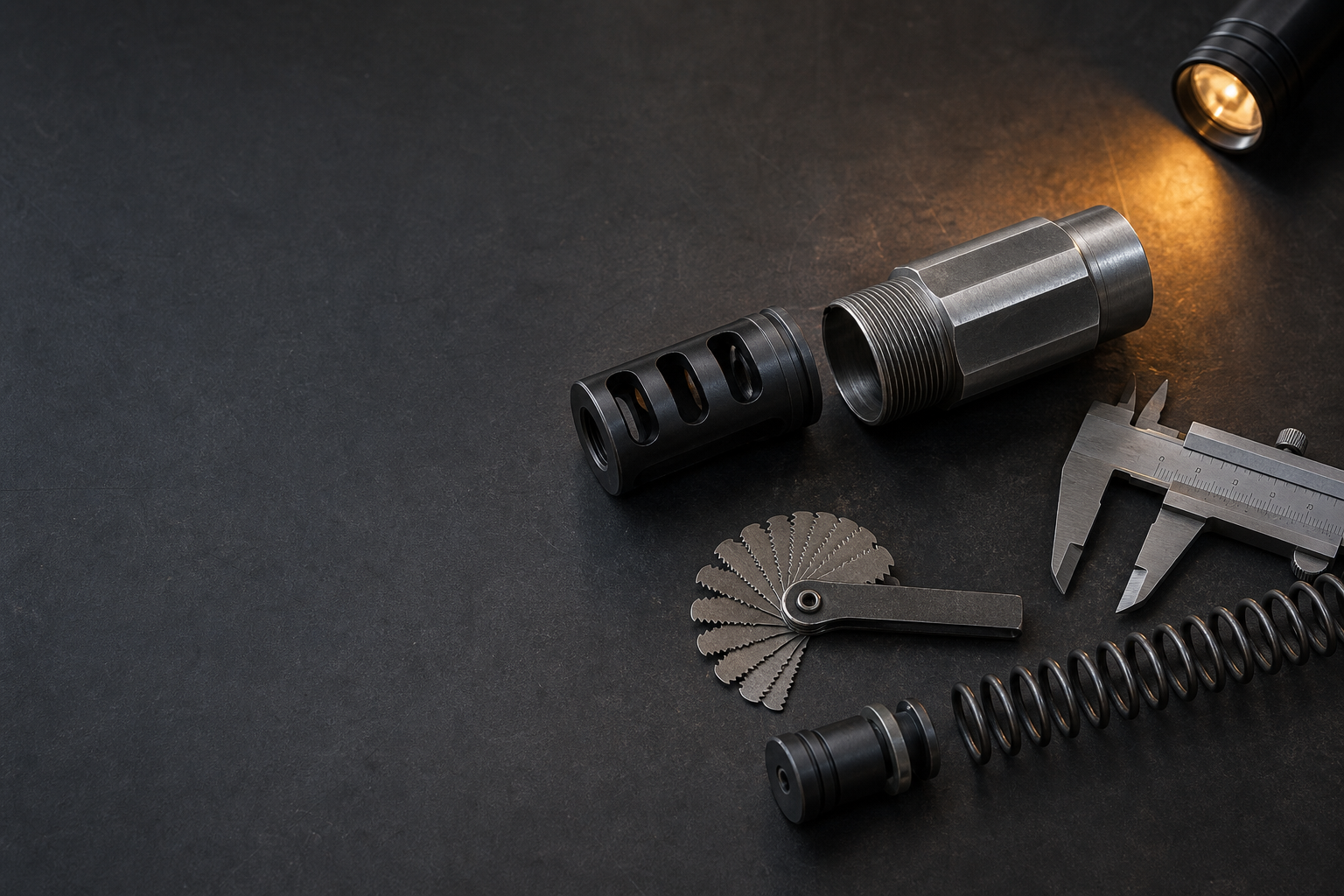
Most problems come down to a handful of errors: wrong thread pitch, picking a brake by appearance, ignoring where you actually shoot, and overlooking cycling changes when adding a suppressor. Each one has a real consequence. Here is how to avoid them.
Installing Without Checking Thread Pitch
A 5/8x24 brake threaded onto a 1/2x28 barrel will not seat correctly. It can damage the crown or strip the threads entirely. The fix is simple: pull the spec sheet for your barrel before you order anything. For 5.56, .223 Wylde, and .300 Blackout barrels, the thread pitch is typically 1/2x28. Large-frame .308 Win and 6.5 Creedmoor barrels typically use 5/8x24. Our product listings include thread pitch in the spec table. Use that data before adding to cart.
Choosing a Brake Based on Looks Instead of Port Geometry
Port count alone does not determine brake performance. Port angle, chamber volume, and chamber geometry together control how efficiently gas gets redirected. A two-chamber brake with large lateral ports can outperform a four-port brake with small, poorly angled ports. Evaluate the geometry, not the port count.
Adding a Suppressor Without Rechecking the Buffer System
This issue appears most often on suppressed and low-mass setups. Adding a suppressor can increase backpressure, while a low-mass BCG changes carrier speed. Recheck the gas setting, buffer, and spring together, then confirm reliable cycling before trusting the build.
Ignoring Blast and Concussion in Your Shooting Environment
A high-efficiency brake is genuinely unpleasant for anyone standing beside you. Some indoor ranges restrict muzzle brakes because of side blast. Check the facility's current policy before using one; a linear compensator or flash hider may be more suitable where brakes are restricted. Match the device to where you actually shoot, not just to what produces the lowest recoil numbers on paper.
Texas Compliance and Muzzle Device Regulations for Denison Shooters
What Texas Law Says About Muzzle Devices
Standard muzzle brakes, flash hiders, and compensators are generally treated as non-NFA muzzle devices by themselves. Device design and firearm configuration can matter, so confirm current federal, Texas, and local requirements before purchase or installation.
For a standard non-NFA muzzle device, separate NFA registration is generally not required; confirm the exact device and configuration before purchase or installation. If you have questions about what ships from our location at 4000 Texoma Parkway, Denison, TX 75020, call us at (888) 706-0633 and we can walk you through it. This is factual context only, not legal advice.
Suppressor-Ready Devices and NFA Considerations
A QD suppressor mount or muzzle device with suppressor-compatible threading is not an NFA item by itself. The suppressor requires the applicable federal application and approval process. The federal transfer tax for suppressors is currently $0. The muzzle device ships like a standard accessory. Remember that once the suppressor is on the gun, your buffer spring and buffer weight almost always need a second look to keep cycling clean.
If you are building a suppressor-ready host, caliber matters. A .300 Blackout upper is one of the most common suppressor host platforms, and the muzzle device you thread on now does not require NFA paperwork on its own. Confirm the current federal, state, and local transfer requirements before purchasing a suppressor or configuring a suppressor-ready rifle.
Texas Shooting Contexts: Range, Competition, and Hunting
The right muzzle device and buffer setup depend heavily on how and where you shoot. Local hunters, competitive shooters, and bench shooters at outdoor ranges near Denison all have different needs. Getting that choice wrong costs you accuracy, comfort, or both.
3-Gun and IDPA Competition in North Texas
Competitive shooters running 3-gun or IDPA stages benefit more from a compensator or hybrid device than a straight muzzle brake. Fast target transitions on multi-steel stages reward muzzle rise control. A compensator vents gas upward to push the muzzle down, keeping your sights on target between shots.
That matters more than raw recoil reduction when you are moving between positions quickly. Competition shooters also tend to run tuned buffer springs, since a fast, consistent cycle helps the sight settle in the same place shot after shot. When comparing muzzle brake vs compensator for competition, the compensator wins on most stage formats.
Deer and Hog Hunting in the Red River Region
Hunters in the Red River region use AR-platform rifles in calibers such as 5.56/.223 Wylde, .300 Blackout, and 6.5 Creedmoor. Check current TPWD regulations for exact whitetail season dates in your zone and applicable hog-hunting rules. For hunts in enclosed blinds with companions, blast direction is an important consideration.
Many hunters prefer a linear compensator in enclosed blinds to reduce side blast toward companions. A muzzle brake directs more blast sideways, which can be uncomfortable in confined spaces. Always use proper hearing protection and follow firearm-safety practices regardless of device choice.
Long-Range Bench Shooting at Local Ranges
Precision bench shooters running .308 Win, 6.5 Creedmoor, or 6mm ARC get the most out of a multi-chamber muzzle brake. These cartridges generate enough recoil that fatigue becomes a real factor over a long session. A quality brake helps you reduce recoil on your AR-15, maintain consistent cheek weld, and call shots accurately. Pair that brake with a correctly rated buffer spring so the rifle returns to battery smoothly and your position stays undisturbed between shots. On larger calibers, a brake is one of the highest-return single upgrades you can make to a bench gun.
Frequently Asked Questions
What is the difference between a muzzle brake and a compensator?
A muzzle brake uses lateral ports to redirect gas sideways, reducing rearward thrust and felt recoil. A compensator angles ports upward to push the muzzle down and reduce flip. Hybrids combine both port designs, covering recoil and muzzle rise at the same time.
Does an AR-15 muzzle brake require a spring change?
On a standard 16-inch 5.56 carbine with a mil-spec buffer and AR-15 buffer spring, a brake alone usually will not require a spring change. Tuning becomes relevant when a suppressor adds backpressure or another component changes the rifle's gas or carrier behavior.
What thread pitch do most AR-15 muzzle brakes use?
5.56 NATO and .223 Wylde barrels use 1/2x28. .300 Blackout barrels also typically use 1/2x28; large-frame .308 Win and 6.5 Creedmoor barrels typically use 5/8x24. Always confirm from your barrel or upper spec sheet before ordering.
Are muzzle brakes legal in Texas?
Standard muzzle brakes are generally non-NFA devices by themselves, but device design and firearm configuration matter. Confirm current federal, Texas, and local requirements before purchase or installation. This is general information, not legal advice.
Do I need a muzzle brake on a 5.56 AR-15, or is it only for larger calibers?
Recoil on 5.56 is mild. A brake helps most with faster follow-up shots in competition. On .308 Win or larger, the improvement is far more noticeable during extended range sessions.
Can I use a muzzle brake on a suppressor-ready build?
Some brakes are designed as QD suppressor hosts. Confirm that your brake and suppressor system are cross-compatible before purchasing. Not all QD mounts work across different suppressor brands, and remember to revisit your buffer spring once the can is on.
Ready to compare AR-15 muzzle brakes and other muzzle devices for your build? Browse our full selection of buffer springs, buffers, muzzle brakes, compensators, flash hiders, and linear compensators at AR15Parts.com. Questions about thread pitch, suppressor compatibility, or buffer and spring tuning? Call us at (888) 706-0633. We ship nationwide from Denison, TX, and we stock these parts.