
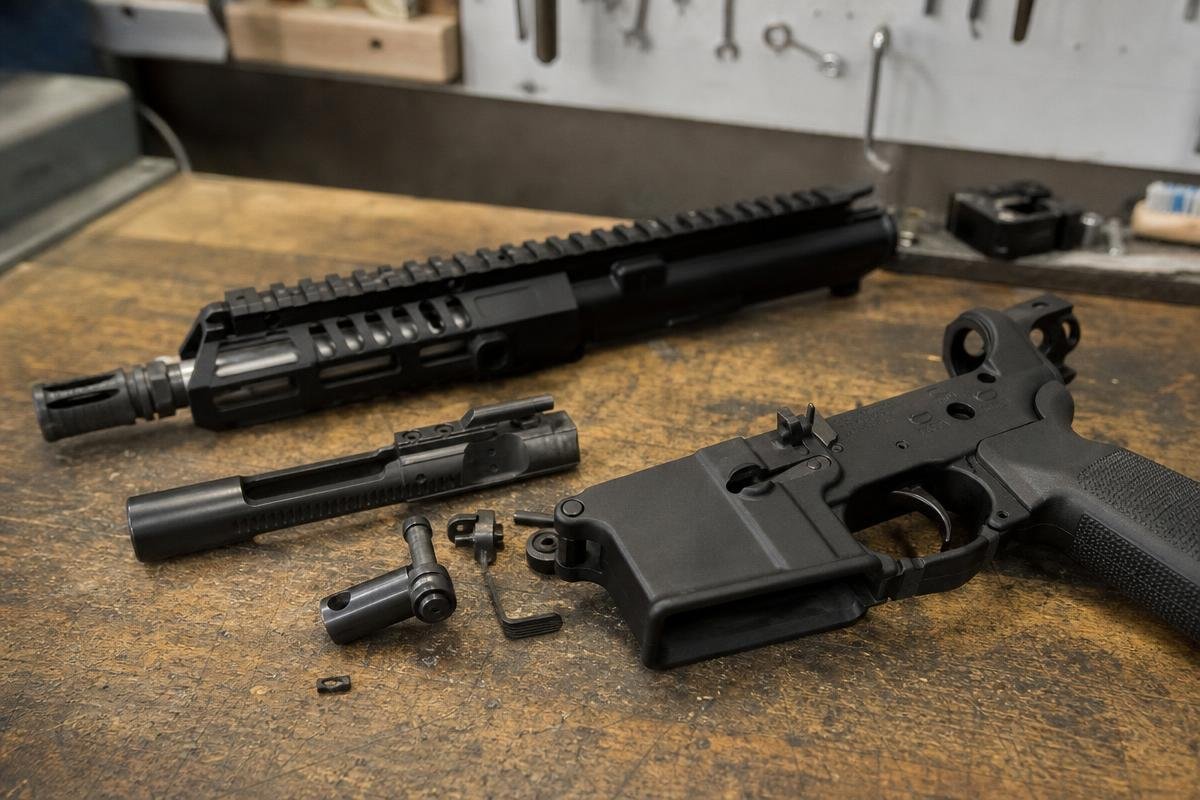
AR-15 parts compatibility starts with the online product listing: check intended use, cartridge, chamber, receiver pattern, barrel length, and whether you are comparing a complete firearm, a preassembled upper, or individual components. AR15Parts.com provides parts and complete assemblies for buyers who want to compare those specifications before ordering. Need help choosing compatible AR-15 parts for your first setup?
AR-15 Parts Compatibility: Online Shopping Takeaways
- An AR-15 uses modular upper and lower receiver assemblies that accept compatible mil-spec components.
- Start with your intended use before choosing a caliber, barrel length, gas system, and sight setup.
- Good platform basics begin with fitment checks before individual parts are added to a cart.
- Complete uppers reduce first-build compatibility questions because major upper components are already assembled.
Start With Your Intended Use
Shopping online for a first AR can get confusing fast. Complete rifles, complete AR-15 uppers, stripped receivers, chamber markings, gas systems, and accessories often appear side by side. Start by deciding whether you want a ready-to-use rifle, a compatible upper and lower combination, or a custom build. That choice determines how many individual specifications you need to verify.
Compare platform basics, major parts, compatibility checks, sensible first-configuration choices, and safe preparation before live fire. Use it to read product markings, compare assemblies, and make a more informed purchase.
We ship from our Denison, TX facility. For help interpreting listed fitment specifications before ordering, call us at (888) 706-0633 or contact our team.
What Is an AR-15 and What Does a Beginner Need to Know First?
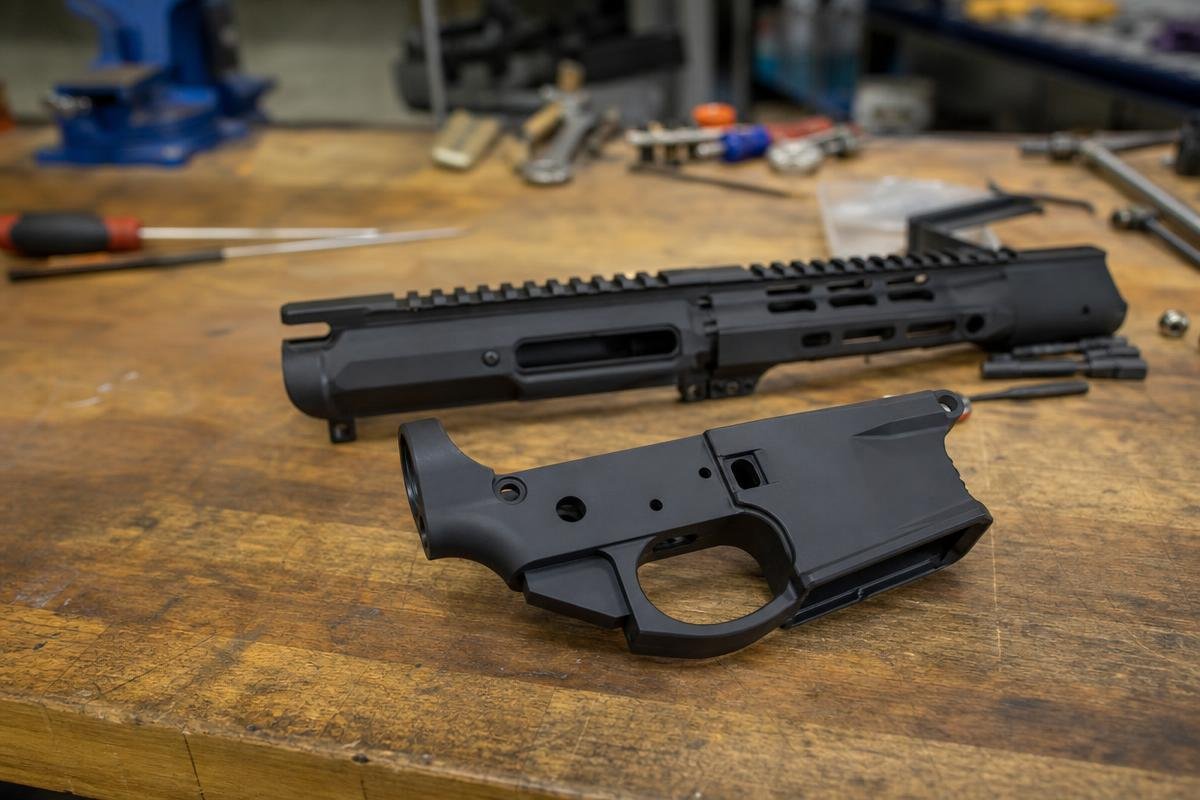
An AR-15 is a semiautomatic rifle platform that fires one round per trigger press and cycles the next round. Before ordering, understand the two main receiver assemblies and the buying paths available to you.
Semiautomatic Operation, Explained Clearly
An AR-15 is not fully automatic. A semiautomatic rifle fires one round each time you press the trigger. After firing, the gas system cycles the bolt carrier group, ejects the spent case, and chambers the next round.
Fully automatic operation continues firing while the trigger remains pressed. That is a different operating system and should not be confused with a standard civilian AR-15.
Upper and Lower Receiver Assemblies
The upper and lower are the two main assemblies. An upper assembly can include the upper receiver, barrel, gas-system components, handguard, bolt carrier group, and charging handle, but the exact contents vary by product. It controls the chamber, barrel length, caliber, and much of the rifle’s configuration.
The lower contains the fire-control components, magazine well, buffer system, grip, and stock. In plain terms, the upper handles the barrel, chamber, and cycling system, while the lower contains the controls and supports the shooter.
Complete Rifle, Complete Upper, or Individual Parts
| Buying path | Best for | What you still need to verify |
|---|---|---|
| Complete rifle | New owners who want the fewest setup decisions | Transfer requirements, ammunition, magazines, sights, safe storage, and range rules |
| Complete upper with a compatible lower | Buyers who already own or are sourcing a matching AR-15 lower | Receiver pattern, chambering, magazine type, and lower compatibility |
| Individual parts build | Buyers comfortable researching every interface | Barrel, gas, bolt, buffer, handguard, stock, and mounting standards |
A complete rifle is usually the simplest route for a first-time buyer. It arrives as a finished firearm through the required transfer process, with fewer matching decisions for you to make. See our complete AR-15 rifles if you want a turnkey starting point.
A complete upper is a practical option if you already have a compatible lower receiver. Our AR-15 complete uppers reduce assembly work because the barrel, gas system, and upper components are already matched.
Individual parts give you the most control, but they require you to verify chambering, barrel extension, gas-system length, buffer setup, and receiver compatibility. Start with a complete rifle or complete upper if those specifications are still new to you.
Prefer fewer compatibility decisions for your first setup?
The AR-15 Parts That Matter Most When You Shop Online
Online listings can show similar-looking parts with different fit and function. Before adding components to your cart, record the cartridge, upper pattern, and mounting specifications. Product titles are helpful, but the technical details in the listing are where compatibility is confirmed.
Barrel, Chamber, and Gas System Specifications
The barrel determines cartridge capability, length, and muzzle setup. Verify barrel length, chamber designation, gas-system length, gas-block journal diameter, and muzzle-thread pattern separately. A 16-inch barrel, 5.56 NATO chamber, mid-length gas system, .750-inch journal, and 1/2x28 threads are five different specifications.
The gas system controls how gas cycles the action. Match the gas tube to the barrel’s gas-system length, then match the gas block to the journal diameter. Review our AR-15 complete uppers if you want core upper components assembled in-house, headspaced, and function-checked before shipping.
Bolt Carrier Groups and Charging Handles
The bolt carrier group strips, chambers, fires, and extracts each cartridge. The BCG must match the cartridge family and upper configuration, including the correct bolt face for the cartridge you plan to shoot. A charging handle must fit the AR-15 upper pattern, not an AR-10 pattern.
The forward assist can help seat a bolt that is slightly out of battery, but it does not fix every chambering issue. Stop and inspect the rifle if a round will not chamber normally. Dirt, damaged ammunition, or an incorrect part can cause the problem.
Handguards, Stocks, Sights, and Magazines
Handguards protect your support hand and provide mounting space for lights, grips, and sights. Free-float handguards attach to the barrel nut and do not contact the barrel. Drop-in handguards fit around the barrel and are retained by the delta ring and front sight base, so they use a different mounting system.
Buttstocks must match the buffer tube pattern, usually mil-spec or commercial. Iron sights must match the rail height and mounting position. Magazines must match the cartridge and lower receiver pattern. Keep a written list of every interface before ordering.
Common First-Cart Mistakes
- Choosing a gas block without checking the barrel’s journal diameter.
- Ordering a stock that does not match the buffer tube standard.
- Assuming a muzzle device fits without confirming thread pitch.
- Mixing AR-10 and AR-15 components because the parts look similar in photos.
- Assuming a complete upper includes a BCG or charging handle without reading the included-items list.
- Buying magazines based on appearance rather than the cartridge and receiver pattern.
How Do You Check AR-15 Compatibility Before Ordering Parts?
Check the cartridge, chamber, bolt, magazine, receiver pattern, and mounting standards before you order. This short compatibility worksheet is especially useful when you are building a cart from several product listings.
Start With Cartridge and Chamber
Start with the barrel marking. A 5.56 NATO chamber and a .223 Wylde chamber are different specifications, so follow the barrel manufacturer’s ammunition guidance instead of assuming the labels mean the same thing.
For a simpler purchase, compare complete assemblies such as 5.56 NATO complete uppers or .223 Wylde upper receivers. A complete upper commonly includes the barrel, gas system, upper receiver, BCG, and charging handle, but always confirm included components on the individual listing.
Match the Bolt, Magazine, and Receiver Pattern
The bolt and magazine must match the cartridge and barrel chamber. Confirm the listing identifies the correct bolt or bolt carrier group, magazine type, and AR-15 or AR-10 receiver pattern before adding parts to your cart.
A complete upper reduces separate compatibility decisions, but it does not remove every check. Verify that the listing states it is ready to drop onto your lower or compatible with any mil-spec lower receiver, then confirm the lower uses the same platform.
Confirm Mounting Standards Before Checkout
Handguards, gas blocks, muzzle devices, stocks, and buffer tubes each have their own fitment details. Check barrel diameter at the gas block journal, handguard mounting system, muzzle thread pitch, buffer tube type, and stock attachment standard.
Use this quick checklist for choosing AR-15 parts before checkout:
- Cartridge and barrel chamber marking
- Correct bolt or BCG and magazine type
- Upper and lower receiver pattern
- Handguard, gas block, and muzzle device fitment
- Stock and buffer tube compatibility
- Whether the listing includes the BCG, charging handle, mounting hardware, or other required components
Pause before mixing parts from different platforms. If a product description leaves a fitment question unanswered, contact our team before ordering.
Have a cart with a question about chambering, gas-system length, or receiver fit?
A Practical First AR-15 Configuration Checklist
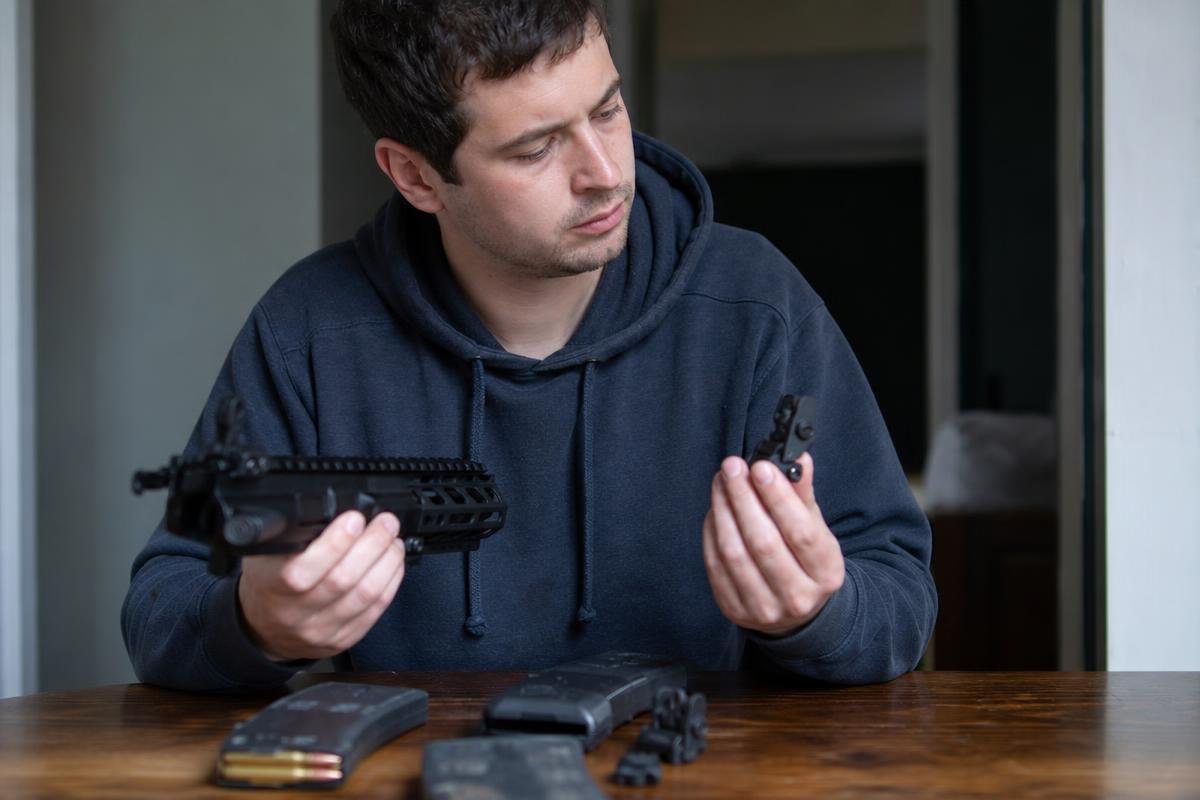
A beginner setup starts with intended use, range access, local rules, and the level of assembly you want to handle. Work through the decisions in order so you do not buy parts that do not belong together.
Choose the Starting Point That Fits Your Needs
A complete rifle is usually the easiest route for a new owner because the major components are already matched and assembled. Review our complete AR-15 rifles if you want a ready-to-use starting point.
A complete upper on a compatible lower is another practical option. A parts build gives you more control, but it also requires you to verify each interface before ordering.
Make the Core Configuration Decisions
Choose the cartridge and chamber first. Then select barrel length and gas system length. A 5.56 NATO chamber accepts 5.56 NATO and .223 Remington ammunition. .223 Wylde chambers are a hybrid design intended to safely and accurately fire both 5.56 NATO and .223 Remington ammunition, combining features of both chamber types.
Next, choose a complete rifle or turnkey upper. Select magazines that match the cartridge, then choose a sighting system. Backup sights must mount at the correct height and be zeroed at your chosen distance. Use the sight manufacturer’s setup and zeroing instructions.
First-Purchase Checklist
Print this list before placing an order. It keeps the main decisions in one place whether you are comparing products online or discussing a configuration with the Denison team.
- Intended use and available range access
- Cartridge and chamber
- Barrel length and gas system
- Complete rifle, complete upper, or parts build
- Compatible bolt carrier group and magazine type
- Sighting system, backup sights, and zero plan
- Stock and buffer tube standard
- Safe-storage plan before the rifle arrives
Need help checking a first configuration before you order? Call (888) 706-0633.
Safe First Use Starts Before You Load the Rifle
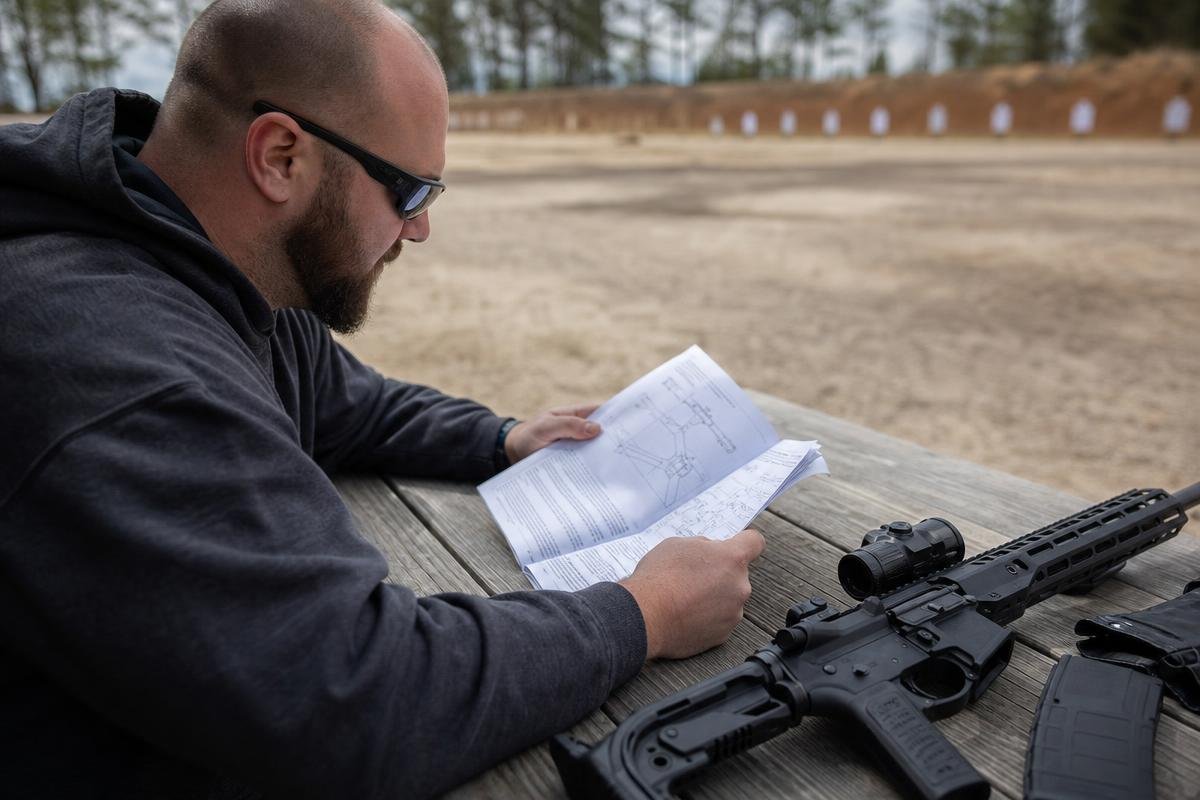
Platform basics should start with safety, not live fire. Before a range visit, read the instructions for your exact rifle, upper, optic, and ammunition. Follow applicable laws and range rules, which can vary by location, and get qualified in-person instruction before firing a new setup.
Read the Instructions for Your Exact Configuration
Manufacturer instructions identify approved ammunition, controls, maintenance limits, and inspection points for that configuration. A function check must follow instructions for your specific platform and installed components. Product details for complete AR-15 uppers can help you confirm what assembly you have, but they do not replace its manual.
Four Universal Firearm Safety Rules
- Treat every firearm as if it is loaded.
- Keep the muzzle pointed in a safe direction.
- Keep your finger off the trigger until you are ready to fire.
- Know your target and what is beyond it.
These rules apply during transport, storage, handling, and range use. Use them every time, even after you believe the rifle is unloaded.
When to Stop and Ask a Qualified Professional
Stop using the rifle if a part is damaged, operation is abnormal, or ammunition does not match the marked chamber. Do not attempt a repair or modification based on a video or forum post. Contact the manufacturer or a qualified gunsmith for an inspection.
If you need help identifying an order or configuration before use, contact AR15Parts.com with the product details.
Shopping for AR-15 Parts from Denison, Texas
We ship from our facility at 4000 Texoma Pkwy, Denison, TX 75020. Call us at (888) 706-0633 to ask about a specific listing, compare product specifications, or get help identifying the information needed for a compatible order. Read more about AR15Parts.com and how our team supports your order.
Keep a Written Specification List
Knowing how to choose AR-15 parts starts with a written list. Record your lower receiver pattern, cartridge, barrel chamber, gas-system length, buffer tube type, and desired sighting setup. Check every product listing against that list before ordering. A 5.56 NATO chamber, carbine-length gas system, and mil-spec buffer tube are separate specifications. Do not assume one confirms another.
Ask Product Questions Before Ordering
Product photos do not always show every detail you need. Check the listing for thread pitch, included hardware, barrel profile, handguard attachment method, and whether an upper includes a bolt carrier group or charging handle.
For a product-specific question, call (888) 706-0633 or contact AR15Parts.com before placing your order. We can help you read listed specifications, but you remain responsible for confirming your build and following applicable laws. Complete rifles and lowers ship to the buyer’s FFL for transfer, and shipping availability for parts and accessories may vary by product and destination.
Frequently Asked Questions
Is an AR-15 a Good Choice for a Beginner?
Yes, an AR-15 can suit a beginner who plans lawful use, learns safe handling, and gets qualified in-person instruction. This popular rifle has familiar controls and a modular layout. Range rules and applicable laws vary by location, so confirm both before your first trip.
Should a First-Time Buyer Choose a Complete Rifle or Parts?
A complete rifle is usually simpler for a first-time buyer because it removes many compatibility decisions. A parts build makes sense if you are comfortable checking receiver patterns, barrel extensions, gas-system lengths, and mounting standards. Our complete AR-15 rifles give you a ready-to-use starting point, while parts let you build around a specific purpose.
Can I Use 5.56 NATO and .223 Ammunition in the Same Rifle?
It depends on your barrel chamber marking and manufacturer guidance. A barrel marked 5.56 NATO generally accepts 5.56 NATO and .223 Remington ammunition. A barrel marked .223 Remington should not be assumed safe for 5.56 NATO, so read markings before buying ammunition.
What Is the Difference Between Direct Impingement and Piston Systems?
Direct impingement routes gas through a tube to cycle the bolt carrier, while a piston system uses a separate operating rod or piston. Direct impingement is common on standard AR-pattern rifles. Review our AR-15 complete uppers before selecting a system, since piston parts are not universal replacements for direct-impingement components.
Do I Need Backup Sights?
Backup sights are a practical secondary aiming option if an optic loses power or is damaged. They must fit your rail height, mount securely, and be zeroed before use. Folded sights still need clearance around your optic and magnifier.
What Should I Confirm Before Ordering AR-15 Parts Online?
Confirm cartridge, chamber, receiver pattern, barrel and gas-system fit, and mounting standards before ordering. That is how to choose AR-15 parts without creating avoidable fitment issues. Use these checks to ask more specific product questions, and follow the manufacturer’s instructions.
If you have a product-specific question after checking your cartridge, chamber, receiver pattern, and mounting standards, use our contact page or call AR15Parts.com at (888) 706-0633 before ordering.
Ready to Get Started with AR15Parts.com?
Call (888) 706-0633 to speak with our team directly. We're ready to answer your questions, walk you through your options, and help you find the right solution for your needs. Whether you're just starting to plan or ready to move forward, we'll make the process simple and stress-free. Reach out today and let's talk about how we can help.