
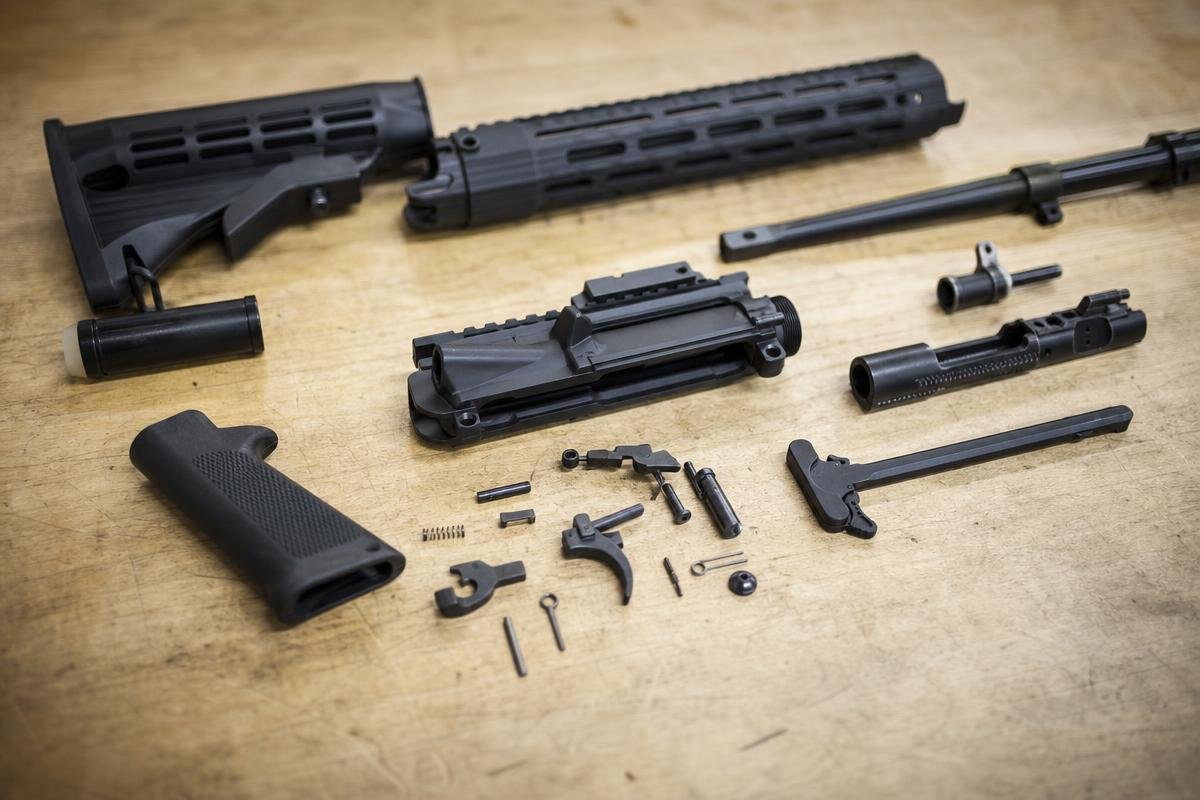
The AR-15 parts diagram and component descriptions help owners identify the major AR-15 assemblies and the small pins, springs, and retainers that support them. Use it to compare a replacement part, organize components during cleaning, or understand which specifications must match before a build or repair. AR-pattern rifles vary, so always compare the component photos with the manufacturer’s specifications for your exact receiver, caliber, and configuration. Have a compatibility question or need help identifying a component? Call us at (888) 706-0633 or contact our team.
Key Takeaways
- An AR-15 parts diagram helps you identify assemblies before ordering replacement components.
- The upper receiver group contains the barrel, bolt carrier group, charging handle, handguard, and gas system.
- The lower receiver group contains the trigger parts, safety selector, buffer system, stock, grip, and magazine catch.
- Small parts, including detents, pins, and springs, are critical to proper AR-15 function and assembly.
What Parts Are Included in an AR-15?
An AR-15 is commonly divided into an upper receiver group, lower receiver group, bolt carrier group, barrel and gas system, handguard, muzzle device, and rear buffer system. The breakdown below separates those assemblies from the smaller detents, roll pins, springs, and retainers that keep controls and moving parts working correctly.
Read the Rifle by Major Assembly
Read the upper receiver group first. It contains the upper receiver, barrel, handguard, gas system, bolt carrier group, charging handle, and muzzle device. The lower receiver group contains the fire-control parts, controls, buffer system, stock, grip, and magazine interface.
A complete upper groups major upper-receiver components into one assembly, but included parts vary by product. Our complete AR-15 uppers let you evaluate barrel length, chamber, gas-system length, handguard, and bolt carrier group as one matched unit.
Use Component Photos and Parts Lists Together
Compare each component photo with a nearby AR-15 parts name list. Identify one component at a time instead of trying to identify every part from the assembled rifle view.
Hidden hardware deserves special attention. Detents, springs, retainers, roll pins, and small pins can sit behind controls or inside receiver pockets. Use each part’s location and function to understand its role without treating the descriptions as assembly instructions.
Know Which Parts Can Vary
Many standard AR-15 lower receiver components use common mil-spec dimensions, but that does not mean every AR-pattern part is interchangeable. Proprietary receivers, nonstandard trigger pockets, caliber conversions, receiver extensions, handguard systems, and upper-to-lower fit can differ by manufacturer.
Barrel profile, gas-system length, handguard attachment method, trigger design, caliber, stock interface, and muzzle device may differ. Check the listed specifications before buying parts that must work together. When in doubt, compare the part’s dimensions, thread pattern, cartridge compatibility, and manufacturer notes before ordering.
What Are the Main AR-15 Upper Receiver Parts?
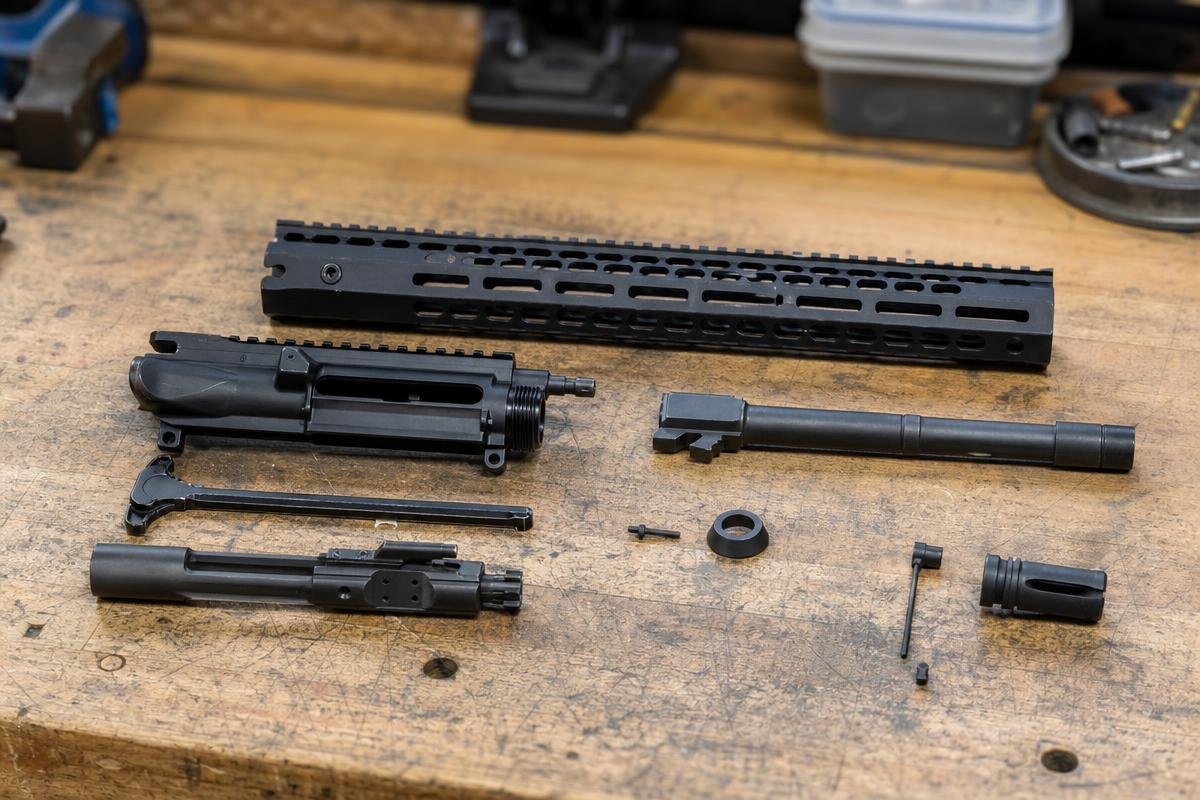
The upper receiver group holds the components that chamber, fire, extract, and eject cartridges. Its main parts are the upper receiver, barrel, gas system, handguard, bolt carrier group, charging handle, ejection-port components, and muzzle device. Their relevant specifications, including caliber and chamber, barrel-extension and bolt compatibility, gas-system length, and mounting interfaces, must be compatible.
Receiver, Charging Handle, and Ejection-Port Components
The upper receiver supports the barrel assembly and guides the bolt carrier group through its firing cycle. It also holds the charging handle, forward assist, and ejection-port assembly.
The charging handle pulls the bolt carrier group rearward. The forward assist is designed to help seat the carrier forward when needed. The ejection port cover helps keep debris out of the receiver when closed. Its cover rod, cover spring, and cover retaining clip hold the cover in place and provide spring tension.
Barrel, Gas System, Handguard, and Muzzle Components
The barrel extension is the locking interface at the rear of the barrel. Its locking lugs engage the bolt. The barrel nut secures the barrel to the upper receiver, while the gas block fits over the barrel gas port and directs gas into the gas tube.
The gas tube runs from the gas block into the upper receiver. Tube length must match the barrel’s gas-port position, including carbine, mid-length, and rifle-length configurations. Compare available complete AR-15 uppers by barrel length, chamber, and gas-system layout before selecting parts.
The handguard mounts around the barrel and gas system. A free-float handguard normally uses a dedicated barrel nut, while a drop-in design relies on a different retention arrangement. At the muzzle, barrel threads accept a muzzle device. Use only the mounting method specified by the muzzle-device manufacturer. Thread pitch and installation requirements must match the barrel and device.
Bolt Carrier Group Components
The bolt carrier group, often called the BCG, cycles the action and contains several small parts that are easy to miss in a parts photo. The carrier holds the bolt and includes the gas key, which receives gas from the tube.
- Carrier, bolt, cam pin, firing pin, and firing-pin retaining pin
- Extractor, extractor spring, insert, and O-ring where applicable
- Ejector and ejector spring
- Gas key, which directs gas into the carrier
The bolt locks into the barrel extension, while the cam pin rotates it during cycling. Bolt face, barrel extension, cartridge family, and headspace are critical fitment considerations. Do not assume a bolt from one caliber or manufacturer is appropriate for another barrel without checking the applicable specifications and using qualified gunsmith support when needed.
Comparing upper configurations? Browse our complete AR-15 uppers or call us at (888) 706-0633.
What Small Parts Are in an AR-15 Lower Parts Kit?
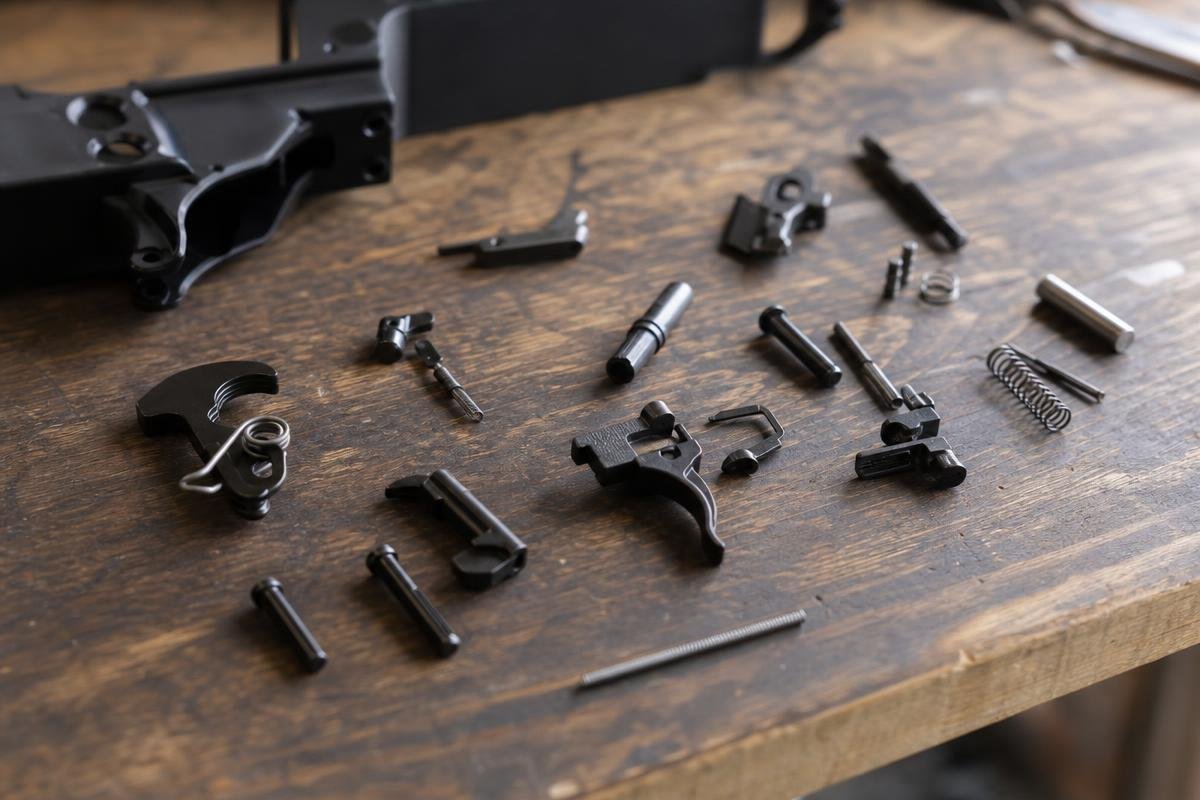
A typical lower parts kit includes the controls and hardware that operate the lower receiver, such as the magazine catch, bolt catch, trigger components, safety selector, pivot and takedown pins, springs, detents, and related pins. Kit contents vary, especially when a trigger, grip, or trigger guard is sold separately.
Magazine and Bolt Controls
The magazine catch, magazine catch button, and magazine catch spring retain and release the magazine. The bolt catch locks the bolt carrier group open after the last round or during inspection.
The bolt catch uses a bolt catch plunger, bolt catch spring, and bolt catch roll pin. Your AR-15 parts name list should also show the pivot pin, takedown pin, their detents, and detent springs. These small parts hold the upper and lower together while allowing the rifle to open for cleaning.
Fire-Control Components and Safety Parts
The trigger, hammer, and disconnector control the firing sequence inside the lower. Their springs provide the required tension, while the trigger pin and hammer pin retain the parts in the receiver.
The safety selector blocks trigger movement in the safe position. It works with a selector detent and selector detent spring, which is retained by the pistol grip. The grip also uses a grip screw and grip screw washer. Keep these parts organized during assembly because detents and springs are easy to lose.
Receiver Extension, Buffer, and Stock Fit
The rear assembly includes the receiver extension, often called a buffer tube, castle nut, end plate, buffer retainer, buffer-retainer spring, buffer, action spring, stock, and stock hardware where applicable. The action spring and buffer control the carrier's rearward travel and return it into battery.
Mil-spec and commercial receiver extensions have different outside dimensions. A stock made for one type may not fit the other correctly. Buffer weight and spring selection can also depend on the upper’s barrel length, gas system, caliber, and operating characteristics. Check your extension and configuration before choosing a rear assembly.
For help comparing a lower with a finished upper assembly, review our complete AR-15 uppers or call (888) 706-0633 to discuss the specifications you are working with.
Small AR-15 Parts That Basic Guides Often Miss
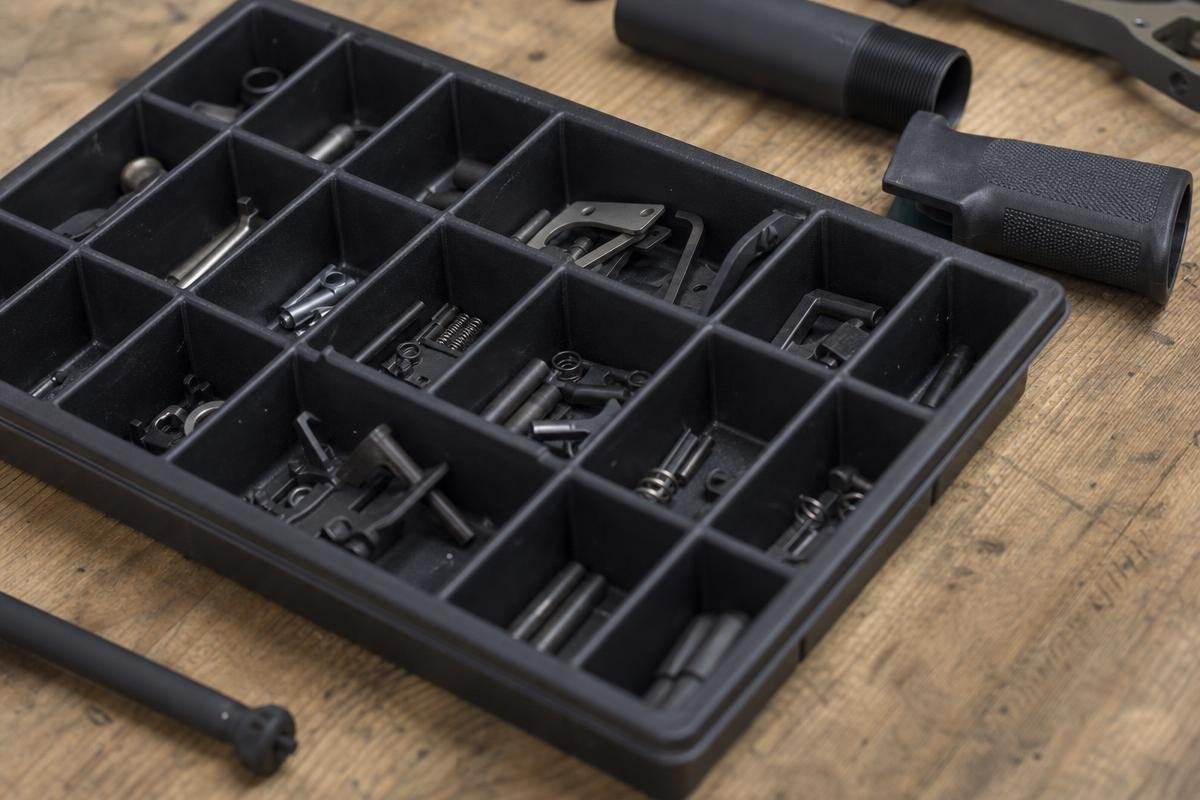
A basic AR-15 parts diagram usually identifies the receiver groups but can skip the hardware that keeps controls and assemblies in place. Pins, springs, detents, and retainers are easy to misplace during maintenance or while sorting a lower parts kit. Use the part’s location and function, not its general shape alone, to distinguish similar-looking hardware.
Small-Parts Inventory Table
| Part Name | Assembly Location | Function |
|---|---|---|
| Takedown and pivot pin detents and springs | Lower receiver | Hold the takedown and pivot pins in position. |
| Selector detent and spring | Safety selector and pistol grip | Indexes the selector between safe and fire positions. |
| Buffer retainer and spring | Rear of lower receiver | Retains the buffer during upper removal. |
| Bolt catch plunger and spring | Left side of lower receiver | Provide pressure behind the bolt catch. |
| Bolt catch roll pin | Lower receiver | Secures the bolt catch in its recess. |
| Trigger and hammer pins, springs, and disconnector spring | Fire-control group | Retain and operate the trigger, hammer, and disconnector. |
| Magazine catch spring | Magazine catch assembly | Provides tension for magazine retention. |
Identify Small Hardware by Function
Identify each piece by its role and assembly location, not shape alone. A detent has a pointed end for indexing. A roll pin is hollow and secures a component. A retainer holds a part in place, while a spring supplies tension. Sorting hardware into separate trays or labeled bags before disassembly makes it easier to avoid mixing similar pieces.
The upper also has small hardware that parts photos can miss. The ejection-port cover uses a rod, spring, and retaining clip. See our complete AR-15 uppers for assembled upper configurations that include these components. The forward-assist assembly includes a pawl and spring; its retaining pin secures the assembly in the upper receiver.
Need help identifying loose AR-15 hardware? Call our Denison team at (888) 706-0633.
Builder Checklist: Match Parts Before You Buy or Assemble
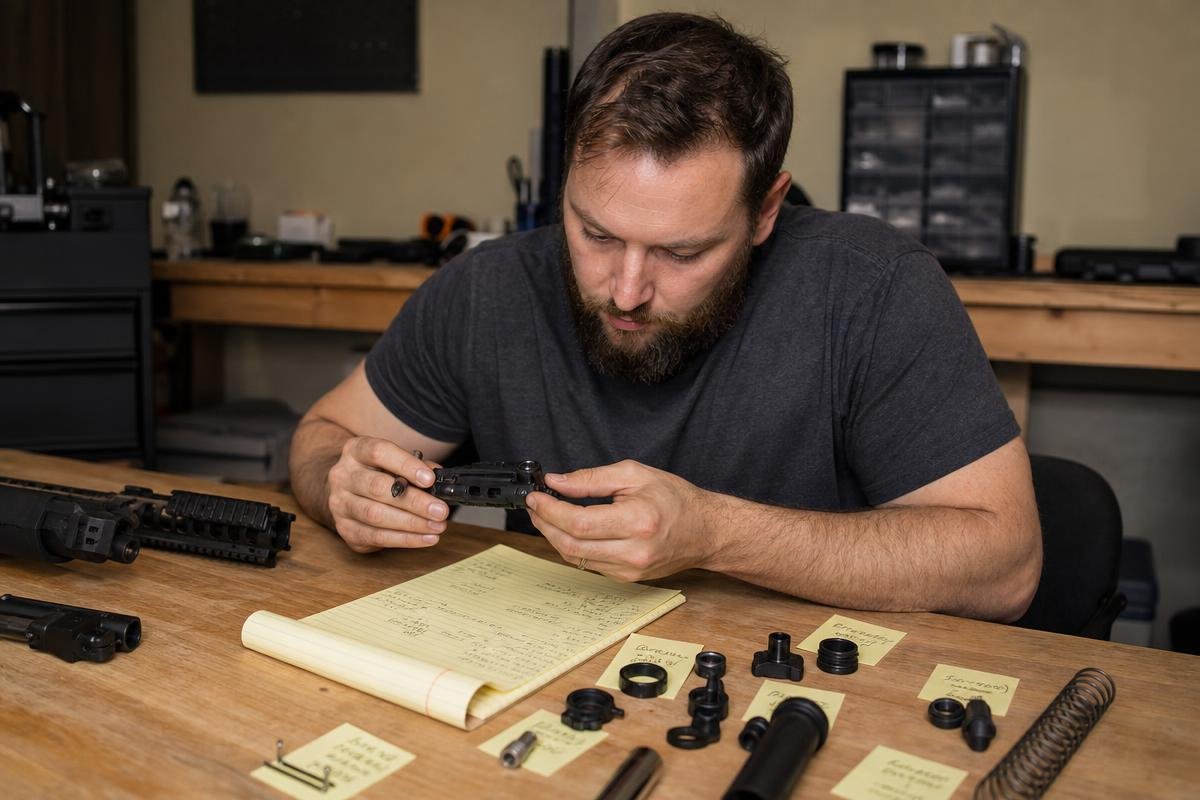
Use this checklist before ordering. It highlights the interfaces that commonly create fitment problems, including caliber, bolt face, barrel extension, gas-system length, handguard mounting, muzzle threads, and receiver-extension type.
Required Compatibility Checks
Start with the cartridge, chamber, bolt face, and magazine. Confirm in the firearm manufacturer’s documentation which ammunition the marked chamber is approved to use, and make sure the bolt and magazines match the cartridge family you select.
- Verify the complete barrel assembly, barrel extension, upper receiver, bolt, and headspace requirements as a compatible system using manufacturer specifications.
- Match the bolt face to the cartridge case head, then verify headspace with proper gauges.
- Match gas-system length to the barrel’s gas port location.
- Match the gas-block journal diameter to the barrel journal.
- Match muzzle threads to the brake, flash hider, suppressor mount, or thread protector.
- Match the receiver extension to a manufacturer-listed compatible stock component, and obtain current legal guidance before configuring any brace.
Compare AR-15 upper receiver parts as a group. The barrel, bolt carrier group, gas tube, gas block, handguard, and muzzle device all need compatible dimensions and attachment methods. Compare AR-15 lower receiver parts the same way, especially the receiver extension, buffer, spring, stock, grip, and magazine release components.
Optional Accessories and Mounting Space
Optics, backup sights, slings, lights, bipods, and rail-mounted accessories are optional. They still need a mounting plan. Check the handguard’s rail sections, M-LOK or KeyMod slots, sling attachment points, and the available top rail space before buying accessories.
Also confirm the handguard mounting system. A free-float handguard uses its own barrel nut and does not contact the barrel, while a drop-in handguard fits around a standard front sight base or retainer system. Check the product description for the correct mounting style before ordering.
Why Complete Uppers Reduce Compatibility Decisions
A configured upper can reduce the number of individual fit checks because the barrel, gas system, and handguard are assembled together, while bolt carrier group and charging handle inclusion varies by product. Our complete AR-15 uppers may be ready to install after you confirm included components and compatibility with your lower.
Read the included-parts list before you buy. Confirm the caliber, magazine type, muzzle device, BCG, charging handle, and handguard configuration. Verify whether a bolt carrier group and charging handle are included instead of assuming they are part of every complete upper.
A Denison Reference for AR-15 Parts and Complete Uppers
We ship from our Denison, TX facility at 4000 Texoma Pkwy, Denison, TX 75020. Use these component descriptions as an educational reference before ordering a replacement, accessory, or complete assembly. Ownership, transfers, configuration, and use remain subject to applicable laws and safe handling practices.
Use the Guide Before Choosing a Replacement Part
Confirm the part name, caliber, receiver pattern, thread pitch, and gas-system fit before you order. A bolt carrier group, barrel, handguard, and muzzle device must match the rest of your upper assembly. For a ready-to-install assembly, compare the specifications on our complete AR-15 uppers with your lower receiver, magazine type, and intended cartridge.
Get Help Identifying a Component
If you are still unsure, call us at (888) 706-0633 with the part’s location, markings, and clear photos if available. We can help identify common components and point you toward the correct category.
Component descriptions do not replace safe handling practices or qualified gunsmith support for diagnosis, assembly, or repairs.
Frequently Asked Questions
What Are the Main AR-15 Assemblies?
The main assemblies are the upper receiver group, lower receiver group, barrel and gas system, bolt carrier group, handguard, buffer system, stock, magazine, and muzzle device. Component photos and an AR-15 parts name list help you separate these assemblies from the pins, springs, detents, and retainers inside them.
What Comes With a Complete AR-15 Upper?
A complete upper usually includes the upper receiver, barrel, gas system, handguard, and muzzle device. Bolt carrier groups and charging handles are not always included, so check the listing before ordering complete AR-15 uppers. Confirm the chamber, barrel length, gas-system length, and muzzle thread pattern against your planned build.
How Do I Check AR-15 Part Compatibility?
Check cartridge and chamber, bolt face, gas-system dimensions, receiver-extension type, handguard mounting system, and thread pattern. A parts guide can identify the part, but it cannot confirm every fitment detail. Compare manufacturer specifications before assembly, especially for caliber conversions and nonstandard handguards.
When Should I Ask a Qualified Gunsmith for Help?
Ask a qualified gunsmith when you are unsure about fit, function, headspace, or safe assembly. Get help with barrel installation, gas-block alignment, muzzle-device timing, and any condition that prevents normal function checks. Use the guide and checklist to confirm the part you need, then contact AR15Parts.com at (888) 706-0633 for help identifying a component or comparing compatible options.
What Small Parts Are Commonly Found in an AR-15 Lower Parts Kit?
A lower parts kit commonly includes control parts, pins, springs, detents, the magazine catch, bolt catch, safety selector, and fire-control components. Check the kit listing because included grips, trigger guards, and fire-control parts can vary.
Why Can AR-15 Parts Vary Between Builds?
AR-15 parts can vary by cartridge, chamber, gas-system length, receiver-extension type, handguard system, and thread pattern. Compare manufacturer specifications before buying or assembling components.
Ready to Get Started with AR15Parts.com?
Call (888) 706-0633 to speak with our team directly. We're ready to answer your questions, walk you through your options, and help you find the right solution for your needs. Whether you're just starting to plan or ready to move forward, we'll make the process simple and stress-free. Reach out today and let's talk about how we can help.