
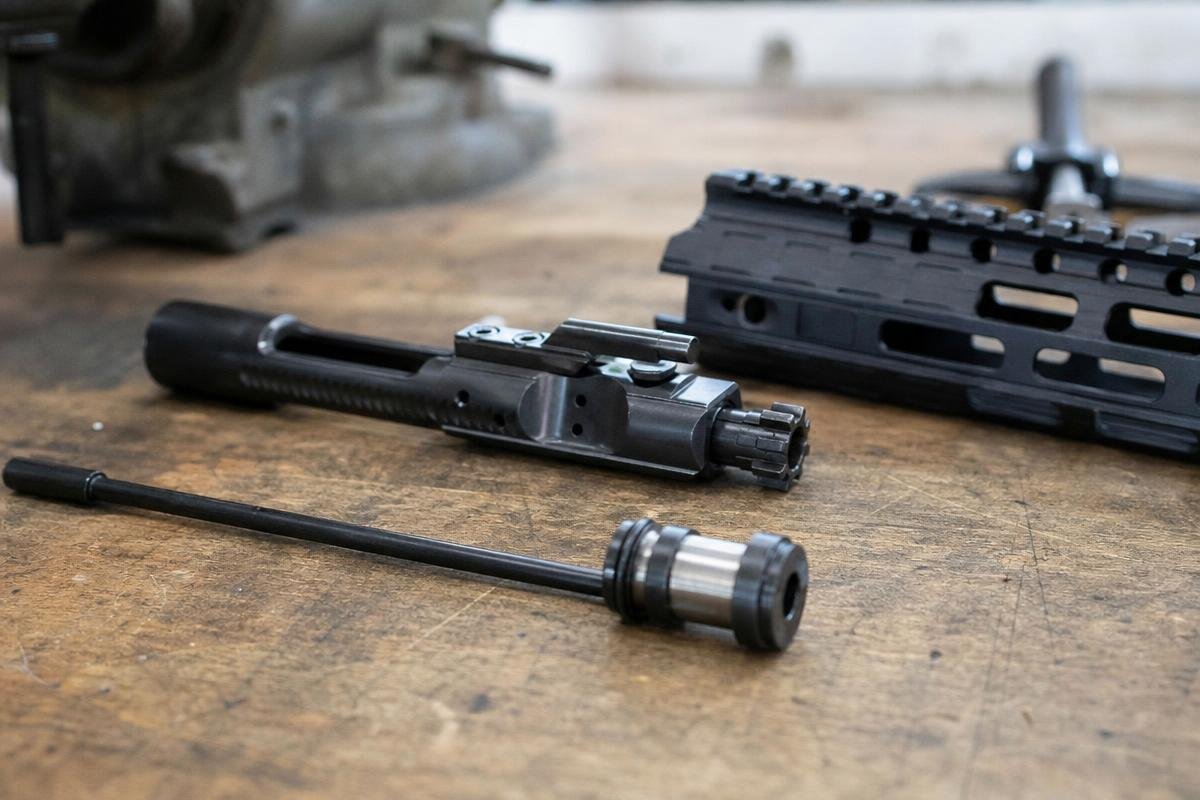
If you are weighing an AR-15 piston system against direct impingement, the differences matter more than most buyers expect. Gas cycling, heat distribution, and reliability in wet or dirty conditions all change depending on which system your rifle runs. At AR15Parts.com in Denison, our team helps shooters compare piston and direct-gas configurations for suppressed, hunting, and range builds. Confirm current product availability before ordering.
The sections below explain how each system works so you can compare the trade-offs before buying. Have questions about piston builds or need help choosing the right upper? Talk to a build specialist at (888) 706-0633.
Key Takeaways
- An AR-15 piston system redirects gas pressure through a rod rather than back into the bolt carrier group.
- Piston-driven ARs run cooler and cleaner at the bolt, which reduces fouling buildup during high round counts.
- Direct-gas systems are usually lighter, while accuracy and reliability depend on the complete design, parts, ammunition, and maintenance.
- Suppressed builds and hunting rifles in wet terrain are the strongest real-world cases for choosing a piston system.
- Piston conversion compatibility depends on the existing upper, barrel, gas-system length, gas-block journal, and carrier design.
How the AR-15 Gas System Works: The Foundation
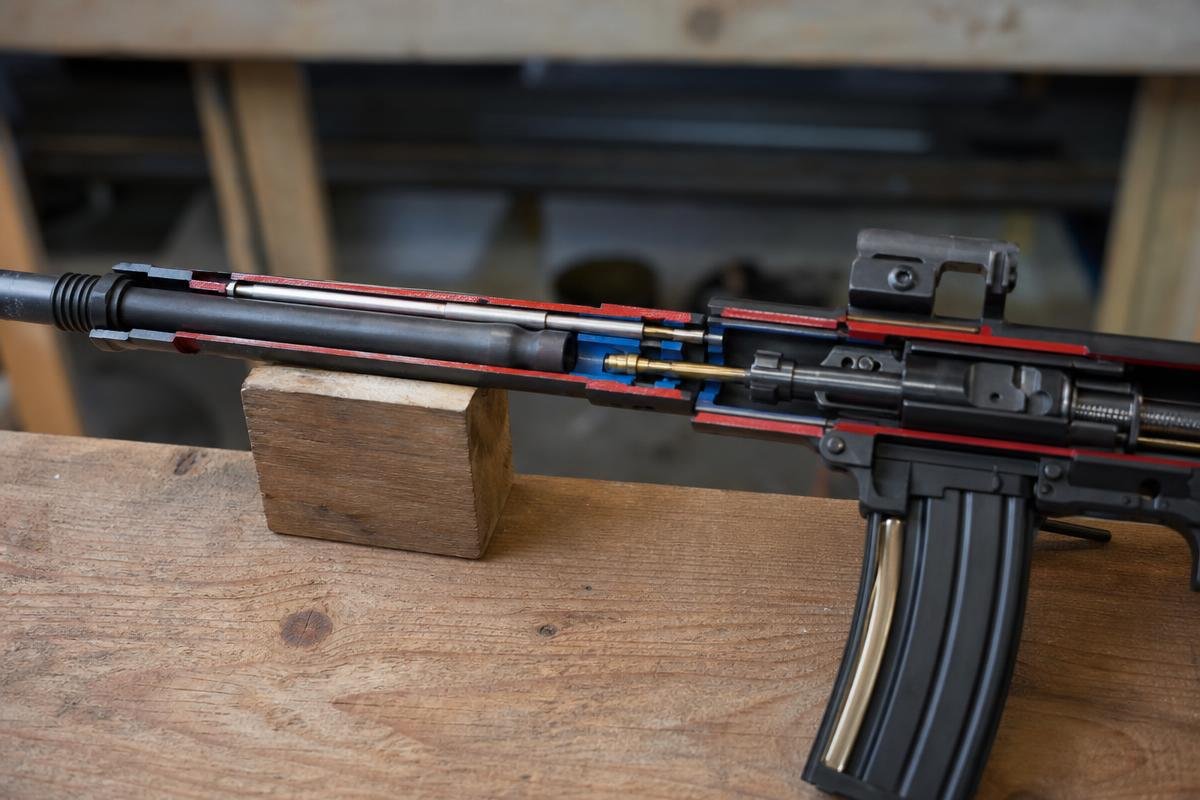
Every AR-15 runs on the same basic principle: the rifle uses its own propellant gas to cycle the action. Understanding how that gas moves through the system is the foundation for understanding why piston-driven designs exist and what problem they solve.
What Happens When You Pull the Trigger
When a cartridge fires, propellant gas follows the bullet down the bore. Before the bullet exits the muzzle, it passes a drilled gas port in the barrel. That port bleeds a portion of the high-pressure gas rearward through a steel gas tube. In a standard direct impingement setup, that gas travels the full length of the tube and enters the bolt carrier key. It then expands inside the carrier body, driving the carrier assembly rearward. The bolt rotates and unlocks, the spent case extracts, and the buffer spring returns the group forward to chamber the next round.
Gas System Length and Why It Matters
Gas system length determines where the port sits on the barrel and how long the bullet stays in the bore after passing that port. That window is called dwell time. Carbine, mid-length, and rifle-length systems typically place the gas port roughly 7, 9, and 12 inches down the barrel, respectively, depending on the barrel and manufacturer. A carbine-length port is reached earlier and generally operates at higher port pressure. A rifle-length port is farther down the barrel, is reached later, and generally operates at lower port pressure. Mid-length splits the difference and is common on 16-inch barrels.
Gas-system length also affects felt recoil, carrier velocity, and how hard the system stresses the brass. For a deeper breakdown of how to match gas length to barrel length and intended use, browse our AR-15 barrels by caliber and length to see how port location is set for each configuration. This mechanical foundation is what the next section builds on when explaining how a piston system changes the path that gas travels.
How the AR-15 Piston System Works
An AR-15 piston system uses gas pressure to drive a mechanical piston and operating rod rather than routing gas back into the bolt carrier group. Gas bleeds from the barrel port into a sealed cylinder above the barrel, and that pressure drives a piston rearward. The piston transfers energy to an operating rod, which pushes the carrier back to cycle the action. Operating gas is not routed through the carrier key as it is in the standard AR gas system.
Short-Stroke Piston
This is the design you see in nearly every piston-driven AR-15 on the market. The piston travels only 0.5 to 1 inch rearward before stopping. It strikes the operating rod, which contacts the bolt carrier and drives it back to extract, eject, and chamber the next round. The piston and rod stay near the gas block. The carrier area may receive less operating gas and fouling, but it still requires inspection and lubrication.
Because the piston does not travel with the carrier, reciprocating mass stays lower than a long-stroke design. That matters for felt recoil and for keeping the rifle's balance point stable during rapid fire.
Long-Stroke Piston
In a long-stroke design, the piston is physically attached to the bolt carrier and travels the full stroke with it. The AK-47 and M1 Garand use this pattern. It is mechanically simple and extremely reliable, but the added reciprocating mass shifts the balance and increases felt impulse. That trade-off is why the short-stroke design dominates the AR-15 piston system market. Manufacturers can retrofit a short-stroke assembly without redesigning the receiver or carrier geometry.
What Happens Inside the Carrier
The bolt in a piston-driven AR-15 still rotates, locks, and unlocks against the barrel extension exactly the same way it does in a direct impingement rifle. The only difference is what pushes the carrier. In a DI rifle, gas expands inside the carrier key and drives the assembly rearward from the inside. In a piston rifle, the operating rod delivers a mechanical push to the outside of the carrier.
Because operating gas is not routed through a standard carrier key, a piston upper may use a solid interface or a different carrier design. Fouling and heat distribution still depend on the complete system. If you want a deeper look at carrier materials, coatings, and how bolt design affects reliability, review the current upper specifications and included carrier components before you select a build.
AR-15 Piston System vs. Direct Impingement: A Side-by-Side Comparison
Both systems cycle a rotating bolt, but piston systems may use a carrier or carrier interface designed for the specific piston assembly. Both are used in military and professional applications. The difference is where the gas goes and what that means for your rifle over time. Here is how they stack up across the categories that actually matter.
| Category | AR-15 Piston System | Direct Impingement |
|---|---|---|
| Cleaning Frequency | Less frequent; gas stays forward | More frequent; gas enters receiver |
| Carbon Fouling Location | Gas block and piston face | Bolt, carrier, and upper receiver |
| Heat in the Receiver | Lower; combustion gases stay forward | Higher; hot gas vents directly into carrier |
| Reliability in Adverse Conditions | Design-dependent tolerance for dirt and fouling | Reliability depends on gas-path and carrier condition |
| Parts Cost | Higher; more machined components | Lower; simple, inexpensive parts |
| Parts Availability | Brand-dependent; less interchangeable | Widely available; mil-spec interchangeable |
| Weight | Heavier; piston and op-rod add mass | Lighter; no additional hardware |
Heat and Carbon Fouling
A DI rifle vents hot combustion gas directly into the carrier key and through the bolt carrier group. Carbon deposits build up on the bolt, inside the carrier, and on the chamber walls of the upper receiver. A piston system keeps all of that forward of the gas block. The carrier assembly stays cooler and cleaner after the same round count.
This difference becomes significant under a suppressor. Suppressors increase back-pressure, which pushes more gas rearward in a DI rifle. Suppressor ownership in Texas is legal with proper NFA registration and continues to grow, and for local shooters running cans on hog hunts or at the range, that extra fouling is a real maintenance issue, not a theoretical one. Since January 1, 2026, the NFA tax on suppressors and short-barreled rifles (SBRs) is $0, but ATF Form 4 (or Form 1) registration and approval are still required.
Reliability Under Adverse Conditions
A piston system transfers energy mechanically at the carrier, while a direct-gas system routes operating gas through the gas tube and carrier key. Reliability for either design depends on parts quality, ammunition, lubrication, maintenance, and the conditions of use.
Neither system is inherently unreliable. Both see professional use. But if your rifle is going into wet Grayson County creek bottoms or sitting in a truck for weeks between cleanings, the piston's mechanical advantage is real. The humid, muddy terrain hunters work north of town is exactly where that tolerance pays off.
Accuracy and Point of Impact Shift
DI applies gas pressure symmetrically inside the carrier, which keeps the cycling force centered and consistent. A short-stroke piston uses an operating rod that contacts the carrier off-center, creating slight carrier tilt during cycling. Some piston designs can change carrier contact and wear patterns. Confirm the manufacturer's carrier design and maintenance guidance rather than assuming the effect is universal.
Quality piston designs address this with improved operating rod geometry or anti-tilt carrier keys. It is not a disqualifying flaw, but it is a real trade-off to understand before you build.
Cost and Parts Availability
Piston uppers and conversion kits cost more. The additional machined components and tighter tolerances drive that price up. DI replacement parts, including gas tubes, carrier keys, and bolt carrier groups, are widely available. Piston components are brand-specific and not interchangeable across manufacturers.
If parts availability matters to your build, browse our complete AR uppers to compare current configurations and included components side by side.
Ready to compare configurations? Browse our current complete uppers, or reach a build specialist for a straight recommendation.
When Does a Piston-Driven AR-15 Actually Make Sense?
A piston-driven AR-15 costs more, weighs more, and adds mechanical complexity. That extra investment pays off in specific situations. In others, it does not. Here is how to read your use case honestly.
Suppressed Builds
This is the strongest argument for a piston system. When you run a suppressor, backpressure increases significantly. On a direct impingement rifle, that extra gas gets pushed back through the gas tube and into the receiver, causing harder cycling, more heat, and faster carbon buildup. A piston system keeps combustion gases forward of the receiver entirely, so the suppressor's backpressure does not foul your bolt carrier group at the same rate.
If you are building a suppressed rifle, especially in 300 Blackout, a piston upper is worth serious consideration. Our 300 Blackout complete uppers are a natural starting point for that build. With suppressor ownership legal under NFA registration, plenty of local hunters run cans on their hog and predator rifles, which makes the piston's cleaner cycling a practical selling point rather than a spec-sheet nicety.
High-Round-Count and Sustained Fire Applications
A DI rifle running 500-plus rounds in a single range session without cleaning accumulates significant carbon in the receiver and on the bolt carrier group. Law enforcement trainers, competition shooters running high-volume drills, and anyone doing serious volume work will see the piston system's heat and fouling tolerance pay off over time. The carrier assembly can stay cleaner for longer, depending on the configuration.
Harsh or Low-Maintenance Environments
A rifle that sits in a truck safe for weeks between hunts, or one that sees wet creek bottoms during a humid November, is a real candidate for a piston system. Mud, moisture, and long cleaning intervals all favor the piston's mechanical reliability advantage. Hunters running night hog hunts in heavy cover around the Red River corridor understand this trade-off immediately.
When DI Is the Better Call
For most recreational shooters, home-defense builds, and precision target work, a quality direct impingement rifle is accurate, lighter, less expensive, and fully reliable when maintained. Eugene Stoner designed the AR-15 around DI, and it works. If weight, cost, and parts interchangeability matter more than suppressor performance or sustained-fire tolerance, DI is the right choice. Do not spend money on a piston system you do not need.
Not sure which system fits your build? Call us at (888) 706-0633 and we will give you a straight answer based on how you actually shoot.
Piston Conversion Kits: Retrofitting a DI Rifle
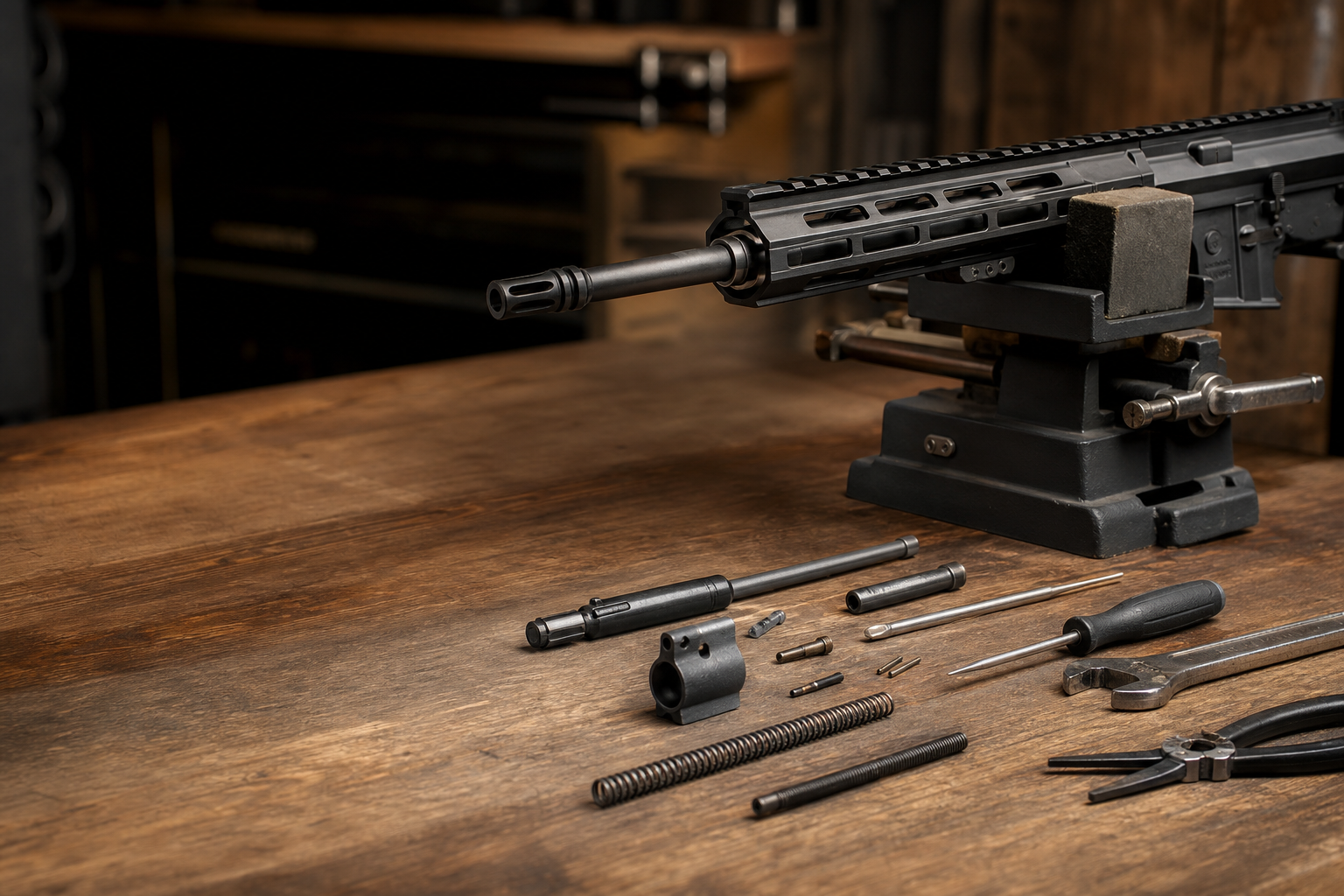
You do not need to buy a complete new upper to run an AR-15 piston system. A piston conversion kit lets you retrofit your existing direct impingement upper, which is a practical path for shooters who already own a DI rifle and want to add a suppressor or get better performance in wet, muddy hunting conditions.
How a Piston Conversion Kit Works
A conversion kit removes your existing gas tube and standard gas block. In their place, a new gas block housing a piston and operating rod is installed at the same gas port location on the barrel. When the rifle fires, gas pressure drives the piston rearward. The operating rod contacts the bolt carrier directly, cycling the action without gas traveling back into the receiver. Depending on the kit design, your existing bolt carrier group may work as-is, or the kit may require a matched carrier.
What to Look for in a Retrofit Kit
Four things matter most before you buy.
- Operating rod material. Use only the material and component specified by the kit manufacturer.
- Carrier interface. Follow the kit manufacturer's carrier and receiver-extension compatibility guidance to manage wear.
- Adjustable gas settings. A multi-position gas block lets you tune flow for suppressed versus unsuppressed use, which matters if you are running an NFA-registered can.
- Gas-block fit. Confirm the barrel's gas-block journal diameter, port location, and the kit manufacturer's clearance requirements.
Compatibility Considerations
Piston kits are gas-system-length specific. A carbine-length kit will not function on a rifle-length gas system. Confirm your barrel's gas port diameter falls within the kit manufacturer's specified range before ordering. If your current barrel does not match, browse AR-15 barrels by caliber and length to find a compatible replacement before committing to a conversion.
Piston-Driven AR-15 Builds in Denison and North Texas
Local Conditions That Favor a Piston Build
Shooters in Grayson County deal with conditions that stress a direct impingement rifle harder than most. Creek bottoms and cedar breaks north of town put rifles in contact with mud, standing water, and heavy dew, and the humid stretches through fall and spring keep moisture on gear longer than dry-climate shooters ever see. Hog and whitetail hunters running suppressed builds in those conditions are exactly the use case where a piston-driven AR-15 earns its cost premium. Outdoor ranges nearby also generate real dust, which accelerates carbon fouling in a DI action.
Picking the Right Upper for Your Use Case
Hunters around Sherman, Pottsboro, and Durant running suppressed 300 Blackout or 5.56 builds will find the most practical piston options in a complete upper. We carry complete uppers in 300 Blackout and 5.56 NATO and ship nationwide from our location at 4000 Texoma Parkway, Denison, TX 75020.
Frequently Asked Questions
Is a piston-driven AR-15 actually more reliable, or is that marketing?
Both systems are reliable when maintained properly. The piston's real advantage is tolerance: it keeps combustion gases out of the receiver, so it handles fouling, reduced lubrication, and sustained fire better than a direct impingement setup. For a well-maintained rifle at normal shooting volumes, a quality DI rifle is equally reliable. The piston's edge shows up at the margins, not in everyday range use.
Can I convert my existing DI AR-15 to a piston system?
Yes. A piston conversion kit for AR-15 replaces the gas tube and gas block with a piston assembly and operating rod. Compatibility depends on the gas-system length, whether carbine, mid-length, or rifle, plus the gas-block journal and carrier requirements. Installation requirements vary by kit, and some configurations require fitting, alignment checks, and manufacturer-specified function testing. Check your barrel's gas port location before ordering a kit.
Does a piston AR-15 run cooler?
The upper receiver and bolt carrier group run significantly cooler because combustion gases never enter the receiver. Heat concentrates near the gas block and barrel instead. That difference is most noticeable in suppressed use or high-round-count sessions where heat buildup in a DI rifle becomes a real handling issue.
Does a short-stroke piston system affect accuracy?
Short-stroke piston AR-15 designs can introduce carrier tilt, a slight downward angle on the carrier during cycling. In some builds that accelerates wear and affects shot-to-shot consistency at distance. Quality piston designs address this with anti-tilt operating rod geometry. For hunting, home defense, and general use at practical distances, a well-built piston upper is accurate enough for the task.
What calibers pair best with a piston upper for suppressed hunting?
5.56 NATO and 300 Blackout are the most common piston pairings, especially in suppressed configurations. 300 Blackout is particularly well-suited because it was designed around subsonic loads and suppressor use, and the piston keeps the receiver clean through extended suppressed strings. Our 300 Blackout uppers are a natural starting point for a suppressed hunting build.
Is the cost premium on a piston AR-15 worth it?
For suppressed builds, high-volume shooting, or rifles that go long stretches between cleanings, yes. Shooters running suppressed hog or whitetail setups in wet, dirty conditions get real value from a piston's cleaner cycling and cooler receiver. For a standard recreational or home-defense rifle, a quality DI upper delivers equivalent performance at lower cost with better parts availability across the board.
Ready to spec out a piston build or compare upper configurations? Browse complete AR-15 uppers in 19-plus calibers at AR15Parts.com, or call us at (888) 706-0633. We ship nationwide from 4000 Texoma Parkway, Denison, TX 75020.
Ready to Get Started with AR15Parts.com?
Call (888) 706-0633 to speak with our team directly. We're ready to answer your questions, walk you through your options, and help you find the right solution for your needs. Whether you're just starting to plan or ready to move forward, we'll make the process simple and stress-free. Reach out today and let's talk about how we can help.