
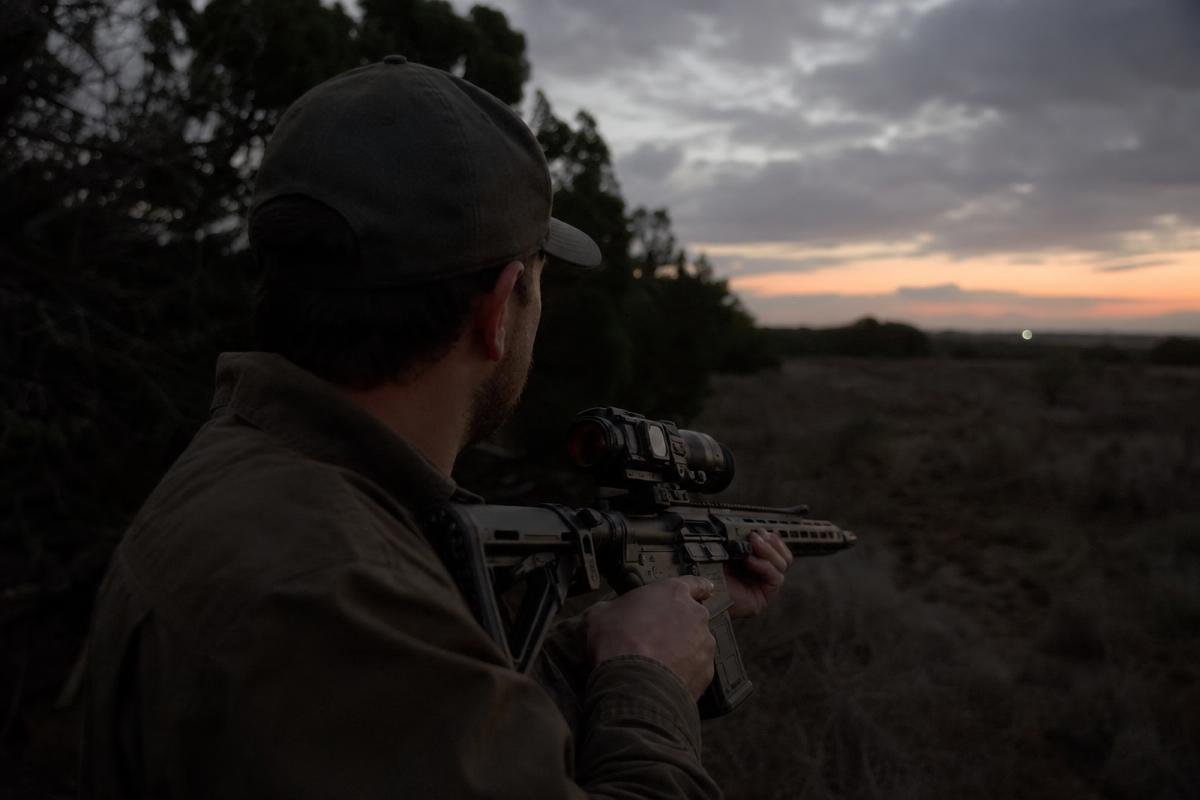
AR15Parts.com is located at 4000 Texoma Parkway, Denison, TX 75020. For a thermal scope vs night vision decision, the short answer is simple: thermal optics are usually better for locating heat in darkness, while night vision provides more visible scene detail. That difference matters on the mix of open pasture, timbered draws, brushy fence lines, and agricultural ground found around Grayson County and Lake Texoma. Need help checking AR optic fit, rail space, and mount compatibility?
Key Takeaways
- Thermal optics display heat contrast, making them useful for locating hogs along dark field edges and brush.
- Night vision uses available light or infrared illumination to show terrain, fences, vegetation, and other visible details.
- Choose around the task, distance, property layout, mounting requirements, recoil rating, battery runtime, and zero retention, not a claimed detection range alone.
- Fog, humidity, rain, smoke, dust, and dense cover can limit useful detail with either system.
Is Thermal Better Than Night Vision for Hog Hunting?
Thermal is usually better when the hardest part of the hunt is finding hogs in darkness, while night vision can be the better tool when you need a more recognizable view of the ground and surroundings. Neither replaces positive target identification, a safe backstop, landowner permission, or a current understanding of applicable regulations.
How Does Thermal Imaging Find Hogs?
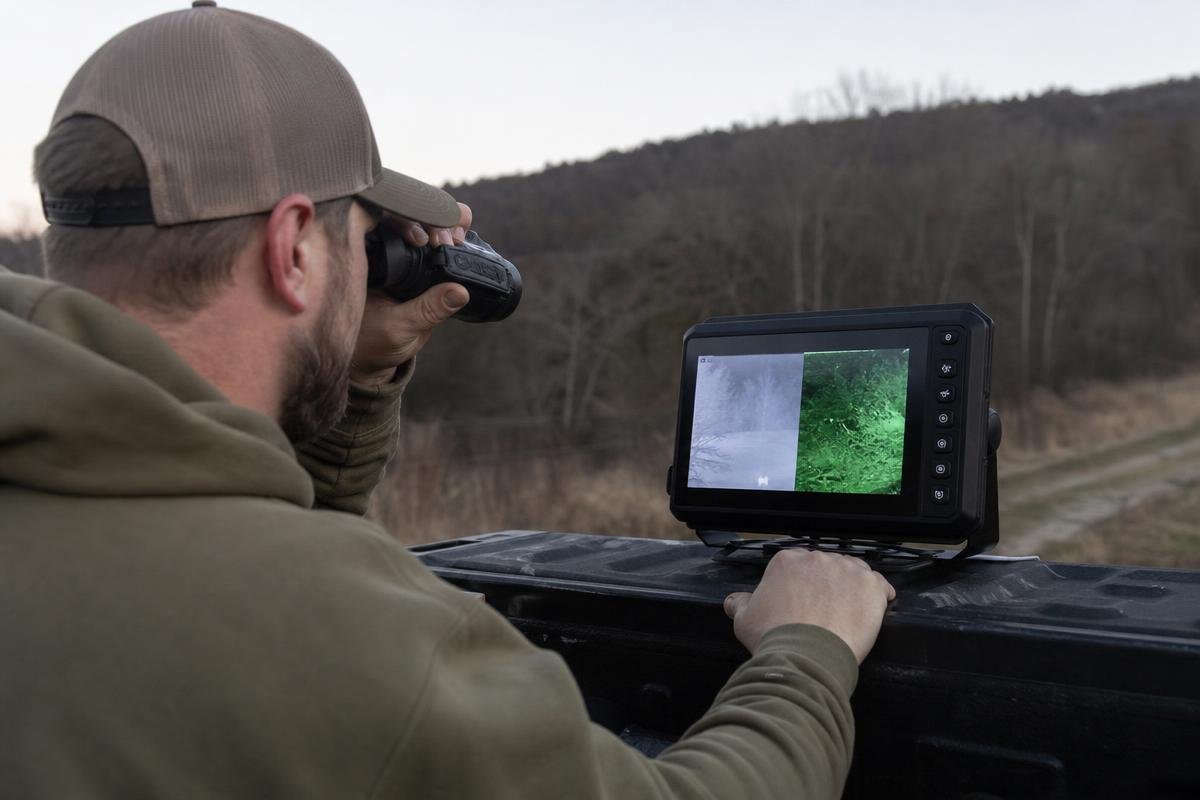
Thermal imaging reads differences in infrared heat radiation rather than visible light. A hog can stand out against cooler grass, soil, brush, or a tree line even when there is no moonlight. This makes heat-based detection useful for scanning long pasture margins, low draws, and wooded transitions where animals emerge after dark.
Sensor resolution and objective lens size affect what you see. Higher-resolution sensors can present a cleaner image, while a larger lens can improve detail at longer distances but generally adds cost, size, and weight. Base magnification also matters: lower base magnification typically gives a wider field of view for scanning, while higher magnification narrows the view and is more suited to longer, open lanes.
For an AR hunting build, optic height and rail space matter. A properly configured complete AR upper for a hunting build gives you a stable top rail for the optic and mount you choose.
How Does Night Vision Show More Scene Detail?
Image-intensifier night vision amplifies available light from the moon, stars, or nearby artificial sources. Digital night vision uses an electronic sensor and display, often aided by infrared illumination when ambient light is weak. Both approaches can present a more familiar view of terrain than a heat-based image.
That visible-scene context can help you read fence lines, gates, pasture transitions, vegetation, and equipment around a property. In the Texoma region, where a firing lane may change quickly from open ground to dense brush or a tree-lined creek bottom, field context should be part of the optic decision, not an afterthought.
Why Is Detection Different From Identification?
Detection means noticing something is present. Identification means knowing exactly what it is and whether a shot is appropriate. A heat source can reveal movement quickly, but a warm animal, person, dog, or livestock animal may not be distinguishable at every distance or angle.
Use the optic as one part of a deliberate process. Establish where you can safely shoot in daylight, know the property boundary and access routes, and do not fire at a partial image or through obscuring cover.
| Factor | Thermal Imaging | Night Vision |
|---|---|---|
| Primary strength | Fast heat-based detection in darkness. | Visible scene detail and terrain recognition. |
| Ambient-light dependence | Does not require visible light. | Needs ambient light or an IR illuminator. |
| Best scanning setup | Wide field of view and manageable base magnification. | Usable ambient light, or a properly matched IR source. |
| Important buying checks | Sensor resolution, lens, refresh rate, recoil rating, battery runtime. | Analog or digital design, illuminator needs, display quality, runtime. |
| AR mounting | Secure mount, correct rail position, repeatable zero. | Secure mount, charging-handle clearance, room for illuminator if used. |
Night-Hunt Property Checklist
- Walk intended firing positions in daylight and identify a safe backstop for every direction.
- Note gates, fence crossings, access roads, livestock areas, occupied structures, and neighboring property lines.
- Confirm the rifle, optic, mount, and chosen ammunition are zeroed together.
- Carry enough power for the optic and any illuminator, and verify equipment settings before dark.
- Review current rules with Texas Parks and Wildlife hunting regulations, as requirements can change by species, location, method, and time of year.
If you need help matching an optic-ready rifle setup to your plan, contact our team for practical build guidance.
Can Thermal or Night Vision Work in Total Darkness, Fog, Smoke, and Brush?
Thermal can operate in total darkness, while night vision needs available light or an infrared source. In fog, humidity, rain, smoke, dust, and brush, neither system should be treated as a guarantee of clear detail or a substitute for sound judgment.
Does Night Vision Work in Complete Darkness?
Night vision can work in complete darkness with infrared illumination. Digital units commonly use an IR illuminator, and image-intensifier devices also require some light input. Illuminator choice and placement matter because close vegetation, dust, and reflective surfaces can create glare or wash out portions of the image.
Thermal optics do not need an illuminator, but their performance still depends on the temperature contrast between the animal and its surroundings. A cool night may create a more distinct image than a warm, humid evening when ground, vegetation, and animals are closer in temperature.
Does Thermal Work Better in Fog or Humidity?
Thermal may retain some detection ability through light haze, but heavy fog, rain, smoke, or high humidity can reduce contrast and shorten useful distance. Night vision can also lose clarity when airborne moisture or particles scatter available light and infrared illumination.
North Texas weather can change quickly around open water and low-lying ground. On humid evenings near Lake Texoma or drainage areas, assess what the optic actually shows at the time, rather than relying on a specification sheet or a previous clear-night experience.
Can Thermal or Night Vision See Through Brush?
No, neither system sees through solid brush, trees, terrain, walls, or other hard cover. Thermal may show heat through thin grass or between openings, but it cannot establish an animal’s full position through dense cover. Night vision is similarly limited by physical obstructions.
A partial image should end the shot decision, not start it. Wait for a clear view and a known safe firing lane.
An AR-15 night hunting optic should be selected around the distances and conditions you actually expect. If you are building a dedicated hunting rifle, review our complete AR uppers for hunting builds with the barrel length and caliber suited to your property.
How Do Thermal and Digital Night Vision Mount on an AR Platform?
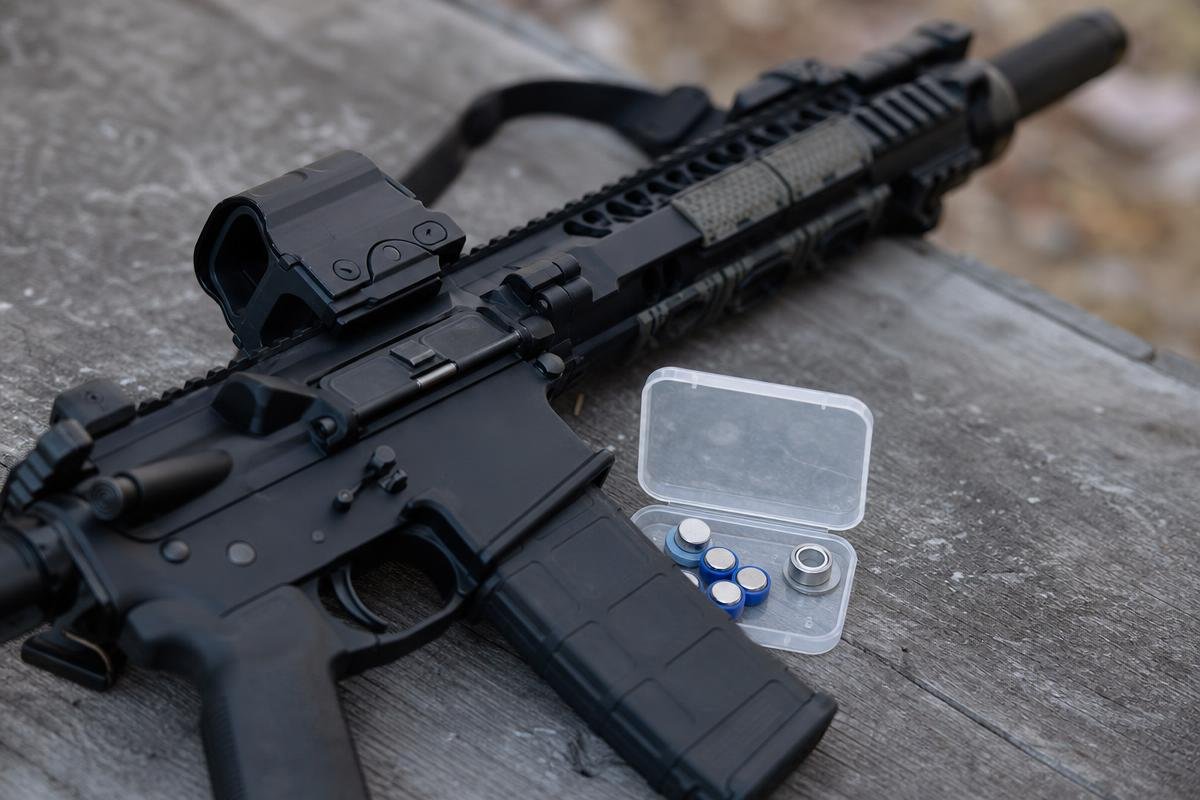
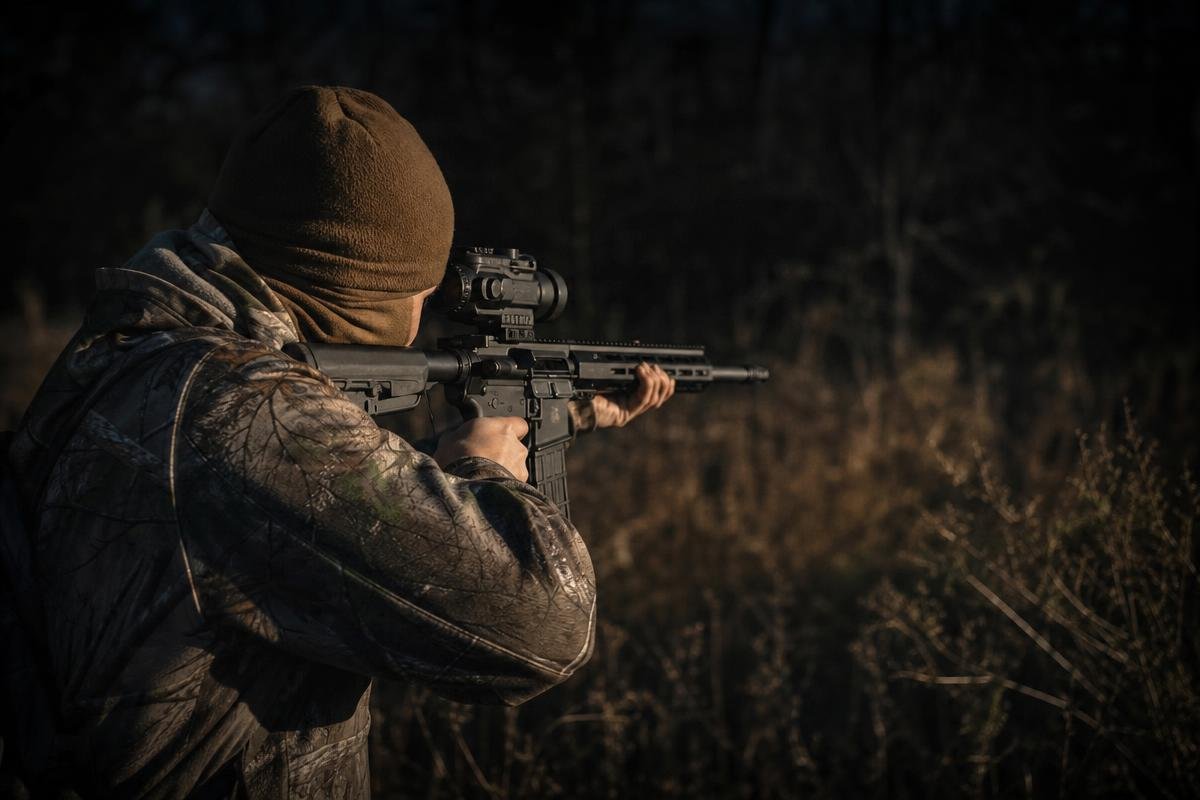
Optic choice also affects your rifle setup. The optic must fit the receiver rail correctly, hold zero under recoil, allow a consistent cheek weld, and remain powered for the way you actually hunt.
What Is the Difference Between Digital and Analog Night Vision?
Digital night vision uses a sensor and electronic display. It may offer video recording, onboard reticles, and rechargeable or replaceable battery options. Analog night vision uses an image-intensifier tube to amplify available light and is a different technology from a digital sensor.
Digital units often make sense for users who value recording and familiar menu-driven controls. Analog systems can offer a live intensified image in low light, but both types require careful evaluation of light conditions, mounting method, and intended use.
What Mounting Checks Matter Most?
Mount the optic on the upper receiver, not across the receiver-to-handguard gap. Confirm that the optic and mount are rated for the cartridge and recoil impulse of your rifle, then torque fasteners to the manufacturer’s specification. A mount that fits the rail is not automatically a mount that will reliably retain zero.
Check charging-handle clearance, display placement, eye relief where applicable, and cheek weld from your normal shooting position. Heavier thermal units can noticeably change rifle balance. If you add an IR illuminator, allow enough handguard space for its mount, controls, and cable routing without interfering with your support hand.
Complete hunting builds need room for the optic and a stable mounting surface. Our complete AR uppers for hunting builds give you a practical starting point for matching barrel length, rail space, and your chosen optic.
How Important Are Battery Runtime and Zero Retention?
Battery runtime is a field-use issue, not just a product specification. Consider whether the optic uses common replaceable cells, internal rechargeable power, or a removable battery pack. Carry protected spares, learn the battery-change process, and avoid changing settings or disturbing the mount unnecessarily in the field.
Before transporting the rifle, ensure the case does not place pressure on the optic, mount, controls, or display. After a hard impact, optic removal, mount change, or major ammunition change, verify zero from a safe range position.
If you need help sorting out an AR platform for your optic, we can discuss AR-15 complete rifles and compatible build options through our online store.
Need help planning an optic-ready AR build? Call (888) 706-0633 and talk with our team.
Which Optic Fits Your Hog Hunting Plan?
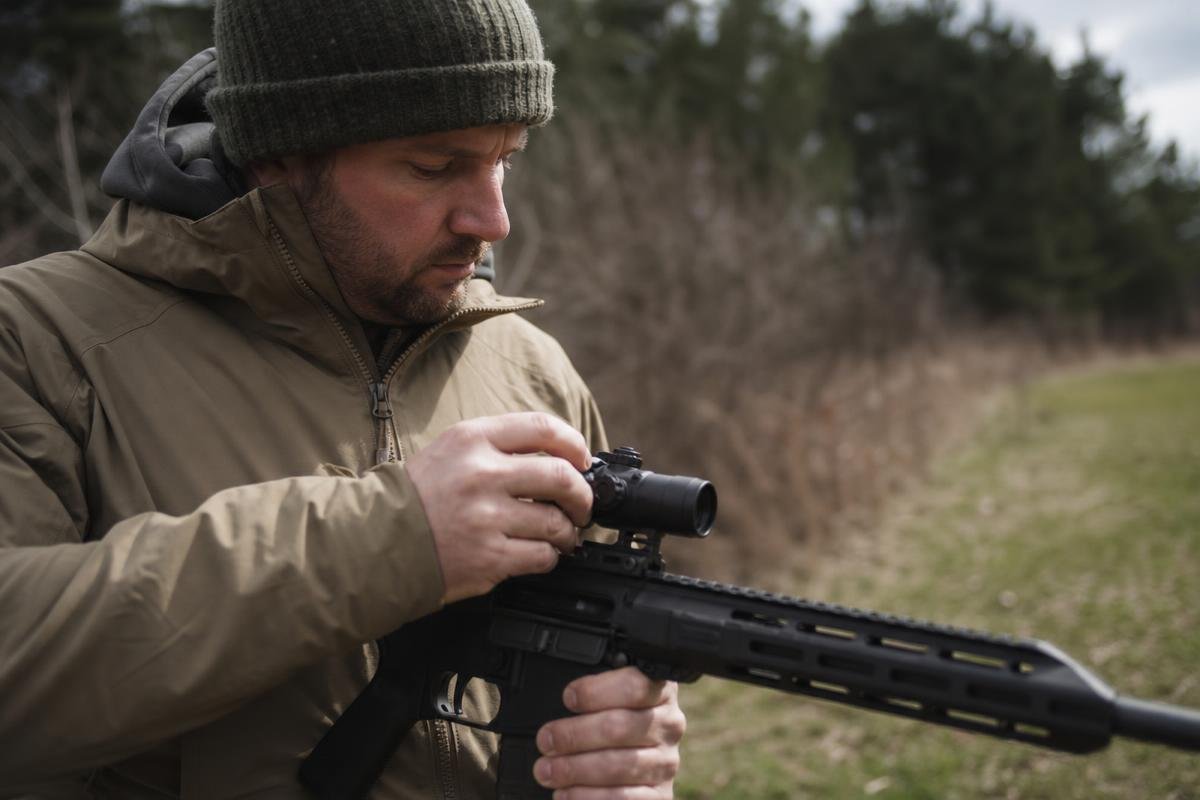
Choose thermal when locating animals is the limiting factor. Choose night vision when the property and available light make visible terrain detail the priority. For many hunters, the best answer is not a brand claim or maximum advertised range, but the optic that fits the longest safe, practical lane on the property.
Should You Buy a Thermal Scope for Open Fields or Brush?
Thermal is often the stronger choice for scanning brushy margins, tree lines, and dark pasture edges where a hog may be difficult to spot with the naked eye. On broad open ground, a lower base magnification can be helpful for scanning, while a higher base magnification may fit a longer, controlled lane if the field of view remains workable.
Do not select an optic based on detection distance alone. The distance at which a device can detect a heat source is not necessarily the distance at which you can identify an animal and make a safe decision.
When Is Night Vision the Better Value?
Night vision can be a practical choice where there is enough moonlight, starlight, or controlled IR illumination to show usable surroundings. It may be especially attractive for a property where identifying fence lines, terrain changes, and familiar landmarks is central to the hunting plan.
Digital systems may cost less than some thermal options and can add recording features, but budget for the complete setup. That can include the optic, a recoil-rated mount, an IR illuminator if needed, batteries, and a safe way to confirm zero. A lower-priced optic that cannot hold zero, run long enough, or provide useful detail for your distance is not a value.
What Should You Check Before You Buy?
Compare base magnification, field of view, sensor or image quality, refresh rate, lens size, recoil rating, weight, battery type, runtime, reticle options, recording features, warranty terms, and mounting pattern. Consider how the controls work with gloves and whether you can access the battery compartment while the optic remains mounted.
Caliber and barrel configuration should also be considered as part of the full build. A longer barrel, different handguard length, or a suppressor-ready setup can change balance and available rail space. We carry complete AR uppers for hunting builds that can help you match the rifle configuration to the optic and intended use.
A Decision Matrix for Thermal and Night Vision
| Likely hunting condition | Thermal fit | Night vision fit | Rifle setup check |
|---|---|---|---|
| Dark field edges and brush | Strong for locating heat signatures in visual clutter. | May need an IR illuminator for a usable image. | Favor a wide scanning view and confirm a repeatable cheek weld. |
| Open pasture with known backstops | Useful for detection across dark ground. | Often useful for reading terrain and visible scene detail. | Match base magnification to the longest practical safe lane. |
| Mixed timber, draws, and fence lines | Can reveal heat near cover, but cannot see through cover. | Can help recognize terrain when illumination is sufficient. | Check balance, rail clearance, and control access from field positions. |
| Changing weather or long sessions | Useful without ambient light, subject to weather limitations. | Performance varies with light and IR conditions. | Prioritize battery access, spare power, mount torque, and zero retention. |
For help matching an AR-15 night hunting optic to your rifle, call us at (888) 706-0633 or contact our team online. We ship from our Denison, TX facility.
How Should You Prepare for a Denison-Area Night Hunt?

Preparation starts with the property, not the optic. The pasture, brush, drainage, fencing, roads, and nearby occupied areas around a hunting location determine safe directions and practical distances before darkness changes what you can see.
Map Safe Directions Before Dark
Walk the property in daylight and identify field edges, brush lines, low areas, access roads, livestock zones, neighboring structures, gates, and access routes. Mark no-shoot directions on a map or phone, then make sure every planned firing position has a safe backstop.
For rural Grayson County properties, a field can look open from one position while dropping into a drainage or meeting a tree line beyond the visible edge. Set up only where you understand the full background and have permission to be there.
Confirm Rules, Permission, and Rifle Readiness
In Texas, feral hogs have no closed season or bag limit, and night hunting on private land is legal with landowner permission. A hunting license is generally required unless the landowner or agent exemption applies; confirm current hunting and firearm requirements before heading out. The Texas Parks and Wildlife hunting regulations are a useful starting point, but rules can change and may vary by species, season, property status, location, and method used after dark.
Check the rifle before loading the truck. Inspect the optic mount, ring or mount fasteners, battery supply, sling, case, magazines, and any illumination equipment. A loose mount can shift point of impact even if the optic was previously zeroed.
We sell firearms, parts, and accessories online and ship from our Denison, TX facility. If you are setting up a dedicated property rifle, review our complete AR-15 rifles and confirm that your optic, mount, and rifle configuration work together before heading out.
Why Verify Zero Before the Hunt?
Confirming zero before a night hunt tells you where the rifle is actually placing shots with that optic and ammunition. A clear image cannot correct a shifted zero, a loose mount, or a changed load.
Use a safe daylight range setup and fire a group with the ammunition you plan to carry. Confirm the mount is secure, note your zero distance, and recheck after any hard case impact, optic removal, battery change that affects settings, or major rifle change.
Bring spare batteries and keep them accessible, not buried under other gear. If you need help matching a hunting build to your planned optic, contact our team before you leave the property.
Frequently Asked Questions
Is Thermal or Night Vision Better for Hog Hunting?
Thermal is better for finding heat signatures, while night vision is better for seeing terrain, fences, and target context. A thermal scope for hog hunting helps locate animals along field edges, but you still need a confirmed safe shot direction.
Thermal imaging vs night vision is not a one-size decision. Choose based on detection needs, available light, and how much scene detail you need before firing.
Can Thermal or Night Vision See Through Brush and Trees?
No, neither thermal nor night vision sees through solid brush, trees, walls, or other hard cover. Thermal may show heat through thin grass or gaps, but an obscured heat signature does not establish a safe target. Check for livestock, roads, neighboring structures, and people before taking a shot. Brush lines can hide more than the animal you first detect.
Does Night Vision Work in Complete Darkness?
Night vision can work in complete darkness if you add infrared illumination. Traditional image-intensifier devices and digital night vision units differ by design, but both need some form of light input. Infrared light is invisible to your unaided eye, yet it can illuminate a field for a compatible device. Verify your illuminator pattern and target identification at a safe range before a hunt.
What Is the Difference Between Digital and Traditional Night Vision?
Digital night vision uses an electronic sensor and display, while traditional night vision amplifies available light through an image-intensifier tube. Compared with thermal imaging, digital night vision shows visible-scene detail rather than heat contrast.
Digital units often record video and work with IR illuminators. Traditional units can provide a more natural live image, depending on tube quality and ambient conditions.
Do I Need to Re-Zero After Changing an Optic or Mount?
Yes, verify zero after changing an optic, mount, battery compartment, or any fastener that affects the sighting system. A loose crossbolt, different rail position, or hard impact can shift point of impact. Torque mount hardware to the manufacturer’s specification. Then confirm zero from a stable rest with the ammunition you plan to carry.
What Should I Check Before Mounting a Night Optic on an AR?
Check rail engagement, mount torque, eye relief, battery access, clearance around the charging handle, and a safe zero before mounting a night optic on an AR. Confirm that your optic sits securely on a clean, undamaged Picatinny rail.
For rifle-side setup help, review our AR-15 complete rifles and complete AR uppers for hunting builds. Verify current hunting and firearm requirements with appropriate authorities before heading onto private property.
Need help finishing the rifle side of your night-hunt setup? Contact AR15Parts.com at (888) 706-0633 for AR rifles, complete uppers, and components, then verify your optic fit and zero before heading onto the property.
Ready to Get Started with AR15Parts.com?
Call (888) 706-0633 to speak with our team directly. We're ready to answer your questions, walk you through your options, and help you find the right solution for your needs. Whether you're just starting to plan or ready to move forward, we'll make the process simple and stress-free. Reach out today and let's talk about how we can help.