
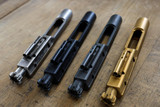
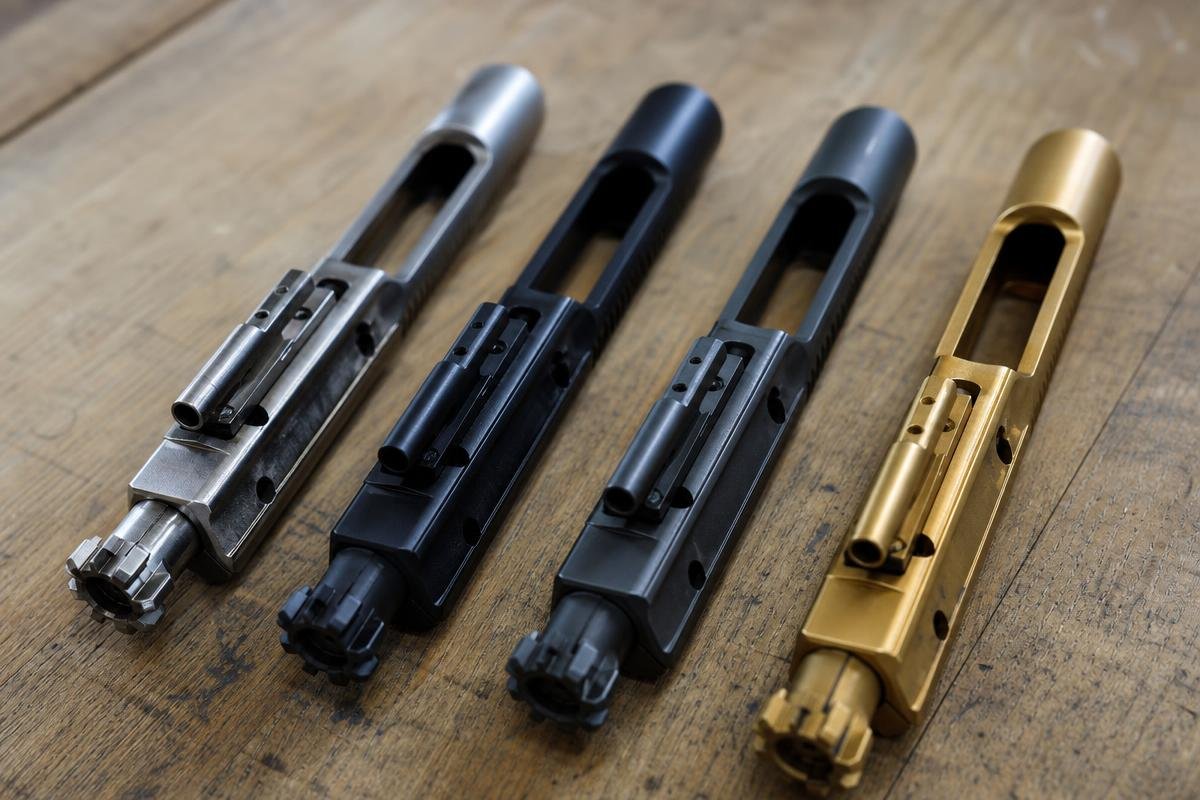
BCG coatings differ in wear resistance, cleaning ease, corrosion protection, and cost. Compare nitride, nickel boron, phosphate, and TiN to find a finish that fits your build. We ship bolt carrier groups from our Denison, TX facility. Browse available finishes to compare options for your build.
Key Takeaways
- Choosing a BCG finish comes down to four trade-offs: lubricity, rust protection, cleaning time, and cost.
- Nickel boron offers the slickest surface and easiest cleaning, but costs more than phosphate or nitride options.
- Nitride (Melonite) offers strong moisture resistance and holds up well in humid or wet environments.
- Phosphate is the mil-spec standard and remains the most affordable finish for duty or range use.
- Titanium nitride (TiN) adds a gold finish and high hardness, but is harder to source and inspect for wear.
How BCG Coatings Affect Wear, Cleaning, and Rust
An AR-15 BCG coating reduces friction, protects against rust, and changes how easily carbon lifts off after firing. It is not cosmetic. It changes the physical properties of the metal surface at the carrier body, cam pin track, and bolt tail, which are the three areas that take the most metal-on-metal punishment through thousands of cycles. The right coating reduces galling, sheds carbon faster, and keeps your rifle running when conditions get rough.
Surface Hardness and Wear Resistance
Phosphate is the mil-spec baseline. It provides adequate hardness for standard use, but it is a surface coating, not a treatment that penetrates the steel. Nitride, also called QPQ or Melonite, is a diffusion process. It drives nitrogen into the steel itself and achieves a case-hardness phosphate simply cannot match. That deeper hardness matters most at the cam pin track, where the carrier takes repeated lateral stress every cycle.
Nickel boron and titanium nitride both deposit harder outer layers than phosphate, though neither penetrates the steel the way nitride does. Each offers advantages in the comparison below. Chrome plating is another BCG finish, but a chrome-lined carrier interior is not the same as a fully chrome-plated carrier.
Lubricity: Why the Coating Affects How Your Rifle Runs
Lubricity is how slick the surface is under heat and pressure. A slicker BCG needs less oil to cycle reliably and keeps moving when fouling builds up. For suppressed builds and high-round-count range sessions, this matters more than most buyers expect. North Texas heat is also a factor: on a hot afternoon shoot, thin oils run off fast, so a high-lubricity finish gives you more margin between wipe-downs.
The general ranking: NiB and TiN sit at the top, nitride falls in the middle, and phosphate is the most oil-dependent of the four. If you run a 300 Blackout complete upper with a suppressor, a high-lubricity finish is worth the extra cost.
Corrosion Resistance and Long-Term Protection
Denison sits in a humid corridor along the Red River. Seasonal moisture, vehicle storage, and outdoor use all create real rust risk for unprotected steel. Phosphate offers the least protection of the four coatings and depends heavily on oil to stay ahead of oxidation. Nitride improves on that significantly. NiB and TiN can also provide strong moisture resistance, although results vary by process quality and manufacturer. The full side-by-side breakdown of all four AR-15 BCG coatings is in the next section.
Nitride, Nickel Boron, Phosphate, and TiN Compared
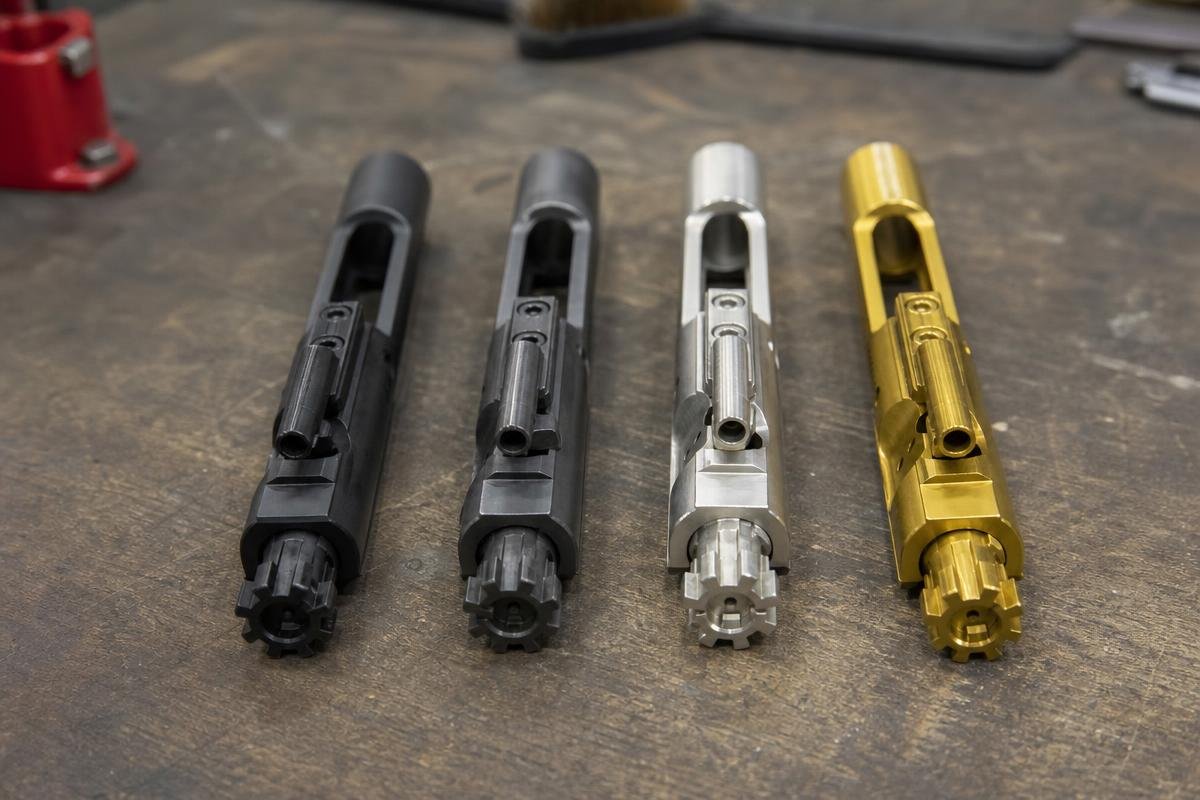
Every AR-15 BCG coating makes a different trade-off between lubricity, rust protection, cleaning ease, and cost. Knowing those trade-offs before you buy saves you from replacing a BCG six months into a build. Here is what each finish actually does and where it falls short.
Phosphate (Parkerized)
Phosphate is the mil-spec standard for a reason: it is inexpensive, widely available, and holds oil well because the surface is porous. That same porosity is the trade-off. Carbon bonds directly to the open surface, so cleaning a phosphate BCG takes more time and more solvent than any other finish on this list. Run it dry and its rust protection drops fast. Phosphate works well for budget builds and shooters who clean after every range session without exception.
Nitride (QPQ / Melonite)
Nitride is not a coating in the traditional sense. It is a diffusion process that converts the outer steel layer itself into iron nitride. No measurable thickness is added, so tolerances stay exact. The result is a surface harder and more oxidation-resistant than phosphate, with noticeably better lubricity and easier carbon removal.
The process also treats the bolt body, including the cam pin hole, which is the highest-stress wear point on the entire assembly. If you are thinking about how gas system length and carrier dwell time affect fouling accumulation at the bolt face, nitride is the most practical upgrade from a standard phosphate BCG.
Nickel Boron (NiB)
Nickel boron uses an electroless plating process to deposit a hard, silver-toned layer over the carrier and bolt. It offers high lubricity compared with many common AR-15 BCG finishes. Carbon does not bond aggressively to the NiB surface, so most fouling wipes off with a dry patch. You can run a NiB BCG with less lubrication than phosphate or nitride and still get reliable cycling.
The trade-off is tarnishing. Heat cycles cause the silver finish to develop a blue-gray discoloration over time. That is purely cosmetic and does not affect function. Nickel boron typically carries a higher price than phosphate, although pricing varies by manufacturer and current inventory.
Titanium Nitride (TiN)
Titanium nitride is a PVD coating and capable of high surface hardness, depending on the specific process and substrate. Its moisture resistance is excellent, lubricity is comparable to nickel boron, and the gold finish is distinctive enough that most people who run it do so partly for aesthetics. TiN makes the most sense on precision and custom builds where you want maximum surface hardness and rust protection in a single part, and where appearance carries real weight.
The gold color is a surface effect only and does not change the rifle's heat signature or make the BCG any more visible in use, since the finished part sits inside the receiver. The main durability caveat is that the PVD layer is thin and sits on top of the steel rather than in it, so abrasive brushing or bore tools can scratch through it. Once bare steel shows through, that spot loses its protection, so TiN carriers should be cleaned with soft patches and non-abrasive solvent only. It is also the most expensive option and the least widely stocked.
| Coating | Lubricity | Rust Protection | Cleaning Ease | Cost Premium Over Phosphate | Appearance |
|---|---|---|---|---|---|
| Phosphate | Low | Low | Difficult | None (baseline) | Flat matte gray |
| Nitride | Moderate | High | Easy | Pricing varies | Matte black |
| Nickel Boron | High | Moderate to High | Very Easy | Pricing varies | Silver, tarnishes with heat |
| Titanium Nitride | High | Very High | Easy | Pricing varies | Gold |
Prices vary by manufacturer and stock. For current pricing across our inventory, check each finish directly. Ready to buy? Shop bolt carrier groups by coating to see what is available.
Cleaning and Maintenance Differences by Coating
The coating on your AR-15 BCG changes how carbon fouling bonds to the metal, which changes how much work you put into cleaning. Knowing that difference before you buy saves time at the bench.
How Carbon Bonds Differently to Each Finish
Phosphate is the most porous of the four common finishes. Carbon fouling works into those pores and grips hard. You need a solvent soak and a bronze brush on the carrier key and bolt tail to break it loose. Nitride's surface is smoother, so carbon bonds less aggressively and a wipe-down handles most sessions. Nickel boron and TiN have low surface energy. Carbon sits on top rather than bonding to the metal, and most of it wipes off with minimal effort.
Cleaning Routine by Coating Type
Phosphate BCGs should be inspected, cleaned, and lubricated according to the manufacturer's guidance and the rifle's use conditions. Skipping the re-oil invites rust, especially in the humid Red River corridor where local shooters store rifles in vehicles through wet summers.
Nitride needs a wipe-down with a carbon solvent after each session. Detailed-cleaning intervals depend on round count, ammunition, operating conditions, and manufacturer guidance. Nickel boron and TiN wipe clean with a non-abrasive solvent and a rag. Go easy with TiN: abrasive tools scratch the PVD layer and compromise the finish. Both need only a light re-oil before storage.
If you run a suppressed host, increase your cleaning frequency regardless of coating. Backpressure drives more carbon into the action on every cycle. Suppressor users on phosphate BCGs should clean after every session without exception.
Running Dry: Which Coatings Tolerate Low Lubrication
Duty rifles and hunting guns sometimes go extended periods without re-lubrication. Nickel boron and TiN may tolerate reduced lubrication better than some finishes, but neither replaces the manufacturer's lubrication requirements. Nitride is a meaningful step up from phosphate in this regard. Phosphate should always run wet. Dry cycling on a phosphate BCG accelerates wear at the bolt tail and inside the carrier.
Note that fouling dynamics shift on piston upper builds, where less carbon reaches the BCG directly. The coating choice still matters, but cleaning intervals extend noticeably on a piston system compared to a direct-impingement setup.
Which BCG Coating Fits Your Build?
No single coating is best for every rifle. The right answer depends on how you run the gun, how often you clean it, and what you're asking it to do. Here is a straightforward decision framework by build type.
Budget Builds and Range Rifles
Phosphate is the correct call when cost is the primary constraint. It works, it's mil-spec, and it holds up fine if you clean the rifle after every range session. Nitride is worth the modest price difference if you want a real maintenance benefit without spending much more. It runs cleaner, wipes down faster, and does not require the same lubrication discipline as phosphate. Do not oversell NiB or TiN for a rifle that gets cleaned regularly. You will pay a premium for a benefit you are already managing with good habits.
Duty, Defensive, and High-Round-Count Rifles
Nickel boron or titanium nitride may suit some high-round-count builds, depending on the complete BCG and maintenance requirements. Both run reliably with minimal maintenance between cleanings, which matters when round count climbs fast and cleaning time is short. This is the sweet spot for North Texas 3-gun shooters, who burn through carbines fast across a stage and have no time to service a rifle mid-match. Nitride is an acceptable middle ground if budget is a factor. Phosphate remains a proven duty-use finish when maintained and lubricated correctly. When reliability is non-negotiable, the coating premium is worth it.
Suppressed Builds
Suppressors dramatically increase backpressure and carbon fouling. A phosphate BCG on a dedicated suppressed host will foul faster and require more frequent cleaning than most shooters expect. Nitride or NiB may simplify cleanup on a suppressed build, but finish alone does not determine suitability. If you are running a 300 Blackout complete upper with a can, this is not a place to cut corners on coating. The same cleanup considerations apply to suppressed 338 ARC builds, another AR-platform caliber, though fouling varies with the setup.
Precision and Bench Rifles
Lower round counts and thorough post-session cleaning make coating less critical to function on a precision build. That said, TiN is a logical choice here. Its hardness and rust protection hold up well, and the gold finish is a common choice on high-investment custom builds where appearance is a legitimate factor. If you clean after every session, any coating above phosphate will serve you well.
Not sure which coating fits your build? Call us at (888) 706-0633 and we can help you select a BCG for your setup.
Durability Over Time: How Each Coating Holds Up
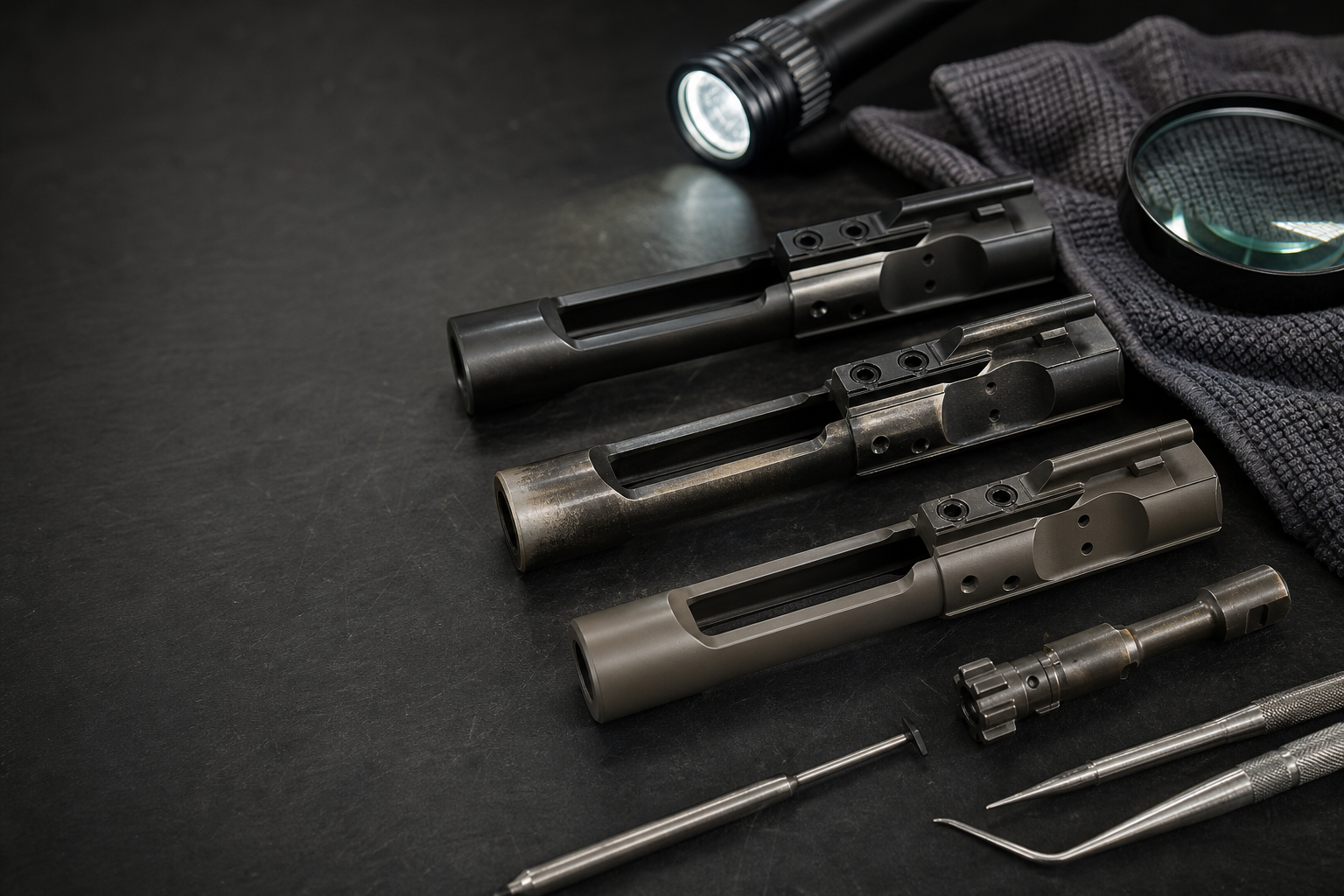
All four coatings wear in the same places first: the bolt tail, cam pin hole, and interior of the carrier key. These are the highest-contact points on any AR-15 BCG, and how a coating handles that friction over thousands of rounds is what separates a finish from a long-term surface treatment.
Wear Patterns at High Round Counts
Nitride holds up best at those contact points because it is not a coating at all. It is a diffusion treatment that converts the steel surface itself. There is no layer to wear through, only hardened steel underneath. Phosphate wears fastest at contact points and needs consistent re-oiling to stay protected. NiB and TiN can show plating wear after tens of thousands of rounds, but this is mostly cosmetic unless bare steel is exposed to sustained moisture over time.
The NiB Tarnishing Issue Explained
This is the most common forum complaint about nickel boron, and it deserves a straight answer. After heat cycling, NiB surfaces can develop a darker, sometimes blotchy appearance. That is surface oxidation of the nickel layer. It does not affect hardness, lubricity, or the finish's ability to shed moisture. Your BCG is not failing. If finish appearance matters to you long-term, TiN holds its gold color well, and nitride stays uniformly matte black with no visible aging. For area shooters storing rifles in vehicles through humid summers, the protective properties of all four coatings remain intact even when the surface looks worn.
Nitride Longevity vs. Phosphate
A nitride BCG will not chip, flake, or peel. Phosphate can be re-applied, but that requires stripping and reprocessing the part. For most shooters, a nitride BCG will outlast the service life of the barrel it is paired with. If you are thinking about AR-15 barrels and BCG longevity together, nitride is the lower-maintenance pairing over a long service life. Phosphate is still a proven finish, but it rewards shooters who stay on top of cleaning and lubrication.
BCG Coatings for Humid North Texas Conditions
Grayson County summers are humid. If you store a rifle in a vehicle or take it out during wet season, that moisture reaches your BCG. For a 5.56 carbine or suppressed 300 Blackout upper stored in humid conditions, consider nitride or NiB if you want easier rust prevention than phosphate offers. Phosphate holds oil well indoors. Outside, in real conditions, the sealed surface of nitride or the slick finish of NiB gives you better rust protection with less maintenance. If you hunt hogs at dawn out on the ranch land north and west of town, that early-morning dew hits your action before you fire a round, which is exactly the scenario where a low-maintenance coating pays off.
We ship BCGs nationwide from our Denison, TX facility. If you want to pair your BCG with a ready-to-run upper, check our complete AR-15 uppers. Questions about the best AR-15 bolt carrier group coating for your specific build? Call us at (888) 706-0633 and we will point you in the right direction.
Frequently Asked Questions
Is nickel boron or nitride better for an AR-15 BCG?
For most shooters, nitride is the better value. It holds up well at contact points over tens of thousands of rounds and costs less than nickel boron. NiB earns its premium in suppressed builds or high-round-count rifles where cleaning ease and higher lubricity make a real difference day to day.
Does BCG coating affect reliability?
Yes, in specific conditions. High-lubricity coatings like NiB and nitride improve reliability in dirty rifles, suppressed hosts, and cold weather where oil thickens. In a clean, properly lubricated rifle, all four coatings run reliably. The gap shows up when maintenance is delayed or conditions are rough.
How long does a nickel boron BCG coating last?
NiB service life varies by coating process, dimensions, lubrication, ammunition, and operating conditions. Tarnishing you see on the surface is cosmetic and does not affect function. Avoid abrasive cleaning tools and the coating will outlast most barrel service lives.
Can you mix coating types between the bolt and carrier?
Yes, and it is common. Different bolt and carrier finishes can be compatible, but dimensions, headspace, gas-ring fit, materials, and manufacturer guidance still control safe function. The one consideration is cleaning. A phosphate bolt paired with a NiB carrier still needs more aggressive cleaning on the bolt side, since the phosphate surface holds carbon differently than the carrier.
Is a phosphate BCG good enough for a duty rifle?
It can work, but it requires a strict maintenance schedule and must always run wet. Nitride and NiB both tolerate lower lubrication levels and clean faster in the field. The cost difference between phosphate and nitride is small enough that there is little reason to choose phosphate for a duty or defensive build, especially in the humid storage conditions common across Grayson County.
What is titanium nitride (TiN) and is it worth the cost?
TiN is a PVD coating that produces the gold finish you see on premium BCGs. It is the hardest of the four coatings by Vickers hardness, with rust protection and lubricity comparable to NiB. The cost premium is the highest of any option. For a high-investment precision or custom build, it may make sense. For a working rifle, nitride or NiB deliver similar performance at a lower price point. See our complete BCG selection guide if you want a deeper breakdown before you buy.
Ready to pick a coating for your build? Call our team at (888) 706-0633 or browse BCGs across all four coating types at AR15Parts.com. We ship nationwide and can help you match the right finish to your build, whether that is a budget range rifle, a suppressed host, or a high-investment 300 Blackout complete upper.
Ready to Get Started with AR15Parts.com?
Call (888) 706-0633 to speak with our team directly. We're ready to answer your questions, walk you through your options, and help you find the right solution for your needs. Whether you're just starting to plan or ready to move forward, we'll make the process simple and stress-free. Reach out today and let's talk about how we can help.