

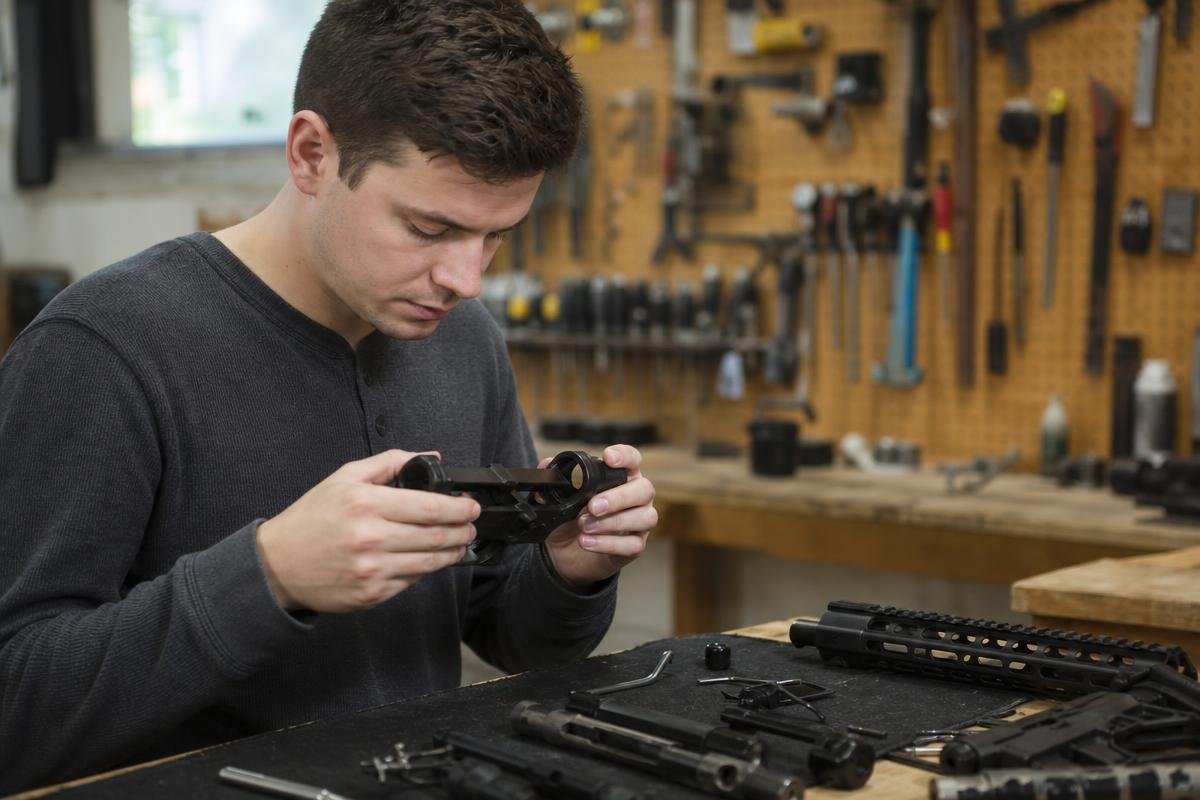
The build vs buy AR-15 decision starts with how much component selection and compatibility work you want to handle. We compare buying a complete rifle, pairing a complete upper with a lower, and planning a parts build, plus the checks to make before ordering.
AR15Parts.com ships from our Denison, TX facility at 4000 Texoma Pkwy, Denison, TX 75020.
Use the product pages and customer-service contact options below to compare configurations and ask general product-category questions before placing an order. Need help choosing between a complete rifle, complete upper, or first parts list?
Key Takeaways
- An AR-15 is a semiautomatic firearm that fires one round for each trigger pull.
- A complete rifle is usually the simplest starting point because the major components are already configured together.
- Many AR-15-pattern uppers and lowers share common dimensions, but chambering, bolt, magazines, buffer system, and manufacturer specifications still need to match.
- Check the barrel chamber marking before buying ammunition, and learn safe handling, storage, and range procedures before your first trip.
Build vs Buy AR-15: Complete Rifle or Parts Build?
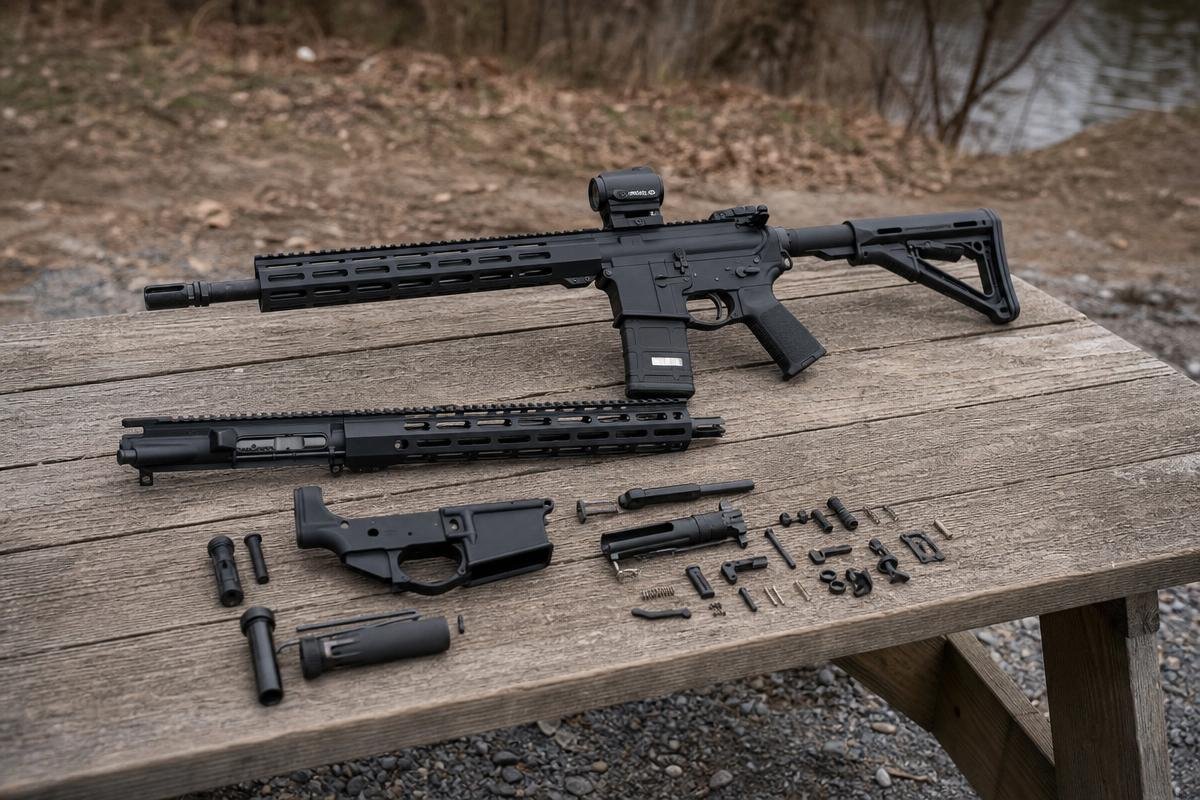
For most first-time owners, a complete rifle is the clearest path because it removes the need to select and install every critical component. A complete upper can make sense when you already have a compatible lower, while a parts build is best approached with a written specification list, proper tools, and qualified inspection when needed.
| Path | Best for | What You Still Need to Check |
|---|---|---|
| Complete rifle | First-time buyers who want the least compatibility work | Chamber marking, sighting system, magazines, fit, storage, and range setup |
| Complete upper plus lower | Owners who already have a compatible lower receiver | Receiver pattern, caliber-specific bolt and magazine needs, buffer system, and manufacturer specifications |
| Parts build | Buyers comfortable researching interfaces and assembly requirements | Every component specification, installation procedure, torque guidance, and safe function inspection |
Buying a Complete Rifle
A complete rifle lets you focus on choosing a chambering, barrel length, sighting setup, magazines, and controls instead of sourcing pins, springs, receiver extensions, and other individual parts. It is a practical choice when you want one configured platform before deciding which accessories actually improve your use of it.
Browse complete AR-15 rifles when you want to compare ready-to-configure options rather than build a parts list from the ground up.
Starting With a Complete Upper
A complete upper is the assembled top half of the rifle. Depending on the configuration, it can include the upper receiver, barrel, gas system, handguard, bolt carrier group, and charging handle.
This route is useful when you already own a lower receiver. Many standard AR-15-pattern uppers and lowers are designed around common dimensions, but do not assume any upper will fit and function with any lower. Verify the manufacturer’s specifications, receiver pattern, chambering, bolt requirements, magazine type, buffer system, and any state-law requirements before ordering. Our complete AR-15 uppers provide a way to compare barrel and chamber configurations as assembled upper groups.
Planning a First Parts Build
A first-time parts build offers control over the finished configuration, but it also creates more opportunities for incompatible selections. Before ordering, write down the receiver pattern, chambering, barrel extension and bolt requirements, gas-system length, handguard mounting system, muzzle thread pattern, buffer system, stock fit, and magazine type.
Building safely means following the instructions supplied by each manufacturer, using the correct tools and torque specifications, and pausing when fitment or safe operation is uncertain. A qualified gunsmith or other qualified firearm professional should inspect a rifle when assembly, headspace, function, or safe operation is in question.
What Parts Make Up an AR-15?
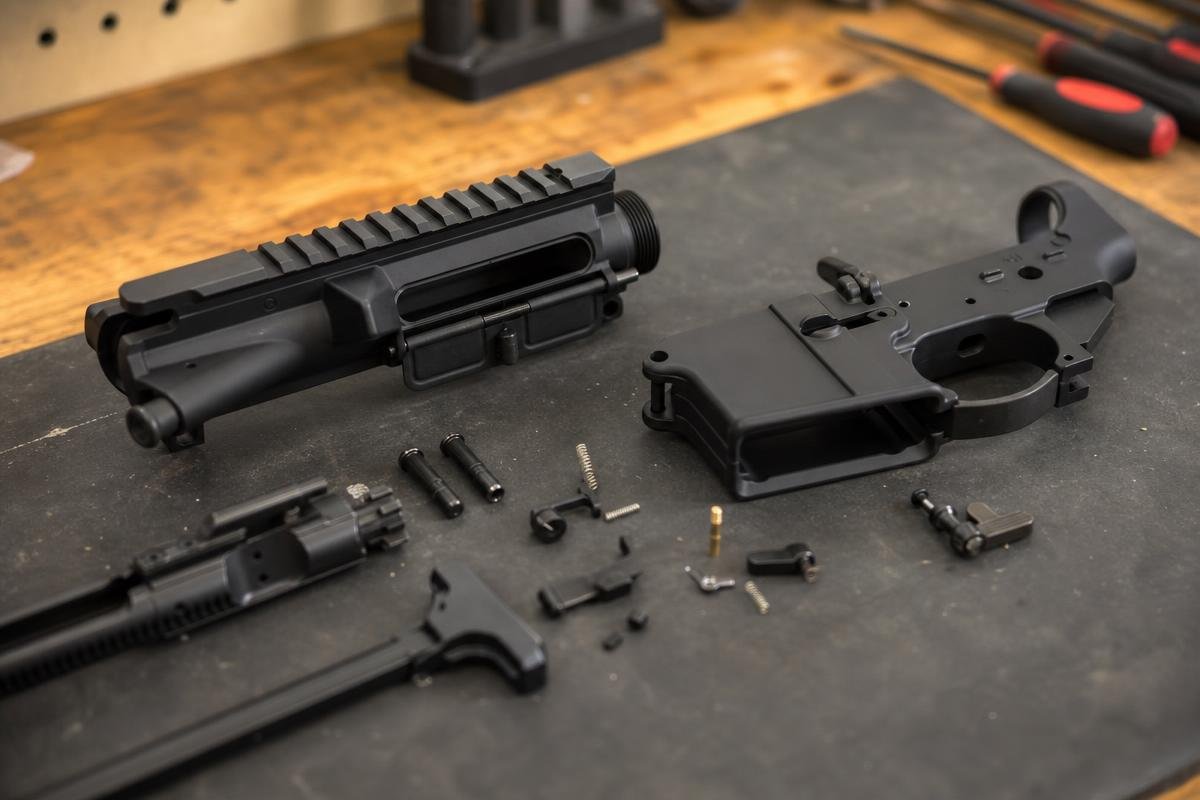
An AR-15 has two main assemblies, the upper receiver and lower receiver. The upper contains the barrel and cycling components. The lower contains the trigger controls, magazine well, and buffer system. Knowing this division helps beginners compare products and identify which specifications must work together.
Upper Receiver, Barrel, and Gas System
The upper receiver houses the barrel, bolt carrier group, charging handle, and mounting surface for sights or optics. The barrel determines the chambering, while the gas block and gas tube direct gas from a fired cartridge back to the action in a typical direct-impingement configuration.
For a useful orientation, identify the muzzle device, barrel, gas block, gas tube, handguard, upper receiver, charging handle, and top rail from front to rear. Barrel length, twist rate, chamber marking, gas-system configuration, and muzzle threads are specifications to compare, not cosmetic details.
Direct-impingement and piston-operated AR-pattern systems use different operating arrangements. Weight, maintenance procedure, parts availability, and the exact rifle configuration should guide the comparison. If you prefer an assembled starting point, review the available complete AR-15 uppers.
Lower Receiver and Fire-Control Components
The lower receiver contains the trigger, hammer, safety selector, magazine catch, bolt catch, and buffer system. It also accepts the pistol grip and stock or other rear configuration.
On a typical AR-15, the lower receiver is generally the serialized component under federal regulations. The upper receiver is a separate assembly, but its specifications still need to work with the lower, buffer system, bolt, magazines, and intended chambering.
Bolt Carrier Group and Charging Handle
The bolt carrier group chambers a cartridge, locks the bolt into the barrel extension, extracts the spent case, and cycles as the firearm operates. The bolt and barrel extension must be appropriate for the chambering.
The charging handle is used to manually cycle the action, inspect the chamber, and lock the bolt to the rear. Before handling an AR-15, learn the location and operation of the safety selector, bolt catch, magazine release, charging handle, ejection port cover, and forward assist if the rifle has one.
Can a 5.56 AR-15 Shoot .223 Ammunition?
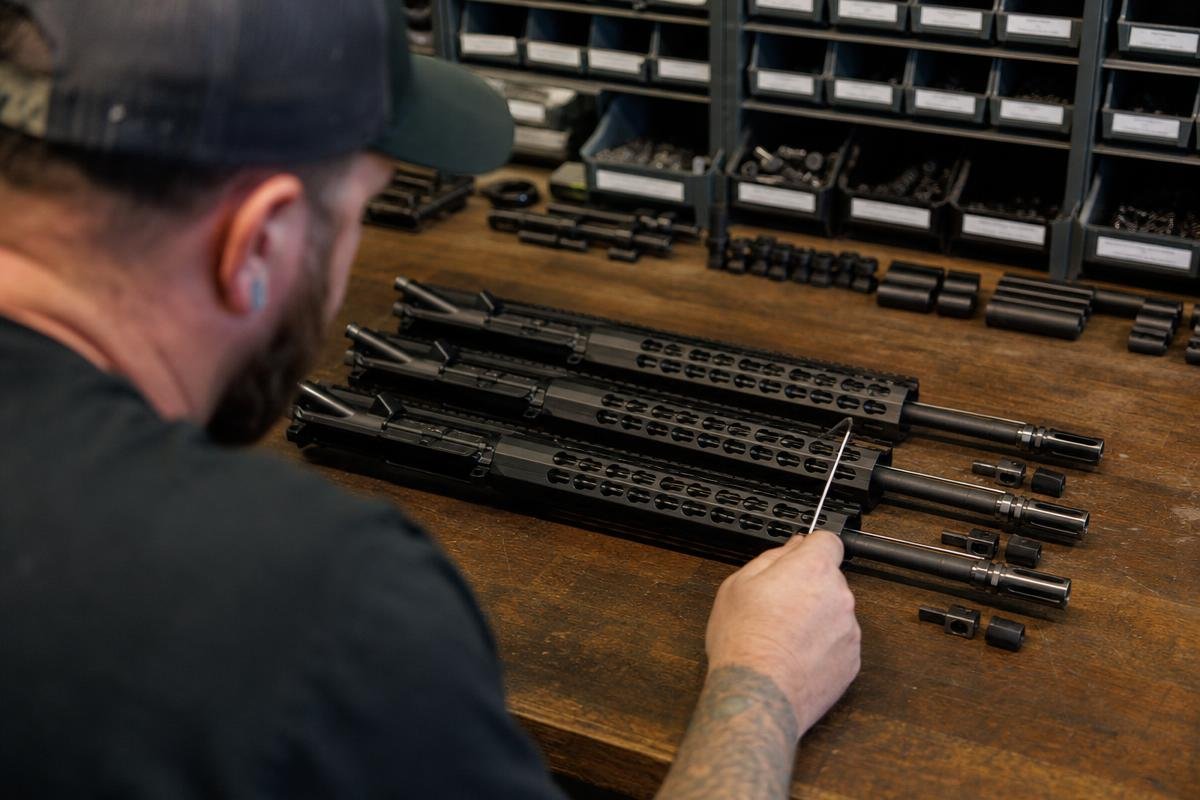
A rifle marked 5.56 NATO can generally fire .223 Remington ammunition, while a rifle marked .223 Remington should not automatically be assumed suitable for 5.56 NATO ammunition. A .223 Wylde chamber is different from both markings and is commonly intended to accommodate .223 Remington and 5.56 NATO ammunition. Always read the barrel marking and follow the barrel or firearm manufacturer’s instructions.
5.56 NATO and .223 Wylde for General-Purpose Configurations
5.56 NATO and .223 Wylde are common choices for a first AR-15 because compatible components, magazines, and ammunition are widely available. The barrel stamp is the first place to confirm what ammunition is appropriate. Magazine fit does not identify the chamber, and cartridge appearance is not a substitute for reading the marking.
A 5.56 NATO barrel and a .223 Wylde barrel are not marked the same, even though both are frequently used for general-purpose configurations. The 5.56 NATO complete uppers category is useful when you want to compare upper assemblies with the barrel, gas system, receiver, and related components already configured together.
300 Blackout and Ammunition Selection
300 Blackout requires careful ammunition organization, especially when more than one AR-pattern rifle is present. Supersonic and subsonic loads have different characteristics, and the rifle configuration, barrel marking, and manufacturer guidance should drive the choice.
Confirm the chamber marking, keep magazines clearly identified for their intended cartridge, and follow the manufacturer’s instructions. Avoid mixing ammunition or magazines for different chamberings on the same bench or in the same range bag.
Specialty Chamberings Need a Full Compatibility Check
Specialty chamberings can require more than a barrel change. A 6.5 Grendel, 6mm ARC, or 338 ARC configuration may require a cartridge-specific bolt, appropriate magazines, and an upper assembly designed for that cartridge.
For a first-time buyer, matched assemblies can reduce the risk of combining a barrel, bolt, and magazine system that were not intended to work together. Compare the listed specifications for the rifle or upper before adding accessories or ammunition.
What Does a New AR-15 Need Before Its First Range Trip?
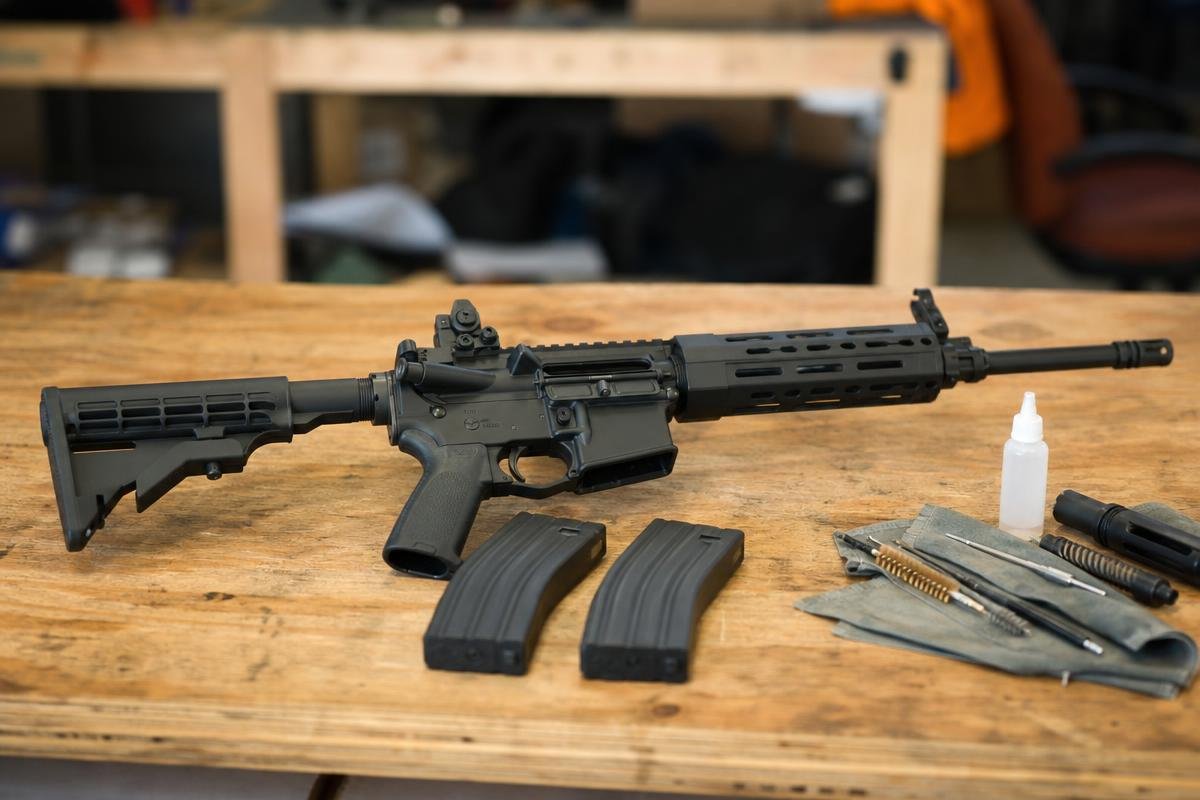
Before the first range trip, confirm the chamber marking, bring compatible magazines and ammunition, mount a sighting system according to its instructions, and pack eye and ear protection. Read the rifle manual, inspect the firearm unloaded, and ask the range about its current procedures before arriving.
Iron Sights and Optics
Start with iron sights or an optic mounted to the upper receiver rail, not to a handguard that may move independently of the barrel and receiver. Follow the optic or sight manufacturer’s instructions for mounting hardware, torque, batteries, and zeroing.
A simple first-range checklist includes a sighting system, eye protection, ear protection, compatible ammunition, compatible magazines, a case suitable for transport, and the firearm and optic manuals. Ask the facility about target rules, accepted calibers, lane procedures, and any chamber-flag or case requirements before you leave home.
Magazines and Familiarity With Controls
Use magazines made for the chambering and inspect them for damaged feed lips, cracked bodies, worn followers, or weak springs. Magazine capacity and range rules can vary by facility, so check the policy for the place where you plan to shoot.
With the firearm unloaded and pointed in a safe direction, learn the safety selector, magazine release, bolt catch, charging handle, and stock adjustment. Adjust the stock so you can reach the controls without unnecessarily shifting your firing hand.
Cleaning and Routine Inspection
After use, follow the firearm manufacturer’s maintenance guidance. Inspect the bolt carrier group, chamber area, bore, magazines, fasteners, and accessible components for fouling, visible damage, or loose hardware.
Lubrication needs vary by firearm and operating conditions, so use the rifle or component manufacturer’s instructions rather than a universal schedule. If a part is damaged, fitment is uncertain, or function is questionable, stop using the firearm until it has been evaluated by a qualified professional.
Need help comparing an upper configuration or checking a product specification before ordering? Call us at (888) 706-0633.
What Beginners Should Know Before Building an AR-15
A first build should begin with a complete parts list, not a series of impulse purchases. Record the chambering, upper type, barrel, gas system, handguard interface, bolt carrier group, charging handle, lower parts, buffer system, stock, magazines, sights, and muzzle device before ordering. This planning step is the practical core of how to build an AR-15 without mixing incompatible parts.
Use a Compatibility Worksheet
Your worksheet should track the specifications that must match across the rifle. The complete AR-15 rifle vs. build decision often comes down to whether you want to perform these checks yourself or start from a configured rifle.
- Chamber, barrel extension, and bolt compatibility
- Barrel gas-port location and gas-system length
- Handguard mounting standard, barrel nut, and planned gas-block clearance
- Muzzle-device thread pattern
- Receiver extension type and stock fit
- Magazine type required by the chambering
Free-float handguards use a barrel-nut mounting system. Drop-in handguards use a different attachment approach and may require a specific front-end configuration. Keep the manufacturer instructions with the worksheet so every selected part can be checked against the rest of the build.
Know Which Parts Need Professional Inspection
Ask a qualified gunsmith or other qualified firearm professional to inspect the rifle if assembly, headspace, function, or safe operation is uncertain. Do not rush a first build for a planned range day. A firearm should be safely inspected and operated only in accordance with manufacturer guidance and applicable rules.
A complete upper can reduce the number of critical fitment choices because the barrel, gas system, and upper receiver are already assembled. Compare complete AR-15 uppers if you want to select the lower configuration separately.
Choose Components by Specification
Mil-spec and commercial buffer tubes have different outside dimensions, and stocks must match the receiver extension type. The terms describe dimensions and interfaces, not a universal quality ranking.
Choose components by chambering, bolt requirement, thread pattern, gas-system length, and mounting interface, not appearance alone. If your worksheet contains too many unanswered questions, compare complete AR-15 rifles before committing to individual components.
Buying an AR-15 Online: Purchase and Range Checklist
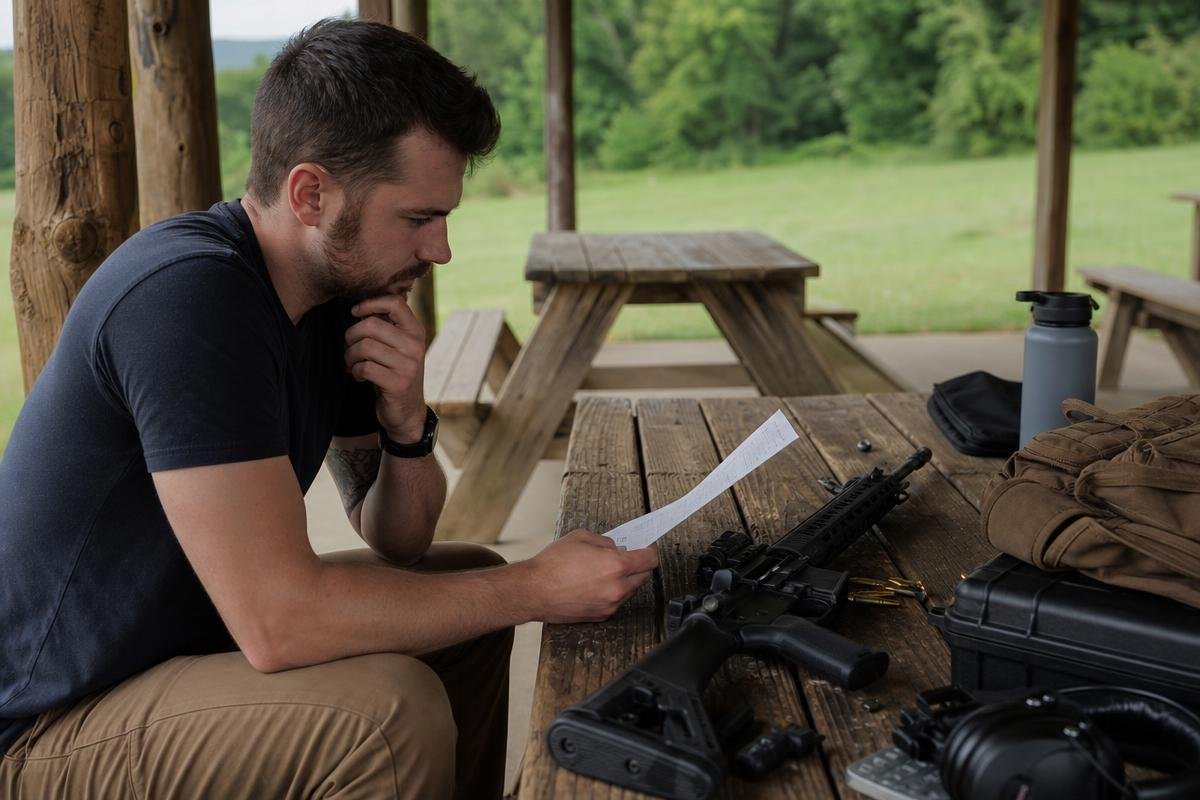
Buyers should confirm current federal, Texas, and local requirements that apply to their purchase, possession, storage, transport, and intended use. Range procedures can also change, so contact the facility you plan to use before packing for a first visit.
Confirm Current Requirements and Range Policies
Check the rules that apply to your purchase, storage, transport, ammunition, and planned range visit. Before arriving at a range, ask about accepted calibers, magazine policies, target restrictions, firing-line commands, required eye and ear protection, case procedures, and chamber-flag requirements.
For a first purchase, a complete rifle is one way to reduce initial configuration decisions. Review complete AR-15 rifles if you prefer to compare configured options rather than source each component individually.
Handle the Rifle Safely
Safe handling starts before any range visit. Treat every firearm as loaded, keep the muzzle pointed in a safe direction, keep your finger off the trigger until ready to fire, and know your target and what is beyond it.
- Keep the action open and verify the chamber is clear when handling an unloaded rifle.
- Store the rifle and ammunition securely when they are not in use.
- Read the rifle and optic manuals before changing controls or adjustments.
Ask Our Team About Parts
Parts questions are easier to address before an order is placed. You can compare product categories or ask general product questions by calling (888) 706-0633, using Contact Us, or visiting AR15Parts.com online.
For a straightforward selection path, compare a complete upper with the lower receiver and buffer system you plan to use. Confirm listed specifications before ordering, particularly when changing chamberings or combining products from different manufacturers.
Frequently Asked Questions
We hear these questions often from first-time buyers. Verify current range policies and applicable laws before you buy, transport, or shoot.
Is an AR-15 Suitable for a First-Time Owner?
Yes, if lawful ownership, safe-handling education, intended use, and your comfort with the platform are in place. Start with basic controls, safe storage, and supervised range practice.
Should I Buy a Complete Rifle or Build One?
A complete rifle reduces setup decisions and gives you a turnkey starting point. The complete AR-15 rifle vs. build choice comes down to convenience versus parts selection, compatibility planning, and inspection. Review our complete AR-15 rifles if you want an out-of-the-box option.
How Do I Know Which Ammunition My AR-15 Can Use?
Read the barrel chamber marking and follow the manufacturer’s guidance. The chamber marking, not the magazine or cartridge appearance, controls ammunition selection.
Will Any AR-15 Upper Fit Any Lower?
Many AR-15 pattern uppers and lowers follow common mil-spec dimensions, but fit is not automatic. Verify receiver pattern, caliber requirements, buffer system needs, and manufacturer specifications before purchase.
What Accessories Should a Beginner Buy First?
Buy a suitable sighting system, compatible magazines, and basic maintenance supplies first. A sling and eye and ear protection also belong on the early purchase list.
How Often Should an AR-15 Be Cleaned?
Cleaning frequency depends on use conditions, ammunition, and manufacturer instructions, not a fixed round count. Inspect the bolt carrier group, chamber, bore, and lubrication before your next range session.
Still deciding between a complete rifle, a complete upper, or a planned build? Contact AR15Parts.com for general product-category guidance before ordering, or call (888) 706-0633 to discuss the parts you are comparing.
Ready to Get Started with AR15Parts.com?
Call (888) 706-0633 to speak with our team directly. We're ready to answer your questions, walk you through your options, and help you find the right solution for your needs. Whether you're just starting to plan or ready to move forward, we'll make the process simple and stress-free. Reach out today and let's talk about how we can help.