
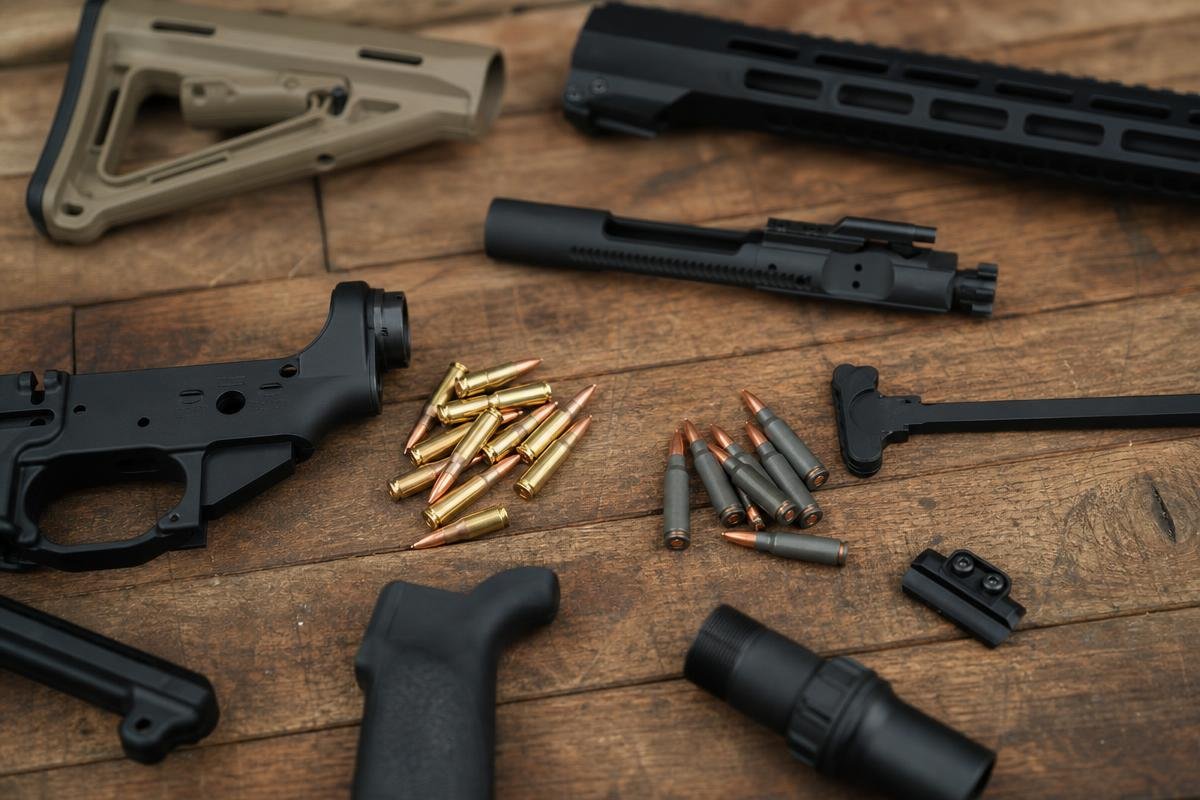
AR15Parts.com ships nationwide from Denison, Texas, with AR parts and complete uppers for builders who need compatible components, not guesswork. Choosing between 7.62x39 and 5.56 NATO for your next AR build starts with intended use, because the cartridges call for different chambering, bolt-face, magazine, and gas-system choices. Our team can help you confirm the caliber-specific parts that belong on your lower. Get clear guidance before you order parts for your next build.
Key Takeaways
- 5.56 NATO uses lighter .224-inch bullets and generally produces less recoil in a comparable AR-pattern rifle.
- 7.62x39 commonly uses wider .311- or .312-inch bullets and heavier projectiles, with more pronounced recoil and a more arched trajectory.
- A 7.62x39 AR requires a correctly chambered barrel, a matching bolt face, and dedicated magazines designed for the cartridge’s taper.
- For most first-time AR builds, 5.56 NATO offers the broadest selection of compatible magazines and replacement components.
7.62x39 vs. 5.56 NATO for AR Builds
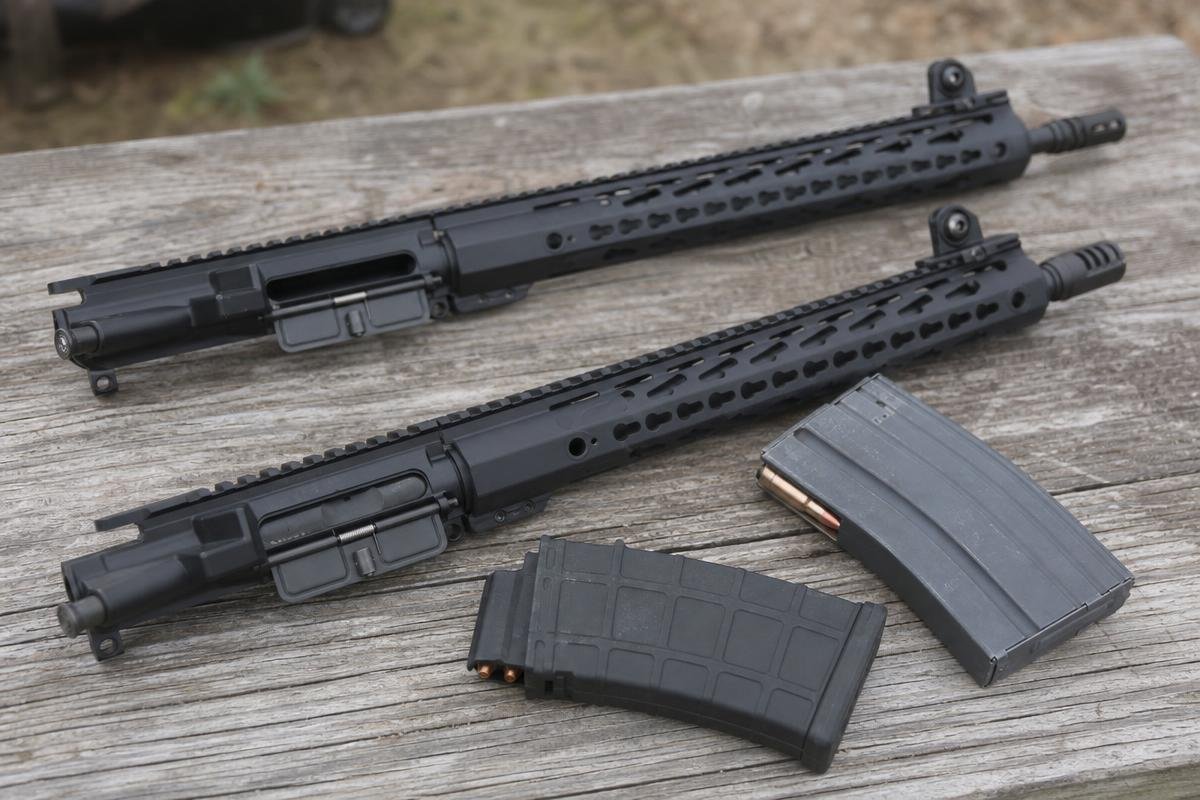
Choosing between 7.62x39 and 5.56 NATO begins with the cartridge, not the rifle. This comparison is specifically 7.62x39 versus 5.56 NATO, not .308 Winchester or another cartridge that happens to use a 7.62 designation. Recoil, practical distance, available loads, projectile construction, and compatible upper components should all be considered before ordering.
AR15Parts.com offers firearms, parts, accessories, and complete upper assemblies. We cover measurable cartridge differences, practical use considerations, what changes on a 7.62x39 build, and what commonly remains standard on a 5.56 NATO setup. Start with our complete AR-15 uppers across multiple calibers if you prefer a matched upper assembly rather than sourcing major components individually.
Is 5.56 or 7.62x39 Better for an AR-15?
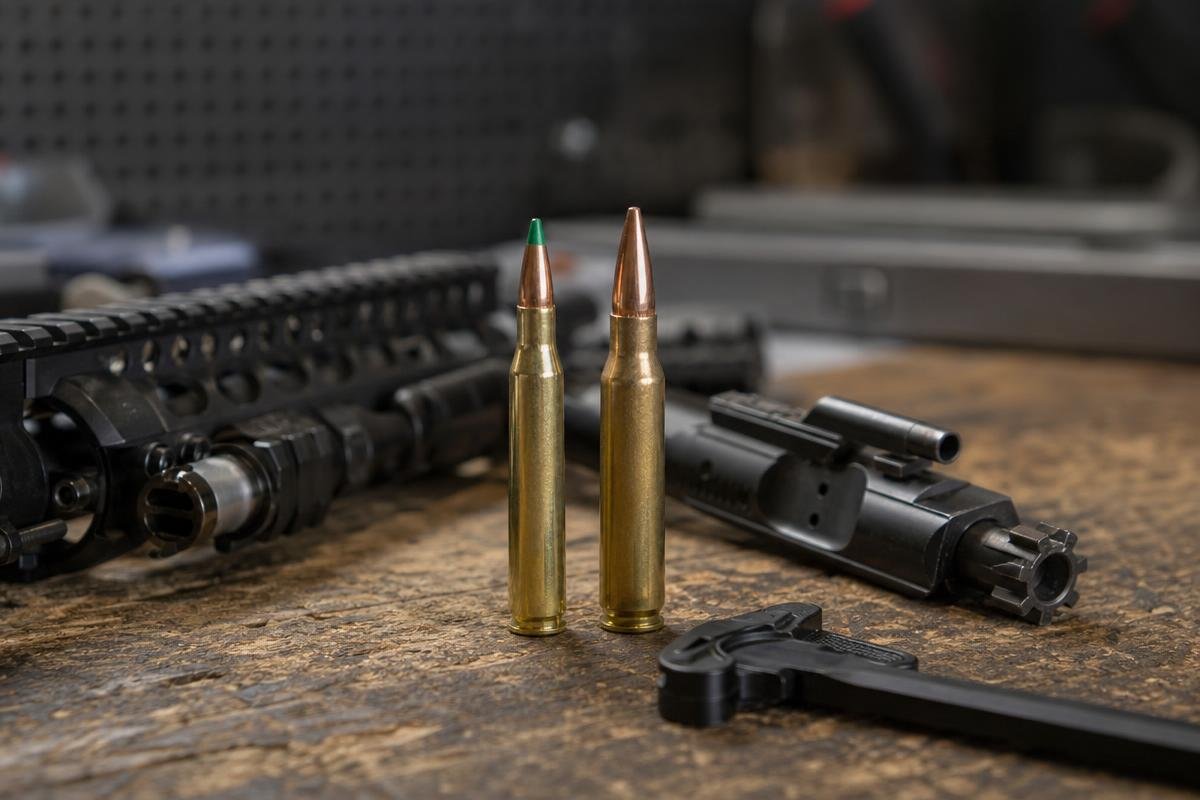
Neither caliber is universally better. For lower recoil, flatter trajectory at common range distances, and the widest standard AR parts compatibility, 5.56 NATO is usually the easier choice. For shooters who want a larger-diameter projectile and heavier common bullet weights, 7.62x39 can be a practical option when the upper, bolt, and magazines are properly matched.
| Specification | 5.56 NATO | 7.62x39 |
|---|---|---|
| Bullet diameter | .224 inch | .311 to .312 inch |
| Common projectile weights | 55 to 77 grains | 123 to 154 grains |
| Velocity pattern | Lighter bullets at higher velocity | Heavier bullets at lower velocity |
| Recoil feel | Lighter in comparable rifles | More pronounced in comparable rifles |
| Magazine requirement | Standard AR-15-pattern 5.56 magazine | Dedicated 7.62x39 AR magazine |
| Caliber-specific upper parts | 5.56 barrel and bolt | 7.62x39 barrel and bolt |
Bullet Diameter, Projectile Weight, and Velocity
5.56 NATO uses a .224-inch bullet, while 7.62x39 commonly uses a .311- or .312-inch bullet. Common 5.56 loads range from 55 to 77 grains, while common 7.62x39 loads often run from 123 to 154 grains.
That difference helps explain the distinct shooting characteristics. From comparable barrel lengths, a typical 55-grain 5.56 load generally leaves the muzzle faster than a typical 123-grain 7.62x39 load, while the 7.62x39 carries more projectile mass. Exact velocity changes substantially with load and barrel length. A short barrel can reduce velocity enough to change practical holds and the way a given projectile performs on impact. Choose correctly chambered components from the start, such as 5.56 NATO complete uppers for a 5.56 build.
Trajectory and Practical Distance
5.56 NATO generally provides a flatter practical trajectory with common AR configurations, which can simplify holds as distance increases. A 16-inch barrel, a 55-grain or 62-grain load, optic height, zero distance, temperature, wind, and elevation all affect actual point of impact.
Typical 7.62x39 loads have a more arched trajectory, so elevation corrections become more important at longer distances. That does not make 7.62x39 ineffective at practical rifle distances. It means the shooter should zero for the chosen load and learn the holdovers rather than relying on a generic caliber chart.
Recoil and Load Dependent Terminal Behavior
7.62x39 usually produces more recoil than 5.56 NATO in similar AR-pattern rifles. The heavier common projectile weights and different cartridge characteristics create a stronger recoil impulse, which can be more noticeable during rapid strings or when shooting lightweight rifles.
Terminal performance depends on the individual load, impact velocity, bullet construction, and intended use, not caliber alone. Some 5.56 projectiles are designed to expand, fragment, or remain intact differently at different impact speeds. The same is true of 7.62x39 ammunition, where soft-point, hollow-point, and other projectile designs can behave very differently. Review the ammunition maker’s specifications and use a load appropriate for the lawful purpose you have in mind.
What Should You Choose, 5.56 NATO or 7.62x39?
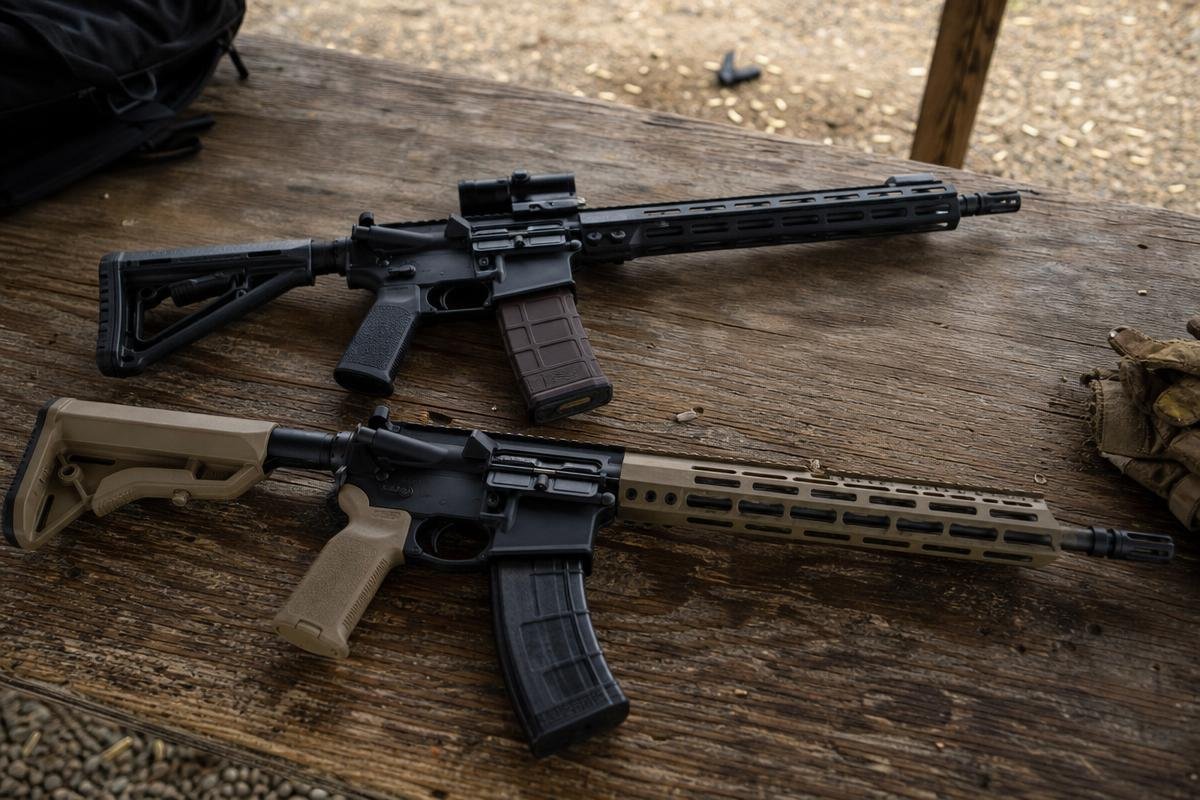
Choose 5.56 NATO when you prioritize lower recoil, quick follow-up shots, and broad AR-pattern compatibility. Choose 7.62x39 when you specifically want its larger-diameter projectile and heavier common bullet weights, and are prepared to use dependable caliber-specific upper components.
Choose 5.56 If You Want Lower Recoil and Broad AR Compatibility
A 5.56 AR build is usually the simpler first AR build. Recoil is lighter, practical trajectory is flatter at typical range distances, and compatible magazines, bolts, barrels, and ammunition are widely available.
5.56 NATO chambers can generally fire .223 Remington ammunition, but do not assume the reverse is true. A complete 5.56 NATO upper receiver provides a matched barrel, bolt carrier group, and gas system for use with a standard AR-15-pattern lower, provided the remaining components are compatible and the build complies with applicable laws.
Choose 7.62x39 If You Want a Larger-Diameter, Heavier Common Projectile
A 7.62x39 AR build fits shooters who prefer heavier common projectiles, often around 123 grains, over the lighter bullets common in 5.56. It carries more projectile mass, but it also has more recoil and requires greater attention to trajectory as distance increases.
Use a 7.62x39 chambered barrel, a caliber-specific bolt, and magazines built for 7.62x39. Reliability is particularly important to evaluate in this platform because the cartridge’s pronounced case taper changes how rounds stack and feed. Quality magazine geometry, suitable ammunition, correct gas operation, and a properly assembled upper all matter.
Match the Cartridge to the Game, Distance, and Setup
Either cartridge may be used for hunting where lawful, but the appropriate choice depends on game, projectile construction, distance, shot placement, and local rules. Check current regulations for the county and property where you intend to hunt before heading afield.
Set up your optic around the load and distance you actually plan to shoot. Neither cartridge compensates for an incorrect zero, unsuitable ammunition, or poor component selection. If 300 Blackout is also on your list, treat it as a separate cartridge decision rather than a substitute for 7.62x39 compatibility. Our complete AR-15 uppers across multiple calibers can help you begin with a configured upper assembly.
What Parts Change When You Build a 7.62x39 AR?
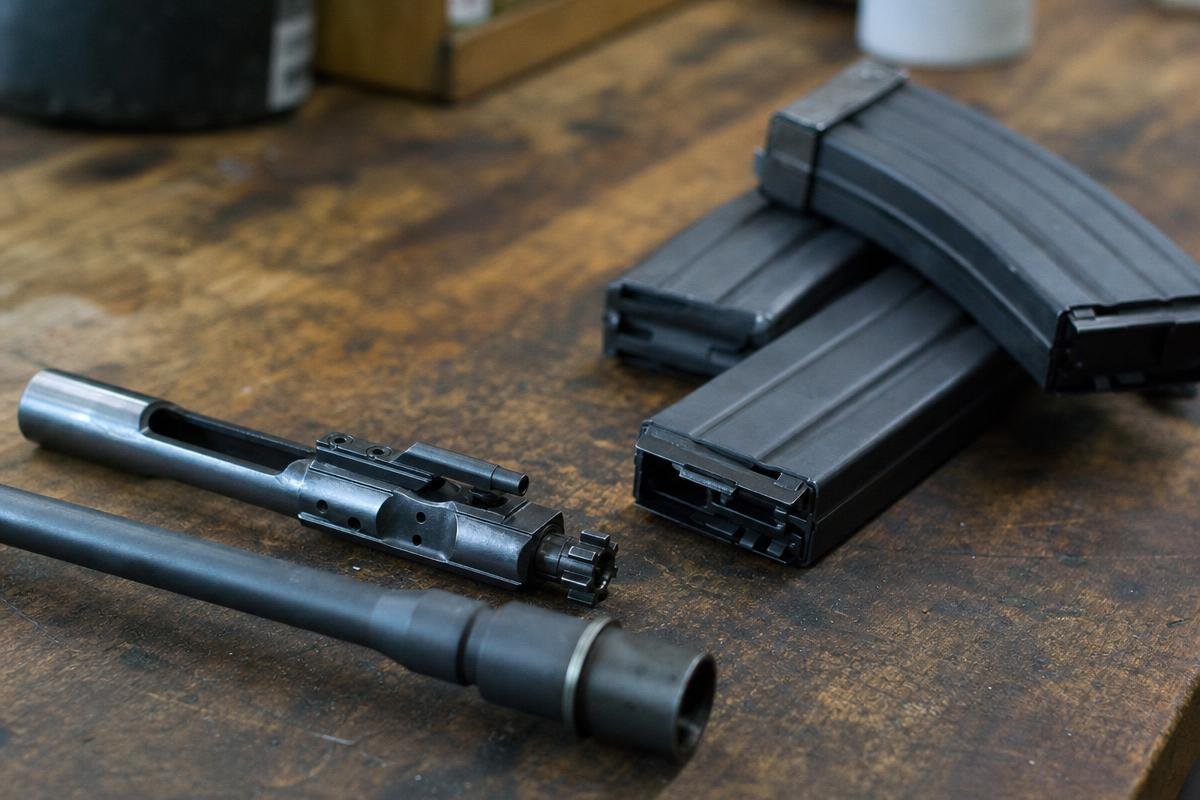
A 7.62x39 AR requires caliber-matched parts at the chamber, bolt face, and magazine. A 5.56 barrel cannot safely chamber 7.62x39 ammunition, and changing only the barrel leaves critical compatibility and feeding concerns unresolved.
The Barrel, Bolt, and Magazine Must Match 7.62x39
Start with the barrel. It must be chambered and marked for 7.62x39, not 5.56 NATO or .223 Wylde. The 7.62x39 cartridge commonly uses a .311- or .312-inch bullet and a substantially different case shape from the .224-inch 5.56 round.
The carrier may be AR-15 pattern, but the bolt must have a 7.62x39 bolt face sized for the cartridge case head. Because the larger bolt face leaves less material around the locking-lug area than a typical 5.56 bolt, bolt quality, inspection, and sensible maintenance are especially important on a 7.62x39 AR. A 5.56 bolt is not the correct part for this cartridge.
Magazine selection also matters. The tapered 7.62x39 case needs a magazine designed to manage that curve and present rounds consistently to the chamber. Use magazines specifically identified for 7.62x39 AR applications, then function-check the rifle safely with the ammunition you intend to use.
Why a 7.62x39 Upper Is Not a Barrel Only Conversion
A 7.62x39 upper versus a 5.56 upper differs at more than the barrel. The chamber, bolt face, and magazine feed geometry must all be configured for the cartridge. A barrel swap alone does not provide the correct bolt or reliable cartridge presentation.
A complete upper can reduce opportunities for major mismatches before your order is placed. We carry complete AR-15 uppers across multiple calibers for builders who prefer a configured upper rather than sourcing each major component separately.
Feed Reliability Depends on the Whole System
Magazine geometry prevents many common feed issues, but it is only one part of the system. Ammunition dimensions, extractor condition, gas configuration, buffer behavior, magazine condition, and assembly quality all affect how a 7.62x39 AR cycles.
Do not assume every 7.62x39 bolt, magazine, or upper works interchangeably across manufacturers. Confirm the stated caliber and specifications before combining parts. If you need help reviewing a configuration, contact our team with a product question before you build.
What Parts Stay Standard on a 5.56 NATO AR Build?
A typical 5.56 AR build follows the common AR-15 pattern. It still needs a correctly marked 5.56-compatible barrel, matching bolt, appropriate magazines, and a properly configured upper assembly, but the available parts path is generally simpler than it is for 7.62x39.
Chamber Marking Comes First
A barrel marked 5.56 NATO is generally designed to fire both 5.56 NATO and .223 Remington ammunition. The 5.56 NATO chamber has dimensions intended for the pressure and cartridge profile of 5.56 NATO loads.
Do not assume a barrel marked .223 Remington is suitable for 5.56 NATO ammunition. Read the barrel marking and follow the firearm and ammunition manufacturer guidance before loading either round. A .223 Wylde chamber is another common option for shooters who want compatibility with .223 Remington and 5.56 NATO ammunition.
Barrel and Gas System Selection Work Together
Barrel length and gas-system length should be selected together. Gas-port timing and dwell conditions change between a 10.5-inch pistol barrel, a 16-inch carbine or mid-length barrel, and a 20-inch rifle-length barrel. Shorter barrels also reduce muzzle velocity, which can change trajectory and the impact-velocity window of a specific load.
A 16-inch 5.56 barrel commonly uses a mid-length or carbine gas system, depending on the barrel design and intended operating curve. Choose a known, matched configuration instead of mixing barrel and gas parts based only on length.
5.56 NATO and .223 Wylde Upper Options
A complete upper keeps the barrel, bolt carrier group, gas system, and receiver together as one compatible assembly. Our 5.56 NATO complete upper receivers are a practical starting point if you want a matched assembly for a compatible AR-15-pattern lower.
For a .223 Wylde chamber, review the available .223 Wylde complete uppers and select the barrel length for your actual shooting distance and handling needs. .223 Wylde does not automatically make every barrel more accurate. Barrel quality, twist rate, ammunition, optic setup, and assembly still matter.
Need help matching a chamber, barrel, and upper? Call us at (888) 706-0633 before you order.
A Practical 7.62x39 and 5.56 NATO Decision Checklist Before You Buy
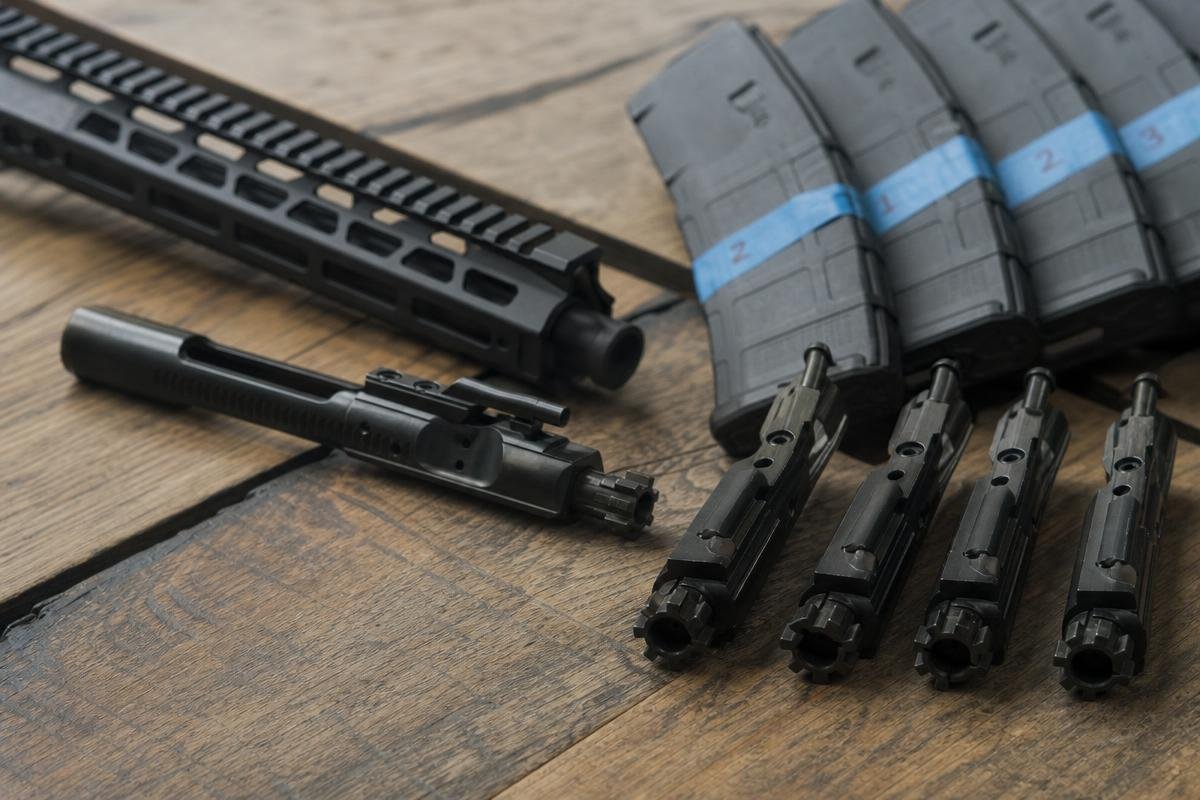
Use this checklist before ordering parts. The decision starts with the cartridge you plan to shoot, then every caliber-specific component should be verified against that choice.
Choose 5.56 for These Priorities
A 5.56 AR build fits shooters who want lighter recoil, higher velocity from common rifle-length configurations, and broad AR-pattern parts availability. Standard magazines and commonly available replacement components make it a straightforward route for many builders.
- Lower recoil for faster follow-up shots.
- Higher-velocity performance from common 16-inch rifle configurations.
- Wide availability of standard magazines and replacement parts.
Start with 5.56 NATO complete upper receivers if you want a matched assembly for a compatible AR-15-pattern lower.
Choose 7.62x39 for These Priorities
A 7.62x39 AR build fits shooters who prefer a larger-diameter projectile and heavier common bullet weights. Plan for a correctly chambered barrel, caliber-specific bolt face, and magazines intended for 7.62x39.
- Heavier common projectiles and greater bullet diameter.
- A build centered on 7.62x39 ammunition.
- Willingness to confirm each caliber-specific part before assembly.
Verify These Parts Before Ordering
Verify chamber marking, bolt face, magazine caliber, barrel length, gas system, muzzle-device thread compatibility, buffer setup, and applicable legal requirements. A complete upper can simplify component matching, but it does not promise universal fit with every lower, magazine, trigger, or accessory.
Unload firearms before inspection or installation. If any fitment or headspace question remains, consult a qualified gunsmith or contact our team with a product question.
Buying AR Parts from Denison, Texas
AR15Parts.com is located at 4000 Texoma Pkwy, Denison, TX 75020, and ships nationwide. Decide between 7.62x39 and 5.56 NATO before ordering, since each caliber requires its own compatible barrel, bolt, and magazine combination.
Settle Caliber Compatibility Before You Order
A 5.56 NATO build needs a correctly chambered 5.56 barrel, compatible bolt, and appropriate AR-15-pattern magazines. A 7.62x39 AR needs a 7.62x39 barrel and bolt, plus magazines made for that cartridge’s case body and feed geometry.
Start with a complete upper if you want matched major components out of the box. We carry 5.56 NATO complete uppers for builds using a compatible standard AR-15-pattern lower.
Ask Product Specific Compatibility Questions
Product descriptions identify chambering and major specifications, but ask before ordering if you are matching parts from different manufacturers. Our team can help you confirm the caliber, barrel, bolt, and magazine combination you have selected.
For product and order questions, contact AR15Parts.com at (888) 706-0633 or use our contact form. Clear compatibility checks before purchase help prevent an incorrect order.
Frequently Asked Questions
These answers cover common compatibility points before you choose a 7.62x39 vs 5.56 NATO build. Confirm markings on every barrel, bolt, upper, and magazine before ordering.
Is 7.62x39 the Same as .308 Winchester?
No. 7.62x39 and .308 Winchester are different cartridges with different case dimensions, pressures, and intended platforms. A 7.62x39 AR uses a 7.62x39 barrel, bolt, and magazines, while .308 Winchester generally uses an AR-10-pattern rifle.
Can 7.62x39 and 5.56 Use the Same Magazines?
No. 7.62x39 magazines are not substitutes for 5.56 magazines. Their case taper and feed geometry require a magazine made for 7.62x39, while 5.56 NATO uses standard AR-15-pattern 5.56 magazines.
Can I Shoot 5.56 NATO in a .223 Remington Chamber?
Generally, no. A .223 Remington chamber may not safely handle 5.56 NATO ammunition because 5.56 NATO is loaded to different pressure specifications. Read your barrel markings and follow your firearm manufacturer’s ammunition guidance.
Can a 7.62x39 AR Use a Standard AR-15 Lower?
Yes, many 7.62x39 builds use a standard AR-15-pattern lower receiver. You still need a compatible 7.62x39 upper, barrel, bolt, and magazines. The lower may stay standard, but the upper assembly cannot be treated like a 5.56 setup.
Which Caliber Is Better for a First AR Build?
5.56 NATO is usually simpler for a first build because compatible parts and magazines are widely available. Choose 7.62x39 if its heavier bullet and intended use fit your needs, and you are comfortable checking bolt, magazine, and upper compatibility.
Should I Buy a Complete Upper or Source Individual Parts?
A complete upper is the simpler choice for a first caliber-specific build. A 7.62x39 upper vs 5.56 upper has different chamber, bolt-face, and magazine requirements, so a complete assembly reduces matching work. Browse our complete AR-15 uppers across multiple calibers if you want a ready-to-drop-onto-your-lower option.
Before you order, confirm your chamber, bolt face, magazine caliber, barrel length, and gas-system setup. For product-specific compatibility questions, contact AR15Parts.com at (888) 706-0633 or visit our contact page.
Ready to Get Started with AR15Parts.com?
Call (888) 706-0633 to speak with our team directly. We're ready to answer your questions, walk you through your options, and help you find the right solution for your needs. Whether you're just starting to plan or ready to move forward, we'll make the process simple and stress-free. Reach out today and let's talk about how we can help.