
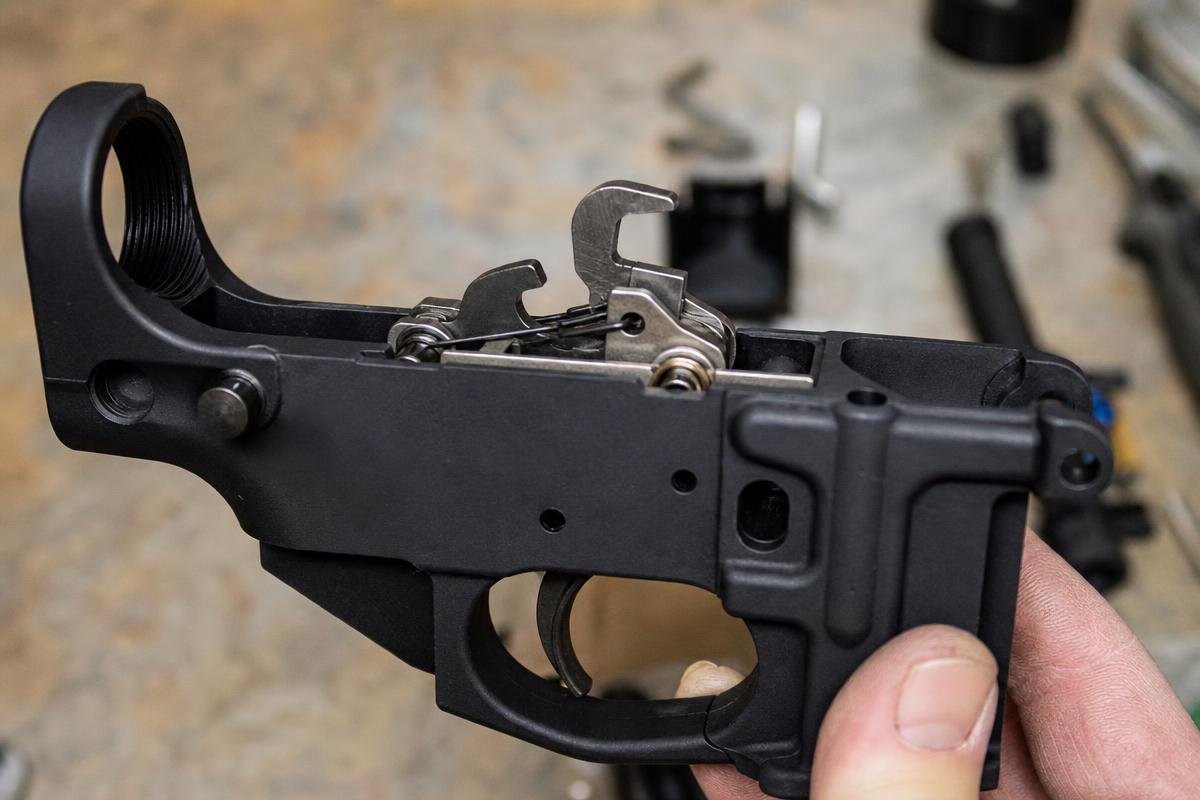
The trigger is the most direct connection between you and your rifle. Choosing between a single stage vs two stage trigger for your AR-15 affects every shot you take, whether you're running hogs at night on the Red River bottom or punching paper at 200 yards. AR15Parts.com is based in Denison, TX, and offers fire control groups, complete lower parts, and drop-in trigger assemblies from manufacturers including Geissele, CMC, LaRue, Timney, and Elftmann.
We can help you match the right pull weight and reset to your actual use case. Below, we cover how both designs work, where each one fits, and what to look for before you buy. Have a build in mind? We can help you pick the right trigger for it.
Key Takeaways
- Single-stage triggers fire the moment you reach the set pull weight, with no intermediate stage before the break.
- Two-stage triggers give you a distinct first-stage take-up and a shorter, lighter second stage for the final break.
- The right choice comes down to your shooting discipline and how you run the rifle under pressure.
- Cassette-style drop-in triggers install without gunsmithing and are designed for compatible mil-spec-pattern lower receivers.
- Pull weight, reset length, and trigger shoe geometry all affect real-world performance more than brand name alone.
How an AR-15 Trigger Actually Works
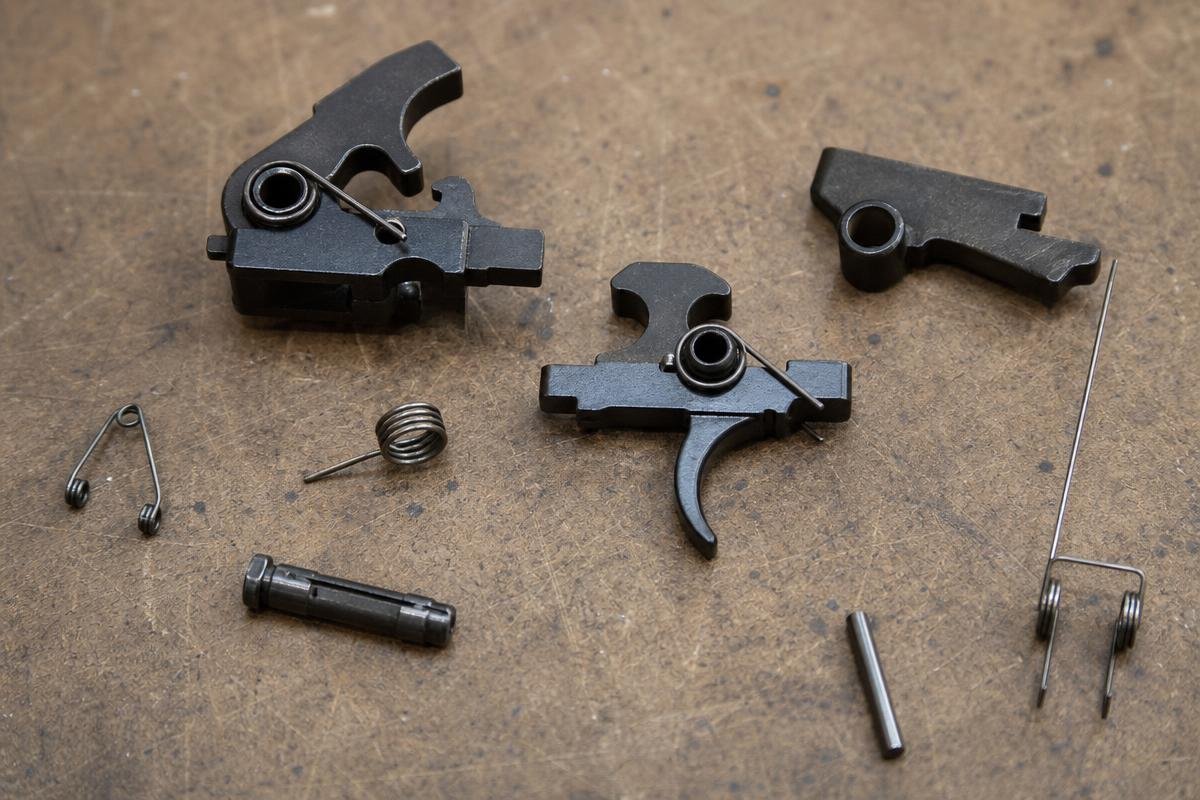
Before you can make a real decision between a single stage vs two stage trigger for your AR-15, you need to understand what's happening inside the lower receiver when you press the trigger. The mechanism is straightforward, but each component has a specific job.
The Fire Control Group
The core fire control group (FCG) includes the trigger, hammer, disconnector, disconnector spring, trigger spring, and hammer spring. The trigger is the interface between your finger and the mechanical sequence. The hammer strikes the firing pin, which drives into the primer. The disconnector catches the hammer during the cycling sequence and holds it until the trigger resets. The trigger spring and hammer spring control resistance and reset tension throughout the pull.
When you press the trigger, it rotates on its pin and releases the hammer from the trigger sear. During cycling, the disconnector catches the hammer until the trigger resets. The hammer spring drives the hammer forward to strike the firing pin. That sequence happens in milliseconds. Every trigger group on every complete AR-15 rifle operates on this same basic geometry.
What Does 'Stage' Mean in a Trigger?
A stage is a distinct zone of resistance felt during the trigger pull before the hammer falls. It is a mechanical sensation, not a setting. A single-stage design has one continuous resistance zone from initial contact to the break. A two-stage design has a defined first-stage take-up followed by a heavier second-stage wall before the break. Exact pull weights vary by trigger model and manufacturer.
Single Stage Triggers: What They Are and When They Work Best
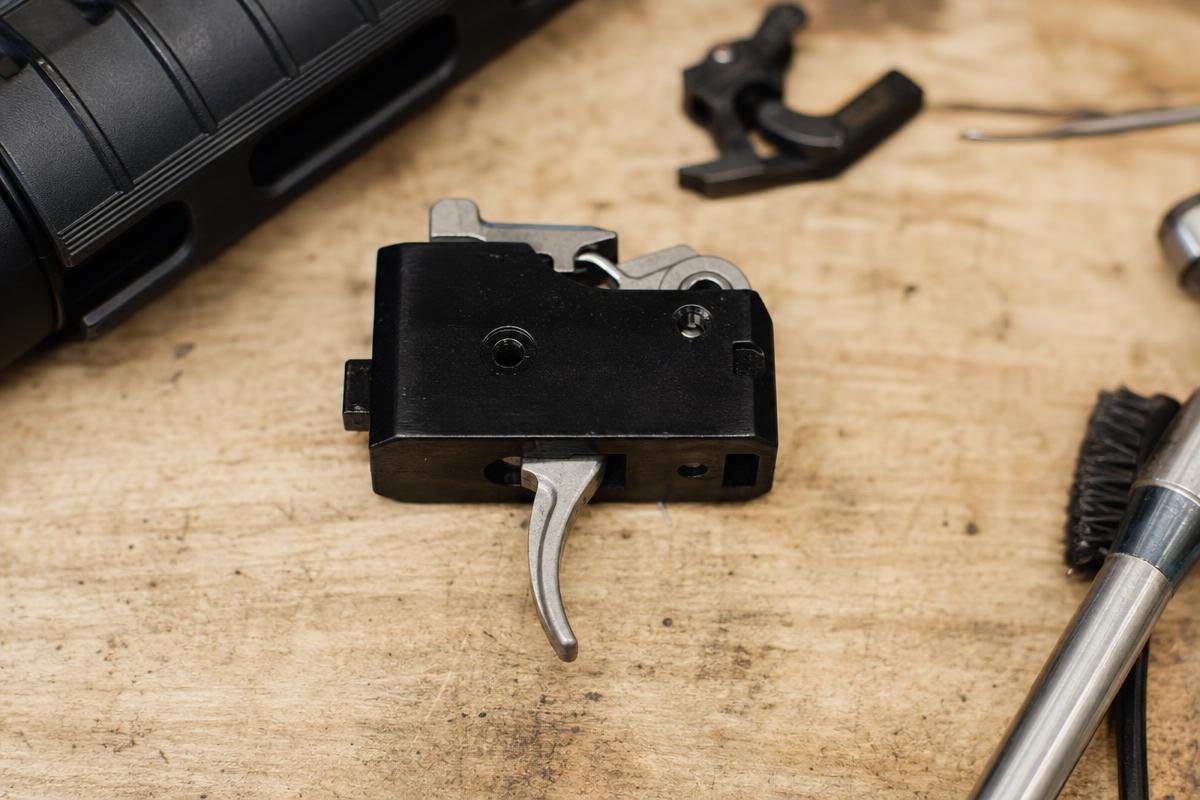
A single-stage trigger has one continuous resistance from the moment your finger contacts the shoe to the moment the hammer falls. There is no defined wall, no staged feedback, no secondary take-up. You press, resistance builds, the trigger breaks. That simplicity is both the limitation and the advantage.
How It Feels
The pull weight is set at the factory or by spring selection, not by a staged mechanism. Because there is no wall to reference, you must develop consistent finger pressure to get a repeatable break. That takes practice. Once you have it, the pull is fast and direct. Nothing interrupts the motion between contact and fire.
Heat affects trigger feel more than most shooters expect. Denison summers regularly push past 100°F, and that heat accelerates carbon fouling on engagement surfaces and causes lubricants to migrate. A mil-spec FCG with cast or MIM components can feel progressively grittier in those conditions. An upgraded unit with polished tool-steel surfaces holds up better through a long summer range session.
Best Use Cases
The single-stage option is the right call for home defense, 3-Gun competition, patrol carbines, and general-purpose builds. At 50 yards and under, the heavier consistent pull is rarely a limiting factor for practical accuracy. In the Red River corridor around Denison, hog hunting often means fast follow-up shots at close range in low light. A single-stage trigger's speed advantage is real in that situation. You are not waiting through a take-up stage before the shot breaks.
Mil-Spec vs. Upgraded Single Stage
A standard mil-spec FCG uses a chrome-silicon spring set, cast or MIM hammer and trigger, and standard trigger and hammer pins. Pull weight and feel vary by manufacturer, and many mil-spec units become smoother with use. It works. It is not precise.
Upgraded single-stage units use machined tool-steel components with polished engagement surfaces. Pull weights drop to 3.5 to 4.5 lbs while keeping the same single-stage character. A cassette-style unit is a self-contained trigger module designed for compatible mil-spec-pattern lower receivers; confirm fitment before installation. That makes a plug-and-play FCG the fastest way to improve your trigger without gunsmithing work.
Want a lighter, cleaner break without touching a stone or file?
Two Stage Triggers: What They Are and When They Work Best
A two-stage trigger adds a deliberate intermediate step before the break. That step is the tradeoff. If you are not trained to pre-stage the trigger, the extra take-up adds time and can slow split times in fast-paced shooting. For precision work, though, that same step is exactly what you want.
How It Feels
Pull the trigger and you reach the first stage: a light, smooth take-up that removes slack and seats the trigger at the wall. That wall is a firm, defined stopping point. Hold pressure there and nothing happens. Increase pressure through the second stage, and the break is crisp and predictable. Exact stage and total pull weights depend on the unit.
The wall is the asset. You can feel it, hold against it, control your breath, and break the shot on your terms. At 200 yards and beyond, that level of control has a measurable effect on group size. Single-stage triggers do not give you that pause point.
Best Use Cases
The two-stage design fits any application where the shooter fires from a supported position with time to stage the trigger. Precision rifle competition, long-range target shooting, and varmint hunting are the obvious fits. For precision shooting, many competitors consider a two-stage unit first. Examples include the Geissele SSA-E and LaRue MBT-2S.
The local angle matters here. Whitetail and hog hunting along the Red River corridor near Denison often means deliberate shots from field positions, not fast-paced drills. Grayson County ranges running 200 to 300 yard bays also favor this design. A two-stage trigger's defined wall is a genuine asset in both settings, not a theoretical one.
Drop-In vs. FCG Replacements
Cassette-style two-stage modules install in minutes. No fitting, no stoning, no guesswork. They seat in the lower, pin in place, and you are done. Standard FCG two-stage replacements use standard trigger and hammer pins and install the same way a mil-spec FCG does. Both options are designed for compatible mil-spec-pattern lower receivers.
If you are building from scratch, review everything included in a complete AR-15 lower parts kit before ordering. Knowing what is already in your kit prevents buying duplicate components. Either the drop-in or the FCG replacement version is equally reliable when installed correctly. The choice comes down to budget and how much time you want to spend at the bench.
Single Stage vs. Two Stage: A Direct Comparison
The previous sections covered how each trigger type works mechanically. This section puts them side by side on the three axes that actually matter for your build: pull weight and reset, speed versus precision, and long-term reliability.
Pull Weight and Reset
A mil-spec single-stage trigger breaks anywhere from 6 to 8.5 lbs. An upgraded single-stage unit drops that to 3.5 to 4.5 lbs with a clean, consistent break and a short, positive reset. Two-stage triggers often split their total pull between roughly 1.5 to 2.5 lbs in the first stage and 2 to 3.5 lbs in the second stage, with a defined wall before the break. Exact weights vary by model.
Reset distance is where these designs diverge the most. Single-stage triggers reset short and positive. You feel the click and you are ready for the next shot. Two-stage triggers require releasing back through the second stage to the first-stage wall, which is a longer total travel distance. That is not a flaw. It is by design. But it is a real difference you will feel under pressure.
Speed vs. Precision Tradeoff
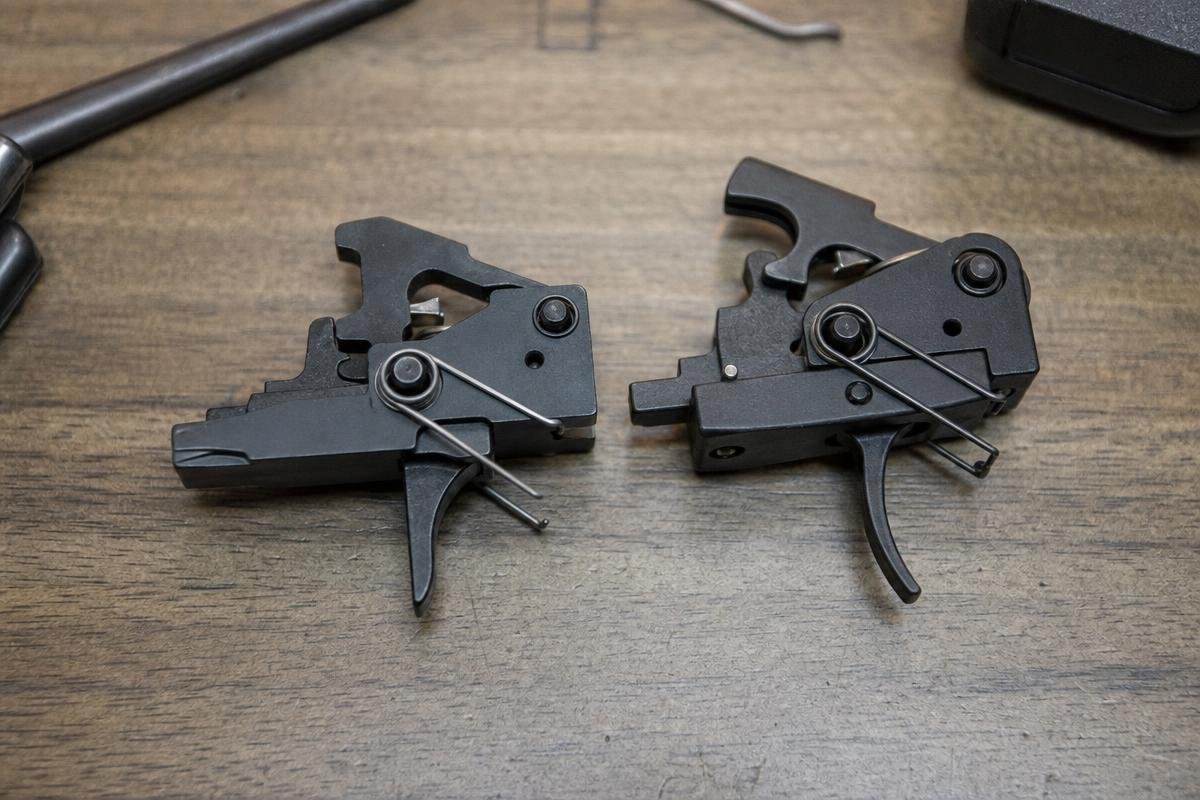
For rapid-fire drills, many shooters prefer a single-stage trigger with a short reset. This design is common in 3-Gun and action-shooting builds. The shorter reset keeps the trigger forward stroke minimal, and there is no wall to manage between shots.
For precision shooting, the two-stage trigger wins. The first-stage wall lets you stage the trigger, settle your sight picture, and apply final pressure without disturbing your hold. Many precision competitors choose two-stage triggers for this reason. On a whitetail hunt or a feral hog setup where the shot needs to count, that wall gives you a measurable advantage in consistent shot breaks.
Reliability and Maintenance
Both designs are reliable when properly installed. Single-stage fire control groups have fewer engagement surfaces, which makes them marginally simpler to inspect and clean. Two-stage FCGs add a first-stage sear engagement surface that should be checked for wear during routine maintenance. Neither design is fragile.
Both trigger types benefit from a light application of quality oil on engagement surfaces. Do not use grease. Oil stays in place and does not migrate onto the bolt carrier group the way heavy grease does. Local summers regularly push past 100°F, and heat accelerates carbon fouling during extended range sessions near Lake Texoma or any outdoor range in the region. After a hot-weather range day, wipe down the FCG and re-oil before storage.
Not sure which trigger fits your build? Call us at (888) 706-0633 and we can point you in the right direction.
Which AR-15 Trigger Is Right for Your Build?
The right trigger depends on what your rifle actually does, not what you think you might do someday. Match your trigger type to your primary use case and your build specs. Everything else is secondary.
Choose Single Stage If
- Your primary use is home defense or close-quarters drills where fast, consistent pulls matter more than precision staging.
- You run 3-Gun or action shooting competitions where split times are the priority.
- Your build runs a carbine-length barrel under 16 inches.
- You want a simpler fire control group with fewer parts to clean and maintain.
- You want a reliable, plug-and-play upgrade without a long wait.
Choose Two Stage If
- Your primary use is precision rifle, varmint hunting, or long-range target shooting where you need a defined wall before the break.
- Your build runs a 20-inch or 24-inch barrel and you shoot from supported positions such as a bench, bipod, or prone.
- You want a quality AR-15 trigger designed for precision shooting.
- You are building a dedicated competition upper or a hunting rifle for whitetail or feral hog seasons in the region.
- Your hand geometry, grip angle, and trigger reach favor a longer, more deliberate pull to the wall before committing to the shot.
What About Adjustable Triggers?
Adjustable triggers are refinements within each type, not a separate category. Some adjustable single-stage triggers from makers like Timney and Elftmann allow pull-weight changes through their adjustment systems. Adjustable two-stage triggers such as the Geissele Hi-Speed National Match may allow separate first-stage and second-stage adjustments. Follow the manufacturer’s specifications for the exact model. These are worth the extra cost if you have a specific pull weight requirement. For a general-purpose build, a quality fixed-weight trigger in the right type will outperform a poorly set adjustable one every time.
Trigger Selection for Denison-Area Shooters and Texas Conditions
Range Distances and Shooting Styles Common Here
Most ranges in the Grayson County area run 100 to 300 yard bays. That puts you squarely in the middle ground where both trigger types are genuinely viable. At shorter distances, a quality single-stage unit can provide a clean, repeatable break. At longer distances, a staged two-stage setup can offer a more defined reference point before the break. That defined wall gives you a consistent reference point before the break, which matters when you are calling your shot at distance.
Hunting around Lake Texoma adds another layer to this decision. Whitetail and feral hog seasons are active in this corridor, and field positions are rarely ideal. A two-stage trigger's deliberate break is an asset when you are shooting from a fence line or a ground blind with your heart rate up. For a dedicated hog rifle that also pulls range duty, a two-stage is a practical choice.
Heat, Humidity, and Trigger Maintenance in Texas Summers
Summers here regularly push past 100°F. Heat accelerates carbon fouling, and it causes heavy grease to migrate off engagement surfaces. A thick grease application that worked fine in January can cause sluggish reset or inconsistent pull weight by July. Use a thin film of quality CLP or dedicated trigger oil on engagement surfaces and reapply after extended range sessions in the heat.
For related maintenance context on keeping your action running in these conditions, the bolt carrier group maintenance guide covers coatings and cleaning intervals worth pairing with your trigger care routine. We ship trigger components and parts nationwide from our facility at 4000 Texoma Pkwy, Denison, TX 75020.
Frequently Asked Questions
What is the main difference between a single stage and two stage AR-15 trigger?
A single-stage trigger has one continuous pull from rest to break. A two-stage trigger has a distinct wall midway through the pull where resistance increases before the final break. That wall is the defining tactile difference in any AR-15 trigger comparison.
Which trigger is more accurate, single stage or two stage?
Two-stage triggers give deliberate shooters an advantage on precision shots because you can stage the trigger at the wall and hold until ready to break. Single-stage triggers are faster for rapid-fire strings where staging is not practical. Accuracy depends on your application, not the trigger type alone.
Can I install a drop-in trigger in my existing AR-15 lower receiver?
Yes. Both cassette-style modules and standard FCG replacements are designed for compatible mil-spec-pattern lower receivers using the pin specifications stated by the trigger manufacturer. Fitment requirements vary by trigger and receiver, so confirm the manufacturer specifications before installation. It is one of the simplest upgrades you can make to an existing build.
What pull weight should I choose for my AR-15 trigger?
Pull-weight needs vary by use case and trigger design. Follow the trigger manufacturer’s guidance and use a qualified armorer when choosing a configuration for competition, hunting, or defensive use.
Do single stage triggers reset faster than two stage triggers?
Generally yes. Short-reset single-stage designs can have less rearward reset travel than many two-stage designs. Two-stage triggers require the trigger to travel back through the second stage before resetting to the first-stage wall, which adds total reset distance. For fast follow-up shots, that difference is measurable.
How much does a quality AR-15 trigger upgrade cost?
Pricing varies by manufacturer, trigger design, and features. Both mil-spec replacements and cassette-style drop-in units are available, so compare current product specifications and pricing before ordering.
Ready to upgrade your trigger? Browse our full selection of single-stage and two-stage trigger components, cassette-style drop-in units, and complete lower parts kits at AR15Parts.com. Questions about which trigger fits your specific build? Call us at (888) 706-0633. We ship nationwide from 4000 Texoma Parkway, Denison, TX 75020.
Ready to Get Started with AR15Parts.com?
Call (888) 706-0633 to speak with our team directly. We're ready to answer your questions, walk you through your options, and help you find the right solution for your needs. Whether you're just starting to plan or ready to move forward, we'll make the process simple and stress-free. Reach out today and let's talk about how we can help.