
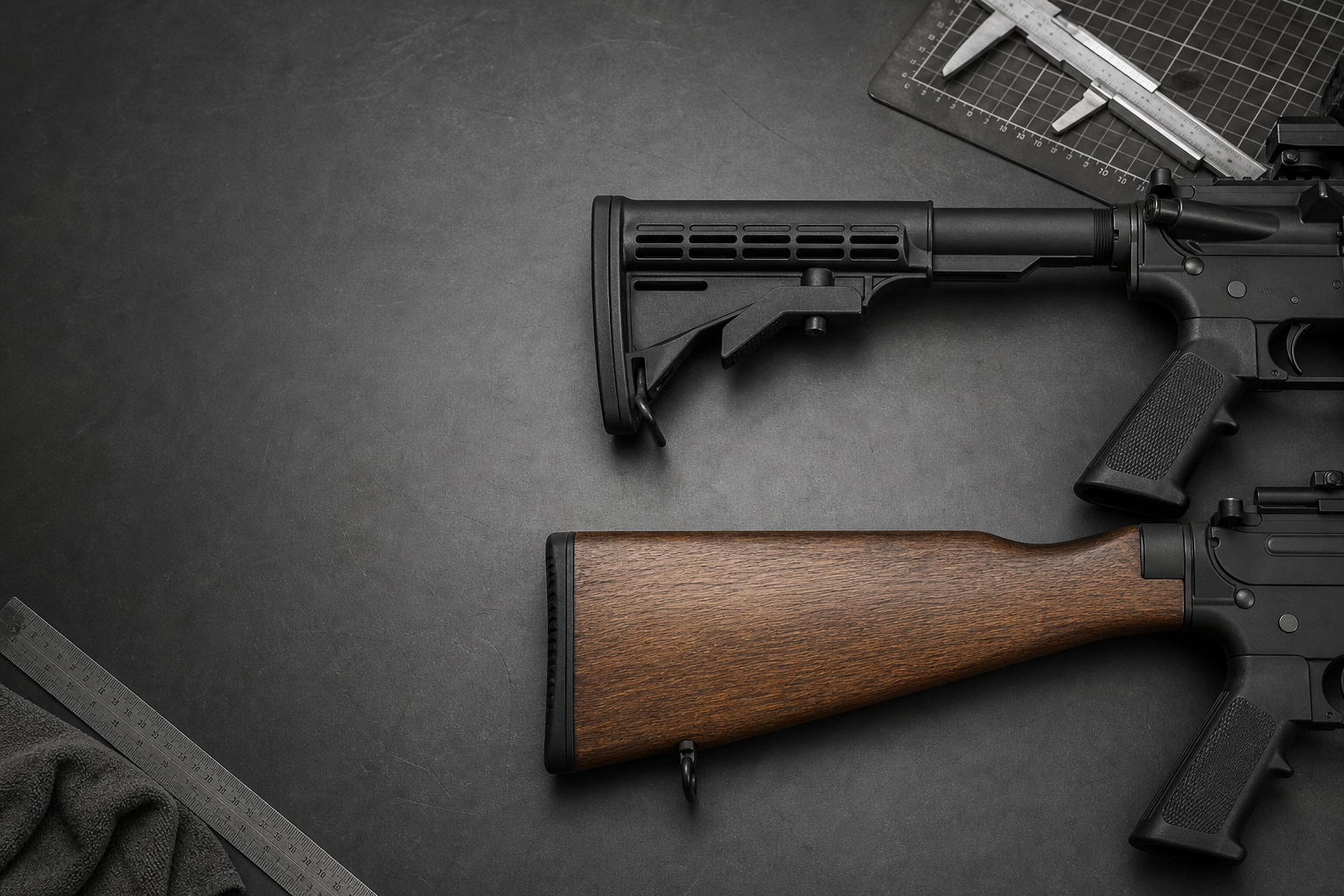
Picking the right stock changes how your rifle fits, handles, and performs across different shooting situations. An AR-15 collapsible stock gives you adjustable length of pull, which matters whether you're wearing body armor, shooting from a vehicle, or passing the rifle between shooters of different sizes. A fixed stock trades that flexibility for a more rigid, consistent cheek weld. We ship from our Denison, TX facility. Stock regulations can change, so confirm the requirements that apply where you live. Not sure which stock fits your build? We can help you narrow it down.
Key Takeaways
- An AR-15 collapsible stock adjusts length of pull across multiple positions, making it more adaptable than a fixed stock.
- Fixed stocks offer a more rigid platform and consistent cheek weld, which some precision shooters prefer.
- Before configuring a rifle, confirm the current federal, state, and local requirements that apply to your setup.
- Collapsible stocks need a compatible carbine receiver extension; A2-style fixed stocks generally use a rifle-length receiver extension.
- Stock choice affects fit, recoil management, and storage length, not just appearance.
What the AR-15 Stock Actually Does
The stock is not just a place to put your shoulder. It is the mechanical endpoint of the recoil cycle. When the bolt carrier group travels rearward, the buffer and spring assembly absorbs that energy inside the buffer tube. The stock transfers what remains into your shoulder. Get the stock wrong and you are fighting the rifle on every shot.
Recoil Management and Cheek Weld
Consistent cheek weld is what keeps your eye at the same height behind the optic or iron sight on every shot. When your cheek hits the comb in a different spot, your point of impact shifts vertically. That is not a zero problem. That is a stock-fit problem.
Fixed stocks have a set comb height. That works well if the stock fits you. Precision adjustable stocks add a riser dial or spacer system so you can dial in exact eye alignment. If you are running a magnified optic and need repeatable cheek contact, comb height becomes a real variable worth addressing, not an afterthought.
What Determines the Right Length of Pull for a Shooter?
Length of pull is the distance from the trigger face to the center of the butt pad, and it is set by your arm length and the gear you wear over your shoulder. A standard mil-spec fixed stock runs approximately 13.5 inches. A 6-position adjustable AR-15 stock on a mil-spec carbine tube moves from roughly 10.5 inches fully collapsed to 13.5 inches fully extended. That 3-inch range is the entire practical argument for a collapsible design.
Body armor, a plate carrier, or heavy winter layers compress your effective length of pull by 1 to 2 inches. A whitetail hunter running thick insulation during a cold December sit near Lake Texoma faces the exact same fit problem as a shooter wearing a plate carrier. The rifle that fits you in a t-shirt will not fit you in full winter gear. An adjustable stock solves that without changing anything else on the build.
If you want to see how stock choice interacts with the rest of your build, browse our complete AR-15 rifles to get a sense of how different configurations come together from the factory.
Fixed Stocks: Where They Win and Where They Don't
Rigidity and Accuracy at the Bench
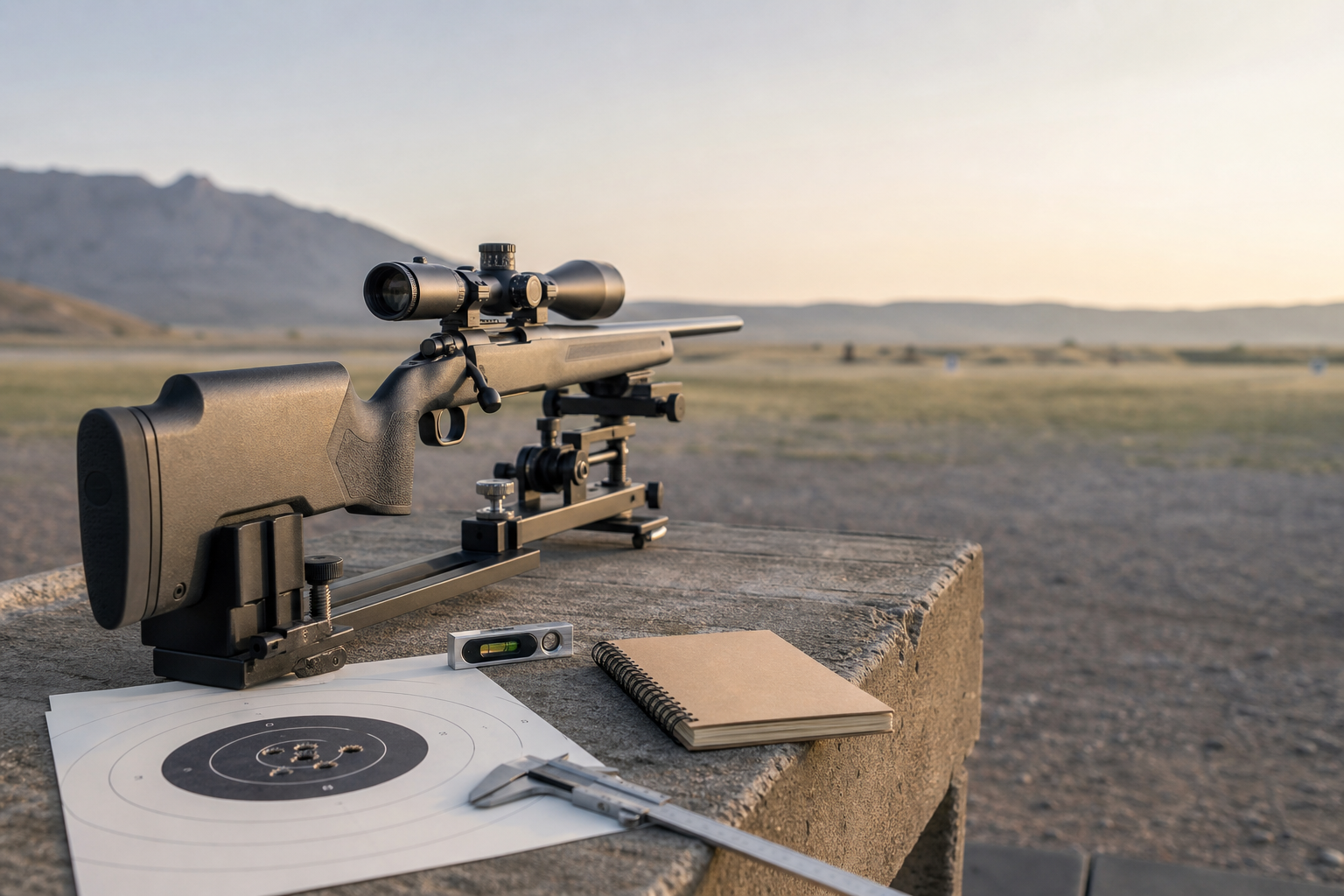
A fixed stock has zero mechanical slop. No locking lever, no detent positions, no rattle under recoil. That single fact matters most when you are shooting from a consistent position at distance. Every time you shoulder the rifle, your cheek weld lands in exactly the same place.
That repeatability is why fixed stocks stay common on A2-style builds and dedicated precision platforms. If your dimensions are known and your shooting position does not change, a fixed stock removes one more variable from the equation. A shooter building a dedicated bench rifle for long-range work at a range will notice that consistency where small deviations compound.
In the fixed vs. collapsible AR-15 stock debate, the fixed option wins on one metric: zero movement. No collapsible stock, regardless of price, fully eliminates the play that comes with a locking mechanism.
Weight, Profile, and Storage Tradeoffs
A2-style fixed stocks use a rifle-length receiver extension, which is longer than a standard carbine tube and uses a heavier buffer, typically around 5.4 oz. That's a compatibility point you need to confirm before ordering. The buffer tube section below covers the specifics in full.
Beyond the tube, fixed stocks add length and weight to your build. Skeletonized and polymer designs close the weight gap, but the overall footprint stays larger. That matters in three real situations:
- Vehicle storage or transport in a compact rifle case
- Home-defense use in tight hallways or confined spaces
- Builds where multiple shooters of different sizes share the rifle
Adding a shoulder stock to a pistol with a barrel under 16 inches may create a short-barreled rifle (SBR) requiring NFA registration before assembly. If your build might shift between configurations, factor that in early. For a general-purpose carbine, the lack of adjustability is a genuine limitation, not a minor inconvenience.
Ready to compare adjustable options side by side? Browse our stocks and compatible receiver extension components.
AR-15 Collapsible Stocks: Adjustability, Tradeoffs, and Who They're Built For
How Does a 6-Position AR-15 Stock Work?
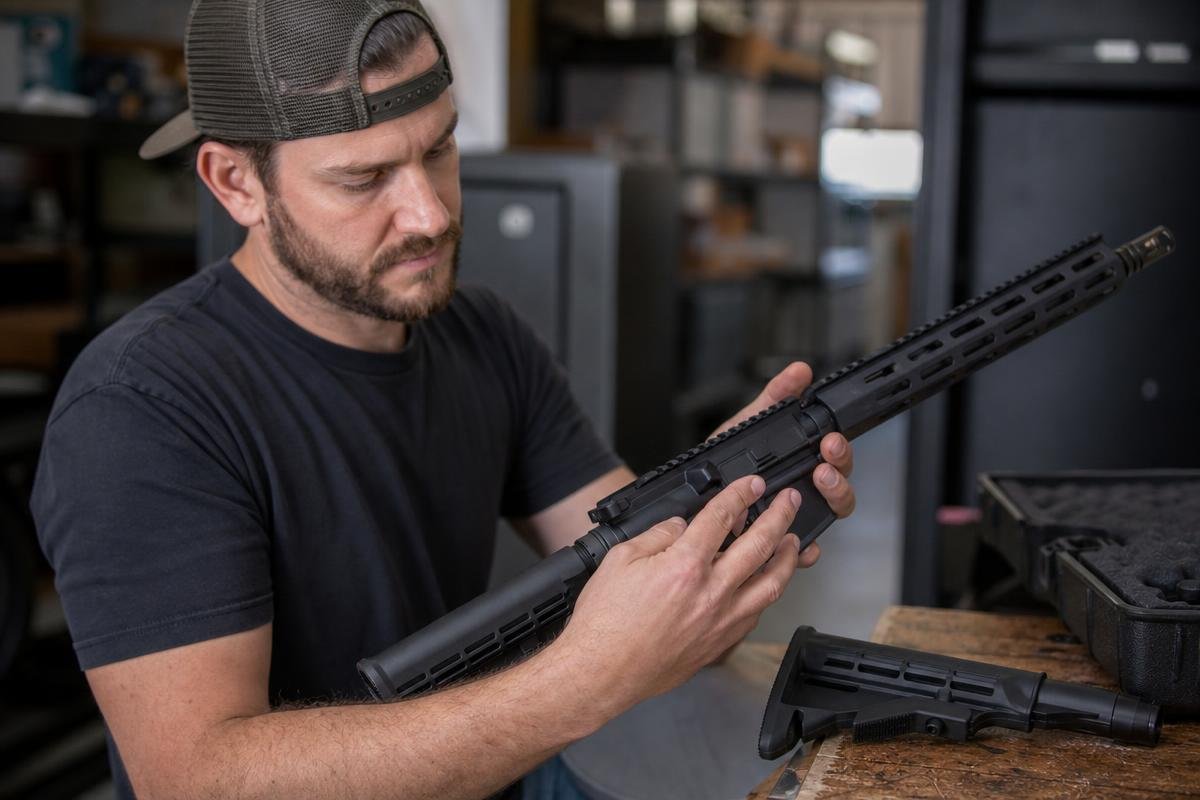
A 6-position stock rides on a carbine receiver extension and locks into one of six detent positions using a spring-loaded lever on the underside of the stock. Each position changes your length of pull by approximately 0.5 inches, giving you roughly 3 inches of total adjustment range across all six settings.
Locking mechanism quality is where cheap stocks fail. Thin stamped levers rattle under recoil, wear out the detent notches on the buffer tube, and develop side-to-side play that throws off your cheek weld. Quality stocks use a thicker lever with a positive, audible detent click and virtually no lateral movement when locked. If the stock wiggles after you lock it in, that is a locking mechanism problem, not a fit problem. Do not accept it.
What Is the Difference Between Mil-Spec and Commercial Buffer Tubes?
The difference is the outer diameter of the tube the stock slides onto. Mil-spec carbine buffer tubes measure approximately 1.148 inches. Commercial tubes run approximately 1.168 inches. That 0.02-inch difference is enough to cause a loose fit or prevent the stock from seating at all if you mismatch them.
Most quality AR-15 lowers ship with mil-spec tubes. Commercial tubes appear more often on budget builds and some older rifles. Always check the stock manufacturer's spec sheet before ordering. If you are unsure which tube you have, a caliper solves it in ten seconds. Pairing a mil-spec stock with a mil-spec tube gives you the tightest fit and the widest selection of quality stock options. Our complete AR-15 uppers are assembled in-house, headspaced and function-checked before shipping.
When Collapsible Is the Right Call
A collapsible stock makes sense for home defense in confined spaces, shared rifles with multiple shooters of different sizes, duty or patrol use with body armor, youth or smaller-framed shooters, and vehicle or truck storage. A rancher who keeps one carbine behind the truck seat for varmints and property work gets direct value from that adjustment range. The length of pull you want behind a rifle scope in daylight is not the same one you want handing the rifle to a smaller family member at 2 a.m.
Before configuring a rifle, confirm the current federal, state, and local requirements that apply to your setup.
Fixed vs. Collapsible: A Direct Comparison by Use Case
Stock type is not a universal decision. The right choice depends on what you're building and how you plan to use it. Here's how fixed and collapsible options stack up across three common build types.
Precision and Long-Range Builds
Fixed stocks win here, and it's not close. There is zero mechanical play in a fixed stock, which means your cheek weld lands in the same position every shot. That consistency matters more at distance than it does at 50 yards. A heavier fixed stock also helps balance a heavy barrel, and a rifle-length buffer tube accommodates a longer buffer and heavier spring for smoother cycling. For a practical shooter, the accuracy benefit is real, not just a bench-shooting advantage. Any wobble in your stock position introduces variation in eye relief and sight picture, and that compounds over distance.
Home Defense and Patrol Rifles
An AR-15 collapsible stock wins for home defense. Fully collapsed, a 6-position stock reduces overall rifle length by roughly 3 inches compared to full extension. That matters in a hallway, a vehicle, or any confined space where maneuvering room is limited. You can also adjust on the fly if you're shooting in body armor or handing the rifle to a smaller family member.
Before configuring a rifle, confirm the current federal, state, and local requirements that apply to your setup.
Competition and 3-Gun Shooting
This one depends on the division. Open and tactical divisions favor collapsible stocks for quick length-of-pull adjustments between stages. A 3-gun competitor running a North Texas match will often collapse the stock a notch when transitioning to close, awkward shooting positions. PRS-style competition points the other direction. Precision shooters increasingly run adjustable stocks with cheek risers for exact eye alignment behind high-magnification optics.
Some minimalist fixed stocks actually come in lighter than collapsible options, which matters in weight-sensitive divisions. Stock selection is part of a broader build decision, the same way choosing complete AR-15 uppers affects balance, weight, and handling. Pick based on your division rulebook first, then fit. Not sure which stock fits your build? Call us at (888) 706-0633 and we'll point you in the right direction.
Buffer Tube Compatibility and Installation Basics
Switching stock types is not as simple as swapping one stock for another. A collapsible stock requires a carbine-length receiver extension. A fixed A2-style stock requires a rifle-length receiver extension. Those two tubes are not interchangeable, and putting the wrong stock on the wrong tube is not a workaround.
Carbine vs. Rifle Receiver Extension
A carbine tube runs a carbine buffer, typically around 3 oz., and a carbine spring. A rifle tube runs a heavier rifle buffer, typically around 5.4 oz., and a longer rifle spring. If you want to switch from a fixed stock to a collapsible stock, you are replacing the entire buffer tube assembly, the buffer, and the spring. That swap runs roughly $30 to $80 depending on component quality. Done correctly, the rifle cycles reliably. Done incorrectly, it will not cycle at all.
Adding a shoulder stock to a pistol with a barrel under 16 inches may create an SBR requiring NFA registration before assembly. The 2023 federal pistol-brace rule was vacated and is not being enforced, but that does not eliminate the separate rules for shoulder stocks. Consult a licensed FFL or firearms attorney about your configuration before ordering. If you want to skip the guesswork entirely, our complete AR-15 rifles ship with matched buffer tube assemblies and stocks already installed.
What to Check Before You Order
Run through this four-point checklist before placing any stock order:
- Confirm whether your lower is a rifle or pistol configuration.
- Identify your installed buffer tube as mil-spec or commercial diameter. A mil-spec stock will not seat correctly on a commercial-diameter tube.
- Confirm the stock you are ordering lists compatibility with your specific tube diameter.
- Check the stock's stated length of pull range against your arm length and the gear you plan to wear.
Unsure which receiver extension you have? Check the manufacturer's specifications or measure its outer diameter, then call us at (888) 706-0633 or contact our team for help comparing compatible parts.
Which AR-15 Stock Is Right for You? A Quick-Decision Checklist
Run through these six scenarios. Whichever column you land in most often is your answer.
- Multiple shooters of different sizes share the rifle. Choose collapsible. A fixed length of pull fits one body. An adjustable AR-15 stock fits everyone.
- You shoot from a bench at known distances with a consistent position. Choose fixed. No mechanical slop, no position creep between shots.
- You regularly wear body armor or a plate carrier. Choose collapsible. Armor typically costs you 1 to 2 inches of effective length of pull, and a collapsible stock recovers that instantly.
- The rifle needs to fit a compact case or ride in a vehicle. Choose collapsible. An AR-15 collapsible stock cuts overall length by up to 3 inches.
- This is a dedicated precision or competition build with a dialed-in length of pull. Choose fixed. Eliminating mechanical variables matters at distance.
- You need one general-purpose carbine for home defense, range work, and field use. Choose collapsible on a mil-spec carbine tube. It is the most versatile starting point for any build.
Hunters and home-defense shooters across Grayson County who run one rifle for multiple roles may find a collapsible stock a practical choice. Stock choice is one of several fit-and-function decisions in a complete build, alongside barrel length, gas system, and more. If you want to see how it all comes together, browse our complete AR-15 rifles or pair your stock with one of our complete AR-15 uppers ready to drop onto your lower.
Buying AR-15 Stocks from Denison, TX
We offer fixed and AR-15 collapsible stock options online and ship from our Denison, TX facility. Compare stock specifications and receiver extension compatibility before ordering; our team can help by phone or through the contact form.
Compare Stock Fit Before You Order
Stock fit depends on length of pull, cheek weld and receiver extension diameter. Check the manufacturer's listed adjustment range and tube specifications against your setup before ordering. If you're unsure, call us at (888) 706-0633 for help comparing compatible options.
We also offer complete AR-15 rifles online so you can compare finished configurations alongside individual stock options. Complete rifles ship to your chosen FFL for transfer.
Shipping from Denison, TX
Stocks are non-serialized components. No FFL transfer is required. We ship directly to your door from our Denison warehouse. If you want to browse complete AR-15 uppers ready to drop onto your lower, those ship the same way. Call (888) 706-0633 or check current stock inventory at ar15parts.com before placing your order.
Frequently Asked Questions
What is the difference between a mil-spec and commercial buffer tube for a collapsible stock?
The outside diameter is the key difference. A mil-spec buffer tube measures approximately 1.148 inches OD. A commercial tube runs approximately 1.168 inches OD. That gap is small but it matters. A mil-spec stock may not seat on a larger commercial tube. A commercial stock on a smaller mil-spec tube may fit loosely. Check the tube spec before you order any ar-15 collapsible stock.
Can I put a collapsible stock on any AR-15 lower receiver?
On a rifle-configuration lower with a carbine-length receiver extension, yes. Adding a shoulder stock to a pistol with a barrel under 16 inches may create an SBR requiring NFA registration before assembly. The 2023 pistol-brace rule was vacated and is not being enforced, but separate shoulder-stock rules still apply. If you are unsure how your lower is registered, talk to a licensed FFL before making any changes. Call us at (888) 706-0633 for product compatibility questions; consult your FFL or an attorney for legal advice.
How many positions does a standard AR-15 collapsible stock have?
Most standard 6-position mil-spec stocks offer six locking positions across roughly 3 inches of total length of pull adjustment, in approximately 0.5-inch increments. Some designs run four positions. A few premium options offer finer intermediate steps. Six positions covers the range most shooters need, from compact storage to a full-length firing position.
Does a fixed stock improve accuracy compared to a collapsible stock?
A fixed stock removes the mechanical play in the locking lever, which gives a more consistent cheek weld shot to shot. At typical carbine distances the difference is small. At longer ranges or in precision competition, that consistency adds up. If your build is purpose-built for precision work, a fixed stock is worth considering. For general use, a quality collapsible stock with a tight lock-up performs well.
Is a collapsible stock legal in Texas?
Confirm the current federal, state, and local requirements for your specific rifle configuration before making changes or ordering parts.
What is a good length of pull for an AR-15 with a collapsible stock?
Start with the stock butt in the crook of your elbow. Your trigger finger should reach the trigger with a slight bend. Most adults land between 12 and 14 inches of length of pull. If you shoot in body armor or heavy gear, subtract 1 to 2 inches from that baseline. Grip angle also affects how trigger reach feels; if you want more detail on that relationship, see our guide on how AR-15 grip angle affects shooter fit and trigger reach.
Ready to pick your stock? Call AR15Parts.com at (888) 706-0633 or visit ar15parts.com to check current inventory and confirm the requirements that apply to your order. We ship from our Denison, TX facility; contact our team if you need help choosing a compatible stock.