
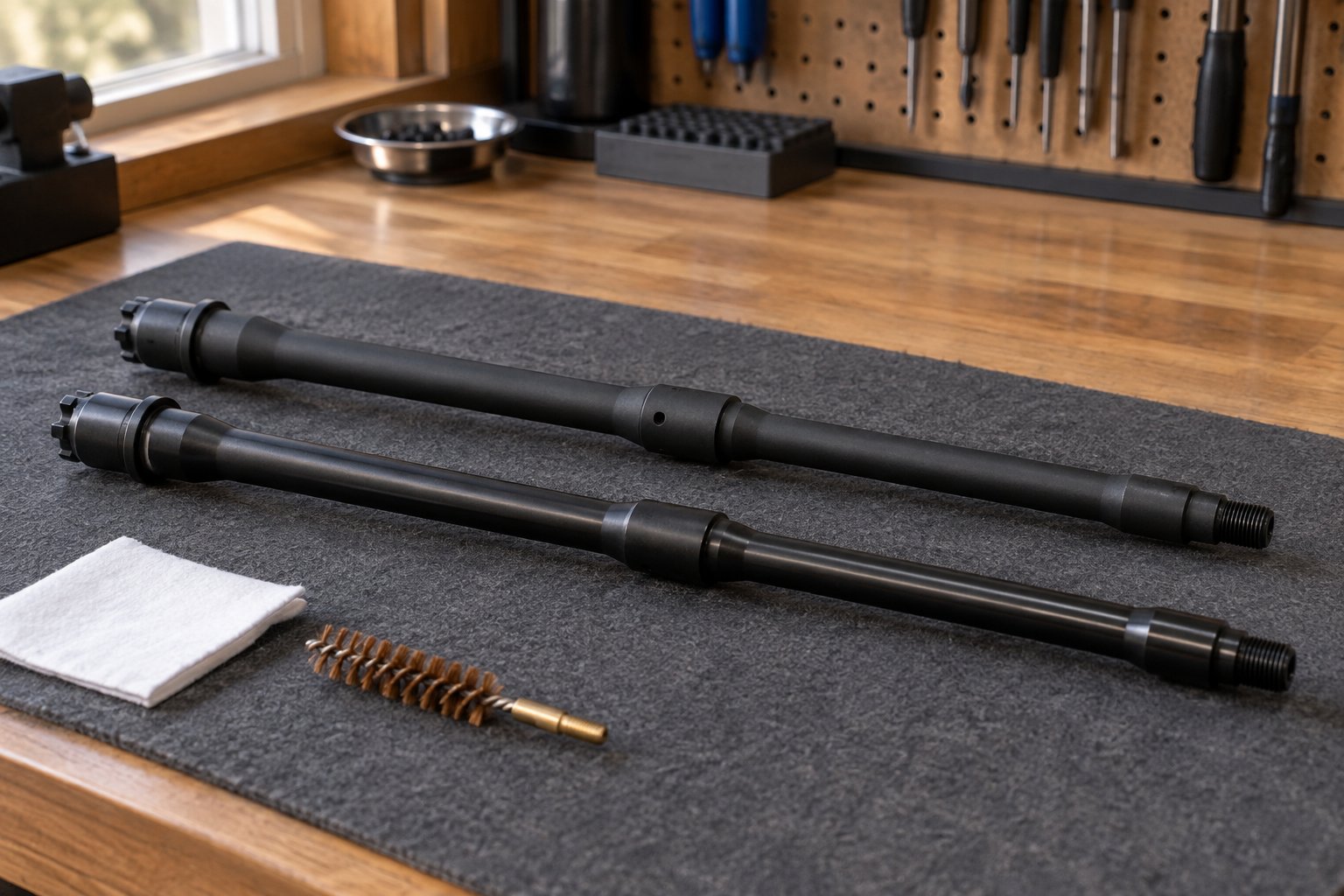
The chrome lined vs nitride question usually comes up once a Denison or Texoma builder narrows a carbon steel 4150 CMV barrel down to a bore treatment. Both options protect the steel from heat and fouling, but they get there in different ways, and each one changes how a barrel feels over years of range trips. AR15Parts.com carries carbon steel barrels in both finishes, alongside 416R stainless options, so builders can match the treatment to how the rifle will actually be used.
Have questions about which bore treatment fits your build before you order a barrel? Browse our full AR-15 parts and accessories lineup or reach out to our team directly.
Key Takeaways
- Chrome lining and nitride treatment are both applied to carbon steel barrels, most commonly 4150 chrome moly vanadium (CMV), but the two processes work in fundamentally different ways.
- Hard chrome lining is an electroplated layer added to the bore surface, while nitride treatments such as QPQ (a salt bath nitrocarburizing process) diffuse nitrogen into the existing steel rather than adding a coating.
- Nitride treatments generally preserve tighter bore dimensions and are associated with strong accuracy potential, while chrome lining has a long reputation for standing up to sustained heat and heavy round counts.
- Both treatments resist corrosion and ease cleaning compared to a bare carbon steel bore, though neither eliminates the need for regular maintenance.
- AR15Parts.com carries QPQ-treated nitride barrels from Ballistic Advantage alongside chrome lined and stainless options, so the right choice depends on caliber, use case, and maintenance habits.
- Stainless steel barrels are a separate bore material rather than a bore treatment, and they are worth a quick comparison before choosing between the two carbon steel finishes covered here.
What Chrome Lining and Nitride Actually Do to a Barrel
Before comparing performance, it helps to understand that chrome lining and nitride treatment solve the same problem, protecting the bore from heat and friction, through very different processes. Both are typically applied to carbon steel barrels such as 4150 CMV, the chrome moly vanadium alloy commonly specified for mil-spec AR-15 and AR-10 barrels.
How Hard Chrome Lining Is Applied
Hard chrome lining is an electroplating process. The barrel is submerged in a chromic acid solution, and an electrical current deposits a layer of chromium onto the bore and chamber surfaces. The plated layer is thin enough to preserve the rifling geometry but substantial enough to resist erosion from repeated firing. Because it is an added layer rather than a change to the base steel, a bore has to be cut to account for the plating so the finished dimensions still meet specification.
How Nitride and QPQ Treatment Work
Nitride treatment, including the salt bath process often marketed as QPQ (quench polish quench) or under trade names like Melonite, is a thermochemical diffusion process rather than a coating. The barrel steel is heated in a nitrogen-rich salt bath, and nitrogen atoms diffuse into the surface of the steel itself, forming a hardened case that is part of the original metal rather than a layer sitting on top of it. Because nothing is added to the bore surface, manufacturers can hold tighter dimensional tolerances through the treatment process. AR15Parts.com lists several QPQ-treated 416R and 4150 CMV barrels from Ballistic Advantage across multiple calibers, which use this nitride process as both a bore and exterior treatment.
How Chrome Lined and Nitride Barrels Handle Heat and Sustained Fire
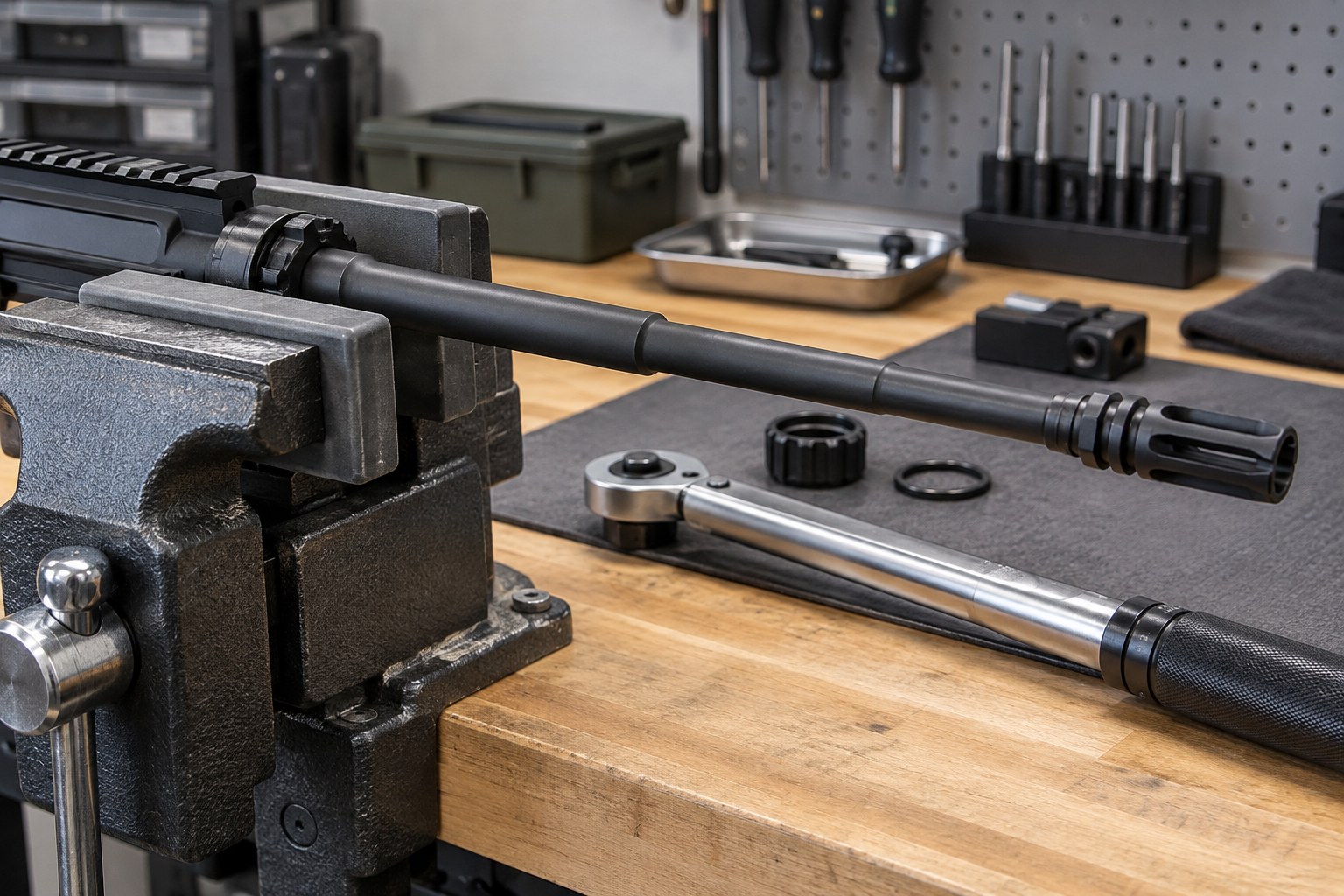
Heat management is where the two treatments have the longest track record, largely because chrome lining was developed for military rifles that needed to survive sustained automatic fire. The table below summarizes how the two treatments generally compare on carbon steel barrels.
| Factor | Chrome Lined | Nitride (QPQ / Salt Bath) |
|---|---|---|
| Type of treatment | Electroplated chromium layer added to the bore | Diffusion process that hardens the existing steel surface |
| Surface hardness | Very hard, wear-resistant plated surface | Hardened surface case, well above untreated carbon steel |
| Heat tolerance | Long history in sustained-fire military rifles | Good heat tolerance for typical semi-auto range and hunting use |
| Dimensional impact | Adds a thin layer that must be accounted for when cutting the bore | Does not add a layer, so original bore dimensions are largely preserved |
| Coverage | Bore and chamber | Bore, chamber, and exterior surfaces treated together |
Chrome lining's plated surface has decades of use in military small arms specifically because it tolerates the heat of extended automatic and rapid semi-automatic fire well. Nitride treatments also perform well under heat because the hardened case resists softening, and the process treats the exterior of the barrel at the same time as the bore, which some builders value for corrosion resistance on the outside of the barrel as well as the inside. For the sustained-fire pace of a typical range day or hunting trip, both treatments hold up; the practical difference shows up more in accuracy and long-term wear patterns than in a single hot string of fire.
Accuracy and Bore Uniformity: Which Treatment Wins
Because chrome lining adds a thin layer to the bore, it can very slightly change the uniformity of the lands and grooves compared to how the barrel was originally cut. Nitride treatment, as a diffusion process that does not add material, tends to preserve the bore's original machined dimensions more closely. This is a meaningful reason precision-focused shooters often lean toward nitride or bare stainless barrels rather than chrome lining, while chrome lining remains popular on barrels built primarily for durability and volume of fire rather than the tightest possible groups.
Break-In and Early Fouling Patterns
Both treatments still benefit from a normal break-in and cleaning routine following the barrel manufacturer's instructions. A freshly machined bore, regardless of treatment, can shed some fouling and metal fines during the first rounds fired. Follow the specific barrel manufacturer's published break-in recommendation rather than a generic routine, since methods vary between brands like Ballistic Advantage, Satern Barrels, and Wilson Combat. Our AR Upper Hub guide to barrel break-in walks through a general approach if your barrel's manufacturer does not publish its own steps.
Twist Rate and Chambering Still Matter More Than Bore Finish
Bore treatment is only one factor in accuracy. Twist rate, chambering (for example .223 Wylde versus 5.56 NATO), and barrel contour all play a larger role in how a given rifle groups than whether the bore is chrome lined or nitride treated. When comparing options in a single caliber, such as the 223 Wylde barrels AR15Parts.com carries, look at twist rate and contour alongside the bore treatment rather than treating the finish as the deciding factor on its own.
Want a ready-to-run option? Shop AR uppers by caliber, barrel length, and handguard.
Cleaning, Fouling and Corrosion Resistance Compared
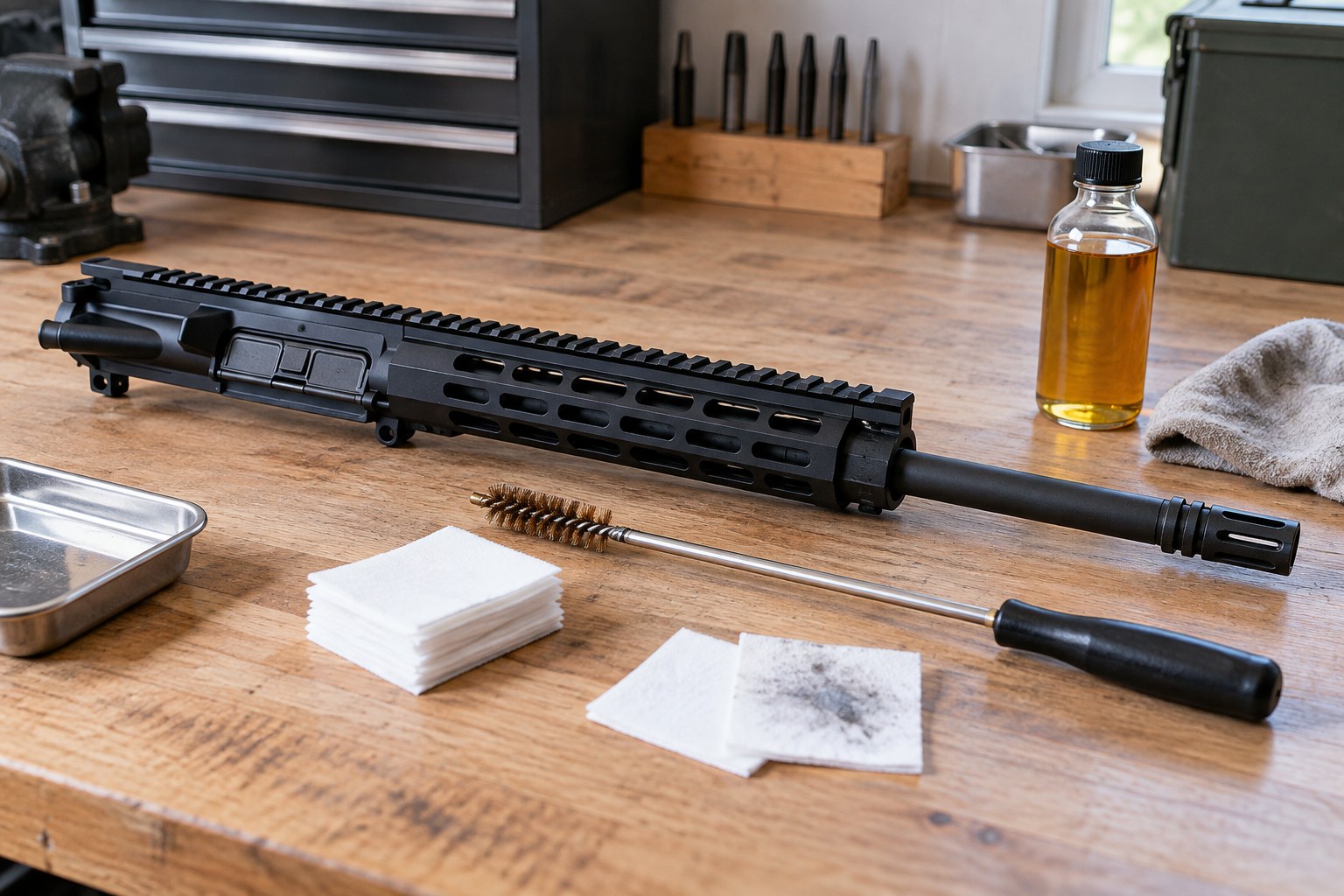
Both chrome lined and nitride bores resist corrosion and clean up more easily than a bare, untreated carbon steel bore, which is one reason carbon steel barrels are rarely sold without one of these treatments or a stainless alternative. Chrome's smooth, hard plated surface has long been valued for how easily carbon fouling wipes away, and it also resists moisture well, which matters during humid Texoma summers and the cooler, damp mornings that follow a Lake Texoma cold front. Nitride's hardened case is similarly corrosion resistant, since the treatment covers the entire barrel surface rather than just the bore.
Cleaning Routine for Either Treatment
- Always confirm the firearm is unloaded before cleaning, and keep ammunition off the bench during the process.
- Use a bore brush and solvent appropriate for carbon fouling and copper fouling, following the barrel manufacturer's cleaning recommendations.
- Avoid abrasive cleaning methods or aggressive brushing that could wear away a chrome lined surface over time.
- Dry and lightly oil the bore after cleaning to help either treatment resist corrosion between range sessions.
- Inspect the crown and muzzle threads periodically, since damage here can affect accuracy regardless of bore treatment.
Neither treatment removes the need for routine cleaning and inspection. A qualified gunsmith should handle any persistent fouling issue, suspected bore damage, or headspace concern that basic cleaning does not resolve.
Choosing Chrome Lined or Nitride for Your Next AR15Parts.com Barrel
The right choice between these two treatments usually comes down to how the rifle will be used and how much weight a builder puts on preserving original bore dimensions versus a treatment with a long history in sustained-fire applications. A carbine built for general range use, home defense, or hog and deer hunting around North Texas can perform well with either option. A builder chasing the tightest possible groups for a precision-oriented rifle may lean toward nitride or a 416R stainless barrel instead.
A Brief Note on Stainless Steel Barrels
Stainless steel barrels are a separate material choice rather than a bore treatment applied to carbon steel. Many stainless barrels, including the 416R options AR15Parts.com carries from Satern Barrels, Shaw Barrels, and Wilson Combat, are left uncoated because stainless steel resists corrosion on its own, though some builders still prefer a nitride-treated carbon steel barrel for its added surface hardness. Our AR Upper Hub guide to chrome lined, nitride and stainless barrels compares all three options in more depth if bore material, rather than treatment, is the main decision in front of you.
AR15Parts.com lists QPQ nitride-treated 4150 CMV and 416R barrels from Ballistic Advantage across popular calibers, alongside chrome lined 4150 CMV barrels and stainless options from Satern Barrels, Shaw Barrels, and Wilson Combat. Browse current options to compare twist rate, length, and gas system before ordering.
Matching Bore Treatment to How You Actually Shoot
Think through how the rifle will spend most of its time before settling on a bore treatment. A few common scenarios can help narrow the decision:
- A general-purpose carbine for range trips, home defense, and casual practice: either chrome lined or nitride carbon steel typically works well, so contour, twist rate, and gas system usually matter more than the bore finish.
- A hunting rifle carried in variable North Texas weather: both treatments resist corrosion better than bare steel, so pick based on caliber availability and barrel length rather than the finish alone.
- A precision-oriented build where the tightest possible groups matter most: nitride or 416R stainless barrels are common choices because they avoid the added plated layer chrome lining introduces.
- A duty-style or high-round-count training rifle: chrome lining's long service history in military small arms makes it a reasonable choice when sustained fire and easy field cleaning are the priority, and browsing options like the 300 Blackout barrels AR15Parts.com carries shows both chrome lined and nitride choices side by side.
Chrome Lined vs Nitride Barrel Help for Denison and Texoma Builders
Texoma's mix of hot, humid summers and damp winter mornings makes corrosion resistance a practical concern for any barrel choice, whether it ends up chrome lined or nitride treated. Builders putting together a rifle for range days, home defense, or North Texas deer and hog hunting can reach out with questions about which treatment fits their specific caliber and barrel length before placing an order.
Our team can walk through the differences between the chrome lined and nitride barrels currently available for your caliber, including how contour and twist rate factor into the decision alongside bore treatment. If you are building on a short barrel, remember that a rifle barrel under 16 inches makes the firearm a short-barreled rifle under the National Firearms Act, which still requires registration with the Bureau of Alcohol, Tobacco, Firearms and Explosives (ATF) regardless of bore treatment.
Range days around Texoma often mean carrying a rifle through a hot truck bed, a humid morning at the water, or a dusty field before it ever gets fired, so builders here tend to ask about corrosion resistance and cleaning as much as accuracy. Either bore treatment covered here will outperform a bare carbon steel bore in that environment, and a light coat of oil after cleaning goes a long way regardless of which barrel finish you choose.
For fitment questions or help comparing current barrel listings, AR15Parts.com can be reached at 4000 Texoma Parkway, Denison, TX 75020 or by phone at (888) 706-0633
Frequently Asked Questions
Is a Chrome Lined or Nitride Barrel More Durable?
Both treatments are considerably more durable than a bare carbon steel bore. Chrome lining has a long history in military rifles built for sustained, heavy fire, while nitride treatment forms a hardened case that resists wear well under typical semi-automatic use. Neither is a poor choice for durability; the better fit depends on your round count expectations and shooting style.
Does Nitride Treatment Really Preserve Bore Dimensions Better Than Chrome Lining?
Yes, generally. Nitride treatment diffuses into the existing steel rather than adding a layer, so it does not change the bore's machined dimensions the way an electroplated chrome layer can. This is a common reason precision-focused barrels favor nitride or stainless steel construction over chrome lining.
Can I Clean a Chrome Lined or Nitride Barrel the Same Way?
Mostly, yes. Both treatments resist corrosion and clean up more easily than bare steel, and both respond well to a standard bore brush, solvent, and light oil routine. Follow the barrel manufacturer's specific cleaning recommendations, and avoid abrasive methods that could wear a chrome lined surface prematurely.
Is QPQ the Same Thing as Nitride?
QPQ (quench polish quench) is a specific salt bath nitrocarburizing process, and it falls under the broader nitride treatment category along with processes sold under names like Melonite. AR15Parts.com lists QPQ-treated barrels from Ballistic Advantage, which use this process on both the bore and exterior surfaces.
Does Bore Treatment Affect Which Twist Rate or Caliber I Should Choose?
No, bore treatment and twist rate are independent decisions. Twist rate depends on the caliber and the bullet weights you plan to shoot, while chrome lining versus nitride is a separate choice about how the bore surface is finished. Confirm both specifications separately when comparing barrels for your build.
Do I Need a Gunsmith to Compare Barrel Options?
Not to compare specifications, but a qualified gunsmith should handle barrel installation if you are unsure about the process, along with any headspace check after installation. Our team can help you confirm caliber, thread pitch, and gas system compatibility by phone before you order.
Ready to Get Started with AR15Parts.com?
Call (888) 706-0633 or email [email protected] to talk through chrome lined and nitride barrel options for your build. Our team is available Monday through Friday, 8:00 AM to 4:00 PM Central, to help you compare current listings and confirm the right fit before you order.