
Comparing 308 vs 338 Lapua for long range comes down to your platform, budget, and shooting distance. We ship AR-platform parts from our Denison, TX facility. Our complete uppers are built to order, assembled in-house, headspaced, and function-checked before shipping.
Below, we compare ballistics, platform compatibility, and ammunition costs. Need help choosing an upper or barrel for your long-range build? Contact our team.
Key Takeaways
- At longer ranges, these cartridges show a significant gap in retained energy and wind drift beyond 500 yards.
- The .308 Win is the practical choice for most hunters and shooters running standard AR-10 or bolt-action platforms.
- The .338 Lapua requires a purpose-built action and generates substantially higher recoil, cost per round, and rifle weight.
- Match-grade .308 ammunition is widely available in 168 and 175 grain match hollow point loads from Hornady, PMC, and Sellier and Bellot.
- Platform compatibility matters as much as ballistics when deciding which cartridge fits your build and your budget.
Cartridge Dimensions and Case Capacity: Where the Difference Starts
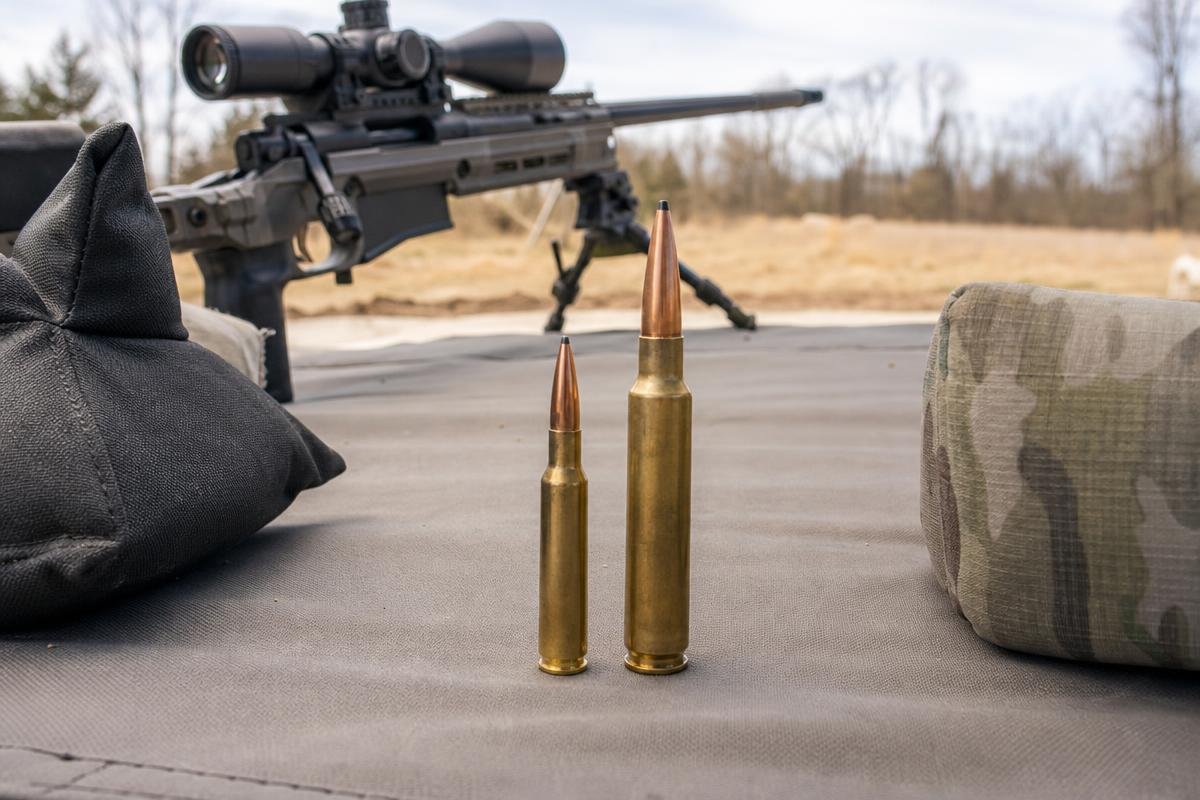
The physical size difference between these two cartridges is not subtle. The .308 Winchester has a case length of 2.015 inches and an overall length of 2.800 inches. The .338 Lapua Magnum measures 2.724 inches in case length and 3.681 inches overall. That is nearly an inch of additional length, and the case capacity gap is even more dramatic: roughly 56 grains of water for the .308 versus approximately 114 grains for the .338 Lapua. The .338 Lapua holds close to double the powder volume. Those dimensions help explain the ballistic differences between these cartridges.
.308 Winchester: Specs and Platform Fit
The .308 Win shares similar dimensions with 7.62x51mm NATO and runs in a short-action receiver. Typical bullet weights run from 147 to 175 grains, with 168- and 175-grain match loads commonly used at longer distances. It is available in bolt-action rifles and compatible AR-10 pattern uppers. Check upper and lower compatibility before ordering.
.338 Lapua Magnum: Specs and Action Requirements
The .338 Lapua Magnum was designed in the 1980s for military long-range sniping. It pushes 250 to 300 grain bullets and requires a magnum-length action to function. That larger receiver footprint means it does not fit a standard AR-10 or DPMS-pattern lower. You need a dedicated platform built around the cartridge from the ground up. That is a meaningful cost and compatibility consideration before you commit to the caliber.
Ballistics Compared: Velocity, Energy, and Bullet Drop at Distance
At 1,000 yards, the .338 Lapua generally retains more energy and drifts less in wind than the .308 Winchester, though the gap depends on the loads and conditions. At shorter distances, the .308 is often more practical. Velocity, energy, and drop help show how each cartridge fits different shooting goals.
Muzzle Velocity and Ballistic Coefficient
The gap between these two cartridges is not just about raw speed. It is about how each bullet holds that speed downrange. A 175-grain Sierra MatchKing in .308 Win leaves the muzzle at roughly 2,650 fps with a G1 BC of 0.505. A 300-grain Berger Hybrid OTM in .338 Lapua runs about 2,750 fps with a G1 BC of 0.818. That higher BC means the .338 sheds velocity far more slowly. The gap between the two compounds with every hundred yards.
Ready to spec a long-range .308 setup? Shop .308 Win complete uppers that drop onto your existing AR-10 lower.
A quick clarification, since it trips up a lot of buyers: the .338 ARC is a separate cartridge from the .338 Lapua and delivers far lower velocity and energy. It is a light, AR-15-friendly .338-caliber option, not a .338 Lapua substitute. If you want to see what the bore diameter does from a semi-auto receiver at moderate range, our 338 ARC complete uppers are worth a look, but do not expect .338 Lapua-class performance from them.
Energy Retention and Effective Range
At the muzzle, a 175-grain .308 at roughly 2,650 fps produces about 2,700 ft-lbs of energy. A 300-grain .338 Lapua at roughly 2,750 fps produces about 5,000 ft-lbs. At 1,000 yards, the .338 Lapua generally retains substantially more energy, but exact figures depend on the load and atmospheric conditions.
For long-range shooting with .308 Winchester, the practical ceiling in precision rifle competition sits around 800 to 1,000 yards. The .338 Lapua extends that ceiling to 1,500 yards and beyond in trained hands. The ballistic advantage becomes decisive somewhere past 700 yards, where the BC difference starts producing real separation in retained energy and time of flight.
Bullet Drop and Wind Drift at 1,000 Yards
At 1,000 yards, both cartridges require substantial elevation correction from a 100-yard zero. Exact drop depends on bullet choice, muzzle velocity, atmospheric conditions, and zero distance. Rather than relying on a fixed inch-of-drop advantage, use a ballistic calculator with your load and conditions to determine the correction.
Wind drift is a clearer distinction at long distances. Higher-BC .338 Lapua bullets generally drift less than typical .308 loads under the same conditions, but the correction still depends on your ammunition, distance, and actual wind.
Recoil: How Each Cartridge Affects Your Follow-Through
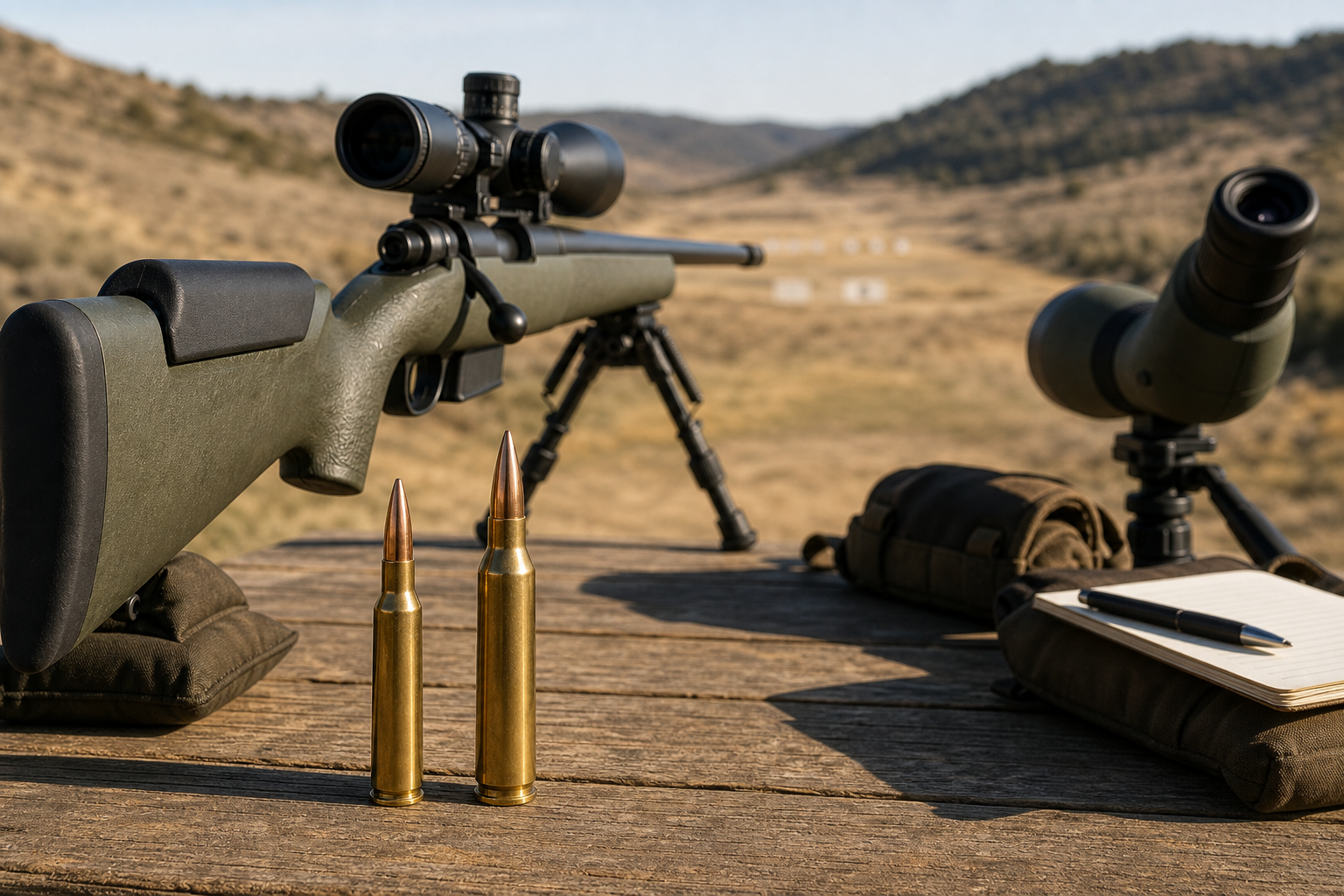
Recoil is not just about comfort. It directly affects how fast you can spot your own impacts, call corrections, and fire a follow-up shot. The recoil gap between these cartridges is worth considering before you commit to a platform.
.308 Winchester Recoil
A .308 Win in a 10-pound rifle produces a modest amount of free recoil energy, typically well under 20 ft-lbs with common match loads. That is manageable for most shooters across extended range sessions. The impulse is sharp but brief, and many shooters can stay on the scope through the shot. That is one reason the .308 shows up regularly in PRS competition. You get your reticle back on target fast, which matters when your spotter is calling corrections in real time.
For a full day at the range, the .308 lets you put more rounds downrange with less recoil fatigue.
.338 Lapua Magnum Recoil and Managing It
A .338 Lapua in a 14-pound rifle generates well over twice the free recoil energy of the .308, depending on the load. Without a quality muzzle brake, extended shooting sessions become fatiguing, and fatigue degrades precision. Most .338 Lapua platforms ship with an integrated brake, and running one without a brake is not recommended for regular use.
A heavier rifle, a recoil pad, and a muzzle brake are standard equipment for .338 Lapua shooters. If you are evaluating stock and recoil pad options for your build, our AR-15 parts and accessories blog covers fit and recoil management in detail. Can you manage .338 Lapua recoil without a brake? Technically yes. Practically, not for long.
Ammo Cost and Availability: The Practical Side of Long-Range Shooting
The cost gap between these two cartridges is real, and it compounds fast. If you shoot regularly, the difference between .308 Win and .338 Lapua pricing will show up in your budget within a single season.
.308 Winchester: Cost and Supply
Factory match-grade .308 Win pricing varies by brand, load, and availability. Bulk 147-grain FMJ boat-tail ammunition is generally less expensive for practice. The .308 Win is widely available from ammunition retailers.
For frequent range sessions, the .308's availability and price make it easier to practice without a steep ammunition budget.
.338 Lapua Magnum: Cost, Scarcity, and Reloading
Factory match-grade .338 Lapua Magnum pricing varies by brand, load, and availability. Sellier and Bellot 300-grain HPBT and Hornady 285-grain ELD Match are common options, but bulk practice ammo is harder to source and still expensive when you find it. The .338 Lapua vs .308 cost-per-round difference can be substantial.
Serious .338 Lapua shooters almost always reload to make regular range time sustainable. Brass is reusable, and component bullets from Berger, Nosler, and Sierra are available in .338 diameter. Reloading is the main way owners keep this cartridge affordable enough to train with week to week.
Have questions about caliber selection or need help choosing the right upper for your build? Call us at (888) 706-0633 and we will point you in the right direction.
Platform Compatibility: What Rifles and Uppers Support Each Caliber
.308 Winchester on Semi-Auto Platforms
The .308 Winchester chambers natively in AR-10 pattern and DPMS-pattern semi-auto rifles. If you already own an AR-10 lower, adding a .308 Win complete upper is a direct path to a capable, magazine-fed platform for longer-range shooting. Check compatibility with your lower before ordering; a new rifle may not be necessary.
For shooters who want a semi-auto setup, this is a practical route. The .308 Win's widely available ammunition and compatible AR-10 uppers make it a flexible choice for range work.
.338 Lapua Magnum: Bolt-Action Territory
The .338 Lapua Magnum does not fit a standard AR-10 or DPMS lower. It is primarily chambered in dedicated magnum-length bolt-action rifles; rare, niche, expensive large-frame semi-auto rifles also exist. That means a completely separate rifle system, not just a new upper. If you want to shoot .338 Lapua, budget for a dedicated rifle rather than an AR-10 upper.
If you want .338-diameter performance in an AR format, the answer is the .338 ARC, and it is important to be clear that it is a lower-power intermediate cartridge, not a .338 Lapua in an AR body. It was developed to bring that bore diameter into a standard AR platform at moderate ranges. We carry 338 ARC complete uppers ready to drop onto a compatible lower. Confirm the cartridge and platform specifications before you decide.
The bottom line: the .308 is a drop-in AR option. The .338 Lapua is not. That distinction drives the buying decision more than any ballistic comparison.
Thinking of Switching from .308 to .338 Lapua? Read This First
Switching calibers is not just a ballistic decision. Moving from .308 to .338 Lapua means a new bolt-action rifle in most cases, a new optic rated for the added recoil, and a completely different ammunition supply chain. The per-round cost jumps sharply. Before you commit, make sure the gains actually match your shooting goals.
What Changes When You Move Up
The .338 Lapua offers better wind resistance and greater retained energy at extended distances, but practical range depends on the load, conditions, and shooter. If you are actively competing at distances beyond 1,000 yards or engaging targets the .308 simply cannot reach reliably, the switch makes sense.
The recoil difference is also worth taking seriously before you buy. The .338 Lapua generates substantially more felt recoil, which affects both follow-up shot speed and long training sessions. Factor in a quality muzzle brake and a heavier platform when budgeting for the switch.
When the .308 Is Still the Right Answer
For targets inside 800 yards, the .308 is the more practical choice for most shooters. It is cheaper to train with, easier to source, and available in complete AR uppers for compatible AR-10 lowers, offering faster follow-up shots than a bolt-action rifle. Quality match-grade .308 loads can also reach 1,000-yard targets in capable hands.
The case for .338 Lapua is strongest at extended distances beyond 1,000 yards, where its wind resistance and retained energy are more useful than at shorter ranges. If you want another AR-10-compatible long-range option, consider a 6.5 Creedmoor upper and check compatibility with your lower.
Which Caliber Makes Sense for Your Shooting Distances?
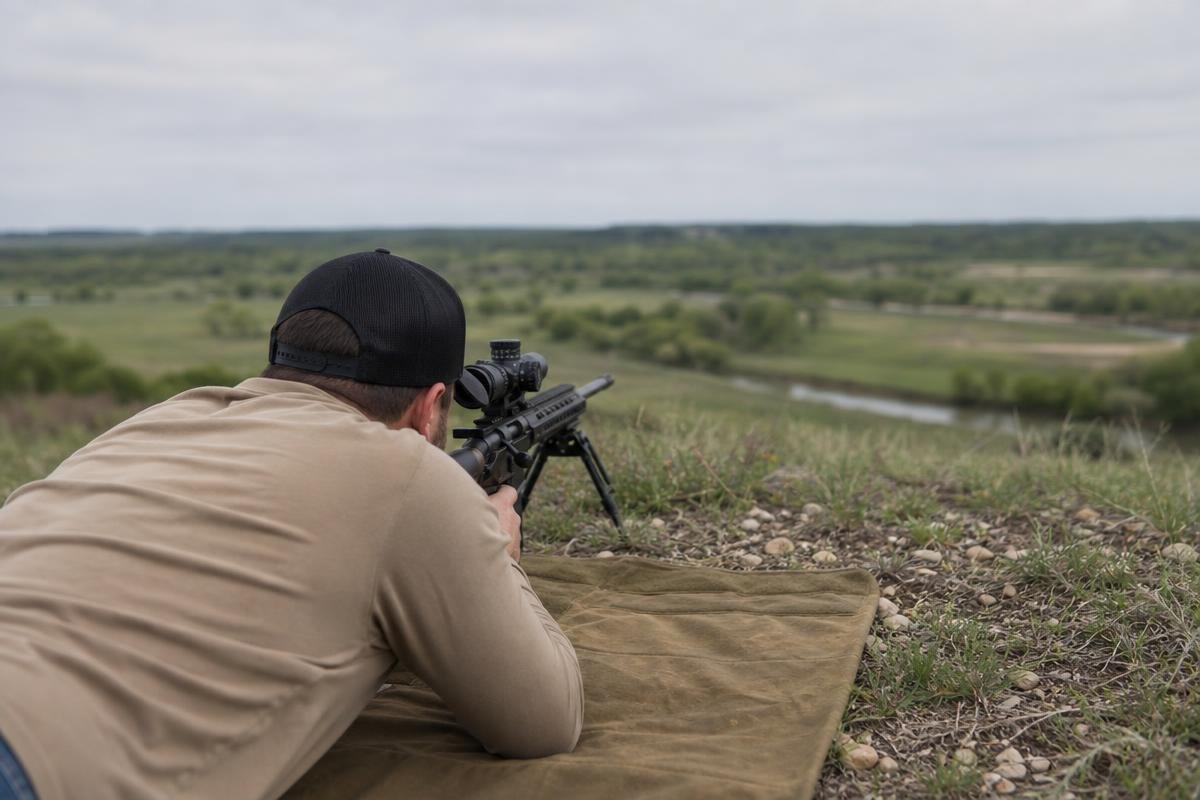
At long distances, wind can be a major variable. Higher-BC .338 Lapua loads generally resist wind drift better than typical .308 loads, but distance, ammunition, and conditions determine how much that advantage matters.
Range Distances and Wind
In a 10 mph full-value crosswind, a higher-BC .338 Lapua load will generally drift less than a typical 175-grain .308 load at 800 yards. The actual gap depends on the ammunition and atmospheric conditions, so use a ballistic calculator for your specific load rather than a fixed wind correction.
If your target work stays under 800 yards, the .308 offers lower ammunition costs and less recoil. If you regularly shoot past 1,000 yards, the .338 Lapua's wind resistance and retained energy may justify a dedicated rifle. We carry complete AR uppers for shooters choosing a compatible AR platform.
Hunting Applications
At shorter hunting distances, a .308 Win with an appropriate hunting load is often a more practical choice than .338 Lapua due to ammunition cost and recoil.
At longer distances, wind reading and shooter skill still matter. The .338 Lapua finds its niche in precision rifle competition past 1,000 yards rather than routine shorter-range shooting.
Frequently Asked Questions
Is the .338 Lapua worth the cost over the .308 for long-range shooting?
If you regularly engage targets past 1,000 yards, the .338 Lapua earns its price through better wind resistance and retained energy at distance. For most shooters working inside 800 yards, .308 vs .338 Lapua ballistics favor the .308 on cost alone. You get comparable precision at a fraction of the per-round price.
Can I shoot .338 Lapua through an AR-10 or DPMS-pattern lower?
No. The .338 Lapua is primarily chambered in magnum-length bolt-action rifles, though rare, niche, expensive large-frame semi-autos exist. It will not fit an AR-10 or DPMS-pattern lower. If you want .338-diameter performance in an AR platform, look at 338 ARC complete uppers, which are built to run on a standard AR-15 lower. Keep in mind the .338 ARC is a much lower-power cartridge and is not a .338 Lapua equivalent.
How far can a .308 Winchester shoot accurately?
In trained hands with match-grade ammo, the .308 is proven to 800 yards and competitive to 1,000 yards under favorable conditions. Past 1,000 yards, wind drift and energy retention become real limiting factors.
How much does .338 Lapua ammo cost compared to .308?
In a 308 vs 338 Lapua cost-per-round comparison, factory ammunition pricing varies by brand, load, and availability. Many .338 Lapua shooters reload to manage the higher cost.
What bullet weight is best for long-range .308 shooting?
The 168-grain and 175-grain hollow point boat tail bullets are the standard for precision .308 work. The 175-grain Sierra MatchKing is a benchmark load in competition. Heavier 185 to 210 grain projectiles are used for extended-range bolt-action applications.
Is the .308 Win a good hunting round for deer and hogs?
Yes. The .308 Win is commonly used for deer and hogs with appropriate hunting ammunition. Shooting distances and conditions vary, so stay within your load's and your own proven limits.
At AR15Parts.com, we build complete uppers to order, assemble them in-house, and headspace and function-check them before shipping from 4000 Texoma Pkwy, Denison, TX 75020. Call us at (888) 706-0633 or browse our complete uppers. Check lower compatibility before you choose.
Ready to Get Started with AR15Parts.com?
Call (888) 706-0633 or contact our team for parts selection and platform compatibility advice. We ship nationwide from our Denison, TX facility.