
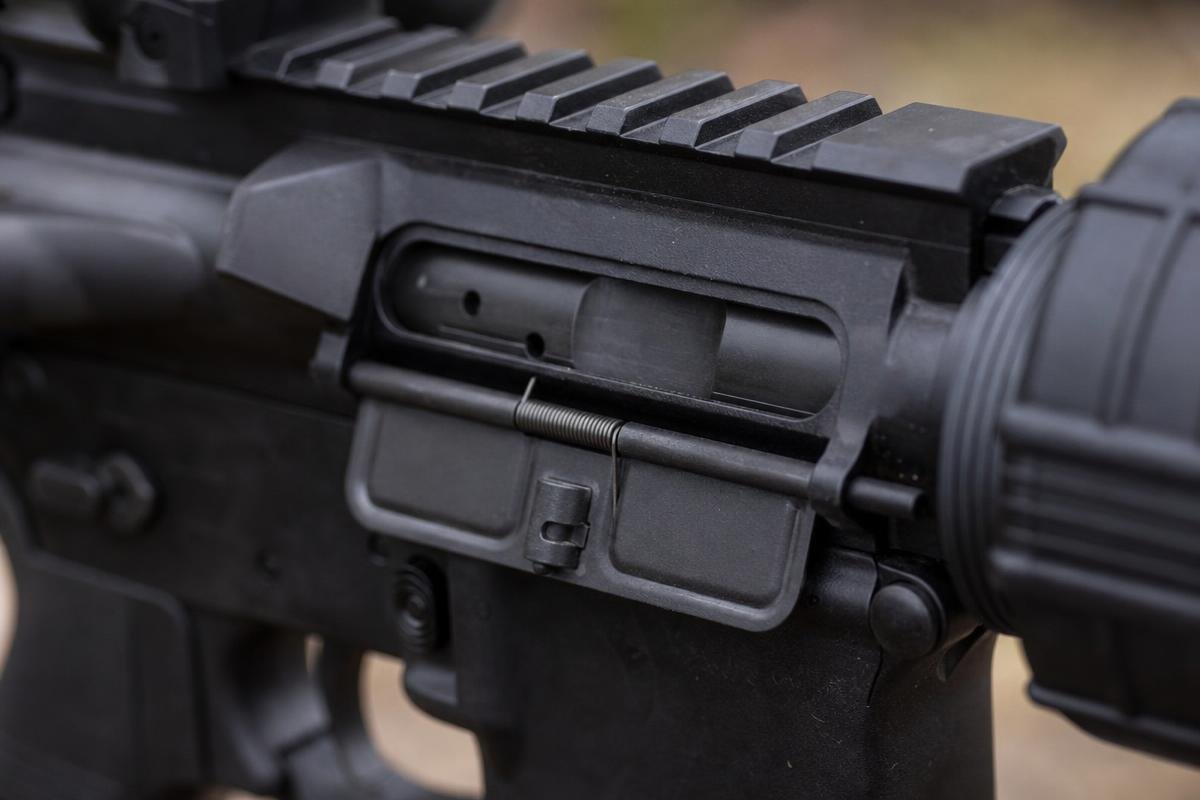
An AR-15 dust cover is not required for basic rifle function, but it is a useful part of a general-purpose upper because it closes the ejection port during storage, transport, and carry. AR15Parts.com supplies AR-15 parts and complete assemblies from 4000 Texoma Parkway, Denison, TX 75020, and can help customers compare upper-receiver configurations and the small parts needed for a compatible replacement.
Key Takeaways
- An AR-15 can fire without a dust cover in many normal range conditions.
- An AR-15 dust cover closes the ejection port while the rifle is not in use and normally opens when the bolt carrier cycles.
- The forward assist and brass deflector perform separate jobs from the ejection port cover.
- Most standard AR-15 upper receivers use a cover, hinge rod, spring, and retaining clip.
When You Can Run an AR-15 Without a Dust Cover
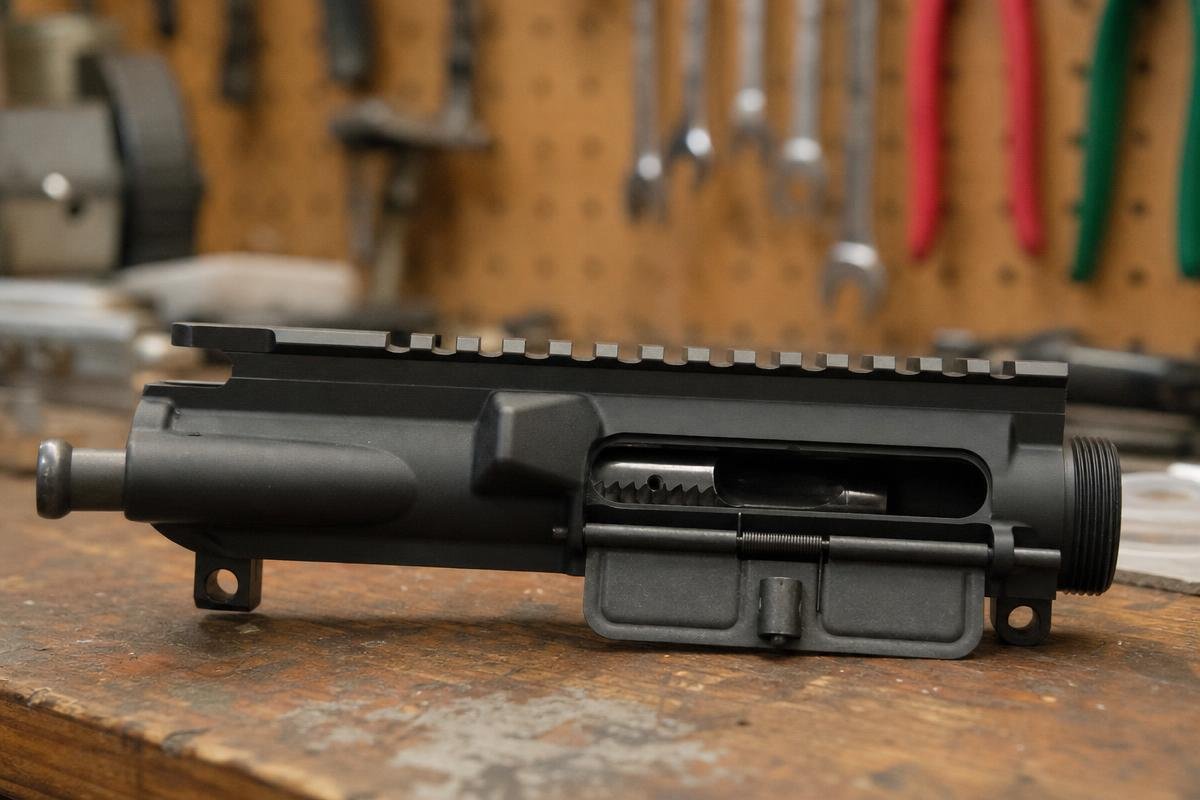
An AR-15 can complete its basic firing cycle without a dust cover. With the port open, the bolt carrier and chamber area are more exposed to what enters through that opening. At a clean bench or indoor range, that may not create an immediate problem, but it removes a simple layer of protection when the rifle is between strings of fire.
Basic Function Versus Practical Protection
A cover is not needed for the rifle to fire, extract, and eject. Its value is before firing, when the upper is in a case, vehicle, safe, or outdoor environment. Manually close it with the bolt forward, and the door remains latched until it is opened by hand or pushed open by the bolt carrier during cycling.
That does not make the receiver sealed or guarantee reliability. It helps reduce the chance that loose grit, vegetation, moisture, or other debris reaches the carrier and chamber area through the open side of the upper.
After exposure to dust, rain, sand, or loose vegetation, inspect the bolt carrier group, chamber area, and magazine well. Follow the same basic checks covered in our AR-15 Cleaning Kit Guide before storing or returning the rifle to use.
Keep the Cover If You Regularly:
The cover is most useful when a rifle spends time outside a clean, controlled shooting environment. Keep an AR-15 dust cover installed if you regularly:
- Carry the rifle in the field.
- Transport it in a vehicle or case.
- Shoot outdoors on dirt, gravel, or grass.
- Store it for long periods between range sessions.
- Use it in dusty or wet conditions.
If your upper is missing the assembly, check fitment before ordering a replacement. Our complete AR-15 uppers provide a useful reference for standard upper receiver configurations and ejection-port hardware.
Dust Cover Vs. Forward Assist Vs. Brass Deflector
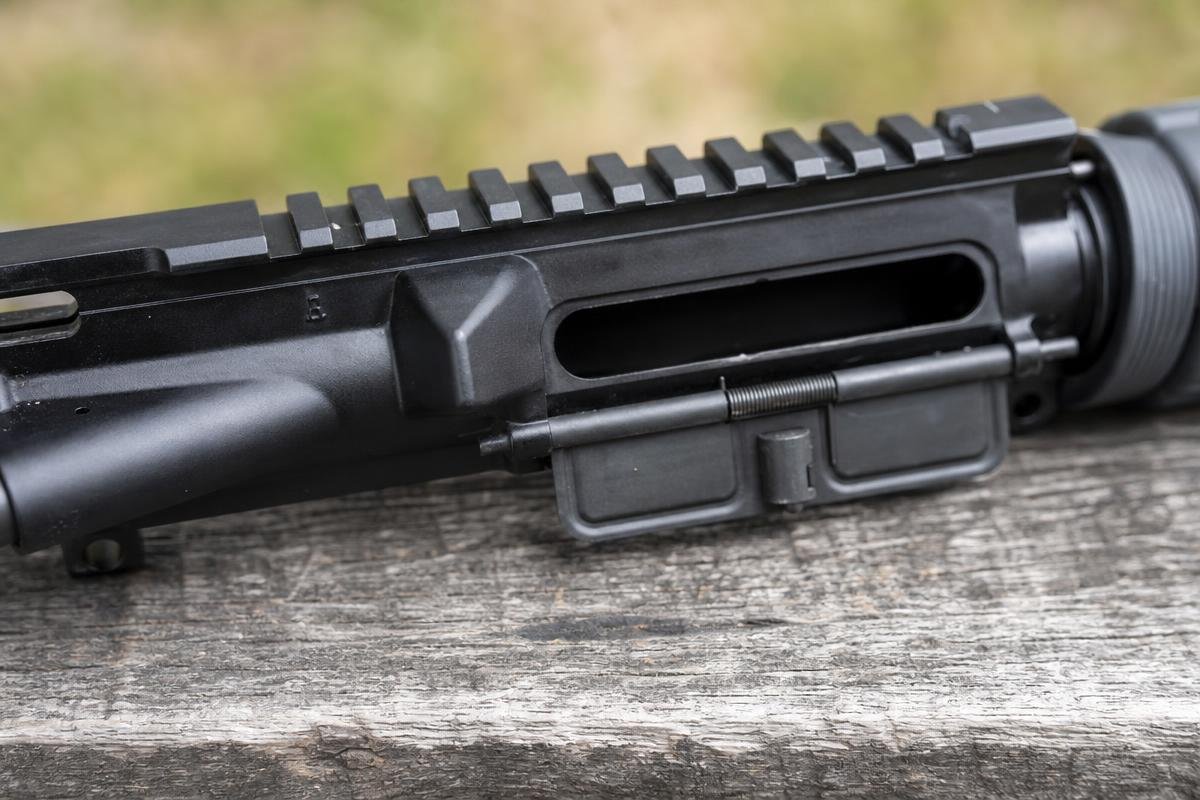
An AR-15 dust cover, forward assist, and brass deflector sit close together on the upper receiver, but each has a separate job. The cover closes the port when the rifle is not in use, the brass deflector redirects fired cases, and the forward assist engages carrier serrations on compatible carriers.
Upper Receiver Parts With Different Jobs
The AR-15 ejection port cover is manually closed over the port when the rifle is not in use. As the action cycles, the bolt carrier normally contacts the cover and forces it open before a fired case ejects. The door does not push the bolt carrier into battery.
The forward assist is the round button at the rear right side of many upper receivers. Pressing it can drive a compatible carrier forward through the serrations on the bolt carrier. If the bolt does not fully close, inspect the ammunition, chamber, magazine, and rifle condition rather than repeatedly forcing a round into battery.
An AR-15 brass deflector is the raised section behind the ejection port. It redirects spent cases away from the shooter and can be especially helpful if you fire from the left shoulder. It does not close the port or replace a cover.
Receiver features vary by design. When comparing uppers, use the product photos and specifications to confirm whether a particular model includes a forward assist, brass deflector, and dust-cover provision.
Quick Comparison of Ejection Port Components
| Component | Location | Primary Function | What It Does Not Do |
|---|---|---|---|
| Dust cover | Over the ejection port | Covers the open port while the rifle is not in use | Force the bolt into battery |
| Forward assist | Rear right side of upper | Engages a compatible carrier to move it forward | Protect the port from debris |
| Brass deflector | Behind the ejection port | Redirects fired cartridge cases | Close or seal the ejection port |
No single part replaces the other two. If you are comparing receiver configurations, check the photos and specifications on our complete AR-15 uppers before ordering.
Choosing a Compatible AR-15 Dust Cover Replacement

An AR-15 dust cover replacement must match your upper receiver before appearance matters. Inspect the ejection-port side of the receiver for hinge-rod holes, the front latch area, and clearance around the forward assist or other receiver features before selecting an assembly.
Parts Included in a Typical Dust Cover Assembly
A typical AR-15 ejection port cover assembly includes the cover door, hinge rod, spring, and retaining clip. The rod supports the door, the clip keeps the rod from walking out, and the spring helps move the cover open after the latch releases.
A missing rod, spring, or retaining clip can stop the cover from installing correctly. It can also leave the door loose, prevent it from staying shut, or keep it from opening normally during cycling.
Confirm Your Upper Receiver Configuration First
Not every AR-15 upper receiver accepts a dust cover. A conventional forged upper generally has machined provisions for the hinge rod and door, while some lightweight, slick-side, billet, and purpose-built uppers omit those features to reduce weight or follow a proprietary receiver design.
Product photos are especially useful here. Look for the hinge-rod channel along the top of the port, the front latch point, and enough clearance for the cover to swing open. Some designs also omit the forward assist, the dust cover provision, or both. If you prefer a complete setup over selecting individual parts, review our AR-15 Complete Rifles for turnkey firearm configurations.
Fit and Function Before Cosmetic Choices
Receiver fit and normal operation should come before engraved logos, caliber markings, or decorative finishes. Standard stamped steel covers are common on conventional uppers, while some aftermarket or billet-style covers use different shapes, finishes, or latch details. An engraved cover that does not fit your receiver is still the wrong part.
Confirm the hinge rod length, spring orientation, and receiver cut before choosing a style. If you are shopping a complete upper instead, our 5.56 NATO Complete AR-15 Uppers let you compare complete upper configurations without assuming every model uses the same ejection port cover setup.
How to Replace an AR-15 Dust Cover Without Damaging the Upper
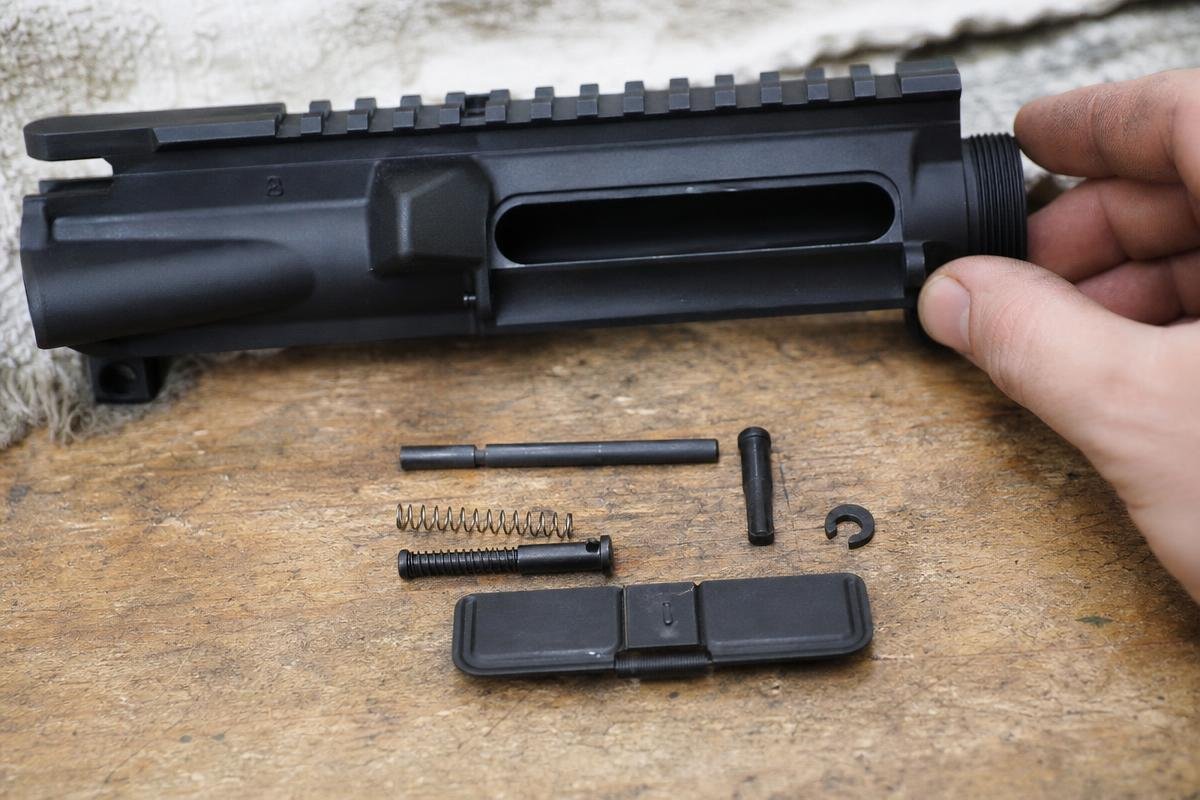
An AR-15 dust cover replacement uses a hinge rod, spring, and retaining clip. These small parts are easy to lose, and incorrect spring tension can keep the cover from closing or opening correctly. This is a general installation overview, not a substitute for your manufacturer’s manual or a qualified gunsmith’s assessment.
Make the Rifle Safe Before Starting
Unload the firearm first. Remove the magazine, visually and physically check the chamber, then separate the upper from the lower receiver. Keep live ammunition away from the work area. Place the upper on a clean bench with enough room to control the hinge rod and spring. A small parts tray helps prevent the clip and spring from rolling away.
Remove the Old Cover and Control the Spring
Carefully remove the retaining clip from the hinge rod. Hold the cover and spring as you withdraw the rod, since the spring can release tension and shift suddenly.
- Withdraw the rod while controlling the spring.
- Remove the old cover and spring from the ejection port.
- Inspect the rod, spring, and receiver channel for bends, burrs, or debris.
Install and Test the Replacement Assembly
Orient the new cover so it closes over the ejection port and latches at the front. Install the spring and hinge rod according to the component manufacturer’s instructions. Verify that the cover latches closed and opens freely when released. Stop and recheck the assembly if it binds, will not latch, or does not open correctly.
Reinstall the retaining clip after the rod is fully seated. Hand cycle the action and confirm the cover latches closed, then opens freely as the carrier moves. Review our AR-15 upper assemblies if you are checking fit across other upper components.
Stop If the Cover Binds or Will Not Latch
Stop work if the cover binds against the carrier, will not latch, or opens with unusual resistance. Do not bend the cover or force the rod into place. The cover may be incompatible, the spring may be indexed incorrectly, or the upper may need inspection by a qualified gunsmith.
Need help identifying a compatible dust cover assembly? Call us at (888) 706-0633.
Why Denison Shooters Should Check the Ejection Port Before Storage and Travel
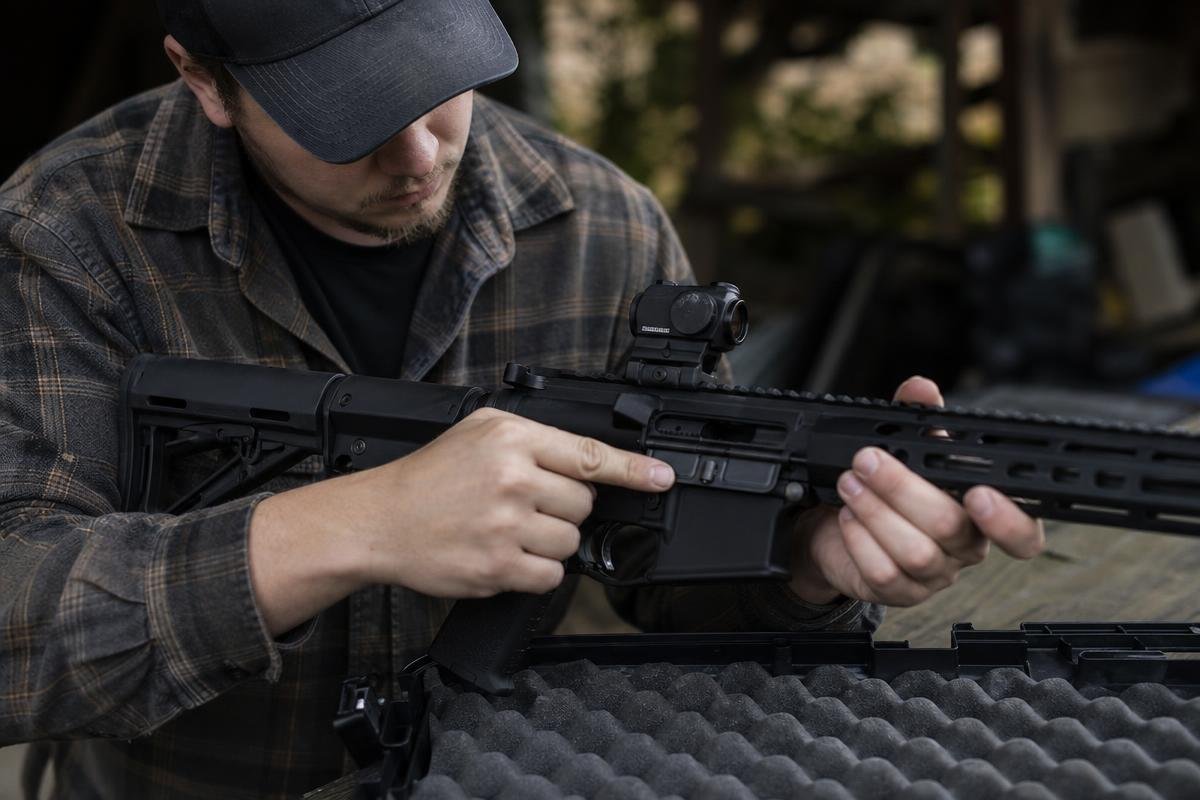
North Texas and Texoma conditions can mean windblown dust, gravel at outdoor ranges, summer humidity, and sudden wet weather. Rifles and uppers moved between home, the range, and other lawful destinations can collect visible debris around the ejection port. Before storage, inspect the cover, bolt carrier area, and receiver opening for grit, loose brass, or other material. AR15Parts.com is located at 4000 Texoma Parkway, Denison, TX 75020.
A Simple Pre-Storage Ejection Port Check
Yes, close the cover before storing an AR-15 after confirming the firearm is unloaded and the bolt is forward. Inspect the port for visible debris, then wipe accessible receiver surfaces with a clean cloth as appropriate. Avoid pushing loose material farther into the chamber or receiver.
- Confirm the firearm is unloaded.
- Check the ejection port and bolt carrier area for debris.
- Remove loose material without forcing anything into the receiver.
- Close the AR-15 dust cover with the bolt forward.
- Store the rifle according to applicable law and manufacturer guidance.
Questions About Product Fit
An AR-15 ejection port cover must match your upper receiver pattern and hinge-pin arrangement. Check whether your upper uses a standard forged receiver, a billet receiver, or a proprietary design before ordering a replacement.
If you need help with product fit, contact AR15Parts.com or call (888) 706-0633. We can help you identify the parts information needed for your upper.
Frequently Asked Questions
Does an AR-15 Dust Cover Open Automatically?
Yes. An AR-15 ejection port cover normally opens as the action cycles, before the fired case ejects. The bolt carrier contacts the cover and releases it, so you do not need to open it by hand before firing.
Can an AR-15 Work Without a Dust Cover?
Yes, an AR-15 can function without a dust cover. The open ejection port loses a layer of protection from loose dirt, sand, unburned powder, and other contaminants while the rifle is carried or stored.
Can Debris Enter Through the Ejection Port?
Yes. Debris entering through the ejection port can reach the area around the bolt carrier and chamber. A small amount may not stop the rifle, but buildup can interfere with chambering, extraction, or bolt movement.
Will Every Upper Receiver Take a Dust Cover?
No. Conventional AR-15 upper receivers generally use a dust cover assembly with a hinge pin, spring, and retaining clip. Some lightweight or specialty receiver designs omit that provision, so confirm receiver compatibility before ordering an AR-15 dust cover replacement.
Should the Cover Stay Closed When the Rifle Is Not in Use?
Yes, closing the cover is useful when the rifle is not actively being fired and the bolt is forward. It does not need to remain closed at all times, but it helps keep the ejection port protected during transport and storage. If you are shopping for a complete setup, see our AR-15 complete uppers and AR-15 complete rifles at AR15Parts.com.
What Parts Are Included in a Typical AR-15 Dust Cover Assembly?
A typical AR-15 dust cover assembly includes the cover, hinge pin or rod, spring, and retaining clip. Confirm that the parts and dimensions match your upper receiver before installation.
Do You Really Need an AR-15 Dust Cover?
No, an AR-15 can generally operate without a dust cover, but the cover helps keep debris out of the ejection port during storage, transport, and field carry. For most conventional uppers, it is a simple, lightweight component worth keeping installed when the receiver is designed to accept it.
AR15Parts.com is a Denison, Texas supplier of firearms, parts, and accessories. We distinguish basic firing function from practical receiver protection, so you can compare your upper's configuration and select parts that fit correctly.
The Practical Answer
You do not need this part for the rifle to cycle at a controlled range, but it is sensible on a general-purpose rifle that may sit in a case, vehicle, safe, or outdoor environment. Confirm that your upper has the hinge and latch provisions before ordering a replacement.
The spring-loaded cover opens as the bolt carrier moves rearward during firing. It does not replace the forward assist or brass deflector, and it does not guarantee reliability. Its job is to keep the ejection port covered until the rifle is fired or the cover is opened by hand.
Key Dust Cover Considerations
Key considerations include opening behavior, receiver compatibility, hinge-pin and spring installation, and the role of nearby upper receiver parts.
Need help matching an ejection port cover to your upper receiver? Contact AR15Parts.com with your receiver configuration, or shop complete AR-15 uppers and AR-15 complete rifles for complete setup options. Call (888) 706-0633.
Ready to Get Started with AR15Parts.com?
Call (888) 706-0633 to speak with our team directly. We're ready to answer your questions, walk you through your options, and help you find the right solution for your needs. Whether you're just starting to plan or ready to move forward, we'll make the process simple and stress-free. Reach out today and let's talk about how we can help.