
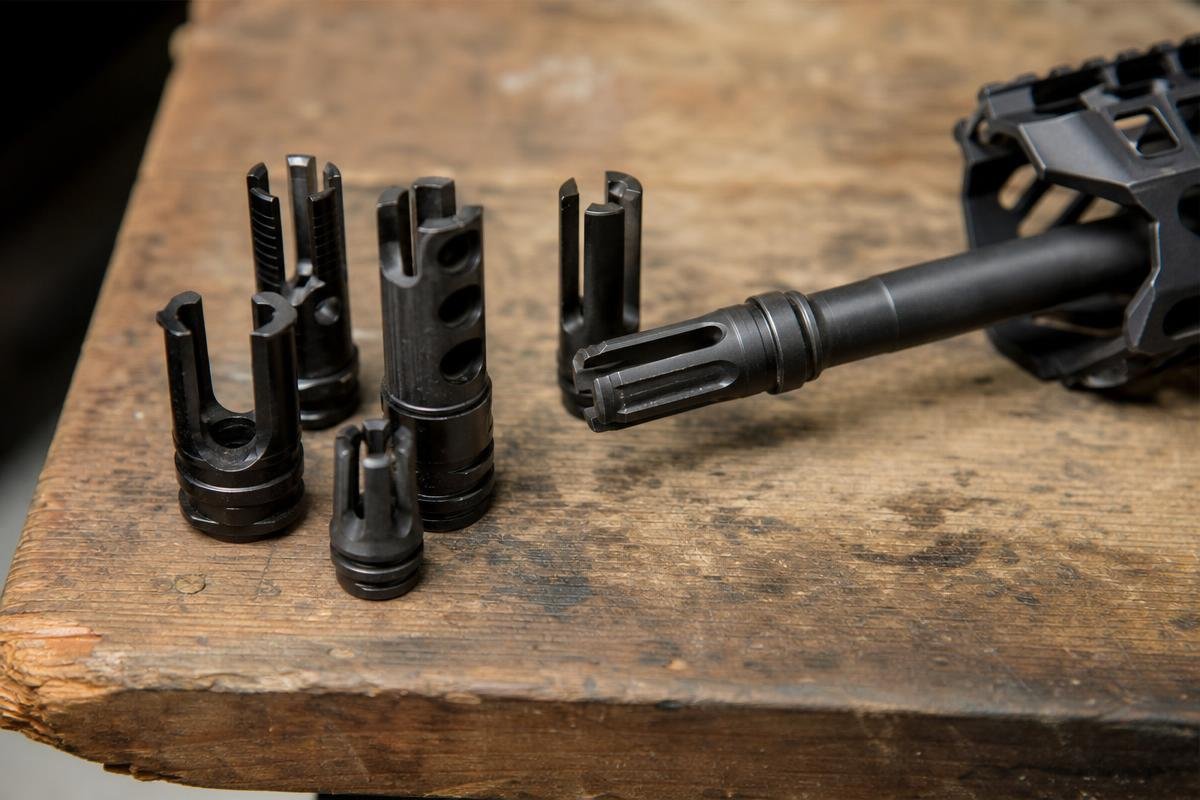
AR15Parts.com helps you compare the muzzle device that best fits your rifle, ammunition, barrel length, and shooting priorities. When choosing a muzzle device, consider whether your priority is reducing flash, recoil, muzzle rise, or side blast. No one design is best for every AR build.
Need help selecting the right muzzle device for your build?
Key Takeaways
- Flash hiders typically reduce visible muzzle flash, particularly when ambient light is low.
- Muzzle brakes redirect gas to reduce felt recoil, but usually increase side blast and perceived noise.
- Compensators vent gas upward to help manage muzzle rise during faster follow-up shots.
- A linear compensator can make blast less disruptive beside the rifle, especially on shorter barrels.
Port geometry determines whether a muzzle device prioritizes flash reduction, recoil control, muzzle-rise control, or forward-directed blast.
What Is the Difference Between a Flash Hider, Muzzle Brake, Compensator, and Linear Comp?
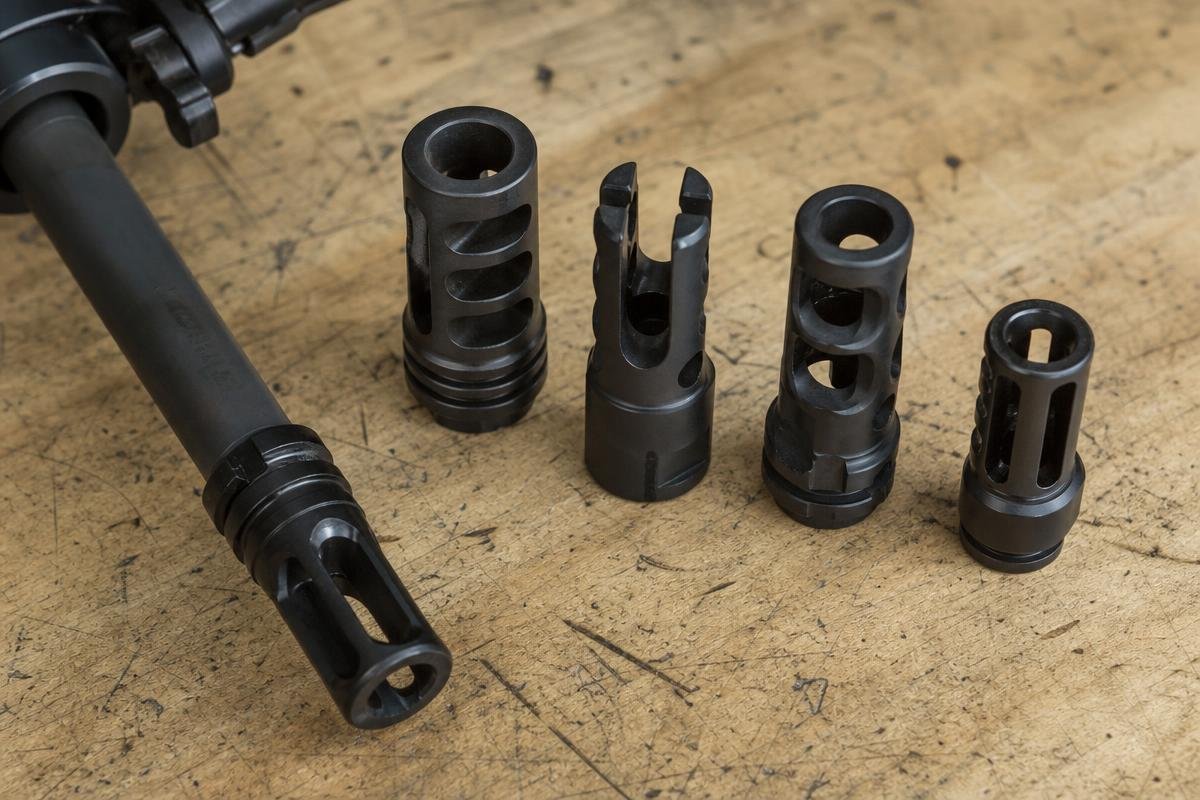
An AR-15 muzzle device changes how propellant gas leaves the barrel. That gas movement affects the recoil impulse, muzzle movement, visible flash, and concussion experienced by the shooter and people near the firing position.
Look beyond the product name, because many hybrid designs combine ports, baffles, chambers, or prongs.
The short answer is simple. Choose a flash hider when visible flash is your main concern, a muzzle brake when recoil reduction matters most, a compensator when you want to limit upward movement, and a linear compensator when directing blast forward is a priority. Hybrid devices can combine features, but usually involve trade-offs.
Product labels overlap, so inspect the actual design. Side baffles generally favor recoil reduction, top ports favor muzzle-rise control, and a forward chamber changes where concussion is felt. Always verify bore diameter, barrel thread pitch, cartridge, and manufacturer instructions before installation.
Browse our AR-15 muzzle devices or reach AR15Parts.com through our contact page or (888) 706-0633 with product-fit questions. The business address is 4000 Texoma Pkwy, Denison, TX 75020.
How Each Muzzle Device Changes Gas Direction
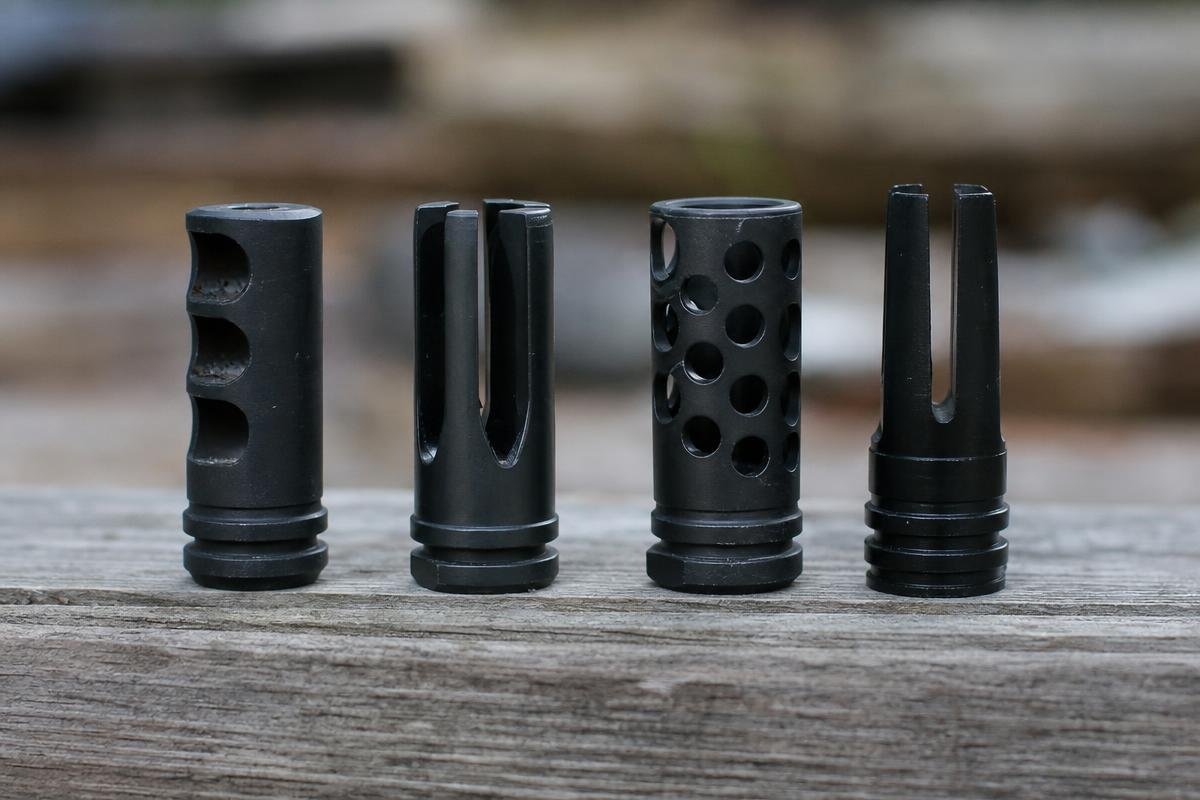
An AR-15 muzzle device works by managing the high-pressure gas that exits behind the bullet. Its port placement, baffle angle, and chamber geometry determine whether it mainly disrupts flash, pushes against recoil, presses the muzzle downward, or directs blast forward.
Side ports, top ports, open tines, and forward chambers produce different shooting characteristics.
Flash Hiders Disrupt the Visible Gas Plume
A flash hider uses slots, prongs, or tines to break up and cool the gas plume at the muzzle. It typically reduces visible flash more effectively than a brake or compensator, particularly with shorter barrels and low-light shooting. Most flash hiders provide little recoil reduction compared with a dedicated brake, although results vary by design.
Open-tine designs can be effective at disrupting flash, but some may produce an audible ringing tone after firing. Closed-tine or closed-bottom styles can be less prone to snagging and may be preferred for certain general-purpose builds. Neither style should be assumed compatible with a suppressor mount unless the manufacturer specifically states that it is.
Muzzle Brakes Push Gas Sideways and Rearward
A muzzle brake uses side ports and internal baffles to push gas laterally, and some designs angle ports slightly rearward. The resulting forward reaction can noticeably reduce felt recoil, which is useful on larger-bore AR platforms or rifles fired from supported positions.
The trade-off is concussion. A brake can feel substantially sharper to the shooter and to people in adjacent lanes, particularly under a roofed firing line where blast reflects from nearby surfaces. Port size, baffle angle, barrel length, and ammunition all influence the result more than the word “brake” stamped on the device.
Compensators Counter Upward Muzzle Movement
A compensator commonly places ports on the top of the device, where escaping gas pushes the muzzle downward. This can help keep the sight picture flatter during rapid strings. In a muzzle brake vs compensator comparison, a brake generally emphasizes rearward recoil reduction while a compensator generally emphasizes vertical control, though many devices do both to some degree.
Top ports must be timed correctly. If the device rotates out of position, its gas effect changes, and a compensator can lose much of the benefit it was selected for.
Linear Comps Send Blast Forward
A linear compensator uses a forward-facing chamber to direct much of the blast and concussion away from the sides of the muzzle. Depending on its geometry, it may modestly change perceived recoil or muzzle behavior, but it generally does not provide the recoil reduction of an aggressive side-port brake.
This can be a practical option for short-barreled configurations, where higher-pressure gas exits closer to the shooter. It may be more comfortable for group shooting or covered firing lines, while still requiring the correct thread pattern and bore clearance for the barrel.
What Muzzle Device Should You Choose for Your Shooting Use?
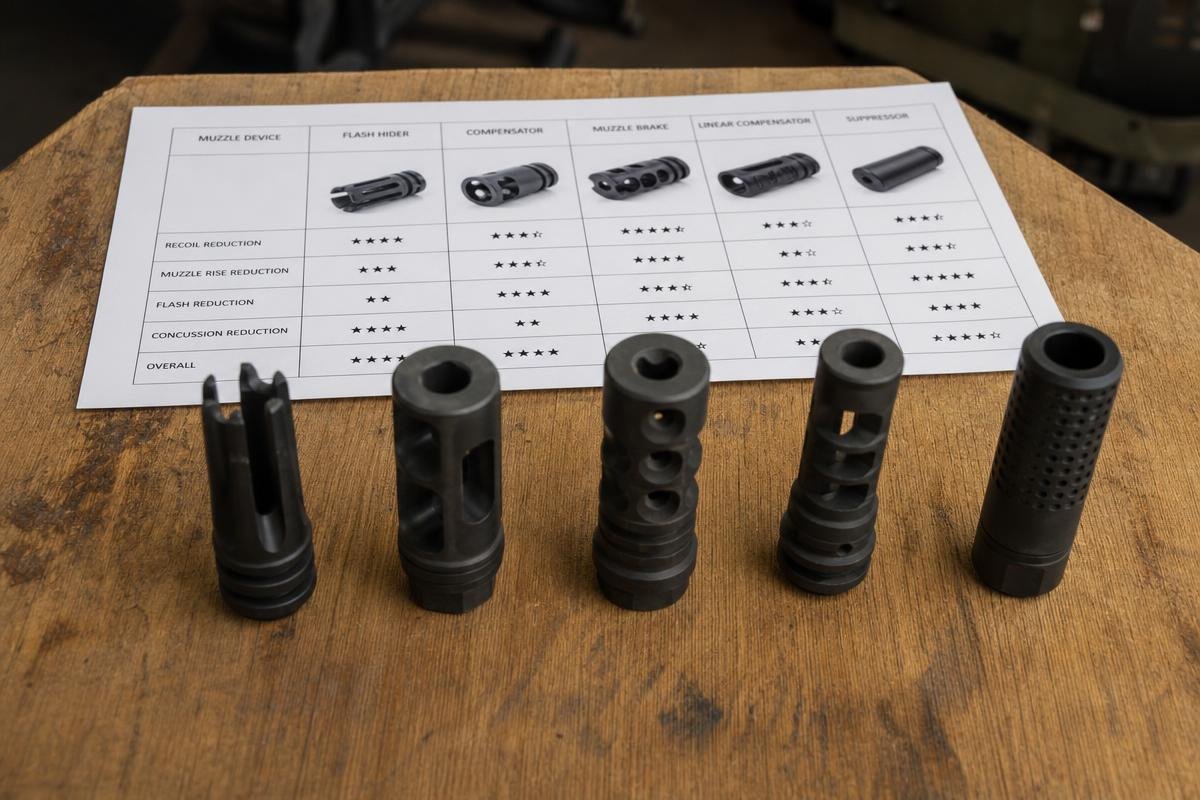
A flash hider is generally best for visible flash, a brake is generally best for recoil reduction, a compensator is generally best for controlling muzzle rise, and a linear compensator is generally best for forward-directed blast. Choose based on how and where you shoot, rather than selecting only by appearance.
Each device type manages gas differently, so the strongest benefit comes with a corresponding compromise.
Muzzle Device Comparison Table
| Device type | Primary benefit | Gas direction | Strongest use case | Main trade-off | Common build fit |
|---|---|---|---|---|---|
| Flash hider | Reduces visible flash | Disrupts gas at the muzzle | Low-light shooting | Usually limited recoil reduction | 5.56 NATO carbines |
| Muzzle brake | Reduces felt recoil | Vented to sides and sometimes rearward | Higher-recoil cartridges | More side blast and noise | 350 Legend builds |
| Compensator | Reduces muzzle rise | Vented upward | Rapid follow-up shots | Limited flash control | 5.56 competition rifles |
| Linear compensator | Directs blast forward | Forward of the shooter | Short-barreled uppers | Usually modest recoil control | Compact AR pistols |
| Hybrid muzzle device | Balances two functions | Depends on port layout | Mixed shooting use | Usually compromises each role | General-purpose rifles |
For low-light use, begin with a flash hider. For the brake versus compensator decision, choose a brake when rearward recoil is the main issue and a compensator when maintaining a flatter reticle path during fast strings matters more.
Use This Checklist to Narrow Your Choice
- Choose a flash hider if visible muzzle flash matters most.
- Choose a brake for a recoil-sensitive build or a larger-bore cartridge.
- Choose a compensator for quick follow-up shots with a 5.56 rifle.
- Choose a linear compensator if forward-directed blast matters to you and nearby shooters.
- Choose a hybrid device if your rifle must cover daylight drills, occasional low-light use, and general range shooting.
Before ordering, confirm the barrel threads, device bore, port layout, ammunition, and any suppressor-mount requirements. Compare port geometry, thread pitch, and bore clearance across our AR-15 muzzle devices before choosing a replacement device.
Compare device fit before checkout or ask about barrel, caliber, and thread compatibility.
Match the Muzzle Device to Your Rifle, Cartridge, and Shooting Use
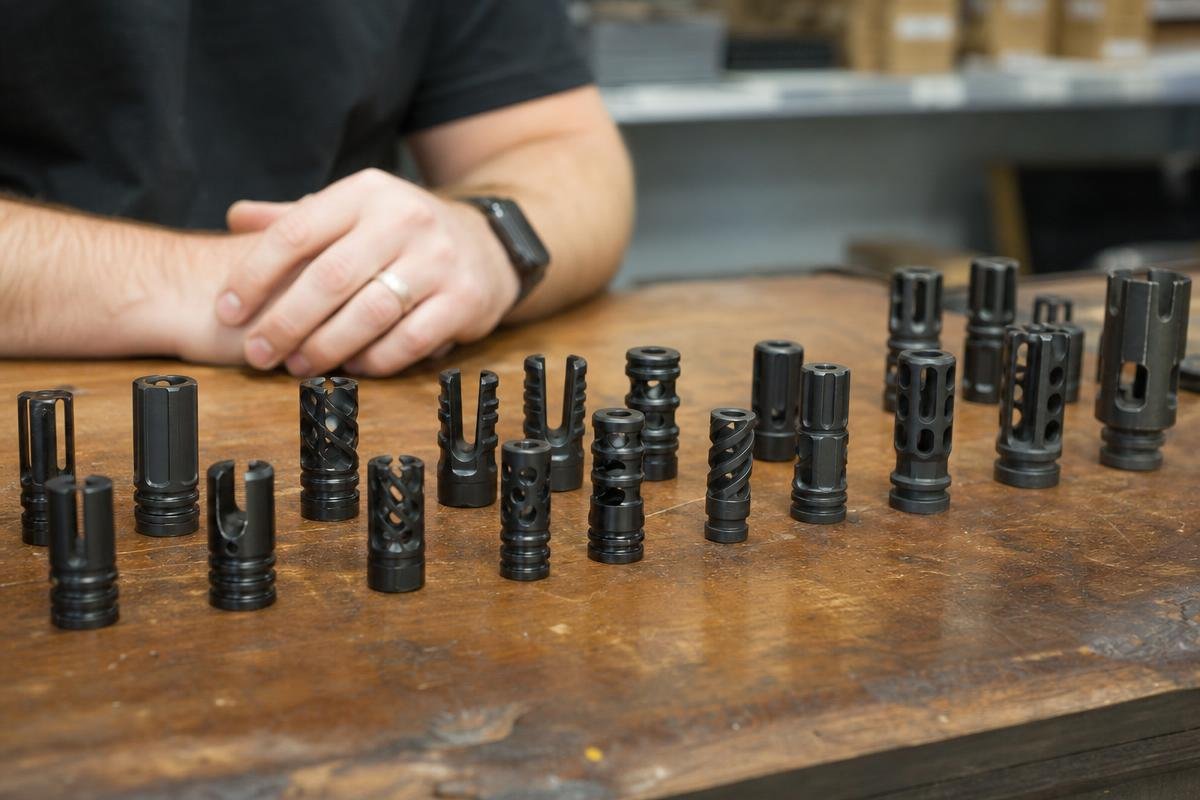
Your cartridge, barrel length, ammunition, and shooting environment should drive your muzzle-device choice. Shorter barrels generally produce more pronounced blast at the muzzle, while larger-bore cartridges can make recoil-reduction features more noticeable.
Barrel length and cartridge affect muzzle pressure, visible flash, recoil, and perceived concussion.
5.56 and .223 Wylde Builds
Most 5.56 and .223 Wylde rifles have manageable recoil, so the decision often comes down to flash reduction, blast management, or faster control during rapid strings. A flash hider is a sensible option when low-light flash is a priority, while a compensator can help keep the rifle flatter during fast follow-up shots.
For a bench-supported rifle, the gain from an aggressive brake may be less important than its added concussion. Many .223 and 5.56 barrels use 1/2x28 muzzle threads, but confirm the barrel specification rather than assuming every barrel follows that pattern.
300 Blackout Builds
300 Blackout selection starts with the ammunition you plan to shoot. Supersonic and subsonic loads differ in recoil impulse and muzzle pressure, while barrel length affects how much gas reaches the device before the bullet exits.
Verify the device bore, thread pitch, and manufacturer guidance for your barrel and ammunition. Do not assume every muzzle device is compatible with a suppressor or suppressor mounting system. Our AR-15 muzzle devices include options with .30-caliber bore clearance and 5/8x24 thread compatibility for 300 Blackout builds.
Larger Bore AR Platforms
Larger-bore cartridges can make recoil-focused brakes more useful, especially during repeated shots. A 350 Legend build, for example, may benefit from a brake that reduces rearward movement and helps the shooter stay on target.
Bore clearance is not optional. The device opening must safely clear the projectile diameter, so a 5.56 device does not belong on a .350 caliber barrel. Larger AR-pattern barrels may also use 5/8x24 threads or another thread pattern, so verify both the listing and barrel specifications before installation.
Short Barrels and Side Blast
Short barrels release higher-pressure gas closer to the shooter, which can make side-port brakes feel sharper. The difference is often more noticeable under a covered firing line or when shooting beside other people, because concussion reflects back from walls, benches, and overhead structures.
A linear compensator can be a practical choice when forward-directed blast matters more than maximum recoil reduction. Before configuring a rifle, confirm applicable federal, state, and local requirements, as well as current manufacturer specifications for the barrel and muzzle device.
Hybrid Muzzle Devices Combine Functions with Trade-Offs
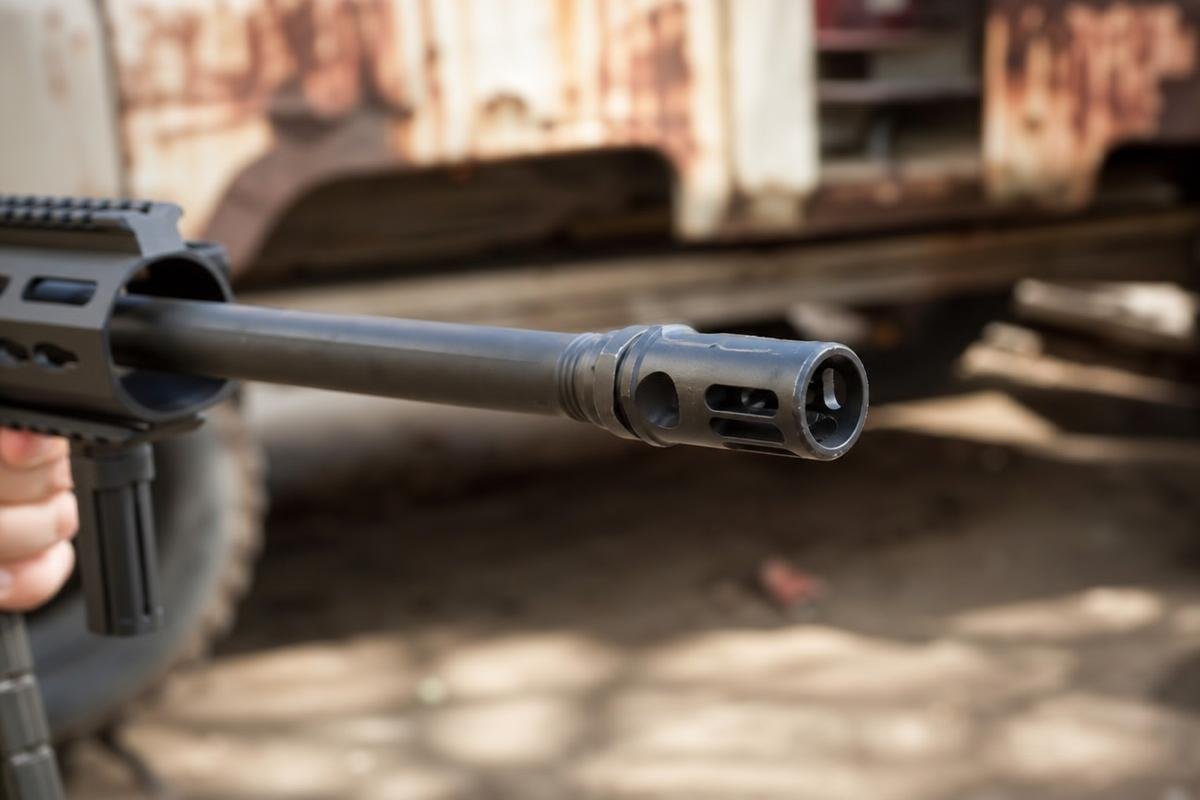
A hybrid muzzle device combines features from brakes, compensators, and flash hiders in one unit. It can reduce recoil and muzzle rise at the same time, but it rarely equals a dedicated brake or flash hider at its strongest single job.
Hybrid devices divide gas-control duties among side ports, top ports, and front-end geometry.
What Makes a Muzzle Device a Hybrid
Most hybrids use side baffles to push gas outward for recoil control, plus top ports to counter muzzle rise. Some also use prongs or tines at the front to help break up visible muzzle flash.
This makes sense for a general-purpose rifle that sees several shooting conditions. Compare the device against your barrel profile, gas system, handguard clearance, cartridge, and intended role before buying.
Port Geometry Changes the Result
Port count, port size, and port angle determine where gas goes. Large side ports can reduce recoil more aggressively, while smaller top ports can help keep the rifle flatter during fast strings.
The brake versus compensator question often comes down to port direction. A hybrid divides that job, so its gas management is shared between recoil control and muzzle-rise control. Prong geometry matters too, because longer open tines may disrupt visible flash more effectively than a solid front face, depending on the design.
Prone Shooting and Dust Signature
An open-bottom brake can drive gas into the ground when you shoot prone. That can throw dust, sand, and loose debris into your sight picture.
A closed-bottom hybrid directs less gas downward and may reduce that dust signature. It can still send blast to the sides, so account for nearby shooters and the role of your AR-15 muzzle device. For build guidance, call our team at (888) 706-0633.
Need help matching a hybrid device to your barrel and shooting role? Call (888) 706-0633.
Installation Checks That Prevent Fit and Function Problems
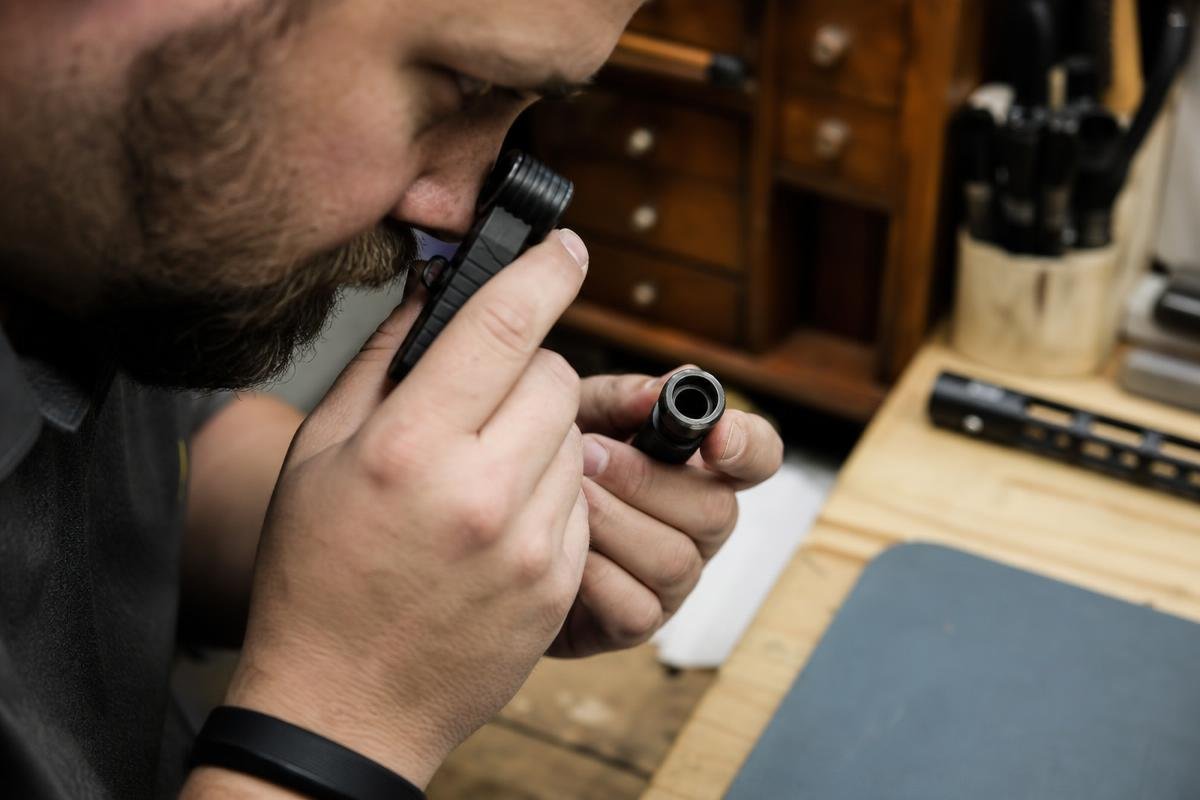
An AR-15 muzzle device must match your barrel threads, caliber, and mounting method before it is fired. The correct-looking device is not necessarily the correct device for your barrel, cartridge, or suppressor-mount setup.
Thread fit, bore clearance, timing, and alignment must be checked before firing.
Verify Threads and Bore Clearance
Many .223 and 5.56 AR-pattern barrels use 1/2x28 threads, while many .30-caliber and larger-bore barrels use 5/8x24 or another pattern. Thread pitch varies by barrel and cartridge, so confirm the exact barrel specification and device listing before ordering.
Bore clearance matters just as much as thread pitch. The projectile needs suitable clearance through the device bore. Never assume a smaller-caliber muzzle device is safe on a larger-caliber barrel, and do not rely on appearance alone to identify bore size.
Time Ports the Way the Manufacturer Specifies
Brakes and compensators often need timing because their ports direct gas in a specific direction. Correct port position is part of the brake-versus-compensator choice, since side ports and top ports affect recoil and muzzle rise differently.
Use the manufacturer-specified shims, crush washer, or mounting hardware, and follow its torque instructions. Some devices are not designed for a crush washer, and suppressor-mount systems may have specific installation requirements. Do not force a device into position with improvised parts.
Inspect Alignment Before Firing
Inspect the installed device for proper seating and visible bore clearance before firing. A device that is loose, crooked, or improperly aligned can create a serious fit problem.
If torque, timing, or alignment is uncertain, stop and consult a qualified gunsmith. This is especially important for any device used as part of a suppressor mounting system. You can also contact our team with product-fit questions before placing an order.
Muzzle Device Selection for AR-15 Shooters
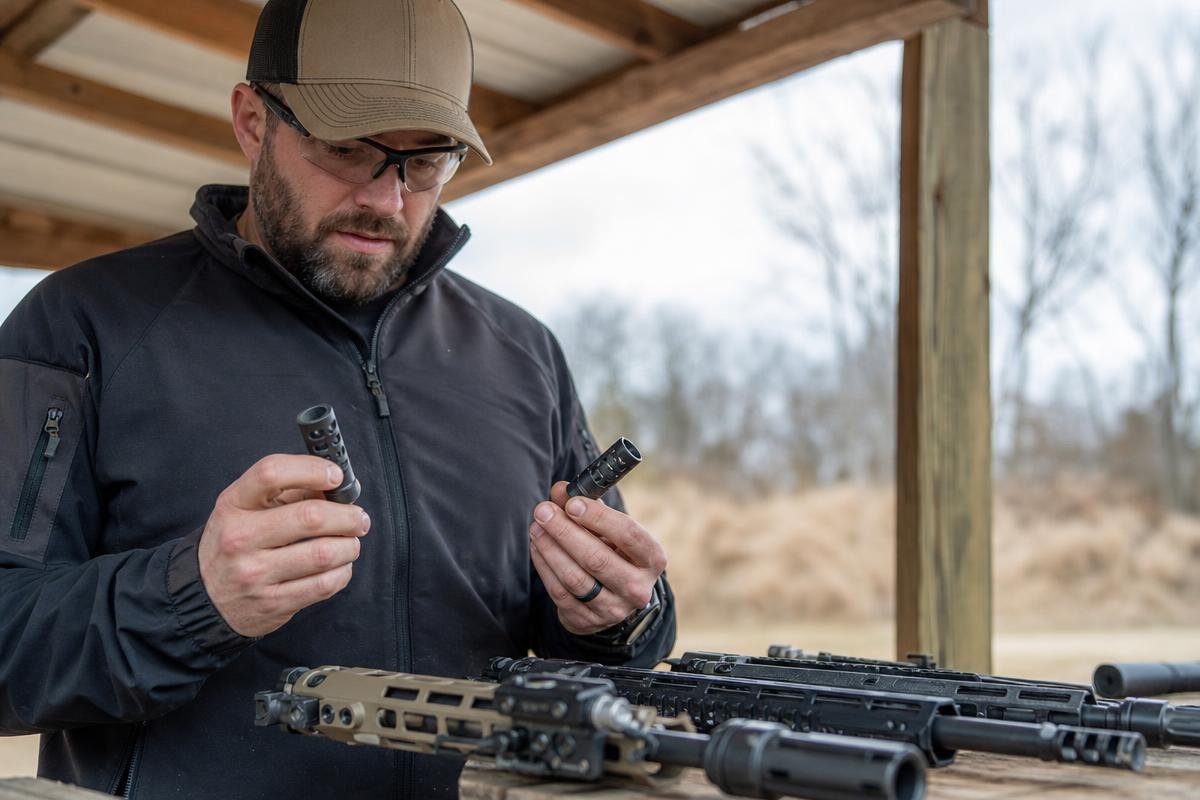
For shooters ordering from AR15Parts.com, an online retailer shipping from Denison, Texas, the same practical factors apply: barrel length, cartridge, shooting position, visible flash, and the effect of blast on others around you. A muzzle device should suit the shooting environment as well as the rifle itself.
Consider the shooter beside you as well as recoil, flash, and muzzle movement when selecting a device.
Plan Around Blast, Recoil, and the People Beside You
A side-port brake fits a recoil-control priority, especially on harder-kicking AR cartridges. It can reduce recoil, but the redirected gas can create sharp side concussion for shooters in adjacent lanes.
A linear compensator directs blast forward of the muzzle. It may be more considerate on a covered firing line or during group shooting, while a flash hider remains the practical choice when reducing visible muzzle flash is the leading concern.
Confirm Requirements Before Finalizing a Build
Confirm current federal, state, and local requirements before ordering parts for a specific rifle configuration. Check barrel threading, device diameter, overall build dimensions, and whether a device must be permanently attached to meet the requirements that apply to your configuration.
Match the device to the barrel and upper before checkout. Browse our AR-15 muzzle devices for compatible options, or contact our team with product-fit questions.
Frequently Asked Questions
Are Muzzle Brakes Louder Than Flash Hiders?
Often. Side-port brakes can increase perceived blast and concussion compared with flash hiders, depending on device design, barrel length, ammunition, and listener position. Wear hearing protection and consider the people beside you on a firing line.
Does a Compensator Reduce Recoil?
It can, although the amount depends on port geometry and device design. Compensators primarily target muzzle rise, while brakes generally prioritize recoil reduction.
What Does a Linear Comp Do?
A linear compensator redirects blast forward of the muzzle. It can make side blast less noticeable for the shooter and people beside you, but it is not primarily a flash suppressor.
Can I Use a Muzzle Device on a 300 Blackout Build?
Yes, if the device matches the barrel and intended ammunition. Verify bore size, thread pitch, and product compatibility across our AR-15 muzzle devices before installation, and confirm your ammunition plan for supersonic or subsonic 300 Blackout use.
How Do I Know if a Muzzle Device Will Fit?
Confirm the barrel threads, bore diameter, and the manufacturer’s instructions before ordering. Check timing requirements, alignment, and torque specifications, especially with a hybrid muzzle device or any device used on a larger-caliber barrel.
Can I Install a Muzzle Device Myself?
Yes, if you have the correct tools and can follow the device instructions. Use proper timing hardware, confirm bore clearance, and have a qualified gunsmith handle the work if alignment or torque is uncertain.
Choose the device around your barrel threads, bore size, cartridge, and shooting priorities. Browse our AR-15 muzzle devices or call AR15Parts.com at (888) 706-0633 for help confirming product specifications before ordering.
Ready to Get Started with AR15Parts.com?
Call (888) 706-0633 to speak with our team directly. We're ready to answer your questions, walk you through your options, and help you find the right solution for your needs. Whether you're just starting to plan or ready to move forward, we'll make the process simple and stress-free.
Reach out today and let's talk about how we can help.