
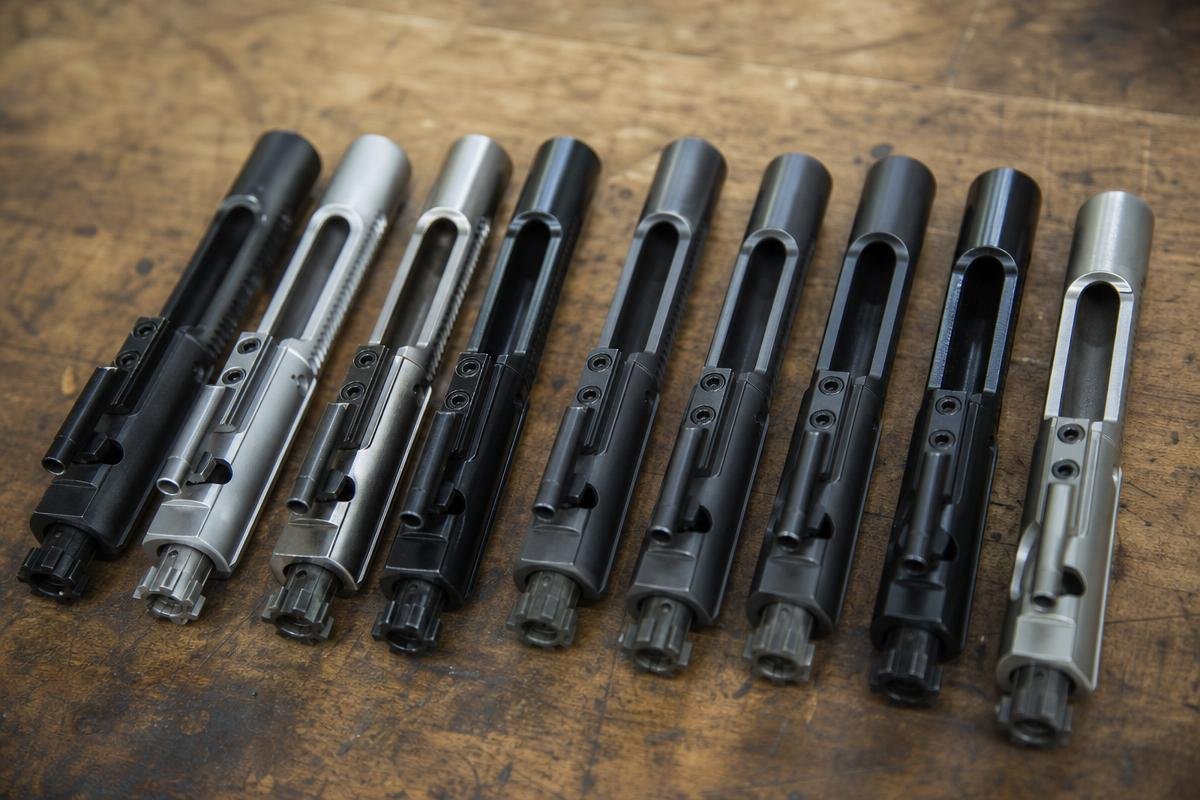
AR15Parts.com supplies AR-15 bolt carrier groups and build parts from Denison, Texas. Can you use an M16-style BCG in a semi-auto AR-15? In most correctly configured builds, yes. The carrier’s rear profile and added mass do not, by themselves, change a rifle’s firing mode. Below, we explain the mechanical differences, fitment checks, and operating-system factors that matter when choosing a carrier group.
Need help identifying the right carrier, bolt face, or upper configuration for your build?
Key Takeaways
- An M16-style carrier is commonly used in standard semi-auto AR-15 configurations.
- M16-style carriers retain more material at the rear and usually weigh more than relieved semi-auto designs.
- Carrier choice should be evaluated with the gas system, buffer, action spring, ammunition, and intended use.
- Match the bolt face to the cartridge family and verify proper headspace with the specific barrel extension when changing bolts.
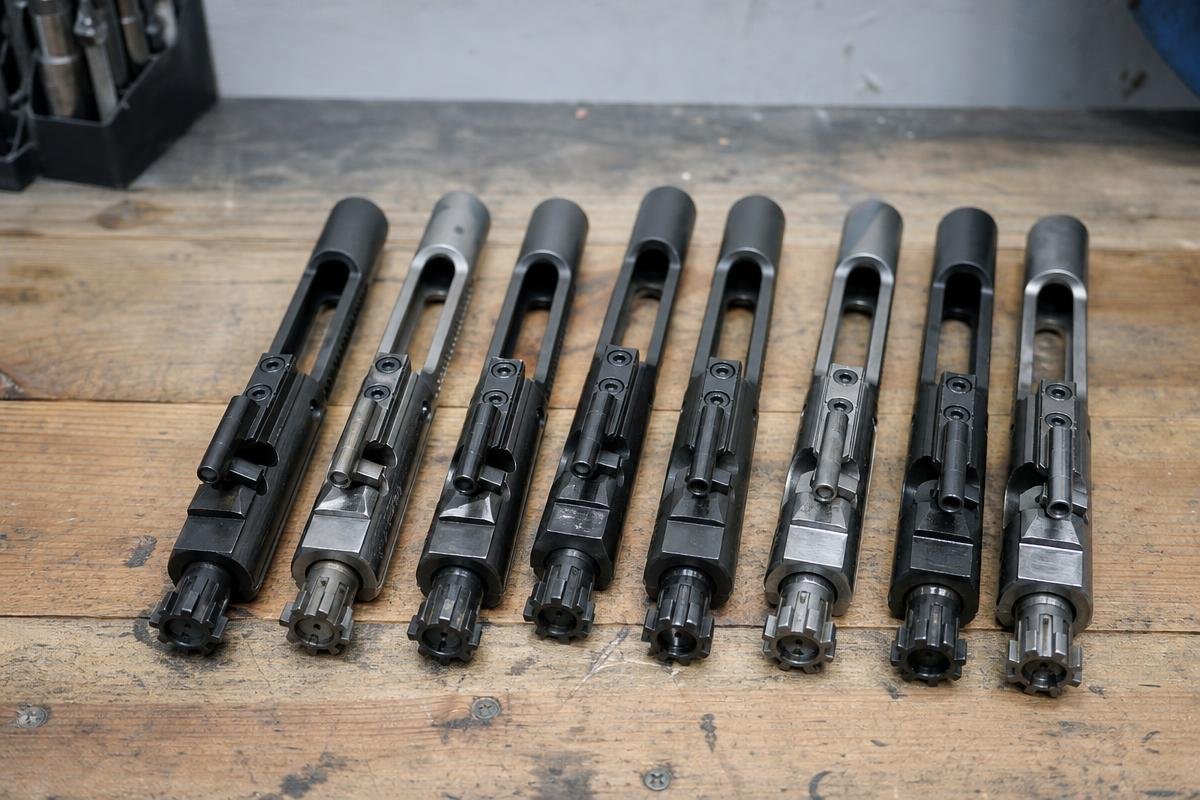
Carrier designs are distinguished primarily by the amount of material retained at the rear of the carrier.
Can You Use an M16-Style BCG in a Semi-Auto AR-15?
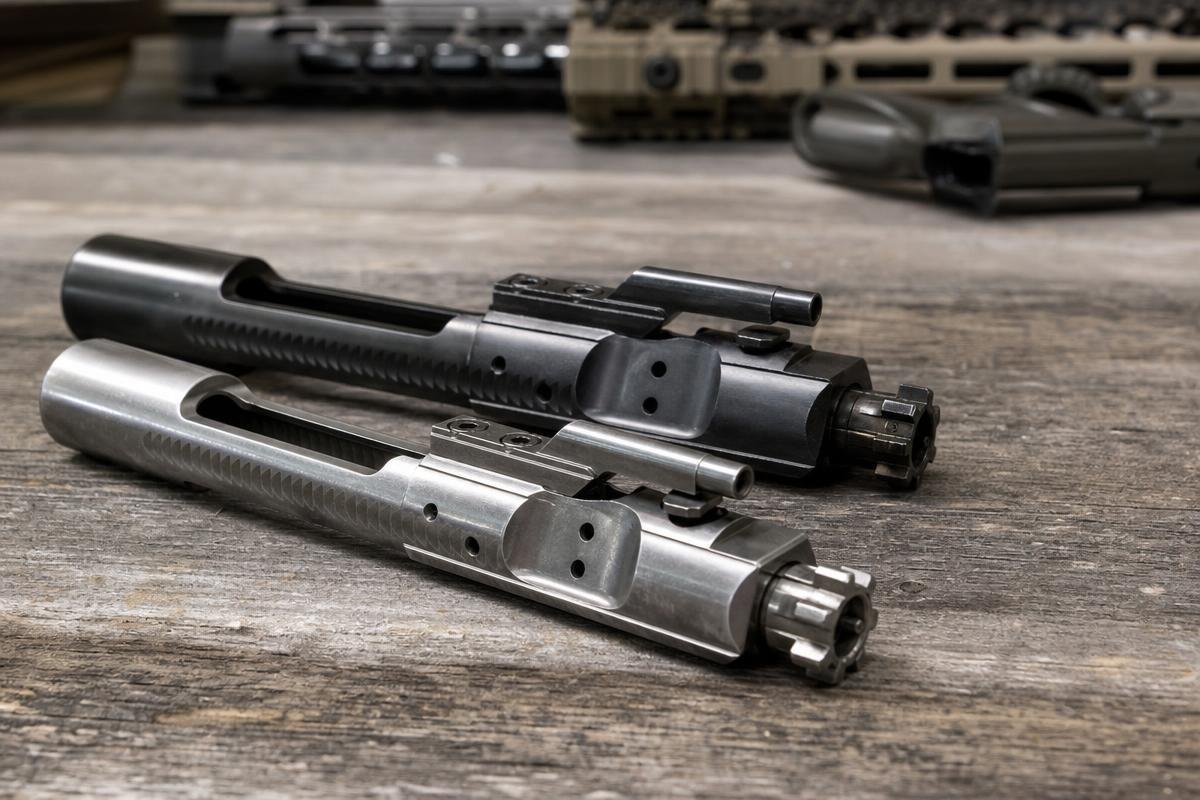
In most standard AR-15 builds, an M16-style carrier will function with a semi-auto lower receiver. The carrier is only one component of the action. Firing mode is determined by the rifle’s fire-control configuration, not by the carrier profile alone. This information covers general mechanics, not legal advice. Firearms laws can vary by jurisdiction, so consult current official guidance and a qualified firearms attorney or gunsmith if you have questions about a specific configuration.
The rear carrier profile affects mass and interaction with compatible fire-control geometry, not basic bolt lockup.
When comparing full-auto versus semi-auto BCG compatibility, focus on carrier geometry, actual listed weight, bolt-face requirements, and the rest of the operating system. AR15Parts.com is an online retailer that ships parts nationwide from Denison, Texas. Builders comparing carrier profiles, bolt materials, and gas-key staking can browse our AR-15 bolt carrier groups before ordering.
What Is the Difference Between a Full-Auto and Semi-Auto BCG?
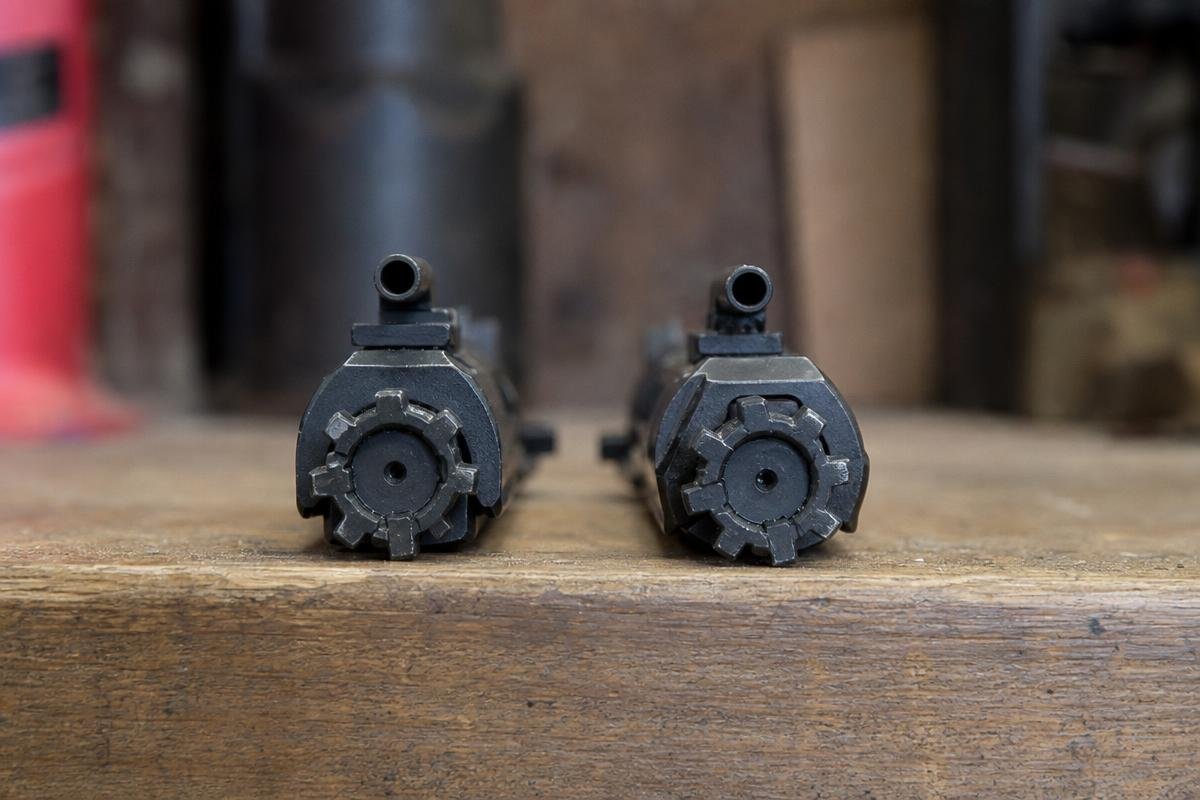
The practical distinction is the rear carrier profile. An M16-style carrier retains more steel behind the firing-pin area, while many semi-auto carriers have a relieved rear section. Because more material remains on the M16-style design, it usually has greater mass than a comparable relieved carrier.
Look at the rear of the carrier body when comparing common AR-15 carrier cuts.
Rear Carrier Geometry Explained
An M16-style bolt carrier group has a longer, full-height rear section. This geometry was designed for M16-pattern use, and it is also a common carrier pattern in semi-auto AR-15 builds.
A relieved semi-auto carrier removes material from that rear section. Both styles generally use the same basic arrangement of bolt, cam pin, firing pin, retaining pin, and gas key. Actual compatibility still depends on the complete rifle and the specific parts involved.
| Carrier type | Rear profile | Practical effect | Semi-auto AR-15 compatibility |
|---|---|---|---|
| M16-style carrier | More rear material retained | Usually adds carrier mass | Commonly compatible with a standard semi-auto lower |
| Semi-auto carrier | Rear section relieved | Usually reduces carrier mass | Commonly compatible with a standard semi-auto lower |
Typical Weight Differences and What They Mean
Comparable M16-style carriers are often roughly 1 to 2 ounces heavier than relieved designs. Many complete M16-style carrier groups fall around 11 to 12 ounces or more, while some lighter designs are closer to 9 to 10 ounces. These are broad ranges, not a universal specification.
Material, coating, machining, gas-key design, and whether the listed weight includes the bolt all affect the number. Compare manufacturer specifications rather than relying on the carrier label alone. Standard mass is generally the safer starting point for a conventional, unsuppressed build because it is less likely to require tuning around a deliberately light operating system.
Lightweight carriers can be useful in purpose-built configurations, but they often require deliberate gas, buffer, spring, and ammunition testing. If you are matching a carrier to an existing upper, compare specifications across our AR-15 bolt carrier groups before ordering.
Parts That Matter Beyond the Carrier Profile
Carrier profile is only one part of a dependable BCG. Bolt material and heat treatment, extractor setup, ejector movement, gas-ring condition, gas-key staking, and bolt-lug condition all deserve inspection.
A carrier group should be selected around the barrel, chamber, gas system, and intended use, whether that is range practice, competition, or defensive use. For assistance comparing available specifications, contact our team at AR15Parts.com or call (888) 706-0633.
Compatibility Checks Before Installing an M16-Style BCG
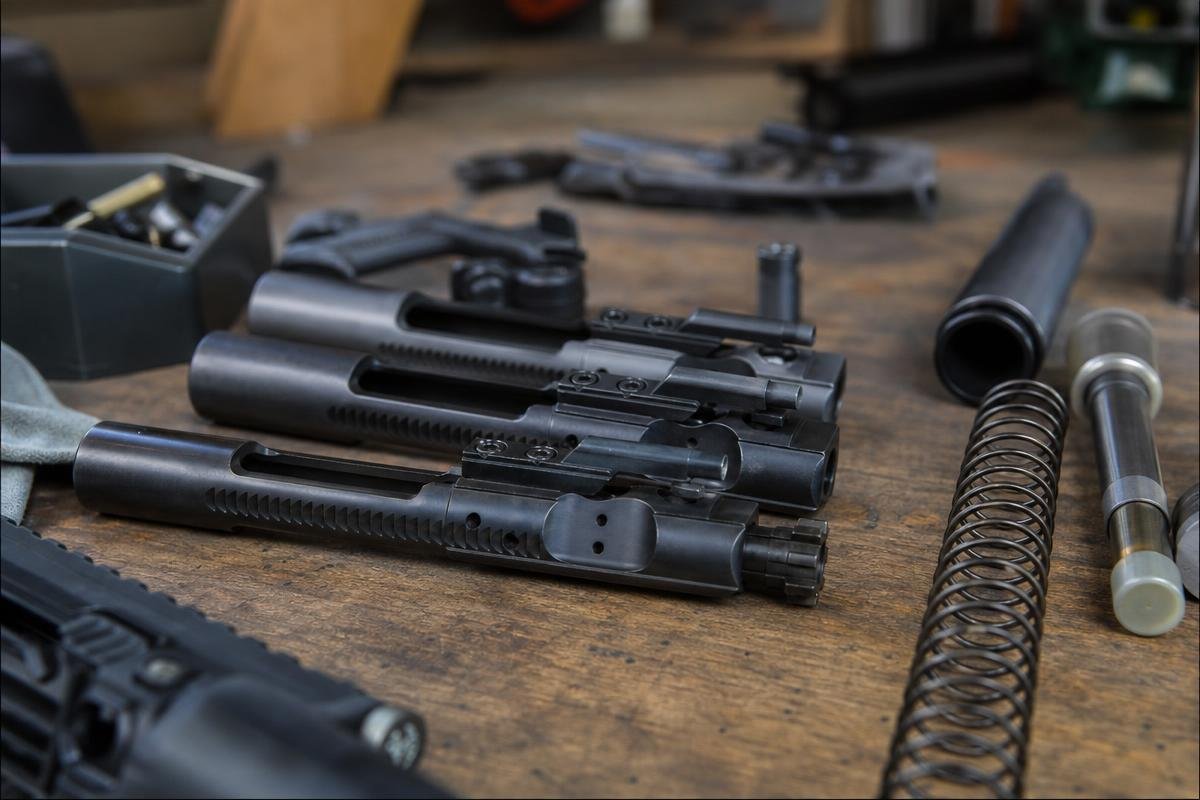
Yes, an M16-style bolt carrier group can generally run in a standard semi-auto AR-15 when the rifle is properly assembled and its parts are compatible. Before installation, make sure the carrier travels freely in the upper receiver and that the bolt, barrel extension, buffer system, and gas system are appropriate for the build.
Fitment begins with smooth carrier travel, correct bolt selection, and a properly assembled upper.
Compatibility Starts With the Complete Rifle
The bolt must match the cartridge case-head dimensions required by the barrel. For example, 5.56 NATO and .223 Wylde barrels commonly use the standard .223/5.56 AR-15 bolt face. The bolt should also be checked for correct headspace with the specific barrel and barrel extension, particularly when combining parts from different sources.
Other chamberings may use a different bolt face, extractor arrangement, or bolt design while retaining an AR-15-pattern carrier body. Before ordering a replacement component, identify the barrel marking, chambering, gas-system length, and the parts already installed. A complete upper reduces the amount of matching required because its barrel and receiver components are selected together. Compare our AR-15 bolt carrier groups by bolt face, carrier profile, and included components before pairing one with your upper.
Checks to Make Before Changing a Bolt or Carrier
Inspect the gas key first. The screws should be properly staked to resist loosening under firing. Check the carrier for smooth travel in the upper receiver, then inspect the bolt lugs, extractor, ejector, cam pin, firing pin, and gas rings for wear or damage.
- Match the bolt face to the cartridge case head.
- Confirm the bolt locks correctly into the barrel extension.
- Verify headspace whenever you change bolts or assemble separate parts.
- Check that the charging handle, buffer system, and gas system are appropriate for the build.
Do not assume two bolts are interchangeable simply because both fit an AR-15 carrier. Headspace is determined by the relationship between the bolt lugs and barrel extension. Older, modified, or atypical lower and upper assemblies may also warrant a professional fitment check. If you are unsure about carrier compatibility or legal requirements, consult current federal, state, and local rules and speak with a qualified gunsmith.
For product-fitment questions, AR15Parts.com can be reached at (888) 706-0633 or through the contact page.
How Extra Carrier Weight Affects Cycling and Reliability
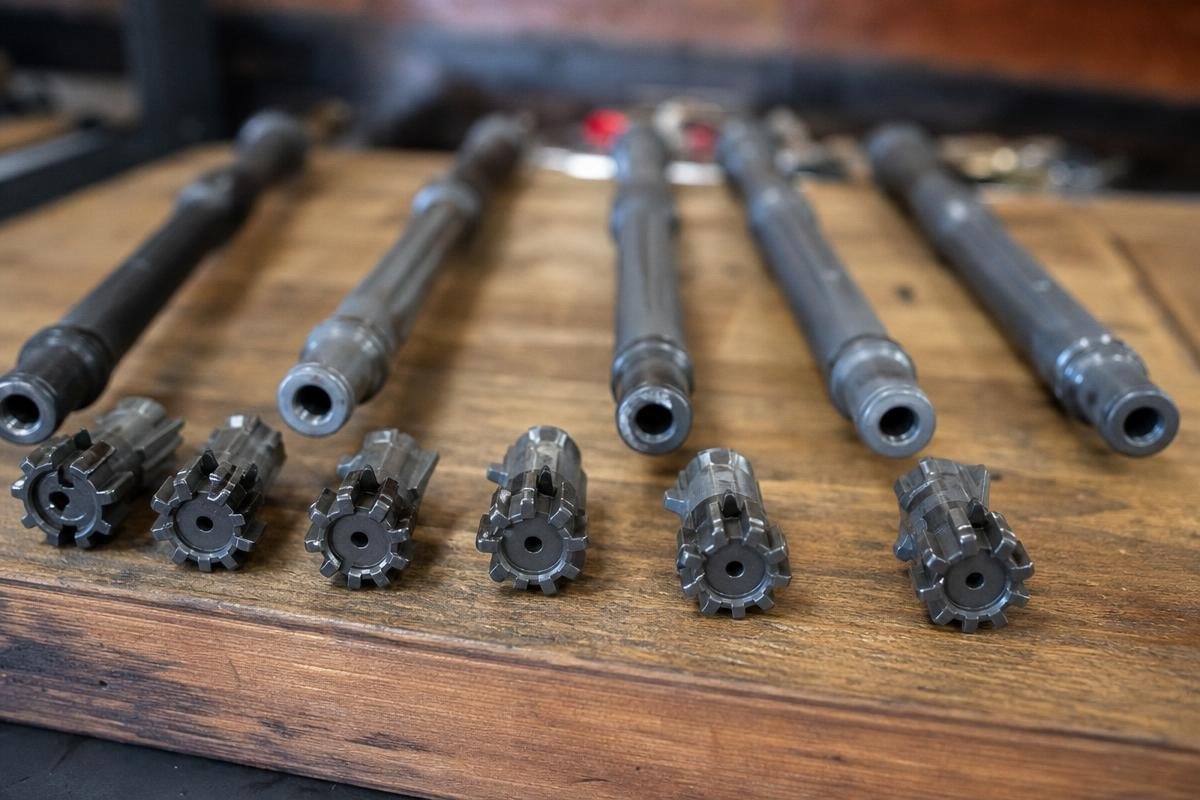
Carrier mass can influence action speed, but reliability depends on the complete operating system. A heavier carrier resists acceleration as gas pressure moves it rearward. That can alter timing and felt recoil characteristics, but it is not a universal fix for over-gassing, under-gassing, extraction issues, or magazine problems.
Carrier mass works alongside the gas system, buffer, action spring, ammunition, and magazines.
Carrier Mass Is One Part of the Operating System
Two AR-15s can respond differently to the same carrier because their remaining components are not identical. Buffer weight, action-spring condition, gas-port sizing, gas-system length, ammunition, suppressor use, lubrication, and magazine condition all influence carrier movement and return to battery.
A properly configured 5.56 NATO upper may run with more than one carrier style without issue. A rifle with marginal gas delivery, a damaged gas seal, or a worn spring may malfunction regardless of carrier profile. Lightweight systems should be approached as a tuned package, not as a drop-in answer. We stock a wide selection of AR-15 bolt carrier groups so builders can match carrier profile and weight to their gas system and buffer setup.
Common Signs of an AR-15 Cycling Problem
Short-stroking, failure to lock back on an empty magazine, unusually forceful ejection, and inconsistent extraction can all indicate a cycling problem. These symptoms overlap, so they do not identify carrier weight as the cause on their own.
- Short-stroking may leave the next round unfed or fail to cycle the action fully.
- Failure to lock back can involve the gas system, magazine, ammunition, or bolt catch.
- Excessive ejection distance may indicate that the action is moving faster than expected.
- Inconsistent extraction can involve the extractor, chamber condition, ammunition, or carrier movement.
Stop using a rifle that repeatedly malfunctions and have it inspected by a qualified gunsmith. AR15Parts.com can help answer a parts-selection question, but a carrier change alone cannot diagnose a reliability issue. Contact AR15Parts.com at (888) 706-0633 or use our contact page before ordering a replacement component.
Comparing standard-mass and lightweight carrier groups? Ask about bolt-face and headspace matching before you order.
Shop AR-15 Bolt Carrier Groups
How to Choose the Right BCG for Your AR-15 Build
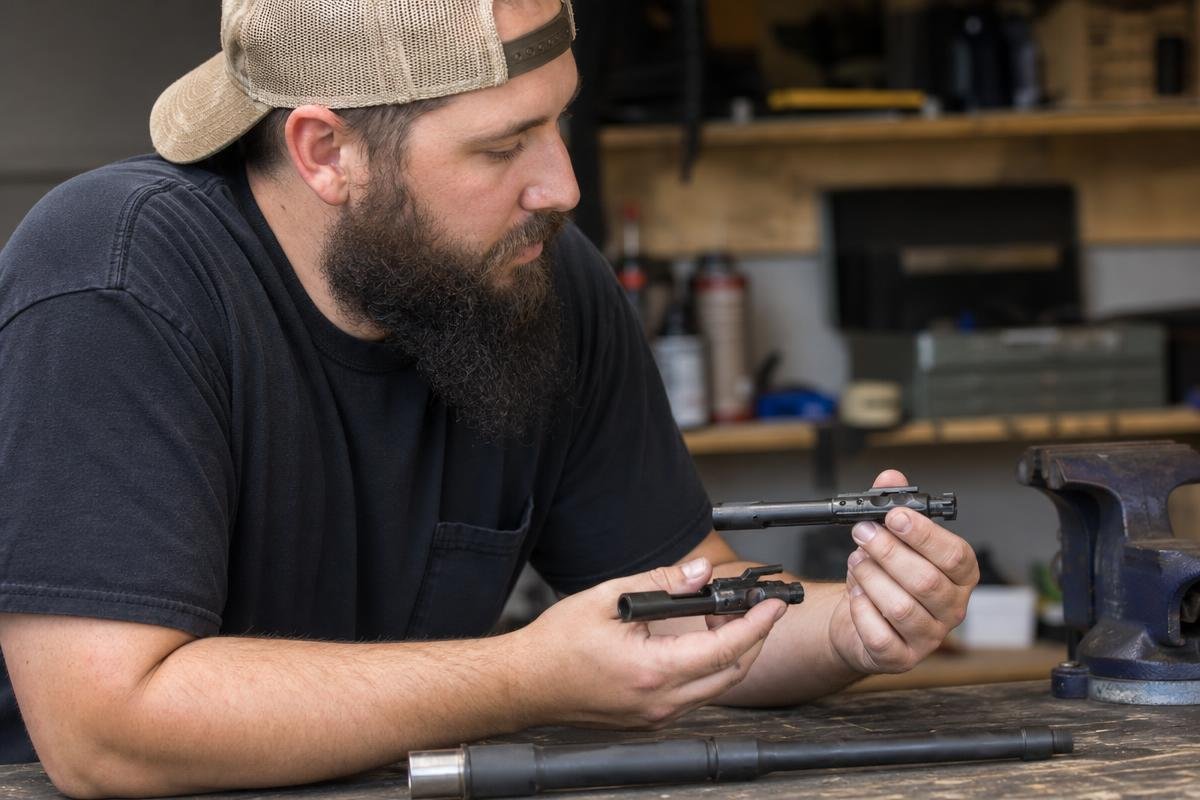
Start with the barrel and bolt relationship, not the finish or carrier label. A standard-mass M16-style carrier is a common choice for conventional AR-15 builds, while lightweight carriers are best reserved for builds where the owner is prepared to evaluate gas, buffer, spring, and ammunition performance together.
Choose a BCG by cartridge family, bolt face, barrel compatibility, construction, and operating-system needs.
Start With Chambering and Bolt Face
Most 5.56 NATO and .223 Wylde builds use a standard AR-15-pattern carrier with a standard .223/5.56 bolt face. They do not require a special carrier cut. An M16-style carrier is frequently selected for its conventional mass and broad compatibility with standard semi-auto AR-15 configurations.
A 300 Blackout build also normally uses the same .223/5.56 bolt face and AR-15 carrier pattern. Other chamberings can require a different bolt face even if the carrier body remains in the AR-15 pattern. Check the barrel manufacturer's bolt-face requirement before ordering a bolt or one of our complete AR-15 bolt carrier groups.
Compare Construction and Included Components
Read the complete BCG specifications before buying. Compare the components that affect lockup, gas sealing, extraction, and serviceability, then consider carrier weight in the context of your gas and buffer setup.
- Carrier material and finish, such as 8620 steel with phosphate, nitride, or nickel boron coating.
- Bolt material, commonly Carpenter 158 or 9310 steel.
- Properly staked gas-key screws that resist loosening under firing.
- Extractor, extractor spring, insert, and O-ring configuration.
- Included firing pin, cam pin, retaining pin, and complete bolt assembly.
- Whether the listing is a complete BCG or only a stripped bolt carrier.
Coating can affect cleaning and corrosion resistance, but it does not correct a mismatched bolt face, incorrect headspace, or poor gas-key staking. For target shooting, self-defense, or general range use, prioritize correct fitment and sound construction first.
Know When Headspace Needs Verification
Headspace should be verified whenever a replacement bolt is paired with a barrel, especially when the bolt and barrel come from different manufacturers or an existing barrel is receiving a new bolt. The carrier body does not set headspace, but the bolt lugs and barrel extension do.
A complete carrier group with its included bolt is a simpler starting point for many builds. If you are mixing parts, use proper GO and NO-GO gauges or have the assembly checked by a qualified gunsmith. Customers with unclear barrel markings, bolt-face requirements, or existing-bolt questions can reach AR15Parts.com through our contact page before ordering.
Common BCG Questions From AR-15 Builders
AR15Parts.com is located at 4000 Texoma Pkwy, Denison, TX 75020. As an online retailer shipping nationwide, the most useful compatibility questions include the barrel chambering, gas-system length, buffer setup, and whether you are replacing a complete BCG or only a bolt.
Clear build details help narrow down the correct carrier group and bolt configuration.
Bring the Right Build Details to a Compatibility Question
Have your barrel chamber, gas-system length, current buffer setup, and intended ammunition ready. Also identify whether you need a complete BCG or only a replacement bolt. Those details are more useful than carrier labeling alone.
If you are asking whether an M16-style carrier will suit your AR-15, include your upper type and intended ammunition. A 5.56 NATO carbine setup may need different attention than a 300 Blackout pistol-gas build. For direct help, use our contact page or call (888) 706-0633.
Find Parts by Platform, Chambering, and Part Type
Start with platform and chambering, then narrow by part type. We carry AR uppers, barrels, bolt carrier groups, charging handles, handguards, lower parts, muzzle devices, stocks, and complete rifles.
When pairing a carrier group with a new upper, confirm the barrel chamber and bolt-face requirement before selecting the bolt. A complete upper can simplify the process by providing a matched barrel and receiver configuration.
Frequently Asked Questions
Does a Full-Auto Style BCG Make an AR-15 Fully Automatic?
No. A full-auto style, or M16-style, bolt carrier alone does not make an AR-15 fully automatic. Fire-control components determine how a rifle fires, not carrier profile alone.
Can an M16-Style Carrier Work in a Semi-Auto AR-15?
Yes. M16-style carriers are commonly used in correctly configured semi-auto AR-15s. When determining whether an M16-style BCG will work in an AR-15, check carrier compatibility, chambering, and assembly.
What Is the Typical Weight Difference?
M16-style carriers often weigh more than relieved semi-auto designs, but the exact difference depends on the steel, coating, gas key, carrier geometry, and manufacturer specifications.
Does Carrier Weight Determine Reliability?
No. Extra weight can slow carrier movement and affect timing, but reliability also depends on gas-system length, gas-port size, buffer weight, ammunition, and lubrication. A full-auto BCG vs semi-auto BCG comparison should start with your complete setup, not weight alone.
Should Headspace Be Checked When Changing a Bolt?
Yes. Check headspace whenever you install a replacement bolt, especially with a barrel from another manufacturer. Use proper GO and NO-GO gauges, or have a qualified gunsmith inspect the barrel and bolt combination.
Do 5.56 NATO and 300 Blackout Use the Same Bolt Face?
Yes. Both cartridges use the standard .378-inch AR-15 bolt face. You can compare compatible AR-15 bolt carrier groups for both chamberings, but each barrel still requires the correct chamber and ammunition.
What Should I Inspect Before Buying a BCG?
Inspect gas-key staking, bolt lugs, extractor and spring components, finish, platform fit, and manufacturer specifications. Match the BCG to your chambering, barrel setup, and existing bolt details. Browse our AR-15 bolt carrier groups or contact our parts team at 4000 Texoma Pkwy, Denison, TX 75020 or (888) 706-0633 for help comparing carrier profiles.
Ready to Get Started with AR15Parts.com?
Call (888) 706-0633 to speak with our team directly. We're ready to answer your questions, walk you through your options, and help you find the right solution for your needs. Whether you're just starting to plan or ready to move forward, we'll make the process simple and stress-free.
Reach out today and let's talk about how we can help.