
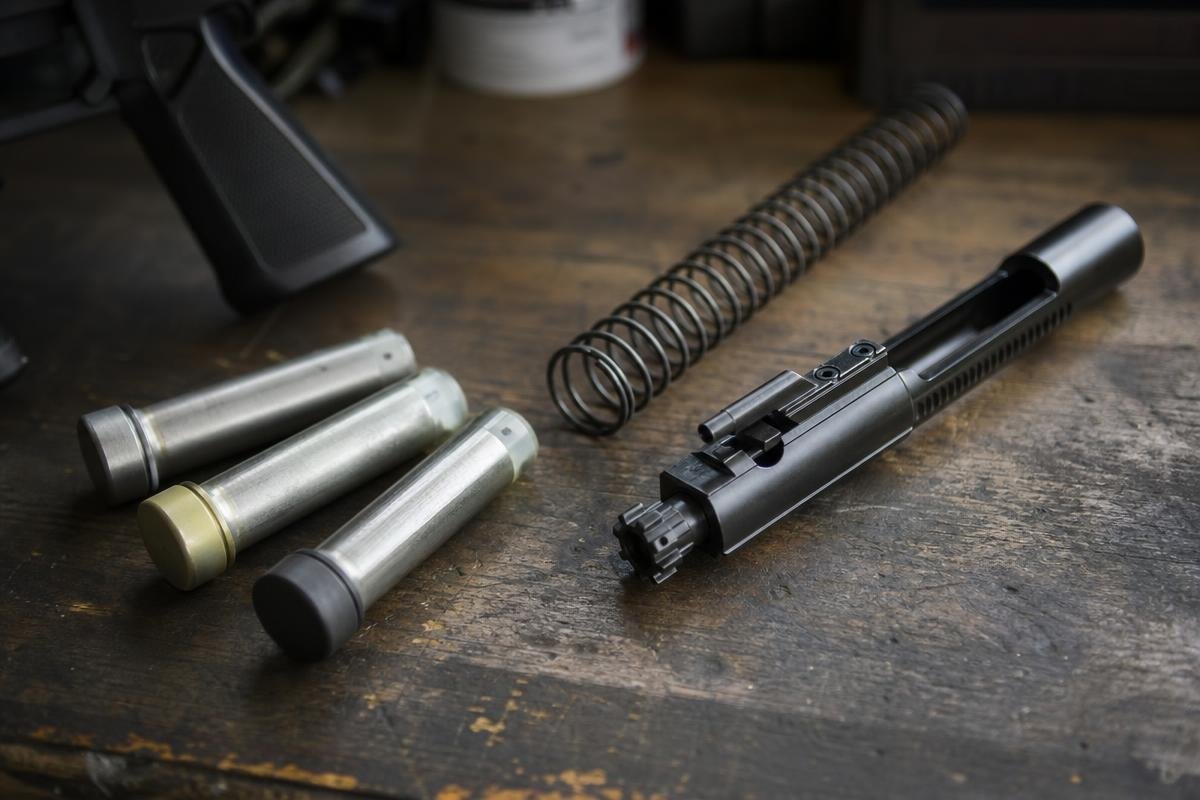
Heavy buffer recoil can feel less abrupt when added buffer mass slows carrier movement in a build with sufficient gas drive. A heavier buffer can also cause cycling problems if the system lacks the energy to move it fully rearward. At AR15Parts.com, we ship parts and accessories from our Denison, TX facility at 4000 Texoma Pkwy, Denison, TX 75020.
Need help matching a buffer and spring to your build? Tell our team your upper configuration, receiver-extension type, ammunition, and exact cycling symptoms.
Heavy Buffer Recoil and Cycling: Key Takeaways
- Buffer weight influences bolt-carrier speed, recoil feel, extraction timing, and the energy needed for reliable cycling.
- Heavy buffer recoil and cycling effects depend on the gas system, ammunition, recoil spring, carrier assembly, and whether the rifle is suppressed.
- Common carbine buffers increase in mass from standard carbine to H, H2, and H3 styles, but the correct choice must be confirmed by live-fire function testing.
- Buffer tuning is a balancing tool, not a substitute for correcting gas-system, magazine, extractor, chamber, ammunition, or assembly problems.
What Does an AR-15 Buffer Actually Do During the Firing Cycle?
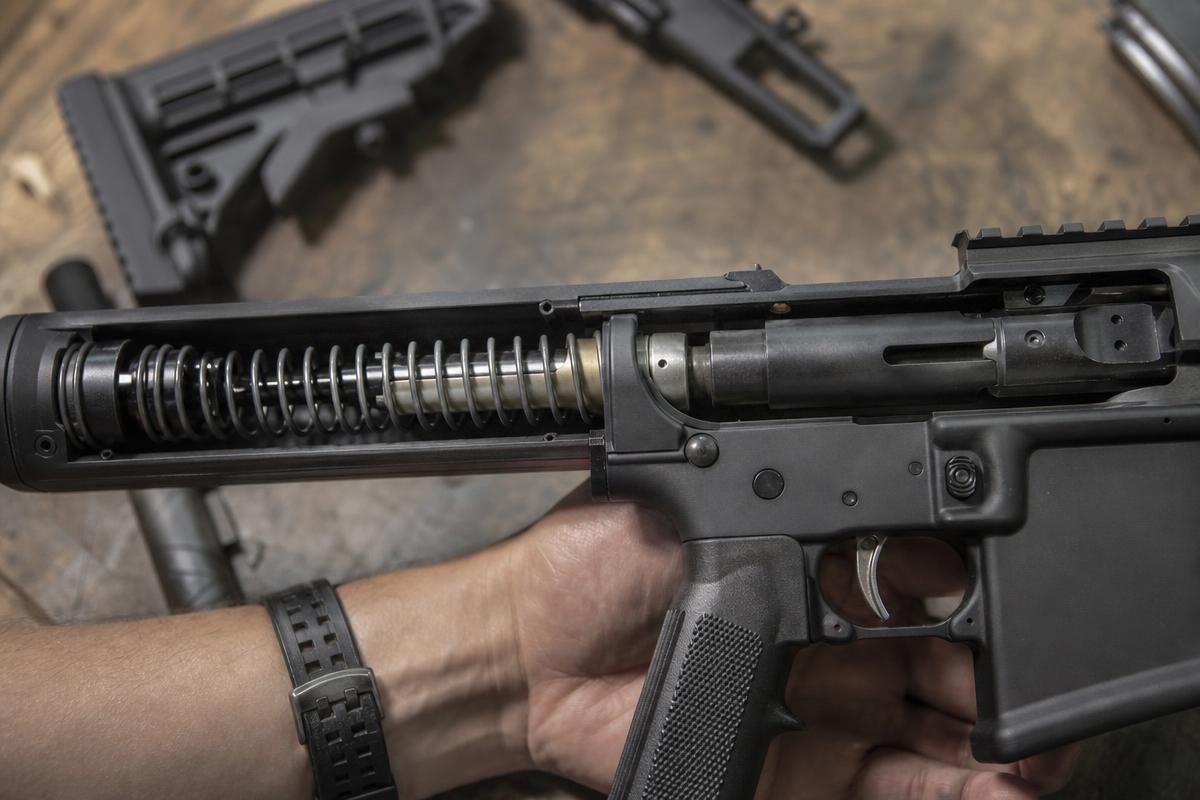
The buffer and AR-15 buffer spring control the bolt carrier group after gas operates the action. Together, they resist rearward movement inside the receiver extension, stop the carrier at the end of travel, and return it forward to strip and chamber the next round.
From Gas Pressure to Rearward Carrier Movement
After the round fires, propellant gas travels through the barrel gas port, gas block, and gas tube into the carrier. The carrier moves rearward, rotates and unlocks the bolt, then extracts the fired case from the chamber.
The carrier contacts the buffer, which compresses the spring in the receiver extension. At the end of rearward travel, spring force sends the buffer and carrier forward so the bolt can pick up a cartridge from the magazine and lock into battery.
This sequence applies across many configurations, including complete AR-15 uppers for multiple calibers. Barrel length, gas-system length, cartridge pressure, carrier mass, and recoil-system format all influence the result.
Why Buffer Mass Changes Carrier Timing
More buffer mass requires more energy to accelerate the moving parts. In a system with ample gas drive, added mass can reduce carrier velocity and change when the bolt begins its rearward movement. That can make the action feel smoother and may improve the operating window of a hard-running rifle.
Buffer mass does not reduce the amount of gas entering the carrier. It only changes how the recoil system responds after the gas system has begun driving the action.
Extraction Timing and the Recoil Impulse
Extraction works best when the fired case has released from the chamber before the extractor pulls it rearward. If the bolt unlocks while pressure remains high, the case may cling to the chamber walls and extraction can become rough.
A matched recoil system can influence that timing and the character of felt recoil. It cannot repair a dirty or damaged chamber, worn extractor components, a loose carrier key, an incorrectly aligned gas block, or a defective magazine. Diagnose those basics before using buffer weight as the primary fix.
Start with a properly matched buffer and AR-15 buffer spring before changing parts. If you are building from the ground up, our complete AR-15 rifles provide a known starting point for evaluating cycling behavior.
Does a Heavier AR-15 Buffer Reduce Recoil?
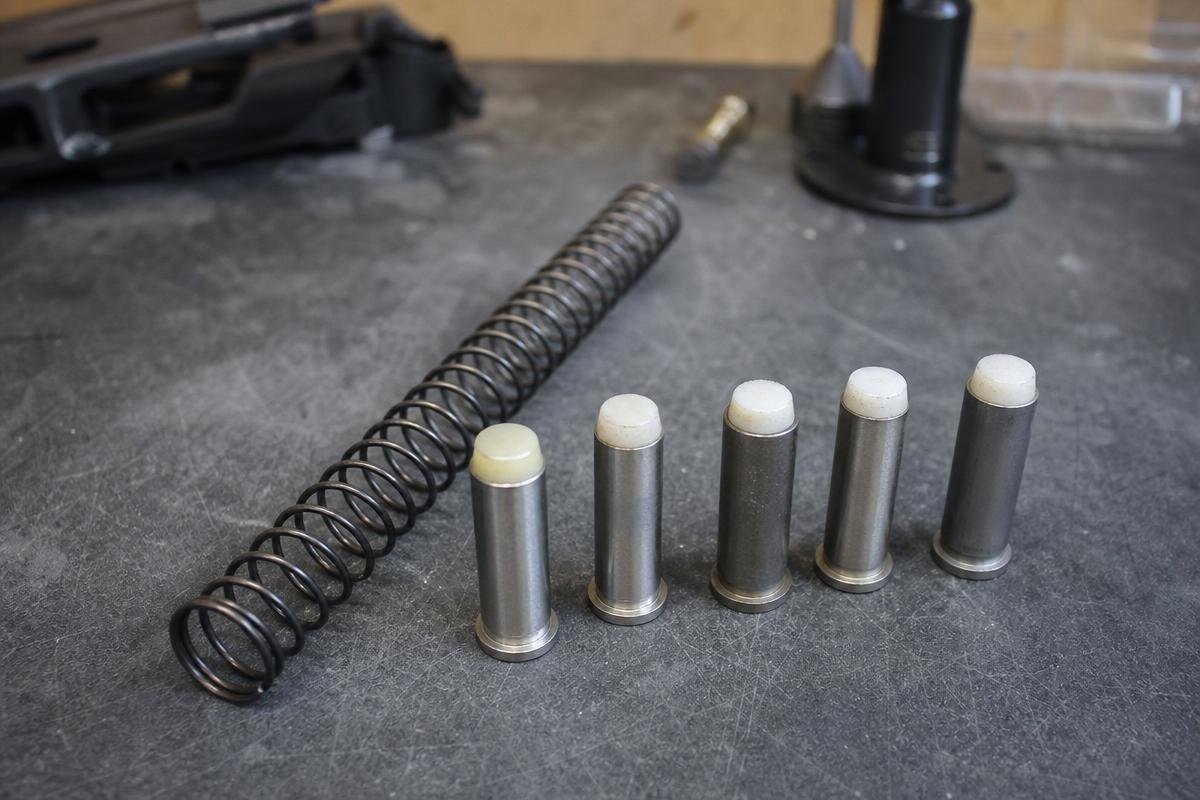
A heavier AR-15 buffer can reduce perceived sharpness and muzzle movement by moderating carrier speed in a rifle with sufficient gas drive. It does not remove total recoil energy, and it can create reliability problems if the rifle no longer has enough energy to cycle fully.
What a Lighter Buffer Can Do
A lighter buffer reduces the moving mass the gas system must cycle. It can be useful when a properly assembled rifle has marginal operating energy, such as when it will not consistently feed or lock open with the intended ammunition and a known-good magazine.
The tradeoff is increased carrier speed. In a system already running hard, less mass can make the action feel sharper and can increase wear or extraction stress. Verify the gas-system setup and recoil spring before assuming that a lighter buffer is the answer.
What a Heavier Buffer Can Do
A heavier carbine buffer can be useful when a rifle has excessive carrier speed, particularly after adding a suppressor or when a configuration otherwise shows signs of a hard-running action. Common carbine categories are standard carbine, H, H2, and H3, with each step generally adding weight through different internal weight combinations.
Exact weights can vary by manufacturer, so compare the manufacturer’s specification instead of relying only on the letter marking. A heavier choice is not automatically better. If the rifle loses reliable feeding or last-round lock-back with the same ammunition and magazine, the system may need less resistance or inspection for another mechanical issue.
Quick Buffer Direction Comparison
| Buffer direction | Carrier speed | Felt recoil character | Likely use case | Risk if mismatched | What to inspect next |
|---|---|---|---|---|---|
| Lighter | Faster | Can feel sharper | Marginal cycling with a verified sound setup | Excessive carrier speed | Gas delivery, carrier condition, extraction |
| Standard | Baseline | Typical carbine impulse | Known working configuration | May mask an unrelated fault | Ammo, spring condition, magazines |
| Heavier | Slower | May feel longer and less abrupt | Hard-running or suppressed setup | Insufficient rearward travel | Single-round lock-back and feed function |
Start with a known, reliable configuration and test one change at a time. If you are matching parts to a new upper, review our complete AR-15 uppers for multiple calibers before selecting a buffer weight.
How to Choose a Starting Buffer Weight for Your Build
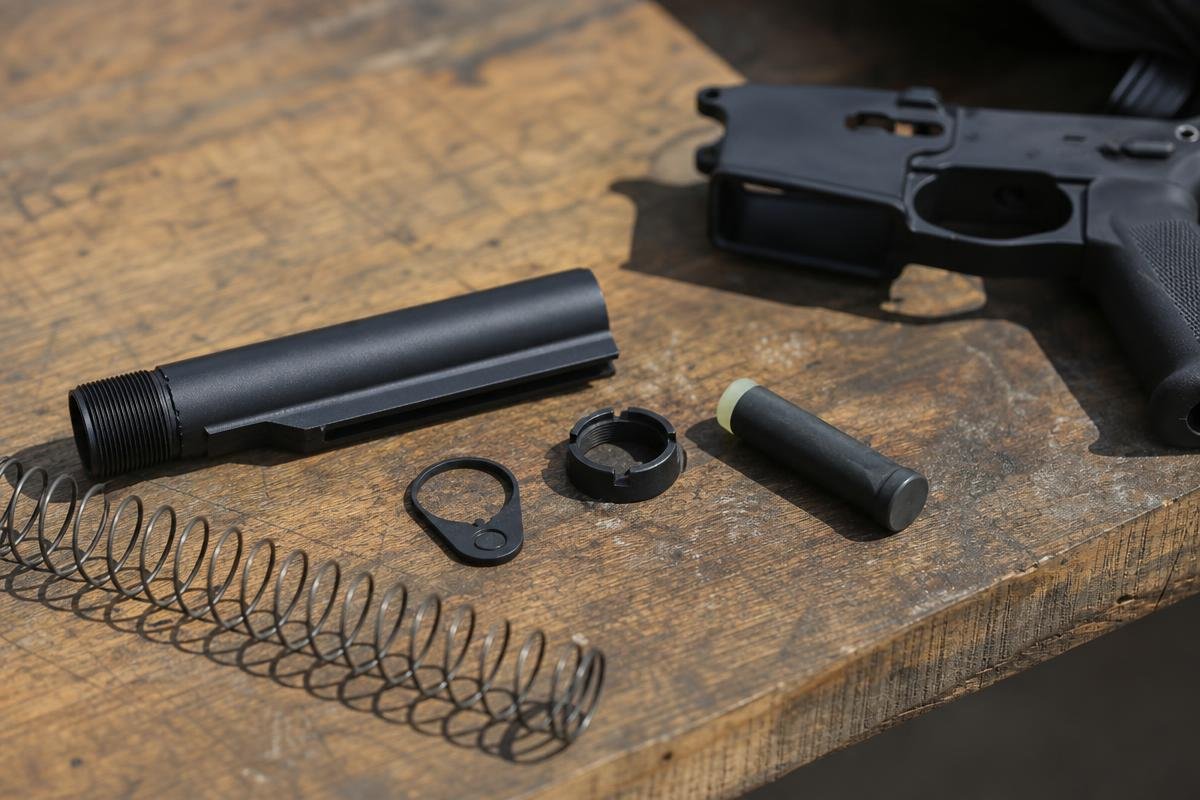
Choose the recoil-system format that fits your receiver extension first, then validate performance with the ammunition you actually plan to use. There is no single AR-15 buffer weight for every rifle. Barrel length, gas-system length, gas-port behavior, suppressor use, carrier mass, ammunition pressure, and spring condition all matter.
Start With the Correct Recoil-System Format
Receiver extension type determines buffer compatibility. A rifle-length extension requires a rifle buffer and rifle spring. A carbine extension requires a carbine-length buffer and spring. Do not mix rifle-length and carbine-length components.
Identify the upper before ordering parts. Record barrel length, gas-system length, caliber, bolt carrier group, and receiver-extension format. Our complete AR-15 uppers for multiple calibers offer a useful reference point when matching the recoil system to an upper assembly.
Function-Test Before Changing Parts
Use a safe range environment, a known-good magazine, and the ammunition you intend to run. Begin with one round in the magazine and confirm the bolt locks open after firing. Then test several rounds for feeding, extraction, ejection, and consistent return to battery.
Ejection pattern can provide a clue, but it is not a complete diagnosis. Brass direction can be affected by ammunition, ejector tension, extractor condition, firing position, and other variables. Give greater weight to reliable lock-back, clean extraction, consistent feeding, and repeatable function.
Use a One-Variable-at-a-Time Approach
Change one component, then repeat the same test with the same magazine, ammunition, and suppressor condition. Replacing the buffer, AR-15 buffer spring, magazine, and ammunition at once makes it difficult to identify the actual cause.
- Confirm the receiver extension, buffer, and spring are the correct matching format.
- Record the barrel length, gas-system length, carrier assembly, and ammunition used.
- Inspect the spring, buffer retainer, chamber, bolt carrier group, extractor, and ejector.
- Use a known-good magazine for single-round lock-back testing.
- Test suppressed and unsuppressed separately when a suppressor is part of the setup.
- Record feeding, extraction, lock-back, and brass condition after each change.
Follow manufacturer instructions and keep the firearm pointed in a safe direction during all testing. For diagnosis or repair concerns, seek qualified gunsmith support. AR15Parts.com stocks firearms, parts, and accessories from 4000 Texoma Parkway, Denison, TX 75020, with shipping availability varying by product and destination.
When a Heavier Buffer Helps and When You Need to Check the Gas System
A heavier buffer may help moderate an action that is moving too quickly, but it cannot correct every reliability issue. Before changing buffer weight, inspect the gas system, chamber, bolt carrier group, extractor and ejector, magazines, ammunition, and spring compatibility.
Signs the Carrier May Be Moving Too Fast
A hard-running rifle may show forceful ejection, sharp action movement, rough extraction, or unusual wear at carrier and buffer contact points. These symptoms can support further evaluation of buffer mass, but they are not proof by themselves that the rifle is over-gassed.
Check the full system before tuning. Confirm the rifle feeds from more than one known-good magazine, locks back reliably, extracts without damaged case rims, and has a properly lubricated carrier group. A correctly weighted buffer will not cure a worn extractor, damaged gas tube, or weak magazine spring.
What Happens If an AR-15 Buffer Is Too Heavy?
If buffer mass and spring resistance exceed the energy available from the ammunition and gas system, the carrier may not travel far enough rearward to complete the cycle. The result can include failures to feed, inconsistent ejection, or failure to lock back after the last round.
Do not diagnose from one round or one magazine alone. Repeat the single-round lock-back test with the same load and a known-good magazine, then inspect gas-block alignment, gas-tube condition, carrier-key staking and seal, carrier movement, and recoil-spring condition if performance is inconsistent.
Buffer Weight Vs Gas Adjustment
The recoil spring and buffer work as a pair after gas begins driving the carrier. An adjustable gas block, used on compatible direct-impingement systems, lets you regulate gas flow before it drives the carrier. These are different tuning points.
For AR-15 gas system tuning, address an obvious gas problem at the gas system rather than treating buffer weight as a one-part cure. Once the rifle is mechanically sound, recoil-system tuning can help refine function and recoil feel. Our 5.56 NATO complete upper receivers provide a practical starting point for matching upper and lower components.
Need help sorting out buffer weight, springs, receiver-extension compatibility, or cycling symptoms? Call AR15Parts.com at (888) 706-0633.
Build Variables That Can Change Buffer Performance
Your AR-15 buffer weight works with the entire operating system, not by itself. A recoil setup that runs correctly in one rifle can behave differently after an upper, ammunition, suppressor, carrier, or gas-system change.
Suppressors and Added Backpressure
Adding a suppressor can change backpressure and carrier speed. A rifle that functions well unsuppressed may cycle differently once suppressed, including more forceful ejection or a sharper operating impulse.
Test suppressed and unsuppressed configurations independently. Keep ammunition and magazine selection consistent for each test, and do not assume a recoil-system choice that works with one configuration will be ideal for both.
Upper Configuration and Cartridge Differences
Gas-system length, barrel length, gas-port size, bolt-carrier mass, and cartridge pressure all affect buffer performance. Do not copy a buffer choice from an unrelated build merely because both use similar lower receivers.
300 Blackout is a useful example because subsonic and supersonic ammunition can produce different operating behavior. Each intended configuration needs its own safe function test. Select an upper suited to the intended cartridge and use, then evaluate the recoil system with the loads you plan to shoot.
Rule Out Problems That Mimic a Buffer Mismatch
Worn magazines, weak or inconsistent ammunition, a dry bolt carrier group, extractor trouble, chamber fouling, and assembly errors can all resemble a buffer problem. A weak magazine spring can cause feeding failures that no buffer change will correct.
Inspect the rifle before adjusting the recoil system. Confirm proper lubrication, examine the extractor and ejector, test known-good magazines, and verify the gas block and carrier key are secure. This inspection-first approach keeps AR-15 gas system tuning focused on the actual fault.
AR-15 Buffer Parts and Build Support From Denison
We ship parts and accessories from our facility at 4000 Texoma Pkwy, Denison, TX 75020. Contact us at (888) 706-0633 with product questions, or review our complete AR-15 uppers before selecting recoil-system parts.
What Buffer and Cycling Details to Share With Our Team
Buffer compatibility depends on details from your actual build. Have your upper configuration, barrel length, gas-system length, receiver-extension type, ammunition, suppressor status, and exact malfunction ready.
Describe what happens during AR-15 cycling problems. Note failures to feed, extraction issues, bolt-over-base malfunctions, weak or inconsistent ejection, and whether the bolt locks back on an empty magazine during a single-round test.
Think of the Upper and Recoil System as One Setup
An upper affects buffer and spring selection because recoil parts work with gas pressure and bolt-carrier movement. Consider the bolt carrier group, gas system, recoil spring, buffer, magazines, and intended ammunition together.
A 5.56 setup may behave differently than a short-barreled configuration or another caliber. Compare your parts against our 5.56 NATO complete upper receivers and confirm fit before ordering. AR-15 buffer weight can change how recoil feels, but it cannot correct every underlying setup issue.
Frequently Asked Questions
Does a Heavier AR-15 Buffer Reduce Recoil?
Yes, a heavier buffer can reduce felt recoil and muzzle movement by slowing carrier movement. It does not remove total recoil energy. Instead, recoil with a heavier buffer often feels less sharp because the recoil impulse is spread over more time.
Can a Buffer Be Too Heavy for an AR-15?
Yes, a buffer can be too heavy if your rifle lacks enough operating energy. Excess resistance can cause short-stroking, inconsistent cycling, weak ejection, or failure to lock back on an empty magazine.
Should I Change the Buffer or the Spring?
Change one part at a time. An AR-15 buffer spring and buffer work as one system, so replacing both at once makes diagnosis harder. Start with a known-good spring, then test buffer weight with your normal ammunition.
Can a Heavier Buffer Help an Over-Gassed AR-15?
Yes, added mass can slow an over-fast carrier and improve extraction timing. A heavier buffer is not a substitute for proper AR-15 gas system tuning. Compatible builds may also benefit from an adjustable gas block.
Do Suppressors Change AR-15 Buffer Needs?
Yes, suppressors commonly add backpressure and increase carrier speed. A rifle that runs correctly unsuppressed may need a different buffer setup when suppressed. Check function with both configurations, especially on 5.56 NATO complete upper receivers.
Can Magazine Problems Look Like Buffer Problems?
Yes, magazine drag, weak springs, damaged feed lips, ammunition, lubrication, extractor condition, and assembly issues can all create AR-15 cycling problems. Need help narrowing down compatible AR-15 recoil-system parts? Contact AR15Parts.com at (888) 706-0633 with your upper details, ammunition type, and exact cycling symptoms.
Ready to Get Started with AR15Parts.com?
Call (888) 706-0633 to speak with our team directly. We're ready to answer your questions, walk you through your options, and help you find the right solution for your needs. Whether you're just starting to plan or ready to move forward, we'll make the process simple and stress-free. Reach out today and let's talk about how we can help.