

Understanding how a mid-length AR-15 gas system works starts with gas timing. On the same barrel length, a mid-length port sits farther from the chamber than a carbine port, so it generally sees lower port pressure. Reliable function still depends on port diameter, dwell length, ammunition, gas-block alignment, carrier mass, buffer, and action spring. Need help matching gas-system parts for your AR-15 build?
Key Takeaways
- A mid-length gas system places the barrel gas port farther from the chamber than a carbine-length system.
- Mid-length setups are commonly used on 16-inch barrels, but gas-system length alone does not determine reliability or recoil.
- The barrel's port location determines the required gas tube, and the gas block must match the barrel journal.
- Port diameter, dwell length, ammunition, buffer weight, spring condition, carrier mass, and suppressor use determine total gas impulse.
What Is a Mid-Length Gas System on an AR-15?
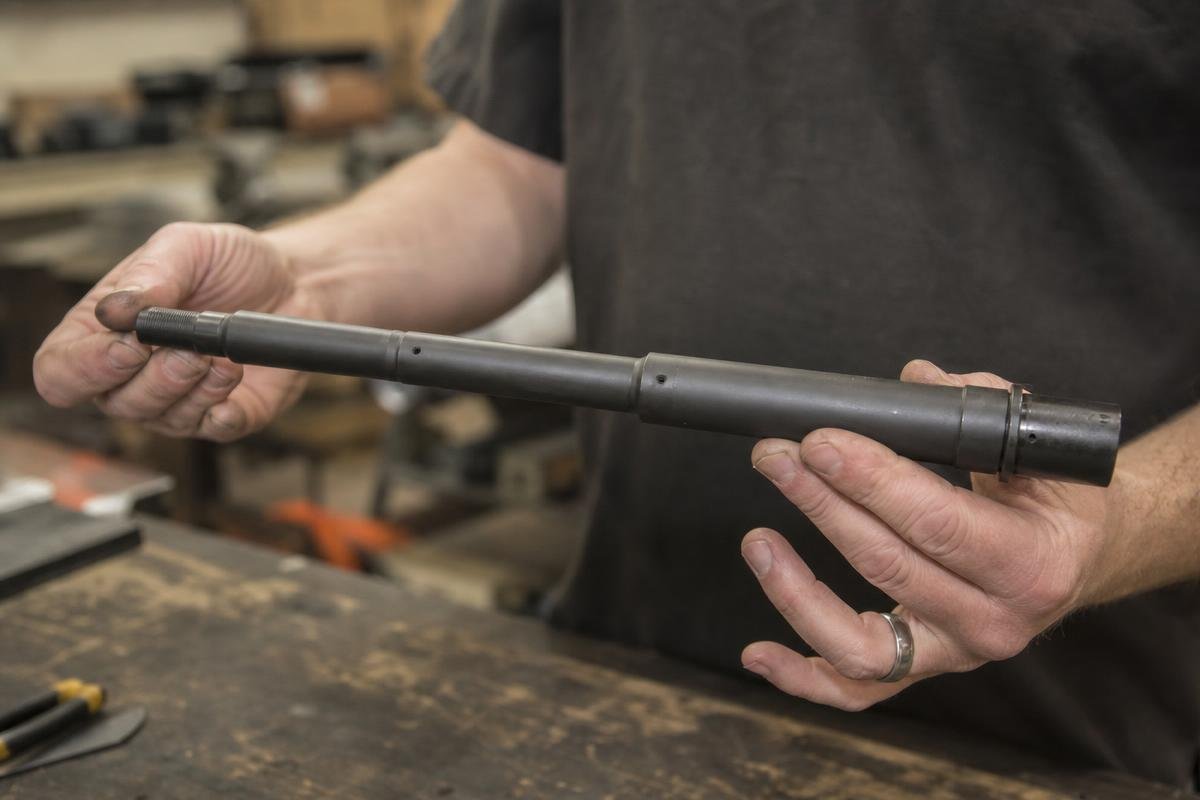
A mid-length AR-15 gas system uses a barrel port positioned between common carbine and rifle gas locations. Gas travels from that port through a mid-length tube to cycle the bolt carrier. On a comparable barrel, the farther-forward port generally means lower port pressure, while the remaining barrel length after the port controls dwell time.
A mid-length configuration is not automatically softer shooting or more reliable than every carbine setup. A barrel maker's gas-port diameter, the ammunition being fired, the seal at the block, buffer system, and suppressor use all affect the energy delivered to the carrier. If you prefer an assembly with those upper components selected together, review complete AR-15 uppers. Shipping availability varies by product and destination, and firearms must ship to a licensed dealer where required.
What Happens During the Mid-Length AR-15 Firing Cycle?
When the bullet passes the barrel gas port, a portion of expanding gas enters the gas block, travels through the tube, and reaches the carrier key. The carrier then moves rearward, the bolt unlocks, the fired case extracts and ejects, and the buffer spring returns the carrier forward to chamber the next round.
Gas Port Location and the Operating Cycle
Gas-system length describes the distance from the receiver area to the barrel port, not the size of that port. A mid-length tube must match a barrel drilled for a mid-length location. Swapping only the tube cannot move a carbine barrel's existing port.
Gas must also enter the block correctly. A misaligned block, loose fasteners, damaged tube, obstructed port, or poor seal can reduce the gas reaching the carrier. For a matched barrel, receiver, gas tube, and block assembly, browse our complete AR-15 uppers.
Why Dwell Time Matters
Dwell time is the interval from the bullet passing the gas port until it exits the muzzle. The barrel length remaining after the port creates that interval. On the same 16-inch barrel, a carbine port has more barrel ahead of it and therefore more dwell length than a mid-length port.
Port pressure and dwell time work together. A farther-forward port generally receives lower pressure, but a barrel with a larger port, a longer dwell interval, or a suppressor can still deliver substantial gas impulse. That is why gas-system length by itself does not predict bolt speed.
What Changes the Gas Curve
Gas-port diameter is separate from gas-system length. The barrel's drilled port controls how much gas can enter the system, while the location affects the pressure available at that point in the bore. Ammunition pressure, bore condition, gas-block alignment, and leakage also affect actual cycling.
At the rear of the rifle, carrier mass, buffer weight, receiver extension type, and action-spring condition influence how the system uses that energy. A suppressor can add backpressure and increase the amount of gas acting on the carrier. For a ready-to-run option, review our 5.56 NATO complete upper receivers with matched operating components.
Is a Mid-Length Gas System Better Than Carbine Length on a 16-Inch AR-15?
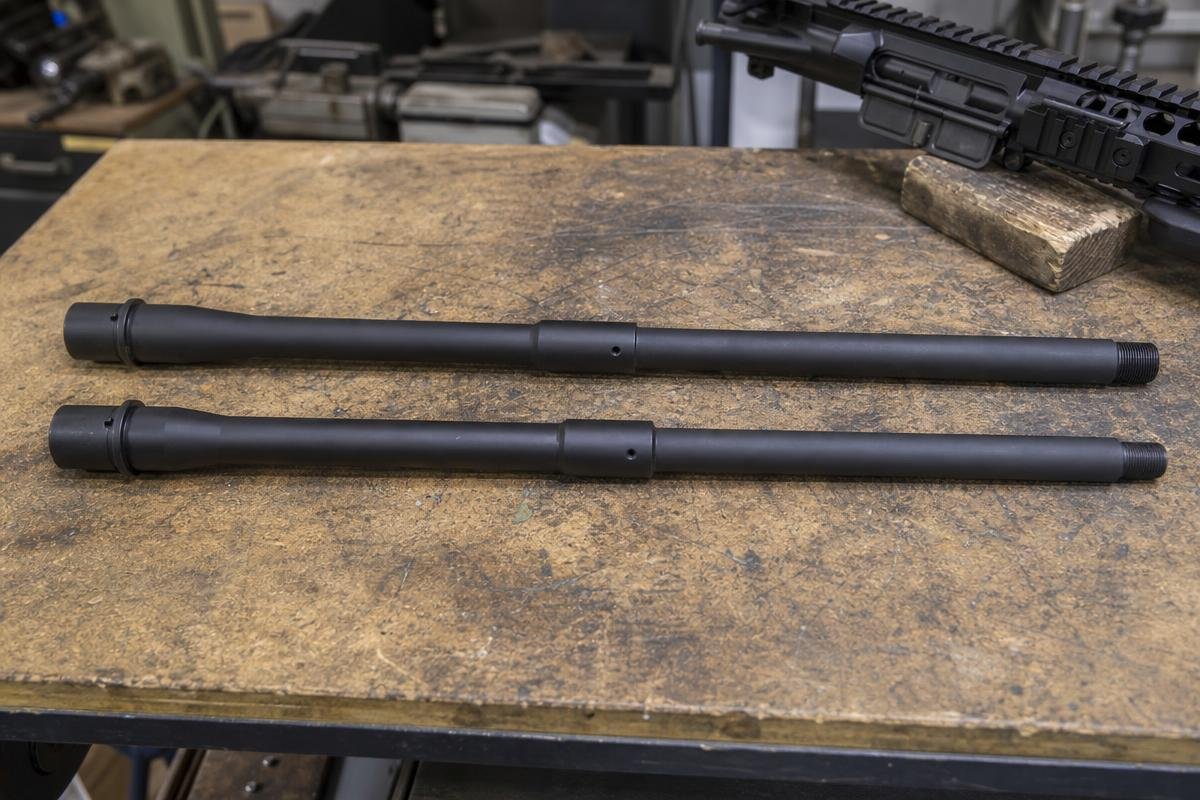
Neither system is universally better on a 16-inch AR-15. Mid-length gas commonly offers lower port pressure because the port is farther from the chamber, while carbine gas has more dwell length on the same barrel. The better choice is the complete, correctly sized and tested barrel-and-buffer combination for the ammunition and use case.
| Feature | Carbine Length | Mid-Length |
|---|---|---|
| Gas-port location | Closer to chamber | Farther down barrel |
| Typical barrel pairing | 10.5 to 16 inches | 16 inches most common; 14.5 to 18 varies |
| Required gas tube | Carbine tube | Mid-length tube |
| Port pressure on same barrel | Generally higher | Generally lower |
| Dwell length on 16-inch barrel | Longer | Shorter |
| Actual cycling behavior | Depends on total setup | Depends on total setup |
These barrel pairings are general ranges, not fixed rules. A 16-inch barrel is by far the most common mid-length pairing. A 14.5-inch mid-length barrel is less common and typically uses a pinned and welded muzzle device to meet the 16-inch minimum for a standard rifle.
Want a matched upper rather than piecing together a gas system?
Recoil Impulse and Carrier Speed
A mid-length setup may feel less abrupt when its barrel port and reciprocating parts are appropriately balanced, but felt recoil also comes from ammunition, muzzle device, rifle weight, stock fit, carrier mass, buffer mass, and spring rate. Do not use perceived recoil alone as proof that a rifle is correctly gassed.
Carbine gas can be dependable on a 16-inch barrel, and a mid-length barrel can be dependable as well. The useful comparison is not one label versus another, but whether the rifle locks back, feeds, extracts, and ejects consistently with the intended ammunition.
Pressure at the Gas Port
Port pressure is not chamber pressure. Pressure declines as the bullet travels down the bore, so a port farther from the chamber generally sees less pressure. A larger port can offset some of that difference, and added suppressor backpressure can change it again.
A carbine-gas barrel cannot become mid-length with a tube swap. The barrel's drilled port location establishes the system length, and the tube, gas block, and handguard arrangement must be chosen around that barrel.
Choosing by Barrel Length and Intended Use
For a 16-inch rifle, consider the chamber, ammunition you expect to use, suppressed or unsuppressed use, and whether you want to tune individual parts. A complete upper is often the more practical choice when you do not need a specialized barrel profile or adjustable gas setup.
If you are building from individual components, verify each product specification before ordering. If you need help confirming a barrel and tube match, contact our parts compatibility team.
Mid-Length Gas System Compatibility Checklist Before You Buy Parts
A mid-length build requires matched components, not only a mid-length gas tube. The barrel controls the gas-port location, so a carbine-length barrel cannot become mid-length by changing the tube. Check every item below before ordering parts.
- Barrel gas-system length: Confirm the barrel specification says mid-length.
- Correct gas-tube length: Confirm the tube is mid-length.
- Barrel gas-block journal diameter: Verify the barrel specification.
- Gas-block type: Confirm a low-profile or fixed block matches the journal.
- Handguard clearance: Confirm the block fits under the rail.
- Buffer and spring considerations: Match the receiver extension pattern, then evaluate mass and spring.
- Suppressor considerations: Account for added backpressure before final tuning.
Match the Barrel Gas-Port Location
The barrel determines whether the gas system is pistol, carbine, mid-length, or rifle length. Its drilled gas port must align precisely with the gas block port. A different tube does not change where gas leaves the barrel.
Browse our barrels and read the product listing before you buy. Confirm the stated gas-system length, barrel length, chamber, gas-block journal, and intended use. Complete AR-15 uppers reduce fitment variables because the barrel, tube, block, and upper assembly are selected as a set.
Use the Correct Gas Tube and Gas Block Journal
Order a mid-length gas tube only for a barrel marked mid-length. Then verify the barrel's gas-block journal specification before ordering a low-profile or fixed block. There is no single journal diameter that fits every barrel.
Check the block's inside diameter, attachment method, and outside profile. A free-float handguard must clear the block and allow installation without binding the tube. Fixed front sight bases require handguards designed for their shape and position.
Balance the Buffer, Spring, and Bolt Carrier Group
Receiver extension pattern and buffer weight are separate compatibility questions. First confirm the buffer and spring fit your receiver extension. Then evaluate buffer mass and spring rate only after the barrel, ammunition, carrier, and suppressor plan are known.
A heavier buffer is not a universal correction. Short-stroking can worsen if the system does not have enough available energy, while a heavily overdriven rifle may need inspection of the entire setup rather than a single part change. If you need a second set of eyes before placing an order, contact AR15Parts.com for parts compatibility help. AR15Parts.com is located at 4000 Texoma Parkway, Denison, TX 75020.
Suppressed Mid-Length Builds and Short-Barrel Limits
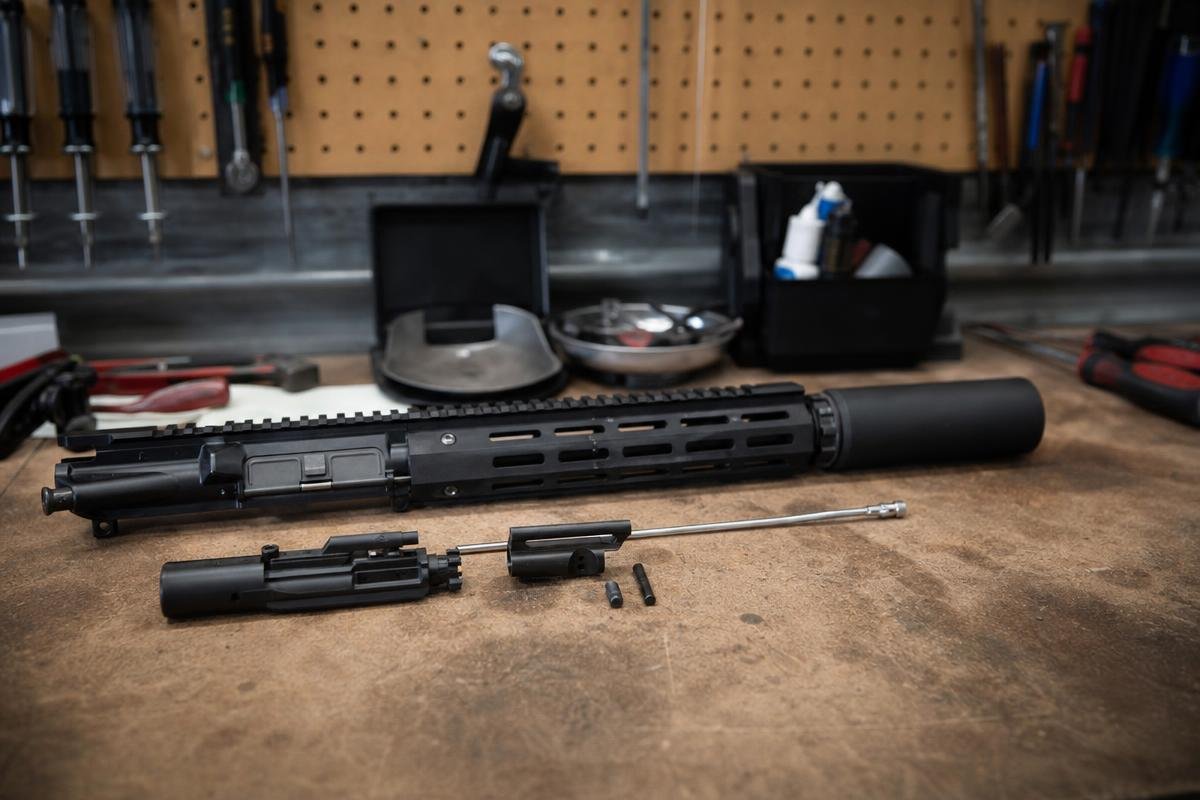
A suppressor can increase backpressure and extend the gas influence on the carrier. That may raise carrier speed, ejection force, fouling, and gas at the ejection port. Test with the ammunition and suppressor you actually intend to use, because behavior can differ significantly between loads and suppressor designs.
Start with barrel compatibility. The barrel sets the gas-port location, then the tube, block, buffer system, and spring must match the intended configuration. A complete upper can be preferable for suppressed use when you want the barrel and gas hardware assembled together rather than sourcing parts with unknown tolerances.
Can You Run Mid-Length Gas on an 11.5-Inch AR-15?
Yes, an 11.5-inch AR-15 can use a mid-length layout only when it is built around a purpose-designed mid-length barrel and correctly matched components. The shorter barrel leaves less dwell-length margin than a longer configuration, so ammunition, suppressor backpressure, and component condition become especially important.
An 11.5-inch carbine-gas barrel cannot become mid-length by replacing only the tube or gas block. Its port is already located for carbine length. A different barrel is required for a different gas-system layout.
Tune the System With Observation, Not Assumptions
Use safe, controlled function testing with the intended ammunition. Confirm lock-back on an empty magazine, consistent feeding, and normal extraction before making changes. A failure to lock back may point to weak ammunition, magazine drag, gas leakage, block misalignment, excessive buffer resistance, or a worn spring.
Signs of an overdriven action can include unusually forceful ejection, extractor wear, excessive fouling, or rough cycling, but no single symptom diagnoses a rifle by itself. Inspect the gas block, carrier key, bolt, extractor, magazines, buffer system, and ammunition before changing parts. For common 5.56 builds, review our 5.56 NATO complete upper receivers alongside your intended ammunition and suppressor setup.
Need help checking suppressed upper and barrel compatibility? Call (888) 706-0633.
How to Choose a Mid-Length Upper for Your Build
Choose barrel length, chamber, and intended use first. Then select a mid-length upper already matched to that barrel, or confirm every component specification before building. This avoids trying to convert a carbine-length barrel with only a different gas tube.
Start With the Barrel and Chamber
A 16-inch barrel is a common starting point for a mid-length build. Confirm the gas-system length in the barrel listing, since the port location is drilled into the barrel and cannot be changed with a tube swap.
For general-purpose builds, 5.56 NATO and .223 Wylde are common chamber choices. Match chamber, twist rate, ammunition weight, and intended use before buying. Our 5.56 NATO complete upper receivers give you a direct path for standard 5.56 NATO and .223 Remington ammunition.
Choose a Complete Upper or Source Compatible Components
A complete upper reduces fitment variables. The barrel, gas tube, gas block, upper receiver, handguard, and bolt carrier group are selected as an assembly. It is often the better route for a first build, a duty-oriented setup, or anyone who does not want to diagnose multiple independently sourced parts.
Source individual parts when you have a specific barrel profile, handguard length, adjustable gas block, or bolt carrier setup in mind and can confirm the specifications. Follow manufacturer installation instructions and use qualified assistance when needed.
Confirm the Lower Receiver Interface
A standard complete upper is intended to interface with a compatible mil-spec lower receiver. Verify your stock, buffer tube, buffer weight, and action spring separately, especially if those parts were selected for another build.
Check that the takedown and pivot pins seat correctly, then perform an appropriate function check before live firing. If you need help sorting parts compatibility, contact AR15Parts.com at (888) 706-0633.
Mid-Length AR-15 Parts Support from Denison

AR15Parts.com supplies firearms, parts, and accessories from 4000 Texoma Parkway, Denison, TX 75020. Call (888) 706-0633 if you need help confirming a mid-length AR-15 build before ordering.
Our team can help you compare a barrel, gas tube, gas block, handguard, buffer setup, and complete upper. Have the barrel marking or product specifications available, since the barrel gas-port location must match the tube and block arrangement.
Questions to Ask Before Ordering
Have these details ready so we can check compatibility and point you toward the right parts.
- Barrel length and chamber
- Current gas-system length
- Gas-block journal diameter
- Handguard style and length
- Suppressor plan and ammunition type
- Complete upper or individual-parts build
If you want a ready-to-drop-on-your-lower option, review our complete AR-15 uppers. For fitment questions, contact AR15Parts.com for parts compatibility help before placing your order.
Frequently Asked Questions
Is a Mid-Length Gas System Better Than Carbine Length?
Neither system is universally better. Results for carbine versus mid-length gas systems depend on barrel length, gas-port size, ammunition, buffer weight, and the complete operating setup. Mid-length is commonly chosen on 16-inch barrels for a longer gas path and a different recoil impulse.
What Barrel Length Works With a Mid-Length Gas System?
Sixteen-inch barrels are a common pairing for mid-length gas. Purpose-built configurations can vary, but compatibility with a mid-length gas system starts with a barrel drilled for that gas-port location. Check the barrel specification before ordering a tube or gas block.
Can I Change From Carbine Gas to Mid-Length Gas With a New Tube?
No, a new tube alone does not convert a carbine-gas barrel. The barrel port location determines gas-system length, so a conversion requires a barrel made for mid-length gas, plus the correct mid-length gas tube and matched gas block.
Does a Mid-Length AR-15 Need a Special Bolt Carrier Group?
No, a standard AR-15 bolt carrier group works with a mid-length system. Use a properly assembled carrier, correct bolt, and buffer setup. Our complete AR-15 uppers provide a simpler path when you want compatible upper components together.
Can You Run a Mid-Length System Suppressed?
Yes, a mid-length system can run suppressed if the barrel, port, buffer, spring, and ammunition work together. A suppressor adds backpressure, so watch ejection pattern, bolt speed, and reliability with your chosen ammunition.
Why Does My AR-15 Fail to Lock Back?
Failure to lock back can come from weak ammunition, a worn magazine, gas-block misalignment, gas leakage, a dirty action, an incorrect buffer, or a weak action spring. Inspect each item before changing parts. Need a second set of eyes before ordering a barrel, gas tube, gas block, buffer parts, or a complete upper? Contact AR15Parts.com for parts compatibility help at (888) 706-0633 and have your barrel length, chamber, current gas-system length, and suppressor plan ready.
Ready to Get Started with AR15Parts.com?
Call (888) 706-0633 to speak with our team directly. We're ready to answer your questions, walk you through your options, and help you find the right solution for your needs. Whether you're just starting to plan or ready to move forward, we'll make the process simple and stress-free. Reach out today and let's talk about how we can help.