
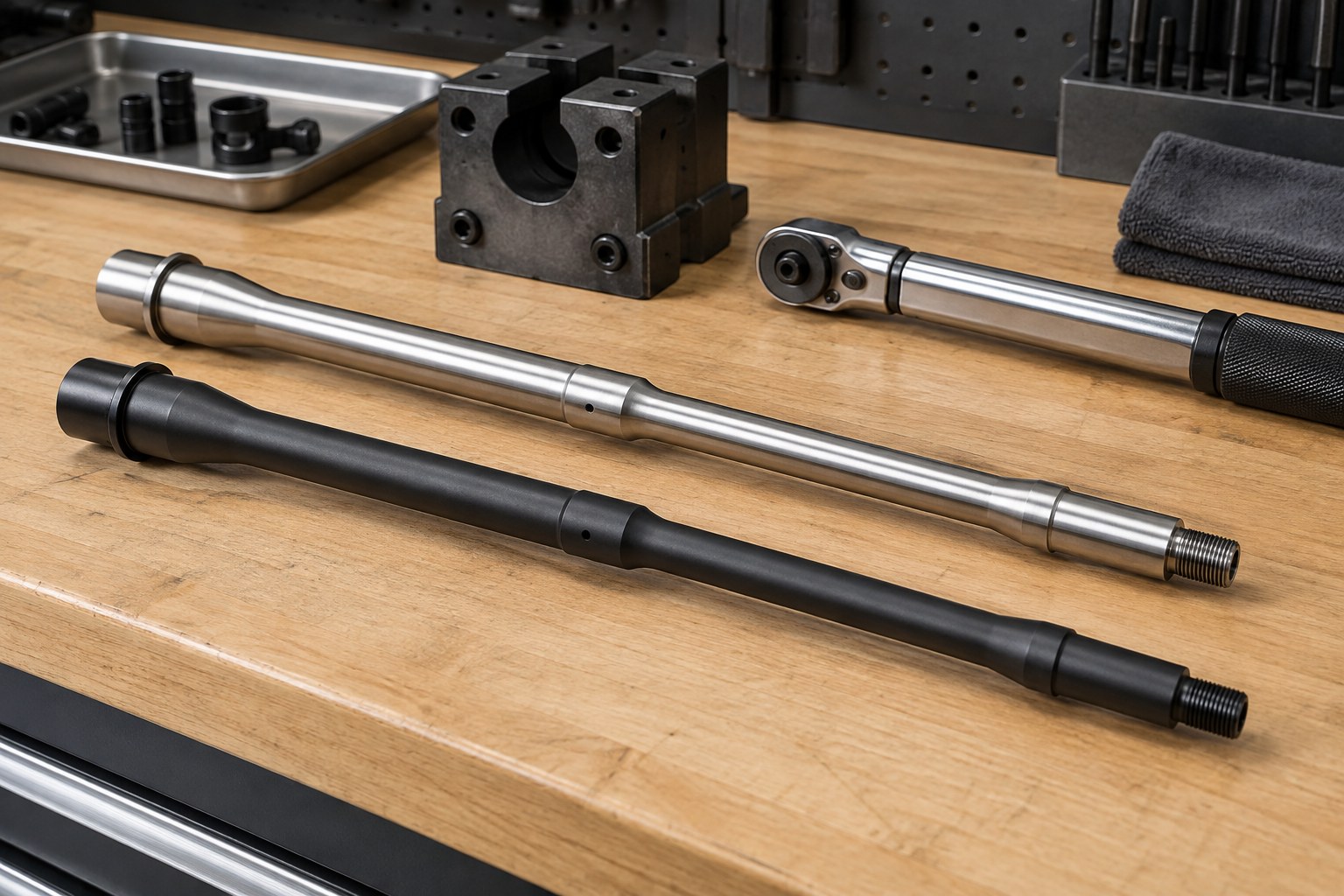
A stainless steel vs nitride barrel decision comes down to what the barrel is made of and how its surface is treated, and getting that distinction right matters for a build that has to handle Texoma humidity between range trips. AR15Parts.com stocks both 416R stainless barrels and nitride-treated carbon steel barrels across common AR-15 and AR-10 chamberings, so Denison-area shooters can match the material to how the rifle will actually be used. Below, we break down the metallurgy, the finish options, and the maintenance habits that keep either barrel performing near Lake Texoma's damp air. Have a specific caliber or profile in mind?
Key Takeaways
- Choosing between a stainless and a nitride-treated barrel is really a question of base material versus surface treatment, since a barrel can be stainless, nitride-treated carbon steel, or both.
- 416R stainless steel is a chromium-alloyed steel commonly used for precision rifle barrels because of its machinability and corrosion resistance.
- Nitride, also called QPQ (quench polish quench), is a salt-bath nitrocarburizing treatment applied to a carbon steel barrel such as 4150 chrome moly vanadium (CMV) to add surface hardness and a corrosion-resistant layer.
- Some barrels, including Ballistic Advantage Premium Black Series barrels, combine 416R stainless steel with a QPQ finish for both benefits at once.
- Precision, varmint, and target shooters often lean toward stainless profiles, while duty, general-purpose, and high-round-count builds commonly favor nitride-treated carbon steel or QPQ stainless.
- Cleaning routine and storage matter more than material alone for keeping any AR-15 barrel free of corrosion in a humid North Texas climate.
What Actually Separates a Stainless Steel Barrel from a Nitride Barrel?
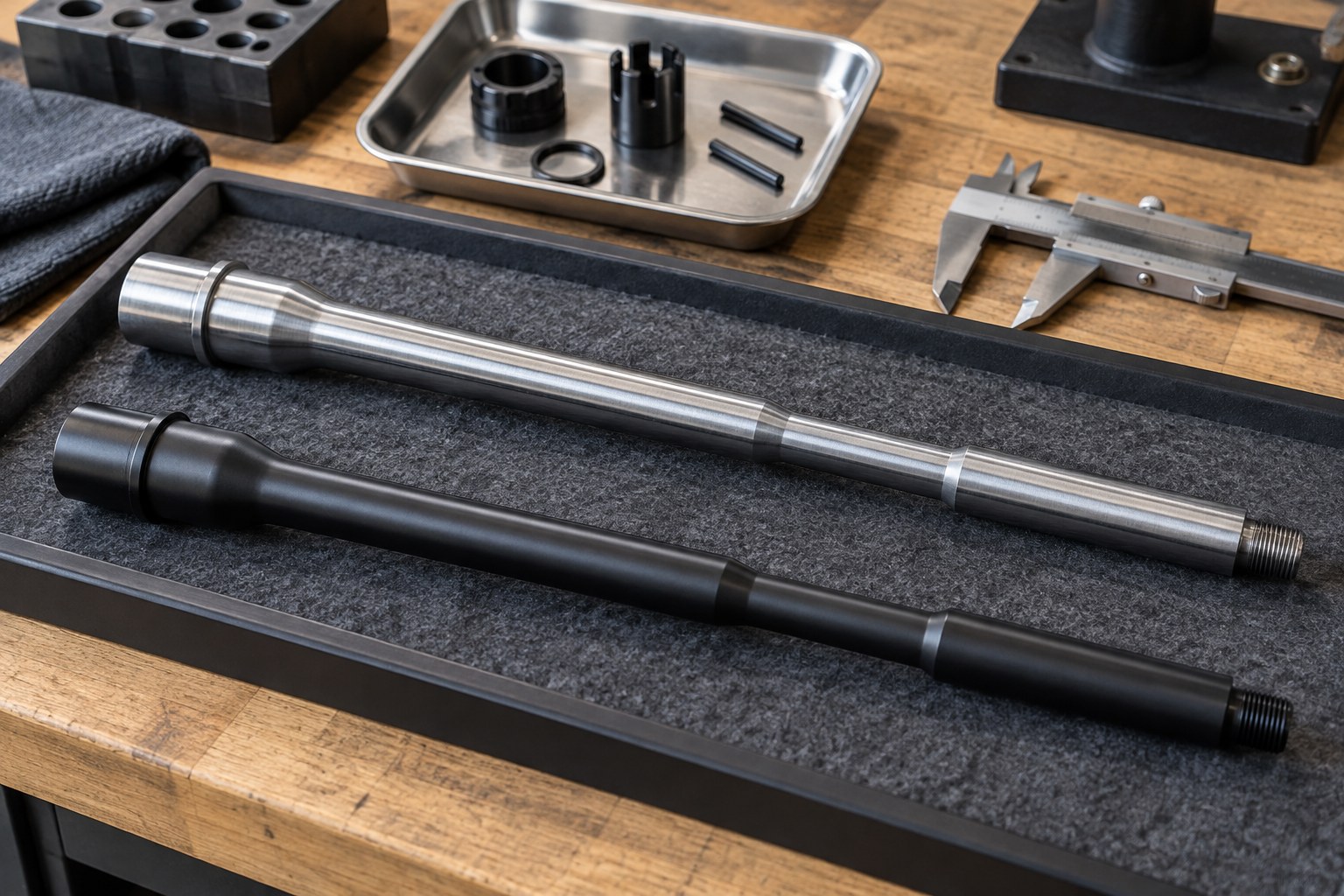
This comparison often gets treated as a single choice, but it is really two separate questions: what the barrel is made of, and what has been done to its surface. Stainless steel is a base material. Nitride, or QPQ, is a surface treatment that can be applied to more than one type of steel. Understanding which question you are answering makes the rest of the decision much easier.
What Makes 416R Stainless Different
Most stainless AR-15 barrels, including the Satern Barrels, Shaw Barrels, and Wilson Combat stainless barrels carried by AR15Parts.com, are machined from 416R stainless steel. According to steel producer Rolled Alloys, 416R is a pre-hardened, low-sulfur, chromium stainless alloy containing roughly 12 percent chromium, developed specifically for high-quality precision rifle and pistol barrels because of its machinability and general corrosion resistance compared to plain carbon steel. That chromium content runs through the entire barrel, not just the surface, which is why stainless barrels resist surface corrosion even where the finish gets scratched or worn.
What Nitride and QPQ Do to a Carbon Steel Barrel
Nitride-finished barrels typically start as a carbon steel such as 4150 chrome moly vanadium (CMV), a steel alloyed with chromium, molybdenum, and vanadium and commonly specified for mil-spec M4 and M16 pattern barrels. QPQ, short for quench polish quench, is a salt-bath nitrocarburizing process that diffuses nitrogen into the steel's surface, then forms a thin oxide layer during a final quench step. That process case-hardens the surface and adds a corrosion-resistant skin to a barrel that would otherwise rely on a separate coating like Parkerizing or chrome lining for protection. The nitride layer is a treatment on top of carbon steel, not a change to the base metal underneath it.
Why Some Barrels Are Both Stainless AND Nitride Treated
Because material and finish are separate choices, a barrel can be both stainless and QPQ treated. Ballistic Advantage Premium Black Series barrels, sold by AR15Parts.com in calibers including 22 ARC, 223 Wylde, 6mm ARC, 308 Winchester, and 338 ARC, are machined from 416R stainless steel and then given a QPQ finish, according to Ballistic Advantage's own product listings. That combination is worth remembering before you assume "stainless" and "nitride" are always opposite ends of the same choice. If you are comparing options for a specific chambering, browse current AR-15 and AR-10 barrels to see which profiles are available in each material and finish.
Stainless Steel vs Nitride Barrel: A Decision Table for Your AR-15 Build
The table below summarizes how the two main options typically compare across the factors that matter most to Denison-area builders. Because product availability changes, treat this as a starting point and confirm the exact specification on the product page before you order.
| Factor | 416R Stainless Steel Barrel | Nitride-Treated 4150 CMV Barrel |
|---|---|---|
| Corrosion resistance source | Chromium content runs through the entire barrel, per steel producer data sheets | Surface nitride/QPQ layer created by nitrocarburizing plus an oxide finish |
| Common finish look | Bright stainless, matte stainless, or glass-bead stainless | Black QPQ or nitride finish, sometimes combined with 416R stainless as well |
| Typical shooter focus | Precision, varmint, and target-oriented builds | Duty, general-purpose, and higher-volume range use |
| Base steel options | 416R stainless steel only | Usually 4150 CMV, but 416R stainless can also receive a QPQ finish |
| Care after wet range days | Wipe down and lightly oil; chromium content adds a margin of forgiveness | Wipe down and oil promptly since exposed carbon steel under a worn coating can corrode faster |
Which Barrel Fits Your Use Case: Precision, Duty, or General Purpose?
Neither material is universally "better." The right choice between the two depends on what the rifle is built to do, how it will be cleaned, and how much it will be handled in the field around Denison and the Texoma area.
Precision, Varmint, and Target Shooting
Shooters chasing tight groups at the range often gravitate toward stainless barrels in calibers such as 204 Ruger, 223 Wylde, 224 Valkyrie, 22 ARC, or 6mm ARC. In general, a barrel's accuracy comes primarily from consistent rifling, bore finish, and quality control rather than the base material itself, so a well-made nitride barrel and a well-made stainless barrel can both shoot accurately. What stainless steel does reliably offer is a consistent bore surface that many barrel makers prefer to lap and finish for match-grade work.
Duty, General-Purpose, and High Round-Count Builds
Nitride-treated 4150 CMV barrels are a common choice for carbines and general-purpose rifles that see a wide mix of ammunition, weather, and storage conditions, including calibers like 5.56 NATO, 300 Blackout, and 7.62x39. The combination of chrome-moly-vanadium steel and a QPQ or nitride finish is associated with barrels designed to handle sustained use across varied conditions rather than dedicated slow-fire precision work. For a build that will see hunting trips, range days, and everyday storage, this is often the more forgiving pairing to maintain.
Want a ready-to-run option? Shop AR uppers by caliber, barrel length, and handguard.
Splitting the Difference with a QPQ Stainless Barrel
If you want the bulk corrosion resistance of stainless steel with the added surface hardness and black finish of QPQ, look at 416R stainless barrels that already carry a QPQ treatment, such as the Ballistic Advantage Premium Black Series options. That pairing lets you keep a precision-oriented base material while adding a treated surface that some shooters find easier to maintain in the field. For a broader side-by-side look at all three common barrel treatments, our AR Upper Hub guide to chrome-lined, nitride, and stainless barrels covers how each finish compares on a mil-spec carbon steel barrel.
Corrosion Care for Texoma Humidity and Range Days at Lake Texoma
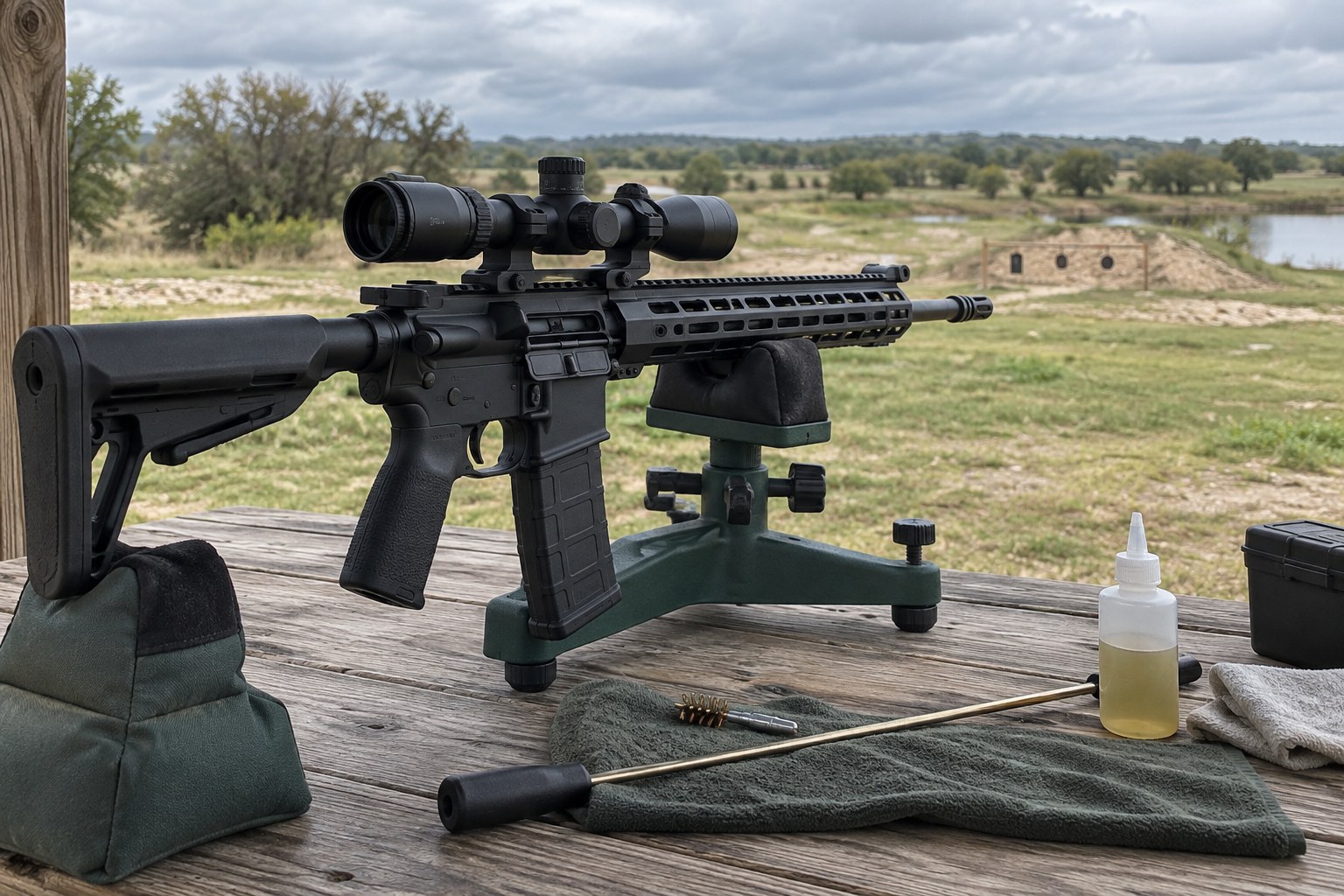
North Texas summers bring high humidity, and a rifle stored in a case after a sweaty range day or a morning of hog or deer hunting near Lake Texoma can absorb moisture before you notice it. Material and finish both affect how forgiving a barrel is of that exposure, but neither replaces a cleaning routine.
Cleaning a Stainless Barrel vs a Nitride Barrel
Both barrel types should be cleaned with an unloaded firearm, a quality bore solvent, and a properly sized brush and rod, following the barrel or rifle manufacturer's published cleaning instructions. Stainless steel's chromium content is distributed through the metal, so light surface scratches from cleaning rods or brushes are less likely to expose bare, unprotected steel. A nitride or QPQ finish is a thin surface layer; once it wears through at a high-friction point such as the crown or feed ramp area, the carbon steel underneath behaves like any other bare carbon steel and needs the same prompt attention to avoid corrosion.
Storage Habits That Matter More Than Material
Whatever barrel you choose, wipe the bore and exterior down after a range day before the rifle goes back into a case, store it somewhere with reasonable airflow rather than a sealed case in a hot vehicle, and reapply a light coat of oil periodically during storage. These habits reduce corrosion risk far more than the difference between a stainless and a nitride finish on their own.
How Long Will Each Barrel Last? Talking About Barrel Life the Right Way
Barrel life depends on caliber, chamber pressure, cleaning habits, ammunition, and how a rifle is fired, so any specific round-count figure you see online should be treated skeptically. In general terms, a nitride or QPQ surface adds hardness that can help resist throat erosion and surface wear, and stainless steel's machinability lets manufacturers hold tight tolerances that support long-term accuracy retention. Rather than chasing a promised lifespan, plan on periodically checking bore condition, throat erosion, and accuracy as the rifle accumulates rounds, and have a qualified gunsmith inspect the bore if velocity or group size changes noticeably over time.
Barrel Length, Twist Rate, and NFA Rules to Confirm Before You Buy
Material and finish are only part of the specification. Twist rate should match the bullet weights you plan to shoot, and gas system length should match the barrel length per the component manufacturer's published specification; never modify a gas port or drill a barrel to change gas timing. If you are considering a barrel under 16 inches for an AR-15 build, remember that the Bureau of Alcohol, Tobacco, Firearms and Explosives (ATF) classifies a rifle with a barrel shorter than 16 inches as a short-barreled rifle under the National Firearms Act, which requires ATF registration regardless of stock or brace configuration. The federal making and transfer tax for short-barreled rifles has been reduced to zero dollars since January 1, 2026, under the One Big Beautiful Bill Act, but the registration requirement itself has not changed, so confirm current ATF guidance before building a sub-16-inch rifle-configured upper.
Once you have settled on caliber, length, twist, and material, browse current options to compare stainless and nitride-finished barrels side by side.
Barrel Material Help for Denison and Texoma Builders
Shooters across Denison and the wider Texoma area deal with a mix of range days, hunting season prep, and long-term storage between trips, and that mix is exactly why a stainless steel vs nitride barrel decision deserves some thought rather than a coin flip. A precision-focused varmint or target rig, a general-purpose carbine for range days, and a duty-style build for higher round counts can all reasonably end up with different barrel specifications on the same workbench.
Our team can answer questions about which barrel material and finish fit a specific caliber, twist rate, and gas system combination. If you are not sure whether a 416R stainless barrel, a nitride-treated 4150 CMV barrel, or a QPQ stainless option makes more sense for your rifle, that is exactly the kind of fitment question our parts team can help you sort out.
Reach AR15Parts.com at 4000 Texoma Parkway, Denison, TX 75020, or call (888) 706-0633 during business hours to talk through your build before you order.
Frequently Asked Questions
Is a Stainless Steel Barrel More Accurate Than a Nitride Barrel?
Not automatically. Accuracy depends primarily on rifling quality, bore finish, and manufacturing consistency rather than the base material alone. Both well-made stainless and well-made nitride-treated barrels can shoot accurately, so compare the specific barrel's profile, twist rate, and manufacturer rather than assuming material decides the outcome.
Can a Barrel Be Both Stainless Steel and Nitride Treated?
Yes. Material and finish are separate choices, and some manufacturers apply a QPQ nitride treatment to 416R stainless steel barrels, including the Ballistic Advantage Premium Black Series line. That combination adds a treated surface on top of a chromium stainless base rather than forcing a choice between the two.
Does Nitride Mean the Same Thing as QPQ?
QPQ, or quench polish quench, is one common salt-bath nitrocarburizing process used to produce a nitride finish, and the terms are often used interchangeably in the AR-15 market. Both describe a surface treatment that diffuses nitrogen into the steel and adds a corrosion-resistant oxide layer, rather than a change to the base metal.
Which Barrel Handles Humidity Better, Stainless or Nitride?
Stainless steel's corrosion resistance runs through the entire barrel because of its chromium content, while a nitride or QPQ finish protects only the surface of the carbon steel underneath. Either barrel handles Texoma humidity well with a consistent wipe-down and oiling routine, but a worn nitride surface exposes bare carbon steel that needs prompt attention.
Is 4150 CMV a Type of Chrome Lining?
No. 4150 chrome moly vanadium (CMV) describes the base steel alloy, which includes chromium as an alloying element, not a chrome lining inside the bore. Chrome lining is a separate plating process applied to the bore and chamber, and a barrel can be 4150 CMV with or without a chrome lining or a nitride finish.
Do I Need a Gunsmith to Install a New Barrel?
If you are not confident checking headspace or torquing a barrel extension or barrel nut to the component manufacturer's published specification, have a qualified gunsmith handle the installation. Our AR Upper Hub headspacing guide walks through what a proper headspace check involves. Incorrect headspace or torque can create a safety issue, so always work with an unloaded firearm and stop if anything about the fit does not match the instructions.
Ready to Get Started with AR15Parts.com?
Call (888) 706-0633 or email [email protected], Monday through Friday from 8:00 AM to 4:00 PM Central, and our team can help you match a stainless steel or nitride-treated barrel to your caliber, twist rate, and use case. Whether you are building a precision rig or a general-purpose carbine, we can walk you through current options before you order. Check our frequently asked questions page for common fitment and ordering questions.