
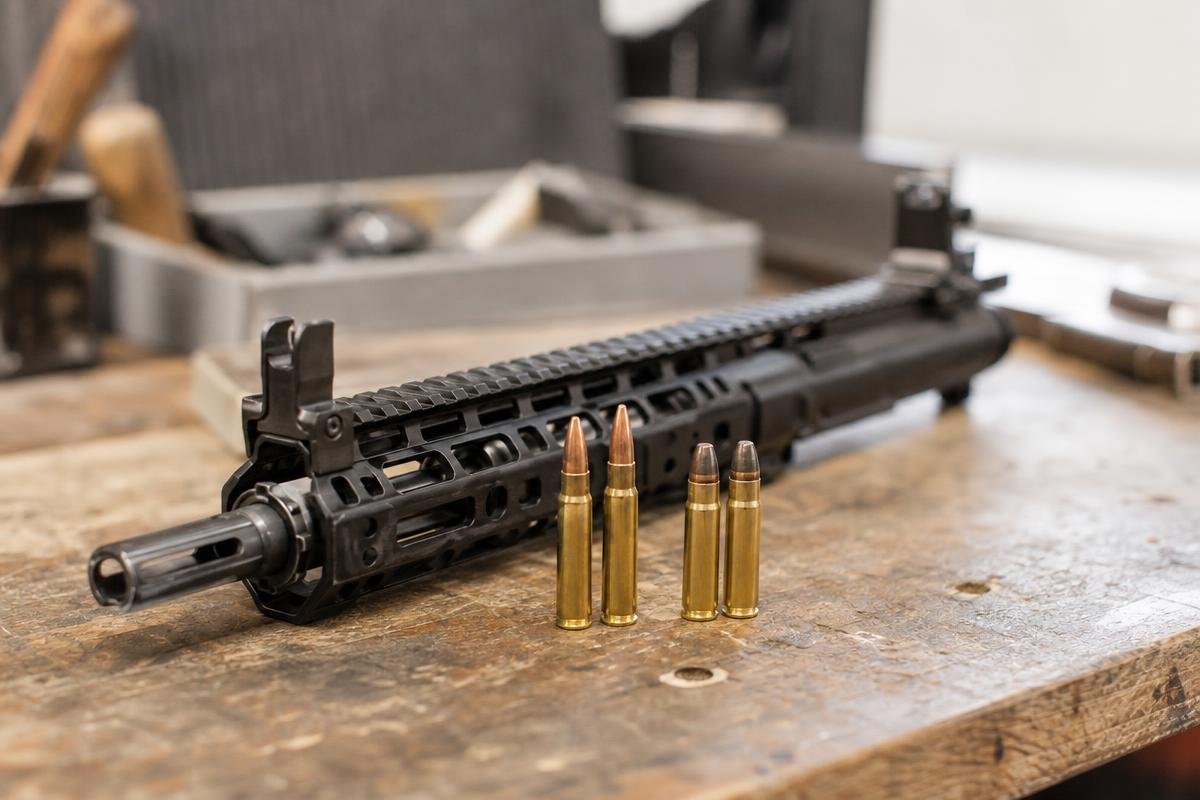
When it comes to 300 Blackout ballistics, performance splits cleanly into two worlds: supersonic loads pushing 110- to 125-grain projectiles past 2,000 fps, and subsonic loads running 190- to 240-grain bullets below 1,050 fps for suppressed use. Choosing the wrong load for your barrel length, twist rate, or intended range costs you real performance.
We ship 300 Blackout uppers and barrels nationwide from our Denison, TX facility. Our team can help you compare configurations by phone at (888) 706-0633 or through our contact form.
Key Takeaways
- The two performance profiles divide cleanly: supersonic for range and terminal energy, subsonic for suppressed use.
- Supersonic 300 BLK loads typically deliver 1,200 to 1,350 ft-lbs of energy at the muzzle; subsonic loads run closer to 450 to 550 ft-lbs.
- Short barrels are common suppressor hosts, but reliable subsonic cycling depends on the complete firearm, ammunition, and suppressor configuration rather than barrel length alone.
- Subsonic loads are significantly more affected by crosswind at distance, making supersonic loads the better choice for open-ground shots past 100 yards.
- A 1:8 twist rate handles both 110-grain supersonic and 220-grain subsonic projectiles without requiring a dedicated barrel for each load type.
Supersonic 300 BLK loads leave a 16-inch barrel at roughly 2,200 to 2,375 fps. Subsonic loads run near 1,050 fps. That gap of 1,200 fps or more is the central difference between the two load types. Same rifle. Same bolt carrier group. Same magazine. Completely different ballistic behavior depending on which round you chamber.
That velocity difference drives everything downstream: energy at impact, effective range, suppressor performance, and how your barrel length shapes each load. The differences matter when comparing configurations. If you are deciding on a build, our complete 300 Blackout uppers are a practical starting point once the ballistic data informs your component choices.
Why 300 Blackout Was Built to Run Both Load Types
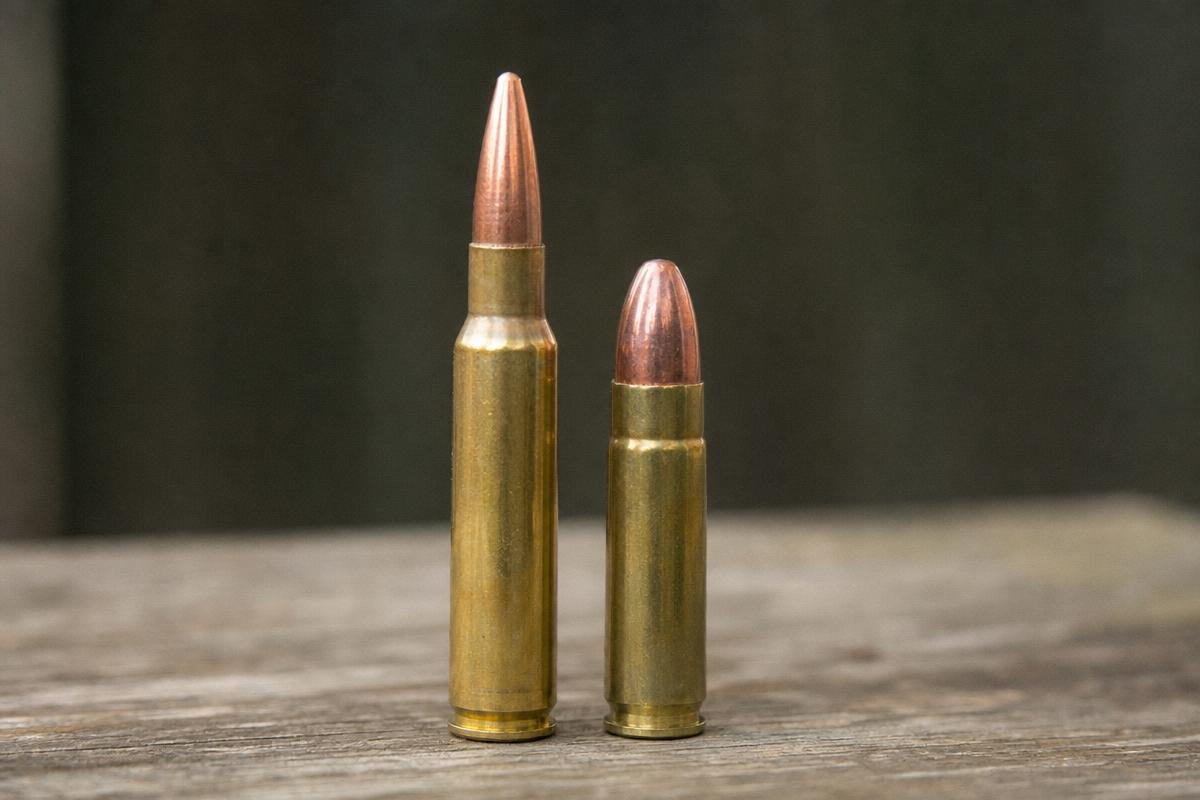
Advanced Armament Corporation and Remington Defense developed 300 BLK to support supersonic and subsonic performance in the AR-15 platform while retaining key compatibility advantages.
The SOCOM Requirement That Created the Cartridge
The design brief was strict. The new round had to feed from standard AR-15 magazines, run on the same bolt carrier group, and require zero modification to the lower receiver. The cartridge uses a shortened, resized case derived from the 5.56/.223 case family and retains the standard AR-15 bolt face. The case dimensions stayed close enough to 5.56 that the cartridge can use standard AR-15 bolt geometry and compatible magazines when the components are properly matched. No new lower. No new bolt. Just a barrel change.
How One Chamber Handles a 500 ft-lb Subsonic and a 1,350 ft-lb Supersonic Round
The 300 BLK chamber headspaces on the case shoulder. The cartridge design supports bullet weights from 110-grain supersonic loads up to 220- to 240-grain subsonic loads, while cycling behavior still depends on the gas system, buffer, ammunition, and suppressor configuration.
Gas system tuning is the real variable in quiet suppressed performance. Cycling reliability depends on gas-port location and diameter, barrel length, buffer setup, ammunition, and suppressor use. Adjustable gas blocks can reduce excess gas but do not correct every under-gassed configuration. Check the specifications for each upper and confirm compatibility with your intended ammunition.
300 Blackout Ballistics Comparison: The Numbers Side by Side
Velocity and Energy: What the Published Data Shows
The gap between the two profiles is not subtle. Supersonic and subsonic loads are practically two different cartridges sharing the same case. A 110-grain supersonic load can produce substantially more velocity and energy than a heavy subsonic load. Use the exact manufacturer's published data for the named product, barrel length, and projectile type rather than grouping dissimilar loads together.
The subsonic energy figure is in the range of some handgun loads, but terminal performance depends on projectile design and conditions. The table below contains illustrative estimates, not figures reproduced from identified Hornady, SIG Sauer, or Remington products or standardized test barrels. Actual velocity varies by load and firearm.
If you are selecting a complete 300 Blackout upper for a specific role, these numbers should drive that decision before anything else does.
Ballistic Comparison Table
| Load Type | Bullet Weight | Illustrative Velocity (16-in barrel) | Muzzle Energy | Effective Range | Suppressor Compatibility | Primary Use |
|---|---|---|---|---|---|---|
| Supersonic FMJ | 110 gr | 2,350 fps | ~1,350 ft-lbs | Load-dependent | Compatible, not optimized | Training |
| Supersonic HP | 125 gr | 2,200 fps | ~1,345 ft-lbs | Load-dependent | Compatible, not optimized | Hunting, defense |
| Subsonic OTM | 220 gr | 1,050 fps | ~540 ft-lbs | Close range; load-dependent | Optimized | Suppressed target use |
| Subsonic | 240 gr | 1,010 fps | ~544 ft-lbs | Close range; load-dependent | Optimized | Suppressed target use |
The spread across these four loads covers nearly every practical use case in a single platform. For shooters comparing barrel configurations, our AR-15-style barrels page lists available 300 BLK lengths with gas system specs.
Suppressor Performance: Where Subsonic 300 BLK Has a Clear Advantage
Why Subsonic Loads Stay Quiet and Supersonic Loads Don't
A suppressor reduces muzzle blast. It cannot eliminate the ballistic crack a bullet produces when it breaks the sound barrier at roughly 1,125 fps at sea level. That crack is a small sonic boom, and no suppressor on the market stops it. A supersonic load traveling at 2,200 fps is quieter suppressed than unsuppressed, but it is not hearing-safe. Keeping the projectile subsonic removes the ballistic crack, allowing the suppressor to reduce the dominant muzzle-blast component. Mechanical and impact noise remain. The result can be substantially quieter, but hearing protection is still recommended unless tested sound levels support a different conclusion.
Suppressors remain subject to current federal, state, and local requirements. Confirm the complete legal configuration before building or buying. The speed of sound changes mainly with air temperature, and actual muzzle velocity also varies by load and firearm. Loads pushed to the 1,080 to 1,100 fps range can cross that threshold unpredictably depending on temperature and atmospheric pressure. If you are building for consistent suppressed performance, stay well below 1,050 fps with your subsonic loads. That margin matters in the field.
Building a Suppressor-Ready 300 BLK Upper
Three components drive suppressed 300 BLK performance at the upper level. First, barrel length: an 8 to 10 inch barrel is the most common suppressor host configuration, though a 16-inch barrel works. Second, thread pitch: 5/8x24 is the standard for .30 caliber suppressors, and your barrel needs to be threaded to match. Third, an adjustable gas block lets you tune gas pressure for reliable cycling across both load types, since the two run very different pressure curves. Check each 300 Blackout barrel listing for length, thread pitch, gas-system specifications, and compatibility with the intended upper assembly.
Terminal Ballistics: How Each Load Performs on Target
Supersonic Terminal Effect at Hunting and Defensive Ranges
Supersonic terminal ballistics are genuinely impressive inside 200 yards. A 110 gr V-MAX or 125 gr hollow point at 2,200 to 2,350 fps produces rapid fragmentation and a significant wound channel. For deer-sized game, a cautious reference for suitable supersonic hunting loads is around 150 to 200 yards, not a universal limit. Follow the specific manufacturer's expansion and impact-velocity data, confirm accuracy, and comply with local law.
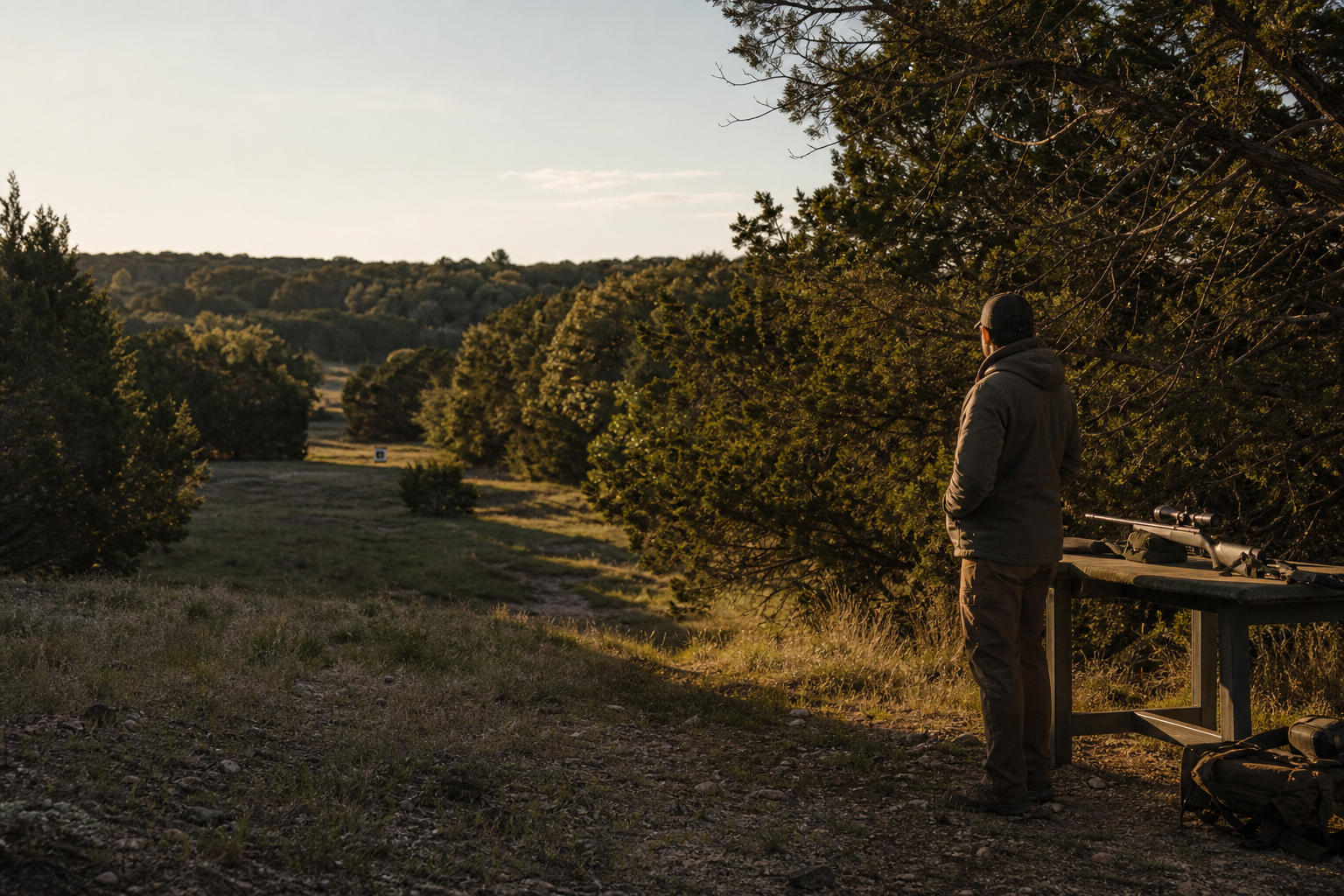
Whitetail hunters in Grayson County work wooded creek bottoms and cedar breaks where most shots stay inside 100 to 150 yards. That is exactly where a supersonic load performs at its best. Do not treat a distant fragmentation threshold as an ethical hunting distance; verified expansion, accuracy, and conditions set a shorter load-specific limit.
If you want a complete upper ready to hunt with this season, we assemble and headspace units in-house, ready to drop onto your lower.
Subsonic Terminal Effect and Its Real Limitations
Subsonic terminal ballistics tell a different story. At 490 to 540 ft-lbs of energy, these loads do not fragment reliably. Terminal effect depends almost entirely on bullet construction. Solid or bonded projectiles penetrate deeply without expanding. OTM bullets may expand modestly, but results vary.
Standard subsonic ammunition is not an ethical choice for deer-sized game unless you are running a specifically designed expanding subsonic bullet. It is effective for suppressed pest control, close-range hog hunting with the right projectile, and CQB applications. For subsonic hunting loads, a conservative reference is around 100 yards or less, and only when the specific expanding projectile meets the manufacturer's performance guidance and local legal requirements. Know what your load is built to do before you pull the trigger on a hunting application.
How Barrel Length Changes Your 300 Blackout Ballistics
Barrel length matters differently depending on which load you run. The two profiles respond to barrel length changes in opposite ways, and that difference should drive your build decision before you order parts.
Short Barrels (8- to 10-Inch): Subsonic Optimized, Supersonic Trade-offs
Heavy subsonic loads may show a smaller velocity change between short and longer barrels than lightweight supersonic loads, but the difference depends on the specific ammunition and firearm. Consult load-specific test data rather than assuming a fixed velocity loss.
Supersonic loads take a harder hit. A 110 gr load producing 2,350 fps from a 16-inch barrel can drop to 1,900-2,000 fps from an 8-inch tube. That translates to a 200-300 ft-lb reduction in muzzle energy and a shorter effective range. For brush hunting where shots stay inside 100 yards, that trade-off may be acceptable. For anything past that, it costs you real performance.
One more thing: barrels under 16 inches on a rifle-stock build require NFA registration. Talk to a qualified attorney or FFL before cutting barrel length on a rifle configuration. We can point you toward the right paperwork questions at (888) 706-0633.
Barrels from 12 to 16 Inches: The Practical Balance Point
A 16-inch barrel delivers full published performance for both load types. It is the most common non-NFA configuration and the safest choice if you run mixed loads regularly. Understanding how to choose the right gas system length matters here, because dwell time directly affects reliable cycling with both load weights.
A 12-inch configuration can keep the package compact, but legal classification and cycling behavior depend on the complete build and current federal and state rules. For hunters working the cedar breaks and river bottoms of North Texas, that compact form factor is a real advantage. Browse complete AR-15 uppers in multiple calibers to see available configurations ready to drop onto your lower.
Need help picking the right barrel length for your build? Call us at (888) 706-0633 and we will walk you through the options.
Effective Range: What Each Load Can Realistically Do
Supersonic 300 BLK Trajectory and Drop at Distance
Trajectory depends on the exact load, measured muzzle velocity, ballistic coefficient, sight height, atmospheric conditions, and zero. For deer-sized game, do not treat 300 to 400 yards as a general ethical range for 300 BLK. A conservative reference for suitable supersonic hunting loads is around 150 to 200 yards, subject to the manufacturer's terminal-performance data. Set your own shorter maximum where the load still expands reliably and you can place shots accurately under the conditions.
Subsonic 300 BLK and Its Steep Trajectory
A 220-grain subsonic load follows a steep, load-specific trajectory. Zeroed at 50 yards, it drops 10 to 12 inches at 100 yards and 40 or more inches at 200 yards. Holdover calculations past 150 yards become difficult to repeat consistently on small targets.
Open pasture land east of Denison adds another variable. Crosswind can move a subsonic bullet substantially, with the amount depending on the exact load and conditions. That is significant for pest control or close-range hog hunting. The wooded draws along the Red River corridor keep most shots inside 100 yards anyway, which is exactly where a suppressed subsonic setup does its best work. The range limitation is not a flaw. These two loads solve different problems, and the ballistics reflect that design intent directly.
If you are building for either role, browse our in-stock uppers to find a configuration matched to your intended distance.
Which 300 Blackout Load Is Right for Your Build?
Matching Your Primary Use Case to the Right Load Type
The right load depends on what your rifle actually needs to do. Here are three common use cases:
- Defensive use: Do not assume generic subsonic OTM expands reliably. Evaluate purpose-built defensive expanding ammunition using manufacturer data and credible terminal testing, with attention to penetration, firearm reliability, and applicable law.
- Whitetail or hog hunting in wooded creek bottoms: Supersonic 110 to 125 gr HP. A 16-inch barrel with a standard carbine gas system covers most shots inside 200 yards. This is the load for North Texas timber and cedar breaks where ranges stay short.
- General-purpose rifle running both: 16 inch barrel with an adjustable gas block. Zero for supersonic at 100 yards and use a holdover reference for subsonic at close range.
The AR-15 platform's modular design gives you another option entirely. The same lower can accept separate complete uppers configured for each role. Local shooters who hunt timber and run suppressed pest control on open pasture leases are a natural fit for the two-upper approach.
Zeroing Strategy When You Run Both Loads
Supersonic and subsonic loads do not share a zero. Point of impact can shift substantially at 100 yards between the two load types. You have three options: zero for supersonic and use a holdover for subsonic, use documented turret adjustments or reticle holds, or dedicate separate uppers to each load type. Review your AR-15 stock and build configuration options if you are setting up a dedicated suppressor host build. If you only want one zero, set it for supersonic and treat subsonic as a close-range hold.
300 Blackout Ballistics in Context: Denison, TX Shooting Conditions
Grayson County's elevation alone does not determine the local speed of sound. Temperature and actual chronograph velocity are the more useful checks for whether a load remains subsonic. For most loads it is a non-issue, but if you are running a load that exits at 1,080 to 1,100 fps, that margin shrinks. A round you think is subsonic can go transonic at the muzzle and produce a crack you did not expect. Know your load's actual velocity before you assume it stays quiet.
Lake Texoma and Red River Terrain
Wooded areas near Lake Texoma can present short shooting distances. Even inside 100 yards, the suitability of a subsonic hunting load depends on a purpose-built expanding projectile, verified terminal performance, accuracy, and local law. Supersonic loads have different terminal characteristics that also depend on the specific projectile.
Open Pasture and Crosswind Conditions
East of town the terrain opens up fast. Crosswind can move a subsonic bullet substantially, with the amount depending on the exact load and conditions. A supersonic 110 gr load drifts far less at the same distance. If you shoot open pasture leases, that difference matters when you are zeroing optics for both load types.
We ship 300 Blackout barrels in multiple lengths nationwide from 4000 Texoma Parkway, Denison, TX 75020. Call (888) 706-0633 with build questions.
Frequently Asked Questions
What is the velocity difference between supersonic and subsonic 300 Blackout?
Supersonic loads in the 110-125 grain range run 2,200-2,375 fps from a 16-inch barrel. Subsonic loads in the 220-240 grain range run 1,010-1,060 fps from the same barrel. That spread of roughly 1,200-1,300 fps translates to a muzzle energy difference of approximately 800-900 ft-lbs in favor of the supersonic load.
Can you shoot subsonic 300 Blackout without a suppressor?
It can fire without a suppressor, but cycling reliability depends on the load, gas system, buffer setup, and firearm. The bullet stays below the speed of sound, but the powder charge still produces a significant muzzle blast. The suppressor performance gains are zero without the can attached. It is not hearing-safe without hearing protection, same as any centerfire rifle round.
What barrel length is best for subsonic 300 Blackout?
Short barrels are common suppressor hosts, but velocity changes with the specific load and firearm; a fixed 20-to-40 fps difference from a 16-inch barrel is not reliable. Check load-specific test data and verify that your complete configuration functions safely.
How far can you accurately shoot supersonic 300 Blackout?
Practical range depends on the exact load, verified trajectory, retained energy, terminal-performance threshold, shooting conditions, and the shooter's ability. Use manufacturer data before setting a hunting distance.
Is 300 Blackout subsonic powerful enough for deer hunting?
Standard subsonic loads produce 490-540 ft-lbs at the muzzle, which is marginal for deer-sized game. Expanding subsonic hunting bullets improve terminal performance, but low velocity limits reliable expansion. Most experienced hunters use supersonic for deer and reserve subsonic for pest control or close-range hog work.
Do supersonic and subsonic 300 Blackout loads use the same zero?
No. Point of impact shifts 6-10 inches at 100 yards between the two load types. Zero for your primary load and use a holdover reference for the secondary, or run separate uppers dedicated to each role. That is the cleanest solution if you run both loads regularly.
Ready to Get Started with AR15Parts.com?
Compare our 300 Blackout uppers and barrels online, then call us at (888) 706-0633 or contact our team if you have questions before ordering. We ship from our Denison, TX facility.