
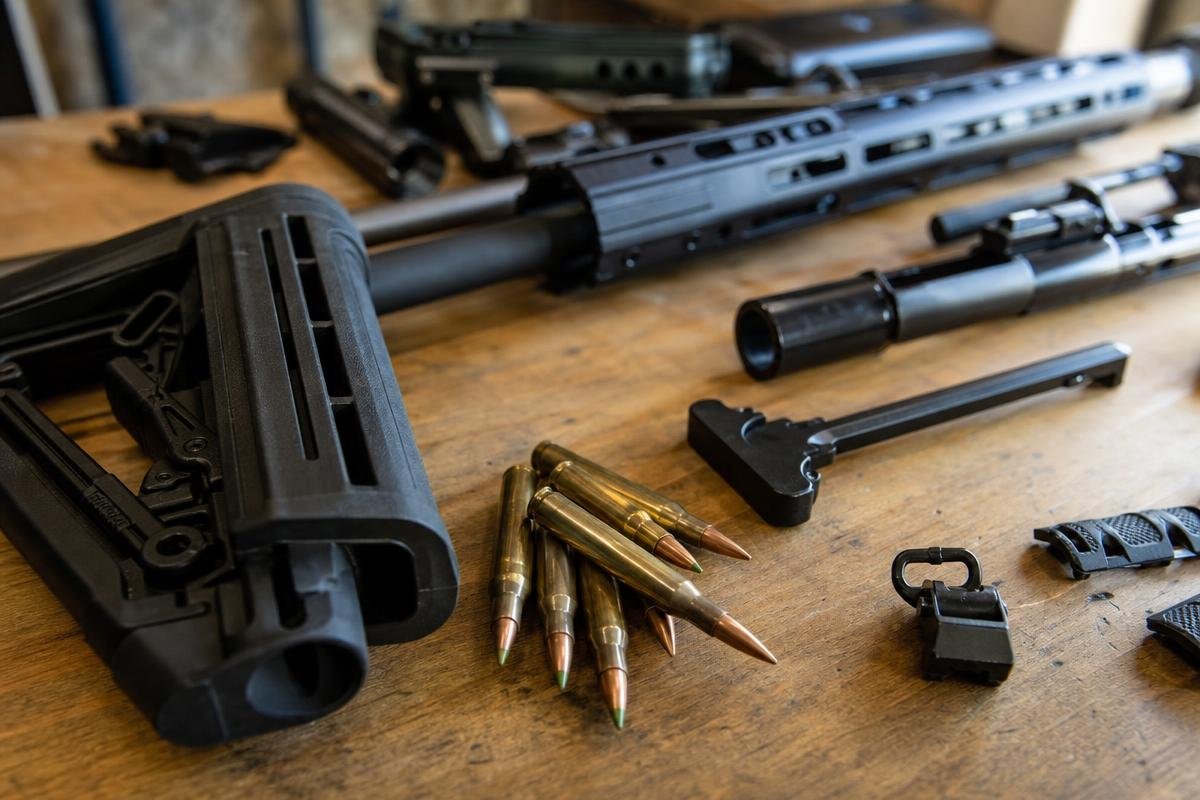
For most general-purpose AR-15s, 5.56 NATO is the easier choice because ammunition, magazines, and replacement parts are common. For hunters who prioritize a heavier .277-caliber projectile and more energy at moderate field distances, 6.8 SPC can be the better fit. Compare how 6.8 SPC vs 5.56 affects bullet diameter, recoil, ammunition cost, ballistics, and the parts required for each upper. Need help selecting compatible parts for your next AR build?
Key Takeaways
- 5.56 NATO is usually the practical choice for training, general-purpose rifles, and shooters who value ammunition availability and lighter recoil.
- 6.8 SPC uses heavier .277-inch bullets and can deliver substantially more energy than typical 5.56 loads from comparable barrel lengths.
- Representative factory-load data shows why barrel length, bullet construction, and distance matter more than caliber labels alone.
- A 6.8 SPC upper requires a correctly chambered barrel, a 6.8-specific bolt, and magazines engineered for the cartridge's case geometry.
6.8 SPC Vs 5.56: The Side-by-Side Differences That Matter
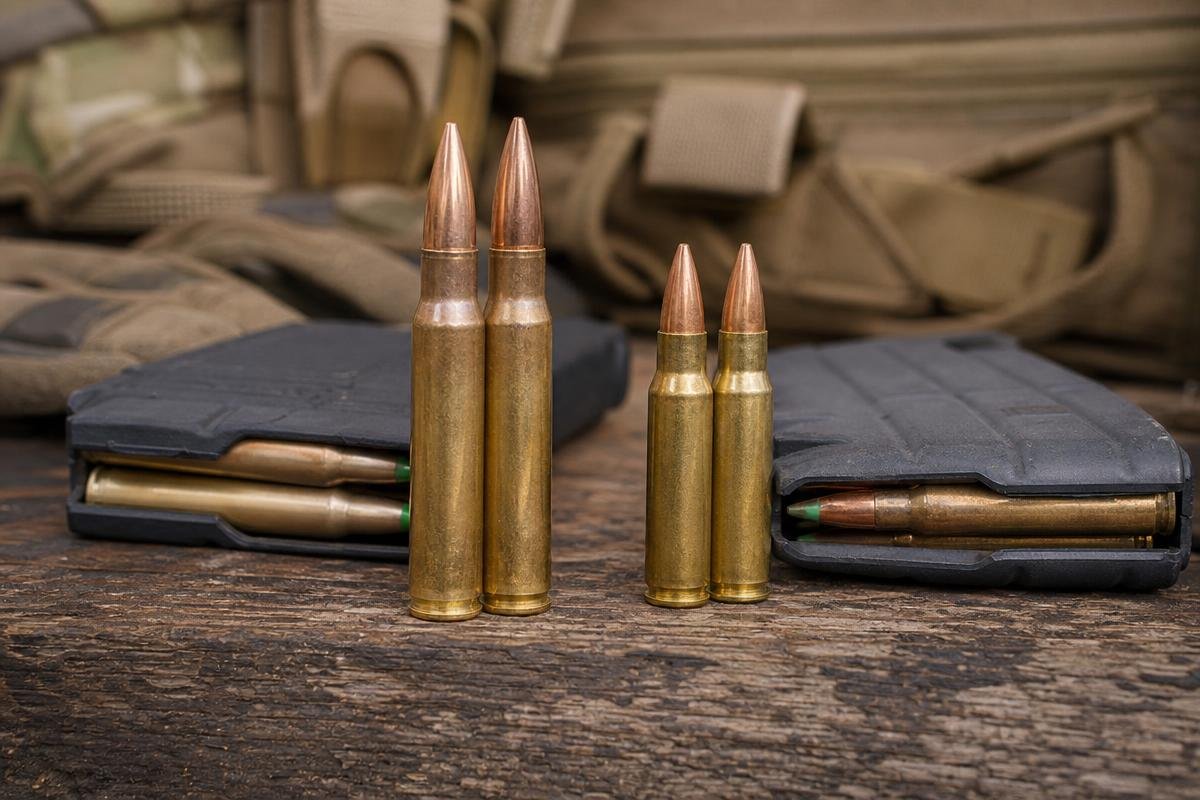
The 6.8 SPC vs. 5.56 decision is not simply about which cartridge is stronger. Compare the exact load, barrel length, intended distance, and bullet type. In broad terms, 6.8 SPC trades increased recoil, reduced magazine capacity, and a narrower ammunition market for a heavier bullet and higher impact energy. 5.56 NATO offers lower recoil, broad load selection, and an easier path to frequent practice.
| Factor | 5.56 NATO | 6.8 SPC |
|---|---|---|
| Common role | Training, defense, competition, and general-purpose rifles | Hunting-focused AR-15 builds and shooters seeking heavier bullets |
| Bullet diameter | .224 inch | .277 inch |
| Typical projectile weight | 55 to 77 grains | 85 to 120 grains |
| Representative 16-inch load | 62-grain bonded or barrier load, about 2,900 fps | 110-grain hunting load, about 2,550 to 2,600 fps |
| Magazine capacity | Commonly 30 rounds in a standard AR-15-pattern magazine | Often about 24 to 25 rounds in a full-size AR-15-pattern magazine, depending on manufacturer and magazine design |
| Ammunition supply | Broad selection of practice, defensive, match, and hunting loads | More limited selection, with availability varying by retailer and production runs |
| Upper compatibility | Uses standard 5.56 barrel, bolt, and magazines | Uses a 6.8 chamber, 6.8 bolt face, and dedicated magazines |
Cartridge Size, Bullet Diameter, and Projectile Weight
A 6.8 SPC bullet measures .277 inch in diameter, while a 5.56 NATO bullet measures .224 inch. The 6.8 SPC commonly uses 85- to 120-grain projectiles, while many 5.56 loads fall between 55 and 77 grains.
Diameter and weight do not tell the whole story. A controlled-expansion hunting bullet, bonded defensive bullet, or open-tip match projectile behaves differently at impact, even when two loads share a similar bullet weight. Select ammunition for the intended use, not only the headstamp.
Representative Ballistics, Recoil, and Practical Range
Representative factory-load comparison: current manufacturer data lists a Hornady 110-grain 6.8 SPC load at 2,575 feet per second from a 16-inch test barrel, producing about 1,620 foot-pounds of muzzle energy. Compare that with the published specifications for the exact 5.56 load you are considering, because velocity and energy vary by bullet design and test barrel.
Retained energy at 200 yards varies by load and ballistic coefficient, so use the ammunition maker's trajectory data for the exact product. Trajectory depends heavily on zero and bullet design, but with a 100-yard zero, both cartridges can be managed at moderate distances. The 6.8 SPC's advantage is retained energy, not a guarantee of flatter trajectory.
These are comparison figures, not a promise for every rifle. Manufacturer specifications are often taken from different test barrels, and real velocity changes with chamber, barrel length, temperature, ammunition lot, and chronograph setup. For a precise setup, confirm data from the ammunition manufacturer and verify your own rifle at the range.
Ammunition Supply, Magazine Capacity, and Compatibility
5.56 ammunition is commonly available in economical full-metal-jacket practice loads, match loads, defensive loads, and hunting-oriented bullet designs. A standard build can begin with 5.56 NATO complete upper receivers ready to drop onto a compatible mil-spec lower receiver.
6.8 SPC uses a larger case head and different cartridge geometry than 5.56, so it needs magazines designed to stack and feed the cartridge correctly. Full-size 6.8 SPC magazines are often listed around 24 or 25 rounds, but capacity varies by maker, follower design, and magazine body. The correct 6.8 upper, bolt, and magazine pattern are essential for reliable function.
Can You Convert a 5.56 AR-15 to 6.8 SPC?
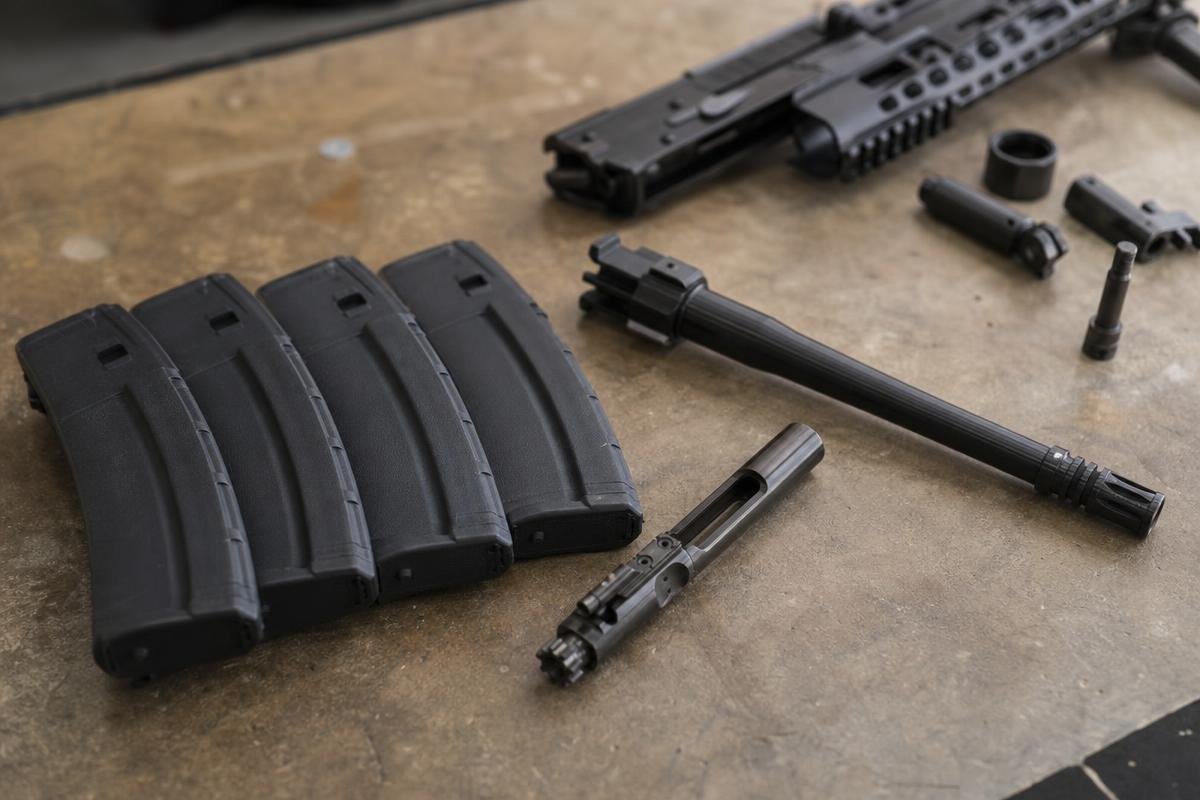
Yes. A standard AR-15-size lower receiver can generally be used for a 6.8 SPC upper, but the upper assembly and feeding components must be purpose-built for 6.8 SPC.
The Barrel, Bolt, and Magazine Must Match
A 5.56 barrel cannot chamber a 6.8 SPC cartridge. Use a barrel chambered for 6.8 SPC, commonly marked 6.8 SPC II, with a bolt built for the cartridge's larger case head.
The carrier can remain standard AR-15 format, but the bolt face cannot. A 5.56 bolt face is too small for 6.8 SPC brass. Dedicated 6.8 magazines are also necessary because the cartridge's case dimensions and geometry affect stacking, feed angle, and capacity.
Complete 6.8 SPC Upper or Individual Components
A complete upper reduces the number of compatibility decisions. The barrel, bolt, gas system, upper receiver, and handguard are configured as an assembly, then installed on a compatible lower.
Our complete AR-15 uppers provide an option for shooters who prefer separate uppers for different cartridges. For a parts build, verify the chamber specification, barrel extension, bolt, gas tube length, gas-block journal, muzzle device thread, and magazine compatibility before assembly.
What You Need for a 6.8 SPC Build
Before ordering, confirm these cartridge-specific requirements:
- A barrel chambered in 6.8 SPC or 6.8 SPC II
- A matching 6.8 SPC bolt with the proper bolt-face dimensions
- Magazines built for 6.8 SPC feeding geometry
- A complete 6.8 SPC upper or individually verified compatible components
If you have a product-fit question, contact our Denison-based team through the AR15Parts.com contact page or call (888) 706-0633. We are located at 4000 Texoma Parkway, Denison, TX 75020. Building around 6.8 SPC? Confirm the chamber, bolt, and magazine pattern before you order.
Which Cartridge Fits Hunting, Home Defense, and Range Use?
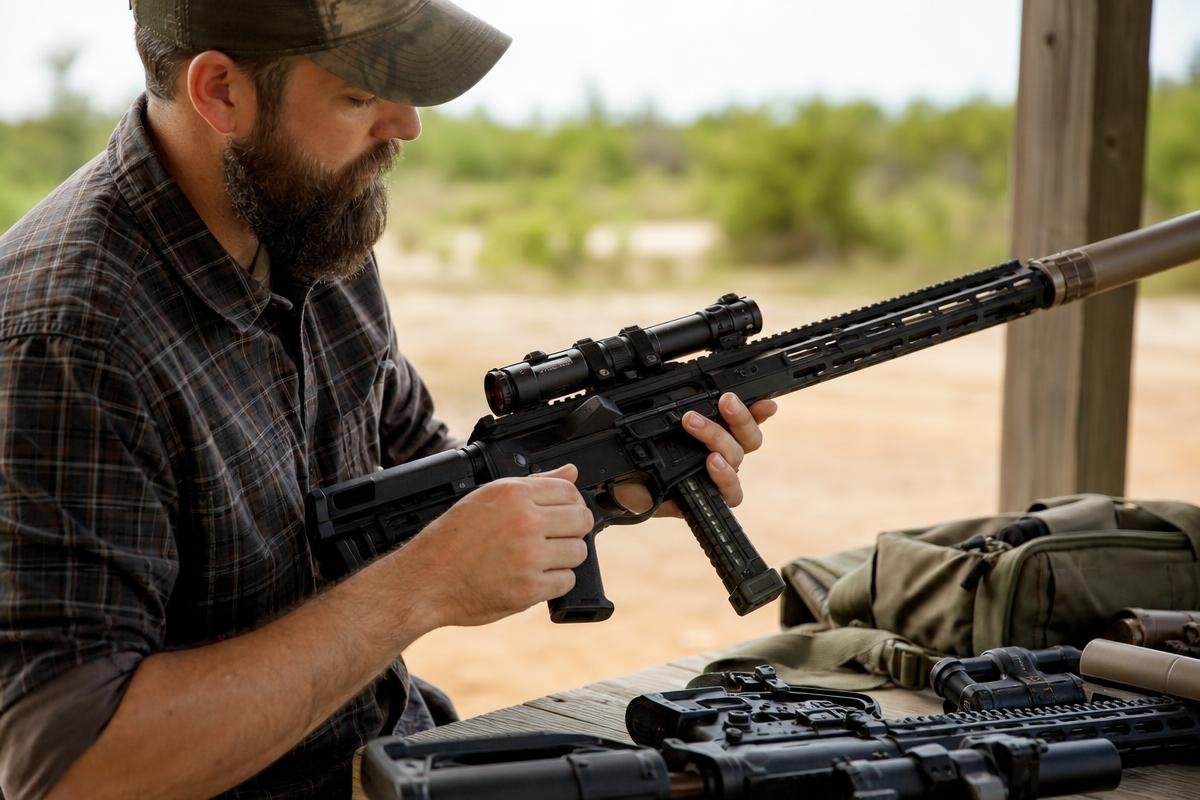
Choose 6.8 SPC when the rifle's primary role is hunting appropriate game at moderate distances and you are willing to use dedicated ammunition and magazines. Choose 5.56 when training volume, controllability, broad availability, and shared AR-15 support matter most.
| If your priority is... | Usually choose... | Why |
|---|---|---|
| Frequent practice and lower operating cost | 5.56 NATO | Practice loads are generally easier to find, and recoil is lighter for long range sessions. |
| North Texas deer or hog hunting at moderate field distances | 6.8 SPC | Heavier hunting bullets and higher retained energy can be useful when paired with a suitable expanding load and lawful hunting setup. |
| One common AR-15 configuration with broad support | 5.56 NATO | Magazines, ammunition types, and compatible replacement parts are widely established. |
| A second upper for a hunting-specific role | 6.8 SPC | A dedicated upper lets you retain a familiar lower while using a cartridge-specific barrel, bolt, and magazine. |
Is 6.8 SPC Better Than 5.56 for Deer Hunting?
For many deer-hunting situations, 6.8 SPC is the stronger choice because representative hunting loads carry more bullet weight and energy than common 5.56 loads from comparable barrels.
That does not make it automatic. Bullet construction, shot placement, distance, and local rules remain important. In the Denison and wider North Texas area, hunters should check current Texas Parks and Wildlife regulations, landowner rules, and any local discharge restrictions before heading afield. Select a hunting bullet designed for the game you intend to pursue and practice from the positions you expect to use.
A dedicated hunting upper also allows a shooter to keep an existing training rifle intact. Our complete AR-15 uppers can help simplify that two-upper approach.
5.56 NATO for Home Defense Considerations
5.56 NATO is common for home defense because ammunition, magazines, rifles, and replacement parts are widely available. Recoil is manageable for many shooters, and standard-capacity AR-15 magazines are broadly supported.
Caliber labels do not replace safe handling. Select ammunition carefully, identify your target, know what is beyond it, maintain a safe backstop, secure the firearm, and follow applicable law. A properly configured 5.56 rifle with familiar controls is often more useful than a cartridge you do not train with.
Training and Range Use
For regular training, 5.56 usually makes more sense because it is easier to locate and typically costs less per round than 6.8 SPC. Retail pricing changes quickly by brand, bullet type, and quantity, but 5.56 practice ammunition is commonly priced below specialty 6.8 SPC hunting loads. Check current product pricing rather than relying on a fixed cost estimate.
Keeping a 5.56 setup for training and adding a dedicated 6.8 SPC upper for hunting is often a practical arrangement. For a ready-to-run 5.56 option, see our 5.56 NATO complete upper receivers.
For a common training and general-purpose setup, compare available 5.56 upper options.
How Barrel Length and Gas System Choice Affect the Build
Barrel length affects velocity, handling, blast, and the operating window of the gas system. A useful 6.8 SPC vs. 5.56 comparison uses the same barrel length, similar bullet purpose, and a clearly stated distance.
Compare Ballistics With Matching Barrel Lengths
A 16-inch barrel is a useful reference point because it is common on general-purpose AR-15s. Shorter barrels reduce velocity for both cartridges, and the amount lost depends on the particular powder blend, chamber, and load. A 6.8 SPC hunting load that performs well from a 16-inch barrel may not produce the same impact velocity from a much shorter barrel.
Before relying on trajectory or terminal-performance claims, read the ammunition maker's data for your barrel length where available. Chronographing your own rifle and confirming zero at the range provides the most useful answer.
Gas System Length Is a Matching Decision
Gas-system length changes the relationship between dwell time, port pressure, recoil impulse, and cycling. Pistol, carbine, mid-length, and rifle gas positions describe where the gas port sits. They are not automatic performance upgrades.
The barrel length, gas-port size, ammunition pressure curve, buffer setup, and carrier mass must work together. A properly configured system supplies enough gas to cycle reliably without treating one gas-system label as a cure-all.
Why a Complete Upper Reduces Matching Work
A complete upper pairs the barrel, gas system, bolt, and receiver as one assembly. That is particularly useful for 6.8 SPC, where bolt-face dimensions and magazine selection differ from a standard 5.56 configuration.
Our complete AR-15 uppers let you choose a configured assembly instead of sourcing each part separately. For 5.56 builds, compare barrel and gas options among our 5.56 NATO complete upper receivers before selecting your lower and accessories.
Need help matching an upper, barrel length, and gas system? Call (888) 706-0633.
Choosing Between 6.8 SPC and 5.56 for Your Next Upper
The practical choice depends on the rifle's job. A 5.56 upper is typically the straightforward all-around option. A 6.8 SPC upper is a more specialized choice for shooters who value heavier bullets and higher retained energy enough to accept cartridge-specific magazines and a smaller ammunition market.
Choose 5.56 for a Common General-Purpose Setup
5.56 NATO makes sense for range work, training, home defense, and a general-purpose AR-15. It is supported by a wide selection of ammunition and magazines, and its lighter recoil can make rapid follow-up shots easier to manage. Start with one of our 5.56 NATO complete upper receivers if you want an assembled unit ready to drop onto a compatible mil-spec lower receiver. This route keeps ammunition and magazine sourcing simple.
Choose 6.8 SPC for a Larger-Diameter Projectile
A 6.8 SPC upper fits shooters who want a .277-inch projectile and greater energy from the AR-15 platform for hunting-focused use. It is a practical option where the selected load, expected distance, and applicable regulations support it.
Confirm the chamber marking, bolt, and magazines all match 6.8 SPC before firing. Do not mix 5.56 magazines or a 5.56 bolt with a 6.8 SPC barrel and ammunition.
Verify the Parts Before You Order
Check the chamber marking, barrel configuration, bolt compatibility, magazine type, and intended use before placing an order. Confirm that the upper is marked for the cartridge you plan to shoot, including 6.8 SPC II where applicable.
AR15Parts.com supplies firearms, parts, and accessories for common builds and caliber-specific setups. If you need help confirming product fit, contact AR15Parts.com about build compatibility before purchase.
A Denison Source for AR-15 Parts and Build Components
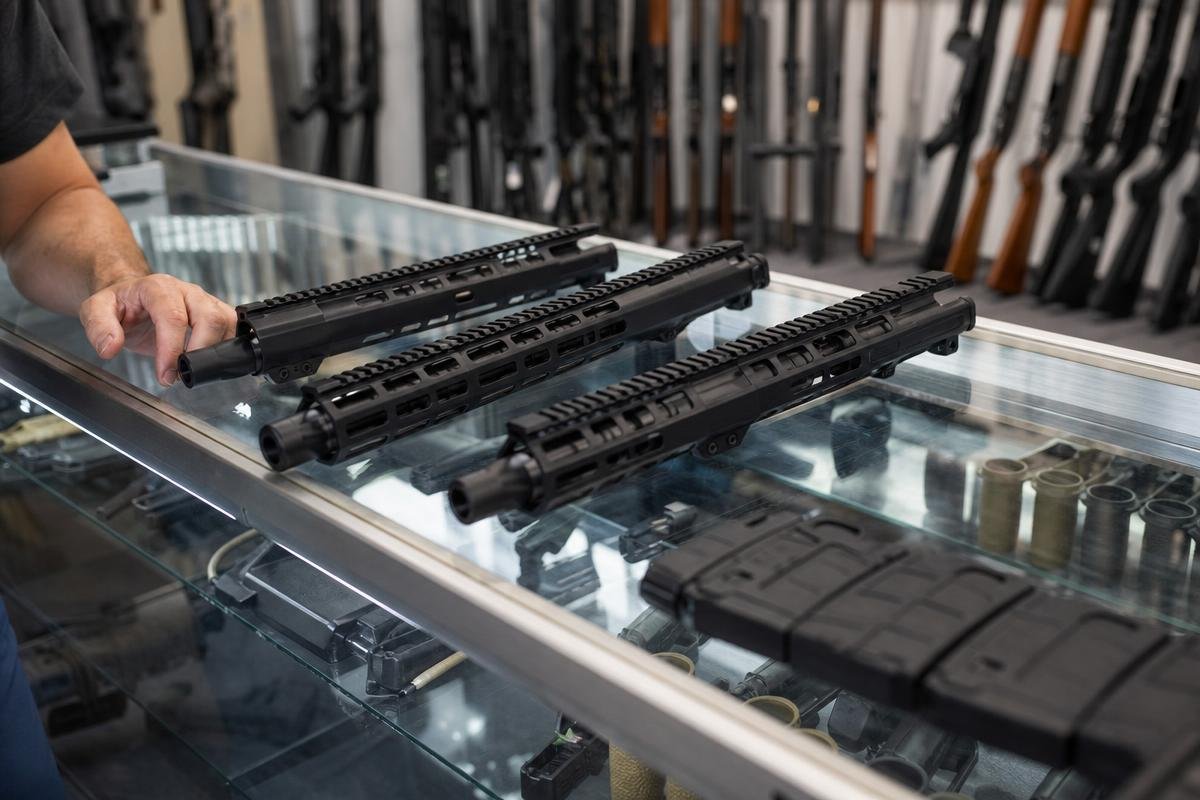
AR15Parts.com is located at 4000 Texoma Parkway, Denison, TX 75020. We carry firearms, parts, and accessories for complete builds, upper swaps, and routine AR-15 maintenance.
The 6.8 SPC vs. 5.56 choice affects the upper, bolt, magazine pattern, ammunition selection, and how the rifle will be used. Review our complete AR-15 uppers if you want a ready-to-drop-on-your-lower assembly instead of sourcing each component separately.
Questions About Compatibility
Ask us about chambering, bolt-face fit, magazine selection, and upper configuration before ordering. For product questions or help confirming a setup, contact AR15Parts.com about build compatibility or call (888) 706-0633. You can also read more about AR15Parts.com and how we support AR-15 owners building around their intended cartridge and use.
Frequently Asked Questions
Is 6.8 SPC More Powerful Than 5.56?
Usually, yes. In a 6.8 SPC vs. 5.56 comparison, representative 6.8 SPC hunting loads typically use heavier, larger-diameter bullets and produce more muzzle and retained energy than common 5.56 loads from similar barrel lengths. Actual results depend on load, barrel length, and distance to target.
Can I Convert a 5.56 AR-15 to 6.8 SPC?
Yes, if your lower follows the standard AR-15-size pattern. A correct conversion requires a matching 6.8 SPC barrel, bolt, and magazines. Review available complete AR-15 uppers if you want an assembled upper rather than separate parts.
Is 6.8 SPC Suitable for Hunting?
Yes, 6.8 SPC hunting loads can be appropriate for suitable game where legal. Check current regulations in your jurisdiction, then select a bullet designed for your intended game and expected shooting distance.
Do 6.8 SPC and 5.56 Use the Same Lower Receiver?
Both cartridges can run on an AR-15-size lower receiver. They do not use the same magazines or bolt. Your 5.56 NATO home defense setup also needs its own correctly chambered barrel and matching ammunition.
What Should I Check Before Buying a New Upper?
Confirm chamber marking, barrel length, gas system, bolt, magazine type, and intended use before ordering. Before buying an upper or conversion parts, verify each fit point with your lower and existing components. AR15Parts.com can help sort out product-fit questions through our Contact Us page or at (888) 706-0633.
Does 6.8 SPC Use the Same Bolt as 5.56?
No. A 6.8 SPC build needs a bolt with the correct face dimensions for the cartridge’s larger case head. A standard 5.56 bolt is not compatible.
Ready to Get Started with AR15Parts.com?
Call (888) 706-0633 to speak with our team directly. We're ready to answer your questions, walk you through your options, and help you find the right solution for your needs. Whether you're just starting to plan or ready to move forward, we'll make the process simple and stress-free. Reach out today and let's talk about how we can help.