
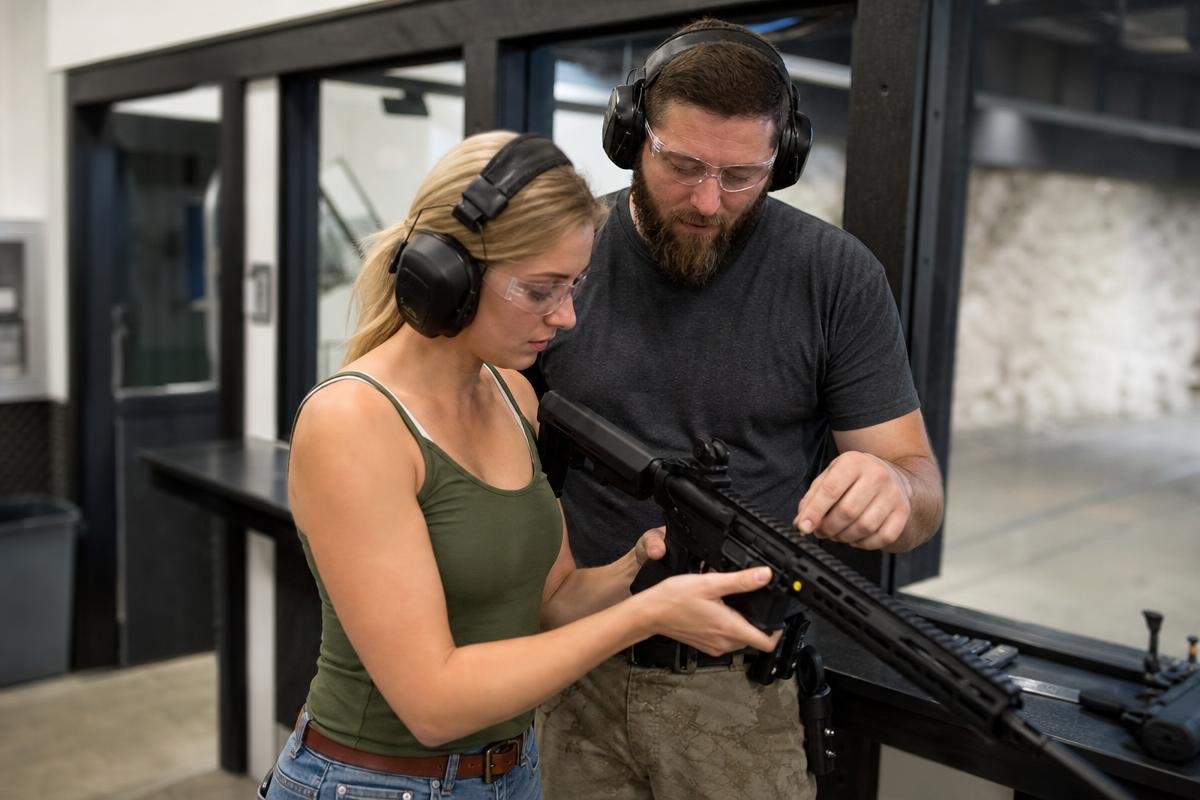
Choosing a first firearm safety course can feel difficult when you do not yet know whether you need classroom instruction, hands-on familiarization, or supervised live fire. Compare those formats, ask useful enrollment questions, and plan for beginner-friendly instruction in and around Denison. AR15Parts.com is an online retailer of firearms, parts, and accessories, not a training provider. Once you have learned safe handling, compare rifle and parts options for your intended use; our team can answer product questions by phone or through our contact form.
Not sure whether your first class should be classroom-based or include live fire? Call us to discuss the equipment you already own or plan to buy after instruction.
Key Takeaways
- Choose an introductory class designed for new shooters, not experienced shooters refining advanced techniques.
- A firearm safety course should cover muzzle control, trigger discipline, loading and unloading, storage, and basic operation before live fire.
- Classroom instruction, unloaded handling, and supervised range instruction serve different starting points, so confirm the format before enrolling.
- Before registering, ask which firearm platform is used, what equipment is supplied, how many students each instructor supervises, and what live-fire costs are included.
What First-Time Shooters Should Look for in a Safety Course
Your first class should build repeatable handling habits before you spend money on speed drills, optics, or additional accessories. For new shooters in the Denison area, compare the instructor's beginner curriculum and range arrangement before shopping for AR-15 complete rifles.
A useful introductory lesson explains muzzle direction, trigger discipline, action operation, ammunition identification, loading and unloading, and basic marksmanship. It should also make clear what happens before, during, and after any live-fire portion.
When comparing options within driving distance of Denison, ask whether instruction takes place at an indoor or outdoor range. Indoor sessions can offer a more controlled environment for a first visit, while outdoor sessions may involve sun, wind, changing temperatures, and more walking between safety briefings and firing positions. Confirm the course location, start time, weather policy, and whether the instructor provides the range or expects students to arrange access.
AR15Parts.com is an online retailer of firearms parts and accessories, shipping from our facility at 4000 Texoma Pkwy, Denison, TX 75020. We can answer product and configuration questions after you have received instruction, including questions about complete AR-15 uppers that fit your intended use.
Choosing beginner instruction is not legal advice and does not replace an instructor's range-specific procedures, Texas firearms-law guidance, or safe vehicle-transport guidance.
Start With the Four Safe-Handling Habits
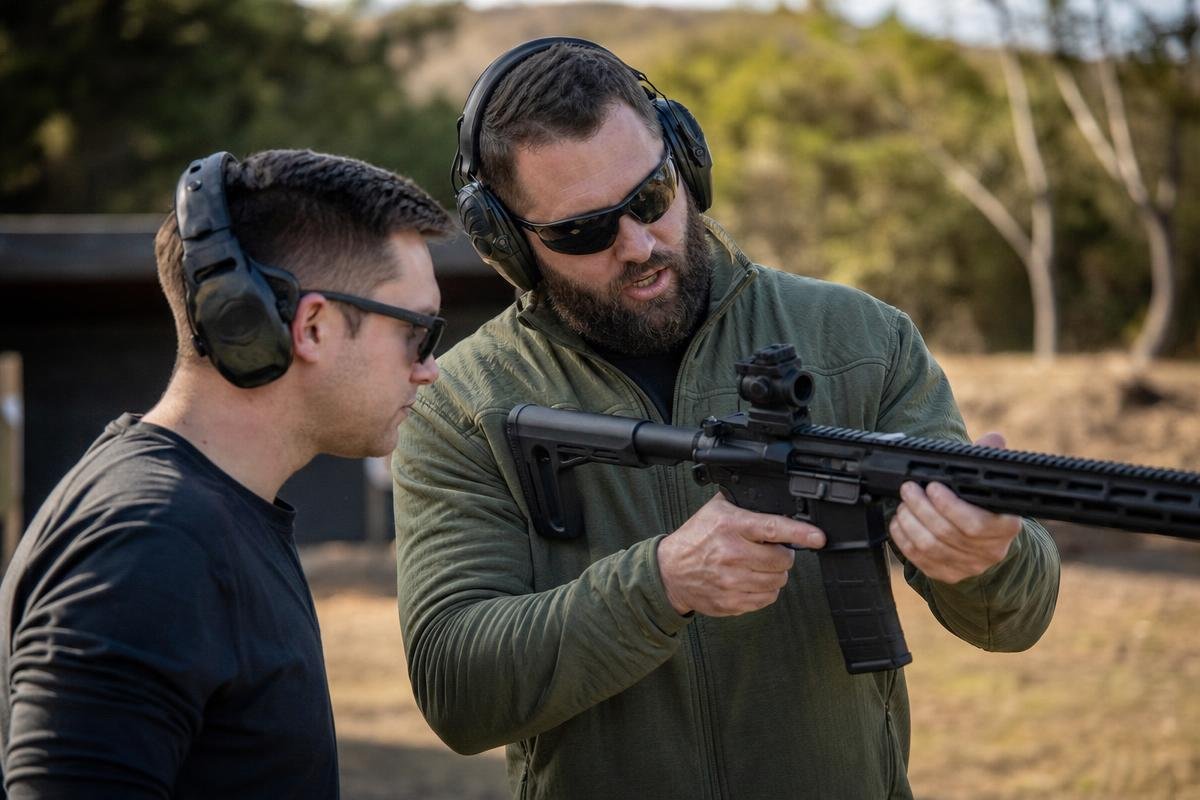
A quality beginner class teaches four habits before it moves into shooting techniques or live fire. The instructor should explain each rule, demonstrate it, and watch students perform it under supervision. These fundamentals apply to handguns, shotguns, and AR-style rifles.
Keep the Muzzle Pointed in a Safe Direction
Muzzle discipline means controlling where the barrel points at all times. Your instructor should correct muzzle direction during uncasing, inspection, movement, and any instructor-directed handling. A muzzle should never sweep another person, even during a condition check.
Keep Your Trigger Finger Indexed Until You Are Ready to Fire
Your trigger finger stays straight along the frame or receiver, outside the trigger guard, until the instructor directs you to fire. This is called indexing. On complete AR-15 rifles, keep the finger high on the receiver side, clear of the trigger and guard.
Treat Every Firearm as if It Is Loaded
Assume every firearm is loaded until its condition has been verified. Open the action, visually inspect the chamber, and follow the instructor's process before handling or passing it to another person. Do not rely on someone else's statement that it is unloaded.
Know Your Target and What Is Beyond It
Target awareness means identifying the intended target and staying aware of the area beyond it. A beginner should not fire at an object they have not clearly identified. This rule requires deliberate decisions before every shot.
Practice only the handling methods your instructor has taught, and only after confirming the firearm is unloaded and clear. Secure firearms and ammunition from unauthorized access between sessions. For local storage support, confirm the availability of safety locks directly with the appropriate Denison municipal or public-safety office before relying on a program listing.
Should Beginners Start With Classroom or Live-Fire Training?
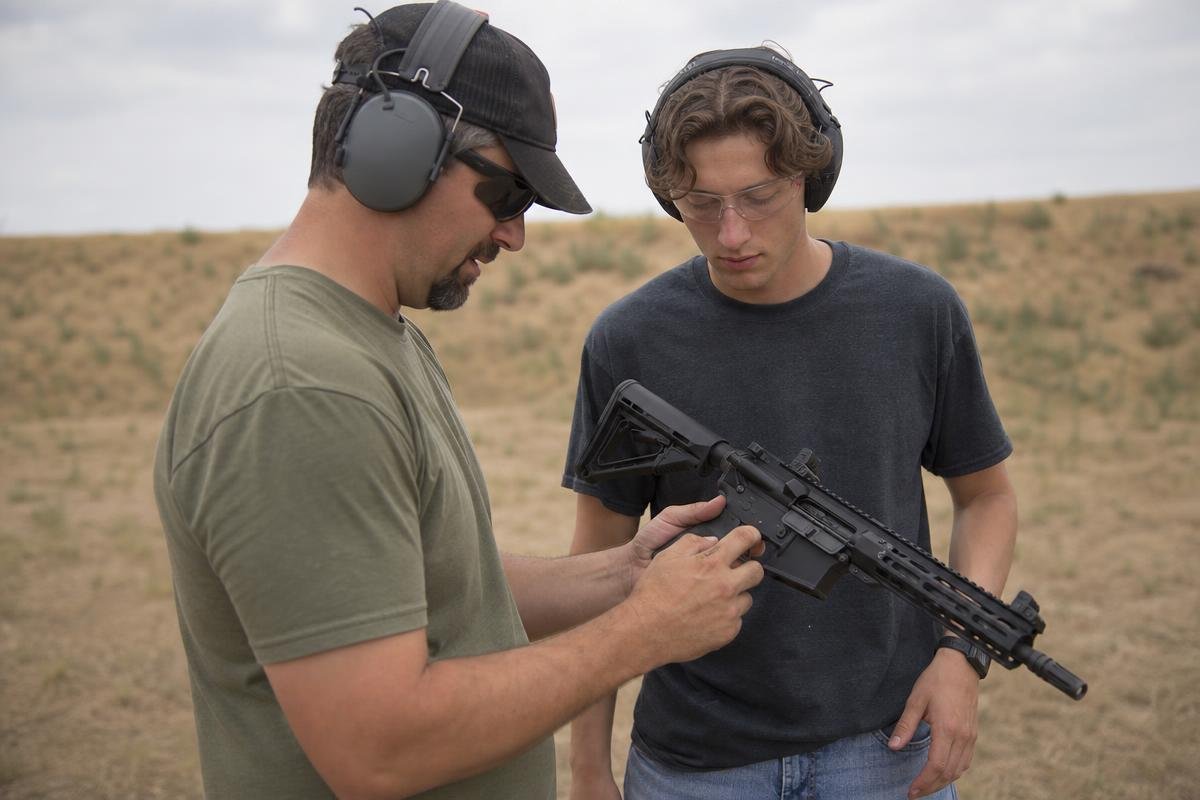
The right first step depends on your comfort level, the course prerequisites, and how much direct supervision is available. Some students benefit from classroom instruction first, while others can begin with an introductory course that combines a safety briefing, unloaded practice, and closely supervised live fire.
Classroom-Only Instruction
Classroom-only instruction is a practical starting point if handling a firearm still feels unfamiliar. You can cover safe-handling habits, parts identification, ammunition basics, cleaning concepts, conflict avoidance, and situational awareness without firing a shot.
This format gives you time to ask questions and understand how different actions operate. It is useful before deciding whether unloaded hands-on work or a supervised range session is your next step.
Unloaded Hands-On Familiarization
Unloaded familiarization is for students ready to handle a firearm under instructor direction before live fire. The instructor should verify the firearm is unloaded, then walk you through action controls, magazine insertion and removal, chamber checks, safe clearing, and loading-area procedures.
You should be able to keep the muzzle in a safe direction and keep your finger outside the trigger guard during every step. That control work can make the firing line less overwhelming later.
Supervised Live-Fire Fundamentals
Supervised live-fire fundamentals are appropriate after you can follow directions and operate the firearm safely while unloaded. Expect coached work on stance, sight alignment, sight picture, trigger press, follow-through, recoil management, and controlled loading and unloading.
A good instructor corrects one issue at a time. The goal is safe, repeatable shooting, not speed or a high round count.
AR-15 Familiarization Before a Range Session
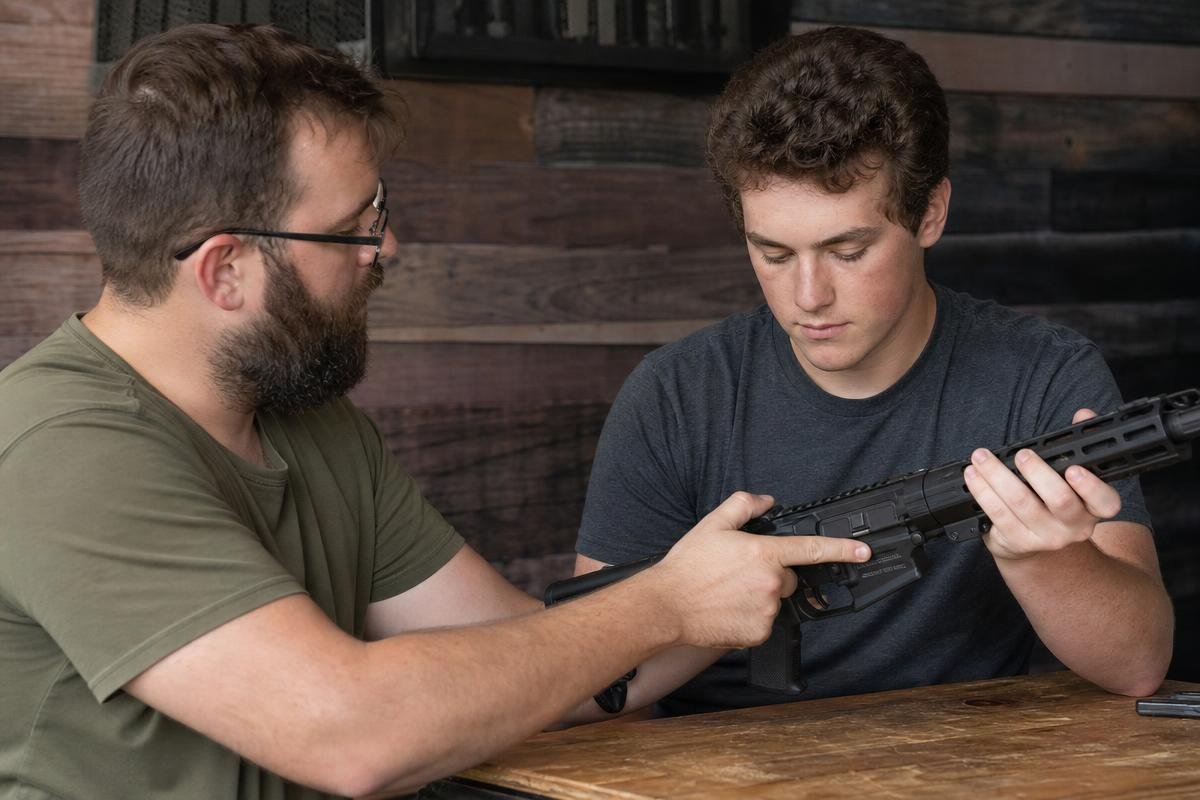
AR-15 instruction should begin with the exact rifle configuration you own or expect to use. Before an unloaded session, identify the upper receiver, lower receiver, charging handle, safety selector, magazine release, bolt catch, chamber, muzzle device, and your optic or iron-sight setup.
Configuration matters because controls and sighting systems can differ between complete AR-15 rifles and rifles assembled from separate components. If you are selecting parts after completing basic instruction, review our complete AR-15 uppers to better understand how an upper assembly pairs with a lower.
What Should You Ask Before Enrolling in a Denison Safety Course?
Compare more than the course title and price. A well-described introductory program should explain its location, format, equipment, instructor supervision, prerequisites, and what happens if weather or scheduling affects a range session. For Denison-area classes, confirm the travel time and whether the listed address is the classroom location, the range location, or both.
Ask How the Class Supports First-Time Shooters
Ask whether the instructor regularly teaches people with no prior firearms experience. A true beginner offering should start with handling fundamentals, firearm parts, and ammunition basics before moving into more advanced material.
- Is the class classroom-only, unloaded handling, or live fire?
- Are handgun, shotgun, and AR-15 basics taught separately or combined?
- How many students does one instructor supervise?
- Are there prerequisites, minimum-age requirements, accessibility considerations, or physical demands?
- Does the instructor offer post-class questions, a follow-up session, or a recommended next-step course?
If you plan to learn the AR platform, ask whether the course covers its controls and operation without assuming prior experience.
Confirm What Equipment Is Included or Required
Get the gear list before enrolling. Ask what the course provides, what you must bring, and what items are prohibited. This prevents surprise costs and helps you avoid buying equipment solely for a class that supplies it.
- Firearm platform and caliber, ammunition, targets, eye protection, and hearing protection
- Whether rental fees, range fees, ammunition costs, and required protective equipment are included in the posted price
- How many rounds are planned for live fire and how much instructor-led handling occurs before shooting
- Cleaning supplies and any required clothing or closed-toe footwear
- Whether you may bring your own firearm or must use a class-provided model
A course that combines several firearm types should tell you which platform you will handle. Do not buy a rifle or a complete AR-15 upper just to meet an unclear class requirement.
Ask How Live-Fire Supervision Works
Live-fire supervision should be stated plainly. Ask how loading and unloading are taught, where instructors stand, how a cease-fire is called, and whether the student-to-instructor ratio changes once the class reaches the firing line.
Also ask about class duration, cancellation and refund terms, weather rescheduling for outdoor sessions, and whether the course can accommodate a student who needs extra time. Direct oversight matters more than a long course description during your first supervised shots.
Have questions about the rifle, upper, or accessories you may need after training? Call us at (888) 706-0633 before buying your first AR-15 setup.
What a Useful First Lesson Should Cover Before You Buy More Gear
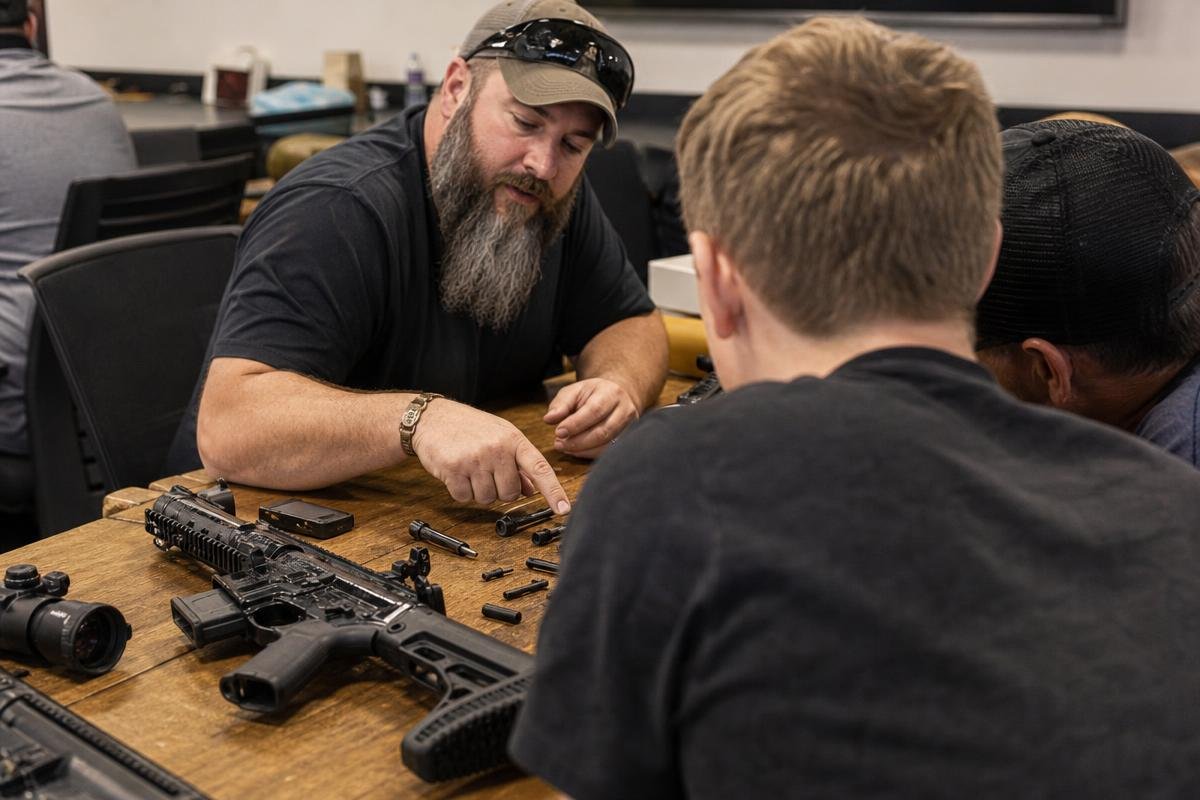
A useful first lesson builds safe familiarity before you spend money on accessories. Strong instruction explains the specific firearm you plan to use, not a generic set of controls that may not match your rifle or handgun.
Learn the Parts and Operating Cycle of Your Firearm
Beginners should be able to identify the upper receiver, lower receiver, bolt carrier group, charging handle, magazine, safety selector, barrel, handguard, and sights on an AR-pattern rifle. The lesson should show how those parts work through loading, chambering, firing, extracting, ejecting, and clearing.
The goal is safe identification and operation, not home assembly or modification. Once you understand the controls and configuration, you can make better choices among complete AR-15 rifles, sights, magazines, and other accessories.
Understand Ammunition Markings and Compatibility
A beginner class should explain how to read the caliber or cartridge marking on the firearm and ammunition box. Use only ammunition specified for that firearm, and ask an instructor before loading any unfamiliar cartridge.
AR-15 instruction should also explain that an upper, barrel chamber, and ammunition marking must match. A shooter considering complete AR-15 uppers needs to understand that a caliber change requires the correct barrel, bolt, magazine, and ammunition.
Build Post-Session Cleaning and Inspection Habits
Cleaning and inspection belong in a first lesson because fouling, loose fasteners, damaged magazines, and worn parts can affect safe function. Students should learn to unload and verify the firearm is clear before cleaning, then inspect the bore, chamber, bolt area, sights, and magazine condition.
Secure storage is equally important once equipment comes home. Ask your instructor for storage guidance suited to your household, including ways to limit unauthorized access.
Include Awareness and De-Escalation in Safety Training
Safe instruction should include awareness, conflict avoidance, and de-escalation. The safest outcome is often leaving a problem early and avoiding a situation that could turn physical.
A first lesson should keep its focus on sound decisions, safe handling, and supervised practice.
How to Prepare for Your First Supervised Live-Fire Session
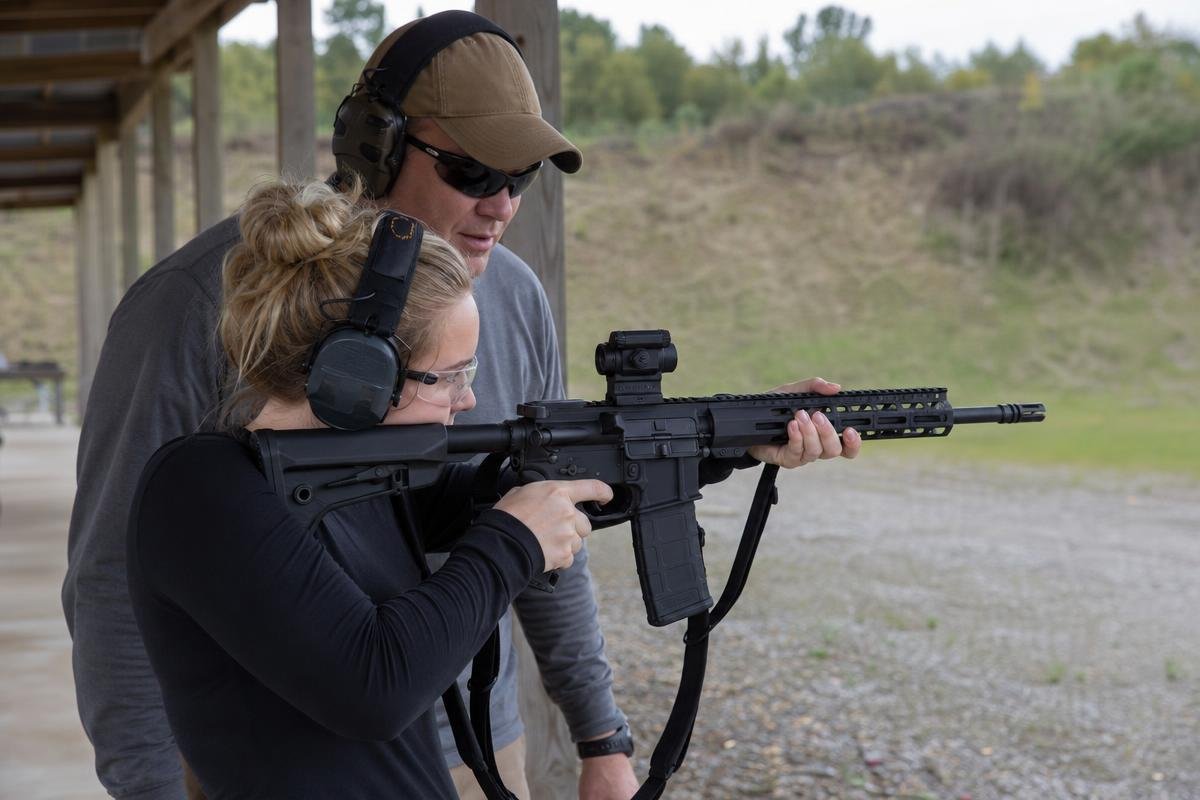
Your first live-fire fundamentals session should be slow, supervised, and built around instructor feedback. Arrive early enough for the safety briefing, tell the instructor you are new, and ask questions before you handle a firearm.
Arrive Ready to Listen and Ask Questions
Bring any course paperwork, water, and a small notebook. Write down corrections on stance, grip, and trigger press after each drill. A quality introductory class gives you time to clarify a command before loading or unloading.
Do not buy extra equipment just to keep pace with other shooters. If you later choose one of our complete AR-15 rifles, your instructor can help you understand its controls and fit before you add accessories.
Wear the Right Protective Equipment
Use properly fitted eye protection and hearing protection for every firing session. North Texas weather can shift quickly, especially during outdoor training, so wear weather-appropriate clothing, closed-toe shoes, and bring water.
A brimmed cap can help keep sun and ejected brass away from your face. Avoid loose clothing that can interfere with a sling, controls, or your instructor's ability to see your stance.
Focus on Fundamentals, Not Speed
Your first session should focus on safe loading and unloading, a consistent stance, sight alignment, sight picture, trigger press, and follow-through. Speed and high round counts do not measure beginner progress. Controlled repetitions and clear instructor feedback do.
Optic zeroing comes later, after you can safely run the firearm and produce consistent groups with iron sights or a properly mounted optic. A stable foundation matters more than adjusting an optic before your technique is repeatable.
Denison Resources That Support Safe Firearm Ownership
Training gives new owners a baseline before gear choices complicate a first setup. Continue building good habits by planning safe storage, using appropriate protective equipment, and selecting range instruction that fits your experience level.
Start With Training Before Choosing Accessories
Learn rifle controls, sight alignment, loading procedures, and safe carry methods before selecting an optic, sling, or rifle configuration. That instruction helps you identify what fits your intended use instead of buying parts based on appearance.
After class, our team can answer product and parts questions by phone or through our contact form. Orders ship from our Denison, TX facility at 4000 Texoma Pkwy, Denison, TX 75020. Compare AR-15 complete rifles and configurations after you understand basic operation. Call (888) 706-0633 for product guidance, not training enrollment.
Use Local and Home Safety Resources
Before bringing a firearm home, establish secure storage that limits unauthorized access. If you are seeking a free safety lock or other municipal resource, verify current availability with the responsible local office because program details can change.
Read current safe-storage guidance before bringing a firearm home, and review prospective ranges' published rules before planning a first supervised visit. An instructor can teach shooting techniques, but home storage and careful range planning support those habits between sessions. If you are planning an AR-style rifle setup, review AR-15 parts after you understand safe handling and storage.
Choosing AR-15 Equipment After a Firearm Safety Course
After learning safe handling, compare our complete rifles, complete uppers, and magazines based on your intended use and the configuration you have trained with. Our complete uppers are built to order, assembled in-house, headspaced, and function-checked before shipping. We ship from our Denison, TX facility; complete firearms ship to the buyer's FFL for transfer. Call us at (888) 706-0633 with product questions.
Frequently Asked Questions
What Should a First Firearm Safety Course Teach?
A firearm safety course should teach muzzle discipline, trigger-finger discipline, condition checks, and target awareness before any shooting techniques. You should also learn how to identify ammunition, operate basic controls, and keep a firearm pointed in a safe direction while loading and unloading.
Should I Take a Classroom-Only Class Before Live Fire?
Classroom instruction can be a good first step if you are not ready to handle a firearm on a firing line. Safe handling must come before live fire, but a well-run beginner gun safety class may combine instruction with closely supervised shooting. Ask how much hands-on coaching is provided.
Do I Need to Own a Firearm Before Taking a Class?
No. Many introductory courses provide equipment for first-time students, but requirements vary by instructor. Ask what firearms, ammunition, eye protection, hearing protection, and targets are supplied before you enroll. Confirm whether you need to bring identification, complete paperwork, or arrive early for an orientation.
Can a Beginner Course Cover AR-15 Parts and Controls?
Yes. Introductory AR-15 safety training can cover magazine insertion, charging-handle use, selector positions, bolt-lock operation, and basic component identification. After you understand safe operation, compare complete AR-15 rifles and complete AR-15 uppers based on your intended use.
How Do I Know if a Class Is a Good Fit for a New Shooter?
Choose a class described clearly as introductory, with an instructor prepared to work at a first-time shooter’s pace. Ask how instructors correct grip, stance, sight alignment, and safe gun handling without rushing students. Training selection is separate from questions about transport, gun laws, or range rules.
What Equipment Should I Bring to a Beginner Firearm Course?
Bring the equipment listed by the instructor, which may include eye and hearing protection, closed-toe shoes, a hat, water, and a notebook. Confirm whether the course supplies a firearm, ammunition, and targets. Do not bring unfamiliar equipment unless the instructor approves it before class.
Use this checklist to compare introductory training options, then contact AR15Parts.com at (888) 706-0633 for help researching rifle parts, complete rifles, uppers, optics, and accessories after you understand the basics of safe operation.
Ready to Get Started with AR15Parts.com?
Call (888) 706-0633 to speak with our team directly. We're ready to answer your questions, walk you through your options, and help you find the right solution for your needs. Whether you're just starting to plan or ready to move forward, we'll make the process simple and stress-free. Reach out today and let's talk about how we can help.